We Compared 6 Duck Feeds on Stated Niacin and Cost Per Pound
Ducklings need roughly 55 to 70 ppm of niacin, and almost no bag prints a number. We compared six duck feeds on stated niacin and cost per pound.

By Sam Reddick Lead gear reviewer, Chicken Geek
Fact checked by Marta Voss
Published Prices and stock checked 7 min read
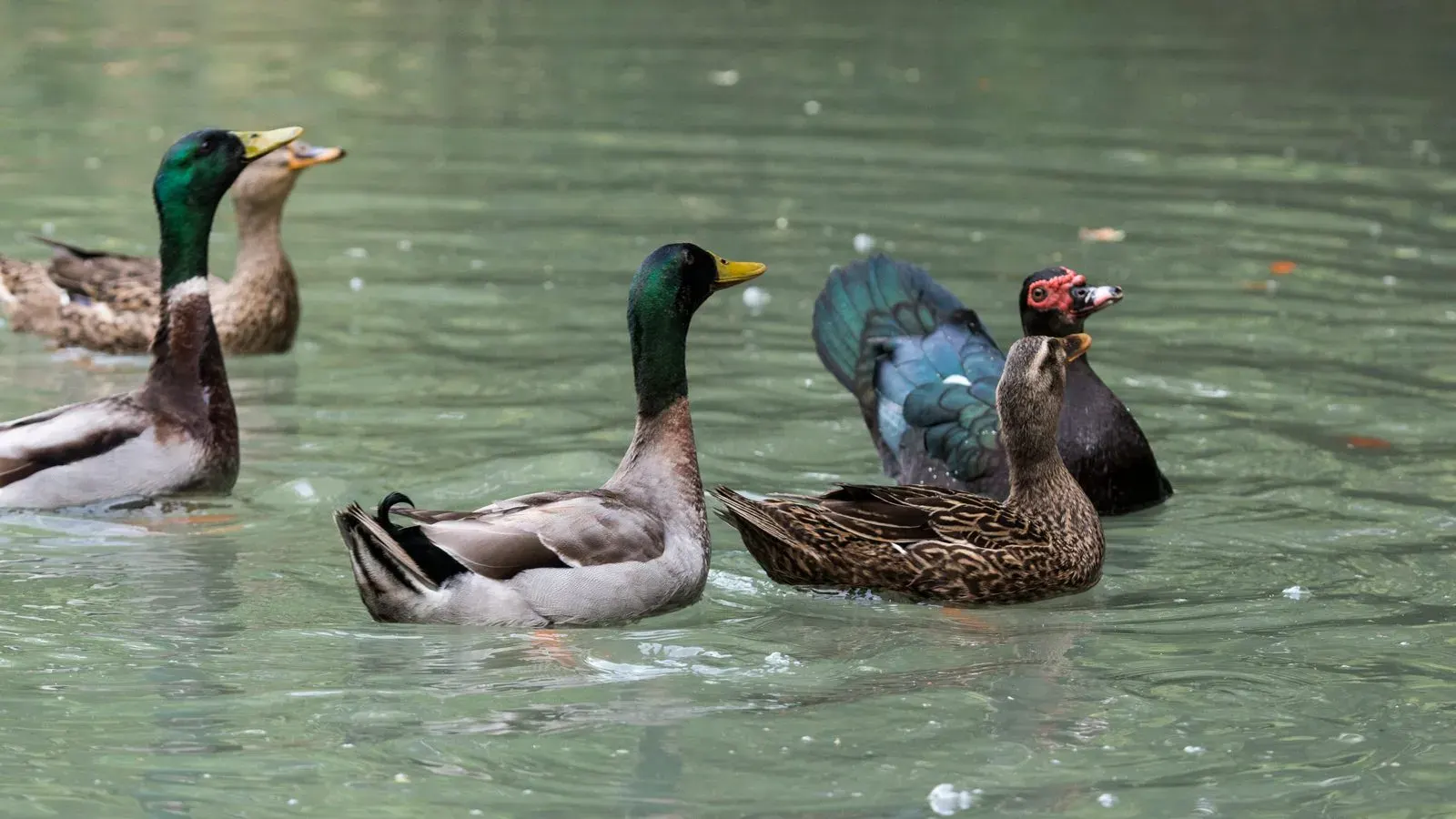
There is one number on a duck feed bag that decides more than anything else on the label, and most bags do not print it. That number is niacin, vitamin B3, measured in parts per million.
Growing ducklings need roughly 55 to 70 ppm. Fall short and the damage shows in the legs. A three week old duckling starts sitting down, gets up slower each day, and the hocks bow outward. Caught early it often corrects. Left alone it does not, and you end up with an adult duck that never walks right. Chicken feed is formulated for chickens, which need far less, so a duckling raised on plain chick starter is the classic way this happens.
So we read every bag here for a niacin figure first. Only one prints one. The Purina all life stages feed states at least 60 ppm. Manna Pro Duck Starter and New Country Organics both say niacin is added but will not say how much. The Manna Pro Duck Layer, the Wholesome Harvest mix and the Country Heritage floating pellet say nothing about niacin at all.
After that, price per pound tells the rest of the story, and the spread here is wide: $1.04 a pound at one end and $6.00 a pound at the other. Below is how each bag scores on both.
Our picks at a glance
Every product below wins one specific situation. Pick the row that matches your flock, your yard and your budget rather than reading top to bottom.
-
Best Overall

Manna Pro Duck Starter
Anyone brooding ducklings who wants a purpose made starter crumble and is willing to add brewer's yeast on top.
Check price on Amazon for Manna Pro Duck Starter Grower Crumble with Probiotics, 8 lb Bag on AmazonAbout $11.99 checked Aug 8, 2026
-
Best Stated Niacin Level

Purina Duck Feed
Keepers with two or three ducks, or anyone who wants a stated niacin figure in writing rather than a marketing phrase.
Check price on Amazon for Purina | Nutritionally Complete Duck Feed for All Life-Stages | 4.5 Pound (4.5 LB) Bag on AmazonAbout $15.99 checked Aug 8, 2026
-
Best Value for a Laying Flock
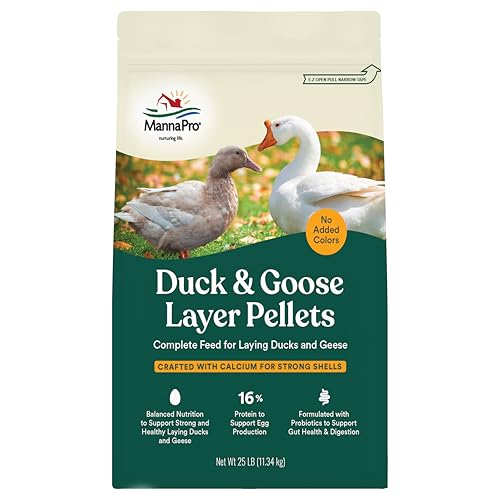
Manna Pro Duck Layer
Keepers with a group of adult laying ducks who want the lowest running cost per pound and a pellet that survives a wet dish.
-
Best Certified Organic Bag

New Country Organics
Keepers who want certified organic, non-GMO and soy free feed for adult laying ducks and have somewhere dry to store 40 lb.
-
Best Whole Grain Mix for Foraging Ducks

Wholesome Harvest 10 lb
Ducks that range and forage most of the day and need a topping up feed rather than a complete formulated ration.
-
Best for Feeding Ducks on a Pond

Country Heritage Float
Anyone feeding ducks, geese or swans on open water where a sinking pellet is simply lost.
Compare every pick side by side
Swipe the table sideways to see every column on a phone.
| Product | Award | Price band | Bag Weight | Stated Protein | Feed Form | Life Stage | Stated Niacin | Other Additives | Best use case | Buy link |
|---|---|---|---|---|---|---|---|---|---|---|
| Manna Pro Duck Starter | Best Overall | Under $30 | 8 lb | 22% | Crumble | Ducklings and goslings, starter and grower | Added niacin for leg strength, amount not stated | Probiotics, vitamins, minerals and amino acids; no antibiotics or artificial colours | Anyone brooding ducklings who wants a purpose made starter crumble and is… | Check price for Manna Pro Duck Starter Grower Crumble with Probiotics, 8 lb Bag on Amazon |
| Purina Duck Feed | Best Stated Niacin Level | Under $30 | 4.5 lb | 19% | Not stated | All life stages, ducklings through adult ducks | At least 60 ppm (mg/kg) | Prebiotics and probiotics for immune and digestive health | Keepers with two or three ducks, or anyone who wants a stated niacin figu… | Check price for Purina | Nutritionally Complete Duck Feed for All Life-Stages | 4.5 Pound (4.5 LB) Bag on Amazon |
| Manna Pro Duck Layer | Best Value for a Laying Flock | Under $30 | 25 lb | Not stated, described as high quality proteins | Pellets | Laying ducks | Not stated | Probiotics; non-medicated, no antibiotics, no artificial colours | Keepers with a group of adult laying ducks who want the lowest running co… | Check price for Manna Pro Duck Layer Pellet | High Protein for Increased Egg Production | Formulated with Probiotics to Support Healthy Digestion | 25 Pounds on Amazon |
| New Country Organics | Best Certified Organic Bag | $60 to $120 | 40 lb | 17% | Not stated, described as grain and contrasted with regular duck pellets | Adult and laying ducks | Extra niacin to help prevent angel wing, amount not stated | Certified organic, non-GMO, soy-free North American grain, plus probiotics and vitamins | Keepers who want certified organic, non-GMO and soy free feed for adult l… | Check price for New Country Organics Duck Layer Feed - Adult & Laying Duck Food - Soy-Free, 17% Protein - Certified Organic & Non-GMO - 40 lbs on Amazon |
| Wholesome Harvest 10 lb | Best Whole Grain Mix for Foraging Ducks | Under $30 | 10 lb | 18% | Whole grain mix of cracked corn, wheat, soybeans and sunflower seeds | Ducks, geese and other waterfowl, daily feeding; also called duckling food in the listing | Not stated | Non-GMO grains, herbs and essential oils including oregano and garlic | Ducks that range and forage most of the day and need a topping up feed ra… | Check price for Wholesome Harvest Duck, Goose, Waterfowl Feed 10 lb, High Protein Specially Formulated to Promote Egg Production and Healthy Flocks on Amazon |
| Country Heritage Float | Best for Feeding Ducks on a Pond | Under $30 | 5 lb | Not stated | Floating pellets, stated to stay afloat for easy pond feeding | Ducks, geese and swans, wild or pet, year round | Not stated | Essential vitamins and minerals, amounts not stated | Anyone feeding ducks, geese or swans on open water where a sinking pellet… | Check price for Country Heritage Floating Waterfowl Feed – Duck, Goose & Swan Food – 5 lb Resealable Bag – Nutrient-Rich Pellets for Wild & Pet Birds on Amazon |
The full reviews
Each review below follows the same order: what it is, why it won its category, how it behaves in real use, and who should buy something else.
1 Best Overall
Manna Pro Duck Starter Grower Crumble with Probiotics, 8 lb Bag
A proper 22 percent duckling crumble at about $1.50 a pound, with one gap you have to close yourself: Manna Pro says niacin is added for leg strength but will not print how much.
What we liked
- Formulated for ducklings and goslings rather than borrowed from a chick starter
- 22 percent protein is the highest stated figure of any feed in this guide
- Crumble form suits a duckling bill that cannot manage a layer pellet
- About $1.50 a pound, well under the cost of the small Purina bag
- Probiotics included, with no antibiotics and no artificial colours
What we did not
- The bag says niacin is added but states no ppm figure, so you cannot confirm it meets the roughly 55 to 70 ppm ducklings need
- An 8 lb bag will not last six growing ducklings much more than a week, so a brooder run means repeat orders
- Crumble sitting in a duck dish absorbs the water they carry back and can mould within a day in warm weather
About $11.99 checked Aug 8, 2026
Key specifications
- Dimensions
- 14 x 10.25 x 4 in (L x W x H)
- Weight
- 8 pounds
- Bag Weight
- 8 lb
- Stated Protein
- 22%
- Feed Form
- Crumble
- Life Stage
- Ducklings and goslings, starter and grower
- Stated Niacin
- Added niacin for leg strength, amount not stated
- Other Additives
- Probiotics, vitamins, minerals and amino acids; no antibiotics or artificial colours
Why the Manna Pro Duck Starter wins this category
Because it is built for the bird. A lot of ducklings get raised on chick starter with a bag of brewer's yeast next to it, and that works, but this is a crumble formulated for ducklings and goslings from the start. The stated 22 percent protein is the highest figure of any feed on this page, which suits the growth rate of a duckling in its first weeks.
The price does the rest of the work. At $11.99 for 8 lb it comes to about $1.50 a pound. The Purina bag, which has the better label, is about $3.55 a pound because it only holds 4.5 lb. For a feed you go through this fast, that gap matters more than the marketing on either bag.
Probiotics are in the mix, and there are no antibiotics and no artificial colours. That is a sensible position for a starter feed.
Living with the Manna Pro Duck Starter
Plan on brewer's yeast anyway. Manna Pro says niacin is added for leg strength but will not say how much, and ducklings need roughly 55 to 70 ppm. About a tablespoon of brewer's yeast per cup of feed, stirred in, closes the gap without changing anything else about the ration. Do that for the first eight to ten weeks.
Plan on buying more than one bag too. Ducklings eat considerably more by weight than chicks of the same age, and an 8 lb bag disappears quickly with a group of six.
The dish needs daily attention. Ducks carry water back to the feed, and wet crumble goes to paste. Tip it, rinse it and refill rather than topping up on yesterday's.
Where the Manna Pro Duck Starter falls short
The missing niacin figure is the real complaint. This is the one nutrient where waterfowl differ sharply from chickens, and a feed sold specifically for ducklings should be willing to print the number. Saying niacin is added for leg strength is a claim, not a specification.
The bag size is the second issue. It is priced well per pound, but 8 lb is not a brooder quantity, and repeat shipping erodes the advantage.
And crumble is the wrong long term form for adult ducks. Once the birds are grown, move them onto a pellet that holds together in a wet dish.
Research based, not hands-on
Assessed on the published guaranteed analysis, bag weight, feed form and life stage from the listing, and compared against published waterfowl niacin requirements and the other five feeds here on cost per pound.
- Best for
- Anyone brooding ducklings who wants a purpose made starter crumble and is willing to add brewer's yeast on top.
- Skip it if
- You want a printed niacin figure on the bag before you buy, because this one does not give a number.
- The limitation to plan around
- 8 lb is a small bag for ducklings, which eat far more by weight than chicks. Six ducklings can empty it inside a week during the fastest growth phase, so budget for several bags rather than one.
2 Best Stated Niacin Level
Purina | Nutritionally Complete Duck Feed for All Life-Stages | 4.5 Pound (4.5 LB) Bag
The only bag in this guide that prints a niacin figure, at least 60 ppm, which is exactly the number a duckling keeper wants. The 4.5 lb bag is the problem, not the formula.
What we liked
- States at least 60 ppm of niacin, the only real number on this page
- 60 ppm sits inside the roughly 55 to 70 ppm range published for growing ducklings
- Covers ducklings through adult ducks, so one bag serves a mixed age group
- Prebiotics and probiotics included for immune and digestive support
What we did not
- At about $3.55 a pound it costs more than twice the Manna Pro Duck Starter per pound, and six ducklings will empty the 4.5 lb bag in under a week
- The listing does not state the feed form, so you cannot tell whether it is a crumble a young duckling can manage or a pellet it cannot
- 19 percent protein is lower than the 22 percent starter here, which matters most during the fastest weeks of duckling growth
About $15.99 checked Aug 8, 2026
Key specifications
- Dimensions
- 8 x 6 x 8 in (L x W x H)
- Weight
- 4.5 pounds
- Bag Weight
- 4.5 lb
- Stated Protein
- 19%
- Feed Form
- Not stated
- Life Stage
- All life stages, ducklings through adult ducks
- Stated Niacin
- At least 60 ppm (mg/kg)
- Other Additives
- Prebiotics and probiotics for immune and digestive health
Why the Purina Duck Feed earns its award
It answers the question the whole category dodges. Ducklings need roughly 55 to 70 ppm of niacin, and this is the one bag here that puts a figure on the label: at least 60 ppm. Every other feed in this guide either says niacin is added without saying how much, or does not mention it at all.
That single line is worth more than most of the claims on the other bags. It means you know where you stand before you open it, and it means a first time duck keeper who has never heard of B3 deficiency is covered by default rather than by luck.
The all life stages formulation is the other useful part. One bag works for ducklings and for adult birds, which suits a small mixed age group better than juggling a starter and a layer ration.
Living with the Purina Duck Feed
The catch is size. A 4.5 lb bag is small, and ducklings eat a surprising amount. Six growing birds will be through it in under a week, and at $15.99 that is about $3.55 a pound, the second dearest per pound in this guide.
That points at a specific use. If you keep two or three ducks, this is a sensible everyday bag. If you are running a brooder, many keepers use a cheaper starter as the base ration and treat this as the bag that guarantees the niacin.
The listing does not say what form the feed takes, so check what arrives before giving it to very young ducklings. A bill that is a few days old cannot manage a full sized pellet.
Where the Purina Duck Feed falls short
Cost per pound is the headline problem. The formula is not expensive, the packaging is. Purina sells this in small quantities and the price per pound reflects that.
The protein figure is the second point. At 19 percent it sits below the 22 percent of the Manna Pro Duck Starter, which is the number you want during the weeks when a duckling is putting on frame fastest. An all life stages feed is a compromise by design, and this is where the compromise lands.
And the unstated feed form is an odd omission on a bag that is otherwise the most transparent here.
Research based, not hands-on
Assessed on the published guaranteed analysis and the stated niacin figure from the listing, checked against published waterfowl niacin requirements, and compared on cost per pound against the other five feeds here.
- Best for
- Keepers with two or three ducks, or anyone who wants a stated niacin figure in writing rather than a marketing phrase.
- Skip it if
- You are brooding a group of six or more ducklings, because a 4.5 lb bag will be gone in under a week.
- The limitation to plan around
- At $15.99 for 4.5 lb this works out at about $3.55 a pound, more than double the Manna Pro Duck Starter. As an everyday ration for a growing group it is an expensive way to buy feed.
3 Best Value for a Laying Flock
Manna Pro Duck Layer Pellet | High Protein for Increased Egg Production | Formulated with Probiotics to Support Healthy Digestion | 25 Pounds
At about $1.04 a pound this is the cheapest feed per pound in this guide, and pellets are the right form for adult ducks. The label is thin: no protein figure and no niacin figure at all.
What we liked
- About $1.04 a pound, the lowest cost per pound of the six feeds here
- Pellets hold together in a wet dish, which crumble does not
- 25 lb bag matches how fast a group of adult ducks actually eats
- Non-medicated, with probiotics and no antibiotics or artificial colours
What we did not
- No crude protein figure is stated anywhere on the listing, so you cannot compare it against the 17 to 22 percent feeds here
- Niacin is not mentioned at all, which makes it unsuitable as the sole ration for ducklings without a separate B3 source
- Layer level calcium is aimed at birds in lay, so drakes and young ducks sharing the dish get a calcium load they do not need
Key specifications
- Dimensions
- 25 x 14 x 3 in (L x W x H)
- Weight
- 25 pounds
- Bag Weight
- 25 lb
- Stated Protein
- Not stated, described as high quality proteins
- Feed Form
- Pellets
- Life Stage
- Laying ducks
- Stated Niacin
- Not stated
- Other Additives
- Probiotics; non-medicated, no antibiotics, no artificial colours
Why the Manna Pro Duck Layer earns its award
Running cost. At $25.99 for 25 lb this comes to about $1.04 a pound, the cheapest per pound of anything in this guide, and adult ducks get through feed quickly. Over a season that gap against a $3.00 or $6.00 a pound bag is real money.
The form is right too. Ducks carry water back to the feed dish constantly, and a pellet stays a pellet for far longer than a crumble does. Wet crumble turns to paste and can mould inside a day in warm weather. If you have adult birds, the pellet is not a preference, it is the practical choice.
It is non-medicated, with probiotics in the mix and no antibiotics or artificial colours. For an everyday ration for birds in lay, that is a reasonable set of boxes ticked.
Living with the Manna Pro Duck Layer
The 25 lb bag suits the way ducks eat. Where a 4.5 lb bag is a week's feeding for a few birds, this lasts long enough to be worth storing properly. Keep it in a sealed metal or heavy plastic bin, because a paper sack in a shed is a rodent invitation and pellets take on damp.
Watch who is eating from the dish. This is a layer ration, and layer calcium is set for a bird that is building a shell every day. Drakes and growing ducks do not need that load. If your group is mixed, a lower calcium feed with oyster shell offered free choice in a separate dish is the safer setup.
Keep water within about a foot of the feeder. Ducks cannot swallow dry feed without it.
Where the Manna Pro Duck Layer falls short
The label is the weak point. There is no protein figure. The listing says high quality proteins and promises increased egg production, which is a claim rather than a specification, and it means you cannot line this up against the 17 percent, 18 percent, 19 percent and 22 percent figures printed on the other bags here.
Niacin is not mentioned anywhere either. For adult ducks that is less critical than it is for ducklings, but it rules this out as a standalone feed for growing birds. If you have ducklings in the same run, they need a starter with a B3 source, or brewer's yeast on top.
Pellets are also too large for a very young duckling to manage, which is another reason this is an adult bird feed only.
Research based, not hands-on
Assessed on the published bag weight, feed form, life stage and additive list from the listing, with cost per pound calculated from the price and bag weight and compared against the other five feeds.
- Best for
- Keepers with a group of adult laying ducks who want the lowest running cost per pound and a pellet that survives a wet dish.
- Skip it if
- You have ducklings, drakes or non laying birds eating from the same dish, because this is a layer ration with layer calcium.
- The limitation to plan around
- The listing gives no protein percentage. It describes high quality proteins instead of printing a number, so you are buying on the brand rather than on the guaranteed analysis.
4 Best Certified Organic Bag
New Country Organics Duck Layer Feed - Adult & Laying Duck Food - Soy-Free, 17% Protein - Certified Organic & Non-GMO - 40 lbs
Certified organic, non-GMO and soy free North American grain in a 40 lb sack, which works out at about $1.72 a pound. That is fair for organic, but the niacin is still an unnumbered claim.
What we liked
- Certified organic and non-GMO, verified rather than described as natural
- Soy free, which is the reason most keepers go looking for a feed like this
- 40 lb is the largest bag here, so the organic premium is spread over real volume
- About $1.72 a pound, cheaper per pound than three of the conventional feeds in this guide
What we did not
- Says extra niacin to help prevent angel wing but gives no ppm figure, so the amount is unverifiable
- The feed form is not stated, only described as grain and contrasted with regular duck pellets, so you cannot tell what lands in the dish
- 17 percent protein is the lowest stated figure here, which suits adult layers but leaves nothing spare for growing birds
Key specifications
- Dimensions
- 25 x 15 x 6 in (L x W x H)
- Weight
- 40 pounds
- Colour
- Black
- Bag Weight
- 40 lb
- Stated Protein
- 17%
- Feed Form
- Not stated, described as grain and contrasted with regular duck pellets
- Life Stage
- Adult and laying ducks
- Stated Niacin
- Extra niacin to help prevent angel wing, amount not stated
- Other Additives
- Certified organic, non-GMO, soy-free North American grain, plus probiotics and vitamins
Why the New Country Organics feed earns its award
It is the only certified organic bag in this guide, and certification is the part that separates it from the feeds that use the word natural. Certified organic and non-GMO are checkable claims. Natural is not.
Soy free is the other reason people go looking for this feed specifically. Whether soy in a duck ration matters is a debate rather than a settled question, but if you have decided you want it out, this is the bag on this page that does it, and it uses North American grain rather than an unstated origin.
The 40 lb sack is what makes the price work. At $68.98 the sticker looks steep next to a $25.99 bag, but spread over 40 lb it comes to about $1.72 a pound. That is less per pound than the Wholesome Harvest mix, the Purina bag or the Country Heritage pellet.
Living with the New Country Organics feed
Storage first. A 40 lb sack needs a sealed bin, and organic feed carries no preservatives that would extend its life in a damp shed. Buy it when you have somewhere dry to put it.
Read the bag when it arrives to see what form the feed is in. The listing calls it grain and contrasts it with regular duck pellets, which suggests a coarser product than a pellet. If it is loose grain, expect some selective eating. Ducks pick out what they prefer and leave the rest, which is how a balanced ration on paper becomes an unbalanced one in the bird.
Probiotics and vitamins are included, and the niacin claim is aimed at angel wing rather than at leg weakness, which is a different problem with a different cause.
Where the New Country Organics feed falls short
The niacin claim has no number behind it. Extra niacin to help prevent angel wing tells you nothing you can measure, and angel wing is more commonly linked to excess protein and energy in fast growing waterfowl than to a B3 shortage. Treat this as an adult layer feed and give growing ducklings a starter with a proper B3 source.
At 17 percent, the protein figure is the lowest of the four feeds here that state one. That is a normal level for adult layers, but it leaves no margin if young birds are sharing the dish.
The unstated feed form is the last gap. For a feed at this price you should be able to tell whether you are getting pellets, crumble or loose grain before you order.
Research based, not hands-on
Assessed on the published certification, protein figure, bag weight and ingredient description from the listing, with cost per pound calculated and compared against the other five feeds here.
- Best for
- Keepers who want certified organic, non-GMO and soy free feed for adult laying ducks and have somewhere dry to store 40 lb.
- Skip it if
- Organic certification is not something you need, because you are paying a premium over conventional feeds with clearer labels.
- The limitation to plan around
- The listing describes the feed as grain and contrasts it with regular duck pellets without saying what form it actually takes. A whole or coarse grain feed lets ducks pick out favourites, so the balance in the bag is not always the balance in the bird.
5 Best Whole Grain Mix for Foraging Ducks
Wholesome Harvest Duck, Goose, Waterfowl Feed 10 lb, High Protein Specially Formulated to Promote Egg Production and Healthy Flocks
A non-GMO whole grain mix of cracked corn, wheat, soybeans and sunflower seeds at 18 percent protein. Treat it as a supplement for foraging birds, not as the complete ration the listing implies.
What we liked
- Whole grain mix that foraging ducks will work through with interest
- 18 percent stated protein, higher than the organic layer feed here
- Non-GMO grains, with oregano and garlic among the added herbs and oils
- 10 lb bag is small enough to stay fresh in a household with a few birds
What we did not
- No niacin is stated anywhere, so it cannot be relied on as the sole feed for ducklings despite the listing calling it duckling food
- A loose grain mix lets ducks pick out corn and sunflower seed and leave the rest, so the balance in the bag is not the balance eaten
- At about $3.00 a pound it costs roughly three times the Manna Pro Duck Layer per pound for a feed with a thinner label
Key specifications
- Size
- 10 Pound (Pack of 1)
- Bag Weight
- 10 lb
- Stated Protein
- 18%
- Feed Form
- Whole grain mix of cracked corn, wheat, soybeans and sunflower seeds
- Life Stage
- Ducks, geese and other waterfowl, daily feeding; also called duckling food in the listing
- Stated Niacin
- Not stated
- Other Additives
- Non-GMO grains, herbs and essential oils including oregano and garlic
Why the Wholesome Harvest 10 lb earns its award
For ducks that spend the day out on grass and in the mud, a whole grain mix is a sensible thing to have. Cracked corn, wheat, soybeans and sunflower seeds give a foraging bird something worth coming back for, and the birds show more interest in it than in a plain pellet.
At 18 percent stated protein it is higher than the 17 percent organic layer feed in this guide, and the grains are non-GMO. Oregano and garlic are among the added herbs and essential oils. Those are flavour and preference additions rather than anything you should expect to act on a health problem.
The 10 lb bag is a practical size. A household with three or four ducks that mostly forage will finish it before it goes stale, which a 40 lb sack of loose grain would not.
Living with the Wholesome Harvest 10 lb
Use it as the top up, not the base. That is the honest way to run a mix like this. Ducks eating a formulated ration plus this will do fine. Ducks eating only this are relying on whatever they find in the yard to fill the gaps.
Expect selective eating. Offer loose grain and a duck will take the corn and the sunflower seed first and leave the wheat until the dish is nearly empty. Over a week that means the balance printed on the bag is not the balance going into the bird.
Scatter it rather than piling it in a dish if you want the birds working for it, and keep water within about a foot either way. Ducks cannot swallow dry grain without it.
Where the Wholesome Harvest 10 lb falls short
The listing calls this duckling food, and we would not use it that way. There is no stated niacin, there is no crumble, and a two week old duckling cannot handle whole wheat and sunflower seed. Ducklings need a starter crumble with a proper B3 source behind it.
Price per pound is the other issue. At $29.99 for 10 lb this comes to about $3.00 a pound, roughly three times the Manna Pro Duck Layer, for a feed that states less on its label.
The high protein claim in the title is also doing some work. 18 percent is a normal figure for a waterfowl feed, not a high one.
Research based, not hands-on
Assessed on the published ingredient list, protein figure and bag weight from the listing, compared against the formulated crumbles and pellets here on cost per pound and on what the label does and does not state.
- Best for
- Ducks that range and forage most of the day and need a topping up feed rather than a complete formulated ration.
- Skip it if
- You are raising ducklings and want one bag to do the whole job, because this states no niacin and comes as loose grain.
- The limitation to plan around
- This is a scratch style blend rather than a formulated crumble or pellet. Selective eating is the thing to plan around, so offer it alongside a complete feed rather than in place of one.
6 Best for Feeding Ducks on a Pond
Country Heritage Floating Waterfowl Feed – Duck, Goose & Swan Food – 5 lb Resealable Bag – Nutrient-Rich Pellets for Wild & Pet Birds
A pellet that floats, which is the one job no other feed here does. At about $6.00 a pound it is the dearest per pound in this guide, so treat it as a pond feed rather than a daily ration.
What we liked
- Floating pellets stay on the surface instead of sinking out of reach on a pond
- Resealable 5 lb bag keeps the pellets dry between pond visits
- Suits ducks, geese and swans, so one bag covers a mixed waterfowl group
- Sold for year round use rather than as a seasonal product
What we did not
- At about $6.00 a pound it is the dearest feed per pound in this guide, roughly six times the cost of the Manna Pro Duck Layer
- No protein figure is stated at all, so there is no way to judge whether it can carry a bird nutritionally
- Niacin is not mentioned, which rules it out as the ration for any growing duckling
Key specifications
- Size
- 5 Pound (Pack of 1)
- Weight
- 5 pounds
- Bag Weight
- 5 lb
- Stated Protein
- Not stated
- Feed Form
- Floating pellets, stated to stay afloat for easy pond feeding
- Life Stage
- Ducks, geese and swans, wild or pet, year round
- Stated Niacin
- Not stated
- Other Additives
- Essential vitamins and minerals, amounts not stated
Why the Country Heritage Float earns its award
It floats. That sounds trivial until you have tipped feed into a pond and watched it vanish, at which point the birds are dabbling in silt and you have fed the bottom of the water instead of the ducks.
A floating pellet keeps the feed where the birds can see it and where you can see how much is left. On a pond that is the whole argument, and nothing else in this guide does it. The pellets are stated to stay afloat for easy pond feeding, and the bag is resealable, which matters for a product that lives near water.
It is aimed at ducks, geese and swans, wild or pet, all year. If you have a mixed group on open water, one bag covers them.
Living with the Country Heritage Float
Buy it for the pond and nothing else. The 5 lb bag is small, and at $29.99 that comes out at about $6.00 a pound, the highest cost per pound of anything here. If you use this as an everyday dish feed you will spend a great deal of money on buoyancy that a feed dish makes irrelevant.
Feed what the birds clear in a few minutes. Uneaten floating pellets get waterlogged, sink and foul the water, and on a small pond that adds up quickly. Feeding at a set spot along the edge also lets you count birds and spot one that is not coming in.
If your ducks are also penned overnight, keep a complete ration in the run and use this only at the water.
Where the Country Heritage Float falls short
The label is the thinnest in this guide. There is no protein figure, no niacin figure, and the added vitamins and minerals are listed without amounts. You cannot compare it against anything on nutrition because it does not offer a number to compare.
That makes it a supplement rather than a ration. Fine for what it is, but the listing sells it as nutrient rich food, and nutrient rich without a guaranteed analysis is a phrase, not a fact.
The price per pound is the last problem. Six dollars a pound is a lot for a feed you scatter on water and cannot fully account for.
Research based, not hands-on
Assessed on the published pellet description, bag weight and stated use from the listing, with cost per pound calculated and compared against the five dish fed rations in this guide.
- Best for
- Anyone feeding ducks, geese or swans on open water where a sinking pellet is simply lost.
- Skip it if
- You are feeding a penned flock from a dish, because you are paying a large premium for buoyancy you will never use.
- The limitation to plan around
- The bag holds 5 lb and states no protein figure. It is built for the pond edge rather than as the feed that carries a flock, so budget for a complete ration alongside it.
How we compared these duck feeds
Every bag was read for the same thing first: does it state a niacin level in parts per million?
That sounds like a narrow test. It is not. Niacin is the one nutrient where a duck differs sharply from a chicken, it is the one deficiency a backyard duck keeper is genuinely likely to meet, and it is the one number that a bag can print in a single line and mostly does not. A feed sold as duck food that will not say how much B3 is in it is asking you to take it on trust.
After that we looked at stated crude protein, the physical form of the feed, the life stage on the bag, and the cost per pound worked out from the bag weight rather than the sticker price. Bag weights here run from 4.5 lb to 40 lb, so the headline price tells you almost nothing.
We also recorded claims that the listings make and we do not repeat. The Wholesome Harvest bag is described as duckling food, but it is an 18 percent whole grain scratch style blend with no crumble and no stated niacin. The Manna Pro Duck Layer promises increased egg production without printing a protein figure at all.
What actually matters in a duck feed
Niacin, the number almost nobody checks
Ducks need roughly two to three times the niacin a chicken does, and growing ducklings need the most. Somewhere around 55 to 70 ppm is the range published guidance points at for the growing stage.
Here is how the six score. Purina Duck Feed states at least 60 ppm, which is the only real number on this page. Manna Pro Duck Starter says added niacin for leg strength but gives no amount. New Country Organics says extra niacin to help prevent angel wing, again with no amount. Manna Pro Duck Layer, Wholesome Harvest and Country Heritage Float say nothing.
The practical answer for a brooder is not to hunt for a perfect bag. It is to buy a decent duck starter and top it with brewer's yeast, about a tablespoon per cup of feed, for the first eight to ten weeks. That closes the gap regardless of what the bag does or does not admit.
Cost per pound, not cost per bag
The spread on this page is large enough to change what you buy.
Manna Pro Duck Layer works out at about $1.04 a pound, the cheapest per pound here. Manna Pro Duck Starter is about $1.50 a pound. New Country Organics is about $1.72 a pound, which is reasonable for certified organic. Wholesome Harvest is about $3.00 a pound. Purina Duck Feed is about $3.55 a pound because the bag is only 4.5 lb. Country Heritage Float is about $6.00 a pound, the dearest here by some distance.
Put that against consumption. Six growing ducklings will go through a 4.5 lb bag in under a week. That is why the Purina bag, which has the best label on this page, is an awkward everyday feed.
Form, and why wet crumble is a problem
A duck takes feed into its bill and goes to the water to swallow it, then brings water back to the dish. Feed and water end up mixed no matter how you arrange the brooder.
Crumble in a wet dish turns to paste and can mould within a day in warm weather. That is why adult ducks generally do better on pellets, and why the crumble in a duckling brooder needs tipping and rinsing daily rather than topping up. Whole grain mixes are a third category: ducks pick out what they like, so the balance in the bag is not the balance in the bird.
Feeding ducks in practice
Keep water within about a foot of the feed. Not across the run, not on the other side of a brooder. A duck that has to travel to swallow will eat less, and a duckling will eat a lot less.
The water needs to be deep enough for a bird to submerge its whole bill and clear its nostrils, but a duckling brooder should not have water it can get properly into and chill in. A narrow deep dish or a fount lip works better than an open pan at that age.
Expect to change both dishes daily. This is the part nobody mentions before you get ducks, and it is the single biggest difference between keeping ducks and keeping hens.
One more thing worth saying plainly: calcium. A laying duck ration carries calcium for a bird in lay. Drakes and young birds do not need that load, so if you keep a mixed group, a lower calcium feed with oyster shell offered free choice in a separate dish is the safer arrangement.
Final recommendation
Manna Pro Duck Starter is the one we would put in a brooder. It is a proper 22 percent crumble made for ducklings, with probiotics and no antibiotics, at about $1.50 a pound. It is not perfect: Manna Pro will not state how much niacin is in it, and 8 lb is a small bag for a real brooder run. Top it with brewer's yeast and buy two.
Three alternates earn a place. If the niacin number is the thing you want in writing, Purina Duck Feed is the only bag here that prints one, at least 60 ppm, and it suits a very small group or a top up bag rather than the everyday ration. If you have adult layers and want the lowest running cost, Manna Pro Duck Layer is the cheapest per pound on this page, though it states no protein figure and no niacin. And if you want certified organic and soy free, New Country Organics is the bag, at about $1.72 a pound in a 40 lb sack.
Country Heritage Float is a pond feeding product rather than a daily ration, and at about $6.00 a pound it should be treated as one.
Questions people ask before buying
How much niacin do ducklings actually need?
Published waterfowl guidance puts the requirement at roughly 55 to 70 ppm of niacin, which is well above what a chicken needs and well above what most chick starters supply. Only one bag in this guide prints a figure at all: the Purina all life stages feed states at least 60 ppm. Everything else either says niacin is added without a number or says nothing. If your bag has no number, assume it is not enough for growing ducklings and add brewer's yeast on top.
Can ducklings eat chick starter?
They can eat it, but it is formulated for chickens and the niacin level is set for a chick rather than a duckling. The usual backyard fix is brewer's yeast sprinkled over the feed, about a tablespoon per cup, which lifts the B3 without changing anything else. Avoid medicated chick starter for ducklings. Ducklings eat far more by weight than chicks do, so a coccidiostat dosed for a chick's intake is not something you want them working through.
What does a niacin deficiency look like in a duckling?
It shows up in the legs, usually between two and four weeks old when the bird is growing fastest. A duckling sits down more, gets up slowly, walks with the hocks turned outward and eventually stops keeping up with the others. Caught in the first days it often improves once niacin goes up. Left for weeks the leg can stay deformed. If a duckling is already down and not improving after several days of extra niacin, that is a vet question rather than a feed question.
Should adult ducks get crumble or pellets?
Pellets, in almost every case. Ducks take a mouthful of feed and carry it back to the water to swallow, and they bring water back to the dish in return. Crumble in a wet dish turns to paste and can mould inside a day in warm weather. A pellet holds together longer and is easier to see and pick up. Crumble still makes sense for ducklings, whose bills are too small for a full layer pellet, as long as you tip and rinse the dish daily.
Why does duck feed need to sit next to water?
Ducks have no crop the way a chicken does and they cannot swallow dry feed without water to wash it down. If the water is across the run, a duck will make the trip, but a duckling in a brooder may simply eat less. Keep water within about a foot of the feed and deep enough for the bird to submerge its whole bill and clear its nostrils. The trade off is mess, so expect to change both dishes daily.
Can laying ducks eat chicken layer feed?
Many keepers do run a mixed flock on chicken layer feed, and ducks will eat it, but two gaps are worth knowing. The niacin is set for chickens, and the calcium in a layer ration is high for any bird that is not laying, which includes drakes. A duck specific layer ration solves the first problem. For the second, the safer setup with a mixed flock is a lower calcium feed plus crushed oyster shell offered free choice in a separate dish, so each bird takes what it needs.
Why you can trust this guide
- Written by
- Sam Reddick, Lead gear reviewer, Chicken Geek. Specialist areas: Coop design and predator proofing, Feeding and watering systems, Cold-weather flock management, Incubation and brooding.
- Fact checked by
- Marta Voss
- Published
- August 8, 2026 · Last updated August 8, 2026 · Products and links rechecked August 8, 2026
- How we picked
- Feeds were compared on whether the bag states a niacin level in parts per million, the stated crude protein, the physical form of the feed, the life stage it is sold for, the cost per pound worked out from the bag weight, and how long a bag realistically lasts a small flock.
- Evidence used
- None of the 6 products on this page were sent to us or bought for a hands-on test. Every recommendation here is research based: manufacturer specifications, listed dimensions and materials, owner feedback at volume, and comparison against equipment our team has owned. Each review states this again above the buy button so you are never guessing which kind of evidence sits behind a pick.
- Editorial standards
- No brand pays for placement, and no manufacturer sees this page before it goes live. Read our editorial policy and testing method.
- Affiliate disclosure
- Chicken Geek is reader supported. We earn a commission from qualifying purchases made through links on this page, at no extra cost to you, and no brand has paid for a placement or an award here.
About the author

Lead gear reviewer, Chicken Geek
Sam has kept a backyard laying flock for eleven years, through two coop rebuilds, one very determined raccoon and several winters cold enough to freeze a waterer solid overnight. He writes the buying guides at Chicken Geek and is responsible for how products get compared.
- Eleven years keeping a mixed laying flock of 8 to 14 birds
- Has built, bought and replaced six different coops
- Runs the product comparison framework used across Chicken Geek
- Reads manufacturer manuals, spec sheets and warranty terms before every recommendation