We Compared 6 Chick Starter Feeds on Protein and Medication
We compared six chick starters on protein, medication and form, and explain the medicated feed mistake that cancels your hatchery coccidiosis vaccine.

By Marta Voss Editor and fact checker, Chicken Geek
Fact checked by Sam Reddick
Published Prices and stock checked 7 min read
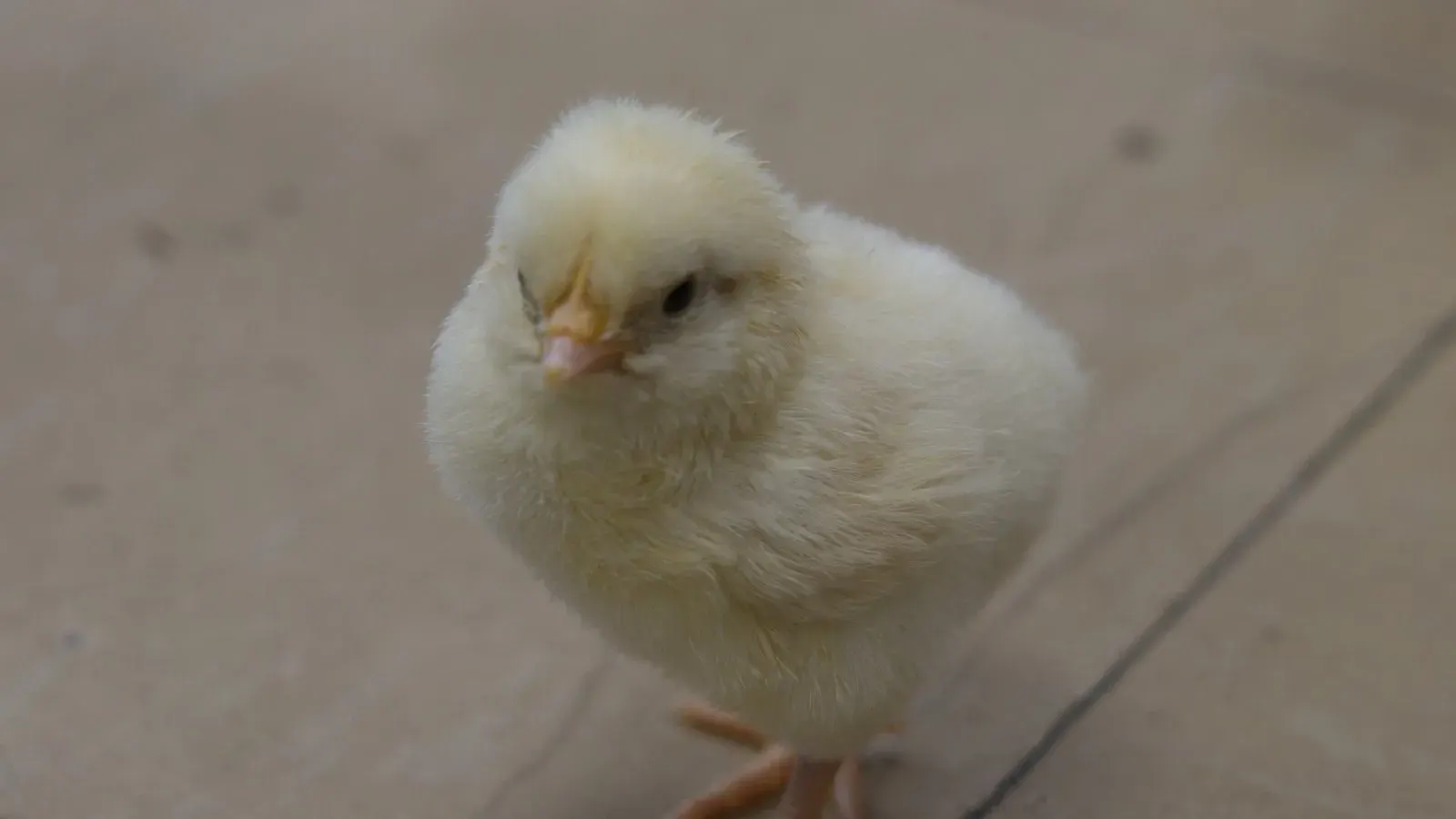
There is one decision in chick feed that matters far more than the others, and a lot of people get it wrong: whether to buy medicated feed.
Medicated chick starter contains amprolium, which is not an antibiotic. It limits the coccidiosis parasite's ability to take up thiamine, keeping numbers low enough that a chick builds immunity instead of being overwhelmed. It is the standard protection against the single biggest killer of young chicks.
But many hatcheries now vaccinate chicks against coccidiosis at day old, and that vaccine works by giving the chick a controlled dose of the parasite. Medicated feed suppresses that dose, so a vaccinated chick on medicated feed ends up with neither the vaccine's protection nor the feed's. Find out your chicks' vaccination status before you buy feed.
Beyond that, we compared these six on protein, physical form and how each one suits a very young bird.
Our picks at a glance
Every product below wins one specific situation. Pick the row that matches your flock, your yard and your budget rather than reading top to bottom.
-
Best Overall
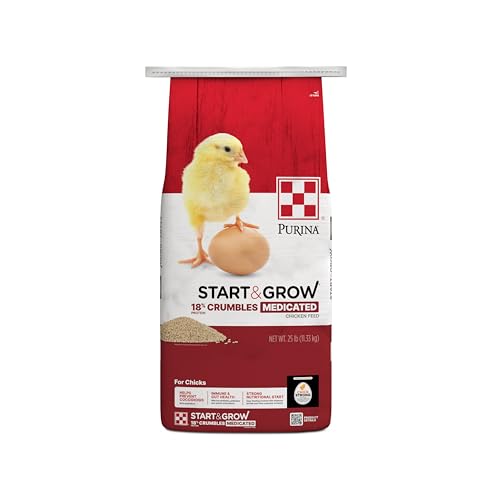
Purina Start & Grow Medicated
Unvaccinated chicks, especially in a brooder that has been used before or in warm, humid conditions where coccidiosis thrives.
-
Best Non-Medicated

Purina Start & Grow Plain
Chicks vaccinated against coccidiosis at the hatchery, or keepers who prefer to manage coccidiosis through hygiene alone.
-
Best Non-GMO

Scratch and Peck Starter
Keepers who want a verified non-GMO starter without the selective feeding problems of a whole grain mash.
Check price on Amazon for Scratch and Peck Feeds | Starter Crumbles for Chickens & Ducks on AmazonAbout $27.99 checked Aug 8, 2026
-
Best Organic

Mile Four Organic Starter
Keepers raising organic birds, or anyone wanting maximum protein for fast-growing breeds and future layers.
-
Best Corn and Soy Free

Wholesome Harvest Starter
Keepers avoiding corn and soy for dietary or allergy reasons, either for the birds or for the people eating the eggs.
-
Best Small Bag

Manna Pro Medicated Feed
Small batches of six to eight chicks, where a 25 lb sack would go stale before the birds finished it.
Check price on Amazon for Manna Pro Medicated Chick Starter Grower Feed, Amprolium & Protein, 5 lb on AmazonAbout $6.97 checked Aug 8, 2026
Compare every pick side by side
Swipe the table sideways to see every column on a phone.
| Product | Award | Price band | Protein | Medicated | Form | Bag Size | Best use case | Buy link |
|---|---|---|---|---|---|---|---|---|
| Purina Start & Grow Medicated | Best Overall | $30 to $60 | 18% | Yes, amprolium | Crumbles | 25 lb | Unvaccinated chicks, especially in a brooder that has been used before or… | Check price for Purina Start & Grow | Nutritionally Complete Medicated Chick Feed Crumbles | 25 Pound (25 lb.) Bag on Amazon |
| Purina Start & Grow Plain | Best Non-Medicated | $30 to $60 | 18% | No | Crumbles | 25 lb | Chicks vaccinated against coccidiosis at the hatchery, or keepers who pre… | Check price for Purina Start and Grow | Non-Medicated Chick Feed Crumbles | Nutritionally Complete - 25 Pound (25 lb.) Bag on Amazon |
| Scratch and Peck Starter | Best Non-GMO | Under $30 | 20% | No | Crumbles | 10 lb | Keepers who want a verified non-GMO starter without the selective feeding… | Check price for Scratch and Peck Feeds | Starter Crumbles for Chickens & Ducks on Amazon |
| Mile Four Organic Starter | Best Organic | $30 to $60 | 21% | No | Whole grain mash | 23 lb | Keepers raising organic birds, or anyone wanting maximum protein for fast… | Check price for Mile Four Organic Chicken Feed (23 lbs) Starter Chick Mash, Non-GMO, USA Grown, 21% Protein, Corn-Free, Soy-Free, Non-Medicated Chick Feed on Amazon |
| Wholesome Harvest Starter | Best Corn and Soy Free | Under $30 | 20% | No | Whole grain | 10 lb | Keepers avoiding corn and soy for dietary or allergy reasons, either for… | Check price for Wholesome Harvest - Corn & Soy-Free Chick Starter Feed - All Grain & Non-GMO Chick Food Starter with Omega 3 - Chicken Feed for Growing Healthy Chicks with High-Protein 22% and Probiotics - 10 Lb on Amazon |
| Manna Pro Medicated Feed | Best Small Bag | Under $30 | 18 percent, per the listing | Yes, amprolium | Crumble feed | 5 lb | Small batches of six to eight chicks, where a 25 lb sack would go stale b… | Check price for Manna Pro Medicated Chick Starter Grower Feed, Amprolium & Protein, 5 lb on Amazon |
The full reviews
Each review below follows the same order: what it is, why it won its category, how it behaves in real use, and who should buy something else.
1 Best Overall
Purina Start & Grow | Nutritionally Complete Medicated Chick Feed Crumbles | 25 Pound (25 lb.) Bag
An 18 percent starter with amprolium, which is the standard protection against coccidiosis and the reason most commercially raised chicks reach six weeks without incident.
What we liked
- Amprolium gives real protection against coccidiosis, the main killer of young chicks
- 18 percent protein matches what a growing chick actually needs
- Consistent formulation from a large mill, so batches do not vary
- 25 lb carries a small batch of chicks from day one to about week ten
What we did not
- Must not be fed to chicks vaccinated against coccidiosis, as it cancels the vaccine
- Contains corn and soy and is not organic
- Crumble form generates fines that settle uneaten in a chick feeder
Key specifications
- Dimensions
- 3 x 1 x 2 in (L x W x H)
- Weight
- 25 pounds
- Colour
- Multicolored
- Protein
- 18%
- Medicated
- Yes, amprolium
- Form
- Crumbles
- Bag Size
- 25 lb
- Organic
- No
- Feed Until
- Week 18 or first egg
Why Purina Start & Grow Medicated wins this category
Because coccidiosis kills more backyard chicks than everything else put together, and it is largely preventable.
It is a parasite that thrives in warm, damp brooder litter, and it builds up in an environment that has held chicks before. Amprolium, the medication in this feed, is not an antibiotic: it limits the parasite's ability to take up thiamine, which keeps its numbers low enough that a chick develops natural immunity rather than being overwhelmed.
That is a well-understood mechanism with a long track record, and for unvaccinated chicks it is the standard sensible choice.
Living with Purina Start & Grow Medicated
Eighteen percent protein is the right level for a growing chick, which needs considerably more than an adult layer.
Consistency between bags matters here more than for adult feed, because chicks are far less resilient to a change in ration than a mature hen is. A large mill running a fixed formulation delivers that.
Twenty-five pounds takes a small batch from hatch to about week ten, which is a sensible single purchase.
Where Purina Start & Grow Medicated falls short
The vaccination conflict is the thing to get right, and it is the single most common mistake with chick feed. Many hatcheries now vaccinate chicks against coccidiosis at day old. That vaccine works by exposing the chick to a controlled dose of the parasite so it develops immunity. Amprolium suppresses the parasite, so feeding this to a vaccinated chick cancels the vaccine and leaves the bird with neither protection.
Check with your supplier before ordering feed. It is not always stated clearly.
The other criticisms are minor: it is a conventional corn and soy formulation, not organic, and crumbles produce fines that chicks pick around at the bottom of the feeder.
Research based, not hands-on
Assessed on the published guaranteed analysis and medication, and compared against non-medicated starters on coccidiosis risk management.
- Best for
- Unvaccinated chicks, especially in a brooder that has been used before or in warm, humid conditions where coccidiosis thrives.
- Skip it if
- Your chicks were vaccinated against coccidiosis at the hatchery, because amprolium will neutralise the vaccine.
- The limitation to plan around
- If your chicks came vaccinated for coccidiosis, this feed cancels that vaccination. Hatcheries do not always make the vaccination status obvious on the invoice, so check before you buy rather than after.
2 Best Non-Medicated
Purina Start and Grow | Non-Medicated Chick Feed Crumbles | Nutritionally Complete - 25 Pound (25 lb.) Bag
The same 18 percent ration without amprolium, which is the correct choice for chicks vaccinated against coccidiosis and the only choice if you are avoiding medication.
What we liked
- Correct feed for hatchery-vaccinated chicks, where medicated feed would cancel the vaccine
- Same 18 percent protein and formulation as the medicated version
- No withdrawal considerations at all
- Widely stocked, so it is easy to find when you need it
What we did not
- No coccidiosis protection, so brooder hygiene has to do all the work
- Higher risk in a reused brooder or in warm, humid conditions
- Conventional corn and soy formulation, and not organic
Key specifications
- Dimensions
- 23 x 15 x 3 in (L x W x H)
- Weight
- 24.9783742846 pounds
- Colour
- Multicolored
- Protein
- 18%
- Medicated
- No
- Form
- Crumbles
- Bag Size
- 25 lb
- Organic
- No
- Feed Until
- Week 18 or first egg
Why Purina Start & Grow Non-Medicated wins this category
Because it is the correct feed for a specific and increasingly common situation. Hatcheries widely vaccinate chicks against coccidiosis at day old, and that vaccine works by giving the chick a controlled dose of the parasite so it builds immunity.
Feeding a medicated ration to a vaccinated chick suppresses the parasite the vaccine needs, so the bird gets neither the vaccine's protection nor the feed's. Non-medicated is not a compromise here, it is the right answer.
Living with Purina Start & Grow Non-Medicated
The formulation is otherwise identical to the medicated version, so there is no nutritional trade. Eighteen percent protein, the same consistent mill, the same crumble form.
There is also nothing to think about regarding withdrawal periods, which simplifies things for anyone who dislikes medicated feed on principle.
Where Purina Start & Grow Non-Medicated falls short
Without amprolium, coccidiosis prevention rests entirely on management, and that means litter hygiene. The parasite thrives in warm, damp bedding, and the reliable place for damp bedding to appear is under the waterer.
That makes the practical requirements specific: keep the waterer where spills drain or on a raised platform, change wet bedding immediately rather than daily, and never brood a new batch in litter that held the last one.
The risk profile changes with conditions. Unvaccinated chicks, in a brooder used before, in warm humid weather, without medicated feed, is the combination where outbreaks happen. The first sign is usually blood in the droppings and a chick sitting hunched and fluffed up, and by that point you are treating rather than preventing.
If your chicks are unvaccinated, the medicated version is the more sensible purchase.
Research based, not hands-on
Assessed on the published guaranteed analysis and absence of medication, and compared against the medicated version on risk profile.
- Best for
- Chicks vaccinated against coccidiosis at the hatchery, or keepers who prefer to manage coccidiosis through hygiene alone.
- Skip it if
- Your chicks are unvaccinated and you are brooding in a space that has held chicks before.
- The limitation to plan around
- Without amprolium, coccidiosis prevention rests entirely on keeping the brooder litter dry and clean. Wet litter under a waterer is where outbreaks begin, and by the time you see blood in the droppings you are treating rather than preventing.
3 Best Non-GMO
Scratch and Peck Feeds | Starter Crumbles for Chickens & Ducks
Non-GMO Project verified at 20 percent protein in crumble rather than mash form, which makes it the easiest premium starter for very young chicks to actually eat.
What we liked
- Crumbles rather than mash, so day-old chicks can eat it without sorting
- Non-GMO Project verified, which is an audited claim rather than a label word
- 20 percent protein, above the conventional standard
- 10 lb bag suits a small batch through the first six weeks
What we did not
- Not medicated, so coccidiosis prevention is entirely a hygiene job
- Costs meaningfully more per pound than conventional starter
- Non-GMO is not the same as organic, which some buyers assume
About $27.99 checked Aug 8, 2026
Key specifications
- Dimensions
- 16 x 10 x 6 in (L x W x H)
- Weight
- 10 pounds
- Protein
- 20%
- Medicated
- No
- Form
- Crumbles
- Bag Size
- 10 lb
- Organic
- No, but non-GMO verified
- Feed Until
- Week 8, then grower
Why Scratch and Peck Starter wins this category
Because it solves the practical problem with premium chick feed. The better-sourced starters are usually whole grain mashes, and a mash is genuinely difficult for a day-old chick, which handles fine crumbs best and will sort out grain while leaving the powdered supplement fraction behind.
A crumble in a verified non-GMO ration gives you the sourcing without the feeding problem.
Living with Scratch and Peck Starter
Twenty percent protein is a step above the conventional 18, which is useful for fast-growing breeds and for pullets whose adult frame is being set in these weeks.
Ten pounds is a sensible size for a small backyard batch through the first six weeks, at a cost per pound that is more reasonable than the very small premium bags.
Where Scratch and Peck Starter falls short
The certification distinction is the thing most likely to disappoint a buyer, and it is worth stating plainly. Non-GMO Project verification confirms that ingredients are not genetically modified. It says nothing about pesticide or herbicide use, nothing about soil management, and nothing about farming method. It is a real, audited certification and it is not organic certification, and a lot of buyers assume otherwise.
If organic is what you want, buy an organic feed.
There is no medication, so coccidiosis prevention depends entirely on brooder hygiene: dry litter, a waterer that does not spill into bedding, and never reusing litter between batches.
And it costs meaningfully more per pound than conventional starter, which is the price of the sourcing rather than of the nutrition.
Research based, not hands-on
Assessed on the published verification, guaranteed analysis and physical form, and compared against organic mash starters on chick usability.
- Best for
- Keepers who want a verified non-GMO starter without the selective feeding problems of a whole grain mash.
- Skip it if
- You need coccidiosis protection through the feed, or you assumed non-GMO meant organic.
- The limitation to plan around
- Non-GMO Project verification is not organic certification. It confirms the absence of genetically modified ingredients and says nothing about pesticides, herbicides or farming method, and buyers routinely conflate the two.
4 Best Organic
Mile Four Organic Chicken Feed (23 lbs) Starter Chick Mash, Non-GMO, USA Grown, 21% Protein, Corn-Free, Soy-Free, Non-Medicated Chick Feed
Certified organic at 21 percent protein, which is the highest here and genuinely useful for fast-growing breeds and for birds destined to be layers.
What we liked
- 21 percent protein, the highest in this comparison
- Certified organic with USA-grown grain and a stated supply chain
- Whole grain mash lets you see exactly what the chicks are eating
- 23 lb bag keeps cost per pound reasonable for an organic feed
What we did not
- Not medicated, so coccidiosis management is entirely down to hygiene
- Mash allows chicks to pick out favourites and leave the fine supplement fraction
- Costs roughly double a conventional starter per pound
Key specifications
- Dimensions
- 10 x 14 x 24 in (L x W x H)
- Weight
- 23 pounds
- Protein
- 21%
- Medicated
- No
- Form
- Whole grain mash
- Bag Size
- 23 lb
- Organic
- Yes, certified
- Feed Until
- Week 16 to 18
Why Mile Four Organic wins this category
Because organic starter feed is a small category and this is one of the few with both real certification and a protein level that makes nutritional sense.
Twenty-one percent is the highest here. That matters most for two groups: fast-growing breeds, whose frames outpace their nutrition on a standard ration, and pullets destined to lay, where early growth sets adult frame size and therefore egg size.
Living with Mile Four Organic
The whole grain format has one genuine advantage, which is that you can see what you are feeding. In a category where a lot of product is a uniform brown crumb, being able to identify the grains is worth something to keepers who care about provenance.
Twenty-three pounds is also a sensible bag size for an organic feed. The 2 lb sample bags this brand also sells are useful for trying it and hopeless as a way to feed a brood.
Where Mile Four Organic falls short
The format is the real criticism, and it is specific to chicks. Day-old chicks are tiny and manage fine crumbs best. A whole grain mash gives them pieces to sort through, and what they leave behind is the powdered supplement fraction carrying the vitamins and minerals.
An adult hen picking around a mash is a mild inefficiency. A three day old chick doing it can genuinely miss part of its nutrition at the point in life when it can least afford to.
Wetting the mash for the first two weeks largely solves it, at the cost of making feeding a twice-daily job.
There is also no medication, so if your chicks are unvaccinated and your brooder has held chicks before, coccidiosis prevention rests entirely on you keeping the litter dry.
And it costs roughly double a conventional starter per pound, which is the standard organic premium.
Research based, not hands-on
Assessed on the published certification, guaranteed analysis and physical form, and compared against crumbled conventional starters on selective feeding.
- Best for
- Keepers raising organic birds, or anyone wanting maximum protein for fast-growing breeds and future layers.
- Skip it if
- Your chicks are unvaccinated and brooding conditions are warm and damp, because there is no coccidiosis protection here.
- The limitation to plan around
- Whole grain mash and very young chicks is an awkward combination. Day-old chicks handle fine crumbs best, and a mash lets them sort out the grain and leave the powdered vitamin and mineral fraction, which is where the balance of the ration lives.
5 Best Corn and Soy Free
Wholesome Harvest - Corn & Soy-Free Chick Starter Feed - All Grain & Non-GMO Chick Food Starter with Omega 3 - Chicken Feed for Growing Healthy Chicks with High-Protein 22% and Probiotics - 10 Lb
Corn-free and soy-free at 20 percent protein, which is a genuinely rare specification and the only option here for keepers avoiding both.
What we liked
- Free of both corn and soy, which very few starters manage
- 20 percent protein despite dropping soy, the usual protein base
- Non-GMO and all grain, with a stated ingredient list
- 10 lb bag suits a small batch without a large commitment
What we did not
- Costs more per pound than conventional starter by a significant margin
- Not medicated, so coccidiosis is a hygiene problem to manage
- 10 lb runs out fast once chicks reach four or five weeks
Key specifications
- Size
- 10 Pound (Pack of 1)
- Protein
- 20%
- Medicated
- No
- Form
- Whole grain
- Bag Size
- 10 lb
- Organic
- No, but non-GMO
- Feed Until
- Week 16 to 18
Why Wholesome Harvest wins this category
Because corn-free and soy-free together is a genuinely difficult formulation. Soy is the standard protein base in poultry feed and corn is the standard energy base, and removing both means replacing them with peas, other legumes and alternative grains at higher cost.
For anyone avoiding these ingredients, whether for the birds or because somebody in the household reacts to soy in eggs, the field of options is small and this is a solid entry in it.
Living with Wholesome Harvest
Reaching 20 percent protein without soy is the technical achievement here, and it means you are not trading nutrition for the ingredient specification. A lot of soy-free feeds land at 16 or 17 percent, which is not enough for a growing chick.
Ten pounds is a low-commitment bag size, useful if you are not sure whether your birds will take to a different formulation.
Where Wholesome Harvest falls short
Acceptance is the practical risk. Feed without corn tastes and smells different, and chicks moving onto it, or coming from a hatchery that started them on a conventional ration, can be slow to eat properly for a few days.
That matters more with chicks than with adults. A hen that eats lightly for two days is fine; a week-old chick that does the same falls behind and often does not catch up. Watch the feeder level and the chicks' crops in the first week rather than assuming.
There is no medication, so coccidiosis prevention rests on brooder hygiene entirely.
And ten pounds does not go far once chicks hit four or five weeks, when consumption rises steeply. Plan on a second bag, and note that the cost per pound at this size is already high.
Research based, not hands-on
Assessed on the published ingredient list and guaranteed analysis, and compared against conventional corn and soy based starters on protein sourcing.
- Best for
- Keepers avoiding corn and soy for dietary or allergy reasons, either for the birds or for the people eating the eggs.
- Skip it if
- You have no particular objection to corn and soy, because you are paying a premium for a specification you do not need.
- The limitation to plan around
- Removing soy means the protein has to come from somewhere else, usually peas or other legumes, and some flocks take a few days to accept the different taste and texture. Watch that chicks are actually eating in the first week rather than assuming it.
6 Best Small Bag
Manna Pro Medicated Chick Starter Grower Feed, Amprolium & Protein, 5 lb
A medicated 18 percent starter in a 5 lb bag for under ten dollars, which is the right quantity for the six or eight chicks a backyard keeper actually brings home.
What we liked
- 5 lb is roughly right for six chicks through their first month
- Medicated with amprolium at the standard inclusion rate
- Cheap enough that a failed hatch is not an expensive bag of waste
- Small bag stores easily in a sealed container
What we did not
- Costs considerably more per pound than a 25 lb sack
- Runs out quickly, so a batch of a dozen chicks means repeat purchases
- Same vaccination conflict as any medicated feed
About $6.97 checked Aug 8, 2026
Key specifications
- Dimensions
- 13 x 10 x 4.5 in (L x W x H)
- Weight
- 5 pounds
- Protein
- 18 percent, per the listing
- Medicated
- Yes, amprolium
- Form
- Crumble feed
- Bag Size
- 5 lb
- Organic
- No
- Feed Until
- Week 8, then grower
- Product Class
- Medicated feed with added amprolium, a preventive ration and not a treatment for an active outbreak
- Active Ingredient
- Amprolium, listing says added Amprolium but states no strength
- Pack Size
- 5 lb bag, listing says 5 Pound (Pack of 1)
- Labelled For Species
- Chicks and young chickens, listing says an extended feed window up to 16 weeks
- Administration
- Fed as the complete ration, the listing prints no mixing or dosing directions
- Egg Withdrawal
- Not stated
- Listing Note
- Listing says the amprolium aids in the prevention of coccidiosis, it makes no claim to treat birds that are already sick
Why Manna Pro Medicated Chick Starter wins this category
Because most backyard keepers bring home six chicks, not thirty, and a 25 lb sack for six chicks means feed sitting around long after they have moved onto grower.
Feed loses vitamin potency over time. A bag sized to the actual batch is fresher through the whole period the chicks are eating it, which for animals as fragile as young chicks is worth having.
At under ten dollars it is also cheap enough that if a hatch fails or an order is smaller than expected, you have not wasted much.
Living with Manna Pro Medicated Chick Starter
Storage is straightforward. Five pounds goes into a sealed container on a shelf, rather than a paper sack on a garage floor where mice will find it.
The medication is amprolium at the standard inclusion rate, so it does the same job as the larger bags, which is keeping coccidiosis numbers low enough that a chick develops immunity rather than being overwhelmed.
Where Manna Pro Medicated Chick Starter falls short
Cost per pound is substantially higher than a 25 lb sack, in the way that any small pack of a staple is.
More practically, it does not last as long as people expect. Chicks eat very little in week one and a great deal by week five, and consumption roughly triples across the brooding period. Six chicks will get through five pounds in about a month, and they need feeding until 16 to 18 weeks. This is a starting bag rather than a complete solution.
The vaccination conflict applies exactly as it does to any medicated feed: if your chicks were vaccinated for coccidiosis at the hatchery, amprolium cancels that vaccine and you should buy non-medicated instead.
Research based, not hands-on
Assessed on the published guaranteed analysis, medication and bag size, and compared against 25 lb sacks on cost per pound.
- Best for
- Small batches of six to eight chicks, where a 25 lb sack would go stale before the birds finished it.
- Skip it if
- You have a full incubator batch, because buying 5 lb at a time gets expensive fast.
- The limitation to plan around
- Five pounds does not last. Six chicks eat through it in about a month, and chicks eat far more in weeks four to eight than in weeks one to three, so plan on buying a larger bag for the second half of the brooding period.
How we compared these starters
Medication status was recorded first, because it is the specification that determines whether a feed is right or wrong for your specific chicks rather than better or worse in general.
We then compared protein against published requirements for growing chicks, physical form against what a day-old bird can actually eat without sorting, certification claims separated into audited and unaudited, and bag size against how much chicks eat across the brooding period, which roughly triples from week one to week six.
What actually matters in chick starter
Medicated or not, and how to decide
Ask your hatchery or supplier one question: were these chicks vaccinated for coccidiosis?
If yes, buy non-medicated. Amprolium suppresses the parasite dose the vaccine relies on, and a vaccinated chick on medicated feed ends up protected by neither.
If no, medicated is the sensible default, especially if you are brooding in a space that has held chicks before, or in warm humid weather, both of which favour the parasite.
If you cannot find out, non-medicated plus strict litter hygiene is the safer guess, because it cannot cancel anything.
Protein for the first eight weeks
Eighteen to 20 percent is the standard band, and 20 to 22 percent suits fast-growing breeds and meat birds.
This is a period where nutrition sets adult frame size, and a pullet underfed in her first eight weeks lays smaller eggs as an adult. It is not a place to economise.
Form, and why crumbles suit chicks
A day-old chick is very small and manages fine, uniform crumbs best.
Whole grain mash lets a chick sort. What gets left behind is the powdered fraction that carries the vitamins and minerals, which is exactly the part a fast-growing bird cannot afford to skip. If you want to feed a mash, wet it into a porridge so nothing can be picked out.
Certifications, and what they actually mean
USDA Organic covers farming method, pesticide use and supply chain.
Non-GMO Project Verified covers only the absence of genetically modified ingredients and says nothing about pesticides or farming method.
They are both real, audited certifications and they are not the same thing, and buyers conflate them constantly.
Bag size against real consumption
Chick consumption roughly triples from week one to week six. A bag that looks generous when the chicks arrive disappears surprisingly fast in the second half of brooding.
For six chicks through to eight weeks, plan on roughly 20 to 25 lb in total. A 5 lb bag is a starting purchase rather than a complete one.
The feed timeline, briefly
Weeks 0 to 8: starter at 18 to 20 percent, medicated or not according to vaccination status.
Weeks 8 to 18: grower at around 16 to 18 percent, non-medicated.
From 18 weeks or the first egg: layer feed at 16 percent with calcium.
The transition that matters most is the last one, and specifically not doing it early. Layer feed carries around four percent calcium to build eggshells, and a pullet who is not yet laying has no use for it and must excrete it, which over time is hard on the kidneys.
Brooder hygiene, which is half the job
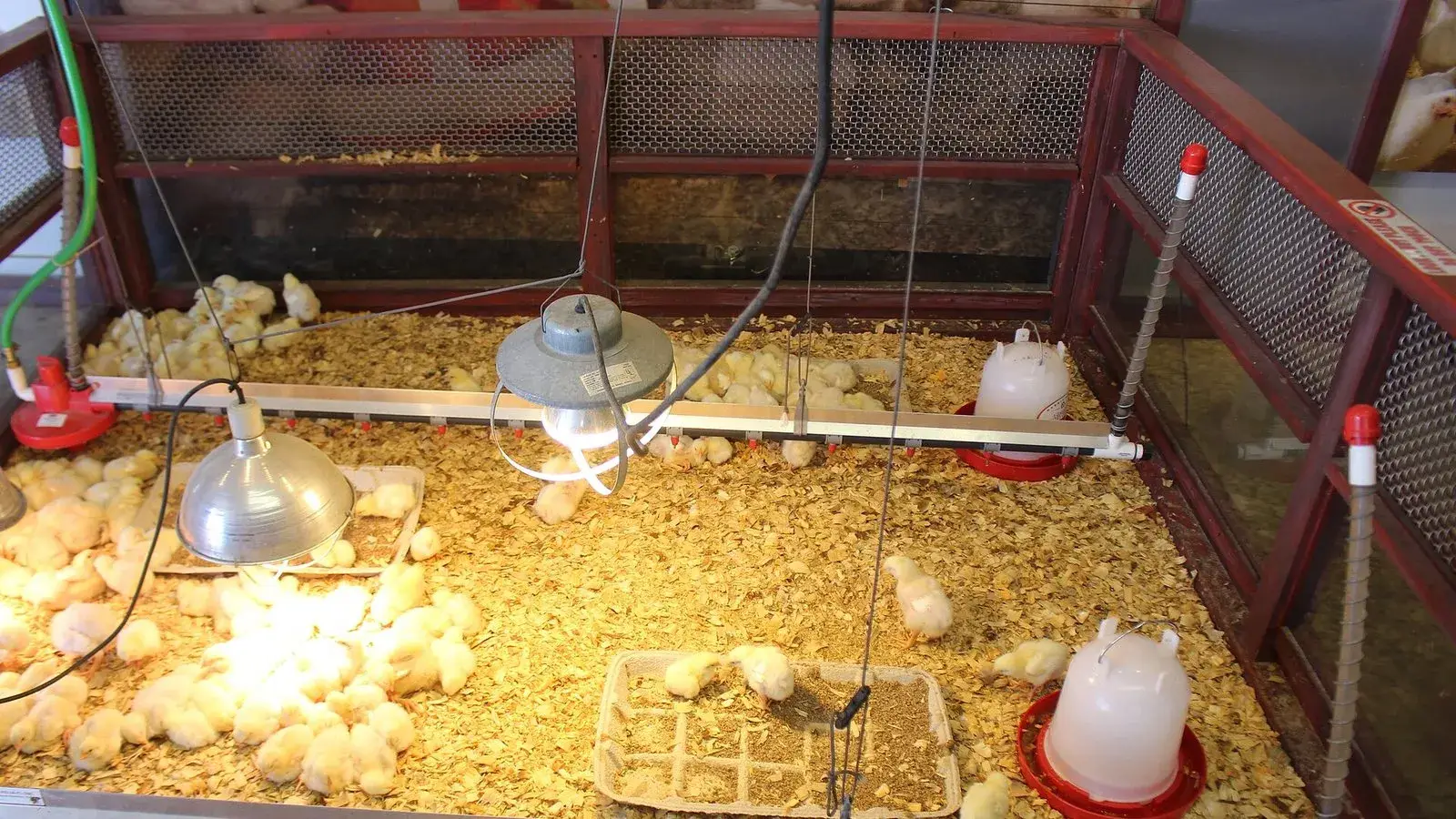
Feed choice is only part of coccidiosis prevention. The rest is dry litter.
The parasite needs warmth and moisture, and the reliable source of moisture in a brooder is the waterer. Raise it on a block or set it on a tray so spills drain away from bedding. Change any damp patch immediately rather than at the weekly clean. And never brood a new batch on litter that held the previous one.
Final recommendation
For unvaccinated chicks, Purina Start & Grow Medicated is the sensible default: 18 percent protein, amprolium at the standard rate, and a consistent formulation from a large mill.
If your chicks came vaccinated, buy the non-medicated version of the same ration instead, and treat brooder hygiene as the thing standing between your chicks and coccidiosis. For a premium non-GMO option that a day-old chick can actually eat, Scratch and Peck Starter is a crumble rather than a mash. And for a first batch of six chicks, the Manna Pro 5 lb bag is the right quantity to start with.
Questions people ask before buying
Should I use medicated chick starter?
Yes if your chicks are unvaccinated, and no if they were vaccinated against coccidiosis at the hatchery. Medicated starter contains amprolium, which keeps coccidiosis numbers low while a chick develops natural immunity, and it is the standard protection against the main killer of young chicks. Giving it to a vaccinated chick suppresses the controlled dose the vaccine relies on, leaving the bird with no protection from either. Check with your hatchery before buying.
Is amprolium an antibiotic?
No, and this is a common misunderstanding. Amprolium is a thiamine analogue. It limits the coccidiosis parasite's ability to take up thiamine, which restricts its multiplication in the chick's gut. It is not an antibiotic, it does not contribute to antibiotic resistance, and there is no withdrawal period for eggs because the birds are long off the feed before they lay.
How much protein do chicks need?
Eighteen to 20 percent for the first six to eight weeks. Meat birds and fast-growing breeds do better at the higher end, around 20 to 22 percent. After about eight weeks, birds move to a grower ration at around 16 to 18 percent, and pullets switch to layer feed at 18 weeks or at the first egg. Never feed layer ration to chicks: the calcium level is far too high for a bird that is not laying.
How long do chicks eat starter feed?
Usually until six to eight weeks, then a grower ration until 16 to 18 weeks or the first egg. Some brands sell a combined starter-grower that covers the whole period, which simplifies things. The transition that really matters is not starter to grower but grower to layer, because layer feed carries around four percent calcium and a pullet who is not laying yet cannot use it.
Can chicks eat crumbles or do they need mash?
Crumbles are generally better for very young chicks because the pieces are small and uniform, so the chick eats the whole balanced ration rather than sorting through it. Whole grain mash is harder for a day-old chick, which can pick out grain and leave the powdered vitamin and mineral fraction behind. If you want to feed a mash to young chicks, wetting it into a porridge prevents the sorting.
How do I prevent coccidiosis in chicks?
Keep the litter dry, because the parasite thrives in warm damp bedding, and the reliable source of damp bedding is spills under the waterer. Raise the waterer or put it on a tray, change wet bedding immediately, never brood a new batch on old litter, and either use medicated feed or vaccinated chicks. Early signs are blood or unusual mucus in droppings and a chick sitting hunched and fluffed, and at that point you need a coccidiostat from a vet or feed store rather than prevention.
Why you can trust this guide
- Written by
- Marta Voss, Editor and fact checker, Chicken Geek. Specialist areas: Editorial fact checking, Chick brooding and starter nutrition, Small-flock husbandry, Feed labels and nutrition claims.
- Fact checked by
- Sam Reddick
- Published
- August 6, 2026 · Last updated August 6, 2026 · Products and links rechecked August 6, 2026
- How we picked
- Feeds were compared on published protein content against the requirements of growing chicks, presence and type of medication, physical form and how easily a day-old chick can eat it, certification claims and whether they are audited, and bag size against realistic consumption across the brooding period.
- Evidence used
- None of the 6 products on this page were sent to us or bought for a hands-on test. Every recommendation here is research based: manufacturer specifications, listed dimensions and materials, owner feedback at volume, and comparison against equipment our team has owned. Each review states this again above the buy button so you are never guessing which kind of evidence sits behind a pick.
- Editorial standards
- No brand pays for placement, and no manufacturer sees this page before it goes live. Read our editorial policy and testing method.
- Affiliate disclosure
- Chicken Geek is reader supported. We earn a commission from qualifying purchases made through links on this page, at no extra cost to you, and no brand has paid for a placement or an award here.
About the author

Editor and fact checker, Chicken Geek
Marta edits every guide on Chicken Geek and checks that each claim can be traced back to a manufacturer specification, a published standard or a stated first-hand observation. She keeps a small backyard flock of six hens and has raised chicks from day one for eight seasons.
- Eight seasons raising chicks from day-old to point of lay
- Checks every specification in a Chicken Geek guide against the manufacturer listing
- Removes any testing claim that cannot be backed up
- Keeps a flock of six hens in a suburban backyard