We Compared 6 Chicken Waterers on Cleanliness and Freezing
We compared six chicken waterers on how clean the water stays, how fast each one freezes, and whether you can actually clean the inside of it.

By Sam Reddick Lead gear reviewer, Chicken Geek
Fact checked by Marta Voss
Published Prices and stock checked 7 min read
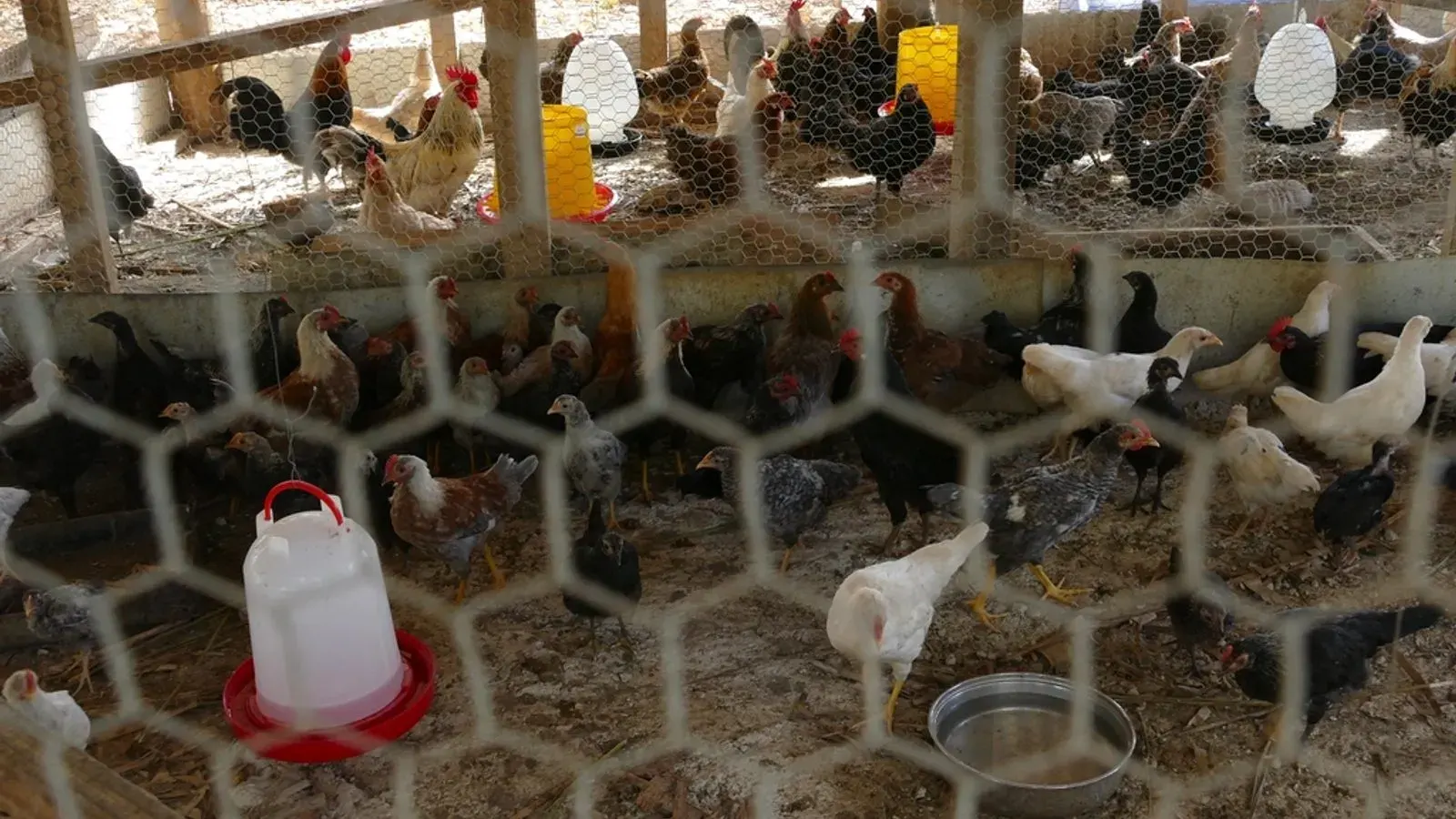
Water is the input a flock cannot go without for even a day, and it is also the input most likely to be quietly making birds ill. An open trough in a run collects scratched litter, dust, droppings and dead insects within hours, and birds drink less from fouled water at exactly the times they need to drink more.
We compared six waterers on three things. How clean the water stays, which is largely decided by whether the reservoir is open or sealed. How fast the drinker freezes, because nipples and cups ice up far sooner than a trough does. And whether you can physically get a brush inside the thing to clean it, which sounds trivial until you have owned a sealed fount growing biofilm you cannot reach.
A laying hen drinks roughly a pint a day and considerably more in heat, so size your choice on your summer figure rather than your average one.
Our picks at a glance
Every product below wins one specific situation. Pick the row that matches your flock, your yard and your budget rather than reading top to bottom.
-
Best Overall

RentACoop 2 Gal High Rise
Flocks of four to eight birds where keeping the water clean between refills is the main frustration.
Check price on Amazon for RentACoop 2 Gallon High Rise Chicken Waterer with Cups & Nipples on AmazonAbout $49.95 checked Aug 8, 2026
-
Best Large Capacity

Harris Farms 6.25 Gal
Larger flocks, hot climates, or anyone who needs the birds watered reliably while they are away for a few days.
Check price on Amazon for Harris Farms Easy-Fill Poultry Drinker, NO BPA Plastic, 6.25 Gallon on AmazonAbout $52.76 checked Aug 8, 2026
-
Best for Cleaning

Premier 1 Bucket Waterer
Keepers who care about water hygiene and have seen the inside of a waterer they could not properly clean.
Check price on Amazon for Premier 1 Quick Clean Bucket Waterer for Chickens – 5 Gallon, with Legs on AmazonAbout $62.00 checked Aug 8, 2026
-
Best Insulated

Omlet Insulated 3 Gal
Keepers with cool but not severe winters, or hot summers, who have no power at the coop.
-
Best Cup Kit

Harris Farms Cups 6-Pack
Anyone who wants clean sealed water but has birds that refuse nipples, or who wants to convert a bucket they already own.
Check price on Amazon for Harris Farms Gravity-Fed Poultry Watering Cups, Automatic System, 6 Count on AmazonAbout $17.69 checked Aug 8, 2026
-
Best Budget

MEWTOGO Nipple 20-Pack
Anyone comfortable with a drill who wants the cleanest possible water for the least possible money.
Check price on Amazon for 20 Pack Chicken Waterer Nipples for Chicks to Chickens with Drill Bits on AmazonAbout $13.99 checked Aug 8, 2026
Compare every pick side by side
Swipe the table sideways to see every column on a phone.
| Product | Award | Price band | Capacity | Drinker Type | Freeze Safe | Cleaning | Best use case | Buy link |
|---|---|---|---|---|---|---|---|---|
| RentACoop 2 Gal High Rise | Best Overall | $30 to $60 | 2 gallons | Nipples and auto-fill cups | No, needs a heater below freezing | Wide opening, easy to scrub | Flocks of four to eight birds where keeping the water clean between refil… | Check price for RentACoop 2 Gallon High Rise Chicken Waterer with Cups & Nipples on Amazon |
| Harris Farms 6.25 Gal | Best Large Capacity | $30 to $60 | 6.25 gallons | Open gravity trough | No | Trough wipes out, body needs a hose | Larger flocks, hot climates, or anyone who needs the birds watered reliab… | Check price for Harris Farms Easy-Fill Poultry Drinker, NO BPA Plastic, 6.25 Gallon on Amazon |
| Premier 1 Bucket Waterer | Best for Cleaning | $60 to $120 | 5 gallons | Side nipples on a bucket | No, but takes a heater belt | Quick clean design, lid comes off | Keepers who care about water hygiene and have seen the inside of a watere… | Check price for Premier 1 Quick Clean Bucket Waterer for Chickens – 5 Gallon, with Legs on Amazon |
| Omlet Insulated 3 Gal | Best Insulated | $60 to $120 | 3 gallons | Enclosed cup dispenser | Slows freezing, not freeze proof | Removable base | Keepers with cool but not severe winters, or hot summers, who have no pow… | Check price for Omlet Insulated Chicken Waterer, 3 Gallon | Automatic Poultry Water Dispenser with 5 Cups & Nipples Included | BPA-Free | Anti-Roost Lid | Sage Green on Amazon |
| Harris Farms Cups 6-Pack | Best Cup Kit | Under $30 | Depends on your container | Gravity-fed cups | No | Cups wipe out individually | Anyone who wants clean sealed water but has birds that refuse nipples, or… | Check price for Harris Farms Gravity-Fed Poultry Watering Cups, Automatic System, 6 Count on Amazon |
| MEWTOGO Nipple 20-Pack | Best Budget | Under $30 | Depends on your container | Horizontal nipples | No | Bucket dependent | Anyone comfortable with a drill who wants the cleanest possible water for… | Check price for 20 Pack Chicken Waterer Nipples for Chicks to Chickens with Drill Bits on Amazon |
The full reviews
Each review below follows the same order: what it is, why it won its category, how it behaves in real use, and who should buy something else.
1 Best Overall
RentACoop 2 Gallon High Rise Chicken Waterer with Cups & Nipples
Nipples and auto-fill cups on the same raised body, which keeps the water clean while still letting birds drink the way they instinctively want to.
What we liked
- Combines nipples and cups, so birds that will not use one will use the other
- Raised body keeps the drinking points above bedding and scratched-up litter
- Enclosed reservoir means droppings, shavings and dust cannot get into the water
- Wide top opening makes scrubbing the inside genuinely possible
What we did not
- Nipples and cups both freeze solid well before an open trough would
- Two gallons is about two days for a flock of eight in summer heat
- The cups need a weekly wipe or they build a biofilm you can feel
About $49.95 checked Aug 8, 2026
Key specifications
- Dimensions
- 6 x 6 x 17 in (L x W x H)
- Weight
- 3.63 pounds
- Colour
- #FFFFFF
- Capacity
- 2 gallons
- Drinker Type
- Nipples and auto-fill cups
- Material
- BPA-free plastic
- Freeze Safe
- No, needs a heater below freezing
- Refill Point
- Top fill with lid
- Cleaning
- Wide opening, easy to scrub
Why the RentACoop 2 gallon wins this category
Because it hedges the one risk that makes nipple waterers frustrating: some birds do not take to them. A hen raised on an open trough may look at a nipple for days before working it out, and a hen that is not drinking is a serious problem within hours in warm weather.
Having cups on the same unit means there is always an obvious, instinctive way to drink while the flock learns the nipples.
Living with the RentACoop 2 gallon
The enclosed reservoir is the real daily benefit. An open trough in a run collects shavings, dust, droppings and the occasional dead insect within a day, and birds drink less from fouled water. A sealed body means what you poured in is what they get.
Raising it matters just as much. Drinking points at bird head height rather than at floor level keeps scratched-up litter out.
Where the RentACoop 2 gallon falls short
Freezing, and it is worse than people expect. Open water freezes from the surface down and stays drinkable for a while. A nipple is a tiny volume of water in a narrow metal passage exposed to the air, and it ices solid long before a trough does. Below freezing this system stops working before you would think it should.
Capacity is the other constraint. Two gallons is comfortable for four to six birds and thin for eight in summer, when a laying hen can drink a pint a day or more.
The cups also need attention. A weekly wipe stops the slick biofilm that builds in any small standing-water vessel.
Research based, not hands-on
Assessed on the published drinker types, capacity and access design, and compared against open troughs on contamination and freezing behaviour.
- Best for
- Flocks of four to eight birds where keeping the water clean between refills is the main frustration.
- Skip it if
- You need it to work unattended below freezing, because nipples and cups are the first things to ice up.
- The limitation to plan around
- Nipple and cup systems freeze much faster than open water because the drinking point is a small volume in a narrow passage. Below freezing this needs a heater or a twice-daily thaw, and it is not a winter product on its own.
2 Best Large Capacity
Harris Farms Easy-Fill Poultry Drinker, NO BPA Plastic, 6.25 Gallon
Six and a quarter gallons with a top fill port, which is enough water for a dozen birds in a heatwave and the only realistic option if you are away for a few days.
What we liked
- 6.25 gallons covers a dozen birds for several days even in hot weather
- Top fill port means you refill without lifting or inverting the whole unit
- BPA-free plastic rather than an unspecified polymer
- Gravity trough is instantly obvious to every bird, with no learning curve
What we did not
- Open trough collects shavings, dust and droppings within a day in a run
- Full weight is over 50 lb, so it is not moving once it is filled
- Cleaning the inside of a sealed 6 gallon body needs a hose and patience
About $52.76 checked Aug 8, 2026
Key specifications
- Dimensions
- 17 x 17 x 21 in (L x W x H)
- Weight
- 4 pounds
- Colour
- Green
- Capacity
- 6.25 gallons
- Drinker Type
- Open gravity trough
- Material
- BPA-free plastic
- Freeze Safe
- No
- Refill Point
- Top fill port
- Cleaning
- Trough wipes out, body needs a hose
Why the Harris Farms 6.25 gallon wins this category
Volume, and the arithmetic behind it is worth doing. A laying hen drinks around a pint a day, and considerably more in heat. Twelve birds in a hot week is close to two gallons a day. A two gallon waterer is a daily job; this one is not.
For anyone who travels, or simply wants a margin of safety in a heatwave, that headroom is the whole point. Water is the one thing a flock cannot go without for even a day.
Living with the Harris Farms 6.25 gallon
The top fill port is the feature that makes the capacity usable. Traditional double-wall founts have to be inverted to fill, which at six gallons is impossible. Filling from the top with a hose means the capacity is not theoretical.
An open trough also has one genuine advantage: every bird understands it immediately. There is no training period and no risk of a bird failing to drink because it has not worked out a nipple.
Where the Harris Farms 6.25 gallon falls short
The trough is open, which in a chicken run means it is dirty. Birds scratch, and scratched litter lands in water. Dust settles. Birds perch on the rim and droppings go in. You will be emptying and rinsing the trough daily regardless of how much water is left, which partly cancels the convenience of the capacity.
Weight is the other practical issue. Over fifty pounds when full means you fill it where it stands, and you cannot easily bring it into shelter for winter or move it out of the sun in summer.
Cleaning the inside of the body is awkward too, because the opening that makes filling easy is not big enough to get a brush and an arm through.
Research based, not hands-on
Assessed on the published capacity, fill design and materials, and compared against enclosed nipple systems on contamination and refill effort.
- Best for
- Larger flocks, hot climates, or anyone who needs the birds watered reliably while they are away for a few days.
- Skip it if
- Keeping the water clean is your priority, because an open trough in a run is fouled within a day.
- The limitation to plan around
- The trough is open, and open water in a chicken run is dirty water. Birds scratch litter into it, dust settles on it, and droppings land in it, so it needs emptying and rinsing daily even though it holds days of water.
3 Best for Cleaning
Premier 1 Quick Clean Bucket Waterer for Chickens – 5 Gallon, with Legs
A five gallon bucket with side nipples and a lid that comes fully off, which means you can get a hand and a brush right inside it. Nothing else here can say that.
What we liked
- Lid removes completely, so the whole interior is reachable with a brush
- Side nipples keep the water sealed from litter, dust and droppings
- Supplied with legs, so it stands at bird height without a stand
- Food-grade bucket that can be replaced cheaply if it is ever damaged
What we did not
- Nipples freeze quickly, though the bucket does accept a heater belt
- Five gallons of water is 40 lb, so it is filled in place rather than carried
- Birds need a few days to learn nipples if they have only used troughs
About $62.00 checked Aug 8, 2026
Key specifications
- Size
- With Legs
- Weight
- 5 pounds
- Colour
- White, Green
- Capacity
- 5 gallons
- Drinker Type
- Side nipples on a bucket
- Material
- Food-grade bucket with legs
- Freeze Safe
- No, but takes a heater belt
- Refill Point
- Lift the lid
- Cleaning
- Quick clean design, lid comes off
Why the Premier 1 bucket wins this category
Because of a problem most people never see. Any vessel that holds standing water grows biofilm, a slick bacterial layer on the inner walls, and in a waterer with a narrow opening you cannot reach it, cannot scrub it and often cannot even see it.
A bucket with a lid that lifts straight off means a brush and a hand go all the way in, every corner is reachable, and the thing you are refilling is actually clean.
Living with the Premier 1 bucket
Side nipples keep the water itself sealed. Nothing gets in: no shavings, no dust, no droppings, no insects. The water your birds drink on Friday is the water you poured in on Monday.
The supplied legs put the nipples at the right height without you having to build a stand or balance the bucket on blocks, which is how most bucket waterers end up being used.
Where the Premier 1 bucket falls short
Nipples have a learning curve, and it is the one genuine risk here. A hen that has drunk from an open trough her whole life does not immediately understand a metal pin. Most work it out within a day or two by pecking at the shine, but during that window you need an open water source available as well. Never switch a flock cold in hot weather.
Freezing is the other limitation, as with every nipple system. The small volume in the nipple ices before the bucket does. The mitigating factor is that a five gallon bucket accepts a thermostatic heater belt, so this can be made into a winter system, which is not true of most sealed waterers.
Research based, not hands-on
Assessed on the published lid design, drinker type and capacity, and compared against sealed-body waterers on cleaning access.
- Best for
- Keepers who care about water hygiene and have seen the inside of a waterer they could not properly clean.
- Skip it if
- Your birds have never used nipples and you cannot supervise the transition for a few days.
- The limitation to plan around
- Nipples require learning. Birds that have only ever drunk from a trough will peck at them experimentally for a day or two, and during that period you must leave an open water source available or risk a bird not drinking.
4 Best Insulated
Omlet Insulated Chicken Waterer, 3 Gallon | Automatic Poultry Water Dispenser with 5 Cups & Nipples Included | BPA-Free | Anti-Roost Lid | Sage Green
An insulated three gallon body that slows both freezing and warming, which extends the usable season at both ends without any power at all.
What we liked
- Insulation slows freezing in autumn frost and warming in summer heat
- Enclosed cup dispenser keeps litter, dust and droppings out of the water
- Removable base makes cleaning far easier than a sealed fount
- Works with no power at all, unlike every heated waterer
What we did not
- Slows freezing rather than preventing it, so a hard frost still wins
- Costs roughly double an uninsulated waterer of the same capacity
- Three gallons is modest for the price compared with plain plastic founts
Key specifications
- Size
- 3 Gallon
- Weight
- 7.71617917 pounds
- Colour
- Sage Green
- Capacity
- 3 gallons
- Drinker Type
- Enclosed cup dispenser
- Material
- Insulated polymer
- Freeze Safe
- Slows freezing, not freeze proof
- Refill Point
- Top fill with lid
- Cleaning
- Removable base
Why the Omlet insulated waterer wins this category
Because there is a long shoulder season where water freezes overnight and thaws by mid-morning, and in that period an insulated body is the difference between the birds having water at 7am and not having it until 10.
It works at the other end too. Water sitting in a thin black plastic fount in July gets genuinely warm, and birds drink less warm water than cool water on exactly the days they need to drink more.
Living with the Omlet insulated waterer
The enclosed cup dispenser is the second half of the design. Water is held inside the body and delivered to a small cup, so litter, dust and droppings never reach the reservoir.
The removable base is a real practical advantage over sealed founts. Most enclosed waterers cannot be properly cleaned inside; this one comes apart.
Where the Omlet insulated waterer falls short
Insulation delays freezing, it does not prevent it. This is worth being precise about, because the word insulated invites the wrong expectation. In a sustained freeze with daytime temperatures below zero, this will ice up, just later than an uninsulated waterer would. It is a shoulder-season product and a mild-winter product, and it does not replace a heated waterer in Minnesota.
The value case is the other criticism. Three gallons of capacity for roughly double the price of a plain six gallon fount is a lot of money for insulation. It buys you convenience during a specific part of the year, and whether that is worth it depends entirely on your climate.
Research based, not hands-on
Assessed on the published insulation, dispenser design and capacity, and compared against uninsulated and heated waterers on freeze behaviour.
- Best for
- Keepers with cool but not severe winters, or hot summers, who have no power at the coop.
- Skip it if
- Your winter goes properly below freezing for days at a time, because insulation only delays the inevitable.
- The limitation to plan around
- Insulation buys hours, not immunity. In a sustained hard freeze this will ice over like anything else, so it is a shoulder-season and mild-winter product rather than a substitute for a heated waterer.
5 Best Cup Kit
Harris Farms Gravity-Fed Poultry Watering Cups, Automatic System, 6 Count
Six gravity-fed cups that turn any bucket into a clean water system, and cups suit birds that never quite take to nipples.
What we liked
- Cups are instantly understood by birds, unlike nipples which need learning
- Six cups is enough for a large flock with no queueing
- Fits any bucket, barrel or pipe you already have
- Costs a fraction of a complete waterer
What we did not
- Open cup holds standing water, so it collects dust and needs regular wiping
- Requires drilling accurate holes with the correct thread size
- Trigger mechanism is small and can stick if grit gets into it
About $17.69 checked Aug 8, 2026
Key specifications
- Colour
- Red
- Capacity
- Depends on your container
- Drinker Type
- Gravity-fed cups
- Material
- Plastic with metal trigger
- Freeze Safe
- No
- Refill Point
- Whatever bucket you fit them to
- Cleaning
- Cups wipe out individually
Why the Harris Farms cups win this category
Because nipples have one real weakness and it is not mechanical: some birds never take to them. Older hens raised on troughs, and occasionally an individual bird of any age, will not reliably work a nipple, and a bird that is not drinking properly goes downhill fast.
A cup solves that. The bird sees water in a small dish, drinks, and the float refills it. There is nothing to learn.
Living with the Harris Farms cups
Six cups means a flock of a dozen can drink without a queue, which matters more than it sounds because the birds lowest in the pecking order are the ones who wait, and they are usually already the ones in poorer condition.
Fitting them to a bucket you already own means capacity is your choice, and you can put cups on both sides for better access.
Where the Harris Farms cups fall short
A cup is a compromise. It holds a small amount of standing water exposed to the air, so it will collect dust and the occasional feather, and a slick biofilm develops in the bowl if you leave it. Wiping them out every few days is a real, if minor, ongoing job that a nipple system does not have.
Installation needs care. The holes must match the thread, and a hole that is even slightly oversized will weep continuously, which is exactly what you do not want above dry bedding.
The trigger mechanism is also small. Grit from feed dust can work into it, and a stuck trigger either means no water or a cup that overflows, and both are worth checking for during your normal rounds.
Research based, not hands-on
Assessed on the published cup count, mechanism and fitting method, and compared against nipples and open troughs on cleanliness and bird acceptance.
- Best for
- Anyone who wants clean sealed water but has birds that refuse nipples, or who wants to convert a bucket they already own.
- Skip it if
- You want zero maintenance, because cups hold standing water and need a wipe every few days.
- The limitation to plan around
- A cup is a small open reservoir, so it is a compromise between a nipple and a trough. It stays much cleaner than a trough and it is not sealed the way a nipple is, and it will need wiping out every few days.
6 Best Budget
20 Pack Chicken Waterer Nipples for Chicks to Chickens with Drill Bits
Twenty horizontal nipples and the drill bits to fit them for about fourteen dollars, which is the cheapest route to genuinely clean drinking water there is.
What we liked
- Cheapest way to get sealed, contamination-free water by a very wide margin
- Horizontal design rather than vertical, so it drips far less onto bedding
- Drill bits included, which removes the usual sizing guesswork
- Twenty in the pack, enough for several buckets or a whole pipe run
What we did not
- Nipples ice up faster than any other drinker design in this comparison
- Birds need a few days to learn them, with an open backup available
- Grit in the water supply can hold the pin open and cause a slow constant drip
About $13.99 checked Aug 8, 2026
Key specifications
- Colour
- red
- Capacity
- Depends on your container
- Drinker Type
- Horizontal nipples
- Material
- Stainless pin in plastic body
- Freeze Safe
- No
- Refill Point
- Whatever bucket you fit them to
- Cleaning
- Bucket dependent
Why the MEWTOGO nipples win this category
Because the biggest single improvement you can make to a flock's drinking water costs about fourteen dollars. Sealed water in a bucket, delivered through nipples, is not contaminated by litter, dust or droppings, and there is no open surface for anything to land in.
Horizontal nipples are the right choice too. Vertical ones drip more, and drips land on bedding.
Living with the MEWTOGO nipples
The included drill bits are more useful than they sound. Getting the hole size right is the one part of this job that goes wrong, and a hole that is a fraction too large weeps forever.
Twenty nipples is enough for several buckets, or for a length of PVC pipe running along a run wall, which is the arrangement large flocks end up with.
Where the MEWTOGO nipples fall short
Freezing is the sharpest limitation. A nipple holds a very small volume of water in a narrow metal passage with a large surface area exposed to cold air. It ices well before a bucket of water does, so in any climate with real frost this is a three-season system unless you add a heater to the bucket.
The learning period is the second issue and it matters most in hot weather. Birds used to a trough will peck at the shiny pin experimentally rather than drinking properly for a day or two. Leave an open water source out during the transition and remove it only once you have watched every bird drink from a nipple.
Grit is the long-term maintenance point. A particle lodged against the pin holds it slightly open and produces a constant slow drip, and mounted above bedding that becomes a wet patch and then a mould problem.
Research based, not hands-on
Assessed on the published nipple type, pack size and included fittings, and compared against cups and troughs on cleanliness, freezing and cost.
- Best for
- Anyone comfortable with a drill who wants the cleanest possible water for the least possible money.
- Skip it if
- You want a finished product, or your winters mean the drinker has to keep working below freezing.
- The limitation to plan around
- A nipple that sticks open drips continuously, and it drips onto whatever is underneath. Mounted over bedding that means a permanently damp patch, which is exactly the condition that produces ammonia and mould.
How we compared these waterers
Water quality was the primary axis. Every waterer was classified by whether the reservoir is open to the air or sealed, because that single property decides how fast the water is fouled by litter, dust and droppings.
We then compared drinker type against freezing behaviour, capacity against a pint per standard bird per day in warm weather, and cleaning access, meaning whether a brush and a hand can physically reach the inside.
We also treated bird acceptance as a real factor. A nipple system with perfect hygiene is worthless if a bird will not drink from it.
What actually matters in a chicken waterer
Open or sealed
An open trough in a run is dirty within a day. Birds scratch litter into it, dust settles, and birds perching on the rim foul it directly. Beyond being unpleasant, birds drink less from fouled water, and reduced water intake reduces feed intake and knocks laying down.
Sealed systems with nipples or cups hold the water inside a closed body and deliver it a mouthful at a time. This is the single biggest quality difference in the category.
Drinker type, and the freezing consequence
Nipples are the cleanest, need learning, and freeze first because the drinking point is a very small volume of water in a narrow metal passage.
Cups are nearly as clean, are understood immediately, and sit in the middle for freezing.
Open troughs are the dirtiest, need no learning, and last longest before icing because a large volume of water freezes from the surface down.
Many experienced keepers run nipples or cups for three seasons and switch to an open heated fount for the winter, which is a sensible answer rather than a compromise.
Cleaning access
Ask one question of any waterer: can I get a brush inside it? Standing water grows biofilm regardless of design, and a sealed fount with a narrow neck cannot be cleaned, only rinsed.
Bucket-based systems with a lid that comes fully off are the clear winners here, and it is a bigger deal than it sounds.
Capacity for a hot week
A pint per standard hen per day, doubled for real heat. Eight hens in a heatwave is close to two gallons a day.
Undersizing is genuinely dangerous rather than merely inconvenient. A flock that runs out of water on a hot afternoon suffers within hours.
Winter water, briefly
Water is the reason winter is hard on a flock, more than cold is. A bird that cannot drink stops eating, and a hen that stops eating in a cold snap loses condition quickly.
If you have power at the coop, a thermostatic heated base under a metal fount is the standard answer, and we compare heated waterers separately.
If you do not have power, the practical routine is two flexible rubber tubs. Swap them morning and evening, and knock the ice out of the frozen one by flexing it, which works far better than trying to break ice out of rigid plastic.
Final recommendation
The RentACoop 2 Gal High Rise is the best all-round buy because it hedges the one real risk of sealed systems: it has both nipples and cups, so no bird goes thirsty while the flock learns.
For a large flock or a hot climate, the Harris Farms 6.25 Gal gives you the volume headroom that actually matters in July. If water hygiene is your priority, the Premier 1 Bucket Waterer is the only one here you can properly scrub inside. And if you just want the cheapest clean water available, twenty MEWTOGO Nipples and a spare bucket will cost you about fourteen dollars.
Questions people ask before buying
How much water does a chicken drink per day?
Roughly a pint a day for a standard-size laying hen in mild weather, and up to double that in real heat. Six hens therefore need at least three quarts a day and closer to a gallon and a half in a heatwave. Water intake also drives feed intake, so a hen that cannot drink properly stops eating and drops off lay within days. Size your waterer on a hot week, not an average one.
Are nipple waterers better than open troughs?
For water quality, clearly yes. A sealed reservoir with nipples cannot be contaminated by litter, dust or droppings, so the water stays as clean as what you poured in. The trade-offs are that birds have to learn to use them, and that a nipple freezes far sooner than an open trough because it holds a tiny volume of water in a narrow metal passage. Many keepers run nipples for three seasons and switch to an open heated fount for winter.
How do I teach chickens to use nipple drinkers?
Tap the pin with your finger so a drop of water hangs on it, which catches their attention because chickens investigate anything shiny and moving. Most birds work it out within a day. Keep an open water source available throughout the transition and only remove it once you have personally watched every bird drink from a nipple, because a bird that has not worked it out can dehydrate quickly in warm weather.
How do I stop chicken water freezing?
A thermostatic heated base or a heated waterer is the only reliable answer below freezing. Insulated bodies delay freezing by hours rather than preventing it. Nipple and cup systems are the worst affected because the drinking point holds so little water. If you have no power at the coop, the practical routine is two open rubber tubs swapped morning and evening, because ice pops out of flexible rubber far more easily than out of rigid plastic.
Where should the waterer go, in the coop or the run?
In the run, under cover, in almost all cases. Water in the coop means spills into bedding, and damp bedding is the root of ammonia, mould and respiratory problems. The exception is deep winter in a severe climate, where a heated waterer inside a coop may be the only way to keep it liquid, and in that case a nipple system over a drip tray keeps the bedding dry.
How often should I clean a chicken waterer?
Rinse open troughs daily and scrub any waterer properly at least weekly. Standing water grows biofilm, a slick bacterial layer on the inner walls, and it forms in sealed waterers just as it does in open ones. The important question when buying is whether you can reach the inside at all: a fount with a narrow neck cannot be scrubbed, and it will develop a layer you cannot see or remove.
Why you can trust this guide
- Written by
- Sam Reddick, Lead gear reviewer, Chicken Geek. Specialist areas: Coop design and predator proofing, Feeding and watering systems, Cold-weather flock management, Incubation and brooding.
- Fact checked by
- Marta Voss
- Published
- August 6, 2026 · Last updated August 6, 2026 · Products and links rechecked August 6, 2026
- How we picked
- Waterers were compared on whether the reservoir is open or sealed and how quickly water fouls, the drinker type and how quickly it freezes, capacity against a pint per standard bird per day in warm weather, and how much of the interior can be physically reached for cleaning.
- Evidence used
- None of the 6 products on this page were sent to us or bought for a hands-on test. Every recommendation here is research based: manufacturer specifications, listed dimensions and materials, owner feedback at volume, and comparison against equipment our team has owned. Each review states this again above the buy button so you are never guessing which kind of evidence sits behind a pick.
- Editorial standards
- No brand pays for placement, and no manufacturer sees this page before it goes live. Read our editorial policy and testing method.
- Affiliate disclosure
- Chicken Geek is reader supported. We earn a commission from qualifying purchases made through links on this page, at no extra cost to you, and no brand has paid for a placement or an award here.
About the author

Lead gear reviewer, Chicken Geek
Sam has kept a backyard laying flock for eleven years, through two coop rebuilds, one very determined raccoon and several winters cold enough to freeze a waterer solid overnight. He writes the buying guides at Chicken Geek and is responsible for how products get compared.
- Eleven years keeping a mixed laying flock of 8 to 14 birds
- Has built, bought and replaced six different coops
- Runs the product comparison framework used across Chicken Geek
- Reads manufacturer manuals, spec sheets and warranty terms before every recommendation