We Compared 6 Duck Coops on the One Part That Rots First
Ducks soak a coop floor every night. We compared six duck houses on floor material, liners, cleaning access and honest capacity, from $99.99 to $169.99.

By Sam Reddick Lead gear reviewer, Chicken Geek
Fact checked by Marta Voss
Published Prices and stock checked 7 min read
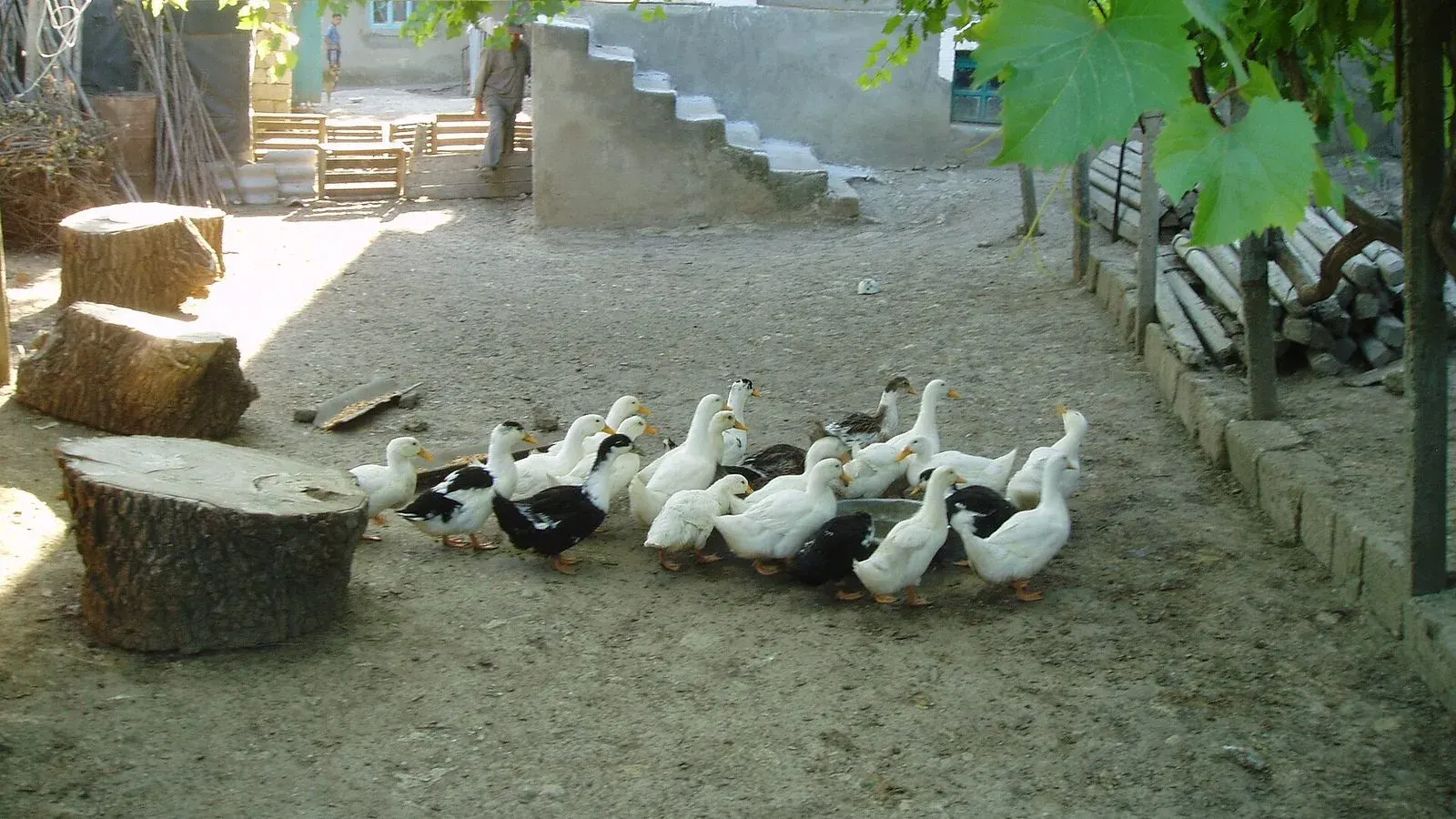
A duck house is not a small chicken coop. Ducks drink and dabble all evening, then carry water indoors on their bills and their feet. By morning the floor is wet. That happens every night, in every season, and it is why duck housing fails in a way chicken housing does not.
So the specification we put first is the floor. Can you hose it, or does it soak? Two of the six here are moulded plastic or resin with nothing absorbent in them. Three are wood with a liner or a metal tray fitted over the boards. One is bare fir with neither, and it needs a dry, covered spot or the floor goes soft in a season.
The other thing to be clear about up front: none of these six is a coop for a flock of six ducks. They are night shelters sized for two or three birds, and three of them state no duck capacity at all. Sized honestly they work well. Sized by the box copy they do not.
Our picks at a glance
Every product below wins one specific situation. Pick the row that matches your flock, your yard and your budget rather than reading top to bottom.
-
Best Overall

GDLF Duck Coop
Keepers with two standard ducks who want the fastest possible clean-out and no ramp to argue with.
Check price on Amazon for GDLF Duck Coop for Outside, Plastic Night Shelter for Backyard Ducks on AmazonAbout $150 checked Aug 8, 2026
-
Best Pull-Out Tray for Daily Muck-Outs

FunXplore Tray Coop
Keepers who want a wooden duck house but know that bare timber and ducks do not mix, and who will clear the tray often.
Check price on Amazon for Duck Coop Outdoor Weatherproof with Pull-Out Tray & Asphalt Roof on AmazonAbout $140 checked Aug 8, 2026
-
Best Budget

Vixzen Resin House
Keepers with two ducks who want a wipe-clean shelter and would rather spend the difference on feed and fencing.
-
Best for a Freezing Winter

FunXplore Insulated
Keepers in a cold climate who want the birds and their drinking water out of hard wind and deep frost overnight.
Check price on Amazon for Insulated Duck Coop Outdoor Weatherproof with Ventilated Windows on AmazonAbout $160 checked Aug 8, 2026
-
Best for a Shady Yard That Gets Little Light

Lovinhut Insulated
Keepers whose only spare ground is shaded, where a dark box would be ignored by the birds at dusk.
Check price on Amazon for Insulated Duck Coop Warm Duck House for Outside with Larger Windows on AmazonAbout $170 checked Aug 8, 2026
-
Best for a Dry, Sheltered Spot
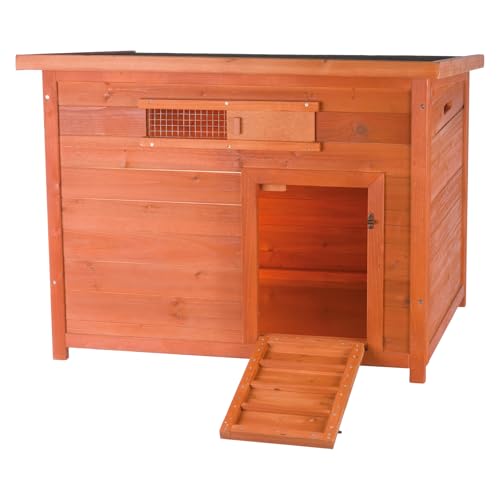
Trixie Natura
Keepers who can site the coop inside a barn, a covered run or under a deep overhang where rain never reaches it.
Compare every pick side by side
Swipe the table sideways to see every column on a phone.
| Product | Award | Price band | Footprint | Material | Stated Capacity | Floor Access | Cleaning | Insulated | Best use case | Buy link |
|---|---|---|---|---|---|---|---|---|---|---|
| GDLF Duck Coop | Best Overall | $120 to $250 | 39 x 32 x 27.7 in | Plastic panels | 2 to 3 adult ducks | Ground level, no roosting bars fitted | Open top for full access | No | Keepers with two standard ducks who want the fastest possible clean-out a… | Check price for GDLF Duck Coop for Outside, Plastic Night Shelter for Backyard Ducks on Amazon |
| FunXplore Tray Coop | Best Pull-Out Tray for Daily Muck-Outs | $120 to $250 | 41.5 x 27.8 x 39.4 in | Solid wood, 1.38 in panels | Not stated for ducks | Raised 12.2 in, 2-in-1 ramp and door | Removable metal tray and openable roof | No, but thicker panels | Keepers who want a wooden duck house but know that bare timber and ducks… | Check price for Duck Coop Outdoor Weatherproof with Pull-Out Tray & Asphalt Roof on Amazon |
| Vixzen Resin House | Best Budget | $60 to $120 | 32.2 x 25.1 x 24.1 in | PP resin with wood grain finish | Not stated for ducks | Ground level | Gas strut top lifts for full access | No | Keepers with two ducks who want a wipe-clean shelter and would rather spe… | Check price for Vixzen Outdoor Duck House, PP Resin Material with Spacious Interior Poultry Shelter, Gas Strut Opening Top & Shutter Vents Chicken Coop for Easy Cleaning and Storage Use in Outdoor(Black) on Amazon |
| FunXplore Insulated | Best for a Freezing Winter | $120 to $250 | 41.7 x 27.8 x 39.5 in | Solid wood with built-in foam core | Not stated for ducks | Elevated on legs, 2-in-1 ramp and door | Removable PVC liner and openable roof | Yes, built-in foam | Keepers in a cold climate who want the birds and their drinking water out… | Check price for Insulated Duck Coop Outdoor Weatherproof with Ventilated Windows on Amazon |
| Lovinhut Insulated | Best for a Shady Yard That Gets Little Light | $120 to $250 | 41.2 x 27.6 x 39.2 in | Thicker wood with built-in foam core | Not stated for ducks | Elevated on legs, door doubles as ramp | Black PVC floor liner | Yes, built-in foam | Keepers whose only spare ground is shaded, where a dark box would be igno… | Check price for Insulated Duck Coop Warm Duck House for Outside with Larger Windows on Amazon |
| Trixie Natura | Best for a Dry, Sheltered Spot | $120 to $250 | 29.5 x 36.5 x 27.5 in | Animal-safe fir wood | Up to 4 lightweight ducks | Fold-down door doubles as a ramp | Barred vents, lift access | No | Keepers who can site the coop inside a barn, a covered run or under a dee… | Check price for Trixie Natura Duck Coop – Wooden Duck House for Free Roaming Ducks – Chicken Crate Suitable for Quails and Other Poultry – in Brown on Amazon |
The full reviews
Each review below follows the same order: what it is, why it won its category, how it behaves in real use, and who should buy something else.
1 Best Overall
GDLF Duck Coop for Outside, Plastic Night Shelter for Backyard Ducks
The floor and the walls are the same plastic, so nothing in this shelter soaks up the water ducks bring in every night. Treat it as a two duck house, not a three duck house.
What we liked
- Plastic panels throughout, so the wet floor rinses instead of absorbing
- Open top gives you full reach inside without crawling in
- Ground level entry, so there is no ramp for a duck to refuse
- No roosting bars fitted, which suits birds that sleep on bedding
What we did not
- The stated 2 to 3 adult ducks is optimistic once wall thickness eats into the 8.7 square foot outside footprint
- At 28 pounds with no insulation it will shift in strong wind unless you stake or weight it down
- No liner or tray, so bedding has to be scooped out by hand rather than lifted out in one piece
About $150 checked Aug 8, 2026
Key specifications
- Dimensions
- 39 x 32 x 27.7 in (L x W x H)
- Weight
- 28 pounds
- Colour
- Gray + Black
- Footprint
- 39 x 32 x 27.7 in
- Material
- Plastic panels
- Stated Capacity
- 2 to 3 adult ducks
- Floor Access
- Ground level, no roosting bars fitted
- Cleaning
- Open top for full access
- Insulated
- No
Why the GDLF Duck Coop wins this category
Ducks make a coop floor wet. Not damp, wet. They rinse their bills in the water dish, they carry water in on their feet, and the bedding in a small shelter is noticeably heavier by morning than it was at dusk. That is the problem this coop solves better than anything else here, because the floor and the walls are the same plastic and neither of them takes on water.
It also sits on the ground. That sounds like a downgrade next to the raised wooden boxes, but ducks climb badly, and a ground level opening removes the single most common complaint in this category: a bird that will not use the ramp and sleeps outside instead.
Living with the GDLF Duck Coop
The top opens fully, which changes the weekly job. You lift the lid, scoop, rinse, dry and refill without getting on your knees or reaching blind through a side door. Compare that with a fixed roof coop where a scraper on a stick is your only tool.
Bedding still needs to be deep. There are no roosting bars fitted, and that is correct for ducks, so give them several inches of straw or shavings to push into a hollow.
Where the GDLF Duck Coop falls short
The capacity claim. At 39 by 32 inches this is 8.7 square feet of outside footprint, and the usable interior is smaller once the panel thickness is taken out. Two Pekins fit comfortably. Three is a squeeze that will show up as fouled bedding and birds pushing at the door.
The second issue is weight. At 28 pounds with no insulation it is light enough to move on your own, which is convenient, and light enough for a gust to nudge across the lawn, which is not. Stake it at all four corners.
There is also no tray or liner. Everything comes out by hand, and while the plastic rinses easily, you do not get the one-lift clean that the tray and liner coops offer.
Research based, not hands-on
Assessed on the published 39 by 32 inch footprint, the stated plastic panel construction and 28 pound weight, and comparison against the wooden and resin alternatives in this guide on floor material and cleaning access.
- Best for
- Keepers with two standard ducks who want the fastest possible clean-out and no ramp to argue with.
- Skip it if
- You need to shelter three or more Pekins, or the coop will sit in an exposed spot with nothing to anchor it to.
- The limitation to plan around
- Plan the stakes before the first windy night. A 28 pound plastic box with an open top catches wind like a sail once the bedding is out.
2 Best Pull-Out Tray for Daily Muck-Outs
Duck Coop Outdoor Weatherproof with Pull-Out Tray & Asphalt Roof
A wooden house with a removable metal tray under the bedding, which is the arrangement that lets timber survive ducks. It is also the cheapest of the three wooden coops here that ship with a liner or tray.
What we liked
- Removable metal tray keeps the water ducks bring in off the timber
- Roof opens as well, so you can reach the whole interior from above
- Thick 1.38 in panels are heavier gauge than typical flat-pack coop board
- Raised 12.2 in, which keeps the floor out of standing water and mud
What we did not
- No duck capacity is stated at all, so you are sizing it yourself from the 41.5 by 27.8 inch footprint
- The 2-in-1 ramp and door is short for its 12.2 in rise, and ducks refuse steep ramps with no grip
- At 59.9 pounds it is a two person lift, so it is not a shelter you reposition around the yard
About $140 checked Aug 8, 2026
Key specifications
- Dimensions
- 41.5 x 27.8 x 39.42 in (L x W x H)
- Weight
- 59.9 pounds
- Colour
- Natural
- Footprint
- 41.5 x 27.8 x 39.4 in
- Material
- Solid wood, 1.38 in panels
- Stated Capacity
- Not stated for ducks
- Floor Access
- Raised 12.2 in, 2-in-1 ramp and door
- Cleaning
- Removable metal tray and openable roof
- Insulated
- No, but thicker panels
Why the FunXplore Tray Coop earns its place
Wood is the wrong material for a duck floor and the right material for duck walls. Timber insulates a little, it blocks wind, and it holds screws. The problem is only ever the floor, and a removable metal tray solves it directly. The bedding sits in the tray, the water goes into the tray, and the boards underneath stay dry.
At $139.99 this is the cheapest of the three wooden coops here that come with a tray or a liner. The Lovinhut at $169.99 and the FunXplore Insulated at $159.99 both cost more, and the Trixie Natura at $162.73 costs more while shipping with neither.
Living with the FunXplore Tray Coop
The daily job is fast. You pull the tray, tip it, rinse it and slide it back. That is the whole clean-out, and it is why a tray coop stays clean while an unlined one gets scraped less and less often.
The roof also opens, so you get overhead access for the corners the tray does not cover. Between the two you can reach everything without crawling in.
The panels are 1.38 inches, which is thicker than the usual flat-pack board, so it feels solid and holds a latch screw properly.
Where the FunXplore Tray Coop falls short
No duck capacity is stated. The footprint is 41.5 by 27.8 inches, so work on two standard ducks with room to lie down, three if they are out all day and only sleep inside.
The ramp is the real weakness. The door folds down to become the ramp, and it has to cover a 12.2 inch rise. Ducks have flat, webbed feet and no grip at all, so a short steep board with widely spaced cleats gets ignored. Budget an hour to build a longer, shallower ramp with grip on it.
Finally, at 59.9 pounds this is not portable in any useful sense. Pick where it goes and leave it there.
Research based, not hands-on
Assessed on the published 41.5 by 27.8 inch footprint, the 12.2 inch raised floor, the stated 1.38 inch solid wood panels and the removable metal tray, and compared against the bare timber and moulded plastic options in this guide.
- Best for
- Keepers who want a wooden duck house but know that bare timber and ducks do not mix, and who will clear the tray often.
- Skip it if
- You want a shelter you can drag to a fresh patch of grass every few days, or you cannot rework the ramp.
- The limitation to plan around
- The ramp is the part to fix before the birds move in. Extend it, cut the angle and add grip strips or the ducks will sleep against the outside wall.
3 Best Budget
Vixzen Outdoor Duck House, PP Resin Material with Spacious Interior Poultry Shelter, Gas Strut Opening Top & Shutter Vents Chicken Coop for Easy Cleaning and Storage Use in Outdoor(Black)
The cheapest shelter here at $99.99, and it still has a better floor material than the $162.73 Trixie Natura. PP resin does not absorb the water ducks bring in, and price does not decide that.
What we liked
- PP resin body means the floor cannot soak up water or rot
- Gas strut top holds itself open while you work with both hands
- Shutter vents let damp air out above the birds
- Ground level entry, so no ramp for a duck to refuse
What we did not
- At 32.2 by 25.1 inches it is the smallest footprint here, which caps it at two ducks
- No duck capacity is stated, so the listing gives you nothing to size against
- Gas struts are a wear part, and a failed strut turns a self-holding lid into a lid you hold up yourself
Key specifications
- Dimensions
- 32.21 x 25.12 x 24.13 in (L x W x H)
- Colour
- Black
- Footprint
- 32.2 x 25.1 x 24.1 in
- Material
- PP resin with wood grain finish
- Stated Capacity
- Not stated for ducks
- Floor Access
- Ground level
- Cleaning
- Gas strut top lifts for full access
- Insulated
- No
Why the Vixzen Resin House is the budget pick
The point worth making plainly is that the cheapest coop here beats a much dearer one on the specification that decides this category. At $99.99 the Vixzen is PP resin all the way through. The $162.73 Trixie Natura is bare fir wood with no tray and no liner. On the question of what happens to a floor that is wet every morning, the $99.99 unit is the better product.
Resin also has no seams for mites to hide in and no grain to hold smell, which matters in a small box that gets wet daily.
Living with the Vixzen Resin House
The gas strut lid is the feature that changes the weekly job. The top lifts and stays lifted, which means both hands are free to scoop and both eyes can see what you are doing. Coops with a plain hinged lid need one hand holding it or a prop.
Shutter vents handle the moisture. Duck bedding gives off more water vapour than chicken bedding, and a sealed plastic box would run with condensation. Vents above the birds let it leave without a draught at floor level.
Cleaning is a rinse. No tray is needed when the shell itself is the washable surface.
Where the Vixzen Resin House falls short
Size. At 32.2 by 25.1 inches this is the smallest footprint in this guide, and the listing states no duck capacity to argue with. Two standard ducks is the honest number. Three would be shoulder to shoulder, and in a small sealed shell that means fouled bedding fast.
The gas struts are the other thing to watch. They are a mechanical part on a cheap product, exposed to sun and frost, and when a strut weakens the lid stops holding itself. It is a nuisance rather than a failure, but it is the part most likely to go first.
There is no insulation, so in a genuinely freezing climate this is a wind break rather than a warm house.
Research based, not hands-on
Assessed on the published 32.2 by 25.1 inch footprint, the stated PP resin construction, gas strut lid and shutter vents, and compared on price and floor material against the five other duck houses in this guide.
- Best for
- Keepers with two ducks who want a wipe-clean shelter and would rather spend the difference on feed and fencing.
- Skip it if
- You have three or more standard ducks, or you need a shelter that holds warmth in a hard winter.
- The limitation to plan around
- The footprint is the ceiling. There is no way to extend a moulded shell, so if the flock grows you buy a second house rather than a bigger one.
4 Best for a Freezing Winter
Insulated Duck Coop Outdoor Weatherproof with Ventilated Windows
A foam core in the walls plus a removable PVC liner on the floor, so it holds warmth without letting the timber take on the water ducks carry in. At 67.3 pounds it is the heaviest published weight here.
What we liked
- One of only two coops here with insulation built into the panels rather than added afterwards
- Removable PVC liner takes the water instead of the floor boards
- Roof opens as well as the door, giving overhead access for cleaning
- Ventilated windows let damp air out above the birds
What we did not
- Insulation traps moisture as well as warmth, so the vents must stay open even in cold weather
- No duck capacity is stated, so the 41.7 by 27.8 inch footprint is all you have to size against
- At 67.3 pounds it carries the heaviest published weight here and needs two people to move at all
About $160 checked Aug 8, 2026
Key specifications
- Dimensions
- 41.7 x 27.8 x 39.5 in (L x W x H)
- Weight
- 67.3 pounds
- Colour
- Orange
- Footprint
- 41.7 x 27.8 x 39.5 in
- Material
- Solid wood with built-in foam core
- Stated Capacity
- Not stated for ducks
- Floor Access
- Elevated on legs, 2-in-1 ramp and door
- Cleaning
- Removable PVC liner and openable roof
- Insulated
- Yes, built-in foam
Why the FunXplore Insulated suits a cold climate
Ducks handle cold well. What they handle badly is a shelter that goes from wet floor to frozen floor, and drinking water that turns solid every night. A foam core in the walls slows both of those down. This and the Lovinhut Insulated are the only two coops here that state insulation as part of the panel rather than something you add afterwards.
Just as important, the insulation has not been bought at the cost of the floor. A removable PVC liner sits over the boards, which is the same solution the Lovinhut uses and the reason both wooden coops can live with ducks at all.
Living with the FunXplore Insulated
The liner is the daily win. Bedding goes on the liner, the liner catches the water, and you lift it out to rinse rather than scraping wet shavings off timber.
The roof opens as well as the door, so the corners are reachable from above. In a box this deep that matters, because reaching in horizontally past a duck is a poor way to clean.
The elevated legs keep the floor out of standing water, which is worth having in the exact weather this coop is bought for.
Where the FunXplore Insulated falls short
Insulation and duck moisture are an awkward pair. Ducks give off a lot of water vapour, and a well sealed warm box condenses it on the inside of the panels. The ventilated windows are there for a reason and they need to stay open through winter, which takes some of the warmth back. Dry and cold beats warm and damp every time.
The weight is the other practical issue. At 67.3 pounds it is the heaviest published weight in this guide, and two of the six publish no weight at all, so siting it is a one time decision and it takes two people.
And as with the rest of the wooden field, no duck capacity is stated. Work on two standard ducks, three at a push if they are out all day.
Research based, not hands-on
Assessed on the published 41.7 by 27.8 inch footprint, the stated solid wood construction with built-in foam core, the removable PVC liner and openable roof, and compared against the uninsulated wood and plastic options in this guide.
- Best for
- Keepers in a cold climate who want the birds and their drinking water out of hard wind and deep frost overnight.
- Skip it if
- Your summers are hot and the coop will sit in full sun, or you need to move the shelter around the yard.
- The limitation to plan around
- Insulation without airflow is worse than no insulation. Keep the ventilated windows open through winter and accept a colder, drier box over a warm, damp one.
5 Best for a Shady Yard That Gets Little Light
Insulated Duck Coop Warm Duck House for Outside with Larger Windows
Larger windows than anything else here plus a foam core and a black PVC floor liner, so a dark corner of the garden still gets a shelter the birds will walk into willingly.
What we liked
- Larger windows bring daylight into a shelter sited under trees or against a fence
- Black PVC floor liner keeps the water ducks bring in off the timber
- Built-in foam core in thicker wood holds warmth on cold nights
- Door doubles as a ramp, so the raised floor still has an entry
What we did not
- Larger windows are also the largest heat loss and the weakest panels against a determined raccoon
- The liner is the only floor protection, so a torn or missing liner puts bedding straight onto wood
- No duck capacity is stated and no weight is published, so both sizing and siting are guesswork
About $170 checked Aug 8, 2026
Key specifications
- Dimensions
- 41.2 x 27.6 x 39.2 in (L x W x H)
- Colour
- Yellow
- Footprint
- 41.2 x 27.6 x 39.2 in
- Material
- Thicker wood with built-in foam core
- Stated Capacity
- Not stated for ducks
- Floor Access
- Elevated on legs, door doubles as ramp
- Cleaning
- Black PVC floor liner
- Insulated
- Yes, built-in foam
Why the Lovinhut Insulated suits a shaded yard
Ducks put themselves to bed by light. A small dark box under a hedge or against a north fence gets refused at dusk, and you end up herding birds into it every night. Bigger windows change that. It is a small thing that decides whether the coop gets used without a fight.
The rest of the build is sensible for the job. Thicker wood with a foam core handles cold, and a black PVC floor liner handles the part that actually matters with ducks, which is water sitting on timber.
Living with the Lovinhut Insulated
Cleaning follows the liner. Bedding sits on the PVC, the PVC takes the wet, and you lift and rinse rather than scrape. It is the same approach the FunXplore Insulated uses and it works for the same reason.
The door folds down to become the ramp. As with every raised coop here, that ramp is short for the rise, and ducks are poor climbers, so plan to extend it and add grip.
At $169.99 this is the most expensive of the six, so it needs to earn the difference. In a shaded yard it does. In an open, sunny yard the FunXplore Insulated at $159.99 gives you the same foam core and liner for less.
Where the Lovinhut Insulated falls short
The windows cut both ways. A large opening in a panel is where heat leaves and where a raccoon concentrates its effort. If your area has raccoons, back the openings with half inch hardware cloth screwed through battens before the birds ever sleep in it.
The liner is the only thing between wet bedding and the floor. Unlike the metal tray in the FunXplore Tray Coop, a PVC sheet can tear or curl, and once it does the timber underneath starts taking water directly.
Neither a duck capacity nor a shipping weight is published, so you are sizing from the 41.2 by 27.6 inch footprint alone. Two standard ducks, three at most.
Research based, not hands-on
Assessed on the published 41.2 by 27.6 inch footprint, the stated thicker wood with built-in foam core, the black PVC floor liner and the larger window openings, and compared against the other two insulated and lined coops in this guide.
- Best for
- Keepers whose only spare ground is shaded, where a dark box would be ignored by the birds at dusk.
- Skip it if
- Predator pressure is high and you cannot back the window openings with hardware cloth.
- The limitation to plan around
- Check the window openings before the first night. Glazing or thin mesh in a large aperture is the point a raccoon works at, and backing it with half inch hardware cloth is a cheap fix.
6 Best for a Dry, Sheltered Spot
Trixie Natura Duck Coop – Wooden Duck House for Free Roaming Ducks – Chicken Crate Suitable for Quails and Other Poultry – in Brown
Well made animal-safe fir with a fold-down door that becomes a ramp, but no tray and no liner, so it only works under cover where the floor gets a chance to dry.
What we liked
- Animal-safe fir wood, so no treatment chemicals near the birds
- Fold-down door doubles as a ramp rather than needing a separate part
- Barred vents move damp air out above the bedding
- Light for its size at 30.32 pounds, so one person can reposition it
What we did not
- Bare fir floor with no tray and no liner takes water every night and goes soft within a season outdoors
- The stated capacity of up to 4 lightweight ducks works out at under 2 square feet each
- At $162.73 it costs more than the resin and plastic houses here while offering the least protected floor
Key specifications
- Dimensions
- 38 x 31 x 7 in (L x W x H)
- Weight
- 30.32 pounds
- Colour
- Brown
- Footprint
- 29.5 x 36.5 x 27.5 in
- Material
- Animal-safe fir wood
- Stated Capacity
- Up to 4 lightweight ducks
- Floor Access
- Fold-down door doubles as a ramp
- Cleaning
- Barred vents, lift access
- Insulated
- No
Why the Trixie Natura works in a sheltered spot
Take this coop out of the rain and most of the objection disappears. The build itself is decent, the fir is animal-safe rather than treated with something you would rather not have near feed, and at 30.32 pounds one person can carry it. Inside a barn, a covered run or under a deep overhang, a bare wooden floor gets a chance to dry between nights and the coop can last for years.
The fold-down door working as a ramp is also the right idea for ducks, since it gives a wide surface rather than a narrow plank.
Living with the Trixie Natura
The vents are barred rather than glazed, which suits ducks. Damp air leaves, light gets in, and there is no pane to fog or crack.
Cleaning is lift access and a scoop. Without a tray there is no quick empty, so the practical routine is to keep the bedding deep, take out the wet patch daily and strip it fully once a week.
If you do buy it, cut a liner for the floor before the birds ever go in. A sheet of pond liner turned up at the edges, or a cheap boot tray, costs a few dollars and changes the lifespan of the whole coop.
Where the Trixie Natura falls short
The floor is the problem and it is not a small one. Ducks wet the bedding every single night, and bare fir absorbs it. Left in the open the boards darken, then soften, then hold mould in the corners, and a season of that is enough to matter. This is why we say plainly that the $99.99 Vixzen Resin House has a better floor material than this $162.73 coop.
The capacity claim also needs cutting down. Up to four lightweight ducks against the published footprint works out at under 2 square feet each, which is tight even for sleeping birds. Two ducks is the number we would use, three if they are outside all day.
No insulation is fitted either, so in a hard winter it is a wind break rather than a warm house.
Research based, not hands-on
Assessed on the published fir wood construction with no tray or liner listed, the 29.5 by 36.5 inch footprint, the stated capacity of up to 4 lightweight ducks, and comparison with the lined and moulded options in this guide.
- Best for
- Keepers who can site the coop inside a barn, a covered run or under a deep overhang where rain never reaches it.
- Skip it if
- The coop will stand in the open, or you cannot fit your own tray or liner to the floor before use.
- The limitation to plan around
- Fit a floor liner yourself before the first night. A cut sheet of pond liner or a shallow metal tray costs very little and is the difference between a coop that lasts and one that softens.
How we compared these duck coops
We started from duck houses currently listed on Amazon and cut the field down on one question before any other: what is the floor made of, and can water be got out of it?
That sorted the six quickly. Two are moulded plastic or resin throughout, with no absorbent material anywhere in the build. Three are wood but ship with something over the floor, a removable metal tray on the FunXplore Tray Coop and a PVC liner on both the FunXplore Insulated and the Lovinhut. One, the Trixie Natura, is animal-safe fir with no tray and no liner listed.
After that we looked at how the interior is reached, because a duck house wants clearing out far more often than a hen house does. Then outside footprint against a realistic load of two or three birds, then ramp arrangement on the raised models, then whether the stated capacity survives contact with the stated dimensions. It often does not.
What actually matters in a duck house
The floor, and whether water sits in it
Ducks bring water in with them. They rinse their bills, they wash their eyes, they stand in the water dish. Every night the bedding gets wetter than a chicken keeper would believe, and by morning the floor underneath it is damp.
A plastic or resin floor does not care. You lift the bedding out, rinse, let it dry for an hour and refill. A wooden floor with a metal tray or a PVC liner over it behaves almost as well, because the tray takes the water and the timber never sees it. Bare wood is the case to avoid. It absorbs, it stays dark, it grows mould in the corners, and in a wet climate the boards go soft inside a season.
This is the reason the cheapest unit here, the $99.99 Vixzen Resin House, has a better floor material than the $162.73 Trixie Natura. Price and floor quality are not the same axis in this category.
Ventilation without draught
Wet bedding gives off a lot of moisture, and a sealed box traps it. You want openings above the birds' heads so the damp air leaves without wind blowing across them at floor level. Shutter vents, barred vents and ventilated windows all do this. A house with only a door does not.
Ramps, because ducks are poor climbers
The three raised models here all use a door that folds down into a ramp. That is a neat idea and it is usually too steep for a duck. Ducks have no toes to grip with. Plan on lengthening the ramp, cutting the angle and adding grip, or plan on carrying birds in at dusk.
Footprint per duck
Measure the outside, then take off the wall thickness. The GDLF Duck Coop is 39 by 32 inches, which reads as 8.7 square feet outside and less once the panels are accounted for. That is two Pekins with room to lie down, not three.
Why capacity claims in this category do not hold up
Three of these six state no duck capacity at all. That is honest in its way, because the makers know these are shelters rather than housing. The two that do give a number are worth checking. Trixie's up to four lightweight ducks works out at under 2 square feet each, and GDLF's 2 to 3 adult ducks is optimistic at the top end.
Our own working figure is 4 square feet of floor per standard duck for sleeping, more if they are shut in during bad weather. Apply that and every coop here is a two duck or three duck house.
Final recommendation
For most people the GDLF Duck Coop is the buy. The floor and the walls are the same wipe-clean plastic, the top opens for full access, and at ground level there is no ramp problem to solve. Read it as a two duck shelter and stake it down.
If you want a raised house and a tray you can pull out without bending into the box, the FunXplore Tray Coop is the one, and it is the cheapest of the three wooden coops with a liner or tray fitted. If the budget is tight, the Vixzen Resin House does the important job for $99.99. And if your winters are genuinely hard, the FunXplore Insulated adds a foam core and keeps the PVC liner.
Questions people ask before buying
What should a duck house floor be made of?
Something that does not absorb water, or something you can lift out and rinse. Moulded plastic and PP resin are the easy answer, because the floor and the walls are one washable surface. Wood is fine as long as a metal tray or a PVC liner sits over the boards and the bedding sits on top of that. Bare timber is the problem case. It takes on water every night, it never dries fully in winter, and the first thing you notice is a soft, dark patch in the corner the ducks favour.
How many ducks actually fit in a coop like this?
Fewer than the listing suggests. These are night shelters, not flock housing. Two standard ducks such as Pekins is the realistic number for most of them, three for the larger wooden boxes if the birds are out all day. The Trixie Natura claim of up to four lightweight ducks works out at under 2 square feet each, which is tight even for sleeping. If you keep six ducks you want a shed or a converted coop, not any of these.
Do ducks need a coop at night?
Yes, if you want to keep them. Ducks are extremely easy prey after dark. They do not fly up to safety, they do not roost, and a fox or a raccoon will take a whole group in one visit. A shelter that closes and latches is the single biggest thing you can do for their survival rate. It does not need to be warm or fancy, it needs to be dry, ventilated and shut before dusk.
Do ducks use ramps?
Badly. Ducks have flat webbed feet and no grip, and a steep ramp with widely spaced cleats is something they will simply refuse. Three of the coops here are raised, and a raised house is a real benefit for drainage, but plan on extending the ramp so it is long and shallow rather than short and steep. Add grip strips or staple carpet to it. A duck that will not use the ramp does not sleep inside, it sleeps against the outside wall where anything can reach it.
Do ducks need nest boxes and roosting bars?
Neither. Ducks do not roost, so roosting bars are wasted space and a hazard to a heavy bird jumping down. They lay on the floor, usually in a corner, usually before you are awake. What they want instead is deep bedding they can push around into a hollow, so give them straw or shavings several inches thick and expect to top it up often. If a coop comes with bars fitted, take them out and use the room for bedding.
Does a duck house need insulation?
For most of the United States, no. Ducks handle cold far better than chickens because of their down and their oiled feathers, and the real risk in a small shelter is damp air rather than low temperature. Insulation earns its money in two situations, a genuinely freezing climate where you want the drinking water and the birds' feet out of the wind, and a small box that would otherwise bake in summer sun. Ventilation above the birds matters more than foam in every other case.
Why you can trust this guide
- Written by
- Sam Reddick, Lead gear reviewer, Chicken Geek. Specialist areas: Coop design and predator proofing, Feeding and watering systems, Cold-weather flock management, Incubation and brooding.
- Fact checked by
- Marta Voss
- Published
- August 8, 2026 · Last updated August 8, 2026 · Products and links rechecked August 8, 2026
- How we picked
- Every coop was judged first on what the floor is made of and whether a liner or tray ships with it, then on how the interior is reached for cleaning, the outside footprint against a realistic two to three duck load, ramp angle for birds that climb badly, and whether the published capacity reconciles with the published dimensions.
- Evidence used
- None of the 6 products on this page were sent to us or bought for a hands-on test. Every recommendation here is research based: manufacturer specifications, listed dimensions and materials, owner feedback at volume, and comparison against equipment our team has owned. Each review states this again above the buy button so you are never guessing which kind of evidence sits behind a pick.
- Editorial standards
- No brand pays for placement, and no manufacturer sees this page before it goes live. Read our editorial policy and testing method.
- Affiliate disclosure
- Chicken Geek is reader supported. We earn a commission from qualifying purchases made through links on this page, at no extra cost to you, and no brand has paid for a placement or an award here.
About the author

Lead gear reviewer, Chicken Geek
Sam has kept a backyard laying flock for eleven years, through two coop rebuilds, one very determined raccoon and several winters cold enough to freeze a waterer solid overnight. He writes the buying guides at Chicken Geek and is responsible for how products get compared.
- Eleven years keeping a mixed laying flock of 8 to 14 birds
- Has built, bought and replaced six different coops
- Runs the product comparison framework used across Chicken Geek
- Reads manufacturer manuals, spec sheets and warranty terms before every recommendation
Related guides
-
 Feeding and Water The Best Duck Feed
 -
 Chicken Coops The Best Chicken Coops for Backyard Flocks
 -
 Chicken Coops The Best Chicken Runs and Covered Enclosures
 -
 Coop Equipment The Best Chicken Coop Bedding
 -
 Chicken Coops The Best Chicken Coop Ramps
 -
 Chicken Coops The Best Predator-Proof Chicken Coops and Runs