We Compared 6 Brooder Thermometers on Probe, Not Price
We compared six brooder thermometers on whether the sensor separates from the display, because a gauge on the wall reads the room, not the chicks.

By Sam Reddick Lead gear reviewer, Chicken Geek
Fact checked by Marta Voss
Published Prices and stock checked 7 min read

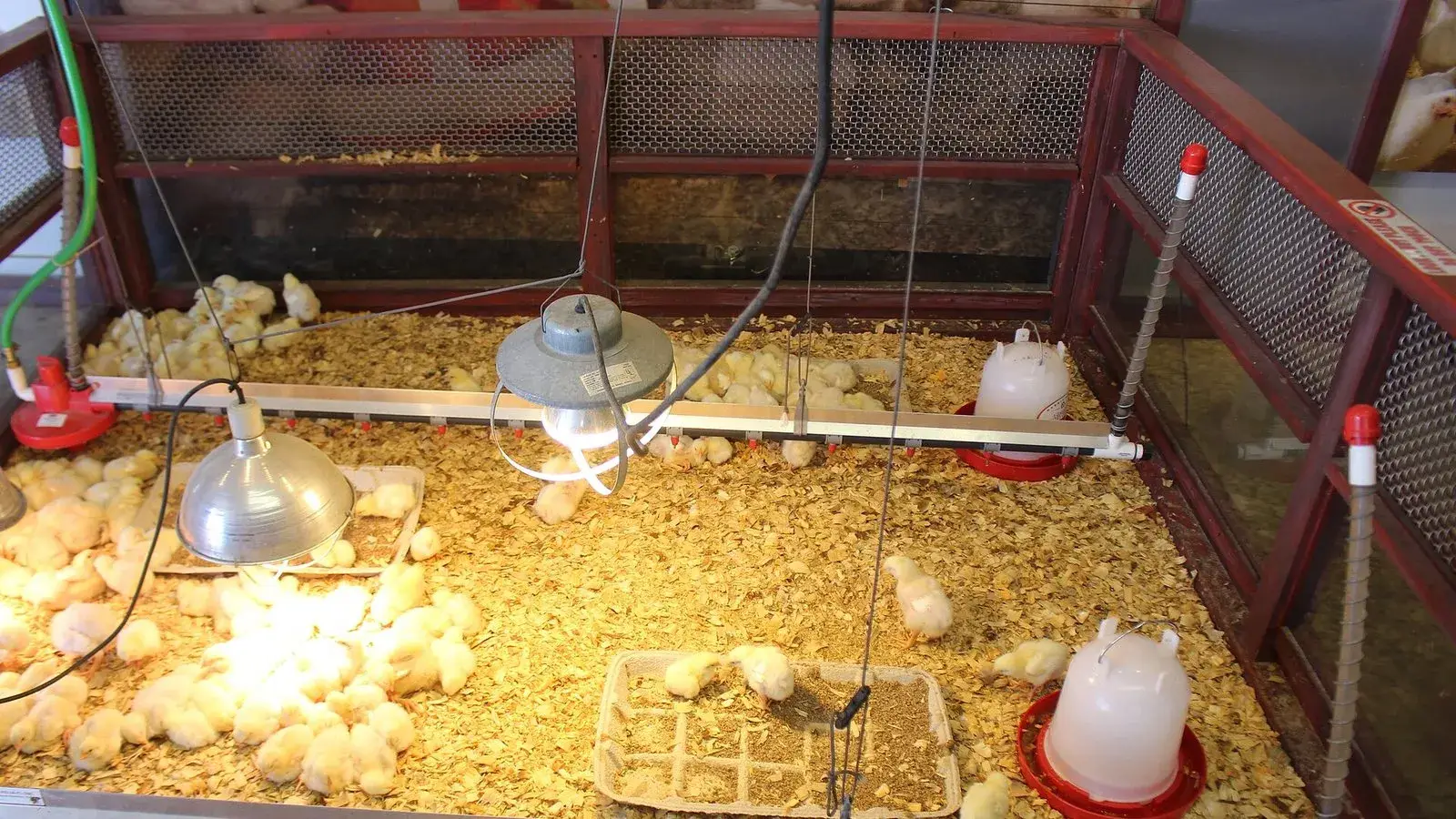
There is only one place in a brooder worth measuring: the air an inch or two above the bedding, directly under the heat source. That is where the chicks are.
A gauge stuck to the side of a tote is not measuring that. It is measuring the wall, several inches away from the heat and a foot from the chicks, and in a small brooder that gap can be 10 degrees. You can be looking at a display reading 85 while the spot under the lamp sits at 95, or the other way round. The number is real. It is just a number about the wrong place.
So the spec that decides this category is whether the sensor separates from the display, on a cable long enough to reach where the chicks are while the screen stays where you can see it. Almost nobody checks the probe line before buying. They check the price. We compared these six on probe type and cable, then on published accuracy, temperature range, whether humidity is read at all, and how many units you get for the money.
Our picks at a glance
Every product below wins one specific situation. Pick the row that matches your flock, your yard and your budget rather than reading top to bottom.
-
Best Overall

KETOTEK USB probe
Anyone brooding chicks who wants the reading taken at chick height under the heat source rather than off the brooder wall.
-
Best for Watching the Brooder and the Room Together

Shutao IN/OUT gauge
Keepers who want to see the brooder and the surrounding room on one screen and understand how much the room is influencing the brooder.
-
Best Pair for a Big Brooder

DWEII 2-pack gauge
Anyone with a brooder big enough to have a genuinely warm end and cool end who wants to see both temperatures at once.
-
Best for Sticking to a Smooth Wall

Weewooday suction pair
Keepers brooding in a glass tank or a smooth walled plastic tote who want gauges mounted without tape, screws or drilling.
-
Best Dial Gauge With No Batteries to Die

Pinnon GQF 0490
Anyone building a permanent brooder with a proper panel who wants a fitted gauge that never needs a battery.
Check price on Amazon for Pinnon Hatch Farms - GQF - 0490 - Brooder Thermometer (50 deg. F to 120 deg. F) on AmazonAbout $17.99 checked Aug 8, 2026
-
Best for a Room Full of Brooders

Weewooday 24-pack
Anyone running several brooders at once, or a hatchery setup where a gauge in every pen is worth more than one good gauge.
Check price on Amazon for Weewooday 24 Pcs Digital Humidity Meter with Probe LCD Thermometer,Black on AmazonAbout $40.99 checked Aug 8, 2026
Compare every pick side by side
Swipe the table sideways to see every column on a phone.
| Product | Award | Price band | Reads Humidity | Temp Range | Probe | Stated Accuracy | Pack Quantity | Power Source | Best use case | Buy link |
|---|---|---|---|---|---|---|---|---|---|---|
| KETOTEK USB probe | Best Overall | Under $30 | No, temperature only | -58 to 230 degrees F | Waterproof NTC 10K sensor on a 1 metre cable | Plus or minus 0.5 degrees F | Not stated | USB connector, input DC 4 to 25 V | Anyone brooding chicks who wants the reading taken at chick height under… | Check price for KETOTEK Digital Thermometer Temperature Gauge USB Power Supply with Sensor Probe for Aquarium Vehicle PC Case Incubators Brooders Climb Pet Fahrenheit & Celsius LCD Display on Amazon |
| Shutao IN/OUT gauge | Best for Watching the Brooder and the Room Together | Under $30 | Yes, humidity range not stated | Indoor 14 to 122 degrees F, outdoor probe -58 to 158 degrees F | Remote probe, IN/OUT button switches the reading | Not stated | Not stated | Not stated | Keepers who want to see the brooder and the surrounding room on one scree… | Check price for Digital Thermometer and Humidity Thermometers Indoor and Outdoor Digital Temperature and Hygrometer Gauge with Probe for Reptile Terrarium Thermometer Pet Keeping on Amazon |
| DWEII 2-pack gauge | Best Pair for a Big Brooder | Under $30 | Yes, 10 to 99% RH | -58 to 158 degrees F | Built-in probe on the meter | Plus or minus 2 degrees F and 5% RH | 2 | 2 LR44 button cells, included | Anyone with a brooder big enough to have a genuinely warm end and cool en… | Check price for DWEII 2 Pack Mini Digital Thermometer Hygrometer with Probe Indoor Temperature Humidity Meter Gauge LCD Fahrenheit Display Hygrometer Thermometer Gauge for Incubator, Humidor,Greenhouse on Amazon |
| Weewooday suction pair | Best for Sticking to a Smooth Wall | Under $30 | Yes, outdoor humidity 10 to 95% RH | Indoor 14 to 122 degrees F, outdoor -58 to 158 degrees F | 2 probes, each in a plastic case with a suction cup | Not stated, listing says readings refresh in about 10 seconds | 2 | 1 AAA battery, not included | Keepers brooding in a glass tank or a smooth walled plastic tote who want… | Check price for Weewooday 2 Pcs Reptile Thermometer and Humidity Gauge Reptile Terrarium Thermometer Hygrometer with Probes Indoor Outdoor Digital Pet Temperature and Hygrometer Gauge for Pet Keeping on Amazon |
| Pinnon GQF 0490 | Best Dial Gauge With No Batteries to Die | Under $30 | No, temperature only | 50 to 120 degrees F | None, analog dial that fits through a 1-1/8 in hole | Not stated, listing says analog display only | Not stated | Not stated, listing describes an analog display | Anyone building a permanent brooder with a proper panel who wants a fitte… | Check price for Pinnon Hatch Farms - GQF - 0490 - Brooder Thermometer (50 deg. F to 120 deg. F) on Amazon |
| Weewooday 24-pack | Best for a Room Full of Brooders | $30 to $60 | Yes, 10 to 99% RH | -58 to 158 degrees F | Stainless steel probe, listing says it is not waterproof | About 2 degrees F and about 5% RH | 24 | 2 LR44 button cells, included | Anyone running several brooders at once, or a hatchery setup where a gaug… | Check price for Weewooday 24 Pcs Digital Humidity Meter with Probe LCD Thermometer,Black on Amazon |
The full reviews
Each review below follows the same order: what it is, why it won its category, how it behaves in real use, and who should buy something else.
1 Best Overall
KETOTEK Digital Thermometer Temperature Gauge USB Power Supply with Sensor Probe for Aquarium Vehicle PC Case Incubators Brooders Climb Pet Fahrenheit & Celsius LCD Display
A waterproof sensor on a 1 metre cable puts the reading at chick height while the display stays outside, and the stated plus or minus 0.5 degrees F is the best published accuracy in this guide. It costs $9.99.
What we liked
- Waterproof sensor on a 1 metre cable, the only published cable length in this guide
- Stated accuracy of plus or minus 0.5 degrees F, the best published figure in this guide
- Display stays outside the brooder while the sensor sits where the chicks are
- Wide range of -58 to 230 degrees F, so it covers a brooder and far beyond
- Reads in Fahrenheit or Celsius on an LCD you can see across a room
- Costs $9.99, less than either of the picks here at around $18
What we did not
- Reads temperature only, so it is no use in an incubator where relative humidity is the number that matters
- Needs a USB supply within reach of the brooder, which means running a second cable to a place that also has water and bedding in it
- No alarm, no min and max memory and no logging, so a heat lamp that fails at 2am goes unrecorded until you next look at the screen
- The 0.5 degrees F claim comes with no stated calibration method, so it cannot be verified from the listing
Key specifications
- Dimensions
- 1.574803148 x 1.574803148 x 0.787401574 in (L x W x H)
- Weight
- 0.0771617917 pounds
- Colour
- Black
- Reads Humidity
- No, temperature only
- Temp Range
- -58 to 230 degrees F
- Probe
- Waterproof NTC 10K sensor on a 1 metre cable
- Stated Accuracy
- Plus or minus 0.5 degrees F
- Pack Quantity
- Not stated
- Power Source
- USB connector, input DC 4 to 25 V
Why the KETOTEK USB probe wins this category
Because it reaches the only place worth measuring.
A brooder has a steep gradient built into it on purpose, hot under the lamp and cool at the far end. The air an inch above the bedding under the heat is what the chicks are living in, and a display stuck to the side of a tote can be reading 10 degrees away from it. A 1 metre cable puts the sensor there and leaves the screen where you can see it without lifting the lid.
The accuracy figure is the bonus. Plus or minus 0.5 degrees F is the best published number in this guide, and it comes from a $9.99 gauge. Both of the picks here at around $18, the Pinnon dial and the Weewooday suction pair, publish no accuracy at all.
Living with the KETOTEK USB probe
The sensor is a waterproof NTC 10K type, which matters more in a brooder than it sounds. Chicks knock waterers over, and bedding under a lamp gets damp before you notice. A sensor rated to survive that is a sensor you can put on the floor rather than a few safe inches above it.
Power is a USB connector accepting DC 4 to 25 V, so it runs from a phone charger, a battery bank or any USB port. That is convenient in a garage or a spare room and it is one more cable to route into an area with water in it, so plan where it enters.
The range of -58 to 230 degrees F is far wider than brooding needs. It does mean the same unit is useful elsewhere afterwards.
Where the KETOTEK USB probe falls short
It reads temperature and nothing else. For a brooder that is the right call, because dry bedding is a management job and not a dial. For an incubator it rules the unit out completely, since humidity is the number that decides how much weight an egg loses before hatch. If you wanted one meter for both, this is not it.
The second gap is memory. There is no alarm, no min and max recall and no logging. The failure that actually kills a batch of chicks is a heat source going out overnight, and this gauge will show you the cold reading only if you happen to be standing in front of it. A min and max memory would at least tell you in the morning that something went wrong.
Finally, take the accuracy claim as published rather than proven. No calibration method is stated, and none of these gauges is a calibrated instrument.
Research based, not hands-on
Assessed on the published cable length, waterproof sensor type, stated accuracy figure, temperature range and power requirement from the live listing, then compared against the other five gauges here on how close each sensor can actually get to the chicks.
- Best for
- Anyone brooding chicks who wants the reading taken at chick height under the heat source rather than off the brooder wall.
- Skip it if
- You want one meter that also serves an incubator, because this reads temperature only and never relative humidity.
- The limitation to plan around
- There is no memory and no alarm. It shows you the temperature now, and nothing about what happened while you were asleep.
2 Best for Watching the Brooder and the Room Together
Digital Thermometer and Humidity Thermometers Indoor and Outdoor Digital Temperature and Hygrometer Gauge with Probe for Reptile Terrarium Thermometer Pet Keeping
One display, two readings. The IN/OUT button switches between the meter's own indoor sensor and a remote probe, so you can compare the brooder against the room it sits in without buying two gauges.
What we liked
- IN/OUT button switches one display between an indoor reading and a remote probe
- Lets you compare the brooder against the room, which is how you spot a cold snap pulling the whole thing down
- Remote probe means the sensor can reach chick height while the screen stays outside
- Outdoor probe range of -58 to 158 degrees F covers a brooder with plenty of margin
- Reads relative humidity as well as temperature, unlike the top pick
What we did not
- No probe cable length is published, so you cannot tell whether the sensor will actually reach the middle of your brooder
- No accuracy figure is stated at all, for either the indoor sensor or the probe
- No power source is stated, so you cannot tell which cells to buy or whether any are included
- The indoor range stops at 122 degrees F, which is below what the air right under a fresh heat lamp can reach
Key specifications
- Colour
- 1PCS
- Reads Humidity
- Yes, humidity range not stated
- Temp Range
- Indoor 14 to 122 degrees F, outdoor probe -58 to 158 degrees F
- Probe
- Remote probe, IN/OUT button switches the reading
- Stated Accuracy
- Not stated
- Pack Quantity
- Not stated
- Power Source
- Not stated
Why the Shutao IN/OUT gauge earns its place
The brooder reading on its own only tells you half the story. Knowing the brooder sits at 92 degrees F is useful. Knowing it sits at 92 while the room around it has dropped to 45 tells you why your lamp is working harder than it was yesterday, and warns you what will happen if the room drops further.
This gauge gives you both from one display. The probe goes into the brooder, the meter's own sensor reads the room it is sitting in, and the IN/OUT button flips between them. It also reads relative humidity, which the top pick does not.
At $8.99 that is a reasonable amount of information for the money, and it is the sensible pick for anyone brooding in an unheated garage or outbuilding where the ambient temperature swings.
Living with the Shutao IN/OUT gauge
Position the meter thoughtfully, because it is doing two jobs at once. It needs to be somewhere that genuinely represents the room, so not on top of the brooder lid where the escaping heat will warm it, and not right beside the heat lamp.
The probe goes where the chicks are, an inch or two above the bedding under the heat source. That is the reading that decides whether the chicks are comfortable.
Get into the habit of checking both. The gap between them is the piece of information you actually paid for, and it is what tells you whether a change in the brooder came from the heat source or from the weather outside.
Where the Shutao IN/OUT gauge falls short
The listing does not publish a cable length. That is a real problem on a product whose entire value rests on the probe reaching the right spot. A short lead means the meter has to sit close to the brooder, which then compromises the room reading, and you have no way to know which situation you are in before it arrives.
There is no accuracy figure for either sensor. The $9.99 KETOTEK publishes plus or minus 0.5 degrees F and this publishes nothing, so if a stated number matters to you, this is not the pick.
The power source is unstated too, so you cannot plan for cells or know whether any come in the box.
One more thing to watch: the indoor sensor is only rated to 122 degrees F. Air directly beneath a fresh heat lamp can go past that, so keep the meter body out of the hot zone and let the probe handle it.
Research based, not hands-on
Assessed on the stated IN/OUT switching behaviour, the two published temperature ranges and the humidity capability from the live listing, alongside the cable length, accuracy and power figures the listing does not provide, then compared against the other probe gauges here.
- Best for
- Keepers who want to see the brooder and the surrounding room on one screen and understand how much the room is influencing the brooder.
- Skip it if
- You need a known cable reach or a published accuracy figure, because this listing provides neither.
- The limitation to plan around
- You see one reading at a time. The button switches between indoor and probe rather than showing both together.
3 Best Pair for a Big Brooder
DWEII 2 Pack Mini Digital Thermometer Hygrometer with Probe Indoor Temperature Humidity Meter Gauge LCD Fahrenheit Display Hygrometer Thermometer Gauge for Incubator, Humidor,Greenhouse
Two meters for $7.99, the lowest price in this guide, which lets you read the warm end and the cool end of a large brooder at the same time. The catch is that the probe sits on the meter body, so the meter has to go where the reading is.
What we liked
- Two meters for $7.99, the lowest price in this guide
- Enough units to read the warm end and the cool end of a large brooder at once
- Publishes an accuracy figure of plus or minus 2 degrees F and 5% RH, which the three pricier picks here that state nothing do not
- Reads relative humidity from 10 to 99% RH as well as temperature
- LR44 button cells are included, so it works out of the box
What we did not
- The probe is built into the meter body, so the whole unit has to sit at chick height and the display ends up somewhere you cannot read without reaching in
- Putting the meter inside the brooder puts the electronics and the battery compartment among bedding, droppings and spilled water
- The stated 2 degrees F and 5% RH figures come with no calibration method, so they cannot be checked
- LR44 cells give no warning before they go flat, and there is no low battery indicator quoted
Key specifications
- Size
- Black
- Colour
- 2PCS Black
- Reads Humidity
- Yes, 10 to 99% RH
- Temp Range
- -58 to 158 degrees F
- Probe
- Built-in probe on the meter
- Stated Accuracy
- Plus or minus 2 degrees F and 5% RH
- Pack Quantity
- 2
- Power Source
- 2 LR44 button cells, included
Why the DWEII 2-pack gauge earns its place
A brooder should have a warm end and a cool end so the chicks can choose. Most keepers set that up and then measure only one of them.
Two meters for $7.99, the lowest price in this guide, solves that cheaply. Put one under the heat source and one at the far end and you can see the actual gradient instead of guessing at it. That gradient is the thing that lets chicks self regulate, and a brooder where both ends read the same has no cool end at all, which is a problem worth knowing about.
It also publishes an accuracy figure, plus or minus 2 degrees F and 5% RH. That is coarser than the KETOTEK's 0.5 degrees F, but it is more than the $17.99 Pinnon or the $17.59 Weewooday pair tell you.
Living with the DWEII 2-pack gauge
The important thing to plan is placement, because the probe is carried on the meter itself. There is no cable to run, which makes setup simple, and it means the meter has to sit exactly where you want the number.
In practice that means finding a low spot where the unit will not be knocked over, buried in bedding or stood on. A small block, a brick or a shelf bracket at chick height works. Sitting it flat on the bedding will get it covered.
You will need to look into the brooder to read it, so lift the lid or use a clear one. The units are small, so a wide brooder will need you to get reasonably close to make out the display.
Cells are LR44 button types and they come in the box, which is more than the Weewooday suction pair offers.
Where the DWEII 2-pack gauge falls short
The design fights the whole point of this category. The reading you want is at chick height, so this meter has to live at chick height, which puts the display down among the bedding facing whichever way you set it. Every time you check the temperature you are opening the brooder and leaning in, and opening the brooder is itself something that changes the temperature.
It also puts the electronics and a battery compartment into a damp, dusty environment with chicks walking on it. That is not what a small indoor hygrometer is built for, and it is a reasonable guess at how these eventually fail.
The accuracy claim is unverifiable. No calibration method is published, and there is no low battery warning quoted, so the first sign of a flat LR44 will be a blank screen.
Research based, not hands-on
Assessed on the stated pack quantity, published accuracy figures, temperature and humidity ranges, probe arrangement and included cells from the live listing, then compared against the separated probe designs here on how far the sensor can get from the display.
- Best for
- Anyone with a brooder big enough to have a genuinely warm end and cool end who wants to see both temperatures at once.
- Skip it if
- You want the display outside the brooder, because the sensor is on the meter body and the two cannot be separated.
- The limitation to plan around
- Meter and sensor are one object. Wherever you want the reading taken is where the whole meter has to live.
4 Best for Sticking to a Smooth Wall
Weewooday 2 Pcs Reptile Thermometer and Humidity Gauge Reptile Terrarium Thermometer Hygrometer with Probes Indoor Outdoor Digital Pet Temperature and Hygrometer Gauge for Pet Keeping
Two gauges, each in a plastic case with a suction cup, so they mount on glass or a smooth plastic tote without tape or screws. Useful mounting, but no accuracy figure is published at $17.59.
What we liked
- Suction cup mounting sticks to glass or a smooth plastic tote with no tape or drilling
- Two units in the pack, enough for two brooders or two ends of one
- Reads relative humidity from 10 to 95% RH as well as temperature
- Separate indoor and outdoor readings, with the outdoor probe rated -58 to 158 degrees F
- Readings refresh in about 10 seconds per the listing, so a change shows up quickly
What we did not
- No accuracy figure is published for either sensor, at $17.59, while the $9.99 KETOTEK states plus or minus 0.5 degrees F
- Suction cups need a smooth non porous surface, so they will not hold on cardboard, plywood or a textured tote, which covers most homemade brooders
- Suction cups lose grip as the air warms and the cup relaxes, so a gauge mounted near a heat lamp can drop into the bedding
- The AAA battery is not included, so neither unit works out of the box
- Mounting on a wall by design puts the sensor case against the wall, which is exactly the air you are not trying to measure
Key specifications
- Weight
- 0.3 pounds
- Colour
- Black
- Reads Humidity
- Yes, outdoor humidity 10 to 95% RH
- Temp Range
- Indoor 14 to 122 degrees F, outdoor -58 to 158 degrees F
- Probe
- 2 probes, each in a plastic case with a suction cup
- Stated Accuracy
- Not stated, listing says readings refresh in about 10 seconds
- Pack Quantity
- 2
- Power Source
- 1 AAA battery, not included
Why the Weewooday suction pair earns its place
Mounting is a real problem people underrate. A gauge lying loose in a brooder gets knocked over, buried or stood on, and taping something to a plastic tote works until the tape gives up in the warmth.
These two arrive already solved: each probe sits in a plastic case with a suction cup on the back. On glass or a smooth plastic bin they go straight on, come off cleanly, and reposition in seconds. If you brood in a glass tank or a slick sided tote, that is genuinely convenient, and two units means two brooders or two ends of the same one.
They read humidity as well, from 10 to 95% RH, and the listing says the display refreshes in about 10 seconds.
Living with the Weewooday suction pair
Clean the surface before you stick them on. Suction cups fail on dust, and a brooder generates a remarkable amount of dust within a week, so plan to re-seat them occasionally.
Mount them as low as the cup will hold, because the closer you get to bedding level the closer you get to the air the chicks are actually in. High on the wall is the easy place to stick them and the least useful place to read.
Buy AAA cells at the same time. The listing says one AAA per unit and that it is not included, so without them the pack does nothing on arrival.
Indoor and outdoor readings are handled separately, with the outdoor probe carrying the wide -58 to 158 degrees F range.
Where the Weewooday suction pair falls short
The missing accuracy figure is the main complaint. At $17.59 it costs $7.60 more than the KETOTEK and publishes no accuracy at all, while that $9.99 gauge states plus or minus 0.5 degrees F. You are paying for a mounting method rather than a better sensor.
The mounting method is also narrower than it sounds. Suction cups need a smooth, non porous, clean surface. Cardboard boxes, plywood brooders, galvanised stock tanks and textured plastic bins are all common brooder builds, and a suction cup holds on none of them. Warmth makes it worse, because a warming cup relaxes and lets go, so the position closest to the heat lamp is the position most likely to end with a gauge in the bedding.
And there is a design tension worth naming. A wall mounted sensor reads wall air. That is the exact reading this whole category is trying to get away from.
Research based, not hands-on
Assessed on the stated pack quantity, the suction cup mounting arrangement, the separate indoor and outdoor ranges and the refresh time from the live listing, alongside the accuracy figure the listing does not provide, then compared against the wired probe designs here.
- Best for
- Keepers brooding in a glass tank or a smooth walled plastic tote who want gauges mounted without tape, screws or drilling.
- Skip it if
- Your brooder is cardboard, plywood or a textured plastic bin, because a suction cup will not stay on any of those.
- The limitation to plan around
- The mounting method decides the sensor position. A suction cup only sticks to a smooth wall, and the wall is not where the chicks are.
5 Best Dial Gauge With No Batteries to Die
Pinnon Hatch Farms - GQF - 0490 - Brooder Thermometer (50 deg. F to 120 deg. F)
An analog dial made to drop through a 1-1/8 in hole, with a 50 to 120 degrees F range covering exactly the brooding window. Nothing to charge, nothing to flatten, and nothing to read at a distance either.
What we liked
- Analog display with no batteries, so it cannot go blank at 3am
- Fits a standard 1-1/8 in hole, which suits a purpose built brooder panel
- The 50 to 120 degrees F range covers the whole brooding window with no wasted scale
- Sold by a poultry brand for this specific job rather than adapted from a reptile gauge
- Nothing to fail electronically in a warm, dusty, humid brooder
What we did not
- There is no probe at all, so it reads the air at the panel it is mounted in rather than the air at chick height
- It requires a 1-1/8 in hole, so it cannot go into a cardboard box or a plastic tote without cutting one
- No accuracy figure is published at $17.99, while the $9.99 KETOTEK states plus or minus 0.5 degrees F
- Reads temperature only and gives no humidity, no memory and no alarm
- The scale stops at 50 degrees F, so it tells you nothing useful once the brooder is off and the space is cold
About $17.99 checked Aug 8, 2026
Key specifications
- Reads Humidity
- No, temperature only
- Temp Range
- 50 to 120 degrees F
- Probe
- None, analog dial that fits through a 1-1/8 in hole
- Stated Accuracy
- Not stated, listing says analog display only
- Pack Quantity
- Not stated
- Power Source
- Not stated, listing describes an analog display
Why the Pinnon GQF 0490 earns its place
Everything else here can go blank. Button cells die without warning, an AAA cell fails on the cold night it is needed, and a USB supply is only as reliable as the socket it is in.
This dial has none of that. It is an analog gauge, it starts working when you put it in and it keeps working, and in a warm, dusty, humid space full of chicks that simplicity has real value. It is also the only pick here made by a poultry brand for brooding specifically, rather than a reptile or humidor gauge pressed into service.
The range is well chosen too. 50 to 120 degrees F covers the whole brooding arc from a 95 degrees F first week down to a feathered flock, with no wasted scale at either end.
Living with the Pinnon GQF 0490
This is a fitted part, not a gauge you drop in. It goes through a 1-1/8 in hole, which means you are drilling a panel, and that means a wooden brooder box, a plywood partition or a purpose built brooder rather than a storage tote.
Choose the hole position with care, because it decides everything this gauge will ever tell you. As low as the build allows, and as close to under the heat source as you can manage. Once it is cut, that is the reading you have.
Reading it is a walk over rather than a glance. Analog dials on the far side of a brooder are hard to make out, so put it where you pass rather than where it is convenient to drill.
Where the Pinnon GQF 0490 falls short
The absence of a probe is the fundamental limit. Everything else in this guide can get a sensor to the chicks. This one measures the air at the panel it is set into, and that air is not what the chicks are breathing under the lamp. The gap between the two can be significant in a small brooder, and there is nothing you can do about it after the hole is cut except cut a better one.
There is no published accuracy at $17.99. Every other pick here either costs less or arrives as a multi-pack, so on a per gauge basis this is the dearest thing in the guide, and it tells you less about its own performance than the $7.99 DWEII pair does.
It also does the least. No humidity, no memory, no minimum and maximum, no alarm. And the scale stops at 50 degrees F, so once brooding is over it has no second use as a general thermometer.
Research based, not hands-on
Assessed on the published temperature range, the analog display type, the 1-1/8 in mounting hole requirement and the absence of any probe or stated accuracy on the listing, then compared against the wired probe gauges here on where each one takes its reading.
- Best for
- Anyone building a permanent brooder with a proper panel who wants a fitted gauge that never needs a battery.
- Skip it if
- You brood in a plastic tote or a cardboard box, because this needs a 1-1/8 in hole cut into a solid panel.
- The limitation to plan around
- With no probe, the reading comes from wherever the panel is, and the panel is rarely at chick height under the heat.
6 Best for a Room Full of Brooders
Weewooday 24 Pcs Digital Humidity Meter with Probe LCD Thermometer,Black
Twenty four gauges for $40.99, which works out at about $1.71 each, the lowest cost per gauge in this guide. It only makes sense if you are running many brooders or want spares you can throw away.
What we liked
- Twenty four units for $40.99, about $1.71 each, the lowest cost per gauge in this guide
- Enough gauges to cover a whole brooding room, or to keep spares for when one fails
- Stainless steel probe on each unit, so the sensor can sit apart from the meter body
- Publishes accuracy of about 2 degrees F and about 5% RH
- Reads humidity from 10 to 99% RH and temperature from -58 to 158 degrees F
- LR44 cells are included with each unit
What we did not
- The listing states the stainless probe is not waterproof, so a tipped chick waterer or damp bedding can end a unit
- Twenty four gauges is far more than any single brooder needs, so most of the $40.99 sits in a drawer unused
- At $40.99 it is the highest total price in this guide, which is real money if you only ever want one gauge
- The accuracy claim is given as about 2 degrees F with no calibration method, so it cannot be checked
- Twenty four sets of LR44 cells will start going flat at different times, and there is no low battery warning quoted
About $40.99 checked Aug 8, 2026
Key specifications
- Dimensions
- 7.28 x 7.28 x 3.94 in (L x W x H)
- Reads Humidity
- Yes, 10 to 99% RH
- Temp Range
- -58 to 158 degrees F
- Probe
- Stainless steel probe, listing says it is not waterproof
- Stated Accuracy
- About 2 degrees F and about 5% RH
- Pack Quantity
- 24
- Power Source
- 2 LR44 button cells, included
Why the Weewooday 24-pack earns its place
Scale is the whole argument. At $40.99 for 24 units the cost works out at roughly $1.71 a gauge, which is the lowest per gauge figure in this guide by a wide margin. The DWEII pair comes to about $4.00 each and the Weewooday suction pair to about $8.80 each.
If you are running a brooding room with several pens, that changes what is possible. Instead of one good gauge that you move around, you put a gauge in every pen and read them all in one walk. Spotting the one pen that has drifted is far easier when every pen has its own number.
Each unit carries a stainless steel probe, so the sensor can sit apart from the meter, and each states about 2 degrees F and about 5% RH.
Living with the Weewooday 24-pack
Label them. Twenty four identical black gauges become confusing fast, and a strip of tape with a pen number on each one saves a lot of squinting later.
Set the probes at chick height under the heat in each pen, and keep the meter bodies up on a rail or a bracket where they are easy to read in a row. That layout is what makes a large setup manageable.
Do not treat individual units as precious. At $1.71 each, a gauge that gets soaked, stood on or lost is a minor event, and that is a reasonable way to think about equipment in a busy brooding room. Keep a few in reserve and swap rather than repair.
The cells are LR44 button types and come included with each unit.
Where the Weewooday 24-pack falls short
The listing is explicit that the stainless probe is not waterproof, and a brooder is one of the wetter environments a small probe can end up in. Chick waterers get tipped, bedding under a waterer stays damp, and a probe lying in that is a probe on borrowed time. Route them so they sit above bedding level and away from the water station.
The obvious problem is quantity. If you have one brooder, you are paying $40.99 for the highest total price in this guide and using one gauge out of 24, and the $9.99 KETOTEK publishes far better accuracy than these do. The maths only works if you genuinely have pens to fill.
The accuracy is also stated loosely, as about 2 degrees F and about 5% RH, with no calibration method. Cross-check two of them against each other when they arrive, because the gap between two gauges is a fair guide to how much you can trust either one.
Research based, not hands-on
Assessed on the stated pack quantity, cost per unit against the other packs here, the published probe material and its stated lack of waterproofing, the accuracy claim and the included cells from the live listing.
- Best for
- Anyone running several brooders at once, or a hatchery setup where a gauge in every pen is worth more than one good gauge.
- Skip it if
- You have one brooder, because twenty three of these will sit in a drawer and the $9.99 KETOTEK measures better.
- The limitation to plan around
- The probes are explicitly not waterproof, so every unit has to be kept clear of spilled water and damp bedding.
How we compared these brooder thermometers
We started with one question: can the sensor get to where the chicks are while the display stays where you can read it?
That sounds like a convenience feature. It is not. A brooder has a steep temperature gradient by design, hot under the lamp and cooler at the far end, and the reading changes by the inch. A gauge stuck to the wall of a tote is reporting on a place no chick spends the night. Getting the sensor to the right spot changes the reading by more than any accuracy figure on this page.
After probe and cable, we looked at published accuracy, and there is much less of it about than you would expect. Then temperature range, whether humidity is measured at all, how each unit mounts, what powers it, and how many you get for the money.
Prices here run from $7.99 to $40.99, and the money buys quantity or mounting rather than precision.
What actually matters in a brooder thermometer
The sensor has to leave the display
There are three arrangements on this page and they are not equally useful.
A wired remote probe puts the sensor at chick height and the screen on the outside of the brooder. KETOTEK does this on a 1 metre waterproof cable, and it is the only pick here that publishes a cable length at all. Shutao does it too, with a button that switches one display between the room reading and the probe reading, though it publishes no cable length.
A probe carried on the meter body, like the DWEII pair, means the whole meter has to sit where you want the reading. That works if you can position it low and safely, and it is awkward if you also want to read it without reaching into the brooder.
No probe at all is the Pinnon. It is an analog dial made to drop through a 1-1/8 in hole, which is exactly right for a built-in brooder panel and no use in a plastic tote.
Published accuracy is thinner than the prices suggest
Only three of these six publish an accuracy figure. KETOTEK states plus or minus 0.5 degrees F. DWEII states 2 degrees F and 5 percent RH. The 24-pack Weewooday says about 2 degrees F and about 5 percent RH.
The other three publish nothing at all, and that includes both of the picks around $18. The Pinnon dial states no accuracy, and the Weewooday suction pair states none either, offering instead that readings refresh in about 10 seconds.
None of these figures comes with a calibration method, so record them and do not lean on them. The useful conclusion is simply that spending more here does not buy a better published number. The $9.99 KETOTEK has the best one on the page.
Humidity is optional, and mostly not the job
Four of these read relative humidity. In a brooder that is a number you will look at and not act on, because dry bedding is a management job rather than a dial to tune.
It matters if you want one meter that also serves an incubator, where humidity controls how much weight an egg loses before hatch. If that is the plan, the temperature only picks, KETOTEK and Pinnon, are out.
Setting brooder temperature by the chicks, not the number
Start at about 95 degrees F under the heat source in the first week and drop it roughly 5 degrees a week from there. That is the standard guide and it is a fine place to begin.
Then stop looking at the meter and look at the chicks. A tight huddle pressed under the heat means too cold. Chicks pinned into the far corners, panting, with wings lifted away from the body, means too hot. Chicks spread across the brooder, eating, drinking and sleeping in loose groups, means you have it right.
Always give them a warm end and a cool end. Chicks are better at choosing their own temperature than any gauge is at setting it for them, and a brooder held at one uniform temperature takes that choice away.
Use the meter for what it is genuinely good at: catching a change. A lamp that has failed at 2am, a bulb that has drifted, a cold snap that has pulled the whole brooder down. That is the job. Chasing a number to the degree is not.
Final recommendation
The KETOTEK USB probe is the buy for most people brooding chicks. A waterproof sensor on a 1 metre cable puts the reading exactly where it belongs, the stated plus or minus 0.5 degrees F is the best published accuracy here, and it costs $9.99. Its honest limits are that it reads temperature only, it needs a USB supply near the brooder, and it has no alarm, no min and max memory and no logging.
If you want to watch the brooder and the room on one screen, the Shutao IN/OUT gauge switches between an indoor reading and a remote probe, which is a genuinely useful pairing. If your brooder is large enough to need a reading at each end, the DWEII 2-pack gauge is the cheap way to get two. And if you are building a brooder with a proper panel rather than using a tote, the Pinnon GQF 0490 fits a 1-1/8 in hole and has no batteries to die.
Questions people ask before buying
Where exactly should the brooder thermometer sensor go?
Put the sensor at chick height, about an inch or two above the bedding, directly under the warmest part of the heat source. That is the air the chicks are living in. A gauge mounted on the brooder wall is reading air that has already moved away from the heat, and in a small brooder the difference between the two spots can be 10 degrees. This is the whole reason a separate probe on a cable is worth more than a slightly better accuracy figure. Reaching the right place beats measuring the wrong place precisely.
What temperature should a brooder be?
The usual starting point is about 95 degrees F under the heat source in week one, dropping roughly 5 degrees a week until the chicks are feathered or the brooder matches the outside air. Treat that as a guide rather than a rule. What matters more is that the brooder has a warm end and a cool end, so the chicks can choose. A single temperature everywhere gives them nowhere to go when they have had enough heat, and chicks regulate themselves well when you let them.
How do I know if the chicks are too hot or too cold?
Read the chicks before you read the meter. Huddled in a tight pile directly under the heat means they are cold. Pressed into the far corners, panting, with wings held away from the body, means they are too hot. Spread out across the brooder, moving around, eating and drinking and sleeping in loose groups, means the temperature is right. The meter is there to catch a change you would otherwise miss, such as a lamp failing overnight, not to be chased to an exact figure.
Are these thermometers accurate enough for a brooder?
For this job, yes, with one caveat. None of these is a calibrated instrument, and the accuracy claims here are manufacturer figures with no stated calibration method behind them. KETOTEK publishes plus or minus 0.5 degrees F, DWEII publishes 2 degrees F and 5 percent RH, Weewooday says about 2 degrees F, and the Pinnon dial and the Shutao publish nothing. A couple of degrees of error does not matter much when you are watching for a 10 degree change or a heat source that has failed. Position matters far more than the last decimal place.
Do I need one that reads humidity as well?
Not for a brooder. Chicks need dry bedding, and you manage that by changing the bedding and keeping the waterer from spilling, not by watching a percentage. That is why the KETOTEK is the top pick despite reading temperature only. Humidity matters in an incubator, where it controls how much moisture an egg loses before hatch, so if you want one gauge for both jobs then a unit that reads relative humidity is worth having. For brooding alone, it is a number you will not act on.
Does a brooder thermometer help if I use a heat plate instead of a lamp?
It helps differently. A heat plate warms the chicks by contact and radiant heat underneath it, so the air temperature in the brooder is not the thing you set. With a plate you adjust the height of the plate rather than chasing an air temperature, and you judge it by whether the chicks fit comfortably underneath and come out to eat. A probe under the plate still tells you if the plate has stopped working, which is the failure worth catching, but do not try to tune a plate to 95 degrees F of air temperature.
Why you can trust this guide
- Written by
- Sam Reddick, Lead gear reviewer, Chicken Geek. Specialist areas: Coop design and predator proofing, Feeding and watering systems, Cold-weather flock management, Incubation and brooding.
- Fact checked by
- Marta Voss
- Published
- August 8, 2026 · Last updated August 8, 2026 · Products and links rechecked August 8, 2026
- How we picked
- Every gauge was compared first on whether the sensor can be separated from the display and how far it reaches, because that decides whether you are reading the chicks or the room, then on published accuracy figures, temperature range, whether relative humidity is measured, how the unit mounts, what powers it and how many units come in the pack.
- Evidence used
- None of the 6 products on this page were sent to us or bought for a hands-on test. Every recommendation here is research based: manufacturer specifications, listed dimensions and materials, owner feedback at volume, and comparison against equipment our team has owned. Each review states this again above the buy button so you are never guessing which kind of evidence sits behind a pick.
- Editorial standards
- No brand pays for placement, and no manufacturer sees this page before it goes live. Read our editorial policy and testing method.
- Affiliate disclosure
- Chicken Geek is reader supported. We earn a commission from qualifying purchases made through links on this page, at no extra cost to you, and no brand has paid for a placement or an award here.
About the author

Lead gear reviewer, Chicken Geek
Sam has kept a backyard laying flock for eleven years, through two coop rebuilds, one very determined raccoon and several winters cold enough to freeze a waterer solid overnight. He writes the buying guides at Chicken Geek and is responsible for how products get compared.
- Eleven years keeping a mixed laying flock of 8 to 14 birds
- Has built, bought and replaced six different coops
- Runs the product comparison framework used across Chicken Geek
- Reads manufacturer manuals, spec sheets and warranty terms before every recommendation