We Compared 6 Incubator Hygrometers on Calibration
We compared six incubator hygrometers on whether you can calibrate them, because every cheap RH sensor drifts and a 5 percent error moves your humidity target.

By Marta Voss Editor and fact checker, Chicken Geek
Fact checked by Sam Reddick
Published Prices and stock checked 7 min read
Everybody shopping for an incubator hygrometer compares accuracy figures. Almost nobody asks the question underneath them: can you check whether the figure is true, and can you correct it if it is not?
Cheap relative humidity sensors drift. That is not a defect, it is how they age, and a gauge that read correctly last spring can be 5 percent out by this one. Five percent sounds small until you look at what it does. You set the incubator to 45 percent and it is really running at 50. Nothing on the display tells you. The eggs tell you eventually, by losing weight too slowly, and by then the hatch is most of the way through.
So the spec that decides this category is whether the unit has a calibration adjustment. One of these six does. With the rest, you find your error with a salt test and then write the offset on a strip of tape stuck to the case, which works but is a workaround rather than a fix. We compared these six on calibration first, then on where the sensor can physically sit, then on what each listing actually publishes about range and accuracy.
Our picks at a glance
Every product below wins one specific situation. Pick the row that matches your flock, your yard and your budget rather than reading top to bottom.
-
Best Overall
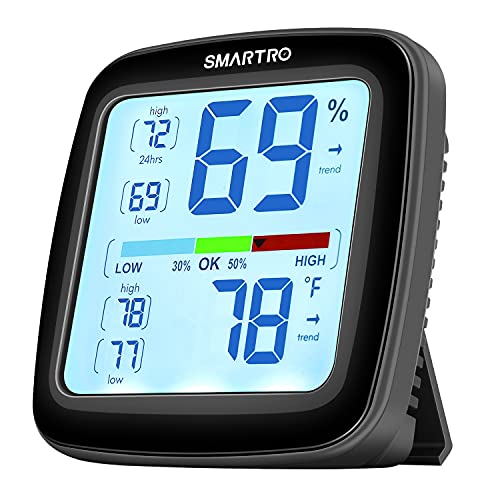
SMARTRO SC42
Anyone who wants to verify their incubator humidity with a salt test and then correct the gauge rather than remember an offset.
Check price on Amazon for SMARTRO SC42 Professional Digital Hygrometer Indoor Room Thermometer on AmazonAbout $18.99 checked Aug 8, 2026
-
Best for Reading Without Opening the Lid

IncuTherm Plus
Keepers who check humidity often and want the reading without lifting the lid and dumping the incubator's air every time.
Check price on Amazon for IncuTherm™ Plus Digital Thermometer and Hygrometer for Egg Incubator on AmazonAbout $28.99 checked Aug 8, 2026
-
Best Cheap Way to Get a Probe Inside

Shutao 3-pack probe
Anyone who wants a probe inside the incubator and two spare gauges to cross-check the reading against, for very little money.
-
Best for Cutting Into a Homemade Incubator
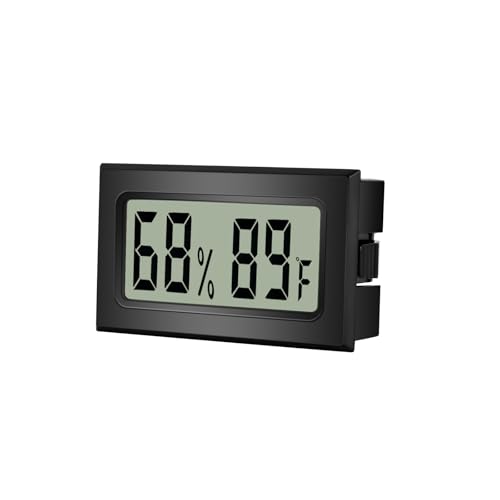
Veanic panel gauge
Anyone building their own incubator or cabinet who wants a flush-fitted gauge in a panel they are cutting anyway.
Check price on Amazon for Reptile Thermometer Hygrometer Meter Indoor Temperature Gauge on AmazonAbout $4.59 checked Aug 8, 2026
-
Best for Cross-Checking Several Gauges

JJMTDS 6-pack
Anyone who wants to find out how much their incubator's humidity readings actually disagree before trusting any single number.
Check price on Amazon for 6 Pack Mini Hygrometer Indoor Humidity Meter, Digital Thermometer Monitor on AmazonAbout $7.89 checked Aug 8, 2026
-
Best for the Room Around the Incubator
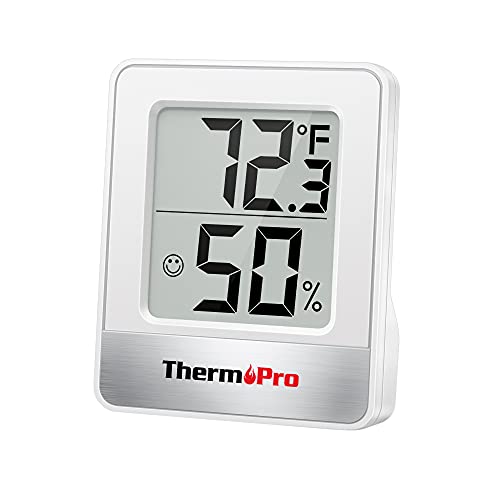
TempPro TP49
Keepers who want to track the room conditions around the incubator, which is what drives how hard the machine has to work.
Check price on Amazon for TempPro TP49 Digital Hygrometer Indoor Thermometer on AmazonAbout $8.99 checked Aug 8, 2026
Compare every pick side by side
Swipe the table sideways to see every column on a phone.
| Product | Award | Price band | Humidity Range | Humidity Accuracy | Temp Range | Remote Probe | Mounting | Batteries | Best use case | Buy link |
|---|---|---|---|---|---|---|---|---|---|---|
| SMARTRO SC42 | Best Overall | Under $30 | 1 to 99% RH | Within 2% RH, and the unit can be manually calibrated | -4 to 158 degrees F, tolerance within 0.5 degrees F | Not stated, sensor is built in | Retractable stand, two magnets or a wall-mount hole | 2 AAA, not included | Anyone who wants to verify their incubator humidity with a salt test and… | Check price for SMARTRO SC42 Professional Digital Hygrometer Indoor Room Thermometer on Amazon |
| IncuTherm Plus | Best for Reading Without Opening the Lid | Under $30 | Not stated | Not stated | Not stated, reads in Celsius or Fahrenheit | Yes, probe sits inside the incubator while the display stays outside | Not stated, display is designed to sit outside the incubator | Battery included | Keepers who check humidity often and want the reading without lifting the… | Check price for IncuTherm™ Plus Digital Thermometer and Hygrometer for Egg Incubator on Amazon |
| Shutao 3-pack probe | Best Cheap Way to Get a Probe Inside | Under $30 | 10 to 99% RH | Plus or minus 5% RH | -58 to 158 degrees F | Yes, wired sensor probe, listing says it is not waterproof | Not stated, listing says to place the probe where you want to measure | Not stated | Anyone who wants a probe inside the incubator and two spare gauges to cro… | Check price for 3Pcs Mini Digital Thermometer Hygrometer with Probe Electronic Temperature Humidity Gauge Meters Indoor LCD Display Fahrenheit for Humidors,Greenhouse,Garden,Incubator Reptile Terrarium on Amazon |
| Veanic panel gauge | Best for Cutting Into a Homemade Incubator | Under $30 | 10 to 99% RH | Plus or minus 5% RH, resolution 1% | -58 to 158 degrees F, resolution 0.2 degrees F | Not stated, sensor is in the body | Drops into a 1.81 x 1.06 in cut-out or sticks on with double-sided tape | Not stated | Anyone building their own incubator or cabinet who wants a flush-fitted g… | Check price for Reptile Thermometer Hygrometer Meter Indoor Temperature Gauge on Amazon |
| JJMTDS 6-pack | Best for Cross-Checking Several Gauges | Under $30 | 10 to 99% RH | Plus or minus 5% RH | -58 to 158 degrees F | Not stated | Not stated | 2 LR44 button cells included, listing claims up to 8 months per set | Anyone who wants to find out how much their incubator's humidity readings… | Check price for 6 Pack Mini Hygrometer Indoor Humidity Meter, Digital Thermometer Monitor on Amazon |
| TempPro TP49 | Best for the Room Around the Incubator | Under $30 | Not stated | Plus or minus 2 to 3% RH | Not stated, accuracy given as plus or minus 1 degree F | Not stated | Three ways, tabletop stand, magnetic back or hanging mount | Not stated | Keepers who want to track the room conditions around the incubator, which… | Check price for TempPro TP49 Digital Hygrometer Indoor Thermometer on Amazon |
The full reviews
Each review below follows the same order: what it is, why it won its category, how it behaves in real use, and who should buy something else.
1 Best Overall
SMARTRO SC42 Professional Digital Hygrometer Indoor Room Thermometer
The only hygrometer here with a manual calibration adjustment, so a salt test becomes a correction instead of a note on tape. It also publishes the most complete figures on this page, at $18.99.
What we liked
- Manual calibration adjustment, the only one in this guide, so a salt test can actually be dialled out
- Publishes a full humidity range of 1 to 99% RH rather than an accuracy figure with no range behind it
- States within 2% RH on humidity and within 0.5 degrees F on temperature
- Wide temperature range of -4 to 158 degrees F, so it works outside the incubator too
- Three mounting options, a retractable stand, two magnets or a wall-mount hole
What we did not
- The sensor is built into the body, so the whole display has to live inside a warm, humid incubator that it was not designed for
- You have to open the lid to read it, and opening the lid vents the humid air you were trying to measure
- The stand, magnets and wall-mount hole are all useless once the unit is sitting inside a closed incubator
- Batteries are not included, so it does nothing until you supply 2 AAA cells
- Calibration corrects a known offset but does not stop the sensor drifting again, so the salt test has to be repeated
About $18.99 checked Aug 8, 2026
Key specifications
- Dimensions
- 3.4 x 1.18 x 3.4 in (L x W x H)
- Weight
- 0.2866009406 pounds
- Colour
- black
- Humidity Range
- 1 to 99% RH
- Humidity Accuracy
- Within 2% RH, and the unit can be manually calibrated
- Temp Range
- -4 to 158 degrees F, tolerance within 0.5 degrees F
- Remote Probe
- Not stated, sensor is built in
- Mounting
- Retractable stand, two magnets or a wall-mount hole
- Batteries
- 2 AAA, not included
Why the SMARTRO SC42 wins this category
Because it is the only one you can put right.
Every cheap RH sensor drifts. A salt test will tell you by how much, and that is genuinely useful with any gauge, but on five of these six the test ends with you writing a number on tape and doing mental arithmetic every time you look at the display. On this one you seal it in a bag with a damp salt slurry, see how far off 75 percent it reads, and dial the difference out. The number on the screen becomes the number you act on.
The published figures back it up. A range of 1 to 99% RH, within 2% RH, and within 0.5 degrees F on temperature. That is more than any other listing here commits to, and it costs $18.99 rather than the $28.99 of the pick that publishes no humidity figures at all.
Living with the SMARTRO SC42
Run the salt test before the first hatch, not during it. Half a bottle cap of table salt, a few drops of water to make a slurry, both sealed in a zip bag for six to eight hours at steady room temperature, then adjust.
Repeat it once a season. Calibration fixes today's offset, it does not immunise the sensor against drifting again, and a gauge you calibrated two years ago is back to being an unknown.
Inside the incubator, put it where you can see the screen through the window if your machine has one. That reduces how often you need to lift the lid. Have 2 AAA cells ready, because none come in the box.
Where the SMARTRO SC42 falls short
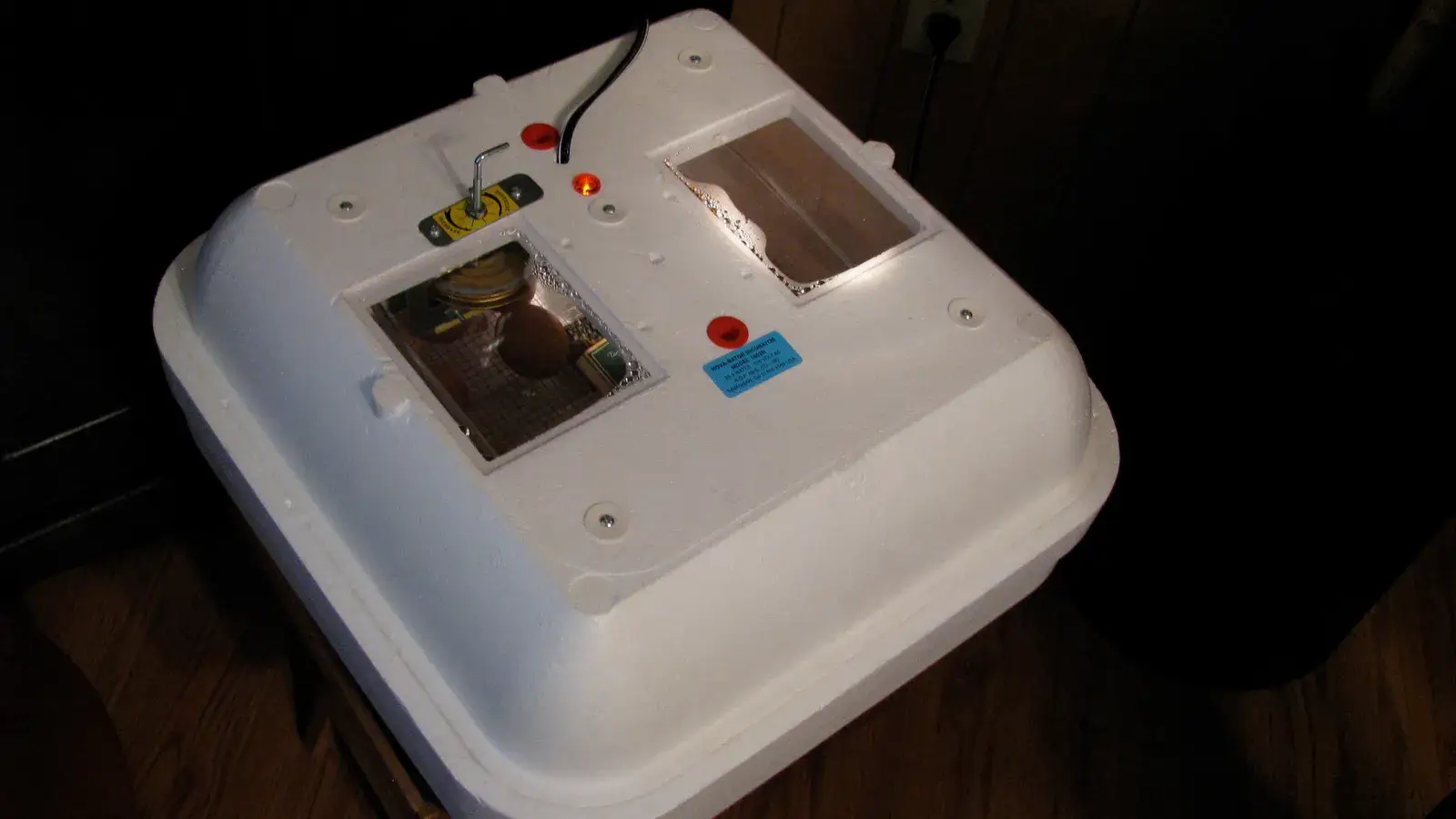
The physical design is a compromise and it is worth being clear about it. This is a room thermometer for a living room shelf. It has a retractable stand, two magnets and a wall-mount hole, and every one of those is dead weight once the unit is sitting inside a closed incubator. The electronics, the screen and the battery compartment all end up in warm, humid air for three weeks at a time, which is not what it was built for.
The bigger operational cost is the built-in sensor. With no probe, reading it means opening the lid, and opening the lid vents the humid air and drops the reading. You end up either accepting a disturbed number or peering through a window at a small display. That is the exact problem the IncuTherm Plus and the Shutao 3-pack solve with a wired probe, and it is a real reason to consider them alongside this.
Calibration is also not permanent. It corrects the offset you measured on the day you measured it, and the sensor keeps ageing afterwards.
Research based, not hands-on
Assessed on the published humidity range, accuracy tolerances, temperature range, mounting options and the stated manual calibration adjustment from the live listing, then compared against the other five picks here on what each one publishes and whether any correction is possible.
- Best for
- Anyone who wants to verify their incubator humidity with a salt test and then correct the gauge rather than remember an offset.
- Skip it if
- You need to read humidity without opening the incubator, because the sensor is built in and there is no remote probe.
- The limitation to plan around
- There is no probe. The display and the sensor are one object, so the readable screen is stuck inside the incubator with the sensor.
2 Best for Reading Without Opening the Lid
IncuTherm™ Plus Digital Thermometer and Hygrometer for Egg Incubator
The probe sits inside the incubator while the display stays outside, which means you can check humidity without venting the air you are measuring. But the listing publishes no humidity range and no accuracy figure at all.
What we liked
- Remote probe goes inside while the display stays outside, so reading it does not vent the incubator
- Sold by an incubation specialist for this exact job rather than adapted from a room gauge
- Reads in Celsius or Fahrenheit, so it matches whatever your incubator uses
- A battery is included, unlike the top pick
- Compact display at 2.5 x 0.5 x 2 in, easy to sit on top of a tabletop incubator
What we did not
- The listing publishes no humidity range at all, so you cannot tell what span it is meant to measure
- No humidity accuracy figure is given, which at $28.99 is less information than the $6.99 Shutao 3-pack provides
- There is no calibration adjustment, so a salt test can only produce an offset you write down and remember
- No temperature range is stated either, only that it reads in Celsius or Fahrenheit
- At $28.99 it is the most expensive pick in this guide, and the extra money buys a probe and a brand rather than a better published sensor
About $28.99 checked Aug 8, 2026
Key specifications
- Dimensions
- 2.5 x 0.5 x 2 in (L x W x H)
- Colour
- Black
- Humidity Range
- Not stated
- Humidity Accuracy
- Not stated
- Temp Range
- Not stated, reads in Celsius or Fahrenheit
- Remote Probe
- Yes, probe sits inside the incubator while the display stays outside
- Mounting
- Not stated, display is designed to sit outside the incubator
- Batteries
- Battery included
Why the IncuTherm Plus earns its place
It solves the problem that quietly ruins most humidity readings.
If the gauge is inside a sealed box, checking it means opening the box. The moment you do, the humid air leaves, room air comes in, and the number you then read describes the disturbance rather than the incubator. People take that reading, adjust the water tray on the strength of it, and end up chasing a value they created themselves.
A probe inside with the display outside ends that. You glance at it as often as you like and the incubator never notices. That is a real operational advantage over the SMARTRO SC42, which reads better on paper and has to be opened up to be read.
It is also made by an incubation company for incubators, so the unit sizing and the placement assumptions suit the job.
Living with the IncuTherm Plus
Placement of the probe is the decision that matters. Put it near the eggs at egg height, not directly over the water tray, because air above open water reads higher than the air the eggs are actually in.
The probe lead has to leave the incubator without wrecking the seal, so look for the vent or cord port your machine already has before improvising a gap at the lid.
The display measures 2.5 x 0.5 x 2 in and sits outside, typically on top of the machine or beside it. A battery comes included, so it works on arrival.
Run a salt test anyway. Even without an adjustment, knowing that your gauge reads 4 percent high is far better than assuming it is right.
Where the IncuTherm Plus falls short
The listing is remarkably thin for the price. No humidity range. No humidity accuracy. No temperature range. At $28.99 this is the most expensive pick in this guide, and it tells you less about its own sensor than the $6.99 Shutao 3-pack does, which states 10 to 99% RH and plus or minus 5% RH.
That is not a claim that it performs badly. It is a claim that you cannot tell, and on an instrument whose entire job is producing a trustworthy number, that gap deserves to weigh on the decision.
There is also no calibration adjustment. So when a salt test shows the gauge is a few percent out, all you can do is write the offset somewhere and apply it in your head for the rest of the unit's life. The SMARTRO lets you correct it. This does not.
What you are actually buying at $28.99 is the probe arrangement and a poultry-specific brand, and the Shutao 3-pack offers the same probe arrangement for a quarter of the money.
Research based, not hands-on
Assessed on the stated remote probe arrangement, display dimensions, unit switching and included battery from the live listing, alongside the humidity range, accuracy and temperature range the listing does not provide, then compared against the other probe pick here.
- Best for
- Keepers who check humidity often and want the reading without lifting the lid and dumping the incubator's air every time.
- Skip it if
- You want published figures to judge before buying, because this listing states neither a humidity range nor an accuracy.
- The limitation to plan around
- Nothing about the sensor's performance is published, so you are buying on the brand and the probe rather than on any specification.
3 Best Cheap Way to Get a Probe Inside
3Pcs Mini Digital Thermometer Hygrometer with Probe Electronic Temperature Humidity Gauge Meters Indoor LCD Display Fahrenheit for Humidors,Greenhouse,Garden,Incubator Reptile Terrarium
Three wired-probe gauges for $6.99, roughly a quarter of the IncuTherm's $28.99 for the same basic arrangement, and its listing publishes a humidity range and an accuracy figure that the IncuTherm's does not.
What we liked
- Wired probe goes inside while the display stays outside, so reading it does not vent the incubator
- Three units for $6.99, so you can cross-check two gauges against each other
- Publishes 10 to 99% RH and plus or minus 5% RH, where the $28.99 IncuTherm publishes neither figure
- Wide temperature range of -58 to 158 degrees F alongside the humidity reading
- The listing tells you to place the probe where you want to measure, which is the right instruction
What we did not
- The listing states the probe is not waterproof, and an incubator at 65 percent RH during lockdown produces condensation on cool surfaces
- Plus or minus 5% RH is as wide as any stated tolerance in this guide, and 5 percent is most of the gap between a 45 and a 50 percent setting
- No calibration adjustment, so a salt test only ever produces an offset you have to remember
- No battery type is stated, so you cannot tell what to keep as spares
- No cable length is published, so you cannot confirm the probe will reach from your incubator's port to the eggs
Key specifications
- Colour
- Black-3PCS
- Humidity Range
- 10 to 99% RH
- Humidity Accuracy
- Plus or minus 5% RH
- Temp Range
- -58 to 158 degrees F
- Remote Probe
- Yes, wired sensor probe, listing says it is not waterproof
- Mounting
- Not stated, listing says to place the probe where you want to measure
- Batteries
- Not stated
Why the Shutao 3-pack probe earns its place
It does the expensive pick's main trick for a fraction of the money, and it publishes more while doing it.
The arrangement is the same in principle: a wired sensor sits inside the incubator, the display stays outside, and you read humidity as often as you like without opening the lid and venting the air you are measuring. The IncuTherm Plus charges $28.99 for that. This charges $6.99 and includes three units.
It also states what the IncuTherm does not. A humidity range of 10 to 99% RH and a tolerance of plus or minus 5% RH. That tolerance is wide, and we will come back to it, but a stated figure you can weigh is worth more than no figure at all.
Three units is the other quiet advantage. Two gauges in one incubator will disagree, and the size of that disagreement is your real uncertainty.
Living with the Shutao 3-pack probe
Use the second and third units properly rather than leaving them in a drawer. Put two probes in the incubator at once, at opposite ends, and note the gap. If they read 3 percent apart, that is roughly how well you know your humidity. If they read 9 percent apart, you have learned something important before setting a single egg.
Run a salt test on each one and label them, because with three identical gauges it is easy to lose track of which offset belongs to which.
Route the probes away from the water tray and away from the coldest wall of the incubator, where moisture collects. Air directly over open water reads higher than the air the eggs are in.
Where the Shutao 3-pack probe falls short
The listing says the probe is not waterproof, and that is a genuine concern here rather than a formality. An incubator is deliberately run humid, and at lockdown you push it higher still, so condensation forms on any surface cooler than the air. A sensor sitting where droplets gather is a sensor that will eventually give a false high reading and then stop.
The stated tolerance is the other weakness. Plus or minus 5% RH is as wide as any figure stated in this guide, matched by the Veanic and the JJMTDS and twice the SMARTRO's 2% RH, and 5 percent is roughly the whole distance between running at 45 and running at 50. There is no calibration adjustment either, so a salt test tells you the offset and then you carry it in your head for good.
Two smaller gaps: no battery type is published, so you cannot buy spares in advance, and no cable length is given, so whether the probe reaches from your machine's cord port to the eggs is unknown until it arrives.
Research based, not hands-on
Assessed on the published humidity range and tolerance, temperature range, pack quantity and the listing's explicit statement that the probe is not waterproof, then compared on cost per gauge and published specification against the other probe pick in this guide.
- Best for
- Anyone who wants a probe inside the incubator and two spare gauges to cross-check the reading against, for very little money.
- Skip it if
- You need a tight humidity tolerance, because plus or minus 5% RH is as loose as any stated figure in this guide.
- The limitation to plan around
- The probe is stated as not waterproof, so it has to be kept clear of the water tray and of surfaces where condensation collects.
4 Best for Cutting Into a Homemade Incubator
Reptile Thermometer Hygrometer Meter Indoor Temperature Gauge
It drops into a 1.81 x 1.06 in cut-out, which makes it the obvious choice for a homemade incubator where you control the panel. At $4.59 it is the cheapest pick in this guide.
What we liked
- Drops into a 1.81 x 1.06 in cut-out, so it sits flush in a panel you build yourself
- Also sticks on with double-sided tape if you would rather not cut anything
- The cheapest pick in this guide at $4.59
- Publishes 10 to 99% RH with plus or minus 5% RH and 1% resolution
- Very small at 1.89 x 1.13 x 0.6 in, so it fits panels with little room to spare
What we did not
- The sensor sits in the body, so mounting it in a wall panel measures wall air rather than the air around the eggs
- Once you have cut the panel, the sensor position is fixed for the life of the incubator and cannot be moved
- The 0.2 degrees F temperature resolution is a display step, not an accuracy claim, and no temperature accuracy is stated
- No calibration adjustment, so a salt test only gives you an offset to remember
- No battery type is stated, so you cannot buy spares before the unit arrives
About $4.59 checked Aug 8, 2026
Key specifications
- Size
- 1.89 x 1.13 x 0.6"
- Colour
- Black
- Humidity Range
- 10 to 99% RH
- Humidity Accuracy
- Plus or minus 5% RH, resolution 1%
- Temp Range
- -58 to 158 degrees F, resolution 0.2 degrees F
- Remote Probe
- Not stated, sensor is in the body
- Mounting
- Drops into a 1.81 x 1.06 in cut-out or sticks on with double-sided tape
- Batteries
- Not stated
Why the Veanic panel gauge earns its place
Homemade incubators are common, and they have a specific need that shop-bought machines do not: a gauge that becomes part of the build rather than an object rattling around inside it.
This one is made for that. The listing gives a cut-out of 1.81 x 1.06 in, so you can cut a clean rectangle in a cooler lid, a plywood door or an acrylic front and drop the unit straight in. The result reads from the outside with nothing loose inside the chamber.
At $4.59 it is the cheapest pick in this guide, and it still publishes a full humidity range of 10 to 99% RH with plus or minus 5% RH and 1 percent resolution, which is more than the $28.99 IncuTherm's listing commits to.
Living with the Veanic panel gauge
Measure the cut-out carefully and cut slightly under, then file to fit. A panel gauge in a hole that is a fraction too big will not hold, and an incubator wall with a gap in it leaks heat and moisture.
Choose the position with more care than the cutting. Put it as close to egg level as the build allows, on a wall that is not directly above the water tray and not the coldest surface in the box, where condensation will collect on the face.
If you would rather not commit, the listing also offers double-sided tape mounting, which is worth using for a season to find the right spot before you cut anything permanent.
Run a salt test before it goes in the panel, while you can still get it into a bag easily. Write the offset on the inside of the lid.
Where the Veanic panel gauge falls short
The design contains a contradiction that is easy to miss. The sensor is in the body, and the body is in the wall, so what you are measuring is the air at the wall. The air around the eggs is what you actually want, and in a small homemade incubator with uneven airflow those two can differ noticeably. The probe picks in this guide do not have that problem.
Cutting makes it worse, because it is permanent. Once the rectangle is in the panel, the sensor lives there for the life of the machine, and if you later decide the position was poor you are cutting a second hole and patching the first.
Two of the published figures are also softer than they look. The 0.2 degrees F is a resolution, meaning the smallest step the display shows, and no temperature accuracy is stated at all. And there is no calibration adjustment, so any offset you find is one you carry in your head.
Research based, not hands-on
Assessed on the published cut-out dimensions, body size, humidity range and tolerance, temperature resolution and mounting options from the live listing, then compared against the probe-equipped picks here on where each sensor ends up sitting.
- Best for
- Anyone building their own incubator or cabinet who wants a flush-fitted gauge in a panel they are cutting anyway.
- Skip it if
- You have a sealed commercial incubator you do not want to cut into, because the sensor is in the body and there is no probe.
- The limitation to plan around
- Cutting a panel fixes the sensor position permanently, and that position is a wall rather than the space around the eggs.
5 Best for Cross-Checking Several Gauges
6 Pack Mini Hygrometer Indoor Humidity Meter, Digital Thermometer Monitor
Six gauges for $7.89, about $1.32 each, which is the cheapest per gauge in this guide. The point is not spares, it is putting several in one incubator and seeing how far apart they read.
What we liked
- Six units for $7.89, about $1.32 each, the lowest cost per gauge in this guide
- Enough gauges to run several in one incubator and measure your real uncertainty
- Publishes 10 to 99% RH with plus or minus 5% RH
- Wide temperature range of -58 to 158 degrees F
- LR44 cells are included, and the listing claims up to 8 months of life per set
- Small at 1.87 x 1.87 x 1.11 in, so several fit inside a machine without blocking airflow
What we did not
- No remote probe is stated, so every gauge has to sit inside the incubator and you must open the lid to read them
- Plus or minus 5% RH on every unit means six gauges that could all be wrong in the same direction, which cross-checking will not reveal
- No calibration adjustment on any of them, so six offsets have to be labelled and remembered separately
- No mounting method is stated, so they sit loose inside the incubator where an egg or a turner tray can knock them over
- The 8 month battery claim is a listing figure with no test conditions attached
About $7.89 checked Aug 8, 2026
Key specifications
- Dimensions
- 1.87 x 1.87 x 1.11 in (L x W x H)
- Weight
- 0.220625 pounds
- Colour
- Black
- Humidity Range
- 10 to 99% RH
- Humidity Accuracy
- Plus or minus 5% RH
- Temp Range
- -58 to 158 degrees F
- Remote Probe
- Not stated
- Mounting
- Not stated
- Batteries
- 2 LR44 button cells included, listing claims up to 8 months per set
Why the JJMTDS 6-pack earns its place
Because the most honest thing you can learn about incubator humidity is how much you do not know it.
Put two gauges in the same machine and they will not agree. Put four in and you will see a spread. That spread is your real working uncertainty, and it is almost always wider than any single listing implies. Six gauges at $7.89, about $1.32 each and the cheapest per gauge in this guide, makes that experiment cost less than a bag of feed.
It is also useful for spreading readings around the chamber. Humidity above the water tray is not humidity at the eggs, and humidity in a corner away from the fan is different again. Six small units at 1.87 x 1.87 x 1.11 in can map that without crowding the machine.
Published figures are respectable for the price: 10 to 99% RH, plus or minus 5% RH, and a temperature range of -58 to 158 degrees F.
Living with the JJMTDS 6-pack
Number them. Six identical black gauges are impossible to tell apart, and the whole exercise depends on knowing which reading came from which unit and which offset belongs to it.
Salt test them together. One large zip bag, one dish of damp salt slurry, all six inside and not touching it, six to eight hours at steady room temperature. You get every offset in a single sitting, and you also see immediately whether they cluster or scatter.
Then place them deliberately: one at egg level, one near the water tray, one at the far corner. Read them when you open the lid for candling rather than opening it specially, because each opening costs you humidity.
Cells are LR44 and come included, with the listing claiming up to 8 months a set.
Where the JJMTDS 6-pack falls short
None of these has a remote probe. That means every reading requires opening the incubator, and opening the incubator vents humid air and changes the number. It is the single biggest practical limitation of this pack, and it is why a probe unit like the Shutao 3-pack has a place alongside it rather than being replaced by it.
There is a subtler problem with the cross-checking argument too, and it is worth naming. All six units are the same model with the same sensor and the same plus or minus 5% RH tolerance. If that design runs high, all six will run high together and agree beautifully while being wrong. Comparing identical gauges finds scatter, not bias. Only a salt test finds bias.
None of them can be calibrated either, so every offset you discover becomes a label and a piece of mental arithmetic. And with no stated mounting, they sit loose in the machine where a turner tray or a rolling egg can push them over.
Research based, not hands-on
Assessed on the stated pack quantity, cost per gauge against the other multi-packs here, published humidity range and tolerance, temperature range, unit size and included cells from the live listing.
- Best for
- Anyone who wants to find out how much their incubator's humidity readings actually disagree before trusting any single number.
- Skip it if
- You want one gauge you can read without opening the incubator, because none of these has a remote probe.
- The limitation to plan around
- Every unit sits inside the machine, so checking any of them means opening the lid and venting the air you are measuring.
6 Best for the Room Around the Incubator
TempPro TP49 Digital Hygrometer Indoor Thermometer
It claims plus or minus 2 to 3% RH, which reads close to the SMARTRO's stated 2% RH, but it states no humidity range to go with it and cannot be adjusted. Treat it as a good room gauge rather than an incubator instrument.
What we liked
- Claims plus or minus 2 to 3% RH, tighter than the plus or minus 5% RH quoted by the Shutao, Veanic and JJMTDS picks
- Also quotes plus or minus 1 degree F on temperature
- Three mounting options, a tabletop stand, a magnetic back or a hanging mount
- Small and light at 2.2 x 0.7 x 2.6 in, so it sits anywhere near the incubator
- Useful for tracking the room conditions that push an incubator's humidity around
What we did not
- No humidity range is published at all, so an accuracy figure is quoted with nothing to apply it across
- There is no calibration adjustment, so the accuracy claim can never be checked or corrected by the owner
- No remote probe is stated, so it cannot read inside the incubator without going inside itself
- No temperature range is stated either, only an accuracy figure with no span behind it
- The stand, magnet and hanging mount are all designed for a room, none of which help inside a closed incubator
About $8.99 checked Aug 8, 2026
Key specifications
- Dimensions
- 2.2 x 0.7 x 2.6 in (L x W x H)
- Weight
- 0.0771617917 pounds
- Colour
- White Indoor Thermometer
- Humidity Range
- Not stated
- Humidity Accuracy
- Plus or minus 2 to 3% RH
- Temp Range
- Not stated, accuracy given as plus or minus 1 degree F
- Remote Probe
- Not stated
- Mounting
- Three ways, tabletop stand, magnetic back or hanging mount
- Batteries
- Not stated
Why the TempPro TP49 earns its place
Not for the inside of the machine, but for the room it stands in.
The air around an incubator matters more than people expect. A machine in a dry heated room in February works harder to hold 45 percent RH than the same machine in a damp garage in May, and knowing the ambient figure explains why your water tray drains faster some weeks than others. It also warns you when a change in the room is about to show up in the incubator.
The TP49 is well suited to that. It mounts three ways, a tabletop stand, a magnetic back or a hanging mount, so it goes wherever the machine is. It quotes plus or minus 2 to 3% RH and plus or minus 1 degree F, and at $8.99 it is a reasonable room gauge.
Living with the TempPro TP49
Put it beside the incubator at about the same height, not on top of it, because the warm air leaving the machine will skew the reading.
Read it alongside the incubator gauge rather than instead of it. The interesting number is the difference between the two, since that gap tells you how much work the machine is doing to hold its setting. A shrinking gap in humid weather often means the incubator will drift high.
Run a salt test on it too. You cannot correct it, but knowing that your room gauge reads a few percent high is still better than assuming it is right, and the test costs nothing but a bottle cap of salt and an afternoon.
Where the TempPro TP49 falls short
The headline claim does not survive a close look. Plus or minus 2 to 3% RH reads as a tight figure, tighter than the 5% RH quoted by three of the cheaper picks here, and the listing states no humidity range to apply it to. An accuracy without a range is a number with nothing behind it. Compare the SMARTRO SC42, which publishes 1 to 99% RH and within 2% RH, both together, and is the tighter figure of the two anyway at its worst case.
The deeper issue is that the claim can never be tested by you. There is no calibration adjustment, so even after a salt test proves the gauge is 4 percent out, the display keeps showing the same wrong number for the rest of its life. A tighter claim on an uncorrectable unit is worth less than a looser claim on one you can dial in.
For incubation specifically, there is no remote probe, so putting it to work inside means putting the whole display inside a warm humid box and opening the lid every time you want to read it. Its three mounting options are all designed for a room, and none of them helps in there.
Research based, not hands-on
Assessed on the quoted humidity and temperature accuracy figures, the mounting options and the dimensions from the live listing, alongside the humidity range and temperature range the listing does not provide, then compared against the calibratable pick in this guide.
- Best for
- Keepers who want to track the room conditions around the incubator, which is what drives how hard the machine has to work.
- Skip it if
- You want a gauge for inside the incubator, because it has no probe and no humidity range is published.
- The limitation to plan around
- The plus or minus 2 to 3% RH claim comes with no humidity range and no way to calibrate, so it cannot be verified from the listing or by you.
How we compared these incubator hygrometers
We ranked these on a question the listings mostly avoid: can you check this thing, and can you fix it?
Every relative humidity sensor at this price drifts over time. That means the accuracy figure printed on a listing describes the unit when it was new, in the maker's conditions, and nothing about what it is doing in your incubator in year two. A gauge you can calibrate turns that from an unknown into a known. A gauge you cannot calibrate leaves you writing an offset on a strip of tape.
Only one pick here has a calibration adjustment. After that we looked at sensor position, because humidity over the water tray is not humidity at the eggs, and because a gauge you have to open the lid to read gives you a number about the air you just let out. Then we looked at what each listing publishes about range and accuracy, and two of these six publish strikingly little.
Prices run from $4.59 to $28.99, and the correlation between price and published specification is close to nil.
What actually matters in an incubator hygrometer
Calibration, because every cheap sensor drifts
The SMARTRO SC42 is the only pick here you can correct. It publishes 1 to 99% RH, within 2% RH, within 0.5 degrees F on temperature, and it carries a manual calibration adjustment, for $18.99.
That last item is the one that matters. It means a salt test produces an action rather than a note. You seal the gauge in a bag with a damp salt slurry, which holds the air at about 75 percent RH, you see what the gauge says, and you dial the difference out.
Compare that with the TempPro TP49, which claims 2 to 3% RH. That reads as close to the SMARTRO's figure until you notice it states no humidity range to go with it and offers no way to adjust anything. A claim you cannot verify and cannot correct is not much use, however good the number looks.
Where the sensor sits, and why opening the lid ruins the reading
The second spec is position. Humidity directly above the water tray is higher than humidity at the eggs, and the whole point of the reading is what the eggs are experiencing.
The trap is that lifting the lid to read a gauge inside is itself what changes the number. Warm wet air leaves, room air comes in, and the reading you then take describes the disturbance rather than the incubator.
A wired probe solves this properly. The IncuTherm Plus does it with the display designed to sit outside, and at $6.99 the Shutao 3-pack does the same thing with a wired sensor and two spare units, for roughly a quarter of the IncuTherm's $28.99. What the extra money on the IncuTherm buys is a poultry brand and a probe, not a better published sensor, because that listing states no humidity range and no accuracy at all.
Two gauges will disagree, and that gap is your real uncertainty
Put two hygrometers in the same incubator and they will not read the same. This surprises people and it should not.
That difference is genuinely useful information. If two gauges sit 6 percent apart, then you do not know your humidity better than 6 percent, no matter what either display shows. That is the honest resolution you are working at, and it is usually wider than any listing suggests.
This is the real argument for a multi-pack like the JJMTDS 6-pack or the Shutao 3-pack. Not spares, cross-checking.
How to run a salt test, and what to check it against
Half fill a bottle cap with table salt and add water a drop at a time until it is a wet slurry, not a solution. Put the cap and the hygrometer into a sealed zip bag, keep them apart from each other, and leave the bag somewhere at a steady room temperature for six to eight hours.
A saturated salt slurry holds the air above it at about 75 percent RH. Whatever the gauge reads at the end of that is measured against 75. Read 70 and your gauge runs 5 percent low. Read 79 and it runs 4 percent high.
On the SMARTRO you adjust it out. On the other five, write the offset on tape and stick it to the case, then remember it every time.
Then cross-check against the eggs. An incubated egg should lose roughly 11 to 13 percent of its set weight between day one and day 18, and that weight loss is the one measurement in the whole process that cannot be miscalibrated. If the eggs are losing too slowly the incubator is running wetter than you think, whatever the gauge says. Expect condensation to push readings high after lockdown, when humidity is raised on purpose.
Final recommendation
The SMARTRO SC42 is the pick for most people incubating at home. It is the only unit here that can be calibrated, its published figures are the most complete on this page, and $18.99 is a fair price for being able to trust your own reading. Its honest faults: the sensor is built in, so a display designed for a living room ends up sitting inside a warm wet box, its stand and magnets go unused in there, batteries are not included, and you have to open the lid to read it.
If avoiding that lid opening is your priority, the IncuTherm Plus puts the probe inside and the display outside, though its listing publishes no humidity range or accuracy. If you want the same probe arrangement cheaply and two extra gauges to cross-check with, the Shutao 3-pack does it for $6.99. And if you are building your own incubator, the Veanic panel gauge drops into a 1.81 x 1.06 in cut-out and costs $4.59.
Questions people ask before buying
How do I calibrate an incubator hygrometer with the salt test?
Half fill a bottle cap or a small dish with table salt, add a few drops of water until it is a damp slurry rather than a solution, and seal it in a zip bag with the hygrometer, not touching it. Leave it somewhere at a steady room temperature for six to eight hours. A saturated salt slurry holds the air above it at about 75 percent RH, so whatever the gauge reads, the difference between that and 75 is your offset. On the SMARTRO SC42 you can dial that out. On the others you write it on tape and do the arithmetic every time you read it.
What humidity should an egg incubator be at?
A common approach for chicken eggs is roughly 45 to 55 percent RH for the first 17 or 18 days, then raising it to around 65 percent for lockdown until the chicks hatch. Different people run drier or wetter and both work, because what actually matters is the total moisture the egg loses, not the number on the display. Follow the guidance for your own incubator and your own climate, and use egg weight loss as the real check on whether the setting is right for you.
How do I know if my hygrometer is lying to me?
Two ways, and both are worth doing. Run a salt test to find the gauge's offset against a known 75 percent RH. Then put a second gauge in the incubator alongside the first. Two gauges will almost never agree exactly, and the gap between them is a fair measure of how much uncertainty you are actually working with. If they are 6 percent apart, you do not know your humidity to better than 6 percent, whatever either display claims. That is why a multi-pack has a use beyond just having spares.
Does the hygrometer need to be inside the incubator?
The sensor does. Humidity over the water tray is not the same as humidity at the eggs, and a gauge reading the room outside is not measuring incubation at all. What you want to avoid is having to open the lid to read it, because opening the lid dumps the humid air out and the reading you then take is a reading of the disturbance you just caused. A unit with a wired probe solves that, which is why the IncuTherm Plus and the Shutao 3-pack are here despite their listings publishing much less than the top pick's does.
Is a more expensive hygrometer more accurate?
Not in this group. The most expensive pick here, the IncuTherm Plus at $28.99, publishes no humidity range and no accuracy figure at all, while the $6.99 Shutao 3-pack states 10 to 99% RH and plus or minus 5% RH. The extra money on the IncuTherm buys a poultry-specific brand and a remote probe, not a better sensor on paper. Judge these on what the listing actually commits to, and treat a figure with no stated range or calibration method as a marketing number.
Should I trust the hygrometer built into my incubator?
Treat it the same way as any other cheap RH sensor: probably close, possibly several percent out, and drifting with age. Built-in gauges cannot usually be removed for a salt test, so the practical check is to put a separate gauge inside next to it and compare. If they disagree by more than a few percent, you have found something worth knowing. Cross-check both against egg weight loss, because the eggs are the only part of the system that cannot be miscalibrated.
Why you can trust this guide
- Written by
- Marta Voss, Editor and fact checker, Chicken Geek. Specialist areas: Editorial fact checking, Chick brooding and starter nutrition, Small-flock husbandry, Feed labels and nutrition claims.
- Fact checked by
- Sam Reddick
- Published
- August 8, 2026 · Last updated August 8, 2026 · Products and links rechecked August 8, 2026
- How we picked
- Every hygrometer was judged first on whether it can be calibrated by the owner, because that is the only way to turn a salt test into a correction, then on whether the sensor can sit inside the incubator while the display stays readable outside, then on the humidity range and accuracy each listing actually publishes rather than implies, plus mounting, batteries and how many units come in the pack.
- Evidence used
- None of the 6 products on this page were sent to us or bought for a hands-on test. Every recommendation here is research based: manufacturer specifications, listed dimensions and materials, owner feedback at volume, and comparison against equipment our team has owned. Each review states this again above the buy button so you are never guessing which kind of evidence sits behind a pick.
- Editorial standards
- No brand pays for placement, and no manufacturer sees this page before it goes live. Read our editorial policy and testing method.
- Affiliate disclosure
- Chicken Geek is reader supported. We earn a commission from qualifying purchases made through links on this page, at no extra cost to you, and no brand has paid for a placement or an award here.
About the author

Editor and fact checker, Chicken Geek
Marta edits every guide on Chicken Geek and checks that each claim can be traced back to a manufacturer specification, a published standard or a stated first-hand observation. She keeps a small backyard flock of six hens and has raised chicks from day one for eight seasons.
- Eight seasons raising chicks from day-old to point of lay
- Checks every specification in a Chicken Geek guide against the manufacturer listing
- Removes any testing claim that cannot be backed up
- Keeps a flock of six hens in a suburban backyard