We Compared 6 Chick Brooders. None of Them Is a Heat Lamp
We compared six brooder heat plates and boxes on chick capacity, wattage and height adjustment, and explain why heat lamps should not be part of the choice.

By Marta Voss Editor and fact checker, Chicken Geek
Fact checked by Sam Reddick
Published Prices and stock checked 7 min read
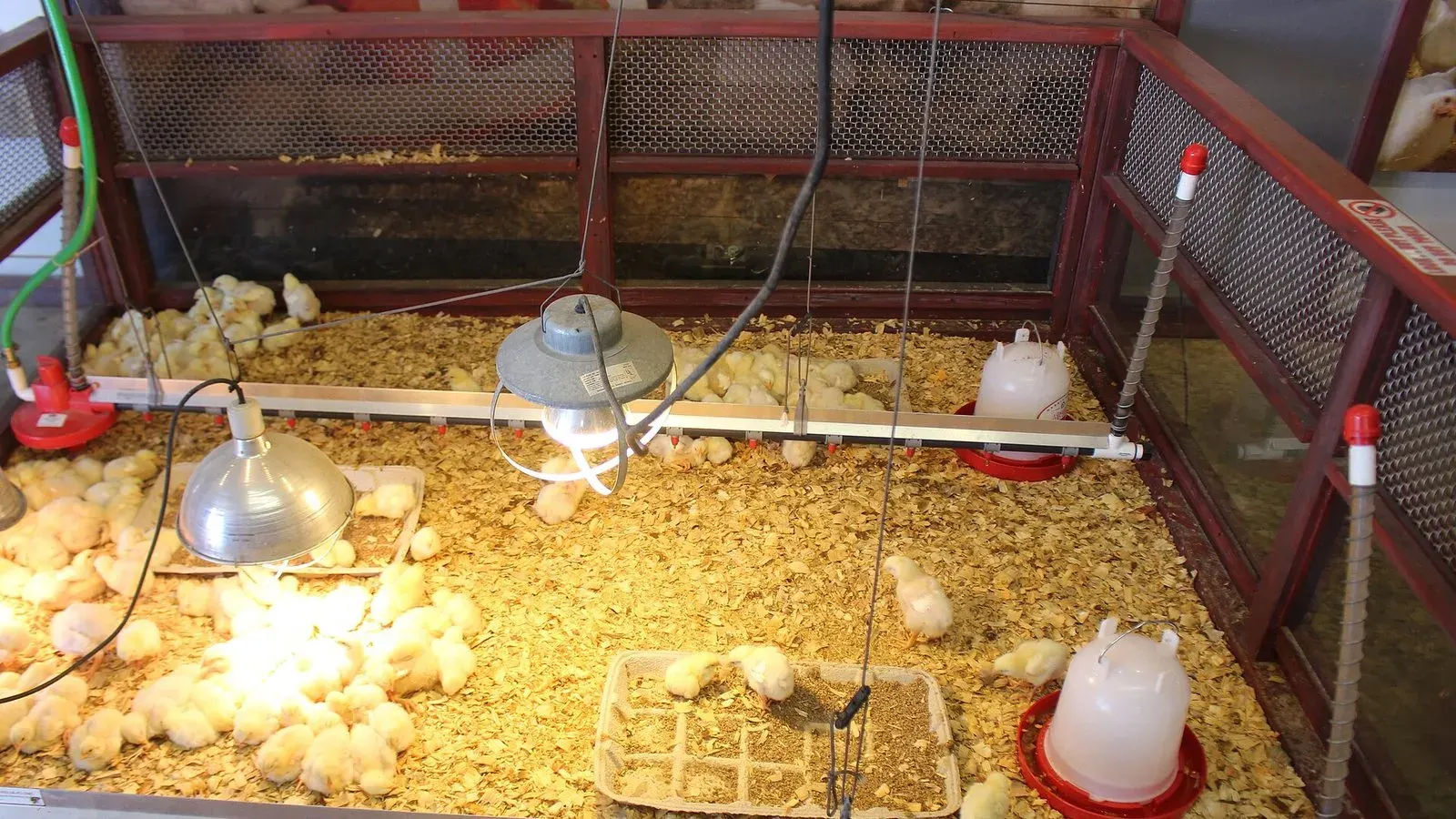
Every product in this comparison is a heat plate or a brooder enclosure, and that is a deliberate exclusion rather than an oversight. Suspended heat lamps cause a large number of shed, garage and house fires every spring, and there is no longer a price argument for them: a heat plate now costs about the same as a decent clamp lamp and a spare bulb.
Heat plates are better for the chicks too. A 250 watt lamp lights a brooder around the clock, and chicks under constant light never properly settle. A plate emits no light, so they sleep underneath it in the dark and come out into daylight to eat, which is what happens under a broody hen.
We compared six on chick capacity against plate area, wattage against the temperature of the space you are brooding in, height adjustment, and what is actually in the box, because most brooder boxes include no heat and most heat plates include no box.
Our picks at a glance
Every product below wins one specific situation. Pick the row that matches your flock, your yard and your budget rather than reading top to bottom.
-
Best Overall

Brinsea EcoGlow 600
Anyone brooding chicks who currently uses a heat lamp, or is about to buy one.
Check price on Amazon for Brinsea Ecoglow Safety 600 Chick or Duckling Brooder, Up to 20 Chicks on AmazonAbout $73.75 checked Aug 8, 2026
-
Best for Large Batches

Tetuga 12x16 Plate
Batches of twenty to forty chicks, where a small plate leaves the weaker birds on the outside edge.
Check price on Amazon for Tetuga Brooder Heat Plate 12 X 16” Chick Heating Plate Warm Up to 40 Chicks on AmazonAbout $39.99 checked Aug 8, 2026
-
Best for Cold Spaces
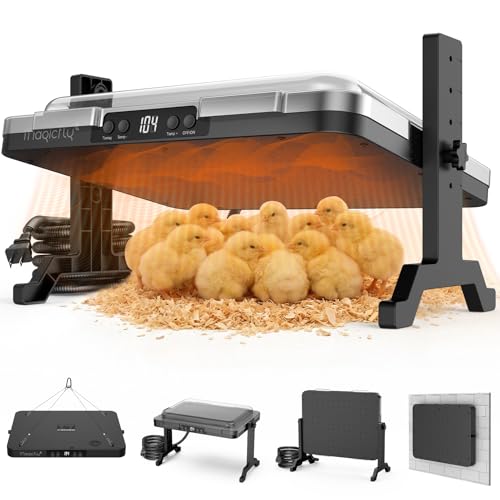
Magicfly 200W Plate
Brooding in an unheated garage, barn or outbuilding in early spring, where low-wattage plates cannot keep up.
Check price on Amazon for Magicfly Brooder Plate for Chicks, 200W Radiant Brooder Heating Plate on AmazonAbout $37.99 checked Aug 8, 2026
-
Best Budget

Sindarhor Brooder Plate
A first batch of a dozen chicks, or anyone still using a heat lamp who needs a cheap reason to stop.
Check price on Amazon for Sindarhor Chick Brooder Heater Plate for Baby Chicks, Ducklings & Poultry on AmazonAbout $24.75 checked Aug 8, 2026
-
Best Complete Setup
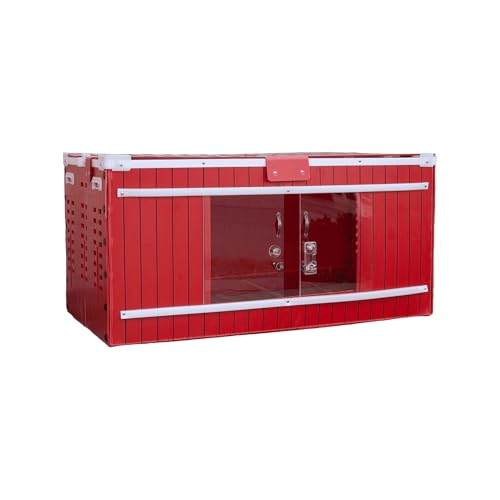
RentACoop Big Red Barn
Anyone brooding chicks more than once, who has already discovered that a cardboard box does not survive three weeks of chicks.
Check price on Amazon for RentACoop Big Red Barn Chick Brooder on AmazonAbout $160 checked Aug 8, 2026
-
Best Brooder Box

ComfyKit Brooder Box
Keepers who want a proper brooder but do not have room to store a rigid one for eleven months of the year.
Check price on Amazon for Brooder Box for Chicks Starter Kit, Dual Doors Chicken Brooder Playpen on AmazonAbout $59.99 checked Aug 8, 2026
Compare every pick side by side
Swipe the table sideways to see every column on a phone.
| Product | Award | Price band | Chick Capacity | Heat Type | Height Adjust | Wattage | Best use case | Buy link |
|---|---|---|---|---|---|---|---|---|
| Brinsea EcoGlow 600 | Best Overall | $60 to $120 | Up to 20 newly hatched chicks | Radiant heat plate | Yes, adjustable legs | About 18 W | Anyone brooding chicks who currently uses a heat lamp, or is about to buy… | Check price for Brinsea Ecoglow Safety 600 Chick or Duckling Brooder, Up to 20 Chicks on Amazon |
| Tetuga 12x16 Plate | Best for Large Batches | $30 to $60 | Up to 40 chicks | Radiant heat plate | Yes, adjustable legs | About 60 W | Batches of twenty to forty chicks, where a small plate leaves the weaker… | Check price for Tetuga Brooder Heat Plate 12 X 16” Chick Heating Plate Warm Up to 40 Chicks on Amazon |
| Magicfly 200W Plate | Best for Cold Spaces | $30 to $60 | Up to 35 chicks | Radiant heat plate | Yes, adjustable legs | 200 W | Brooding in an unheated garage, barn or outbuilding in early spring, wher… | Check price for Magicfly Brooder Plate for Chicks, 200W Radiant Brooder Heating Plate on Amazon |
| Sindarhor Brooder Plate | Best Budget | Under $30 | Up to 15 chicks | Radiant heat plate | Yes, adjustable legs | About 30 W | A first batch of a dozen chicks, or anyone still using a heat lamp who ne… | Check price for Sindarhor Chick Brooder Heater Plate for Baby Chicks, Ducklings & Poultry on Amazon |
| RentACoop Big Red Barn | Best Complete Setup | $120 to $250 | Up to 25 chicks | Enclosure, add your own plate | Not applicable | Not applicable | Anyone brooding chicks more than once, who has already discovered that a… | Check price for RentACoop Big Red Barn Chick Brooder on Amazon |
| ComfyKit Brooder Box | Best Brooder Box | $30 to $60 | Up to 20 chicks | Enclosure, add your own plate | Not applicable | Not applicable | Keepers who want a proper brooder but do not have room to store a rigid o… | Check price for Brooder Box for Chicks Starter Kit, Dual Doors Chicken Brooder Playpen on Amazon |
The full reviews
Each review below follows the same order: what it is, why it won its category, how it behaves in real use, and who should buy something else.
1 Best Overall
Brinsea Ecoglow Safety 600 Chick or Duckling Brooder, Up to 20 Chicks
The heat plate that made heat lamps obsolete for backyard brooding, drawing about 18 watts and letting chicks sleep in the dark like they would under a hen.
What we liked
- Around 18 W, a fraction of the 250 W a heat lamp burns
- No light output, so chicks get a proper day and night cycle
- Sloped cover stops chicks roosting on top and fouling it
- Three year warranty, which no other brooder plate here matches
What we did not
- Costs roughly triple the budget heat plates
- Chicks must be able to reach the plate, so it needs raising every few days
- Provides warmth only, so the brooder box and everything else is separate
About $73.75 checked Aug 8, 2026
Key specifications
- Dimensions
- 12 x 8 x 9 in (L x W x H)
- Weight
- 1.5 pounds
- Colour
- Yellow/Black
- Chick Capacity
- Up to 20 newly hatched chicks
- Heat Type
- Radiant heat plate
- Height Adjust
- Yes, adjustable legs
- Wattage
- About 18 W
- Anti Roost Top
- Sloped cover fitted
- Warranty
- 3 years
Why the Brinsea EcoGlow 600 wins this category
Because of what it replaces. A 250 watt heat lamp hanging over a box of dry shavings is the most dangerous thing in backyard poultry keeping, responsible for a large number of shed, barn and house fires every spring. Clamps slip, chicks fly, bulbs break.
A heat plate sits on legs at chick height. There is nothing to fall, nothing hot enough to ignite bedding, and it draws about 18 watts instead of 250.
Living with the Brinsea EcoGlow 600
The behavioural difference is the part people notice most. A heat lamp lights the brooder 24 hours a day, and chicks under constant light never properly settle. A plate emits no light, so chicks sleep in the dark underneath it and come out into daylight to eat, which is exactly what happens under a broody hen.
The sloped cover is a small piece of good design. Flat-topped plates become the highest perch in the brooder, and chicks stand on them and foul them.
Where the Brinsea EcoGlow 600 falls short
Price. It costs about three times a budget plate, and the budget plates work. What you are paying for is build quality, a genuinely thought-through cover and a three year warranty rather than one.
The height adjustment is a real ongoing job rather than a set-and-forget. Chicks need to just touch the underside of the plate with their backs, and they grow fast, so it needs raising every few days through the first three weeks. Forget for a week and they are pressed flat underneath it.
The bigger conceptual limitation is that a plate warms chicks, not air. In a cold outbuilding in March, chicks are warm under the plate and chilled at the feeder, and that gap is where losses happen. In a cold space you need a warmer room, not a bigger plate.
Research based, not hands-on
Assessed on the published wattage, cover design and warranty, and compared against heat lamps on fire risk, power draw and chick behaviour.
- Best for
- Anyone brooding chicks who currently uses a heat lamp, or is about to buy one.
- Skip it if
- You are brooding in an unheated outbuilding in early spring, because a plate warms chicks rather than the room around them.
- The limitation to plan around
- A heat plate warms what is underneath it and does not warm the room. In a genuinely cold space, chicks will be warm under the plate and cold everywhere else, and they need to be able to get to food and water without chilling.
2 Best for Large Batches
Tetuga Brooder Heat Plate 12 X 16” Chick Heating Plate Warm Up to 40 Chicks
A 12 by 16 inch plate rated for up to forty chicks, which is the size you need once a hatch produces more birds than a small plate can cover.
What we liked
- Twelve by sixteen inches covers up to about forty chicks
- Around 60 W, still a fraction of a heat lamp's draw
- Adjustable legs allow the height to track the chicks as they grow
- Large enough that lower-ranked chicks are not pushed out into the cold
What we did not
- Flat top, so chicks perch on it and foul it unless you fit a cone
- Large footprint needs a correspondingly large brooder box
- One year warranty and limited support if the element fails
About $39.99 checked Aug 8, 2026
Key specifications
- Dimensions
- 0.393700787 x 0.393700787 x 0.393700787 in (L x W x H)
- Weight
- 3.3 pounds
- Colour
- Black
- Chick Capacity
- Up to 40 chicks
- Heat Type
- Radiant heat plate
- Height Adjust
- Yes, adjustable legs
- Wattage
- About 60 W
- Anti Roost Top
- Flat top, cone sold separately
- Warranty
- 1 year
Why the Tetuga plate wins this category
Because plate area is capacity, and capacity is not a soft limit. Chicks under a plate distribute themselves by rank, and when there is not enough plate the weakest birds end up on the outside edge, partly out from under it, cold.
Those are exactly the chicks that fail in the first fortnight. A plate large enough that everybody fits underneath is not a luxury when you have thirty chicks.
Living with the Tetuga plate
At around 60 watts it is still using a quarter of what a heat lamp draws while covering more than twice as many chicks, which is the efficiency argument for plates in a nutshell.
Adjustable legs are essential rather than optional. Chicks double in size within a fortnight, and the plate has to track them so their backs just brush the underside.
Where the Tetuga plate falls short
The flat top is the daily irritation. Anything flat and elevated in a brooder becomes a perch, and chicks stand on the plate and foul it. You will be wiping the top of it most days.
A sloped cone solves it and is a separate purchase, which means the realistic cost is higher than the headline price. Given the price gap to the premium plates that ship with a sloped cover fitted, that is worth factoring in.
Footprint is the other constraint. Twelve by sixteen inches inside a brooder means the brooder itself needs to be considerably bigger, because chicks also need warm space, cool space, feeder and waterer without everything being under the plate.
One year of warranty on a heating element in a box of chicks is thin cover.
Research based, not hands-on
Assessed on the published plate area, wattage and leg adjustment, and compared against smaller plates on chick capacity and crowding.
- Best for
- Batches of twenty to forty chicks, where a small plate leaves the weaker birds on the outside edge.
- Skip it if
- You are brooding fewer than a dozen chicks, because the plate will not fit sensibly in a small brooder.
- The limitation to plan around
- The top is flat, which makes it the highest point in a brooder and therefore a perch. Chicks will stand on it and foul it daily unless you add a sloped cone, which is sold separately and is effectively necessary.
3 Best for Cold Spaces
Magicfly Brooder Plate for Chicks, 200W Radiant Brooder Heating Plate
Two hundred watts across a 15.8 by 12 inch plate, which is the one here with enough output to keep chicks warm in an unheated garage in early spring.
What we liked
- 200 W provides real output where 18 to 30 W plates struggle in the cold
- Large plate area covers up to about thirty-five chicks
- Radiant panel design rather than a lamp, so no light and no fire risk from a bulb
- Doubles as a coop panel heater once brooding season ends
What we did not
- 200 W in a warm room is more heat than chicks need
- Flat top, so chicks perch on it and foul it without a separate cone
- Higher output means a higher surface temperature and a real need for correct height
About $37.99 checked Aug 8, 2026
Key specifications
- Dimensions
- 15.8 x 12 x 3 in (L x W x H)
- Weight
- 2.94978506556 pounds
- Colour
- Black
- Chick Capacity
- Up to 35 chicks
- Heat Type
- Radiant heat plate
- Height Adjust
- Yes, adjustable legs
- Wattage
- 200 W
- Anti Roost Top
- Flat top
- Warranty
- 1 year
Why the Magicfly 200 W wins this category
Because heat plates have one genuine weakness, and it is cold ambient temperature. A plate warms what is directly underneath it and does nothing for the surrounding air, which is fine in a spare room at 68 F and marginal in a garage at 40 F.
Two hundred watts changes that calculation. It puts enough radiant output under the plate to keep chicks properly warm when the space around them is not.
Living with the Magicfly 200 W
The plate area covers up to about thirty-five chicks, so it handles a full incubator batch without the crowding problem that leaves weak chicks on the outside edge.
Once brooding is done it converts to a coop panel heater for the winter, which is a genuine second use rather than a marketing line, and it means the thing is not sitting idle for eleven months.
Where the Magicfly 200 W falls short
Wattage is only an advantage in the right conditions. In a warm indoor room, 200 watts is considerably more heat than chicks need, and they will simply avoid the plate, which defeats the point of having a warm refuge they choose to use.
The flat top means chicks perch and foul it, and a sloped cone is a separate purchase, exactly as with the other large plates here.
The height setting matters more with a hotter plate. The standard guidance, that chicks' backs should just brush the underside, is a comfortable target on a 30 W plate and a real requirement on a 200 W one. Set it too low and you have chicks under a surface that is genuinely too hot rather than pleasantly warm, and they will crowd away from it.
Research based, not hands-on
Assessed on the published wattage and plate dimensions, and compared against low-wattage plates on output in cold ambient conditions.
- Best for
- Brooding in an unheated garage, barn or outbuilding in early spring, where low-wattage plates cannot keep up.
- Skip it if
- You brood in a heated room indoors, because 200 W is far more than the chicks need there.
- The limitation to plan around
- More wattage means a hotter plate surface, so getting the height right matters more than with a low-output plate. Set too low it is uncomfortably hot for chicks; the usual rule of backs just brushing the underside becomes a requirement rather than a guideline.
4 Best Budget
Sindarhor Chick Brooder Heater Plate for Baby Chicks, Ducklings & Poultry
A heat plate for about twenty-five dollars, which means there is no longer any price argument for buying a heat lamp instead.
What we liked
- Cheaper than a heat lamp plus a decent clamp and a spare bulb
- Sloped cover fitted as standard, so chicks cannot perch on it
- Around 30 W, so running cost across a six week brood is negligible
- Adjustable legs included at this price
What we did not
- Rated for around fifteen chicks, so it is quickly outgrown
- Light plastic legs can splay if a pile of chicks pushes against them
- One year warranty and no meaningful support
About $24.75 checked Aug 8, 2026
Key specifications
- Dimensions
- 8.7 x 9.8 x 13 in (L x W x H)
- Weight
- 3.06001619656 pounds
- Colour
- Yellow
- Chick Capacity
- Up to 15 chicks
- Heat Type
- Radiant heat plate
- Height Adjust
- Yes, adjustable legs
- Wattage
- About 30 W
- Anti Roost Top
- Sloped cover fitted
- Warranty
- 1 year
Why the Sindarhor plate wins this category
Because it removes the last argument for heat lamps. For years the case for a lamp was price: a clamp lamp and a bulb cost fifteen dollars while heat plates cost eighty. At twenty-five dollars with a sloped cover and adjustable legs, that gap has closed.
Given that heat lamps are a leading cause of spring barn and shed fires, closing that gap is genuinely important rather than merely convenient.
Living with the Sindarhor plate
The sloped cover fitted as standard is the detail that makes this good value rather than merely cheap. Plates with flat tops need a cone bought separately, and without one chicks perch and foul them daily.
At around 30 watts the running cost across a six week brood is a rounding error, compared with a 250 watt lamp running continuously for the same period.
Where the Sindarhor plate falls short
Capacity is around fifteen chicks, and it is a genuine ceiling rather than a soft guideline. Chicks sort themselves by rank under a plate, and when there is not enough plate the weakest birds sit half out from underneath, cold, and those are the chicks that fail.
Anyone hatching a 24 or 30 egg incubator batch will outgrow this immediately.
The legs are the component to watch. They are light plastic, and chicks pile hard against one edge when they are settling. A leg that splays lets the plate drop onto the pile, and that is the one failure mode where a heat plate can actually hurt a chick. Check the fixings every few days for the first fortnight.
Warranty is one year, which for a heating element under a box of live chicks is minimal.
Research based, not hands-on
Assessed on the published capacity, wattage, cover and leg design, and compared against heat lamps and premium plates on cost and safety.
- Best for
- A first batch of a dozen chicks, or anyone still using a heat lamp who needs a cheap reason to stop.
- Skip it if
- You regularly brood more than fifteen chicks at a time, because a small plate leaves the weakest birds on the edge.
- The limitation to plan around
- The legs are the weak component. Chicks pile against one side and a splayed leg drops the plate onto the pile, which is the one genuinely dangerous failure mode a heat plate has. Check the leg fixings every few days.
5 Best Complete Setup
RentACoop Big Red Barn Chick Brooder
A four foot brooder enclosure built for the job, which solves the problem that most people brood chicks in a cardboard box that is too small by week two.
What we liked
- Four feet long, so chicks get a genuine warm end and a cool end
- Solid enclosure that does not collapse or absorb moisture like cardboard
- Purpose-built height stops three week old chicks from hopping out
- Reusable year after year rather than being thrown away wet
What we did not
- No heat source included at all, so a plate is a separate purchase
- Costs more than most people expect to spend on a brooder box
- Bulky to store for the eleven months a year it is not in use
About $160 checked Aug 8, 2026
Key specifications
- Dimensions
- 48 x 23 x 23 in (L x W x H)
- Weight
- 19 pounds
- Colour
- Red
- Chick Capacity
- Up to 25 chicks
- Heat Type
- Enclosure, add your own plate
- Height Adjust
- Not applicable
- Wattage
- Not applicable
- Anti Roost Top
- Covered brooder box
- Warranty
- 1 year
Why the RentACoop Big Red Barn wins this category
Because of a specific mistake almost every first-time brooder makes: the box is too small.
Chicks need a temperature gradient. Warm under the plate, cooler at the far end, so they can self-regulate by moving. In a small box the whole space is warm and they cannot get away from the heat, which stresses them and shows up as pasty vent and poor growth.
Four feet gives a real gradient. That is the whole argument.
Living with the RentACoop Big Red Barn
Cardboard is the usual alternative and it does not survive. Chicks spill water, cardboard absorbs it, and by week two the base is soft and the whole thing smells. A solid enclosure is wiped out and used again next year.
Height matters more than people expect too. Chicks start hopping and fluttering at around three weeks, and a low-sided box means chicks in the room rather than in the brooder.
Where the RentACoop Big Red Barn falls short
There is no heat in it. This is an enclosure and nothing else, so the real cost is this plus a heat plate, and anyone comparing its price against an all-in-one kit needs to add that first.
It is also more than most people expect to spend on what is fundamentally a box, and for a single hatch a large plastic storage tote genuinely will do the job.
Storage is the ongoing annoyance. A four foot brooder is used for six weeks a year and takes up shed space for the other forty-six. Anyone with limited storage should think about that before ordering, because it is the reason purpose-built brooders often get sold on after a season.
Research based, not hands-on
Assessed on the published dimensions and construction, and compared against improvised cardboard and tote brooders on thermal gradient and durability.
- Best for
- Anyone brooding chicks more than once, who has already discovered that a cardboard box does not survive three weeks of chicks.
- Skip it if
- This is a one-off hatch, because a large plastic tote will get you through a single brood.
- The limitation to plan around
- There is no heat source in the box. This is an enclosure, so the real cost is this plus a heat plate, and comparing its price against all-in-one brooder kits without adding that is misleading.
6 Best Brooder Box
Brooder Box for Chicks Starter Kit, Dual Doors Chicken Brooder Playpen
A dual-door playpen style brooder that folds flat for storage, which is the answer to the main objection to buying a purpose-built brooder at all.
What we liked
- Folds down for storage rather than taking up shed space all year
- Dual doors mean you can reach both ends without leaning over the chicks
- Around 45 inches long, enough for a real warm-to-cool gradient
- Costs meaningfully less than a rigid purpose-built brooder
What we did not
- No heat source included, so a plate is a separate purchase
- Fabric and mesh construction is harder to disinfect than a wipe-clean shell
- Lighter build means a determined dog or cat could get into it
About $59.99 checked Aug 8, 2026
Key specifications
- Dimensions
- 45 x 23 x 20.5 in (L x W x H)
- Colour
- Orange
- Chick Capacity
- Up to 20 chicks
- Heat Type
- Enclosure, add your own plate
- Height Adjust
- Not applicable
- Wattage
- Not applicable
- Anti Roost Top
- Dual-door covered playpen
- Warranty
- 1 year
Why the ComfyKit wins this category
Because the honest reason most people brood in a cardboard box is not money, it is storage. A rigid four foot brooder is used for six weeks and then has to live somewhere for the rest of the year, and most garages do not have the room.
Folding flat removes that objection entirely, at a lower price than a rigid brooder, while still giving 45 inches of length and a real temperature gradient.
Living with the ComfyKit
Dual doors is a better feature than it sounds. Reaching over the top of a brooder means leaning across chicks, and chicks scatter and pile when something looms above them. Opening a door at the end you need is calmer for everyone.
Being able to see through mesh sides is also useful for checking on chicks without opening anything.
Where the ComfyKit falls short
Cleaning is the real limitation and it matters more than it first appears. Coccidiosis is the main disease risk in brooding, the organism persists in a brooder environment, and the standard defence between batches is thorough cleaning and drying of every surface.
Fabric and mesh cannot be scrubbed and dried the way a solid plastic shell can. For a single brood a year that is not a serious concern. For anyone running several batches through a season it is a genuine hygiene disadvantage.
There is no heat source included either, so as with any brooder enclosure the real cost is this plus a plate.
And the construction is light. It contains chicks perfectly well and it is not a barrier against a determined dog or cat, so it needs to live somewhere secure.
Research based, not hands-on
Assessed on the published dimensions, construction and folding design, and compared against rigid brooders on storage and cleaning.
- Best for
- Keepers who want a proper brooder but do not have room to store a rigid one for eleven months of the year.
- Skip it if
- You need something you can properly disinfect between batches, because fabric and mesh are harder to sanitise than plastic.
- The limitation to plan around
- Fabric and mesh cannot be scrubbed and dried the way a solid shell can, and coccidiosis lives in a brooder between batches. If you brood several times a season, hygiene between groups matters and this is the harder surface to get properly clean.
How we compared these brooders
We excluded heat lamps entirely. They are cheaper than nothing here and they start fires, and a comparison that includes them cannot be honest about safety.
Among heat plates we compared plate area against realistic chick capacity, because capacity is a physical limit rather than a marketing figure: chicks that do not fit under the plate sit on the cold edge, and those are the ones that fail.
Wattage was assessed against ambient temperature, since a plate warms chicks rather than air and the right wattage depends entirely on where you are brooding. We also recorded whether the top is sloped, which decides whether chicks perch on and foul it.
For enclosures we compared length, because the temperature gradient is what a brooder is actually for.
What actually matters in a brooder
Plate area, not the number on the box
Chicks sort themselves by rank under a plate. When there is enough plate, everybody fits. When there is not, the birds lowest in the order end up half out from underneath, and cold chicks in week one are the chicks you lose.
Take the stated capacity seriously as a ceiling rather than a target, and size up if you are between two options.
Wattage matched to where you are brooding
This is the specification people get wrong in both directions.
In a heated room indoors, 20 to 30 watts is plenty and a 200 watt plate is more heat than chicks want. In an unheated garage in March, a 20 watt plate cannot keep up, and chicks are warm under the plate and chilled everywhere else.
Decide where the brooder is going before you choose wattage.
Height adjustment, which is a weekly job
Set the plate so chicks' backs just brush the underside. Then raise it every few days, because chicks grow extremely fast.
The chicks tell you if you get it wrong. Tightly huddled and cheeping loudly means too cold. Spread out around the edges, panting, means too warm. Scattered comfortably, some under and some out, means right.
The temperature gradient
A brooder needs a warm end and a cool end. That is why length matters and why the standard cardboard box fails: everything in it is warm, so the chicks cannot move away from the heat.
Three to four feet is the practical minimum for a normal batch.
Hygiene between batches
Coccidiosis is the main disease risk in brooding and the organism persists in the environment between groups.
If you brood once a year, almost anything works. If you brood several times a season, prioritise surfaces you can scrub, disinfect and dry completely, which means solid plastic over fabric, mesh or cardboard.
What else the brooder needs
A chick feeder and a shallow chick waterer, sited at the cool end so chicks have to move away from the heat to use them.
Bedding that is not slippery. Newspaper alone causes splayed leg because chicks cannot grip it; pine shavings or paper towel over shavings for the first few days is the standard answer.
Something over the top by week three, because chicks start fluttering and will get out.
And a thermometer at chick height if you want reassurance, though the birds' own behaviour is more reliable than any number.
Final recommendation
The Brinsea EcoGlow 600 is the best brooder heat plate. Eighteen watts, no light so the chicks sleep normally, a sloped cover so they cannot foul it, and a three year warranty rather than one.
For a full incubator batch, the Tetuga 12x16 Plate has the area to cover thirty or forty chicks without leaving weak birds on the edge. If you brood in an unheated garage, the Magicfly 200W has the output that low-wattage plates lack. And if you are still using a heat lamp for cost reasons, the Sindarhor Plate is twenty-five dollars and removes a genuine fire risk.
Questions people ask before buying
Are heat plates better than heat lamps for chicks?
In almost every respect, yes. Heat plates use a fraction of the power, typically 20 to 60 watts against 250, they cannot fall into bedding and start a fire, and they produce no light so chicks get a proper day and night cycle instead of being illuminated around the clock. The one situation where a lamp still has an argument is a genuinely cold outbuilding, because a plate warms chicks rather than air, and even then a higher-wattage plate is usually the better answer.
What temperature do chicks need?
Around 95 F in the warm zone for the first week, reduced by about five degrees each week until they are feathered at roughly six weeks. With a heat plate you do not measure this directly, you adjust the plate height so the chicks' backs just brush the underside and raise it as they grow. The chicks themselves are the best thermometer: huddled tightly under it means too cold, spread out at the far edges means too warm, and scattered comfortably around means right.
How big should a brooder be?
Long enough to have a genuinely warm end and a genuinely cool end, which in practice means at least three to four feet for a normal batch. The gradient is the point. Chicks self-regulate by moving toward and away from the heat, and in a small box where everything is warm they cannot, which causes stress, pasty vent and poor growth. Allow around half a square foot per chick for the first few weeks and double that by week four.
How high should a brooder plate be set?
So that the chicks' backs just brush the underside when they stand under it. That is comfortably warm without being pressed against the element. Chicks grow very fast, so this needs raising every few days for the first three weeks, and forgetting for a week means birds squeezing flat to get underneath. Adjustable legs are not an optional feature on a heat plate.
How long do chicks need heat?
Until they are fully feathered, which is around six weeks for most breeds, though it depends on the temperature they are moving into. Reduce the heat gradually rather than removing it suddenly, and watch behaviour rather than the calendar. Chicks that are ready will already be spending most of their time away from the plate. Moving fully feathered birds into an unheated coop in mild weather is normal and they do not need heat there.
Do I need to clean a brooder between batches?
Thoroughly, and it matters more than most people realise. Coccidiosis is the main disease risk in young chicks, and the organism persists in a brooder environment between groups. Scrub every surface, disinfect, and let it dry completely, ideally in sunlight. This is the main practical reason to prefer a wipe-clean solid brooder over fabric or cardboard if you brood more than one batch a season.
Why you can trust this guide
- Written by
- Marta Voss, Editor and fact checker, Chicken Geek. Specialist areas: Editorial fact checking, Chick brooding and starter nutrition, Small-flock husbandry, Feed labels and nutrition claims.
- Fact checked by
- Sam Reddick
- Published
- August 6, 2026 · Last updated August 6, 2026 · Products and links rechecked August 6, 2026
- How we picked
- Products were compared on plate area against realistic chick capacity, wattage assessed against the ambient temperature of typical brooding spaces, height adjustment, whether the top is sloped to prevent perching, enclosure length for a proper temperature gradient, and what is included in the box.
- Evidence used
- None of the 6 products on this page were sent to us or bought for a hands-on test. Every recommendation here is research based: manufacturer specifications, listed dimensions and materials, owner feedback at volume, and comparison against equipment our team has owned. Each review states this again above the buy button so you are never guessing which kind of evidence sits behind a pick.
- Editorial standards
- No brand pays for placement, and no manufacturer sees this page before it goes live. Read our editorial policy and testing method.
- Affiliate disclosure
- Chicken Geek is reader supported. We earn a commission from qualifying purchases made through links on this page, at no extra cost to you, and no brand has paid for a placement or an award here.
About the author

Editor and fact checker, Chicken Geek
Marta edits every guide on Chicken Geek and checks that each claim can be traced back to a manufacturer specification, a published standard or a stated first-hand observation. She keeps a small backyard flock of six hens and has raised chicks from day one for eight seasons.
- Eight seasons raising chicks from day-old to point of lay
- Checks every specification in a Chicken Geek guide against the manufacturer listing
- Removes any testing claim that cannot be backed up
- Keeps a flock of six hens in a suburban backyard