We Compared 6 Chick Feeders on Spilled and Fouled Feed
We compared six chick feeders on spill resistance, lid design, cleaning and brooder placement, the things that decide how much starter crumble chicks actually eat.

By Marta Voss Editor and fact checker, Chicken Geek
Fact checked by Sam Reddick
Published Prices and stock checked 7 min read
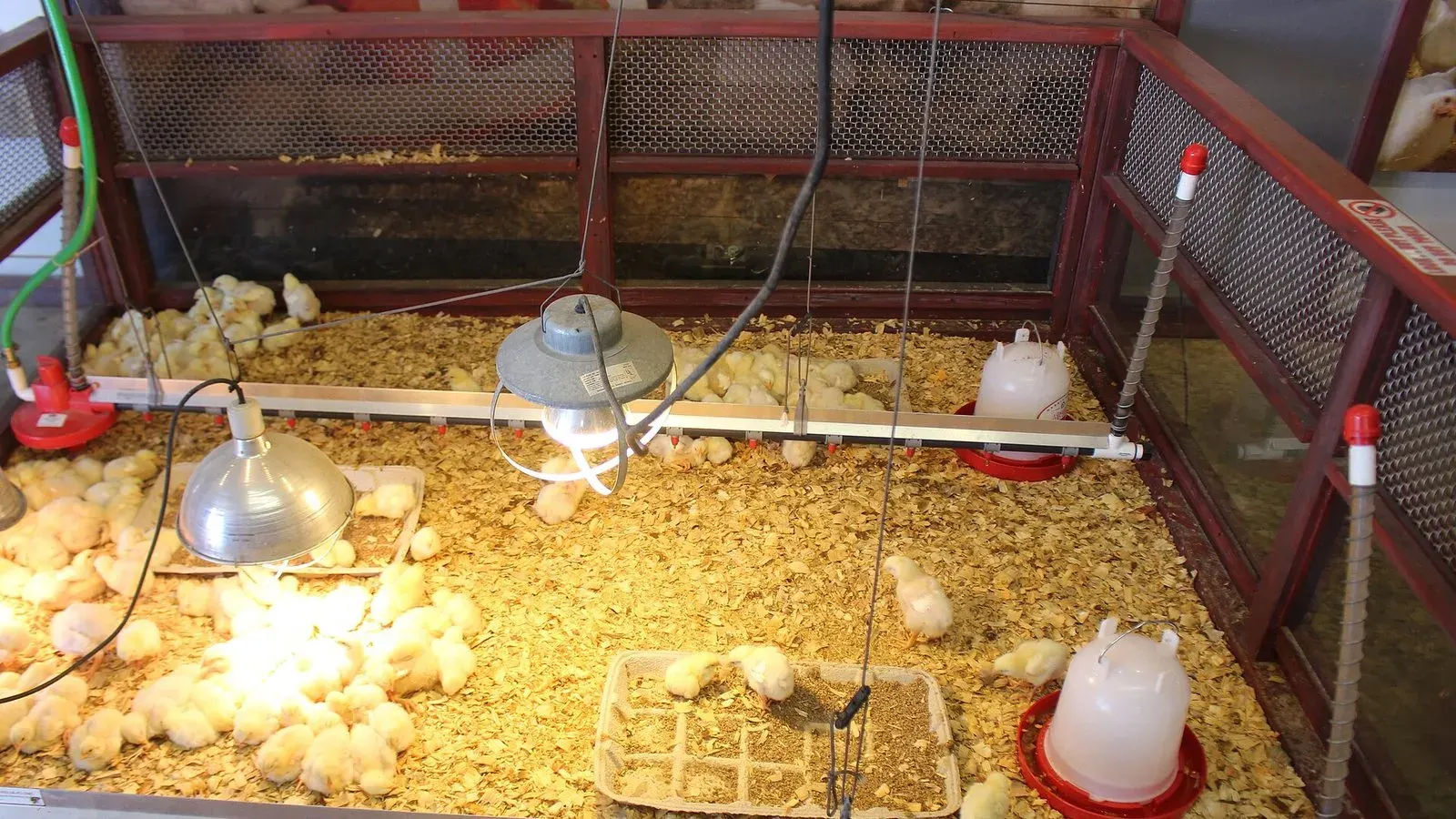
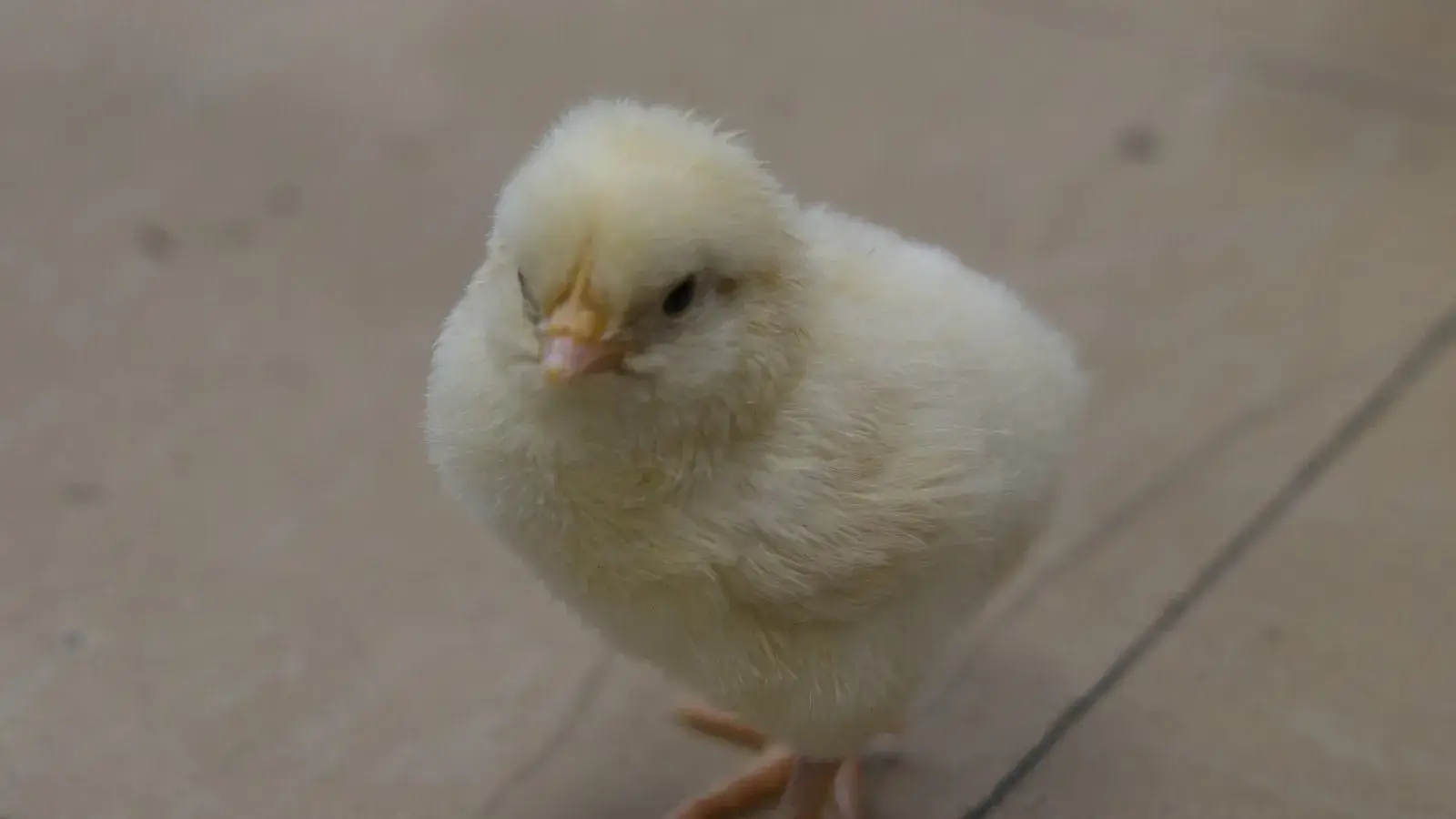
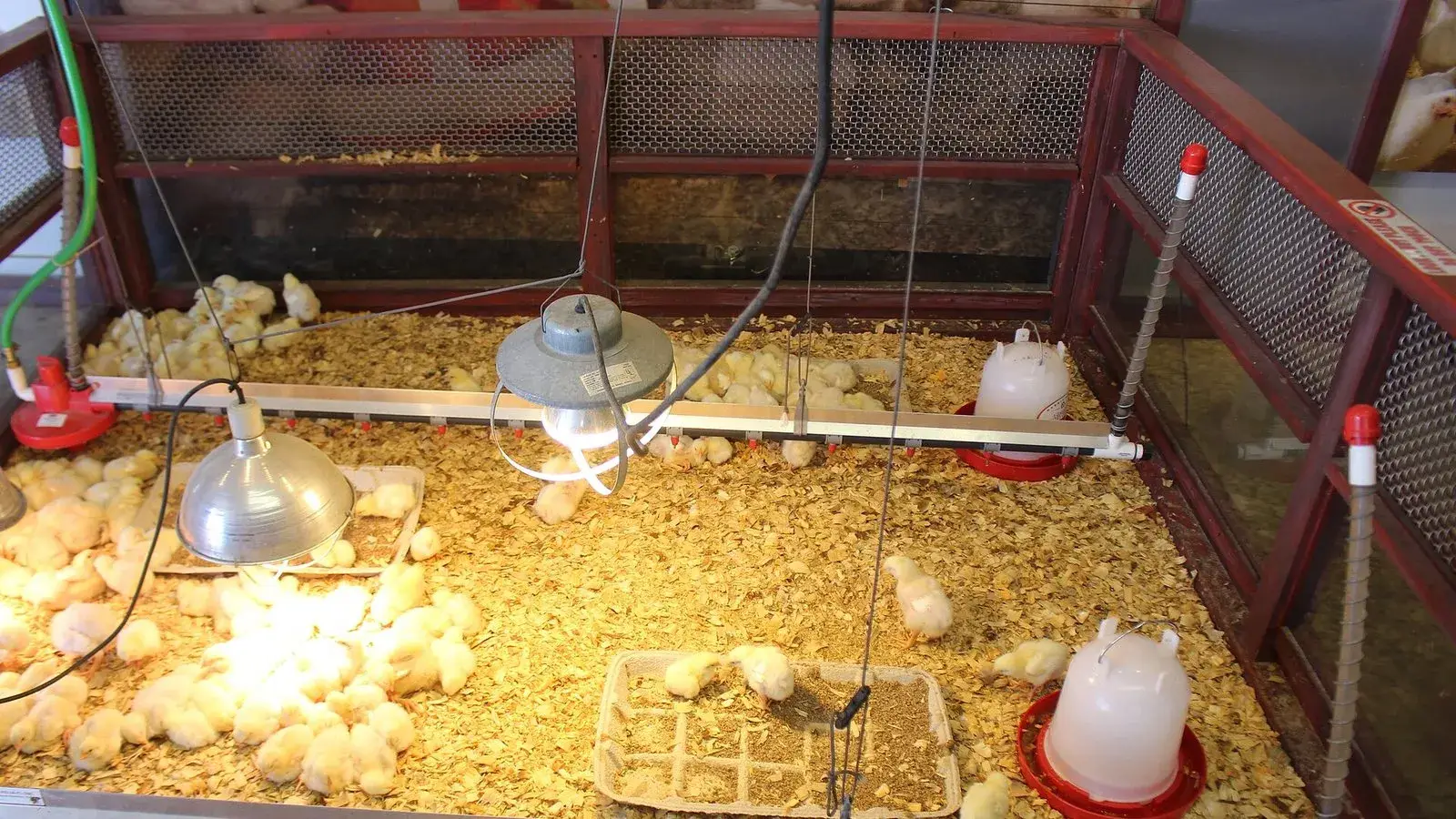
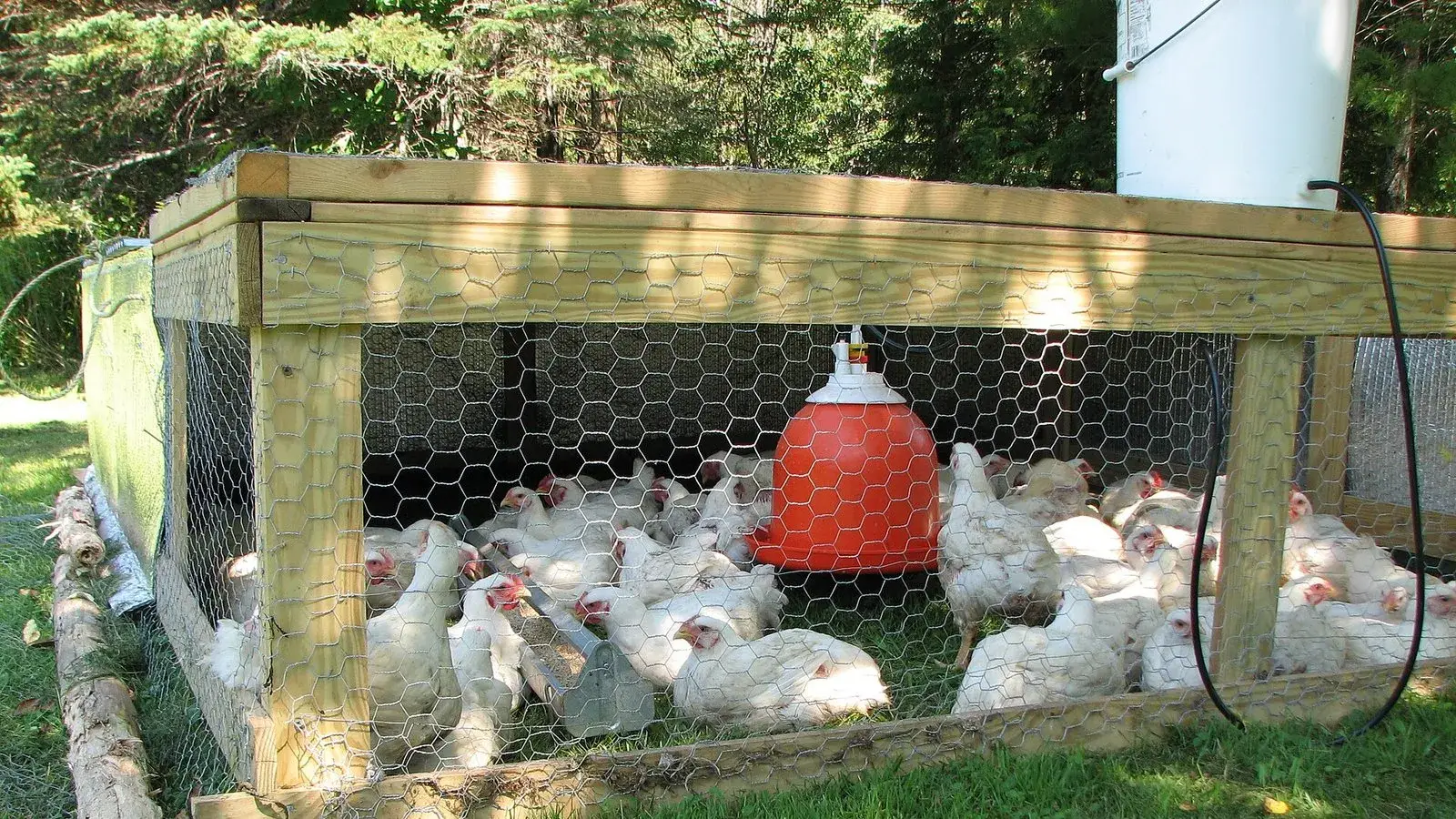
Chicks are not careful eaters. Put starter crumble in an open dish and within a few minutes they are standing in it, scratching it over the side and dropping straight into what is left. Most of what you lose in the first three weeks is lost this way, and it is entirely avoidable.
That is why this comparison starts with the lid rather than the capacity. A holed lid or a guarded port lets a chick reach the crumble with its head while keeping its feet out. Every feeder here was judged on how well it does that, then on how quickly it refills and how easily it strips down for scrubbing, because a chick feeder gets cleaned far more often than an adult one.
Capacity matters less than you would expect. Chicks need feed in front of them all day for the first weeks, so the answer to a small feeder is a second feeder rather than a bigger hopper. Where you put it matters more. The feeder belongs at the cool end of the brooder, away from the heat plate, so the crumble stays fresh and the chicks have a reason to move off the heat.
Our picks at a glance
Every product below wins one specific situation. Pick the row that matches your flock, your yard and your budget rather than reading top to bottom.
-
Best Overall

MACGOAL Flip-Top Trough
Anyone brooding up to a dozen chicks who wants feed staying in the feeder instead of in the bedding.
Check price on Amazon for MACGOAL Flip Top Chick Feeder Trough, Plastic Bird Small Poultry Feeder on AmazonAbout $7.98 checked Aug 8, 2026
-
Best Classic Jar Feeder
Little Giant Jar Base
Keepers who already have quart jars and want a metal feeder that will still work after ten batches of chicks.
-
Best Metal

Potchen Metal Slide-Top
Anyone brooding chicks every spring who would rather buy one metal feeder than replace a plastic one every couple of years.
-
Best Two-Pack

Oncpcare 12-Hole 2-Pack
Anyone brooding a standard hatchery batch of 20 to 25 chicks who needs more than one feeding station from day one.
Check price on Amazon for 2 Pack Baby Chick Feeders, Trough for Brooder, 12-Hole Flip-Top on AmazonAbout $9.99 checked Aug 8, 2026
-
Best Starter Set

ZenxyHoC Starter Set
First-time keepers setting up a brooder from scratch who want the feeder and waterer matched and ordered together.
Check price on Amazon for 2-in-1 Chick Starter Set: 0.3 Gal Feeder & 0.4 Gal Waterer Green on AmazonAbout $17.99 checked Aug 8, 2026
-
Best Budget Set
Weartfun 3-Piece Set
Anyone raising a small batch of six to ten chicks who wants the whole brooder kit for the price of one mid-range feeder.
Compare every pick side by side
Swipe the table sideways to see every column on a phone.
| Product | Award | Price band | Capacity | Feed Ports | Material | Spill Resistance | Best use case | Buy link |
|---|---|---|---|---|---|---|---|---|
| MACGOAL Flip-Top Trough | Best Overall | Under $30 | About 1 lb | 12 holes with flip lid | Plastic | High, holed lid | Anyone brooding up to a dozen chicks who wants feed staying in the feeder… | Check price for MACGOAL Flip Top Chick Feeder Trough, Plastic Bird Small Poultry Feeder on Amazon |
| Little Giant Jar Base | Best Classic Jar Feeder | Under $30 | 1 quart with your own jar | Open circular trough | Galvanised steel | Moderate, open trough | Keepers who already have quart jars and want a metal feeder that will sti… | Check price for Baby Chick Feeder Base - Little Giant - Metal Feeder Base Jar, Standard 1 Quart (Item No. 9810) on Amazon |
| Potchen Metal Slide-Top | Best Metal | Under $30 | About 1.5 lb each | Slide-top trough openings | Galvanised steel | High, covered trough | Anyone brooding chicks every spring who would rather buy one metal feeder… | Check price for Potchen 2 Pcs Slide-top Poultry Feeder Durable Galvanized Metal Chicken Feeder Trough with Removable Top Trough Multi-Hole Tray for Pigeon Quails Duckling Birds Duck Chicken(12 Inch) on Amazon |
| Oncpcare 12-Hole 2-Pack | Best Two-Pack | Under $30 | About 1 lb each | 12 holes with flip lid | Plastic | High, holed lid | Anyone brooding a standard hatchery batch of 20 to 25 chicks who needs mo… | Check price for 2 Pack Baby Chick Feeders, Trough for Brooder, 12-Hole Flip-Top on Amazon |
| ZenxyHoC Starter Set | Best Starter Set | Under $30 | 0.3 gal feeder and 0.4 gal waterer | Guarded feeding ports | Plastic | High, guarded ports | First-time keepers setting up a brooder from scratch who want the feeder… | Check price for 2-in-1 Chick Starter Set: 0.3 Gal Feeder & 0.4 Gal Waterer Green on Amazon |
| Weartfun 3-Piece Set | Best Budget Set | Under $30 | About 1 lb feeder | Trough with holed lid | Plastic | Moderate | Anyone raising a small batch of six to ten chicks who wants the whole bro… | Check price for Chick Feeder and Waterer Set, 3 Pcs Baby Chicken Supplies with Chicks Feeder Trough and 1L Waterer, Chicken Starter Kit for Small Poultry Ducks Quail Coop on Amazon |
The full reviews
Each review below follows the same order: what it is, why it won its category, how it behaves in real use, and who should buy something else.
1 Best Overall
MACGOAL Flip Top Chick Feeder Trough, Plastic Bird Small Poultry Feeder
A 12 hole lid over a 1 lb trough, which keeps chick feet out of the crumble while still letting a dozen chicks feed at the same time.
What we liked
- Holed lid means chicks feed with their heads in and their feet on top
- Flip top opens for refilling without taking the feeder apart
- Twelve holes let a full brooder batch eat at once instead of queueing
- At 11.8 inches long and 3.9 inches wide it sits flat against a brooder wall
What we did not
- About 1 lb of crumble means refilling morning and evening once chicks are growing
- The plastic lid hinge is the part under constant load, and a cracked hinge makes the lid useless
- Chicks outgrow the lid holes as they feather out, so this is a brooder feeder rather than a permanent one
About $7.98 checked Aug 8, 2026
Key specifications
- Dimensions
- 11.8 x 3.9 x 2.8 in (L x W x H)
- Colour
- Red
- Capacity
- About 1 lb
- Feed Ports
- 12 holes with flip lid
- Material
- Plastic
- Spill Resistance
- High, holed lid
- Chicks Served
- Up to 12 chicks
Why the MACGOAL Flip-Top Trough wins this category
Because it solves the one problem that costs money in a brooder. Chicks scratch, and a chick standing in an open dish rakes crumble backwards into the bedding within minutes, then fouls whatever is left behind.
A perforated lid removes the option. The chick pushes its head through a hole, takes what it wants and pulls back out. It can stand on the lid all day and never touch the feed underneath. Nothing else in this comparison does that job more simply or for less money.
Living with the MACGOAL Flip-Top Trough
The flip top is the detail that makes it pleasant to own. Refilling a chick feeder is a job you do several times a day for six weeks, and a lid that lifts on a hinge turns that into a one-handed action rather than a two-handed unscrewing.
Twelve holes is generous for the size. A dozen chicks can feed together, which matters because chicks establish a pecking order early and a feeder with three openings leaves the smallest birds waiting.
The narrow 3.9 inch footprint helps in a small brooder, where floor space is the constraint.
Where the MACGOAL Flip-Top Trough falls short
Capacity is the honest weakness. About 1 pound is roughly a day for twelve chicks in their second and third weeks, so this is a twice daily check, not a set-and-forget feeder. Two of them is a better arrangement than wishing this one were bigger.
The hinge is the part that fails. It is thin plastic taking every open and close, and once it cracks the lid no longer stays down, which returns you to an open trough.
Its working life is also short by design. Once the birds feather out and their heads stop fitting the lid holes, they feed around the edges and tip it over.
Research based, not hands-on
Assessed on the published lid design, trough dimensions and stated capacity, and compared against open dish feeders on how chicks scratch feed out.
- Best for
- Anyone brooding up to a dozen chicks who wants feed staying in the feeder instead of in the bedding.
- Skip it if
- You are brooding twenty or more chicks, because one 1 lb trough will neither hold enough nor give enough feeding space.
- The limitation to plan around
- Capacity is the thing to plan around. About 1 lb goes quickly with twelve growing chicks, so expect to check it twice a day rather than filling it once and forgetting it.
2 Best Classic Jar Feeder
Baby Chick Feeder Base - Little Giant - Metal Feeder Base Jar, Standard 1 Quart (Item No. 9810)
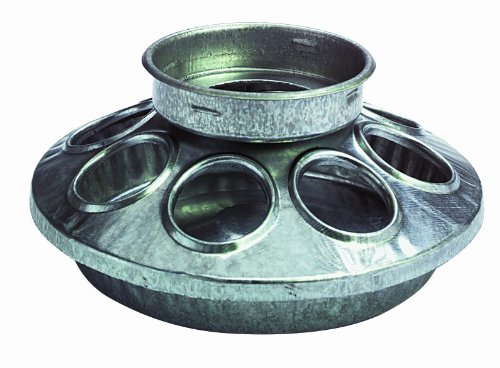
The galvanised base that screws onto a standard quart jar, which is the oldest brooder feeder design there is and still the cheapest way to get 1 quart of feed in front of fifteen chicks.
What we liked
- Galvanised steel base that survives being scrubbed daily for years
- Screws onto a standard 1 quart jar, so the jar is replaceable and free
- Gravity feed keeps the trough topped up until the jar empties
- Circular trough gives fifteen chicks access from every side at once
What we did not
- The trough is open, so chicks can stand in it and scratch crumble over the lip
- It arrives as a base only, and without a quart jar on hand it does not feed anything
- A glass jar in a brooder breaks if the chicks knock the assembly over
Key specifications
- Dimensions
- 6 x 6 x 2.5 in (L x W x H)
- Weight
- 0.1 pounds
- Colour
- Silver
- Capacity
- 1 quart with your own jar
- Feed Ports
- Open circular trough
- Material
- Galvanised steel
- Spill Resistance
- Moderate, open trough
- Chicks Served
- Up to 15 chicks
Why the Little Giant Jar Base wins this category
Because the jar feeder has survived a century for good reasons and this is the plain metal version of it. A quart of crumble sits above the trough and gravity keeps the trough full without any moving parts, which means nothing to jam, nothing to hinge and nothing to break.
Galvanised steel is the other half of the case. At 0.1 pounds it is a small piece of pressed metal, and it will still be usable long after the plastic troughs in this comparison have gone brittle. Scrubbing it daily does nothing to it.
Living with the Little Giant Jar Base
The circular trough gives access from all sides, so fifteen chicks are not fighting over a line of holes. In a round brooder that is a genuinely better shape than a straight trough against a wall.
Using your own jar is quietly useful. Jars are cheap, and if one cracks you replace the jar rather than the feeder. You can also pre-fill a second jar and swap it in.
Where the Little Giant Jar Base falls short
The trough is open, and that is the whole argument against it. Chicks stand on the rim, get in, and rake crumble out with their feet. It will not waste feed like a flat dish, because the lip is raised and the trough is narrow, and it will still lose noticeably more than a holed lid.
It is also a base and nothing else. If you order it expecting a complete feeder, you have half a feeder until you find a standard quart jar that fits.
Glass on a brooder floor deserves a thought. A quart jar full of feed is top heavy on a 6 inch base, and chicks perching on it can tip the assembly. A plastic jar removes that risk.
Research based, not hands-on
Assessed on the published material, jar fitting and trough design, and compared against holed lid feeders on how much crumble chicks scratch out.
- Best for
- Keepers who already have quart jars and want a metal feeder that will still work after ten batches of chicks.
- Skip it if
- Crumble in the bedding is what you are trying to stop, because an open circular trough is exactly where that comes from.
- The limitation to plan around
- The open trough is the compromise you accept for the price. Keep the feed level low and raise the base on a block once the chicks are a week old, or you will be sweeping crumble out of the shavings every day.
3 Best Metal
Potchen 2 Pcs Slide-top Poultry Feeder Durable Galvanized Metal Chicken Feeder Trough with Removable Top Trough Multi-Hole Tray for Pigeon Quails Duckling Birds Duck Chicken(12 Inch)
Two 12 inch galvanised troughs with sliding covered tops, which gives you a spill-resistant feeder that will still be in service after ten batches of chicks.
What we liked
- Galvanised steel body that does not go brittle after a few damp seasons
- Covered slide top keeps chicks standing on the lid rather than in the crumble
- Two troughs let you set up feeding stations at both ends of the brooder
- About 1.5 lb each is more capacity per trough than the plastic feeders here
What we did not
- Cut edges on galvanised steel can rust once the coating is scratched, and brooder bedding stays damp
- The top has to be slid back to refill, which is slower than a lid that flips open
- Twelve inches of trough needs more wall space than some small brooders have
- You pay for two feeders whether a small batch needs two or not
Key specifications
- Size
- 12 Inch
- Capacity
- About 1.5 lb each
- Feed Ports
- Slide-top trough openings
- Material
- Galvanised steel
- Spill Resistance
- High, covered trough
- Chicks Served
- Up to 20 chicks across both
Why the Potchen Metal Slide-Top wins this category
On material, and material is the argument for the price. Plastic brooder feeders are cheap because they are meant to be replaced. Galvanised steel is not. A pressed steel trough scrubbed daily for six weeks a year looks much the same after a decade, which changes the cost per season.
The covered top matters as much. It does the same job as a perforated plastic lid, keeping chick feet out of the crumble, and it does it in a material chicks cannot crack by standing on it.
Living with the Potchen Metal Slide-Top
Getting two is the useful part. The correct setup for a batch of twenty is two feeding stations at opposite ends of the brooder rather than one large trough, because the strongest chicks will otherwise hold the only feeder and the smallest birds eat last.
At about 1.5 pounds each, the pair holds roughly 3 pounds between them, so a batch of twenty is a once daily fill rather than a twice daily one. Twelve inches is also a good length for a rectangular brooder, where a trough along the wall wastes no floor.
Where the Potchen Metal Slide-Top falls short
Galvanising protects the surface, not the cut edges, and every pressed steel trough has cut edges. Scrape one against a brooder wall, leave it in damp shavings, and rust starts there. It is slow and it is worth knowing about, because a rusted seam is a place feed sticks and bacteria sit.
The slide top is slower to use than a flip lid. Refilling means pulling the cover back along its runner, and crumble dust in that runner makes it stiff. It is a small annoyance repeated several times a day.
The two-pack cuts both ways. For twenty chicks it is right. For six chicks you are paying 17.99 for a feeder and a spare.
Research based, not hands-on
Assessed on the published material, trough length, stated capacity and slide-top design, and compared against plastic troughs on durability in damp bedding.
- Best for
- Anyone brooding chicks every spring who would rather buy one metal feeder than replace a plastic one every couple of years.
- Skip it if
- You are brooding a single small batch, because two 12 inch metal troughs is more feeder than eight chicks need.
- The limitation to plan around
- The slide top is the thing to plan around. It has to be pulled back for every refill, and crumble dust in the runner makes it stiff, so it needs wiping out when you clean rather than only when it sticks.
4 Best Two-Pack
2 Pack Baby Chick Feeders, Trough for Brooder, 12-Hole Flip-Top
Two 12-hole flip-top troughs for about 10 dollars, which is the right answer for a hatchery batch because two feeding stations beat one bigger feeder every time.
What we liked
- Two troughs let you set up feeding stations at opposite ends of the brooder
- Twelve holes per lid means 24 chicks can feed without a queue forming
- Flip-top lids open for refilling without unclipping or unscrewing anything
- Under 8 inches long each, so both fit in a brooder that one long trough would fill
What we did not
- Twelve holes on a trough under 8 inches long puts chicks shoulder to shoulder, so smaller birds get pushed off
- About 1 lb each means checking both feeders morning and evening once the chicks are two weeks old
- Plastic lids and hinges will not survive annual brooding the way a galvanised trough does
About $9.99 checked Aug 8, 2026
Key specifications
- Dimensions
- 3.543307083 x 2.5590551155 x 7.87401574 in (L x W x H)
- Weight
- 1.10231131 pounds
- Colour
- 2 Pack
- Capacity
- About 1 lb each
- Feed Ports
- 12 holes with flip lid
- Material
- Plastic
- Spill Resistance
- High, holed lid
- Chicks Served
- Up to 24 chicks across both
Why the Oncpcare 12-Hole 2-Pack wins this category
Because the correct answer to more chicks is more feeders, not a bigger one. Chicks sort out a pecking order in the first fortnight, and with a single feeder the confident birds hold it and the smallest ones eat what is left. Two troughs at opposite ends of the brooder removes the bottleneck entirely.
Buying that as a pair for about 10 dollars is what earns the award. The holed flip-top lid is the same design that wins the top spot in this guide, and here you get it twice for a couple of dollars more.
Living with the Oncpcare 12-Hole 2-Pack
The flip lids are the practical detail. A lid that opens on a hinge makes a refill quick enough that you actually do it when you notice the trough running low.
Each trough is under 8 inches long, which helps in a plastic tub brooder. Two short troughs fit along two walls where a single 12 inch feeder takes a whole side.
Splitting the feed also gives you a signal. If one trough is always empty first, that end of the brooder is where the birds are settling, which usually says something about your heat placement.
Where the Oncpcare 12-Hole 2-Pack falls short
Twelve holes on a trough this short means the openings sit close together. Chicks feed shoulder to shoulder, and the smallest birds get pushed off a hole even when the count says there is room. The hole count is honest, the spacing is tight.
Capacity is the same story as every plastic brooder trough here. About 1 pound each is a day at most for a large batch, so both need checking morning and evening.
Material is the long-term limit. These are plastic lids on plastic hinges, and they will not take annual brooding for a decade the way galvanised steel will.
Research based, not hands-on
Assessed on the published dimensions, per-trough capacity and 12-hole flip-top design, and compared against single large feeders on feeding access for a full batch.
- Best for
- Anyone brooding a standard hatchery batch of 20 to 25 chicks who needs more than one feeding station from day one.
- Skip it if
- You only have four or five chicks, because a single trough does that job and the second one sits in a cupboard.
- The limitation to plan around
- Two feeders means two feeders to clean. Chick feeders get scrubbed every couple of days, and doubling the count doubles that job, so keep both in use rather than letting one sit unwashed as a spare.
5 Best Starter Set
2-in-1 Chick Starter Set: 0.3 Gal Feeder & 0.4 Gal Waterer Green
A 0.3 gal feeder with guarded ports and a matching 0.4 gal waterer, which covers both halves of a brooder in one order for people setting up from nothing.
What we liked
- Guarded ports keep chick feet out of the crumble as effectively as a holed lid
- Feeder and waterer arrive together, so nothing is missing on the day the chicks land
- 0.3 gal of crumble is enough for fifteen chicks without towering over the brooder floor
- Waterer holds 0.4 gal, more than most brooder waterers sold at this price
What we did not
- Guarded ports are harder to get a brush into than a lid that lifts straight off
- The feeder is a compact tub rather than a long trough, so it offers fewer feeding positions than a 12 inch trough
- Both pieces are the same plastic, so a crack in either usually means buying the pair again
About $17.99 checked Aug 8, 2026
Key specifications
- Dimensions
- 0.39 x 0.39 x 0.39 in (L x W x H)
- Weight
- 0.82011961464 pounds
- Colour
- Green
- Capacity
- 0.3 gal feeder and 0.4 gal waterer
- Feed Ports
- Guarded feeding ports
- Material
- Plastic
- Spill Resistance
- High, guarded ports
- Chicks Served
- Up to 15 chicks
Why the ZenxyHoC Starter Set wins this category
Because the day chicks arrive is the wrong day to discover you bought a feeder and forgot the waterer. A matched set removes that risk, and this one is not a compromise on either half. The feeder holds 0.3 gal behind guarded ports, and the waterer holds 0.4 gal, which is more than several standalone brooder waterers at similar money.
Guarded ports do the same work as a perforated lid. A chick reaches in with its head and cannot get a foot to the crumble, so what stays in the feeder stays clean.
Living with the ZenxyHoC Starter Set
Buying both pieces from the same maker helps beyond convenience. They stand at the same height, so you can raise both on one block of wood once the chicks are a week old.
Capacity is well judged for fifteen chicks. A 0.3 gal feeder is a comfortable daily fill in the first fortnight, and the 0.4 gal waterer means you are not refilling water three times a day.
Keep the two pieces apart in the brooder despite them being a set. Flicked water turns crumble into a crust that blocks the ports.
Where the ZenxyHoC Starter Set falls short
Cleaning is the real cost of guarded ports. A flip-top lid comes off and the trough goes under a tap. A guarded port has a shaped throat you need a bottle brush to reach, and chick feeders get washed every couple of days for six weeks.
Shape is the other trade. This is a compact tub, not a 12 inch trough, so fewer chicks can feed at once than the capacity suggests. With fifteen chicks you will see birds waiting.
Both pieces being plastic sets the lifespan. Expect a few seasons rather than a decade, and if the feeder cracks you are usually replacing the set.
Research based, not hands-on
Assessed on the published feeder and waterer capacities, guarded port design and plastic construction, and compared against separate feeder purchases on cost and cleaning access.
- Best for
- First-time keepers setting up a brooder from scratch who want the feeder and waterer matched and ordered together.
- Skip it if
- You already own a brooder waterer, because then you are paying set price for a feeder you could buy on its own for less.
- The limitation to plan around
- The port design is the thing to plan around. Guarded ports keep feed clean and they are more awkward to scrub than a flat perforated lid, so cleaning takes a bottle brush and a few more minutes every couple of days.
6 Best Budget Set
Chick Feeder and Waterer Set, 3 Pcs Baby Chicken Supplies with Chicks Feeder Trough and 1L Waterer, Chicken Starter Kit for Small Poultry Ducks Quail Coop
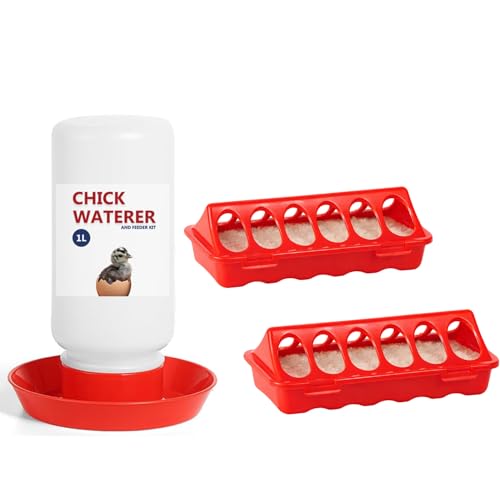
A three piece kit with an 8 inch holed-lid trough and a 1L waterer for about 11 dollars, which is the cheapest way to get a small brooder properly equipped.
What we liked
- Feeder and 1L waterer together for about 11 dollars, well under what the metal trough and the starter set cost on their own
- Holed lid on the trough keeps chick feet out of the crumble
- The 8 inch trough is small enough for a plastic tub brooder
- Three pieces means a spare part rather than a single point of failure
What we did not
- Spill resistance is only moderate, so more crumble reaches the bedding than with the flip-top designs here
- Rated for up to 10 chicks, the lowest here, so a normal 25 chick batch needs three sets
- A 1L waterer will not last a full day for ten growing chicks in a warm brooder
Key specifications
- Dimensions
- 8 x 3.3 x 2.6 in (L x W x H)
- Weight
- 0.67902376696 pounds
- Colour
- Red
- Capacity
- About 1 lb feeder
- Feed Ports
- Trough with holed lid
- Material
- Plastic
- Spill Resistance
- Moderate
- Chicks Served
- Up to 10 chicks
Why the Weartfun 3-Piece Set wins this category
On price for a complete setup. About 11 dollars gets a trough feeder, a 1L waterer and a third piece, which is around 60 percent of the 17.99 that the Potchen metal two-pack and the ZenxyHoC starter set each cost. The ZenxyHoC starter set is the only other one here that covers both the feeder and the waterer, and it costs about 7 dollars more. For someone hatching half a dozen chicks once to see how it goes, that is the right amount of money to spend.
The trough has a holed lid rather than being an open dish, so the basic mechanism is right. Chicks feed through the lid instead of standing in the crumble, which is the difference between losing a little feed and losing a lot.
Living with the Weartfun 3-Piece Set
The 8 by 3.3 inch footprint suits the way most people actually brood, which is a plastic storage tub in a garage. A 12 inch metal trough eats a whole wall of that. This one does not.
Having the waterer in the same order matters on the first day. Chicks need water within minutes of going into the brooder, and a set removes any chance of the waterer being the thing that has not arrived.
Three pieces also means a spare if something cracks mid-batch.
Where the Weartfun 3-Piece Set falls short
Spill resistance is rated moderate rather than high, and that is the honest gap between this and the flip-top troughs here. The lid reduces scratching without stopping it, and over six weeks the difference shows up in the bedding.
Ten chicks is a hard ceiling. Buy this for a batch of 25 and you need three sets, which costs more than two better feeders and leaves you with three waterers you do not want.
The waterer is the tighter constraint of the two. A litre goes fast with ten growing chicks in a heated brooder, so plan on refilling it more than once a day rather than treating it as a daily job.
Research based, not hands-on
Assessed on the published trough dimensions, stated 1 lb feeder capacity, 1L waterer volume and holed lid design, and compared against the flip-top troughs in this guide on spill behaviour.
- Best for
- Anyone raising a small batch of six to ten chicks who wants the whole brooder kit for the price of one mid-range feeder.
- Skip it if
- You are brooding a full hatchery batch, because ten chicks is the ceiling and three sets costs more than two proper feeders.
- The limitation to plan around
- Moderate spill resistance is the compromise for the price. The lid helps and it does not seal the trough the way a flip-top does, so raise the feeder on a block once the chicks are a week old to cut the crumble that gets scratched in and out.
How we compared these chick feeders
The first question asked of every feeder was whether a chick can stand in it. That single detail decides how much starter crumble ends up in the bedding, and how much of what stays in the feeder is still clean by the evening.
After that, four things. Lid and port design, because a hole a chick pushes its head through behaves nothing like a trough it can climb into. Refill access, since a feeder that has to be dismantled to top up gets topped up less often than it should. Cleaning, because chick feeders get scrubbed every day or two and a sealed seam is a real problem. And material, because galvanised steel and plastic age very differently in damp bedding.
Capacity was compared last, on purpose. It is the number most listings lead with and it is the least useful one in this category.
What actually matters in a chick feeder
The lid is the whole product
An open dish fails within minutes. A chick that can stand on the rim will get in, and once it is in it rakes backwards with both feet. Feed goes over the side, the chick fouls what is left, and the rest gets tipped out.
A holed lid solves this in the simplest possible way. The chick pushes its head through the lid, eats, and pulls back out. Its feet never touch the crumble. A guarded port does the same job with a shaped opening rather than a flat perforated lid.
That is why the flip-top and slide-top designs here score above the open jar base, even though the jar base is the traditional brooder feeder and works perfectly well if you stay on top of it.
Constant access, not capacity
Chicks eat little and often, and for the first weeks feed should be in front of them all the time. A three day old chick that finds an empty feeder does not wait patiently for you.
That changes what capacity means. A 1 pound trough is not a small feeder, it is a feeder you check morning and evening. If you are brooding 25 chicks, the right answer is three troughs spread around the brooder, not one big hopper in the middle. Spreading them also stops the strongest chicks holding the only feeding station.
Cleaning, every couple of days
This is the part nobody plans for. Chicks stand on the lid, so droppings land on top and get pushed into the holes by the next bird. Damp crumble sets hard in the corners of a trough.
Look for a feeder that comes apart without tools and has nothing you cannot get a brush into. Flip-top lids do well here. Sealed two-part mouldings do not.
Plastic or galvanised steel
Plastic is lighter, cheaper and easier to scrub, and it is what most brooder feeders are made from. It also goes brittle over a few seasons and stains where damp crumble sits.
Galvanised steel lasts far longer and shrugs off the bedding, but it costs more for the same capacity and it can rust at cut edges once the coating is scratched.
For one batch of chicks a year, plastic is the sensible buy. If you brood every spring for the next decade, steel is cheaper per year and it will still be usable when the plastic troughs have cracked.
Setting the feeder up in the brooder
Put it at the cool end, away from the heat plate. Warm feed goes off faster, and chicks need a reason to move off the heat and regulate their own temperature.
Keep the feeder and the waterer apart. Chicks flick water everywhere, and wet crumble sets into a crust that blocks the lid holes and stops the feed flowing down. A foot of separation is enough in a normal brooder.
Once the chicks are about a week old, sit the feeder on a scrap of wood or a small block. Raising the lip closer to the height of their backs cuts down how much bedding gets scratched into it.
For the first day or two, ignore all of this and scatter crumble on a paper towel as well. Very new chicks find feed on a flat surface more easily than they find a feeder, and once they know what crumble is they will use the trough.
Final recommendation
The MACGOAL Flip-Top Trough is the pick for most people. The holed lid addresses the actual mechanism of chick feed waste, the flip top means refilling takes a second, and at about 8 dollars it costs less than the feed you would otherwise lose.
If you are brooding a big batch, the Oncpcare 12-Hole 2-Pack gives you the same design twice, so you can spread feeding stations across the brooder. If you brood every year and want to buy once, the Potchen Metal Slide-Top is galvanised steel and will outlast every plastic trough here. And if you are starting from nothing, the ZenxyHoC Starter Set covers the feeder and the waterer in a single order.
Questions people ask before buying
Why do chicks waste so much feed?
Because scratching is instinctive from the first days of life. A chick that can get its feet into a dish will rake backwards with both feet exactly as it would in leaf litter, and everything it rakes goes over the side into the bedding. It then stands in what is left and fouls it, so you throw that out too. The fix is not a deeper dish, it is a lid with holes or a guarded port that lets the head in and keeps the feet out.
How many chick feeders do I need?
Work on one feeder for every ten to twelve chicks, then add one more. A typical hatchery batch of 25 chicks wants three small troughs rather than one large one. Spreading feeding stations around the brooder matters as much as total capacity, because the strongest chicks will hold a single feeder and the smallest ones eat last. Two feeders at opposite ends of the brooder solve that without costing much.
Where should the chick feeder go in the brooder?
At the cool end, away from the heat plate or lamp. Heat dries crumble out and shortens how long it stays fresh, and feed sitting under a lamp all day goes off faster. The bigger reason is behavioural. Chicks regulate their own temperature by moving between warm and cool areas, and putting the feed at the cool end gives them a reason to move rather than sitting under the heat for hours.
Can I just use a shallow bowl for the first week?
You can for the first day or two, and many people do because a flat surface helps very new chicks find the feed at all. Sprinkling crumble on a paper towel or a jar lid works while they learn. After that it becomes a waste problem, because the chicks are strong enough to scratch and the bowl gets fouled within hours. Move to a feeder with a holed lid or guarded ports by the end of the first week.
How often should a chick feeder be cleaned?
Check it daily and wash it properly every couple of days. Chicks stand on the lid, so droppings land on top and get pushed down into the holes when the next chick feeds. Damp crumble also sets hard in the corners of a trough. Pick a feeder that comes apart without tools and has no sealed seam you cannot reach with a brush, because a feeder that is awkward to clean is a feeder that does not get cleaned.
When do chicks outgrow a chick feeder?
Usually somewhere between four and six weeks, and the signal is physical rather than a date. Once the birds are feathering out and their heads no longer fit comfortably through the lid holes, they will start feeding around the outside and knocking the trough over. That is the point to move to a hanging or port feeder sized for grown birds. Keep the chick feeder, because you will want it for the next batch.
Why you can trust this guide
- Written by
- Marta Voss, Editor and fact checker, Chicken Geek. Specialist areas: Editorial fact checking, Chick brooding and starter nutrition, Small-flock husbandry, Feed labels and nutrition claims.
- Fact checked by
- Sam Reddick
- Published
- August 6, 2026 · Last updated August 6, 2026 · Products and links rechecked August 6, 2026
- How we picked
- Feeders were compared on whether a chick can physically stand in the feed, on lid and port design against scratched-out crumble, on how long a fill lasts a full brooder batch, on how far the feeder strips down for daily cleaning, and on how plastic and galvanised steel hold up in damp bedding.
- Evidence used
- None of the 6 products on this page were sent to us or bought for a hands-on test. Every recommendation here is research based: manufacturer specifications, listed dimensions and materials, owner feedback at volume, and comparison against equipment our team has owned. Each review states this again above the buy button so you are never guessing which kind of evidence sits behind a pick.
- Editorial standards
- No brand pays for placement, and no manufacturer sees this page before it goes live. Read our editorial policy and testing method.
- Affiliate disclosure
- Chicken Geek is reader supported. We earn a commission from qualifying purchases made through links on this page, at no extra cost to you, and no brand has paid for a placement or an award here.
About the author

Editor and fact checker, Chicken Geek
Marta edits every guide on Chicken Geek and checks that each claim can be traced back to a manufacturer specification, a published standard or a stated first-hand observation. She keeps a small backyard flock of six hens and has raised chicks from day one for eight seasons.
- Eight seasons raising chicks from day-old to point of lay
- Checks every specification in a Chicken Geek guide against the manufacturer listing
- Removes any testing claim that cannot be backed up
- Keeps a flock of six hens in a suburban backyard