We Compared 6 Coop Heaters. Most Flocks Do Not Need One
We compared six coop heaters on wattage, thermostat control and fire safety, and explain why most backyard flocks do not need heat at all.

By Sam Reddick Lead gear reviewer, Chicken Geek
Fact checked by Marta Voss
Published Prices and stock checked 7 min read
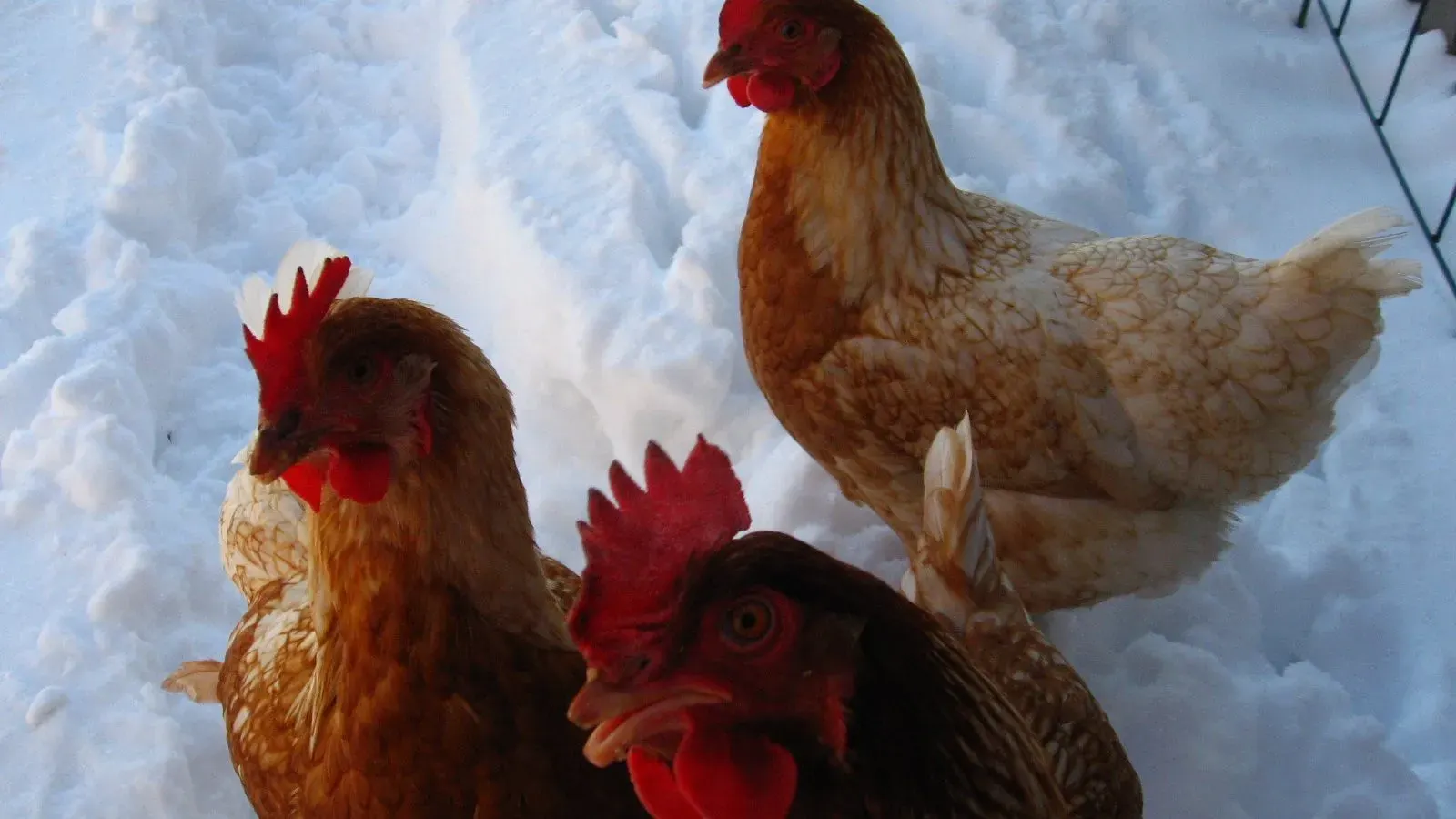
Before the picks, the thing that will save most readers the money: adult chickens in full feather do not need a heated coop in most of the United States. They handle cold far better than they handle damp, and a sealed, warm, humid coop causes more frostbite than a cold, dry, well-ventilated one does.
What supplementary heat is genuinely for is a short list. Very cold snaps well below zero. Birds that are old, sick, moulting or thin. Coops with too little insulation and too much air movement at bird level. And keeping water liquid, which is a different product entirely.
With that said, if you have decided you want a panel, the choice matters. We compared six on wattage against coop size, whether a thermostat is included, and how each one fails. We have also been direct about heat lamps, which are cheaper than every product here and cause a disproportionate share of coop fires.
Our picks at a glance
Every product below wins one specific situation. Pick the row that matches your flock, your yard and your budget rather than reading top to bottom.
-
Best Overall

Cozy Coop 150W Panel
Small to medium coops where the goal is taking the edge off for a few hard nights rather than heating the space.
Check price on Amazon for Cozy Products Cozy Coop Chicken Coop Heater, Flat-Panel, 150 Watts on AmazonAbout $54.69 checked Aug 8, 2026
-
Best Thermostatic
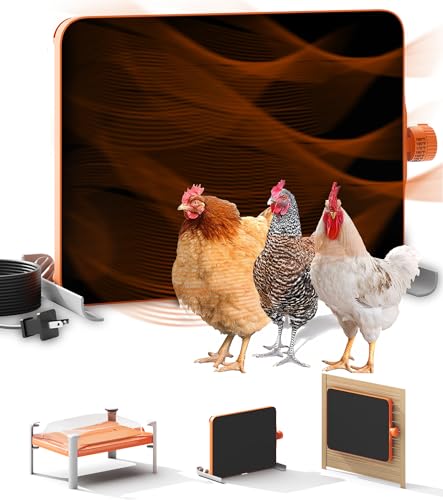
Chickcozy Smart Heater
Keepers who want to plug a heater in during November and not think about it again until March.
Check price on Amazon for Smart Chicken Coop Heater, 200W Radiant Heat Panel with Temperature Sensor on AmazonAbout $59.99 checked Aug 8, 2026
-
Best Dual Purpose
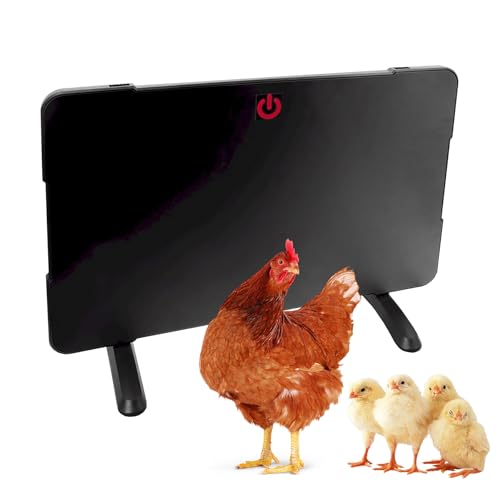
Farm Innovators 2-in-1
Keepers who hatch or buy chicks each spring and want one piece of heating equipment doing both jobs.
-
Best for Large Coops

PETNF Large App Heater
Large coops with a dozen or more birds where a small panel would only ever warm whichever hen got there first.
-
Best Low Wattage

My Favorite Chicken 100W
Small coops and tractors housing three or four birds, where the aim is a slightly warmer corner rather than a warmer coop.
-
Best Budget

PETNF 140W Heater
Anyone currently considering a heat lamp, because for similar money this removes the fire risk entirely.
Compare every pick side by side
Swipe the table sideways to see every column on a phone.
| Product | Award | Price band | Wattage | Heat Type | Thermostat | Coop Size | Best use case | Buy link |
|---|---|---|---|---|---|---|---|---|
| Cozy Coop 150W Panel | Best Overall | $30 to $60 | 150 W | Flat radiant panel | No, always on when plugged in | Small to medium coops | Small to medium coops where the goal is taking the edge off for a few har… | Check price for Cozy Products Cozy Coop Chicken Coop Heater, Flat-Panel, 150 Watts on Amazon |
| Chickcozy Smart Heater | Best Thermostatic | $30 to $60 | 200 W | Radiant panel | Yes, built-in adapter and control | Medium coops and brooders | Keepers who want to plug a heater in during November and not think about… | Check price for Smart Chicken Coop Heater, 200W Radiant Heat Panel with Temperature Sensor on Amazon |
| Farm Innovators 2-in-1 | Best Dual Purpose | $30 to $60 | 200 W | Radiant panel, converts to brooder plate | No | Medium coops and brooders | Keepers who hatch or buy chicks each spring and want one piece of heating… | Check price for Farm Innovators 2-In-1 Radiant 200-Watt Chicken Coop Panel Heater Converts to 50W Brooder Heater for Chicks, Free Standing or can be Wall Mounted, Hung or Used Horizontally on Amazon |
| PETNF Large App Heater | Best for Large Coops | $30 to $60 | Adjustable, app controlled | Foldable radiant panel | Yes, remote and app | Large coops | Large coops with a dozen or more birds where a small panel would only eve… | Check price for Chicken Coop Heater for Winter with Remote APP Control, 30''x12'' Large Foldable Chicken Heaters Warmer Inside Coop with Adjustable Timer Temp, 180W Safe Flat Panel Radiant Heater for Chickens Coops on Amazon |
| My Favorite Chicken 100W | Best Low Wattage | $30 to $60 | 100 W | Flat radiant panel | No | Small coops and tractors | Small coops and tractors housing three or four birds, where the aim is a… | Check price for My Favorite Chicken Radiant Chicken Coop Heater – 100-Watt Flat Panel Heater for Chickens, Energy-Efficient Chicken Coop Heater for Winter, Safe Radiant Heat Panel on Amazon |
| PETNF 140W Heater | Best Budget | $30 to $60 | 140 W | Radiant panel | No | Small coops | Anyone currently considering a heat lamp, because for similar money this… | Check price for PETNF Chicken Coop Heater 140 Watts Radiant Heat Chicken Heater Energy Efficient Design Safer Than Brooder Lamps Heater for Chicken Coop, Heating Wire UL-Compliant Two Ways to Use, 11.81''x15.74'' on Amazon |
The full reviews
Each review below follows the same order: what it is, why it won its category, how it behaves in real use, and who should buy something else.
1 Best Overall
Cozy Products Cozy Coop Chicken Coop Heater, Flat-Panel, 150 Watts
A 150 watt flat panel that warms birds by radiant heat rather than heating the air, which is the right approach and the safest one in a coop full of dry bedding.
What we liked
- Radiant panel warms the birds near it instead of trying to heat the whole coop
- Surface stays far below the ignition temperature of bedding, unlike a heat lamp
- Listed to US safety standards rather than carrying only a generic marking
- Mounts flat to a wall, so there is nothing hanging that a bird can knock down
What we did not
- No thermostat at all, so it runs continuously whenever it is plugged in
- 150 W does very little in a coop above about 30 sq ft
- Needs a mains outlet at the coop and a properly rated outdoor extension
About $54.69 checked Aug 8, 2026
Key specifications
- Dimensions
- 18.98 x 0.63 x 12.01 in (L x W x H)
- Weight
- 1 pounds
- Colour
- Black
- Wattage
- 150 W
- Heat Type
- Flat radiant panel
- Mounting
- Wall mount or free stand
- Thermostat
- No, always on when plugged in
- Safety Cert
- Listed to US safety standards
- Coop Size
- Small to medium coops
Why the Cozy Coop wins this category
Because it does the correct thing rather than the obvious thing. The instinct is to heat the air in a coop. That is expensive, it is largely futile in a ventilated structure, and it produces the exact condition that harms birds: warm, humid air that condenses and causes frostbite.
A radiant panel warms the surfaces and birds in front of it and leaves the air alone. The birds choose whether to sit near it.
Living with the Cozy Coop
Wall mounting is the whole safety story in one detail. Heat lamps hang, hens fly, and a lamp knocked into deep bedding is the single most common cause of coop fires. A panel screwed flat to a wall cannot be knocked into anything.
The surface runs warm rather than hot, well below anything that would ignite shavings even in direct contact.
Where the Cozy Coop falls short
No thermostat. It is on when it is plugged in, which means it runs through a mild night in November exactly as hard as it does at minus fifteen in January. In practice most owners add a plug-in thermostatic socket set to switch on around freezing, which costs another twenty dollars and should arguably be in the box.
The other honest limit is capacity. One hundred and fifty watts is a meaningful amount of radiant warmth for a bird sitting two feet away and close to nothing in a coop of thirty square feet or more. This is a take-the-edge-off product, not a heating system, and buying it expecting more will disappoint.
Research based, not hands-on
Assessed on the published wattage, panel design and safety listing, and compared against heat lamps and thermostatic panels on fire risk and control.
- Best for
- Small to medium coops where the goal is taking the edge off for a few hard nights rather than heating the space.
- Skip it if
- You want it to run unattended all winter, because with no thermostat it is on whenever it is powered.
- The limitation to plan around
- There is no thermostat. It heats whenever it has power, which means either you switch it on and off yourself or you add a plug-in thermostat, and the second is what most people end up doing.
2 Best Thermostatic
Smart Chicken Coop Heater, 200W Radiant Heat Panel with Temperature Sensor
The only panel here with the thermostat built in, so it runs when it is genuinely cold and stops when it is not. That is the difference between a heater and a switch.
What we liked
- Built-in thermostat means it only draws power when the coop is actually cold
- 200 W is enough to matter in a medium coop rather than being a token
- Converts to a brooder plate, so it earns its keep in spring as well as winter
- Wall mount or legs, so it works in a coop or in a brooder box
What we did not
- Costs noticeably more than an unthermostatted panel of the same wattage
- Electronic thermostat is another component that can fail, unlike a plain panel
- Still needs mains power at the coop, with all the installation that implies
About $59.99 checked Aug 8, 2026
Key specifications
- Dimensions
- 16 x 11 x 1.2 in (L x W x H)
- Colour
- Orange
- Wattage
- 200 W
- Heat Type
- Radiant panel
- Mounting
- Wall mount or legs
- Thermostat
- Yes, built-in adapter and control
- Safety Cert
- Listed to US safety standards
- Coop Size
- Medium coops and brooders
Why the Chickcozy wins this category
Because most coop heaters are not heaters, they are elements with a plug. They run whenever powered, which means through the mild half of winter they are burning electricity for no benefit, and you either accept that or you go out twice a day to switch them.
A built-in thermostat makes it an appliance. Plug it in when the weather turns and unplug it in spring.
Living with the Chickcozy
Two hundred watts is the right figure for a medium coop. It is enough radiant output that birds nearby genuinely feel it, without being so much that it starts warming and humidifying the air.
The brooder plate conversion is the sleeper feature. Chicks need heat in spring, and a panel that does both jobs replaces a separate purchase and a separate thing to store.
Where the Chickcozy falls short
Complexity is the trade. A plain panel is a resistive element and a cord; there is very little in it to fail. Adding electronics adds a failure point, and it is one that fails silently: a dead thermostat looks exactly like a coop that is warm enough.
The other limitation is that the switching point is fixed. You get the manufacturer's judgement about when a coop is cold, not your own. If you want heat to come on at 20 F rather than at freezing, an external thermostat on a dumb panel actually gives you more control for less money.
Research based, not hands-on
Assessed on the published wattage, thermostat and dual-mode design, and compared against unthermostatted panels on running cost and convenience.
- Best for
- Keepers who want to plug a heater in during November and not think about it again until March.
- Skip it if
- You would rather have one simple component with nothing to go wrong, or you already own a plug-in thermostat.
- The limitation to plan around
- The thermostat is not adjustable to a target you choose, so you are accepting the manufacturer's idea of when a coop needs heat. If you want it to come on at a specific temperature, an external thermostat still gives you more control.
3 Best Dual Purpose
Farm Innovators 2-In-1 Radiant 200-Watt Chicken Coop Panel Heater Converts to 50W Brooder Heater for Chicks, Free Standing or can be Wall Mounted, Hung or Used Horizontally
One 200 watt panel that works as a coop heater in winter and a brooder plate in spring, from a brand that has been making poultry heating equipment for decades.
What we liked
- Converts between wall-mounted coop panel and legged brooder plate
- 200 W is genuinely useful output rather than a token
- Long-established poultry equipment maker rather than a generic import
- Listed to US safety standards
What we did not
- No thermostat, so it runs whenever it has power
- The conversion needs tools and is not something you do casually mid-season
- Legs are the usual weak point and can splay under a determined chick pile
Key specifications
- Dimensions
- 7 x 19 x 13 in (L x W x H)
- Colour
- Black
- Wattage
- 200 W
- Heat Type
- Radiant panel, converts to brooder plate
- Mounting
- Wall mount or legs
- Thermostat
- No
- Safety Cert
- Listed to US safety standards
- Coop Size
- Medium coops and brooders
Why the Farm Innovators 2-in-1 wins this category
Because coop heating and chick brooding are the same physics: radiant warmth from a panel that birds choose to sit near. A product that recognises this and provides both mounting arrangements saves a purchase and a storage problem.
The brand history matters here more than usual. Poultry heating is a category with real fire risk and a lot of unbranded imports, and Farm Innovators has been in it long enough to have a reputation worth protecting.
Living with the Farm Innovators 2-in-1
In coop mode it mounts flat on a wall, which is the correct arrangement: nothing hangs, nothing swings, and no bird can knock it into the bedding.
In brooder mode the legs let chicks huddle underneath, which is how they naturally behave with a broody hen. It is a far better arrangement than a heat lamp, which lights the brooder around the clock and keeps chicks from settling.
Where the Farm Innovators 2-in-1 falls short
No thermostat, the same gap as most panels in this class. Add a plug-in thermostatic socket if you want it to manage itself.
The scheduling problem is the more specific issue. Chicks arrive in early spring, which in a lot of the country is also when the coop still needs help on a hard night. One panel cannot be under a brooder in the garage and on a coop wall at the same time, and that clash is entirely predictable if you brood every year.
The legs are the physical weak spot. Chicks pile, and a splayed leg drops the plate onto the pile.
Research based, not hands-on
Assessed on the published wattage, dual-mode design and safety listing, and compared against single-purpose panels and dedicated brooder plates.
- Best for
- Keepers who hatch or buy chicks each spring and want one piece of heating equipment doing both jobs.
- Skip it if
- You never raise chicks, because a dedicated coop panel does the winter job for less.
- The limitation to plan around
- Dual purpose means it is in the brooder exactly when late frosts arrive. If you brood chicks in March and your coop still needs warmth in March, one panel cannot be in both places.
4 Best for Large Coops
Chicken Coop Heater for Winter with Remote APP Control, 30''x12'' Large Foldable Chicken Heaters Warmer Inside Coop with Adjustable Timer Temp, 180W Safe Flat Panel Radiant Heater for Chickens Coops
A 30 by 12 inch foldable panel with remote and app control, which is the only unit here with enough surface area to warm several birds at once in a large coop.
What we liked
- Large panel area means several birds benefit at once rather than one at a time
- Adjustable output plus remote and app control from indoors
- Folds for storage, which matters for something this size
- Thermostatic control included rather than needing an external socket
What we did not
- App and remote add failure points that a plain panel does not have
- Large surface needs a correspondingly large clear wall, which small coops do not have
- Adjustable output invites people to run it hotter than a coop actually needs
Key specifications
- Dimensions
- 13 x 2 x 9 in (L x W x H)
- Weight
- 3 pounds
- Colour
- Black 2G-APP
- Wattage
- Adjustable, app controlled
- Heat Type
- Foldable radiant panel
- Mounting
- Wall mount or free stand
- Thermostat
- Yes, remote and app
- Safety Cert
- Listed to US safety standards
- Coop Size
- Large coops
Why the PETNF large panel wins this category
Because radiant heat only reaches what it can see. A small panel warms the one or two birds directly in front of it and does nothing for the other ten, which in a large flock means a scrum at the warm spot and the birds lowest in the pecking order getting none of it.
Thirty inches of panel changes that. Enough birds can line up along it that the pecking order stops being the deciding factor.
Living with the PETNF large panel
Remote and app control genuinely earn their place on a large coop, because the alternative is walking out in the dark to change a setting.
Folding for storage is a practical touch. A 30 by 12 inch panel is an awkward thing to put in a shed for eight months of the year.
Where the PETNF large panel falls short
Adjustable output sounds like a benefit and is the thing we would warn people about hardest. Chickens in full feather handle cold well and handle damp badly. A coop run warm generates humid air from the birds' own breath, that air meets a cold surface, and the moisture condenses. Frostbitten combs are far more often a humidity problem than a temperature problem.
The temptation with an adjustable heater is to turn it up on a cold night, and that is exactly the wrong response.
The practical constraint is size. This needs a large clear wall, and small coops do not have one. In a 20 square foot coop it is both physically awkward and more output than the space should ever see.
Research based, not hands-on
Assessed on the published panel dimensions, control system and adjustability, and compared against fixed-output panels on coverage in large coops.
- Best for
- Large coops with a dozen or more birds where a small panel would only ever warm whichever hen got there first.
- Skip it if
- Your coop is under about 40 sq ft, because the panel will not fit sensibly and the output is more than the space needs.
- The limitation to plan around
- Adjustable output is a liability as much as a feature. Running a coop warm produces humid air, and humid air in a cold coop condenses on combs and wattles, which is how frostbite actually happens.
5 Best Low Wattage
My Favorite Chicken Radiant Chicken Coop Heater – 100-Watt Flat Panel Heater for Chickens, Energy-Efficient Chicken Coop Heater for Winter, Safe Radiant Heat Panel
One hundred watts, which is the least heat you can add and still make a difference, and in most coops the least heat is the correct amount.
What we liked
- 100 W is the lowest draw here, so running cost is genuinely trivial
- Low output makes it very hard to over-warm and humidify a small coop
- Flat panel mounts to a wall with nothing hanging or swinging
- Listed to US safety standards
What we did not
- No thermostat, so it runs continuously whenever powered
- 100 W is close to negligible in anything above about 20 sq ft
- Costs about the same as the 150 W and 200 W panels, so you pay the same for less
Key specifications
- Weight
- 4 pounds
- Colour
- Black
- Wattage
- 100 W
- Heat Type
- Flat radiant panel
- Mounting
- Wall mount
- Thermostat
- No
- Safety Cert
- Listed to US safety standards
- Coop Size
- Small coops and tractors
Why the My Favorite Chicken panel wins this category
Because in most backyard coops the correct amount of supplementary heat is either none or very little. Adult chickens in full feather are comfortable well below freezing. What harms them is damp air and draughts, and a heater that warms a coop enough to raise humidity makes both worse.
One hundred watts gives birds a warm surface to sit near without meaningfully changing the coop's air.
Living with the My Favorite Chicken panel
Running cost is close to nothing. At 100 W continuous through a cold snap, this uses less electricity than a household light left on.
The flat wall mount is the same safety story as every good panel: nothing hangs, nothing swings, and there is no bulb to break into bedding.
Where the My Favorite Chicken panel falls short
The value case is weak on paper, and buyers should see that clearly. This costs roughly what a 150 or 200 watt panel costs and produces less heat. If you compare on watts per dollar it loses to everything here.
The reason to buy it anyway is that in a small coop the higher-output panels are more heat than the space should get. But that is a deliberate choice, not a bargain, and anyone buying it because it looks cheaper has misread it.
Like most panels in this class it has no thermostat, so it is on whenever powered. In a small coop that matters less, because the output is low enough that leaving it running through a mild spell does little harm.
Research based, not hands-on
Assessed on the published wattage and panel design, and compared against the higher-output panels here on coverage and running cost.
- Best for
- Small coops and tractors housing three or four birds, where the aim is a slightly warmer corner rather than a warmer coop.
- Skip it if
- You have a large coop or a genuinely severe winter, because 100 W will not register.
- The limitation to plan around
- You pay roughly the same as for a 200 W panel and get half the output. That only makes sense if your coop is small enough that more heat would be actively unhelpful, so buy this deliberately rather than to save money.
6 Best Budget
PETNF Chicken Coop Heater 140 Watts Radiant Heat Chicken Heater Energy Efficient Design Safer Than Brooder Lamps Heater for Chicken Coop, Heating Wire UL-Compliant Two Ways to Use, 11.81''x15.74''
A 140 watt radiant panel at the lowest price here, which is a far safer purchase than the heat lamp most people buy at this budget.
What we liked
- Cheapest safe option, and the direct alternative at this price is a heat lamp
- 140 W sits in the useful range for a small to medium coop
- Radiant panel with no bulb to break and no lamp to swing into bedding
- Listed to US safety standards
What we did not
- No thermostat, so it runs continuously whenever it is plugged in
- Thin mounting bracket, and the fixings supplied are short for a coop wall
- Cord is short enough that an outdoor-rated extension is effectively mandatory
Key specifications
- Weight
- 1 pounds
- Colour
- Light black-ChickenNestHeater
- Wattage
- 140 W
- Heat Type
- Radiant panel
- Mounting
- Wall mount
- Thermostat
- No
- Safety Cert
- Listed to US safety standards
- Coop Size
- Small coops
Why the PETNF 140 W wins this category
Because of what it replaces. At this price the traditional purchase is a clamp lamp with a 250 watt bulb, and heat lamps are responsible for a large share of coop and barn fires. They hang, they get knocked, the clamp slips, the bulb lands in dry shavings, and the coop is gone in minutes.
A flat panel at a similar price removes that entire failure mode.
Living with the PETNF 140 W
One hundred and forty watts is a sensible figure for a small or medium coop: enough that birds sitting near it feel it, not so much that the coop air warms and humidifies.
There is no bulb to replace, nothing to break, and no light output, which matters because a bright heat lamp keeps birds awake and disrupts the laying cycle.
Where the PETNF 140 W falls short
The mounting hardware is where the cost has been taken out. The bracket is thin and the screws supplied are short, which on a coop wall means they bite into surface material rather than structure. Over a winter of vibration and temperature cycling that loosens, and a heater that has worked loose and is resting against bedding has reintroduced the exact risk you avoided by not buying a lamp.
Replacing the screws with longer ones into a batten takes ten minutes and should be treated as part of installation rather than optional.
There is also no thermostat and the cord is short, so budget for an outdoor-rated extension and probably a thermostatic socket.
Research based, not hands-on
Assessed on the published wattage, mounting hardware and safety listing, and compared against suspended heat lamps on fire risk at a similar price.
- Best for
- Anyone currently considering a heat lamp, because for similar money this removes the fire risk entirely.
- Skip it if
- You want set-and-forget operation, or you need real output in a large coop.
- The limitation to plan around
- The supplied mounting screws are short and the bracket is thin. On a coop wall of any thickness you should replace them with longer screws into a batten, because a panel that works loose over a season ends up resting on bedding.
How we compared these heaters
We excluded suspended heat lamps entirely. They are cheaper than everything here and they are responsible for a large proportion of coop fires, and no comparison that includes them can be honest about safety.
Among radiant panels we compared wattage against realistic coop volumes, whether thermostatic control is built in or has to be added, how the unit mounts and what happens if that mounting fails, whether the manufacturer holds a recognised safety listing, and whether the panel does anything useful in spring as a brooder plate.
What actually matters in a coop heater
Radiant panels, not air heating
A coop is a ventilated box, and it has to be. Trying to raise the air temperature inside it is expensive and largely futile, and the more successful you are the more humidity you trap.
Radiant panels sidestep the problem. They warm the surfaces and birds in their line of sight and leave the air alone. Birds move toward the warmth if they want it and away if they do not, which is exactly the right arrangement.
Wattage against coop size
One hundred to 150 watts for a coop up to about 20 square feet. Two hundred watts for a medium coop. Above roughly 40 square feet, buy a physically larger panel rather than a higher wattage one, because radiant heat only reaches what the panel can see and a small hot panel just means a queue.
Thermostat control
This is the difference between an appliance and an element with a plug. Without a thermostat the panel runs whenever powered, which through a mild spell is pure waste.
Either buy a panel with one built in, or spend about twenty dollars on a plug-in thermostatic socket. The second option is often the better one, because you can set the switching point yourself.
Mounting and fire risk
Flat wall mounting, screwed into structure, is the safe arrangement. Nothing hangs, nothing swings, and no bird can knock it into bedding.
Check the fixings that come in the box. Several panels here ship with short screws that bite into surface material rather than a frame member. Replacing them with longer screws into a batten is ten minutes and removes the one realistic way these panels become dangerous.
Safety listing
Look for a recognised national safety listing rather than a generic marking. This is a mains-powered heating appliance sitting in a wooden building full of dry bedding, and it is not the place to save fifteen dollars on an unlisted import.
What to do instead of buying a heater
If your birds look cold, work through this list before spending on heat.
Check ventilation above roost height. You want air leaving the coop near the ridge without a draught crossing the birds. Most coops are under-ventilated rather than over-ventilated, and the visible sign is condensation on the inside of the walls in the morning.
Deepen the bedding. Four to six inches of dry, absorbent material insulates the floor and manages moisture. Damp, matted bedding does the opposite.
Block draughts at bird level while leaving the high vents open. Cold still air is fine; moving cold air is not.
Widen the roost bar. A flat two-by-four with the wide face up lets a hen cover her feet with her body, which is how chickens keep their toes warm.
And solve the water first. A bird that cannot drink stops eating, and a hen that stops eating in a cold snap loses condition faster than a cold coop will ever cost her.
Final recommendation
The Cozy Coop 150W Panel is the sensible default: correct approach, safe mounting, recognised listing, and the right output for a typical backyard coop. Add a plug-in thermostat and it becomes a set-and-forget product.
If you would rather not think about it at all, the Chickcozy Smart Heater has the thermostat built in and converts to a brooder plate in spring. For a large flock the PETNF Large App Heater is the only panel here with enough surface area to serve more than two birds at once. And if you are currently running a heat lamp, the PETNF 140W Heater is a cheap way to remove a real fire risk this week.
Questions people ask before buying
Do chickens actually need a heated coop in winter?
In most of the United States, no. Adult birds in full feather tolerate temperatures well below freezing, and they generate significant heat themselves when roosting together. The genuine risks in winter are damp air, draughts at roost level and frozen water, none of which a heater fixes and one of which it can make worse. Heat is worth considering for extreme cold, for birds that are old, ill, thin or mid-moult, and for coops that are genuinely draughty.
Are heat lamps safe in a chicken coop?
They are the highest-risk piece of equipment commonly used in poultry keeping. A suspended lamp can be knocked by a bird, the clamp can slip, and a hot bulb landing in dry bedding will start a fire very quickly. Flat radiant panels mounted to a wall remove that failure mode entirely, run at surface temperatures that will not ignite shavings, and cost about the same. If you currently use a heat lamp, replacing it is the single best safety change you can make.
Will heating the coop cause frostbite?
It can, which surprises people. Frostbite on combs and wattles is driven by moisture as much as by temperature. Birds exhale a lot of water vapour, and warming a coop without increasing ventilation raises humidity, which then condenses on the coldest surfaces including combs. A cold, dry, well-ventilated coop produces less frostbite than a warm, sealed, humid one. Ventilation above roost height is more protective than heat.
What wattage coop heater do I need?
Less than you think, because you are warming birds rather than air. A 100 to 150 watt radiant panel suits a small coop of up to about 20 square feet, 200 watts suits a medium coop, and above roughly 40 square feet you want a larger panel area rather than simply more watts. Adding enough power to genuinely raise the air temperature in a ventilated coop is neither practical nor desirable.
Should a coop heater run all night?
Only when it is genuinely cold, which is why a thermostat matters more than wattage. Without one, a heater runs identically on a mild November night and a hard January one, wasting electricity and unnecessarily drying the coop. Either buy a panel with a thermostat built in or add a plug-in thermostatic socket set to switch on near freezing, which costs about twenty dollars.
What is more important than a heater for winter chickens?
Three things, in order. Ventilation above roost height, so moist air leaves without blowing across the birds. Dry bedding, deep enough to insulate the floor and absorb droppings. And liquid water, because a bird that cannot drink stops eating and loses condition fast. A heated waterer will do more for your flock in winter than a coop heater will, at a similar price.
Why you can trust this guide
- Written by
- Sam Reddick, Lead gear reviewer, Chicken Geek. Specialist areas: Coop design and predator proofing, Feeding and watering systems, Cold-weather flock management, Incubation and brooding.
- Fact checked by
- Marta Voss
- Published
- August 6, 2026 · Last updated August 6, 2026 · Products and links rechecked August 6, 2026
- How we picked
- Heaters were compared on wattage against typical coop volumes, whether thermostatic control is built in, mounting method and its fire risk, safety listing, and whether the unit does anything useful outside winter. Suspended heat lamps were excluded on fire risk grounds.
- Evidence used
- None of the 6 products on this page were sent to us or bought for a hands-on test. Every recommendation here is research based: manufacturer specifications, listed dimensions and materials, owner feedback at volume, and comparison against equipment our team has owned. Each review states this again above the buy button so you are never guessing which kind of evidence sits behind a pick.
- Editorial standards
- No brand pays for placement, and no manufacturer sees this page before it goes live. Read our editorial policy and testing method.
- Affiliate disclosure
- Chicken Geek is reader supported. We earn a commission from qualifying purchases made through links on this page, at no extra cost to you, and no brand has paid for a placement or an award here.
About the author

Lead gear reviewer, Chicken Geek
Sam has kept a backyard laying flock for eleven years, through two coop rebuilds, one very determined raccoon and several winters cold enough to freeze a waterer solid overnight. He writes the buying guides at Chicken Geek and is responsible for how products get compared.
- Eleven years keeping a mixed laying flock of 8 to 14 birds
- Has built, bought and replaced six different coops
- Runs the product comparison framework used across Chicken Geek
- Reads manufacturer manuals, spec sheets and warranty terms before every recommendation