We Compared 6 Egg Scales on Readability, Not Capacity
We compared six egg scales on readability in grams, because a 0.1 oz step cannot see the 0.4 g a day an incubated egg loses before hatch.

By Sam Reddick Lead gear reviewer, Chicken Geek
Fact checked by Marta Voss
Published Prices and stock checked 7 min read
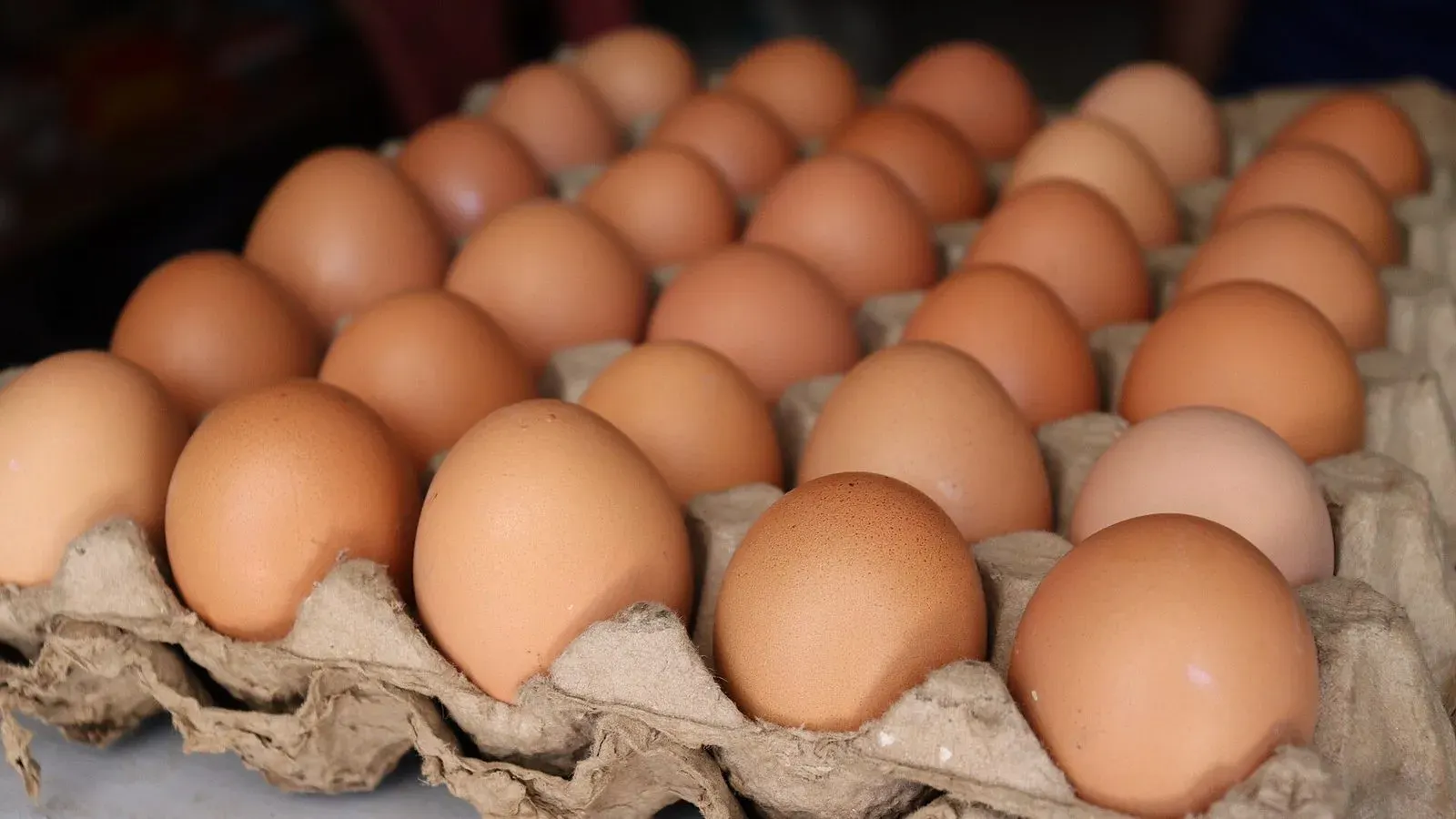
Most people buy an egg scale to sort eggs into size classes. That job is easy, and almost every scale here can do it.
The hard job is hatching. An incubated egg should shed roughly 11 to 13 percent of its set weight by day 18, and that loss is the clearest check you have on whether your incubator humidity is right. A 60 g egg needs to lose about 7 g across those 18 days, which is roughly 0.4 g a day. Now look at what the scale can actually see. A display that moves in 0.1 oz steps is moving in jumps of 2.8 g, so it cannot show you a daily change at all. It would take the best part of a week before the reading admitted anything had happened.
That one number sorts this whole group. It is why the $9.99 Yoncon beats the $25 Escali outright on the spec that matters most, and why it matches the $35 reflex on that same spec for a quarter of the money. We compared these six on published readability first, then on capacity, tare, power and whether the platform will hold an egg still long enough to give you a steady number.
Our picks at a glance
Every product below wins one specific situation. Pick the row that matches your flock, your yard and your budget rather than reading top to bottom.
-
Best Overall
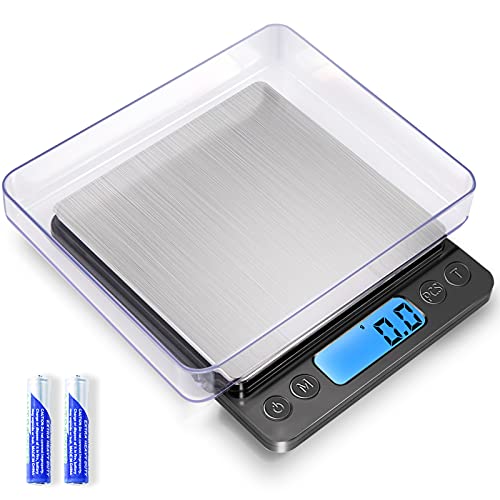
Yoncon 3000 g scale
Anyone who incubates eggs and wants a weight record fine enough to catch a humidity problem before day 18 rather than after it.
-
Best Pocket Scale for the Coop Bag

Diyife pocket scale
Keepers who want a fine gram reading for the least money and have a steady indoor bench to put it on.
Check price on Amazon for Digital Pocket Scale 1000g x 0.01g, Diyife Portable Precision Gram Scale on AmazonAbout $6.99 checked Aug 8, 2026
-
Best for Grading Records You Keep All Season

reflex Super Egg Scale
Keepers who grade a lot of eggs and want the season's numbers stored and exported rather than written on a scrap of paper.
-
Best for a Bench That Gets Wet
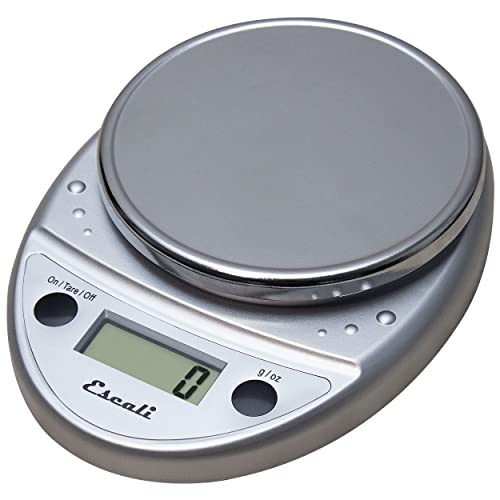
Escali Primo
Keepers who grade and pack eggs on a working bench that gets wiped down, and who want a scale that survives that treatment.
-
Best for Grading in Ounces

Hatching Time scale
Keepers who grade and sort eggs in ounces and want a scale sold and documented for poultry rather than for baking.
-
Best With No Batteries
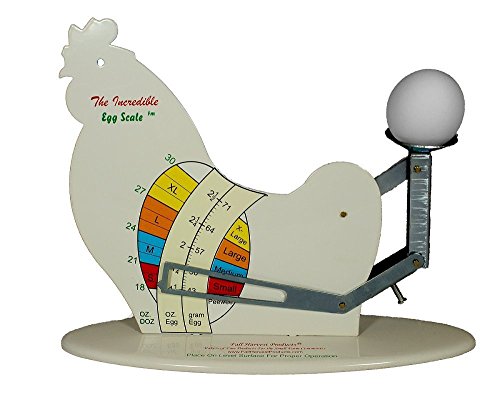
Incredible Egg Scale
Keepers who only ever sort eggs into size classes and want a tool that works forever with nothing to power it.
Check price on Amazon for The Incredible Egg Scale on AmazonAbout $45.62 checked Aug 8, 2026
Compare every pick side by side
Swipe the table sideways to see every column on a phone.
| Product | Award | Price band | Type | Capacity | Readability | Units | Power Source | Tare Function | Listing Note | Best use case | Buy link |
|---|---|---|---|---|---|---|---|---|---|---|---|
| Yoncon 3000 g scale | Best Overall | Under $30 | Digital mini kitchen scale, stainless steel top, 4 x 5 x 0.75 in | 3000 g, listing quotes a 0.5 g starting weight | 0.1 g | g, oz, lb, tl, ozt, dwt, gn, ml | 2 AAA batteries, included | Yes | Two trays are included, handy for holding an egg still. Listing quotes a one year warranty on the main parts. | Anyone who incubates eggs and wants a weight record fine enough to catch… | Check price for Digital Food Kitchen Scale Upgraded, YONCON 3000g/0.1g High Accuracy Mini Pocket Scale Measures in Grams and oz for Cooking, Baking, Jewelry, Tare Function,2 Trays, LCD Display (Batteries Included) on Amazon |
| Diyife pocket scale | Best Pocket Scale for the Coop Bag | Under $30 | Digital pocket scale, 3.42 x 2.2 x 0.74 in | 1000 g | 0.01 g | 7 units, g / tl / oz / ct / gn / dwt / ozt | 2 AAA batteries, included | Yes | Removable cover doubles as a tray. Listing warns readings are affected by wind and vibration, so it wants a solid indoor bench. | Keepers who want a fine gram reading for the least money and have a stead… | Check price for Digital Pocket Scale 1000g x 0.01g, Diyife Portable Precision Gram Scale on Amazon |
| reflex Super Egg Scale | Best for Grading Records You Keep All Season | $30 to $60 | Digital egg grading scale with a phone app, stainless steel surface, 6.5 x 5.1 x 1.2 in | 3000 g | 0.1 g | Grams and ounces | Built-in rechargeable battery, USB charging | Not stated | The grading work happens in the Super Egg Scale app, which stores history and exports to Excel. Judge it as a scale plus software, not a scale alone. | Keepers who grade a lot of eggs and want the season's numbers stored and… | Check price for Super Egg Scale - Egg Sizing, Sizes, Grading, Egg Weight Analysis, reflex 3000g / 0.1g Digital Scale Grams and Ounces USB Rechargeable, Portable, Accurate, Metal Stainless Steel Surface on Amazon |
| Escali Primo | Best for a Bench That Gets Wet | Under $30 | Digital food scale, 8.5 x 6 x 1.5 in, sealed two-button control panel | 11 lb (5000 g) | 0.05 oz (1 g) increments | oz, lb:oz, g | Not stated | Yes | Controls are sealed under a shield against spills, it shuts off after four minutes and the listing quotes a lifetime warranty, but 1 g steps are coarser than the 0.1 g and 0.01 g scales here. | Keepers who grade and pack eggs on a working bench that gets wiped down,… | Check price for Escali Primo Digital Food Scale Multi-Functional Kitchen Scale and Baking Scale for Precise Weight Measuring and Portion Control, 8.5 x 6 x 1.5 inches, Chrome on Amazon |
| Hatching Time scale | Best for Grading in Ounces | Under $30 | Digital egg and kitchen scale | 6.6 lb (3 kg) | 0.1 oz | Not stated, the listing only quotes 0.1 oz precision | Not stated | Not stated | The only scale here sold for poultry keepers by name, aimed at grading, sorting and hatch records, but the listing is thin on figures. | Keepers who grade and sort eggs in ounces and want a scale sold and docum… | Check price for Hatching Time Digital Egg & Kitchen Scale | 0.1 oz Precision Digital Food Scale with 6.6 lb Capacity | Egg Weighing Scale for Poultry Eggs, Baking, Cooking, Meal Prep & Portion Control on Amazon |
| Incredible Egg Scale | Best With No Batteries | $30 to $60 | Mechanical egg grading scale, full steel construction, 7.75 x 3 x 9.75 in | Not stated | Not stated | Weighs peewee through X-Large sizes in grams and ounces | Not stated | Not stated | Three bullets in total, so almost nothing is specified. It grades by size class rather than giving a number, and the vintage look is part of the pitch. | Keepers who only ever sort eggs into size classes and want a tool that wo… | Check price for The Incredible Egg Scale on Amazon |
The full reviews
Each review below follows the same order: what it is, why it won its category, how it behaves in real use, and who should buy something else.
1 Best Overall
Digital Food Kitchen Scale Upgraded, YONCON 3000g/0.1g High Accuracy Mini Pocket Scale Measures in Grams and oz for Cooking, Baking, Jewelry, Tare Function,2 Trays, LCD Display (Batteries Included)
It reads to 0.1 g, which is the one spec that decides this category, and it does it at $9.99 with 3000 g of capacity behind it. That resolution is what lets you see the roughly 0.4 g a day an incubated egg loses.
What we liked
- Reads to 0.1 g, fine enough to follow daily hatch weight loss on a single egg
- Costs $9.99, a tenth of the display step of the $25 Escali Primo for less than half the money
- Two trays are included, which stop an egg rolling and settling on the platform
- Tare button, so you can zero a tray or a carton before weighing
- 3000 g capacity covers a full carton of eggs, not just one at a time
- Eight units on the display, including grams, ounces and pounds
What we did not
- The stainless top is only about 4 x 5 in, so a wire basket or a loaded tray will overhang and give an unstable reading
- Runs on two AAA cells with no mains option, and a flat cell on a weigh-in day breaks the run of numbers you are building
- The listing quotes a one year warranty on the main parts, against the lifetime warranty stated on the Escali Primo
Key specifications
- Dimensions
- 4.13385 x 4.99999 x 0.74803 in (L x W x H)
- Weight
- 0.5 pounds
- Colour
- Black
- Type
- Digital mini kitchen scale, stainless steel top, 4 x 5 x 0.75 in
- Capacity
- 3000 g, listing quotes a 0.5 g starting weight
- Readability
- 0.1 g
- Units
- g, oz, lb, tl, ozt, dwt, gn, ml
- Power Source
- 2 AAA batteries, included
- Tare Function
- Yes
- Listing Note
- Two trays are included, handy for holding an egg still. Listing quotes a one year warranty on the main parts.
Why the Yoncon 3000 g scale wins this category
Because it pairs fine resolution with a platform and a capacity that suit eggs.
An incubated 60 g egg is meant to lose about 7 g between set and day 18. That is roughly 0.4 g a day. A 0.1 g display step sees that clearly, with four steps of movement between one weigh-in and the next. The $35 reflex reads to the same 0.1 g for three and a half times the money. The $6.99 Diyife reads finer still and costs less, but it stops at 1000 g and its own listing warns that wind and vibration move the number, so it needs a bench the Yoncon does not.
The rest of the spec sheet is unremarkable, and that is fine. It has 3000 g of capacity, a tare button and eight units, which is more than an egg keeper needs. What it does not have is the coarse readability that quietly makes a scale useless for hatch records.
Living with the Yoncon 3000 g scale
The two included trays matter more than the listing makes them sound. An egg has no flat side, so on bare steel it rocks and the display chases it. Sitting the egg in a tray with the tare pressed gives you a number that settles once and stays.
The listing quotes a 0.5 g starting weight, which is the minimum load it will register. That is well below the weight of any egg, so it makes no difference here.
At 4 x 5 x 0.75 in and half a pound, it goes in a drawer or a bag without argument, and the batteries come in the box.
Where the Yoncon 3000 g scale falls short
The platform is the real limit. Roughly 4 x 5 in holds one egg, one small tray or one carton, and anything bigger hangs over the edge and gives you a reading that shifts every time you touch it. If your routine is weighing a whole morning's collection at once, this is the wrong shape of scale.
Power is the second weak point. Two AAA cells, no mains option, and a cell that goes flat on the day you meant to weigh means a gap in a record whose whole value comes from being unbroken. Keep spares with the scale.
The one year warranty is also the shortest of the two stated in this guide. The Escali Primo states a lifetime warranty at two and a half times the price.
Research based, not hands-on
Assessed on the published readability, capacity, unit list, power source and platform dimensions from the listing, then compared against the coarser 0.1 oz and 1 g scales in this guide using the weight loss arithmetic of a hatch.
- Best for
- Anyone who incubates eggs and wants a weight record fine enough to catch a humidity problem before day 18 rather than after it.
- Skip it if
- You mostly weigh full baskets or crates of eggs at once, because the platform is too small to hold them steady.
- The limitation to plan around
- The weighing surface is about 4 x 5 in. It suits one egg, a small tray or a single carton, and nothing larger will sit flat enough to read reliably.
2 Best Pocket Scale for the Coop Bag
Digital Pocket Scale 1000g x 0.01g, Diyife Portable Precision Gram Scale
The cheapest scale here at $6.99, and small enough to live in a coop bag. The 0.01 g display step is finer than the readings will actually be, but 0.1 g of real resolution is all a hatch record needs.
What we liked
- Reads in fine gram steps, so daily hatch weight loss is easy to follow
- The cheapest scale in this guide at $6.99
- 3.42 x 2.2 x 0.74 in and under 3 oz, so it fits a pocket or a coop bag
- The removable cover doubles as a tray, which holds a rolling egg still
- Tare button and seven units on the display
What we did not
- The listing itself warns that wind and vibration move the reading, so it wants a solid indoor bench rather than a coop shelf
- 1000 g capacity is the lowest here, so a full carton of large eggs plus a tray can reach the limit
- The 0.01 g figure is a display step, not a proven accuracy, so the last digit will wander and should be ignored
About $6.99 checked Aug 8, 2026
Key specifications
- Dimensions
- 3.42 x 2.2 x 0.74 in (L x W x H)
- Weight
- 0.1763698096 pounds
- Colour
- Black
- Type
- Digital pocket scale, 3.42 x 2.2 x 0.74 in
- Capacity
- 1000 g
- Readability
- 0.01 g
- Units
- 7 units, g / tl / oz / ct / gn / dwt / ozt
- Power Source
- 2 AAA batteries, included
- Tare Function
- Yes
- Listing Note
- Removable cover doubles as a tray. Listing warns readings are affected by wind and vibration, so it wants a solid indoor bench.
What the Diyife pocket scale is for
It is the cheapest route into gram level resolution, and for a hatch record that is the only spec that matters.
At $6.99 it undercuts everything else here, and it still resolves a change far smaller than the roughly 0.4 g a day an incubated egg loses. If you want to start keeping weight records this season without spending anything meaningful, the Diyife pocket scale does the job.
Treat the 0.01 g claim as a display step rather than a promise. It is the resolution of the readout, not a verified accuracy, and no cheap pocket scale is a hundredth of a gram accurate in a real room.
Living with the Diyife pocket scale
The removable cover is the useful detail. Flip it over and it becomes a shallow tray, which stops an egg rocking on the platform and chasing the reading around. Tare it, drop the egg in, take the number.
It is genuinely pocket sized at 3.42 x 2.2 x 0.74 in and under 3 oz, so it travels to the coop, to a swap meet or to a friend's hatch without being a thing you have to carry deliberately. Two AAA cells come in the box.
Seven units are on the display, which is more than anyone weighing eggs will use. Set it to grams and leave it.
Where the Diyife pocket scale falls short
The maker says the quiet part out loud: wind and vibration affect the reading. That is honest and it is also a real constraint. A scale this fine needs a solid level surface in still air, so weighing on a coop shelf, a tailgate or an outdoor step will give you numbers that drift while you watch.
Capacity is the other limit. 1000 g is the lowest in this guide, and a dozen large eggs sits close to 700 g before you add a carton or a tray. It handles single eggs comfortably and full loads awkwardly.
The small platform compounds that. There is not much room to sit anything larger than an egg or two on it without overhang.
Research based, not hands-on
Assessed on the published readability, capacity, dimensions and the manufacturer's own stated warning about wind and vibration, then compared against the larger bench scales in this guide on platform size and capacity.
- Best for
- Keepers who want a fine gram reading for the least money and have a steady indoor bench to put it on.
- Skip it if
- You want to weigh a full carton or a basket, because 1000 g is the smallest capacity in this guide.
- The limitation to plan around
- It is a precision pocket scale, so it needs a firm level surface out of any draught. On a coop shelf or a windy step the reading will not settle.
3 Best for Grading Records You Keep All Season
Super Egg Scale - Egg Sizing, Sizes, Grading, Egg Weight Analysis, reflex 3000g / 0.1g Digital Scale Grams and Ounces USB Rechargeable, Portable, Accurate, Metal Stainless Steel Surface
The scale reads to 0.1 g, which is fine for hatch work, but the reason to buy it is the app that stores grading history and exports to Excel. Judge it as a scale plus software, not as a scale alone.
What we liked
- Reads to 0.1 g, fine enough to follow hatch weight loss as well as grade
- The app keeps grading history and exports it to Excel, so a season of records survives
- Built-in rechargeable battery over USB, so there are no cells to go flat mid weigh-in
- 3000 g capacity and a 6.5 x 5.1 in stainless surface, roomier than the 4 x 5 in Yoncon platform
- Stainless steel top wipes clean after a cracked egg
What we did not
- The grading logic runs inside the Super Egg Scale app, so the feature you are paying for cannot be checked from the listing before you buy
- At $35 only the mechanical Incredible Egg Scale costs more here, and the $9.99 Yoncon matches its 0.1 g readability exactly
- No tare function is stated on the listing, which matters if you want to zero a tray or an egg cup
Key specifications
- Dimensions
- 6.4960629855 x 5.118110231 x 1.181102361 in (L x W x H)
- Weight
- 0.38801358112 pounds
- Colour
- silver
- Type
- Digital egg grading scale with a phone app, stainless steel surface, 6.5 x 5.1 x 1.2 in
- Capacity
- 3000 g
- Readability
- 0.1 g
- Units
- Grams and ounces
- Power Source
- Built-in rechargeable battery, USB charging
- Tare Function
- Not stated
- Listing Note
- The grading work happens in the Super Egg Scale app, which stores history and exports to Excel. Judge it as a scale plus software, not a scale alone.
What the reflex Super Egg Scale offers
Every other scale here hands you a number and forgets it. This one is sold as a system: weigh the egg, and the app puts it in a size class, stores it and lets you pull the whole lot out into a spreadsheet later.
If you sell eggs by size, that is the difference between grading and keeping grading records. A season of weights tells you which birds are climbing into the next class, when your pullets started laying properly, and how the flock's output shifted through the year.
On raw specification it is competent rather than special. 0.1 g readability, 3000 g capacity, a 6.5 x 5.1 in stainless surface. Fine for hatch weight loss, matched by a $9.99 scale.
Living with the reflex Super Egg Scale
The rechargeable battery is a genuine advantage in this group. Two of these scales run on AAA cells, and a dead cell on a weigh-in day puts a hole in a record whose value comes from being continuous. A USB top-up avoids that.
The platform is 6.5 x 5.1 in, so a carton or a small tray sits flat rather than overhanging where it would on the Yoncon's 4 x 5 in top. Only the Escali Primo's 8.5 x 6 in surface is bigger. Stainless steel also wipes clean after a cracked egg.
At 1.2 in tall and just over 6 oz, it is still a scale you can put away in a drawer.
Where the reflex Super Egg Scale falls short
The main feature is invisible before purchase. The grading, the history and the export all happen inside the app, and a product listing cannot show you whether that app is pleasant to use, how it handles a mis-tapped entry, or whether it will still be maintained in two years. You are buying software on trust.
The price is the second issue. At $35 the only pick here that costs more is the mechanical Incredible Egg Scale, which does not produce a number at all, and among the digital scales the $9.99 Yoncon matches this one's 0.1 g readability exactly. The extra $25 buys record keeping, not measurement.
The listing also does not state a tare function. If you like to zero a tray or an egg cup before weighing, that is worth checking before you commit.
Research based, not hands-on
Assessed on the published readability, capacity, charging method and surface dimensions from the listing, with the app-based grading and export treated as a stated feature that cannot be verified from a product page.
- Best for
- Keepers who grade a lot of eggs and want the season's numbers stored and exported rather than written on a scrap of paper.
- Skip it if
- You do not want a phone involved, because the grading and record keeping that justify the price live in the app.
- The limitation to plan around
- The software is the product. If the app stops being supported or you dislike how it works, what is left is a 0.1 g scale that costs three and a half times the Yoncon.
4 Best for a Bench That Gets Wet
Escali Primo Digital Food Scale Multi-Functional Kitchen Scale and Baking Scale for Precise Weight Measuring and Portion Control, 8.5 x 6 x 1.5 inches, Chrome
A sealed two-button panel and a stated lifetime warranty make this the one to put on a bench that gets washed down. The catch is 1 g steps, which is too coarse to follow daily hatch weight loss.
What we liked
- Controls are sealed under a shield, so a spill or a wet hand does not reach the buttons
- The listing quotes a lifetime warranty, the longest stated in this guide
- 11 lb capacity is the highest here, so a full basket of eggs fits in one weighing
- The 8.5 x 6 in platform is the largest in this guide and holds a carton or a tray flat
- Tare function and a two-button layout that is hard to get wrong with cold hands
What we did not
- It reads in 1 g steps, so a 0.4 g daily change during incubation is invisible until several days have passed
- The listing does not state a power source, so you cannot plan for the battery type before it arrives
- Auto shut-off after four minutes will drop your tare part way through grading a full basket
Key specifications
- Dimensions
- 8 x 6 x 1.2 in (L x W x H)
- Weight
- 0.95019234922 pounds
- Colour
- Chrome
- Type
- Digital food scale, 8.5 x 6 x 1.5 in, sealed two-button control panel
- Capacity
- 11 lb (5000 g)
- Readability
- 0.05 oz (1 g) increments
- Units
- oz, lb:oz, g
- Power Source
- Not stated
- Tare Function
- Yes
- Listing Note
- Controls are sealed under a shield against spills, it shuts off after four minutes and the listing quotes a lifetime warranty, but 1 g steps are coarser than the 0.1 g and 0.01 g scales here.
Why the Escali Primo suits a wet bench
Most cheap scales die at the buttons. Water gets past a membrane, corrosion follows, and a scale that measures perfectly well stops responding to the tare press.
The Primo puts its two buttons under a sealing shield, which is a deliberate answer to that failure mode rather than a marketing line. Pair it with a stated lifetime warranty and you have the one scale here built for a surface that gets washed rather than dusted.
For a keeper who grades and packs eggs on a working bench, that is worth more than another decimal place.
Living with the Escali Primo
The platform is the largest in this guide at 8.5 x 6 in, and the capacity is the highest at 11 lb. A full basket of eggs goes on in one go, which changes how long grading takes when you have four dozen to sort.
It reads in ounces, pounds and ounces, and grams, so you can work in whichever the buyer at the other end uses. The tare works normally, so a carton or a tray can be zeroed out.
At 8 x 6 x 1.2 in and just under a pound it is a fixture on a bench rather than something you carry to the coop.
Where the Escali Primo falls short
The readability is the problem, and it is not a small one. 1 g steps, quoted as 0.05 oz, are ten times coarser than the 0.1 g of the $9.99 Yoncon. An incubated egg loses about 0.4 g a day, so this display would show you nothing at all for two or three days and then move once. For hatch records that is not a usable instrument, and no amount of build quality fixes it.
The four minute auto shut-off is the second annoyance in practice. It saves battery, but it also drops your tare while you are still filling a tray, so a long grading session means re-zeroing repeatedly.
The listing also never says what powers it, which is an odd gap on an otherwise well specified product.
Research based, not hands-on
Assessed on the published readability, capacity, platform dimensions, sealed panel design, auto shut-off behaviour and stated warranty from the listing, then compared against the finer 0.1 g and 0.01 g scales in this guide.
- Best for
- Keepers who grade and pack eggs on a working bench that gets wiped down, and who want a scale that survives that treatment.
- Skip it if
- You are buying the scale mainly to track hatch weight loss, because 1 g steps cannot resolve a 0.4 g daily change.
- The limitation to plan around
- Readability stops at 1 g, or 0.05 oz. That is fine for grading into size classes and not fine for following a single egg through incubation.
5 Best for Grading in Ounces
Hatching Time Digital Egg & Kitchen Scale | 0.1 oz Precision Digital Food Scale with 6.6 lb Capacity | Egg Weighing Scale for Poultry Eggs, Baking, Cooking, Meal Prep & Portion Control
The only scale here sold to poultry keepers by name, and it grades in ounces perfectly well. The 0.1 oz step is 2.8 g, though, so it cannot follow the daily weight loss of an incubating egg.
What we liked
- 0.1 oz steps are fine for grading, since US size classes sit about 0.25 oz apart per egg
- 6.6 lb capacity holds a full carton or a small basket in one weighing
- Sold and described for poultry work, so the instructions are aimed at egg keepers
- Doubles as a general kitchen scale for feed portions and meal prep
What we did not
- The 0.1 oz step is 2.8 g, so an egg losing about 0.4 g a day shows no change for a week
- The listing states no units beyond 0.1 oz precision, so there is no confirmation it reads grams at all
- No power source and no tare function are stated, so you cannot plan for batteries or for zeroing a tray
Key specifications
- Weight
- 1 pounds
- Colour
- Black
- Type
- Digital egg and kitchen scale
- Capacity
- 6.6 lb (3 kg)
- Readability
- 0.1 oz
- Units
- Not stated, the listing only quotes 0.1 oz precision
- Power Source
- Not stated
- Tare Function
- Not stated
- Listing Note
- The only scale here sold for poultry keepers by name, aimed at grading, sorting and hatch records, but the listing is thin on figures.
What the Hatching Time scale does well
It grades. US size classes are separated by about 0.25 oz per egg, so a display that moves in 0.1 oz steps drops every egg into the right class with room on either side. If your job is sorting a morning's collection into mediums, larges and extra larges, this is a competent tool at a fair price.
It is also the only pick here written for poultry keepers rather than for bakers, which shows up in how the product is described and what it assumes you are doing with it. Capacity is 6.6 lb, enough for a full carton or a small basket at once.
For a keeper who has no incubator, that is a reasonable package.
Living with the Hatching Time scale
Set expectations from the precision figure and you will not be disappointed. 0.1 oz is a normal kitchen scale step, and it behaves like one: quick to settle, easy to read, no chasing decimals.
It works as a general kitchen scale too, which matters if it is going to live indoors rather than in a coop cupboard. Feed portions, treat mixes and meal prep are all within the same 6.6 lb range.
At 1 lb it is solid enough to stay put on a bench without sliding when you set an egg down.
Where the Hatching Time scale falls short
The name promises hatch records that the specification cannot deliver. 0.1 oz is 2.8 g. An incubated 60 g egg loses roughly 0.4 g a day, so this display would sit completely still for about a week before it moved a single step. That is not a slow reading, it is no reading at all, and it is the reason a $9.99 kitchen scale beats it for the job the brand name implies.
The listing is also unusually thin for the money. No units are stated beyond the 0.1 oz precision, so there is no confirmation it will show grams. No power source is given. No tare function is mentioned, which matters the moment you want to zero a tray or an egg cup.
Buy it for grading in ounces, and assume nothing that the listing does not say.
Research based, not hands-on
Assessed on the published 0.1 oz precision and 6.6 lb capacity, and on what the listing leaves unstated, then compared against the gram-resolution scales in this guide using the arithmetic of incubation weight loss.
- Best for
- Keepers who grade and sort eggs in ounces and want a scale sold and documented for poultry rather than for baking.
- Skip it if
- You incubate and want to track weight loss, because a 2.8 g display step cannot show a 0.4 g daily change.
- The limitation to plan around
- The listing is thin. Units, power source and tare are all left unstated, so you are buying on the 0.1 oz precision figure and the brand name alone.
6 Best With No Batteries
The Incredible Egg Scale
A full steel mechanical scale that sorts eggs from peewee to X-Large with nothing to charge and nothing to go flat. It gives you a size class rather than a number, so it cannot do hatch records at all.
What we liked
- Fully mechanical, so there is no battery, no charging and nothing to die mid season
- Full steel construction per the listing, with no electronics or battery compartment to fail in a dusty coop room
- Sorts peewee through X-Large directly, with no conversion or size chart needed
- The vintage styling is part of the appeal if the scale lives on a visible shelf
What we did not
- It reports a size class rather than a weight, so there is no number to write down and no way to track an egg through incubation
- The listing runs to three bullets, with no capacity and no readability stated, so its precision cannot be judged before purchase
- At $45.62 it is the most expensive pick in this guide while doing the least measuring
About $45.62 checked Aug 8, 2026
Key specifications
- Dimensions
- 7.75 x 3 x 9.75 in (L x W x H)
- Weight
- 0.95 pounds
- Colour
- multicolour
- Type
- Mechanical egg grading scale, full steel construction, 7.75 x 3 x 9.75 in
- Capacity
- Not stated
- Readability
- Not stated
- Units
- Weighs peewee through X-Large sizes in grams and ounces
- Power Source
- Not stated
- Tare Function
- Not stated
- Listing Note
- Three bullets in total, so almost nothing is specified. It grades by size class rather than giving a number, and the vintage look is part of the pitch.
What the Incredible Egg Scale is for
One job, done without electricity. Put an egg on, read off whether it is peewee, small, medium, large or X-Large, move to the next one.
If you sell eggs at the gate and you sort by class rather than by weight, that is genuinely the whole task. There is no battery to go flat on a Saturday morning, no charging cable, no auto shut-off dropping your tare. The listing describes full steel construction, and there is nothing electronic in it to fail.
It also looks the part on a shelf, which the maker leans into, and that is a fair reason to buy something you will use in front of customers.
Living with the Incredible Egg Scale
At 7.75 x 3 x 9.75 in it is taller than it is wide, so it wants a shelf edge or a bench corner rather than a drawer. Just under a pound, so it stays where you put it.
The workflow is faster than a digital scale for pure sorting. No waiting for a reading to settle, no tare, no rolling egg chasing a decimal point. Egg on, class read, egg off.
Nothing about it needs maintaining beyond keeping it clean, and steel takes a wipe down without complaint.
Where the Incredible Egg Scale falls short
It does not measure. That is the fundamental point. A size class is a band, not a figure, so there is nothing to write in a notebook and nothing to compare against last week. Everything in this guide's main argument, tracking the 11 to 13 percent an incubated egg should lose by day 18, is simply outside what this device can do.
The listing is also close to empty. Three bullets in total, with no capacity and no readability given, so there is no published basis on which to judge how finely or how consistently it separates one class from the next. Mechanical scales drift and can need adjusting, and nothing here tells you whether or how you would do that.
Then there is the price. At $45.62 it is the most expensive pick in this guide, and it produces less information than the $6.99 Diyife.
Research based, not hands-on
Assessed on the very limited published information, which covers construction, dimensions and the peewee through X-Large size range, and on what a mechanical class sorter can and cannot do compared with the digital scales in this guide.
- Best for
- Keepers who only ever sort eggs into size classes and want a tool that works forever with nothing to power it.
- Skip it if
- You want an actual weight in grams, because this gives you a size class and never a figure you can record.
- The limitation to plan around
- It is a size sorter, not a measuring instrument. No capacity and no readability are published, so treat every claim about its precision as unverified.
How we compared these egg scales
We started with one question: can this scale see a change of about half a gram?
That sounds arbitrary until you do the arithmetic on a hatch. An incubated egg is meant to lose roughly 11 to 13 percent of its set weight by day 18. On a 60 g egg that is about 7 g spread over 18 days, so around 0.4 g a day. A scale that cannot resolve that cannot give you an early warning about incubator humidity, which is the single most useful thing an egg scale does.
After readability we looked at capacity, tare, stated units, power source and the size of the platform, because a scale that will not hold an egg still is a scale you stop trusting. We also noted where a listing simply does not say. Two of these six leave out figures a buyer would reasonably expect, and that gap is part of the assessment.
Price did not decide much. The cheapest scale here reads to 0.01 g and the most expensive reads by size class only.
What actually matters in an egg scale
Readability in grams, because that is what limits hatch records
Readability is the smallest step the display can move. It is not the same as accuracy, but it is a hard ceiling on what you can see.
Convert everything to grams before you compare. 0.1 oz is 2.8 g. One gram is one gram. 0.1 g is 0.1 g. Against a 0.4 g daily change, only the last two are any use, and only the 0.1 g scales let you weigh once every couple of days and still see movement.
This is why the poultry branding on a box is worth so little here. The scale sold for poultry keepers reads in 0.1 oz steps, which is 2.8 g. The $9.99 kitchen scale reads in 0.1 g steps, a step twenty eight times smaller.
Grading is a much easier job, so the picture flips
If you never incubate, most of the above stops mattering.
US size classes are separated by about 0.25 oz per egg. That is a wide gap, and a scale reading in 0.1 oz or in whole grams will drop an egg into the right class every time. For a keeper selling by size at the farm gate, a coarse scale with a big steady platform and a sealed control panel is a better tool than a jeweller's scale with more digits.
So decide which job you are buying for before you look at the prices. The two jobs do not want the same instrument.
The egg rolls, and a rolling egg moves the number
An egg has no flat side. On a bare steel platform it rocks, settles, and rocks again, and the display chases it while you stand there waiting.
That is why a tray or a cover that doubles as a dish is worth more than it looks. Tare the tray, drop the egg in, read it once. Without one you will end up steadying the egg with a finger, which is exactly how a weight record gets quietly wrong.
Draughts do the same thing on the finer scales. The Diyife listing says so itself.
How to actually track hatch weight loss
Weigh on the day you set the eggs and write the numbers on the shells in pencil, so you follow the same eggs rather than an average of a changing group.
Work out the target now, not later. Take the set weight, take 12 percent of it, and that is roughly what the egg should have lost by day 18. A 62 g egg wants to be around 55 g. Write that on the shell too.
Then weigh every three or four days. Losing too slowly means the incubator is too humid, so lower the water level. Losing too fast means the air is too dry, so add water or surface area. Change one thing, then wait for the next weigh-in before changing anything else.
Stop at lockdown. Once the eggs are on the incubator floor and the lid is shut, opening it to weigh does more harm than the record is worth.
Final recommendation
The Yoncon 3000 g scale is the buy for most keepers. It reads to 0.1 g, it holds 3000 g, it comes with two trays and a tare button, and at $9.99 it pairs resolution fine enough for hatch records with the capacity and the platform to use it on more than one egg at a time.
If you want something that lives in a coop bag, the Diyife pocket scale is smaller and cheaper at $6.99, and it reads in finer steps still, as long as you accept it wants a solid indoor bench and stops at 1000 g. If you grade a lot of eggs and want the season's records kept and exported, the reflex Super Egg Scale does that through its app. And if your bench gets wet and you want a sealed control panel with a stated lifetime warranty, the Escali Primo is the sensible choice, provided 1 g steps are enough for what you are doing.
Questions people ask before buying
What readability do I need on an egg scale?
It depends entirely on the job. For grading eggs into US size classes, 0.1 oz is fine, because the classes sit about 0.25 oz apart per egg and a 0.1 oz step still lands you in the right box. For tracking hatch weight loss, 0.1 oz is useless. An incubated 60 g egg loses about 0.4 g a day, and a 0.1 oz step is 2.8 g, so the display will sit unchanged for days and then jump. If you incubate, buy something that reads in grams to at least 0.1 g.
How much weight should an incubated egg lose?
The usual target is roughly 11 to 13 percent of the egg's weight at set, measured by about day 18 when lockdown starts. Weigh a sample of eggs on day one, write the numbers down, then weigh the same eggs every few days. If they are losing too slowly, the incubator is too humid and you lower the water level. If they are losing too fast, you raise it. This is a check on humidity, not a guarantee of a hatch, and it works best when you follow the same eggs rather than swapping which ones you weigh.
Is 0.01 g better than 0.1 g for weighing eggs?
Not in any way you will notice. A 0.01 g display step is finer than the real accuracy of a cheap pocket scale, and the Diyife's own listing warns that wind and vibration move the reading. An egg sitting in a coop bag on a windy day is not being measured to a hundredth of a gram. For hatch records, 0.1 g resolves a 0.4 g daily change with room to spare, and a 0.1 g scale with a bigger, steadier platform will give you a more repeatable number than a smaller one with more digits.
Do I need a scale sold specifically for poultry?
No. Only the Hatching Time scale here is sold to poultry keepers by name, and its listing quotes 0.1 oz precision, which is the coarsest useful figure in this group for hatch work. A general kitchen or pocket scale that reads in grams does the same job for less money and shows you more. The word egg on the box is marketing. The readability figure on the spec sheet is the thing that decides what the scale can tell you.
What are the US egg size classes by weight?
US classes are set by minimum weight per dozen, not per egg. Peewee is 15 oz per dozen, Small is 18 oz, Medium is 21 oz, Large is 24 oz, Extra Large is 27 oz and Jumbo is 30 oz. That works out at steps of about 0.25 oz per egg between classes. Because the gap is that wide, grading is a forgiving job, and a scale reading in 0.1 oz steps or in whole grams will put your eggs in the right class without any trouble.
Why does the reading jump around when I weigh an egg?
Usually because the egg is rolling. An egg has no flat side, so on a bare steel platform it settles, rocks and settles again, and the scale chases it. That is why the Yoncon's two trays and the Diyife's removable cover tray are more useful than they look on the listing. A ring of tape, an egg cup or a small bowl with the tare pressed does the same job. Draughts and a soft or uneven bench also move the reading, so weigh indoors on something solid.
Why you can trust this guide
- Written by
- Sam Reddick, Lead gear reviewer, Chicken Geek. Specialist areas: Coop design and predator proofing, Feeding and watering systems, Cold-weather flock management, Incubation and brooding.
- Fact checked by
- Marta Voss
- Published
- August 8, 2026 · Last updated August 8, 2026 · Products and links rechecked August 8, 2026
- How we picked
- Every scale was compared on published readability first, because that decides whether it can resolve daily hatch weight loss, then on stated capacity, units, tare function, power source, the size of the weighing platform against the size of an egg, and what each listing actually specifies rather than what it implies.
- Evidence used
- None of the 6 products on this page were sent to us or bought for a hands-on test. Every recommendation here is research based: manufacturer specifications, listed dimensions and materials, owner feedback at volume, and comparison against equipment our team has owned. Each review states this again above the buy button so you are never guessing which kind of evidence sits behind a pick.
- Editorial standards
- No brand pays for placement, and no manufacturer sees this page before it goes live. Read our editorial policy and testing method.
- Affiliate disclosure
- Chicken Geek is reader supported. We earn a commission from qualifying purchases made through links on this page, at no extra cost to you, and no brand has paid for a placement or an award here.
About the author

Lead gear reviewer, Chicken Geek
Sam has kept a backyard laying flock for eleven years, through two coop rebuilds, one very determined raccoon and several winters cold enough to freeze a waterer solid overnight. He writes the buying guides at Chicken Geek and is responsible for how products get compared.
- Eleven years keeping a mixed laying flock of 8 to 14 birds
- Has built, bought and replaced six different coops
- Runs the product comparison framework used across Chicken Geek
- Reads manufacturer manuals, spec sheets and warranty terms before every recommendation