We Compared 6 Egg Incubators. Temperature Stability Decides Everything
We compared six egg incubators on temperature tolerance, turning, humidity control and capacity, because temperature stability is what decides your hatch rate.

By Marta Voss Editor and fact checker, Chicken Geek
Fact checked by Sam Reddick
Published Prices and stock checked 7 min read
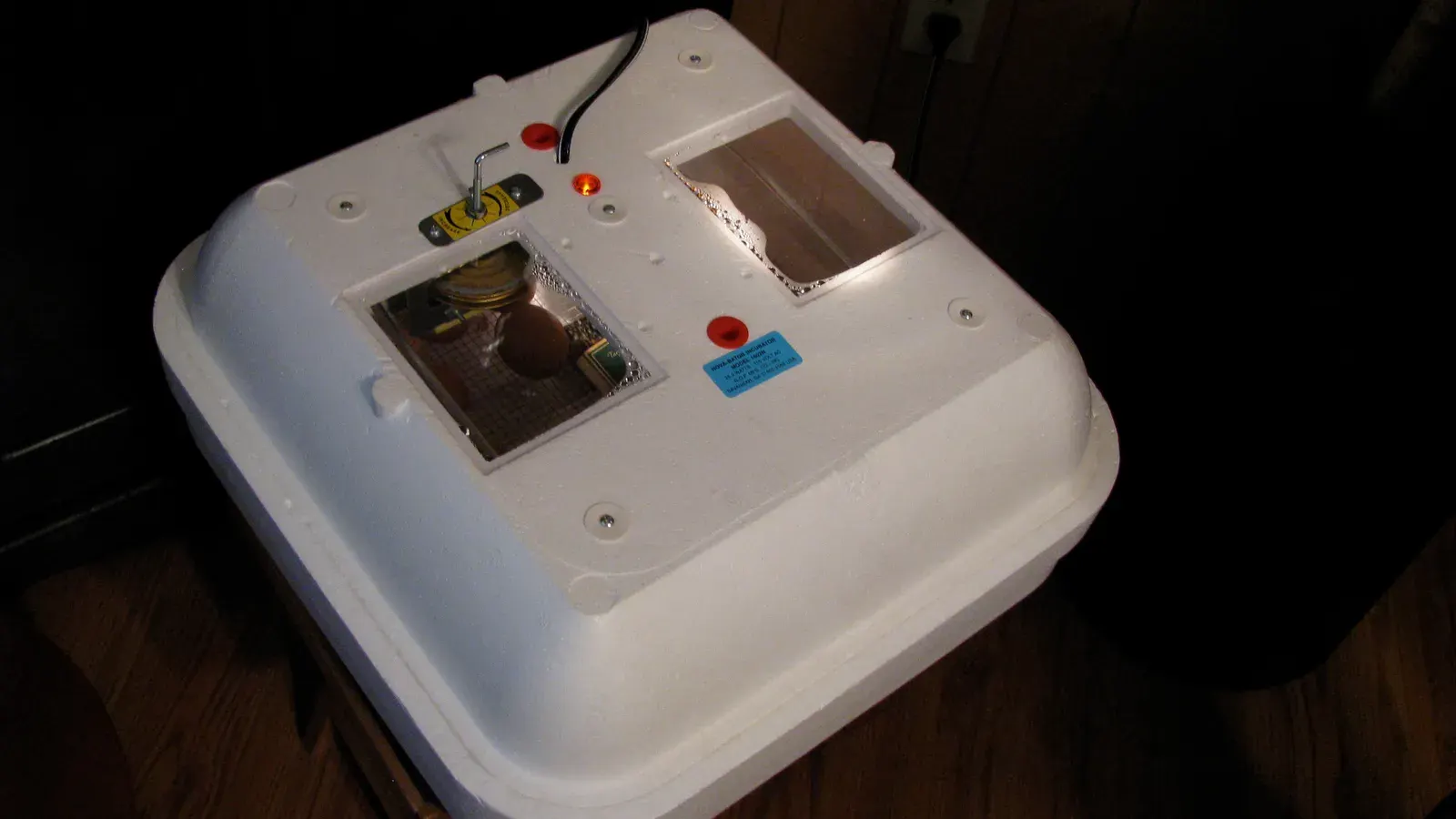
Incubation is one of the few areas of chicken keeping where the equipment specification directly and measurably decides the outcome. Chicken eggs want 99.5 F for 21 days. Machines that hold within half a degree of that hatch well. Machines that drift by a degree and a half hatch noticeably worse, and no amount of care compensates.
So we compared these six on stated temperature tolerance first, then on turning mechanism, humidity monitoring, capacity and what is actually in the box. Four of them include an egg candler, and the cheapest of those costs under thirty dollars; the two that leave the candler out cost roughly nine and twelve times as much.
Before the picks, one piece of advice that applies to every machine here and costs about ten dollars: buy an independent thermometer, put it at egg height, and run the incubator empty for 24 hours before you set anything. Built-in displays report what the controller believes, which is not always what the eggs are experiencing.
Our picks at a glance
Every product below wins one specific situation. Pick the row that matches your flock, your yard and your budget rather than reading top to bottom.
-
Best Overall
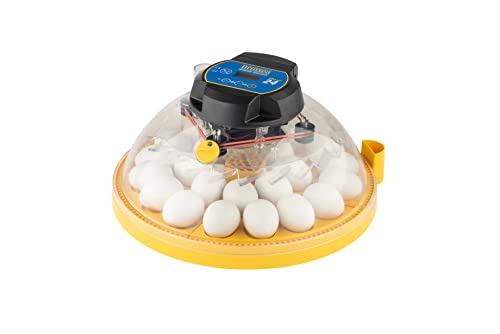
Brinsea Maxi 24 Advance
Anyone hatching more than one batch a year who is tired of poor hatch rates from cheap machines.
Check price on Amazon for Brinsea Maxi 24 Advance Incubator with auto Turner for Hatching 24 Eggs on AmazonAbout $350 checked Aug 8, 2026
-
Best for First-Time Hatchers
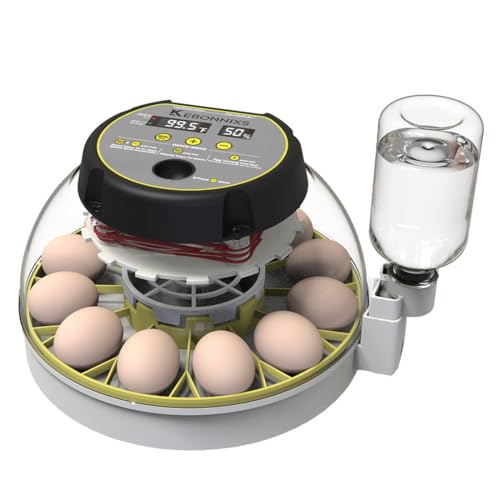
KEBONNIXS 12 Egg
A first hatch, where the batch size, the candler and the humidity display matter more than the last half degree of stability.
-
Best Mid-Size

MATICOOPX 30 Egg
Keepers hatching one or two real batches a year who want replacement layers plus some to sell or give away.
-
Best for Classrooms

Brinsea Mini II Advance
Classrooms, families hatching with children, and anyone who wants a small number of chicks with the best possible odds.
Check price on Amazon for Brinsea Mini II Advance Incubator with Automatic Turner for Hatching 7 Eggs on AmazonAbout $250 checked Aug 8, 2026
-
Best Large Batch
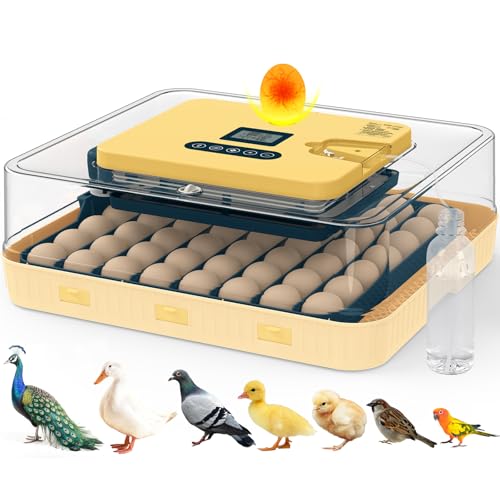
innhom 56 Egg
Smallholders hatching to sell, or anyone running batches large enough that a 24 egg machine means two runs.
-
Best Budget

VEVOR 12 Egg
A first curiosity hatch, a school project, or anyone who wants to try incubation without committing real money.
Compare every pick side by side
Swipe the table sideways to see every column on a phone.
| Product | Award | Price band | Egg Capacity | Turning | Humidity Control | Temp Accuracy | Best use case | Buy link |
|---|---|---|---|---|---|---|---|---|
| Brinsea Maxi 24 Advance | Best Overall | $250 to $500 | 24 hen eggs | Fully automatic cradle | Manual top-up with readout | Digital, holds within about 0.4 F | Anyone hatching more than one batch a year who is tired of poor hatch rat… | Check price for Brinsea Maxi 24 Advance Incubator with auto Turner for Hatching 24 Eggs on Amazon |
| KEBONNIXS 12 Egg | Best for First-Time Hatchers | $30 to $60 | 12 hen eggs | Automatic roller | Display with manual water channels | Digital, holds within about 1 F | A first hatch, where the batch size, the candler and the humidity display… | Check price for KEBONNIXS 12 Egg Incubator with Humidity Display, Egg Candler, Automatic Egg Turner, for Hatching Chickens on Amazon |
| MATICOOPX 30 Egg | Best Mid-Size | $120 to $250 | 30 hen eggs | Automatic | Display with manual water channels | Digital, holds within about 1 F | Keepers hatching one or two real batches a year who want replacement laye… | Check price for MATICOOPX 30 Egg Incubator with Humidity Display, Egg Candler, Automatic Egg Turner, for Hatching Chickens on Amazon |
| Brinsea Mini II Advance | Best for Classrooms | $120 to $250 | 7 hen eggs | Fully automatic | Manual top-up with readout | Digital, holds within about 0.4 F | Classrooms, families hatching with children, and anyone who wants a small… | Check price for Brinsea Mini II Advance Incubator with Automatic Turner for Hatching 7 Eggs on Amazon |
| innhom 56 Egg | Best Large Batch | $60 to $120 | 56 hen eggs | Automatic | Display with manual water channels | Digital, holds within about 1.5 F | Smallholders hatching to sell, or anyone running batches large enough tha… | Check price for Incubators for Hatching Eggs, 56 Eggs Incubator with Egg Candler, Auto Egg Turner, Temp & Humidity Control, Hatch Day,360° Viewing for Chicken,Duck,Quail Eggs,Ideal for Farm,School and Lab,Blue&Yellow on Amazon |
| VEVOR 12 Egg | Best Budget | Under $30 | 12 hen eggs | Automatic roller | Display with manual water channels | Digital, holds within about 1.5 F | A first curiosity hatch, a school project, or anyone who wants to try inc… | Check price for VEVOR 12 Egg Incubator, Automatic Egg Turner with LED Candler, Temperature & Humidity Control, 360° View Clear Window, Poultry Eggs Incubator for Home Farm, Hatching Chicks Ducks Goose Quail on Amazon |
The full reviews
Each review below follows the same order: what it is, why it won its category, how it behaves in real use, and who should buy something else.
1 Best Overall
Brinsea Maxi 24 Advance Incubator with auto Turner for Hatching 24 Eggs
Temperature stability within about half a degree and a three year warranty, which are the two specifications that separate a machine that hatches from one that disappoints.
What we liked
- Holds temperature within roughly 0.4 F, tight enough to matter to hatch rates
- Three year warranty against one year for almost everything else here
- Fully automatic cradle turning that rocks the whole tray gently
- Twenty-four hen eggs is the right batch size for a backyard flock
What we did not
- Costs seven to twelve times what the budget incubators cost
- No egg candler included despite the price
- Humidity is manual top-up rather than pump controlled at this model level
About $350 checked Aug 8, 2026
Key specifications
- Dimensions
- 12 x 12 x 8 in (L x W x H)
- Weight
- 4 pounds
- Colour
- Yellow/Blue
- Egg Capacity
- 24 hen eggs
- Turning
- Fully automatic cradle
- Humidity Control
- Manual top-up with readout
- Temp Accuracy
- Digital, holds within about 0.4 F
- Candler Included
- No
- Warranty
- 3 years
Why the Brinsea Maxi 24 wins this category
Because incubation is unforgiving about temperature in a way that surprises first-time hatchers. Chicken eggs want 99.5 F, and sustained deviation of even a degree changes outcomes: too warm and chicks hatch early, weak and sometimes deformed; too cool and they hatch late or not at all.
A machine that holds within roughly half a degree is doing the single most important job well. Budget incubators typically drift by one and a half to two degrees, and that is where their hatch rates go.
Living with the Brinsea Maxi 24
Cradle turning rocks the whole tray gently rather than rolling eggs across a mesh floor, which is closer to what a broody hen does and much less likely to damage an air cell.
The three year warranty is a real signal. Warranty length is what a manufacturer will actually bet money on, and most incubators in this category carry one year.
Where the Brinsea Maxi 24 falls short
The price is the obvious barrier, and for a single curiosity hatch it cannot be justified. The maths only works across several seasons of hatching.
The absence of a candler is a genuine irritation at this price, when a twenty-eight dollar machine includes one. Candling at day seven and day fourteen is basic practice, and you will need to buy one separately.
Humidity remains a manual job at this model level. You fill channels, read a display and adjust, and getting it wrong is the second biggest cause of failure after temperature. The machine gives you good information; it does not make the decision for you.
Research based, not hands-on
Assessed on the published temperature stability figure, turning mechanism and warranty, and compared against budget incubators on stated tolerance.
- Best for
- Anyone hatching more than one batch a year who is tired of poor hatch rates from cheap machines.
- Skip it if
- This is a one-off school project or a single curiosity hatch, because the cost cannot be justified for one use.
- The limitation to plan around
- Humidity is still manual. You top up water channels and read a display, and getting humidity wrong is the second most common cause of failed hatches after temperature, so this does not remove the skill requirement.
2 Best for First-Time Hatchers
KEBONNIXS 12 Egg Incubator with Humidity Display, Egg Candler, Automatic Egg Turner, for Hatching Chickens
Twelve eggs, an included candler and a humidity readout for about fifty dollars, and the cheapest machine here that holds temperature inside a single degree, which is what decides a hatch.
What we liked
- Egg candler included, so you can check fertility at day seven without another purchase
- Humidity display rather than guesswork, which is unusual at this price
- Twelve eggs is a manageable first batch that fits in a normal brooder afterwards
- Clear lid lets you watch hatching without opening the machine
What we did not
- Holds temperature to about a degree, noticeably looser than the premium machines
- Automatic roller turning can roll eggs into each other on a full tray
- One year warranty and no real support if the controller fails
Key specifications
- Dimensions
- 11.4 x 10.2 x 6.7 in (L x W x H)
- Weight
- 3.67 pounds
- Colour
- black
- Egg Capacity
- 12 hen eggs
- Turning
- Automatic roller
- Humidity Control
- Display with manual water channels
- Temp Accuracy
- Digital, holds within about 1 F
- Candler Included
- Yes
- Warranty
- 1 year
Why the KEBONNIXS 12 wins this category
Because a first hatch fails for boring reasons, and this machine removes two of them.
The first is not candling. Beginners often run infertile or dead eggs for the full 21 days, then wonder why nothing happened, when a candler at day seven would have told them. Including one means it actually gets done.
The second is not knowing the humidity. Guessing is the standard beginner situation, and a display turns humidity from a mystery into a number you can act on.
Living with the KEBONNIXS 12
Twelve eggs is a well-judged first batch. It is enough that a mediocre hatch rate still produces chicks, and few enough that the resulting birds fit in a normal brooder and a normal coop.
The clear lid matters more emotionally than technically, and hatching is partly why people do this. Being able to watch without opening the machine is worth something, and opening a machine mid-hatch is a genuine mistake.
Where the KEBONNIXS 12 falls short
Temperature tolerance is around a degree, against roughly half a degree on the premium machines. In practice that is the difference between an 80 percent hatch and a 60 percent one across enough batches, and if you hatch several times a year that gap compounds into a real number of chicks.
Roller turning is less gentle than cradle turning. On a full tray eggs can roll against each other, and while it usually causes no harm, it is a small ongoing risk that better machines do not have.
The bigger practical warning has nothing to do with the machine. Twelve eggs means up to twelve chicks and roughly half will be cockerels. Decide what happens to them before you set eggs, not at week six when they start crowing.
Research based, not hands-on
Assessed on the published temperature tolerance, included accessories and capacity, and compared against the premium and budget machines here.
- Best for
- A first hatch, where the batch size, the candler and the humidity display matter more than the last half degree of stability.
- Skip it if
- You hatch regularly, because the temperature tolerance will cost you chicks over enough batches.
- The limitation to plan around
- Twelve chicks is a lot more birds than most beginners plan for, and roughly half will be cockerels. Have a plan for the cockerels before you set eggs, because that decision arrives at week six whether you are ready or not.
3 Best Mid-Size
MATICOOPX 30 Egg Incubator with Humidity Display, Egg Candler, Automatic Egg Turner, for Hatching Chickens
Thirty eggs with a humidity display and a candler for around a third of what the Brinsea Maxi 24 costs, which is the sensible middle ground for someone hatching a batch or two a year.
What we liked
- Thirty eggs is a real batch without being a commercial quantity
- Humidity display and candler included, so nothing else needs buying
- Around 1 F tolerance, which is respectable for the price
- Larger body has more thermal mass, so it rides out room temperature swings better
What we did not
- Thirty chicks is far more than most backyard setups can absorb
- One year warranty against three on the premium machines
- Larger tray means opening it during hatch disturbs more eggs at once
Key specifications
- Dimensions
- 14.1 x 14.1 x 9.1 in (L x W x H)
- Weight
- 9.15 pounds
- Colour
- Multicolor
- Egg Capacity
- 30 hen eggs
- Turning
- Automatic
- Humidity Control
- Display with manual water channels
- Temp Accuracy
- Digital, holds within about 1 F
- Candler Included
- Yes
- Warranty
- 1 year
Why the MATICOOPX 30 wins this category
Because it sits at the point where hatching stops being an experiment and becomes a way to actually replace and grow a flock. Twelve eggs might give you six or seven chicks; thirty gives you enough that after cockerels and losses you still have a meaningful number of pullets.
At around a third of the price of the Brinsea Maxi 24, with a candler and humidity display included, it is the most complete package in the middle of this market.
Living with the MATICOOPX 30
The larger body is quietly an advantage. More air volume and more mass means the machine responds to room temperature changes more slowly, so a cold night moves the eggs less than it would in a small thin-shelled unit.
A tolerance of around a degree is respectable. It is not Brinsea territory and it is well ahead of the sub-thirty-dollar VEVOR.
Where the MATICOOPX 30 falls short
The output is the honest problem, and it is about your setup rather than the machine. Thirty eggs at a good hatch rate is roughly twenty-four chicks, and about half of those will be cockerels. That is a dozen young roosters arriving in your garden at the same moment, in most cases somewhere they cannot stay.
Anyone buying a thirty egg incubator should be able to answer what happens to the cockerels before they set a single egg.
The one year warranty is the other gap against the premium machines, and warranty length is a reasonable proxy for what the manufacturer expects of its own controller.
Opening a large tray during hatch also disturbs more eggs at once, which matters because humidity drops sharply every time the lid comes off.
Research based, not hands-on
Assessed on the published capacity, tolerance and included accessories, and compared against the 12 and 56 egg machines here on batch size and thermal behaviour.
- Best for
- Keepers hatching one or two real batches a year who want replacement layers plus some to sell or give away.
- Skip it if
- You only need a handful of chicks, because a full tray produces more birds than a backyard flock can absorb.
- The limitation to plan around
- Thirty eggs is roughly twenty-four chicks at a good hatch rate, of which about twelve will be cockerels. Unless you have a plan for those birds, this machine produces a problem rather than a flock.
4 Best for Classrooms
Brinsea Mini II Advance Incubator with Automatic Turner for Hatching 7 Eggs
Seven eggs with premium temperature control, which is the right machine when the point is watching a hatch succeed rather than producing a flock.
What we liked
- Premium 0.4 F stability in the smallest machine here, so hatch rates hold up
- Seven eggs produces a manageable number of chicks for a family or a classroom
- Small, quiet and clear, so it works on a desk or a kitchen counter
- Three year warranty, unusual for a machine this size
What we did not
- Very expensive per egg position, several times the mid-size machines
- Seven eggs may yield only three or four chicks, which can be a hard lesson
- No candler included despite the price
About $250 checked Aug 8, 2026
Key specifications
- Dimensions
- 8.5 x 8.5 x 7 in (L x W x H)
- Weight
- 3 pounds
- Colour
- yellow& black
- Egg Capacity
- 7 hen eggs
- Turning
- Fully automatic
- Humidity Control
- Manual top-up with readout
- Temp Accuracy
- Digital, holds within about 0.4 F
- Candler Included
- No
- Warranty
- 3 years
Why the Brinsea Mini II wins this category
Because when the purpose is educational, the hatch rate is the entire point. Nobody minds a mediocre percentage across fifty-six eggs. A classroom watching seven eggs cares enormously whether five hatch or one does.
Putting premium temperature control into a seven egg machine is exactly the right design decision for that use, and it is the only small incubator here that does it.
Living with the Brinsea Mini II
Size and noise matter in a classroom or a kitchen. This is small enough to sit on a desk, quiet enough not to be a distraction, and clear enough that a group of children can watch without opening it.
The three year warranty on a machine this size is unusual and reflects the same controller as the larger Brinsea models.
Where the Brinsea Mini II falls short
Cost per egg position is very high, several times the mid-size machines. If your goal is chicks, this is not the way to get them.
The candler omission stings more here than on the larger Brinsea, because the whole point of this machine is a good outcome from a small clutch, and candling at day seven is how you find out what you are actually working with.
The risk worth naming is emotional rather than technical. Small batches amplify variance. Seven eggs at a 70 percent hatch is five chicks; a poor clutch of eggs can leave you with two, or none. If the hatch is being watched by children, say before day 21 that some eggs do not hatch and that this is normal, rather than managing it on the day.
Research based, not hands-on
Assessed on the published stability figure, capacity and warranty, and compared against the larger machines here on cost per egg position.
- Best for
- Classrooms, families hatching with children, and anyone who wants a small number of chicks with the best possible odds.
- Skip it if
- You are hatching to build a flock, because the cost per chick is very high.
- The limitation to plan around
- A small batch amplifies bad luck. Seven eggs at a 70 percent hatch is five chicks, and one poor clutch of eggs can mean two. If a hatch is being watched by children, set the expectation before day 21.
5 Best Large Batch
Incubators for Hatching Eggs, 56 Eggs Incubator with Egg Candler, Auto Egg Turner, Temp & Humidity Control, Hatch Day,360° Viewing for Chicken,Duck,Quail Eggs,Ideal for Farm,School and Lab,Blue&Yellow
Fifty-six eggs for under a hundred dollars, which is by far the lowest cost per egg position here and the only affordable route to hatching at scale.
What we liked
- 56 eggs at a price where 24 egg machines usually sit
- Lowest cost per egg position of anything in this comparison
- Candler and humidity display included
- Large enough to run mixed batches of chicken, duck and quail eggs at once
What we did not
- Around 1.5 F tolerance, and looser tolerance costs more chicks at scale
- Fifty-six eggs is a commercial quantity for a backyard keeper
- Large trays are heavy and awkward to remove during lockdown
Key specifications
- Dimensions
- 19.5 x 16.5 x 7 in (L x W x H)
- Weight
- 9 pounds
- Colour
- Blue&Yellow
- Egg Capacity
- 56 hen eggs
- Turning
- Automatic
- Humidity Control
- Display with manual water channels
- Temp Accuracy
- Digital, holds within about 1.5 F
- Candler Included
- Yes
- Warranty
- 1 year
Why the innhom 56 wins this category
Cost per egg position, and it is not close. Fifty-six positions for under a hundred dollars works out at a fraction of what the 12 and 24 egg machines cost per egg, and for anyone hatching to sell or to stock a larger flock that arithmetic is the whole argument.
It also removes the need for staggered batches. Two runs in a 24 egg machine means two sets of dates, two lockdowns and two brooder groups of different ages.
Living with the innhom 56
The capacity allows mixed batches, which is genuinely useful on a smallholding. Chicken, duck and quail eggs have different incubation periods, and having room to run overlapping sets rather than waiting is a practical advantage.
The candler and humidity display are included, so as with the mid-size machines nothing else needs buying.
Where the innhom 56 falls short
Temperature tolerance is the same 1.5 F as the cheapest machine here, and this is where scale works against you. A drift that costs three chicks out of twelve costs fourteen out of fifty-six. The percentage is the same and the absolute loss is what you feel, and at this batch size those chicks are worth considerably more than the difference in machine price.
Anyone hatching seriously at this volume should either calibrate obsessively with an independent thermometer or spend more on stability.
The practical handling issues are real too. A full 56 egg tray is heavy and awkward, and moving eggs to hatching position at day 18 with a large tray is a fiddly job during which humidity drops.
And for a backyard keeper the output is simply wrong. Fifty-six eggs is a business decision, not a garden one.
Research based, not hands-on
Assessed on the published capacity, tolerance and accessories, and compared against the smaller machines here on cost per egg position.
- Best for
- Smallholders hatching to sell, or anyone running batches large enough that a 24 egg machine means two runs.
- Skip it if
- You are hatching for a backyard flock, because the chick output is far beyond what a garden setup can absorb.
- The limitation to plan around
- Temperature tolerance matters more, not less, as batch size grows. A 1.5 degree drift that costs you three chicks out of twelve costs you fourteen out of fifty-six, and the absolute loss is what you actually feel.
6 Best Budget
VEVOR 12 Egg Incubator, Automatic Egg Turner with LED Candler, Temperature & Humidity Control, 360° View Clear Window, Poultry Eggs Incubator for Home Farm, Hatching Chicks Ducks Goose Quail
An automatic turner, a temperature display and an LED candler for under thirty dollars. The tolerance is loose, and it is a genuine incubator rather than a toy.
What we liked
- Under thirty dollars with automatic turning included
- LED candler in the box, so fertility checking costs nothing extra
- Small enough to sit on a kitchen counter and be watched
- Cheap enough that a single successful hatch justifies it entirely
What we did not
- Holds temperature to about 1.5 F, tied with the innhom 56 for the loosest tolerance here
- Thin plastic shell means ambient room temperature swings reach the eggs
- Display is uncalibrated, so it can read correct while running warm or cool
Key specifications
- Dimensions
- 11.81 x 11.61 x 8.46 in (L x W x H)
- Weight
- 2.8 pounds
- Colour
- 12 Eggs
- Egg Capacity
- 12 hen eggs
- Turning
- Automatic roller
- Humidity Control
- Display with manual water channels
- Temp Accuracy
- Digital, holds within about 1.5 F
- Candler Included
- Yes, LED candler
- Warranty
- 1 year
Why the VEVOR 12 wins this category
Because the alternative at this price is not a better incubator, it is not hatching at all. Under thirty dollars with automatic turning, a temperature display and a candler included is a genuinely surprising specification, and plenty of people have had successful hatches from machines like this.
For a first attempt, the barrier to entry matters more than the last degree of stability.
Living with the VEVOR 12
Small enough for a kitchen counter, which is where a first incubator should live. Hatching is an event, and being able to see it happen is most of the appeal for anyone doing it with children.
The candler being included means fertility checking at day seven costs nothing extra, and that single habit does more for a beginner's hatch rate than any hardware upgrade.
Where the VEVOR 12 falls short
Temperature tolerance of around 1.5 F is the loosest here alongside the innhom 56, and temperature is the specification that most directly determines whether eggs hatch. Thin plastic is part of the reason: a machine with little thermal mass follows the room, so a cold night or a sunny afternoon moves the eggs with it.
Site it away from windows, radiators and draughts, and in a room that stays reasonably constant.
The calibration issue is the one that catches people out and it is worth acting on. The display reports what the controller believes, not necessarily what the eggs are experiencing. Buy a cheap independent thermometer, put it at egg height, run the machine empty for 24 hours, and adjust the setting until the independent reading is right. Doing that turns a mediocre machine into a workable one.
Research based, not hands-on
Assessed on the published temperature tolerance, shell construction and included accessories, and compared against the premium machines here on stability.
- Best for
- A first curiosity hatch, a school project, or anyone who wants to try incubation without committing real money.
- Skip it if
- You are hatching valuable or hard-to-source eggs, because the temperature tolerance will cost you some of them.
- The limitation to plan around
- The built-in display is not calibrated and can read 99.5 while the tray is actually at 101. Put an independent thermometer at egg height on day one, before you set anything you care about, and adjust to that rather than to the display.
How we compared these incubators
Temperature tolerance was the primary specification, taken from the manufacturer's own published figure, because it is the variable that most directly determines hatch rate.
We then compared turning mechanisms, distinguishing cradle turning that rocks the whole tray from roller turning that moves eggs across a surface. Humidity provision was recorded as monitored or unmonitored, since no machine at these price points controls humidity automatically.
Capacity was assessed against realistic chick output for a backyard keeper rather than against the number of eggs the tray holds, and warranty length was treated as a meaningful signal of manufacturer confidence in the controller.
What actually matters in an egg incubator
Temperature stability
Chicken eggs want 99.5 F in a forced-air machine. Sustained deviation above that produces early, weak and sometimes deformed chicks; sustained deviation below produces late hatches and chicks that fail to emerge.
Manufacturers publish a tolerance figure and it is worth taking seriously. Half a degree is excellent, one degree is workable, and a degree and a half is where hatch rates start to visibly suffer.
Thermal mass helps too. A small, thin-shelled machine follows the room temperature. A larger, better insulated one rides out a cold night.
Calibration, which applies to every machine
Do this before you set eggs you care about.
Buy an independent thermometer, place it at the height the top of the eggs will sit, run the incubator empty for a full 24 hours, and adjust until the independent reading is right. The built-in display tells you about the sensor's position, not the eggs'.
On the cheapest machines this step is the single highest-value thing you can do.
Turning
Eggs need turning several times a day for the first 18 days so the embryo does not stick to the shell membrane. Every machine here automates it.
Cradle turning rocks the whole tray and is gentler. Roller turning moves eggs across a surface and can knock them together on a full tray. Both work; cradle is better.
Humidity
None of these machines controls humidity automatically. They monitor it, and you top up water channels in response.
Run 45 to 55 percent for the first 18 days, then raise to 65 to 75 percent for lockdown. Too low at lockdown and the membrane dries and shrink-wraps the chick, which is one of the most common late failures.
A machine with a humidity display is worth a great deal more than one without, because otherwise you are working blind.
Capacity, and the cockerel question
Work backwards from what you can keep, not forwards from what the tray holds.
Twelve eggs is roughly nine chicks, of which four or five will be pullets. That is a sensible backyard addition. Fifty-six eggs is a commercial quantity, and about half of what hatches will be cockerels arriving in your garden at the same time.
Have an answer to that before you set eggs. It is the part of hatching people plan for least and regret most.
A realistic first hatch
Set eggs that are fresh, ideally under ten days old, stored pointed end down at cool room temperature and turned daily until you set them.
Candle at day seven. Clear eggs are infertile or dead and should come out. Candle again at day fourteen.
Stop turning at day 18, raise the humidity, and then leave the machine shut. Chicks can take a day to fully emerge and they do not need help; assisting a chick that is not ready is usually fatal.
Expect 70 to 80 percent from shipped eggs and a bit better from your own. And expect that not every egg hatches, which is normal rather than a failure.
Final recommendation
The Brinsea Maxi 24 Advance is the machine to buy if you hatch more than once. Half a degree of stability and a three year warranty is what consistent hatches are made of, and 24 eggs is the right batch size for a backyard flock.
For a first hatch, the KEBONNIXS 12 gives you a candler, a humidity display and a manageable batch for a seventh of the price. For a classroom or a family hatch where the outcome matters emotionally, the Brinsea Mini II Advance puts premium control behind seven eggs. And if thirty dollars is the budget, the VEVOR 12 will hatch chicks provided you calibrate it first.
Questions people ask before buying
What temperature and humidity do chicken eggs need?
99.5 F in a forced-air incubator, or around 101 F measured at the top of the eggs in a still-air one. Humidity is usually run at 45 to 55 percent for the first 18 days, then raised to 65 to 75 percent for the final three days, known as lockdown. The temperature figure is the one that matters most: sustained deviation of more than about a degree measurably reduces hatch rates and can produce weak or deformed chicks.
Do I need to calibrate an incubator?
Yes, on every machine including expensive ones. The built-in display reports what the controller's sensor reads, which may be in a different position and at a different temperature from your eggs. Put an independent thermometer at egg height, run the machine empty for 24 hours, and adjust the setting until the independent reading is correct. On cheap incubators this single step can be the difference between a good hatch and none.
How long do chicken eggs take to hatch?
Twenty-one days from the start of incubation, though a day either side is normal. Eggs stop being turned at day 18, which is called lockdown, and humidity is raised for the final three days so the membrane does not dry out and trap the chick. Once you go into lockdown the incubator should stay closed, because every opening drops humidity sharply at the point it matters most.
What hatch rate should I expect?
Seventy to 80 percent is good for shipped eggs and 80 to 90 percent for fresh eggs from your own flock in a stable machine. Below 50 percent something is wrong, and the usual suspects in order are temperature drift, humidity too low during lockdown, eggs that were infertile from the start, and rough handling or a long delay before setting. Candling at day seven tells you whether the problem is fertility or incubation.
What size incubator should I buy?
Fewer eggs than you think. Roughly half of what hatches will be cockerels, and most backyard setups cannot keep them. A 12 egg machine yields perhaps eight or nine chicks and four pullets, which is a sensible flock addition. A 56 egg machine produces a commercial quantity. Decide what happens to the cockerels before you set eggs, because that question arrives at about week six regardless.
Is an incubator better than a broody hen?
A broody hen manages temperature, humidity and turning perfectly and raises the chicks afterwards, which is a great deal of work you do not have to do. The catch is that she decides when to go broody, not you, and some hybrid breeds almost never do. An incubator gives you control over timing and quantity. If you have a reliably broody hen and no schedule to keep, she is the better option.
Why you can trust this guide
- Written by
- Marta Voss, Editor and fact checker, Chicken Geek. Specialist areas: Editorial fact checking, Chick brooding and starter nutrition, Small-flock husbandry, Feed labels and nutrition claims.
- Fact checked by
- Sam Reddick
- Published
- August 6, 2026 · Last updated August 6, 2026 · Products and links rechecked August 6, 2026
- How we picked
- Incubators were compared on published temperature tolerance, turning mechanism and how gently it moves eggs, humidity monitoring and control, capacity against realistic chick output for a backyard flock, included accessories, and warranty length as a proxy for manufacturer confidence.
- Evidence used
- None of the 6 products on this page were sent to us or bought for a hands-on test. Every recommendation here is research based: manufacturer specifications, listed dimensions and materials, owner feedback at volume, and comparison against equipment our team has owned. Each review states this again above the buy button so you are never guessing which kind of evidence sits behind a pick.
- Editorial standards
- No brand pays for placement, and no manufacturer sees this page before it goes live. Read our editorial policy and testing method.
- Affiliate disclosure
- Chicken Geek is reader supported. We earn a commission from qualifying purchases made through links on this page, at no extra cost to you, and no brand has paid for a placement or an award here.
About the author

Editor and fact checker, Chicken Geek
Marta edits every guide on Chicken Geek and checks that each claim can be traced back to a manufacturer specification, a published standard or a stated first-hand observation. She keeps a small backyard flock of six hens and has raised chicks from day one for eight seasons.
- Eight seasons raising chicks from day-old to point of lay
- Checks every specification in a Chicken Geek guide against the manufacturer listing
- Removes any testing claim that cannot be backed up
- Keeps a flock of six hens in a suburban backyard