We Compared 6 Egg Candlers on Brightness and Seal
We compared six egg candlers on light output, shell sealing and dark egg performance, the three things that decide whether you can read a Marans egg at day 7.

By Marta Voss Editor and fact checker, Chicken Geek
Fact checked by Sam Reddick
Published Prices and stock checked 7 min read

Candling tells you whether an egg is developing, and most of the frustration people have with it comes down to one number nobody checks before buying. How much light the thing actually puts out.
A white or cream shell lights up under almost anything. A Marans, a Welsummer or a dark Olive Egger shell is close to opaque, and a moderate LED simply will not get through it. That is the difference between seeing a clear spider of veins at day 7 and seeing a vague orange glow that tells you nothing at all.
The other half of the job is the seal. Light escaping around the outside of the shell washes out the image you are trying to read, so a rubber gasket that presses against the shell matters nearly as much as the lamp behind it. We compared six candlers on brightness, seal, power source and dark shell performance, and the picks below win in different situations.
Our picks at a glance
Every product below wins one specific situation. Pick the row that matches your flock, your yard and your budget rather than reading top to bottom.
-
Best Overall

Incu-Bright LED Candler
Anyone hatching dark brown eggs, or hatching more than one species, who wants a single candler that covers the lot.
Check price on Amazon for Incu-Bright™ Ultra Bright LED Egg Candler - Portable Light for All Egg Size on AmazonAbout $21.99 checked Aug 8, 2026
-
Best for Dark Shells

VCNFPRO 3.0 Candler
Keepers of Marans, Welsummers or other dark-egg breeds who want the brightness without paying for the full size range.
Check price on Amazon for 3.0 Upgrade Egg Candler Light【Semi LED Chip】【S-Certified Titanium Material】 on AmazonAbout $12.99 checked Aug 8, 2026
-
Best Rechargeable

Magicfly Rechargeable
Anyone who hatches several times a year and is tired of finding the candler flat on the morning of a day 7 check.
-
Best Corded

HBlife Wired LED
Anyone who candles at a fixed bench beside the incubator and wants consistent output from the first egg to the last.
-
Best Value

NestEcho Candler
Keepers with white, cream or light brown eggs who want one lamp that fits everything from bantam to duck eggs.
Check price on Amazon for NestEcho Egg Candler Light Tester Egg Candler Tester Candling Lamp for All Egg Typy on AmazonAbout $13.99 checked Aug 8, 2026
-
Best Budget
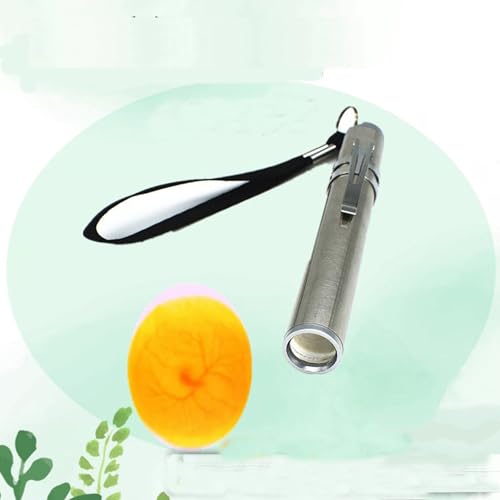
Dranvosk Pocket Candler
Anyone setting a small batch of white or cream eggs once or twice a year who does not want to spend real money on a lamp.
Compare every pick side by side
Swipe the table sideways to see every column on a phone.
| Product | Award | Price band | Power Source | Brightness | Seal Type | Works With Dark Eggs | Best use case | Buy link |
|---|---|---|---|---|---|---|---|---|
| Incu-Bright LED Candler | Best Overall | Under $30 | Battery, portable | Very high output LED | Rubber gasket seals to the shell | Yes, bright enough for brown shells | Anyone hatching dark brown eggs, or hatching more than one species, who w… | Check price for Incu-Bright™ Ultra Bright LED Egg Candler - Portable Light for All Egg Size on Amazon |
| VCNFPRO 3.0 Candler | Best for Dark Shells | Under $30 | Battery, portable | High output LED | Titanium tip with soft rim | Yes, bright enough for brown shells | Keepers of Marans, Welsummers or other dark-egg breeds who want the brigh… | Check price for 3.0 Upgrade Egg Candler Light【Semi LED Chip】【S-Certified Titanium Material】 on Amazon |
| Magicfly Rechargeable | Best Rechargeable | Under $30 | USB rechargeable | High output LED | Moulded rim | Usually, dark brown shells are marginal | Anyone who hatches several times a year and is tired of finding the candl… | Check price for Magicfly Rechargeable Egg Candler Tester for Monitoring Eggs Development, Bright Cool LED Light Candling Lamp on Amazon |
| HBlife Wired LED | Best Corded | Under $30 | Mains adapter, corded | High output cool LED | Moulded rim | Usually, dark brown shells are marginal | Anyone who candles at a fixed bench beside the incubator and wants consis… | Check price for Blife Wired LED Egg Candler, Bright Cool Light Egg Candler Tester for Monitoring Egg Development with 2 Soft Rubber on Amazon |
| NestEcho Candler | Best Value | Under $30 | Battery, portable | Moderate LED | Moulded rim | Marginal on dark shells | Keepers with white, cream or light brown eggs who want one lamp that fits… | Check price for NestEcho Egg Candler Light Tester Egg Candler Tester Candling Lamp for All Egg Typy on Amazon |
| Dranvosk Pocket Candler | Best Budget | Under $30 | Battery, portable | Moderate LED | Narrow tip, no gasket | No, too dim for brown shells | Anyone setting a small batch of white or cream eggs once or twice a year… | Check price for Dranvosk Portable LED Egg Candler Tester Candling Light Lamp Flashlight for Chicken,Duck and Bird Eggs(Not Included Batteries) on Amazon |
The full reviews
Each review below follows the same order: what it is, why it won its category, how it behaves in real use, and who should buy something else.
1 Best Overall
Incu-Bright™ Ultra Bright LED Egg Candler - Portable Light for All Egg Size
The brightest lamp in this group behind a rubber gasket that seals to the shell, which is the combination that lets you read a dark brown egg at day 7 instead of guessing at it.
What we liked
- Very high output LED, bright enough to show veins through dark brown shells
- Rubber gasket compresses against the shell so no light leaks around the edge
- Tip range covers everything from quail eggs up to goose eggs
- Battery powered, so it goes to the incubator rather than the other way round
What we did not
- Runs on batteries, so a cell can fade partway through a tray of two dozen eggs
- At about 22 dollars it costs four times the cheapest candler here, and none of that helps if your birds lay white eggs
- The gasket is a wear part, and a split or hardened one leaks light long before the LED itself fails
About $21.99 checked Aug 8, 2026
Key specifications
- Power Source
- Battery, portable
- Brightness
- Very high output LED
- Seal Type
- Rubber gasket seals to the shell
- Works With Dark Eggs
- Yes, bright enough for brown shells
- Egg Sizes
- All sizes from quail to goose
Why the Incu-Bright LED Candler wins this category
Because it is the only candler here that does both halves of the job well. The LED is the highest output in this group, which is what gets light through a pigmented shell, and the tip carries a rubber gasket that compresses against the egg, which is what stops that light escaping round the outside and washing out the image.
Either one alone is not enough. A very bright lamp with a leaky tip gives you a glare ring and a dim egg. A well sealed tip with a weak lamp gives you a clean orange circle with nothing in it.
Living with the Incu-Bright LED Candler
The egg size range is the practical advantage most people underrate. A tip that seals on quail eggs and still makes contact around a goose egg means one candler covers a mixed hatching year, and you are not choosing between a lamp that fits your bantam eggs and one that fits your duck eggs.
Being battery powered also means it goes where the eggs are. Candling happens at the incubator, in the dark, and a lead running back to an outlet is the thing that makes you slow.
Where the Incu-Bright LED Candler falls short
Batteries are the real cost of ownership. Bright LEDs draw more current, and a cell that is halfway down produces a dimmer beam without any obvious warning. The failure looks like an unreadable dark egg, so people conclude the candler is not good enough when the answer is a fresh set of cells.
The gasket also wears. Rubber that has been compressed against a few hundred shells and stored warm will eventually harden or split, and a leaking gasket undoes the main reason to buy this over a cheaper lamp. Check it each season.
And if your flock lays white eggs, the extra output here is capability you will never use.
Research based, not hands-on
Assessed on the published light output, gasket design and stated egg size range, and compared against the dimmer lamps in this guide on dark shell readability.
- Best for
- Anyone hatching dark brown eggs, or hatching more than one species, who wants a single candler that covers the lot.
- Skip it if
- Every bird you keep lays white or cream eggs, because a moderate LED reads those shells perfectly well for a quarter of the money.
- The limitation to plan around
- It runs on batteries, and a fading cell dims the lamp gradually rather than switching it off. Put fresh cells in before a candling session, not during one, or you will blame the egg for what the battery is doing.
2 Best for Dark Shells
3.0 Upgrade Egg Candler Light【Semi LED Chip】【S-Certified Titanium Material】
A high output LED behind a titanium tip with a soft rim, and at about 13 dollars it is the cheapest thing on this page that will show you veins through a Marans shell.
What we liked
- High output LED that the maker rates as readable through brown shells
- Titanium tip is a hard rim that will not deform or crack with use
- Soft rim on the tip cuts the light leak that washes out a dim image
- Costs about nine dollars less than the brightest candler here
What we did not
- The soft rim is narrower than a full gasket, so it leaks light at the edge on eggs much larger than a chicken egg
- Output is high but not the highest here, so the very darkest Olive Egger shells are still hard work
- Battery powered, and a fading cell dims the lamp gradually so a readable egg starts looking like a dead one
About $12.99 checked Aug 8, 2026
Key specifications
- Dimensions
- 1 x 1 x 1 in (L x W x H)
- Colour
- Black
- Power Source
- Battery, portable
- Brightness
- High output LED
- Seal Type
- Titanium tip with soft rim
- Works With Dark Eggs
- Yes, bright enough for brown shells
- Egg Sizes
- All common poultry sizes
Why the VCNFPRO 3.0 Candler wins this category
Because it answers the one question that sends most people shopping for a candler, and it does it for about 13 dollars. Dark brown shells are the eggs that defeat cheap lamps, and this is the cheapest lamp here rated to get through them.
That matters more than the overall ranking suggests. If you keep Marans or Welsummers and everything else in your setup is already bought, you do not need a candler that also handles goose eggs. You need output, and this has it.
Living with the VCNFPRO 3.0 Candler
The titanium tip is a genuine durability point rather than a spec sheet flourish. Candler tips get pressed against shells, dropped on concrete floors and stored in a drawer with everything else, and a hard metal rim survives that treatment better than moulded plastic that goes brittle.
Being battery powered keeps it at the incubator, where candling should happen. The session should be a few minutes in a dark room with the eggs beside the machine.
Where the VCNFPRO 3.0 Candler falls short
The seal is the compromise you are accepting. A soft rim is better than a bare tip and it is not the same as a rubber gasket that compresses to the curve of the shell. On a standard chicken egg the contact is good. On a large duck or goose egg the rim cannot follow the curve, light escapes at the edge, and the bright ring your eye adapts to is what makes the inside of the egg unreadable.
Output is the second point to be honest about. It is high, and the Incu-Bright is higher. On the darkest Olive Egger shells that gap decides whether you get a usable image.
Batteries add the last caveat. A cell at half charge produces a dimmer beam with no warning, so replace them before a hatch rather than mid tray.
Research based, not hands-on
Assessed on the published LED output rating, tip material and rim design, and compared against the brighter gasket-sealed lamp in this guide on dark shell performance.
- Best for
- Keepers of Marans, Welsummers or other dark-egg breeds who want the brightness without paying for the full size range.
- Skip it if
- You hatch goose or other large eggs, because the tip is sized for common poultry eggs and will not seal around something that big.
- The limitation to plan around
- This is a dark shell tool at a low price, and the compromise is the seal. It contacts a chicken egg well and loses light at the edge on anything much bigger, so match it to the eggs you actually set.
3 Best Rechargeable
Magicfly Rechargeable Egg Candler Tester for Monitoring Eggs Development, Bright Cool LED Light Candling Lamp
A USB rechargeable pen candler with a high output cool LED, which removes the one thing that ruins a candling session on the other battery lamps here.
What we liked
- USB rechargeable, so there are no cells to buy and none to run out mid session
- High output cool LED puts light through the shell without adding heat to it
- Slim 6.7 inch body is easy to hold steady against an egg in the dark
- Cordless, so it works at the incubator or out at a broody hen
What we did not
- Moulded rim rather than a rubber gasket, so light escapes at the edge of the shell
- Rated only as usually working on dark brown shells, so the darkest eggs are marginal
- A flat cell means waiting for a charge rather than swapping in a spare set of batteries
- Tip suits chicken and duck eggs, so quail and goose eggs are outside its range
Key specifications
- Dimensions
- 1.2 x 6.7 x 1.2 in (L x W x H)
- Colour
- Black
- Power Source
- USB rechargeable
- Brightness
- High output LED
- Seal Type
- Moulded rim
- Works With Dark Eggs
- Usually, dark brown shells are marginal
- Egg Sizes
- Chicken and duck
Why the Magicfly Rechargeable wins this category
Because the most common candling failure is not a bad image, it is a lamp that will not come on. Disposable cells sit in a drawer discharging quietly between hatches, and the moment you discover that is the moment you have 24 eggs cooling on the bench.
A USB cell removes that. It also removes the running cost, which over a few seasons of hatching is not nothing.
Living with the Magicfly Rechargeable
The 6.7 inch pen shape is well judged for the job. You hold it in one hand, the egg in the other, and the length gives you somewhere to grip that is not directly behind the light. Short stub candlers put your fingers next to the tip, which is awkward when you are working blind.
The cool LED matters more than it sounds. You are holding a lamp against a developing egg, and a light source that runs cool keeps the contact from being a heat question as well as a cooling one.
Where the Magicfly Rechargeable falls short
The seal is the weak point. A moulded rim is a shaped plastic edge, not a compressible gasket, so it touches the shell at a few points and leaks light everywhere else. In a dark room your eye adapts to that leaked ring and the dim image inside the egg is what suffers.
That combines badly with the brightness rating. This is listed as usually working on dark brown shells, and usually is the honest word for it. On a mid brown egg it will be fine. On a proper Marans shell you need both the output and the seal, and this compromises on each.
The egg range is the last constraint. It is built for chicken and duck eggs, so quail at one end and goose at the other are outside what the tip can seal against.
Research based, not hands-on
Assessed on the published power source, LED output rating, rim design and egg size range, and compared against battery and mains lamps in this guide on session reliability.
- Best for
- Anyone who hatches several times a year and is tired of finding the candler flat on the morning of a day 7 check.
- Skip it if
- Your flock lays the darkest brown eggs, because this is rated as marginal on those shells rather than reliable.
- The limitation to plan around
- Rechargeable removes the battery problem and replaces it with a charging problem. There is no spare cell to swap in, so put it on charge the night before day 7 rather than reaching for it cold.
4 Best Corded
Blife Wired LED Egg Candler, Bright Cool Light Egg Candler Tester for Monitoring Egg Development with 2 Soft Rubber
A mains powered cool LED candler that cannot go flat, which makes it the one lamp here that gives the same image on the last egg of a tray as it did on the first.
What we liked
- Mains powered, so output never drops off as a cell discharges
- High output cool LED that does not add heat to the egg during contact
- No batteries to buy, store or find flat before a day 7 check
- Light 0.32 pound body that is easy to hold steady for a whole tray
What we did not
- Tethered to an outlet, so it cannot be carried out to a broody hen in a coop without power
- Moulded rim rather than a rubber gasket, so light leaks at the edge of the shell
- Rated only as usually working on dark brown shells, which leaves the darkest eggs marginal
- A trailing lead across the bench beside a tray of eggs is a hazard worth planning around
Key specifications
- Size
- 6.3 x 1.38 x 1.38 inch
- Weight
- 0.32 pounds
- Colour
- Black
- Power Source
- Mains adapter, corded
- Brightness
- High output cool LED
- Seal Type
- Moulded rim
- Works With Dark Eggs
- Usually, dark brown shells are marginal
- Egg Sizes
- Chicken and duck
Why the HBlife Wired LED wins this category
Because a mains lamp has one property no battery lamp can match: the twenty fourth egg gets exactly the same light as the first. Every battery candler here dims as its cells discharge, and the dimming is gradual enough that you attribute it to the eggs rather than the lamp.
If you candle at a bench with a socket nearby, that consistency beats portability.
Living with the HBlife Wired LED
At 0.32 pounds and 6.3 inches it is a light pen rather than a handful, which matters when you are holding it against eggs one after another in the dark. Hand fatigue is what makes people rush the back half of a tray.
The cool LED is the right choice here. You are pressing a lamp against an egg with a developing embryo in it, and a light source that does not run warm keeps the contact purely optical.
There is also nothing to maintain. No cells to buy, nothing to charge, nothing to find flat in June.
Where the HBlife Wired LED falls short
The lead is the whole trade. Candling wants to happen within arm's reach of the incubator so eggs spend the least time in room air, and a corded lamp means either there is a socket there or you carry the eggs to the lamp. Carrying eggs is the wrong answer.
A trailing cable beside a tray of hatching eggs is also worth planning for, because catching it with an elbow is an expensive mistake.
Optically it sits in the middle of this group. The output is high and the rim is moulded rather than gasketed, so light escapes around the shell edge and the darkest brown eggs are described as usually readable rather than reliably readable. For a light-shelled flock that is fine. For Marans it is not the lamp to buy.
Research based, not hands-on
Assessed on the published power source, LED output rating, rim design and body weight, and compared against the battery lamps in this guide on output consistency.
- Best for
- Anyone who candles at a fixed bench beside the incubator and wants consistent output from the first egg to the last.
- Skip it if
- You candle away from mains power, under a broody hen or in an outbuilding, because this needs an outlet within reach.
- The limitation to plan around
- The cord decides where you can work. Candling should happen right beside the incubator so eggs are out of the heat for the shortest possible time, and if there is no socket there this lamp forces you to move the eggs instead.
5 Best Value
NestEcho Egg Candler Light Tester Egg Candler Tester Candling Lamp for All Egg Typy
A solid battery candler with a moderate LED and a tip that covers all the common poultry egg sizes, which is a sensible middle buy for anyone whose flock lays light shells.
What we liked
- Tip range covers all the common poultry egg sizes rather than chicken eggs only
- Battery powered, so it works at the incubator with no lead to trail
- Substantial 0.37 pound body gives you something solid to hold in the dark
- Moderate LED is entirely adequate for white, cream and light brown shells
What we did not
- Moderate output only, so dark brown shells are marginal and the darkest ones unreadable
- Moulded rim rather than a rubber gasket, so light escapes at the edge of every egg
- The brighter VCNFPRO costs about a dollar less, which makes this a choice about the body rather than the value
- Heaviest lamp here, which tells in the hand near the end of a full tray
About $13.99 checked Aug 8, 2026
Key specifications
- Weight
- 0.37037660016 pounds
- Colour
- Silver
- Power Source
- Battery, portable
- Brightness
- Moderate LED
- Seal Type
- Moulded rim
- Works With Dark Eggs
- Marginal on dark shells
- Egg Sizes
- All common poultry sizes
Why the NestEcho Candler wins this category
Because most backyard flocks lay white, cream or light brown eggs, and for those shells a moderate LED is genuinely sufficient. Buying the brightest lamp on the page to candle a Leghorn egg is paying for headroom you will never reach into.
What lifts it above the pocket lamps is the tip range. It is sized for the common poultry egg sizes rather than chicken eggs and smaller, so a run of bantam eggs one season and duck eggs the next does not mean a second purchase.
Living with the NestEcho Candler
At 0.37 pounds it is the most substantial lamp here, and there is a real argument for that. A solid body sits still against a shell, and something with a bit of mass is easier to hold steady than a very light pen when you are working blind.
Batteries keep it at the incubator, which is where candling belongs. The eggs stay next to the machine, and each one goes back before the next comes out.
Where the NestEcho Candler falls short
Two things limit it, and they compound. The LED is moderate, and the rim is moulded rather than gasketed, so you get less light going in and more of it escaping around the shell edge. On a white egg neither matters. On a dark brown egg both matter at once, and the result is an orange circle with nothing readable in it.
Honesty about the price is the other point. The VCNFPRO 3.0 is brighter and costs about a dollar less, so this is not the value pick on brightness per dollar. What you get instead is the wider egg size range and the heavier body. If neither appeals, buy the cheaper lamp.
The weight cuts both ways over a long tray, where a lighter pen tires your hand less.
Research based, not hands-on
Assessed on the published LED output rating, rim design, egg size range and weight, and compared on price against the brighter lamps in this guide.
- Best for
- Keepers with white, cream or light brown eggs who want one lamp that fits everything from bantam to duck eggs.
- Skip it if
- You keep Marans, Welsummers or Olive Eggers, because a moderate LED will not get through that pigment layer.
- The limitation to plan around
- The output is the ceiling. It is enough for a light shell and marginal on a dark one, so if there is any chance of adding a dark-egg breed to the flock later, buy brightness now rather than replacing this lamp then.
6 Best Budget
Dranvosk Portable LED Egg Candler Tester Candling Light Lamp Flashlight for Chicken,Duck and Bird Eggs(Not Included Batteries)
A pocket sized battery lamp for about 5 dollars that will read white and cream shells perfectly well, provided you accept that brown eggs are outside what it can do.
What we liked
- About 5 dollars, which is roughly a quarter of what the brightest lamp here costs
- Pocket sized at under 5 inches, so it lives in the incubator box rather than a drawer
- Moderate LED is enough to show veins through white and cream shells at day 7
- Battery powered, so it works at the incubator and in a power cut
What we did not
- Listed as too dim for brown shells, so anything darker than cream is not readable
- Narrow tip with no gasket, so light escapes around the shell edge on every egg
- Tip suits chicken eggs and smaller, which rules out duck and goose eggs
- Batteries are not included, so the real cost is a few dollars more than the price shown
Key specifications
- Dimensions
- 4.78 x 1.38 x 0.78 in (L x W x H)
- Colour
- Silver
- Power Source
- Battery, portable
- Brightness
- Moderate LED
- Seal Type
- Narrow tip, no gasket
- Works With Dark Eggs
- No, too dim for brown shells
- Egg Sizes
- Chicken and smaller
Why the Dranvosk Pocket Candler wins this category
Because it is honest about what it is. At about 5 dollars it does one job, and the maker states the limit plainly: this is not bright enough for brown shells. That clarity is worth more than a cheap lamp claiming to handle everything.
For a white or cream shell, the job is easy. Those shells pass light readily, and a moderate LED shows the vein network at day 7 and a filled dark egg at day 14 without any drama.
Living with the Dranvosk Pocket Candler
Being under 5 inches long is a genuine advantage in the way small tools usually are. It lives in the box with the incubator, so it is where the eggs are when day 7 comes round, rather than in a kitchen drawer under everything else.
Batteries mean it works anywhere, including out at a broody hen with no power nearby, and including during the kind of outage that also has you worrying about the incubator.
Where the Dranvosk Pocket Candler falls short
Everything follows from the output. Moderate light with a narrow unsealed tip means a bright ring around the egg and a dim interior, which is workable on a Leghorn egg and hopeless on anything with pigment in the shell. If you keep a Rhode Island Red, let alone a Marans, this will not tell you what you need to know.
The tip range narrows it again. It is shaped for chicken eggs and smaller, so duck and goose eggs are outside what it will seal against at all.
One smaller point is worth knowing before you order. Batteries are not supplied, so budget for a set on top of the price you see.
Research based, not hands-on
Assessed on the published LED output rating, tip design, egg size range and the stated limitation on brown shells, and compared against the brighter lamps in this guide.
- Best for
- Anyone setting a small batch of white or cream eggs once or twice a year who does not want to spend real money on a lamp.
- Skip it if
- Any bird in your flock lays a brown egg, because the maker states plainly that this is too dim for brown shells.
- The limitation to plan around
- The maker is honest that this will not read brown shells, and that is the whole decision. Check what colour your hens actually lay before ordering, because a lamp that cannot see through your eggs is not a bargain.
How we compared these candlers
Every candler here was judged on the same job: producing a readable image through a shell at day 7, quickly, without leaving eggs out of the incubator longer than they should be.
Brightness came first, because it is the specification that decides whether a dark shell is readable at all. The seal came second, since a tip that presses against the shell puts all of its light through the egg instead of around it. Power source came third, because a corded lamp never runs flat and a battery lamp goes wherever the incubator sits. Egg size came last: a tip shaped for a chicken egg is awkward on a quail egg and too small to seal against a goose egg.
Price carried little weight here. The whole category runs from about 5 dollars to about 22 dollars, so buying the brightest option instead of the cheapest costs less than a bag of feed.
What actually matters in an egg candler
Brightness, and why dark shells defeat cheap candlers
This is the specification that decides the outcome, and almost nobody checks it before buying.
A white or cream shell passes light easily, and any LED in this group will show you veins at day 7. A dark brown shell is a different problem. The pigment layer on a Marans, a Welsummer or a dark Olive Egger egg absorbs most of what a moderate LED produces, and what reaches your eye is an even orange glow with no structure in it. You cannot tell a developing egg from a clear one, which is the entire point of the exercise.
So the rule is simple. If you keep dark-egg breeds, buy on light output and treat everything else as secondary. If all your birds lay white, cream or light brown eggs, the cheapest lamp on this page will do the job properly.
The seal against the shell
Leaked light is the second reason people cannot read what they are looking at. When a bright ring escapes around the outside of the egg, your eye adapts to the ring and the dim image inside the shell disappears.
A soft rubber gasket that compresses against the shell fixes that. It blocks the edge leak, and it spreads the contact pressure so you are not pushing a hard plastic rim into a shell that has an embryo in it. A narrow tip with no gasket leaks at the sides of every egg that is not exactly the diameter of the tip, which in practice is most of them.
Power source, and how long you stand there
Two dozen eggs at ten seconds each is not a long session. Two dozen eggs while you are also writing down what you saw is longer.
A battery candler goes to the incubator, which is where you want to be working, and it keeps working when the power is out. It can also go flat partway through a tray. A corded lamp cannot go flat and cannot be carried out to a broody hen in a coop with no outlet. A USB rechargeable unit sits between the two: nothing to buy, but a dead cell means waiting for a charge.
Egg size and tip shape
A tip sized for a chicken egg seals poorly against a quail egg and cannot make contact around a goose egg at all. If you hatch anything other than chicken eggs, check the tip range before you compare brightness figures, because a bright lamp that will not seal against your eggs reads worse than a moderate lamp that will.
When to candle, and when to stop
Candle at day 7. That is early enough to remove clears before they spoil in a warm incubator, and late enough that a fertile egg shows an obvious spider of veins with a dark spot at the centre.
Candle again at day 14. By then a developing egg is mostly filled and dark, with a defined air cell at the blunt end. An egg that has quit since day 7 shows a blood ring or a loose dark mass with no vein structure behind it.
Stop at day 18. That is lockdown: the eggs come off the turner, humidity goes up and the lid stays shut. Chicks are positioning to pip, and opening the incubator now costs you more than the information would be worth.
However you do it, work in a dark room and work fast. Eggs lose heat quickly in room air, and every extra minute of handling is a risk you are taking in exchange for something you mostly already know.
Final recommendation
The Incu-Bright LED Candler is the best all-round buy. It has the highest light output in this group, a rubber gasket that genuinely seals to the shell, and a tip range covering quail through goose, which makes it the one candler that suits a mixed hatching setup.
If dark brown shells are the only reason you are shopping, the VCNFPRO 3.0 Candler does that specific job for about 13 dollars. If you are tired of buying batteries, the Magicfly Rechargeable is the sensible pick as long as your eggs are not the darkest ones. And if you candle a dozen light-shelled eggs twice a season, the Dranvosk Pocket Candler at about 5 dollars is honestly enough.
Questions people ask before buying
When should I candle hatching eggs?
Twice is enough for most hatches: day 7 and day 14. Day 7 is early enough to pull clears before they spoil in a warm incubator, and late enough that a fertile egg shows an obvious network of veins around a dark central spot. Day 14 confirms which of those are still going. Stop at day 18, because that is when lockdown starts and the incubator needs to stay shut until the chicks have hatched.
Why can I not see anything inside my brown eggs?
Almost always because the candler is not bright enough. Dark brown shells from breeds like Marans and Welsummer carry a heavy pigment layer that blocks most of the light a moderate LED produces, so you get an orange glow with no detail in it. The fixes are a much brighter lamp, a tip that seals against the shell so no light leaks past the edge, and a genuinely dark room so your eyes are not adapted to anything brighter than the egg.
Does candling harm the developing embryo?
Not if you are quick about it. The risks are cooling and handling, not the light itself. Eggs lose heat fast in room air and every extra minute out of the incubator adds up, so work in a dark room with the eggs beside you, look at one egg at a time, and put each one back before you pick up the next. A tray of 24 eggs should take a few minutes, not half an hour. Cracked or very dirty eggs are worth handling least of all.
What does a clear egg at day 7 mean?
It means one of two things: the egg was never fertile, or development stopped so early that there is nothing to see. Either way it is not going to hatch, and leaving it in a warm incubator for another two weeks risks it going bad and contaminating the rest of the tray. Take clears out at day 7. If you are not confident about what you are looking at, mark the egg in pencil and check it again the next day rather than guessing.
Can I just use a phone torch instead of a candler?
A phone torch works on white and cream shells if you cup your hand around the egg to block the leak, and it will not work on dark brown shells. The problem is not raw brightness but shape. A phone spreads its light across a wide area, so most of it goes past the egg rather than through it. A candler concentrates the same sort of output into a small sealed tip, which is why an inexpensive candler outperforms a phone on the eggs that are actually hard to read.
Do these candlers work on duck and goose eggs?
Check the tip before you buy, because the range differs a lot across this group. Some tips are shaped for chicken eggs and smaller, some cover the common poultry sizes, and only the Incu-Bright claims everything from quail up to goose. A tip that cannot make contact all the way around a large egg leaks light at the edge and washes out the image, so a bright lamp with the wrong tip can read worse than a moderate one with the right tip. Duck and goose shells are also thicker, which asks more of the lamp again.
Why you can trust this guide
- Written by
- Marta Voss, Editor and fact checker, Chicken Geek. Specialist areas: Editorial fact checking, Chick brooding and starter nutrition, Small-flock husbandry, Feed labels and nutrition claims.
- Fact checked by
- Sam Reddick
- Published
- August 6, 2026 · Last updated August 6, 2026 · Products and links rechecked August 6, 2026
- How we picked
- Candlers were compared on published light output, whether the tip seals against the shell or leaks light around the edge, power source and what that means during a long session at the incubator, the range of egg sizes the tip fits, and whether the maker claims dark brown shells are readable.
- Evidence used
- None of the 6 products on this page were sent to us or bought for a hands-on test. Every recommendation here is research based: manufacturer specifications, listed dimensions and materials, owner feedback at volume, and comparison against equipment our team has owned. Each review states this again above the buy button so you are never guessing which kind of evidence sits behind a pick.
- Editorial standards
- No brand pays for placement, and no manufacturer sees this page before it goes live. Read our editorial policy and testing method.
- Affiliate disclosure
- Chicken Geek is reader supported. We earn a commission from qualifying purchases made through links on this page, at no extra cost to you, and no brand has paid for a placement or an award here.
About the author

Editor and fact checker, Chicken Geek
Marta edits every guide on Chicken Geek and checks that each claim can be traced back to a manufacturer specification, a published standard or a stated first-hand observation. She keeps a small backyard flock of six hens and has raised chicks from day one for eight seasons.
- Eight seasons raising chicks from day-old to point of lay
- Checks every specification in a Chicken Geek guide against the manufacturer listing
- Removes any testing claim that cannot be backed up
- Keeps a flock of six hens in a suburban backyard