We Compared 6 Coop Thermometers on Humidity, Not Just Heat
We compared six chicken coop thermometers on humidity reading, overnight logging, weather rating and real range, because moisture causes frostbite, not cold.

By Sam Reddick Lead gear reviewer, Chicken Geek
Fact checked by Marta Voss
Published Prices and stock checked 7 min read
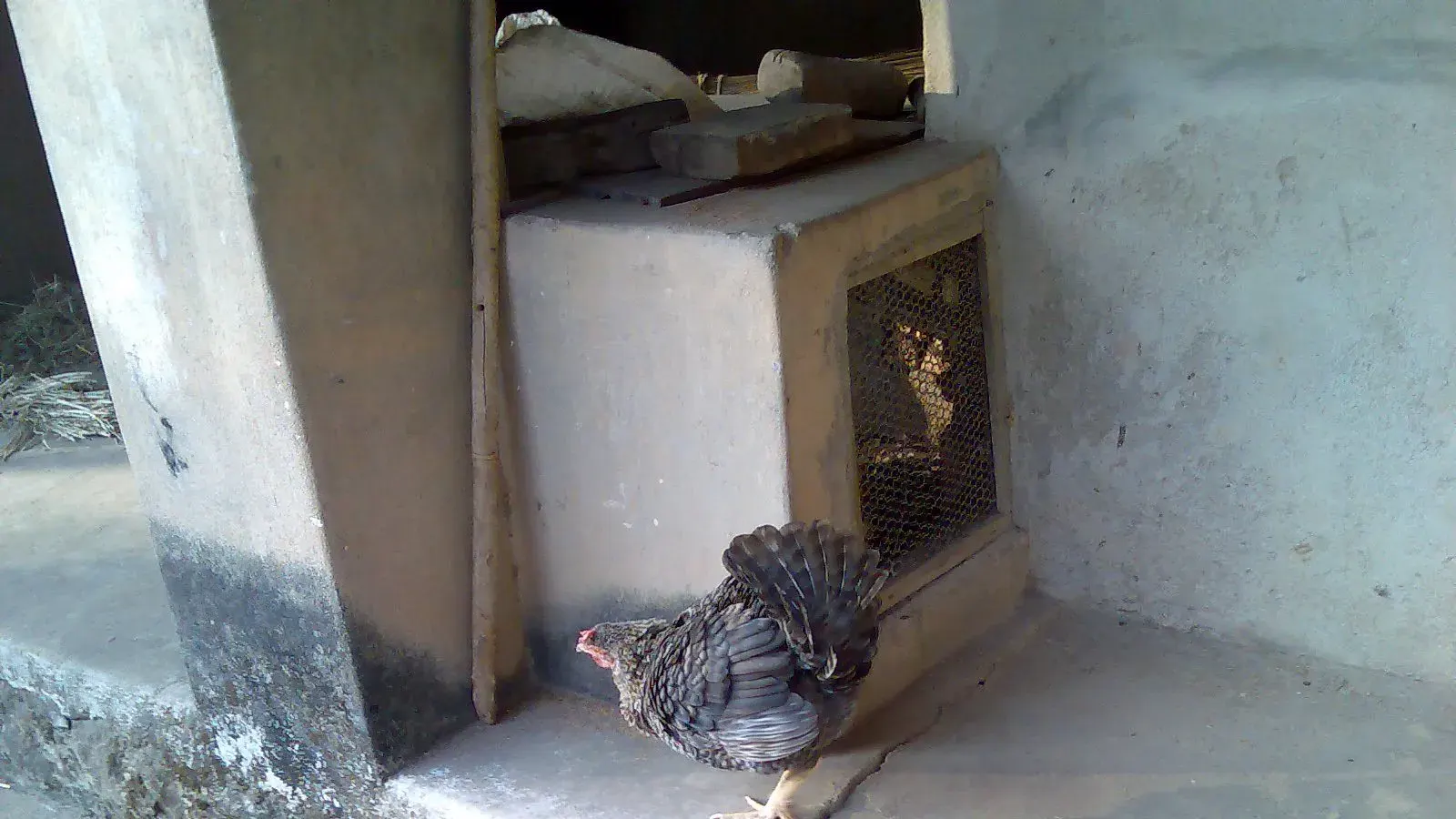
Most keepers buy a coop thermometer to watch the temperature. The temperature is the reading that matters least.
Frostbitten combs and wattles are caused by moisture in the air condensing on the bird and then freezing, not by cold on its own. A coop sitting at 20 F with 50 percent humidity is a safer place to sleep than one sitting at 32 F with 90 percent humidity. So the number worth watching is relative humidity. If yours reads consistently above about 70 percent, you have a ventilation problem to solve, not a heater to buy.
The second thing that matters is history. Humidity peaks in the small hours, after the birds have spent six hours breathing and roosting in a closed box, and that is the exact window you are asleep for. A gauge that shows you a number at 9am tells you almost nothing. A sensor that logs the night tells you everything. We compared six on that basis: whether they read humidity at all, whether they keep a record, how they cope with damp air, and how far the signal really travels.
Our picks at a glance
Every product below wins one specific situation. Pick the row that matches your flock, your yard and your budget rather than reading top to bottom.
-
Best Overall

SwitchBot IP65 Sensor
Keepers who want to see what the coop humidity actually does overnight rather than guess from a morning glance.
-
Best for Logging

Govee H5074
Keepers with a sheltered mounting spot inside the coop who want a detailed overnight record they can export.
Check price on Amazon for Govee Smart Bluetooth Thermometer Hygrometer H5074, Mini Humidity Sensor on AmazonAbout $13.99 checked Aug 8, 2026
-
Best Range

TempPro TempAir 500 ft
Coops set well back from the house where a phone will never be close enough to collect Bluetooth readings.
Check price on Amazon for TempPro TempAir 500 FT Indoor Outdoor Thermometer Wireless with Sensor on AmazonAbout $16.99 checked Aug 8, 2026
-
Best Display

U UNNI Weather Station
Households where several people check on the birds and nobody wants to open an app to do it.
-
Best for Brooders
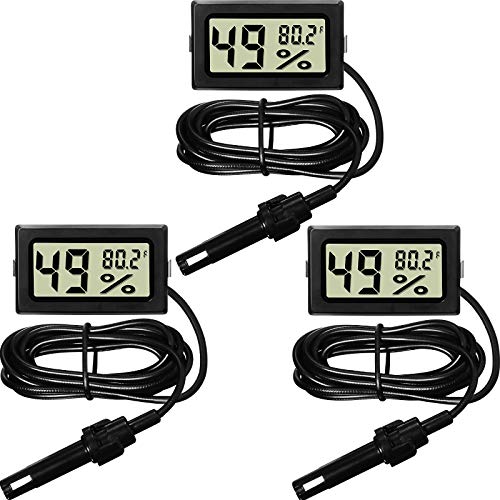
Weewooday Probe Gauge
Brooders and incubator setups where the reading has to come from one exact spot but the screen needs to be elsewhere.
-
Best Budget

TempPro TP50
Anyone who wants to start measuring coop humidity properly without spending much or setting anything up.
Check price on Amazon for TempPro TP50 Digital Hygrometer Indoor Thermometer Room Thermometer on AmazonAbout $10.99 checked Aug 8, 2026
Compare every pick side by side
Swipe the table sideways to see every column on a phone.
| Product | Award | Price band | Reading Type | Connectivity | Range | Weather Rating | Best use case | Buy link |
|---|---|---|---|---|---|---|---|---|
| SwitchBot IP65 Sensor | Best Overall | Under $30 | Temperature and humidity | Bluetooth to phone | About 394 ft line of sight | IP65 | Keepers who want to see what the coop humidity actually does overnight ra… | Check price for SwitchBot IP65 Indoor Outdoor Hygrometer Thermometer Wireless, 394ft Bluetooth Range, Refrigerator Thermometer, Dewpoint/VPD/Absolute Humidity Sensor, Free Data Storage Export, 2 Years Battery Life on Amazon |
| Govee H5074 | Best for Logging | Under $30 | Temperature and humidity | Bluetooth to phone | About 200 ft line of sight | Indoor rated, shelter it | Keepers with a sheltered mounting spot inside the coop who want a detaile… | Check price for Govee Smart Bluetooth Thermometer Hygrometer H5074, Mini Humidity Sensor on Amazon |
| TempPro TempAir 500 ft | Best Range | Under $30 | Temperature only at the sensor | Radio to a base display | About 500 ft line of sight | Weather resistant sensor | Coops set well back from the house where a phone will never be close enou… | Check price for TempPro TempAir 500 FT Indoor Outdoor Thermometer Wireless with Sensor on Amazon |
| U UNNI Weather Station | Best Display | Under $30 | Temperature and humidity | Radio to a base display | About 200 ft line of sight | Weather resistant sensor | Households where several people check on the birds and nobody wants to op… | Check price for Indoor Outdoor Thermometer Hygrometer Wireless Weather Station, Temperature Humidity Monitor Battery Powered Inside Outside Thermometers with 330ft Range Remote Sensor and Backlight Display on Amazon |
| Weewooday Probe Gauge | Best for Brooders | Under $30 | Temperature and humidity with probe | None, read at the unit | Probe lead length | Indoor rated, shelter it | Brooders and incubator setups where the reading has to come from one exac… | Check price for Weewooday Mini Digital Temperature Humidity Meters Gauge with Probe Gauge LCD Fahrenheit Display Thermometer Hygrometer for Incubator Reptile Plant Greenhouse Chicken Coop Garden(Black, 3 Pieces) on Amazon |
| TempPro TP50 | Best Budget | Under $30 | Temperature and humidity | None, read at the unit | Not applicable | Indoor rated, shelter it | Anyone who wants to start measuring coop humidity properly without spendi… | Check price for TempPro TP50 Digital Hygrometer Indoor Thermometer Room Thermometer on Amazon |
The full reviews
Each review below follows the same order: what it is, why it won its category, how it behaves in real use, and who should buy something else.
1 Best Overall
SwitchBot IP65 Indoor Outdoor Hygrometer Thermometer Wireless, 394ft Bluetooth Range, Refrigerator Thermometer, Dewpoint/VPD/Absolute Humidity Sensor, Free Data Storage Export, 2 Years Battery Life
The only pick here that does all three jobs: it reads humidity, it keeps the overnight history you actually need, and it carries a real IP65 rating for damp coop air.
What we liked
- Reads relative humidity as well as temperature, which is the number that matters
- Logs history to the app, so you can look back at what happened overnight
- IP65 rating, so damp coop air and blown spray are within its design
- Data export is free, so a winter of readings can be kept and compared
- Quoted 394 ft range is the longest Bluetooth figure in this group
What we did not
- Bluetooth only, so your phone has to come within range of the coop before the log will sync
- The 394 ft figure is line of sight, and a coop wall plus a house wall will cut it well below that
- IP65 covers dust and water jets, not immersion, so it still needs to sit under the coop roof
Key specifications
- Dimensions
- 2.3622 x 1.10236 x 0.7874 in (L x W x H)
- Weight
- 0.09700339528 pounds
- Colour
- white
- Reading Type
- Temperature and humidity
- Connectivity
- Bluetooth to phone
- Range
- About 394 ft line of sight
- Weather Rating
- IP65
- Logging
- Yes, app history
Why the SwitchBot IP65 Sensor wins this category
Because it answers the question the category is really about. A coop thermometer that only shows temperature cannot tell you why a bird has a black tip on her comb. Moisture in the air is what condenses and freezes, so a humidity reading is not a bonus feature here, it is the point.
This one reads humidity, and it stores it. That combination is what separates it from four of the other five picks.
Living with the SwitchBot IP65 Sensor
The IP65 rating is the second reason to choose it. Coop air is dusty and often close to saturated, which is a harsher place for a bare circuit board than most people assume. IP65 means dust tight and protected against water jets, so a sensor at roost height is inside its design envelope.
Free data export matters more than it sounds. A winter of readings lets you compare last January against this one after you have added vents, which turns a guess about ventilation into something you can check.
Battery life is quoted at two years, so it is not a thing you are servicing in the cold.
Where the SwitchBot IP65 Sensor falls short
It is a Bluetooth device, and that sets a hard boundary. Readings sit on the sensor until a phone comes close enough to collect them, so this is a record of what happened, not a warning while it is happening. If you want to be told at 2am that the coop has hit 90 percent, this is not that product.
The 394 ft range is a line of sight figure. Put a coop wall and a house wall in between and the useful distance drops a long way. Fine for most gardens, not enough for a paddock.
IP65 is also not waterproof. Mount it under the coop roof.
Research based, not hands-on
Assessed on the published IP rating, sensor type, Bluetooth range and logging behaviour, and compared against the indoor-rated and display-only units in this guide.
- Best for
- Keepers who want to see what the coop humidity actually does overnight rather than guess from a morning glance.
- Skip it if
- You do not want to use a phone app at all, because there is no display panel to read from the house.
- The limitation to plan around
- It syncs over Bluetooth, not wifi, so the readings sit on the sensor until you walk close enough for your phone to collect them. Miss a few days and the log is still there, but you are not getting an alert while a problem is happening.
2 Best for Logging
Govee Smart Bluetooth Thermometer Hygrometer H5074, Mini Humidity Sensor
A tiny Bluetooth sensor that keeps a proper temperature and humidity history and exports it cleanly, which is exactly what you need to see what the coop does at 3am.
What we liked
- Keeps a full app history rather than a single live number or a min and max
- Exports the log, so you can compare one winter against the next
- Reads relative humidity, the number that actually predicts frostbite risk
- Small enough to tuck onto a roost-height wall batten without getting knocked
What we did not
- Indoor rated with no IP figure, so condensation in a damp coop can reach the board
- The 200 ft Bluetooth range is roughly half the SwitchBot figure, which may not clear a long garden
- It stores readings rather than alerting you, so nothing happens until you walk out with a phone
About $13.99 checked Aug 8, 2026
Key specifications
- Dimensions
- 1.56 x 1.56 x 0.67 in (L x W x H)
- Weight
- 0.023125 pounds
- Colour
- White
- Reading Type
- Temperature and humidity
- Connectivity
- Bluetooth to phone
- Range
- About 200 ft line of sight
- Weather Rating
- Indoor rated, shelter it
- Logging
- Yes, app history and export
Why the Govee H5074 wins this category
Because logging is the feature that separates a useful coop sensor from a decoration, and this one does it properly. It keeps a continuous history in the app and lets you export it, rather than handing you a live figure and a min and max.
That matters because the risky window is the one you sleep through. Humidity climbs while the birds are shut in, and a peak of 88 percent that lasted six hours is a very different problem from one that touched 88 percent for ten minutes. Only a history shows you which you have.
Living with the Govee H5074
The size helps more than you would expect. At about 1.5 inches square it sits on a wall batten at roost height without being in anyone's way.
Export is the part worth using. Pull the data after a cold snap, see how long the coop sat above 70 percent, then add a vent and pull it again next month. That turns ventilation from an argument into a measurement.
Where the Govee H5074 falls short
The weather rating is the real gap. There is no IP figure here, so this is an indoor sensor being asked to live in air that is often close to saturated, with dust and ammonia in it. Mount it high on a sheltered wall, away from vents and out of any drip line, and accept that it will not last as long as a sealed unit.
Range is the other constraint. Half the reach of the SwitchBot means a coop at the far end of a long garden may simply not sync from the house, and then you are walking out to collect readings you could have collected by walking out to read a dial.
There is also no alerting. It records the night, it does not warn you during it.
Research based, not hands-on
Assessed on the published logging and export capability, Bluetooth range and the absence of an IP rating, and compared against the weather-rated sensors in this guide.
- Best for
- Keepers with a sheltered mounting spot inside the coop who want a detailed overnight record they can export.
- Skip it if
- The only place you can mount a sensor is exposed to spray or drips, because this one has no weather rating.
- The limitation to plan around
- The body is indoor rated, so it has to live somewhere nothing can drip or blow onto it. In a coop that is genuinely damp, treat it as a consumable and expect a shorter life than a sealed unit.
3 Best Range
TempPro TempAir 500 FT Indoor Outdoor Thermometer Wireless with Sensor
A 500 ft radio link to a base display, which is the longest reach here and the right answer for a coop well away from the house. It reports temperature only.
What we liked
- About 500 ft of radio range, the longest reach of any pick in this guide
- Reads on a base display indoors, so no phone or app is needed
- Weather resistant sensor, so it can sit in a damp coop rather than a sheltered corner
- Radio to a base station keeps working whether or not anyone is home with a phone
What we did not
- The sensor reports temperature only, so the humidity reading that predicts frostbite is simply not available
- Min and max memory only, so you get the overnight low but no picture of how the night developed
- Needs a base display kept indoors within range, so that is two units and two sets of batteries to maintain
About $16.99 checked Aug 8, 2026
Key specifications
- Dimensions
- 3.1 x 2.6 x 1 in (L x W x H)
- Weight
- 0.02 pounds
- Colour
- Light White-1 Sensor
- Reading Type
- Temperature only at the sensor
- Connectivity
- Radio to a base display
- Range
- About 500 ft line of sight
- Weather Rating
- Weather resistant sensor
- Logging
- Min and max memory only
Why the TempPro TempAir 500 ft wins this category
Because distance defeats every other pick here. Bluetooth sensors have to wait for a phone to walk within range, which is fine for a coop at the end of the lawn and useless for one across a paddock. A 500 ft radio link to a base display in the kitchen just keeps working.
That is a real category. Plenty of coops sit further from the house than a Bluetooth link can cross, and for those keepers the choice is between this and no remote reading at all.
Living with the TempPro TempAir 500 ft
The base display is the part people underrate. There is no app to open and no phone to have charged, so anyone in the household can glance at it, which in practice means it gets looked at.
The sensor is weather resistant, so it can be mounted at roost height inside the coop without the fussing an indoor-rated unit needs. Two units means two battery changes, both worth checking before winter.
Where the TempPro TempAir 500 ft falls short
It measures temperature and only temperature, and that is a serious omission in this category. Frostbite is driven by moisture in the air condensing on the comb, so a coop at 20 F and 50 percent humidity is safer than one at 32 F and 90 percent. This device cannot tell those two coops apart. It will show you the colder one and make it look like the problem.
Min and max memory is the second gap. You can see that the coop dropped to 18 F overnight, but not when, for how long, or what the air was doing around it.
If you need the range, buy it for the range and put a cheap hygrometer on the coop wall as well. Used on its own it answers a question that was never the important one.
Research based, not hands-on
Assessed on the published radio range, sensor reading type, weather resistance and memory behaviour, and compared against the humidity-reading sensors in this guide.
- Best for
- Coops set well back from the house where a phone will never be close enough to collect Bluetooth readings.
- Skip it if
- You want to manage coop humidity, because this sensor does not measure humidity at all.
- The limitation to plan around
- It measures temperature and nothing else. That leaves the most useful coop reading uncovered, so if you buy this for range you should plan to pair it with a separate hygrometer inside the coop.
4 Best Display
Indoor Outdoor Thermometer Hygrometer Wireless Weather Station, Temperature Humidity Monitor Battery Powered Inside Outside Thermometers with 330ft Range Remote Sensor and Backlight Display
A backlit base station that shows inside and outside temperature and humidity side by side, which is the fastest way to see whether your coop is actually breathing.
What we liked
- Shows inside and outside readings together, which is the comparison that reveals a ventilation problem
- Large backlit display is readable across a room and in the dark
- Reads relative humidity as well as temperature at both ends
- Weather resistant remote sensor, so it can be mounted inside the coop
- No phone or app needed, so anyone in the house can check it
What we did not
- Min and max memory only, so there is no overnight history showing when humidity actually peaked
- The listing headline quotes 330 ft while the sensor spec is about 200 ft line of sight, so plan on the lower figure
- At roughly 1.9 pounds the base is a shelf object rather than something you carry out to the coop
Key specifications
- Dimensions
- 5.70865 x 1.37795 x 5.70865 in (L x W x H)
- Weight
- 1.86951998176 pounds
- Colour
- White+Grey
- Reading Type
- Temperature and humidity
- Connectivity
- Radio to a base display
- Range
- About 200 ft line of sight
- Weather Rating
- Weather resistant sensor
- Logging
- Min and max memory only
Why the U UNNI Weather Station wins this category
Because of what it puts on the screen at the same time. Inside temperature and humidity next to outside temperature and humidity is the single most useful view in this whole category, and it is the one thing no logging sensor gives you at a glance.
The gap between those two humidity figures is your ventilation report. If the coop reads 15 or 20 points wetter than the air outside, the moisture the birds produce all night is not leaving the building, and no amount of heat will fix that.
Living with the U UNNI Weather Station
The backlight matters in a way that sounds trivial and is not. Winter checks happen in the dark, and a display you can read from the doorway is a display that gets read.
There is no app, no pairing and no phone battery involved, so the birds get checked by whoever is up first rather than by whoever owns the sensor.
The remote unit is weather resistant, so mounting it at roost height inside the coop is within its design.
Where the U UNNI Weather Station falls short
The memory is the weak point. Min and max records the extremes and throws away everything else, so you learn that the coop hit 88 percent humidity but not whether that was a ten minute spike at dawn or six hours of saturated air over the roost. Those are different problems with different fixes.
Range needs reading carefully too. The listing headline quotes 330 ft, while the sensor specification here is about 200 ft line of sight, and line of sight means with nothing in the way. Two walls and a garden will pull that down further, so size it against the shorter number.
The base is also heavy at about 1.9 pounds, so it lives on a shelf. Pick one you walk past.
Research based, not hands-on
Assessed on the published display, dual-channel reading type, sensor weather resistance and stated range, and compared against the logging sensors in this guide.
- Best for
- Households where several people check on the birds and nobody wants to open an app to do it.
- Skip it if
- You want a scrollable overnight record, because this keeps extremes rather than a history.
- The limitation to plan around
- Min and max is all the memory you get. It will tell you the coop touched 88 percent humidity last night but not when it happened, how long it stayed there, or whether it recovered before dawn.
5 Best for Brooders
Weewooday Mini Digital Temperature Humidity Meters Gauge with Probe Gauge LCD Fahrenheit Display Thermometer Hygrometer for Incubator Reptile Plant Greenhouse Chicken Coop Garden(Black, 3 Pieces)
A three pack of probe gauges for about 10 dollars, which lets you put the sensing tip exactly where the chicks are while the display stays somewhere you can read it.
What we liked
- The probe separates the measuring point from the display, which is what a brooder needs
- Three units in the pack, so a brooder, a coop and a spare are covered at once
- Reads relative humidity as well as temperature, which matters for hatching and for chicks
- Cheap enough that placing one in each zone of a brooder is reasonable
What we did not
- No logging at all, so an overnight humidity spike leaves no trace by the time you look
- You have to walk to the unit to read it, which in practice means checking it far less often
- Indoor rated body, so the display has to sit out of the weather even where the probe does not
Key specifications
- Dimensions
- 4.13 x 4.13 x 1.18 in (L x W x H)
- Weight
- 0.26014546916 pounds
- Colour
- White
- Reading Type
- Temperature and humidity with probe
- Connectivity
- None, read at the unit
- Range
- Probe lead length
- Weather Rating
- Indoor rated, shelter it
- Logging
- None
Why the Weewooday Probe Gauge wins this category
Because a brooder has a temperature gradient and a coop mostly does not. Chicks need a warm zone they can move into and a cooler zone they can move out of, and the whole point of the setup is that those two areas read differently. A sealed wireless sensor tells you about wherever it happens to be. A probe tells you about the exact spot you cared about.
Being able to push the tip to chick height under the heat plate, with the display sitting outside the brooder wall, is the reason to buy this over anything else here.
Living with the Weewooday Probe Gauge
Three units in the pack changes how you use them. One at the warm end, one at the cool end, and you see the gradient rather than infer it. That beats moving a single gauge around.
Humidity is on the display too, which matters if you are hatching, and it matters in a brooder because damp bedding under a heat source is where chicks get into trouble.
Where the Weewooday Probe Gauge falls short
There is no record of any kind. Not a log, not even a min and max. The reading exists only while you are looking at it, which means an overnight humidity spike in a coop leaves absolutely no evidence by morning. For the main coop that is a real weakness, because the overnight hours are the ones that matter.
It also has no connection, so checking it means walking out there. Everyone intends to. In February, at 7am, in the rain, fewer people do.
The body is indoor rated as well, so while the probe can go into a damp space the display needs to sit somewhere dry and sheltered. That is easy on a brooder wall and more awkward inside a coop.
Research based, not hands-on
Assessed on the published probe design, reading type, indoor rating and absence of logging, and compared against the wireless sensors in this guide.
- Best for
- Brooders and incubator setups where the reading has to come from one exact spot but the screen needs to be elsewhere.
- Skip it if
- You want to know what happened while you were asleep, because nothing is recorded between glances.
- The limitation to plan around
- There is no memory and no connection of any kind, so every reading costs a trip. That is workable in a brooder you are checking hourly and poor for a coop you visit twice a day.
6 Best Budget
TempPro TP50 Digital Hygrometer Indoor Thermometer Room Thermometer
About 11 dollars for a temperature and humidity display with min and max memory, which covers the reading that actually matters with nothing to pair, charge or update.
What we liked
- Reads relative humidity, so it answers the question a temperature-only unit cannot
- Min and max memory catches the overnight extremes you would otherwise miss entirely
- Cheap enough to put one in the coop and one outside for a direct comparison
- Nothing to pair, charge or update, so it works the day it arrives
What we did not
- No connectivity at all, so every reading costs a walk out to the coop
- Min and max records the extreme but not when it happened or how long it lasted
- Indoor rated, so it needs a dry sheltered spot and will not survive driven rain or drips
About $10.99 checked Aug 8, 2026
Key specifications
- Dimensions
- 3.11023 x 0.838581 x 2.618105 in (L x W x H)
- Weight
- 0.1322773572 pounds
- Colour
- White
- Reading Type
- Temperature and humidity
- Connectivity
- None, read at the unit
- Range
- Not applicable
- Weather Rating
- Indoor rated, shelter it
- Logging
- Min and max memory only
Why the TempPro TP50 wins this category
Because it covers the important reading in the cheapest self-contained unit here, with no probe lead to route into the coop. Plenty of cheap coop gauges show temperature only, which leaves the moisture question unanswered. This one shows relative humidity, and knowing that the coop sits at 85 percent overnight is worth far more than knowing it sits at 22 F.
Accuracy is not really the constraint at this price either. You are not measuring to a laboratory standard, you are working out whether the coop is at 55 percent or 85 percent, and a cheap sensor separates those clearly.
Living with the TempPro TP50
Min and max memory does more work here than the price suggests. Check it in the morning and the overnight humidity peak is still on the screen, so the most dangerous part of the night is not completely invisible to you.
Buying two is the smart move. Put one inside the coop at roost height and one outside under cover, then compare them. A coop reading 15 or 20 points wetter than the outside air is a coop that is not venting.
Where the TempPro TP50 falls short
Everything about it depends on you walking out there. There is no connection of any kind, so the reading exists on the unit and nowhere else, and the winter mornings you skip are exactly the ones worth checking.
The memory is also thin. A peak of 88 percent tells you something happened, but not whether it was a brief spike after the birds went in or six saturated hours over the roost. Those call for different responses, and only a logging sensor separates them.
It is indoor rated too, so it needs a dry spot inside the coop, well away from vents and out of any drip line. Treat it as a consumable in a genuinely damp coop.
Research based, not hands-on
Assessed on the published reading type, memory behaviour and indoor rating, and compared against the connected sensors in this guide on what each actually reports.
- Best for
- Anyone who wants to start measuring coop humidity properly without spending much or setting anything up.
- Skip it if
- You need the reading to reach you indoors, because this only exists on the unit itself.
- The limitation to plan around
- You have to be standing in front of it. Min and max softens that, since the overnight peak is still there in the morning, but you will never see the shape of the night or get told about a problem while it is happening.
How we compared these coop thermometers
Every unit was judged against the same question: would it have told you about the problem while the problem was happening?
That splits into four things. Whether it reads relative humidity at all, because a temperature-only device cannot answer the question that actually matters. Whether it keeps a record you can scroll back through, or only a live number and perhaps a min and max. What its weather rating is, because coop air is damp air and a bare circuit board in damp air has a short life. And how far its signal really carries, since a sensor you have to stand next to is a sensor you will stop checking by the second week of January.
Price barely separated these. Five of the six sit between 10 and 18 dollars, so the decision is about capability, not budget.
What actually matters in a coop thermometer
Humidity is the reading that decides frostbite
Frostbite on a comb is a moisture event before it is a cold event. Water vapour in the coop air condenses on the wettest, most exposed tissue the bird has, and then that film of water freezes.
This is why the temperature reading misleads people. A coop at 20 F and 50 percent humidity is a drier, safer place to sleep than a coop at 32 F and 90 percent humidity, even though the second one looks warmer on the display. Keepers who seal a coop up to keep the heat in often make the frostbite risk worse, because they have trapped the moisture along with the warmth.
The practical rule is simple. If the inside reading sits above about 70 percent overnight, the answer is more ventilation, not more heat.
Logging matters more than accuracy
The dangerous window is roughly midnight to dawn. The birds have been shut in for hours, breathing and producing droppings, and the air has had all night to load up with moisture.
You are asleep for that. So a device that shows a live number is showing you the least interesting part of the day, and a min and max memory only tells you the peak, not how long it lasted or when it arrived.
A sensor that logs to an app lets you look at the shape of the night. That is what tells you whether the coop recovers after you open the pop door, or whether it never really dries out at all.
Weather rating, because coop air is wet air
Most cheap hygrometers are indoor rated. An indoor rating in a bedroom is fine. An indoor rating in a coop means a sensor sitting in air that is sometimes at 90 percent humidity, with dust and ammonia in it.
An IP rating is the only honest signal here. IP65 means dust tight and protected against water jets, which is a genuinely different class of product from a bare plastic box. Anything indoor rated needs to be mounted where nothing can drip or blow onto it, and it should still be treated as a consumable.
Range is a line of sight number
Bluetooth and radio ranges are quoted in open air with nothing in the way. Your coop has walls, your house has walls, and between them there is usually a garden.
Take the quoted figure as a ceiling, not a promise. A 394 ft rating gets you to the bottom of most gardens through one or two walls. A 200 ft rating may not, and if it does not sync you will be walking out there to read it anyway.
What to do with the numbers once you have them
Under 60 percent overnight means the coop is breathing properly. Leave it alone.
Between 60 and 70 percent is normal on a wet week and worth watching rather than acting on, especially if it drops back during the day.
Consistently above 70 percent is the signal to change something, and the order to do it in is: open more ventilation above roost height, clean droppings out more often, take wet bedding out rather than covering it, and move the waterer outside if you can. Heat is not on that list. Warm air holds more moisture, so a heater in a badly ventilated coop can raise the humidity rather than lower it.
Also compare inside against outside. If the coop reads 15 or 20 points wetter than the outside air, the moisture the birds produce is not leaving the building.
Final recommendation
The SwitchBot IP65 Sensor is the best all-round buy. It reads humidity, it logs the history you actually need, it exports the data, and it is the only pick here with a real IP65 rating for damp coop air. At around 13 dollars, there is little reason to buy less.
If you want the same logging for a sheltered indoor mounting position, the Govee H5074 does that job and exports cleanly. If your coop is a long way from the house and you want a reading on a wall display without a phone, the TempPro TempAir 500 ft carries the furthest, though it reports temperature only and cannot answer the humidity question. And for a brooder, where you need the probe in one place and the display where you can see it, the Weewooday Probe Gauge is the sensible choice.
Questions people ask before buying
What humidity should a chicken coop be?
Aim to stay under about 70 percent relative humidity inside the coop, and treat anything that sits above that overnight as a problem to fix. Chickens release a lot of moisture through their breath and their droppings, and in a closed coop that moisture has nowhere to go. Once the air is saturated it condenses on combs, wattles and the underside of the roof, and that condensation is what freezes. There is no single perfect figure, but the gap between inside and outside humidity tells you how well the coop is breathing.
What temperature is too cold for chickens?
Healthy adult standard breeds cope with temperatures well below freezing as long as the coop is dry and free of draughts at roost height. Cold is not usually the thing that hurts them. Wet air is. A hen in a dry coop at 10 F is in better shape than a hen in a damp coop at 30 F. Watch for frostbite on large single combs, keep an eye on birds that are underweight or unwell, and be more careful with chicks and with breeds that have very large combs.
Where should I put the thermometer in the coop?
Put the sensor at roost height, on a side wall, out of direct sun and away from the vents. That is the air the birds are actually breathing all night. Mounting it on the floor gives you a colder and damper reading than the birds experience, and mounting it near a vent gives you something closer to the outside air than the coop air. If you have a second sensor, put it outside so you can compare the two, because the difference between them is the clearest sign of whether your ventilation is working.
Do I need a thermometer if I already have a coop heater?
Yes, and arguably more so. A heater raises the air temperature, and warm air holds more moisture than cold air, so a heated coop with poor ventilation can end up damper than an unheated one. That is the situation where birds get frostbite in a coop the keeper thinks is safe. If you run a heater, a humidity reading is the check that tells you whether the heat is helping or quietly making the air worse.
Will a cheap coop thermometer be accurate enough?
For this job, usually yes. You are not trying to measure humidity to a laboratory standard, you are trying to see whether the coop sits at 55 percent or 85 percent overnight, and a 10 dollar sensor resolves that difference clearly. What cheap units genuinely lack is memory and a way to report back to you. Accuracy is rarely the limiting factor. Knowing what happened at 3am is.
How do I lower the humidity in a chicken coop?
Add ventilation above roost height, and do it before you add anything else. Warm damp air rises, so vents high on the walls or under the eaves let it leave without blowing across the birds. After that, clean droppings out more often, because droppings are a large share of the moisture load, and remove any wet bedding rather than adding dry bedding on top of it. Keep the waterer outside the coop if you can. Sealing a coop up tight to keep it warm is the single most common cause of a damp coop.
Why you can trust this guide
- Written by
- Sam Reddick, Lead gear reviewer, Chicken Geek. Specialist areas: Coop design and predator proofing, Feeding and watering systems, Cold-weather flock management, Incubation and brooding.
- Fact checked by
- Marta Voss
- Published
- August 6, 2026 · Last updated August 6, 2026 · Products and links rechecked August 6, 2026
- How we picked
- Each unit was compared on whether it measures relative humidity as well as temperature, whether it stores a history you can look back at rather than a single live number, its published weather or IP rating against the damp air inside a coop, the realistic range of its connection back to you, and what it costs to run over a winter.
- Evidence used
- None of the 6 products on this page were sent to us or bought for a hands-on test. Every recommendation here is research based: manufacturer specifications, listed dimensions and materials, owner feedback at volume, and comparison against equipment our team has owned. Each review states this again above the buy button so you are never guessing which kind of evidence sits behind a pick.
- Editorial standards
- No brand pays for placement, and no manufacturer sees this page before it goes live. Read our editorial policy and testing method.
- Affiliate disclosure
- Chicken Geek is reader supported. We earn a commission from qualifying purchases made through links on this page, at no extra cost to you, and no brand has paid for a placement or an award here.
About the author

Lead gear reviewer, Chicken Geek
Sam has kept a backyard laying flock for eleven years, through two coop rebuilds, one very determined raccoon and several winters cold enough to freeze a waterer solid overnight. He writes the buying guides at Chicken Geek and is responsible for how products get compared.
- Eleven years keeping a mixed laying flock of 8 to 14 birds
- Has built, bought and replaced six different coops
- Runs the product comparison framework used across Chicken Geek
- Reads manufacturer manuals, spec sheets and warranty terms before every recommendation