We Compared 6 Chicken Coops. These Are the Ones Worth Buying
We compared six backyard chicken coops on interior floor space per bird, run size, predator resistance and how long each one actually lasts outdoors.

By Sam Reddick Lead gear reviewer, Chicken Geek
Fact checked by Marta Voss
Published Prices and stock checked 7 min read
This guide is for anyone buying their first coop, or replacing one that did not survive its third winter. We looked at six coops that cover genuinely different situations: a small starter house, a long-run coop for a settled flock, a walk-in enclosure, a wipe-clean plastic coop and a solid timber henhouse built to last.
We judged every one of them on the same four things: how much interior floor space each bird actually gets, how much covered run comes with it, how the wire is attached, and what fails first. That last question matters most. Nearly every coop in this price range fails in the same order, and knowing the order tells you which compromises you can live with.
One finding runs through all of it. Manufacturer bird-capacity claims in this category are roughly double what the interior floor supports at the four square feet per standard hen that most extension services recommend. We have listed our own capacity figure for every coop alongside the manufacturer's.
Our picks at a glance
Every product below wins one specific situation. Pick the row that matches your flock, your yard and your budget rather than reading top to bottom.
-
Best Overall

Petsfit Coop with Run
Keepers with two to three standard hens who want a complete house, run and nest box setup without building anything.
Check price on Amazon for Petsfit Outdoor Chicken Coop with Run for 4-6 Chickens, 3 Nesting Boxes on AmazonAbout $160 checked Aug 8, 2026
-
Best for Four to Six Hens

Ketive 116 in Coop
A settled flock of four to six standard hens in a fixed spot, where the birds may be confined for days at a time in bad weather.
-
Best Budget
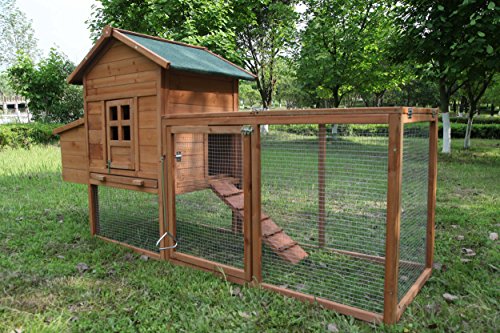
GOJOOASIS Small Coop
A first pair of bantams, a small starter flock, or a broody separation coop next to a larger setup.
Check price on Amazon for Outdoor Chicken Coop for 2-4 Chickens Wooden Hen House with Nesting Box on AmazonAbout $94.88 checked Aug 8, 2026
-
Best for Low Maintenance

Omlet Eglu Cube
Long-term keepers who are tired of scrubbing wood, dealing with red mite, or replacing a rotting coop every four years.
-
Best Walk-In
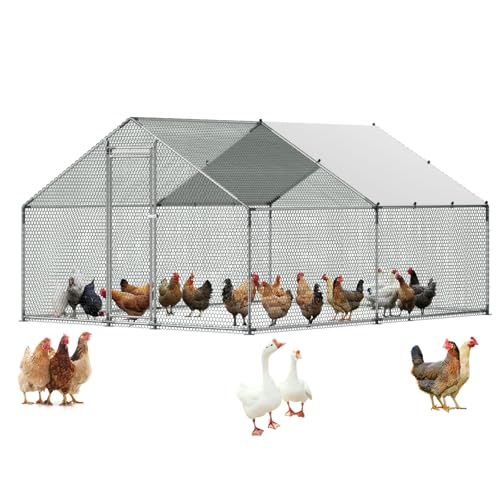
VEVOR Walk-In Coop
Keepers who already have a henhouse and need a large, secure daytime run they can stand up inside.
-
Best Long-Term Buy
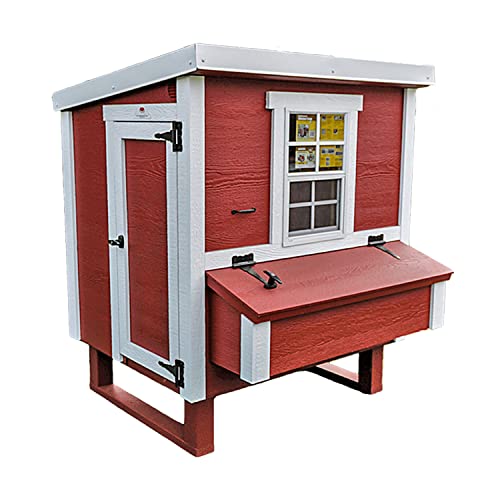
OverEZ Classic Medium
Keepers who are certain they will still have a flock in a decade and would rather buy once than replace a fir coop three times.
Compare every pick side by side
Swipe the table sideways to see every column on a phone.
| Product | Award | Price band | Bird Capacity | Nesting Boxes | Run Included | Material | Best use case | Buy link |
|---|---|---|---|---|---|---|---|---|
| Petsfit Coop with Run | Best Overall | $120 to $250 | 4 to 6 standard hens | 3 | Yes, attached | Fir wood with asphalt roof | Keepers with two to three standard hens who want a complete house, run an… | Check price for Petsfit Outdoor Chicken Coop with Run for 4-6 Chickens, 3 Nesting Boxes on Amazon |
| Ketive 116 in Coop | Best for Four to Six Hens | $250 to $500 | 6 to 8 standard hens | 2 | Yes, full length | Fir wood, asphalt roof | A settled flock of four to six standard hens in a fixed spot, where the b… | Check price for Ketive 116" Large Chicken Coop with Run, Wooden Hen House Outdoor Poultry Cage 28.41 ft² for 4–6 Chickens, 4 Nesting Boxes, 4 Perches, Easy-Clean Slide Out Tray, Expandable Backyard Coop on Amazon |
| GOJOOASIS Small Coop | Best Budget | $60 to $120 | 2 to 4 bantams or 2 standard hens | 1 | Yes, small | Fir wood, waterproof roof | A first pair of bantams, a small starter flock, or a broody separation co… | Check price for Outdoor Chicken Coop for 2-4 Chickens Wooden Hen House with Nesting Box on Amazon |
| Omlet Eglu Cube | Best for Low Maintenance | Over $1,000 | 6 to 10 standard hens | 1 large shared nest area | Yes, 6 ft run | Twin-wall insulated polymer | Long-term keepers who are tired of scrubbing wood, dealing with red mite,… | Check price for Omlet Eglu Cube Large Chicken Coop | Easy to Clean Plastic Chicken Tractor | The Most Secure Hen House for Complete Peace of Mind | Weatherproof Cool in Summer and Warm in Winter | Green on Amazon |
| VEVOR Walk-In Coop | Best Walk-In | $120 to $250 | 12 to 20 standard hens | None, add your own | It is the run | Galvanised steel frame with wire mesh | Keepers who already have a henhouse and need a large, secure daytime run… | Check price for VEVOR Large Metal Chicken Coop, 9.8x13.1x6.5 ft Large Walk in Chicken Runs for Yard with Cover, Hen House Enclosure with Security Lock, Outdoor Duck Rabbit Cage Poultry Pen for Backyard, Farm, Yard on Amazon |
| OverEZ Classic Medium | Best Long-Term Buy | Over $1,000 | Up to 10 standard hens | 2 external access | No, coop only | Solid timber, shingled roof | Keepers who are certain they will still have a flock in a decade and woul… | Check price for OverEZ Classic Medium Chicken Coop for up to 10 Chickens - Nesting Box - Large Bird, Poultry and Hen House, Made in USA on Amazon |
The full reviews
Each review below follows the same order: what it is, why it won its category, how it behaves in real use, and who should buy something else.
1 Best Overall
Petsfit Outdoor Chicken Coop with Run for 4-6 Chickens, 3 Nesting Boxes
The most sensible balance of house, run, nest boxes and price in the flat-pack category, as long as you read its capacity claim as three hens rather than six.
What we liked
- Three separate nest boxes, which is unusual at this price
- Wide 42 in footprint gives real run width rather than a narrow tunnel
- Pull-out tray means weekly cleaning takes minutes, not an hour
- Asphalt roof sheds water better than the felt used on cheaper coops
What we did not
- The 4 to 6 hen claim is roughly double what the interior floor actually supports
- Fir wood needs re-sealing every 12 to 18 months or the panels start to swell
- Wire is stapled rather than screwed through battens, so a determined raccoon can work it loose
About $160 checked Aug 8, 2026
Key specifications
- Dimensions
- 71 x 42 x 45 in (L x W x H)
- Colour
- Brown + Vertical Stripes
- Bird Capacity
- 4 to 6 standard hens
- Nesting Boxes
- 3
- Material
- Fir wood with asphalt roof
- Run Included
- Yes, attached
- Cleaning
- Pull-out tray
- Assembly
- About 90 minutes, two people
Why the Petsfit wins this category
Most coops in this price band make you choose: either a decent henhouse with a token run, or a big run with a sleeping box barely large enough to turn around in. The Petsfit is one of the few that does neither. At 71 inches long and 42 inches wide it is properly wide rather than a long narrow tunnel, and the width is what makes the run usable. Birds move sideways past each other instead of queueing.
The three nest boxes matter more than the number suggests. Hens do not spread out across available boxes, they queue for whichever one they have decided is correct. Three boxes means the queue moves, and it means you can block one for cleaning without a standoff.
Living with the Petsfit
The pull-out tray is the feature you will notice every single week. Coops without one force you to reach in through a side door with a scraper, which is why so many people stop cleaning properly by month three. This one slides out, gets scraped over a bin, and slides back.
The asphalt roof is a genuine upgrade over the tar-paper felt used on cheaper fir coops, which typically starts lifting at the edges in its second winter.
Where the Petsfit falls short
The capacity claim. The raised henhouse gives you roughly six square feet of interior floor, and the standard guideline is four square feet per standard-size hen. That is two birds, comfortably three if they free range during the day. Six standard hens in this coop will lead to feather picking and a coop you cannot keep clean.
The other issue is how the mesh is attached. Staples into softwood pull out. Every fir coop in this price band shares the problem, and it is fixable, but you should fix it before you need to rather than after.
Research based, not hands-on
Assessed on published dimensions, panel construction described in the listing, and comparison against three similarly built fir coops our team has owned and eventually replaced.
- Best for
- Keepers with two to three standard hens who want a complete house, run and nest box setup without building anything.
- Skip it if
- You want to keep six or more standard hens, or you live somewhere with a serious raccoon or fisher problem.
- The limitation to plan around
- The staple-fixed mesh is the weak point. Budget an afternoon and about $25 in hardware cloth and screws to re-secure every panel before the first night your birds sleep in it.
2 Best for Four to Six Hens
Ketive 116" Large Chicken Coop with Run, Wooden Hen House Outdoor Poultry Cage 28.41 ft² for 4–6 Chickens, 4 Nesting Boxes, 4 Perches, Easy-Clean Slide Out Tray, Expandable Backyard Coop
Nearly ten feet of covered run attached to a proper raised henhouse, which is what a flock of four to six birds actually needs if they are shut in during bad weather.
What we liked
- The run is long enough that birds can walk rather than shuffle
- Two nest boxes with external access, so eggs come out without entering the run
- Side doors plus a pull-out tray give access to every corner for cleaning
- Asphalt roof over both house and run keeps the ground usable in rain
What we did not
- At almost ten feet long it needs a genuinely flat strip of ground or the doors will not close square
- Two to three hours of assembly and a second person to hold panels upright
- Hardware is soft plated steel that will start rusting at the screw heads within a year
- Too heavy to reposition once assembled without dismantling or adding a wheel kit
Key specifications
- Dimensions
- 116 x 56 x 44 in (L x W x H)
- Weight
- 100 pounds
- Colour
- Black
- Bird Capacity
- 6 to 8 standard hens
- Nesting Boxes
- 2
- Material
- Fir wood, asphalt roof
- Run Included
- Yes, full length
- Cleaning
- Pull-out tray plus side doors
- Assembly
- 2 to 3 hours, two people
Why the Ketive wins this category
Run length. Almost every fir coop sold for "6 to 8 chickens" gives you a house of adequate size and a run that is barely a covered corridor. The problem shows up the first week you get four straight days of rain and the birds are shut in: in a short run they stand still, get bored, and start pecking each other.
At 116 inches, this run is long enough that a bird at one end can walk to the other end. That single fact does more for flock behaviour in a wet week than any toy or treat.
Living with the Ketive
The two external nest boxes are the daily convenience. Lift a lid from outside, take the eggs, walk away. You never open the run door for routine collection, which means fewer escapes and less mud walked in and out.
Cleaning is genuinely provided for. There is a tray for the house and side doors for the run, so you can reach every corner from outside without crawling.
Where the Ketive falls short
Levelling. A coop this long is a rigid frame sitting on ground that is almost certainly not flat. If you build it on a slope, the house door and the nest lids will not sit square, and you will spend the rest of its life fighting doors that stick or gap. Pavers or a compacted, levelled strip are not optional.
The hardware is the other predictable weakness. The hinges, latches and screws are plated rather than galvanised or stainless, and they will show rust within the first year in a wet climate. Replacing the latch hardware with stainless is cheap and worth doing on day one, because a rusted latch is a latch that eventually fails at the wrong moment.
Research based, not hands-on
Assessed on published run length and house dimensions, the described access panels, and comparison against similarly proportioned long-run fir coops.
- Best for
- A settled flock of four to six standard hens in a fixed spot, where the birds may be confined for days at a time in bad weather.
- Skip it if
- Your yard slopes, or you want to move the coop around the garden through the season.
- The limitation to plan around
- This is a permanent installation. Once it is built you are not moving it, so the ground underneath will go bare and sour within a couple of months and will need deep litter or a sand base to stay usable.
3 Best Budget
Outdoor Chicken Coop for 2-4 Chickens Wooden Hen House with Nesting Box
The cheapest coop we would actually put birds in, provided you treat it as a two-hen house and accept that you will be re-treating the timber every year.
What we liked
- Roughly a third the price of the mid-range fir coops it copies
- Light enough for one person to reposition without a wheel kit
- Pull-out tray is included, which many coops at this price skip
- Simple enough to assemble alone in about an hour
What we did not
- Thin panel stock means the whole frame flexes when you lift or move it
- Roofing felt rather than asphalt, so expect edge lifting by the second winter
- The nest box shares the main compartment, so bedding and droppings mix constantly
- No room to grow, the flock size it suits is the flock size it will always suit
About $94.88 checked Aug 8, 2026
Key specifications
- Dimensions
- 80 x 26 x 44 in (L x W x H)
- Colour
- wood
- Bird Capacity
- 2 to 4 bantams or 2 standard hens
- Nesting Boxes
- 1
- Material
- Fir wood, waterproof roof
- Run Included
- Yes, small
- Cleaning
- Pull-out tray
- Assembly
- About 60 minutes
Why the GOJOOASIS wins this category
Because it exists at a price where the alternative is usually a coop we would refuse to recommend at all. Under a hundred dollars, most listings are either wire boxes with a plywood lid or "rabbit hutches" relabelled for poultry. This one has a raised house, a covered run, a nest area, a pull-out tray and a roof that sheds water. That is the full set of things a coop needs to be a coop.
It is also honest about size in a way that most cheap coops are not, listing itself for two to four birds rather than claiming eight.
Living with the GOJOOASIS
Light. That is the defining quality. One person can lift an end and shuffle it to fresh grass without a wheel kit, which matters more than it sounds: a coop that never moves builds up a bare, sour patch underneath it within a month.
The tray is the other thing worth having. At this price it is genuinely unusual, and it is the difference between cleaning weekly and cleaning when you finally cannot stand it.
Where the GOJOOASIS falls short
Everything about the build is thin. The panels flex, the screws bite into softwood that will not hold a second re-tightening in the same hole, and the roofing felt is the cheapest available. In practice this is a coop with a three to four year life, not a ten year one.
The nest area is the real design compromise. It is not separated from the main floor, so bedding, droppings and eggs share a space. You will collect dirtier eggs from this coop than from one with a proper external nest box, and there is no fix for it short of building a divider yourself.
Research based, not hands-on
Assessed on published panel dimensions, listed materials and roof covering, and compared against the same class of budget fir coop our team has bought, used and replaced.
- Best for
- A first pair of bantams, a small starter flock, or a broody separation coop next to a larger setup.
- Skip it if
- You want a coop that will still be standing in five years, or you plan to grow past two or three birds.
- The limitation to plan around
- The timber is thin and only lightly treated. Without a coat of exterior wood preservative before it ever gets rained on, the panels will swell at the joints inside one wet season and stop lining up.
4 Best for Low Maintenance
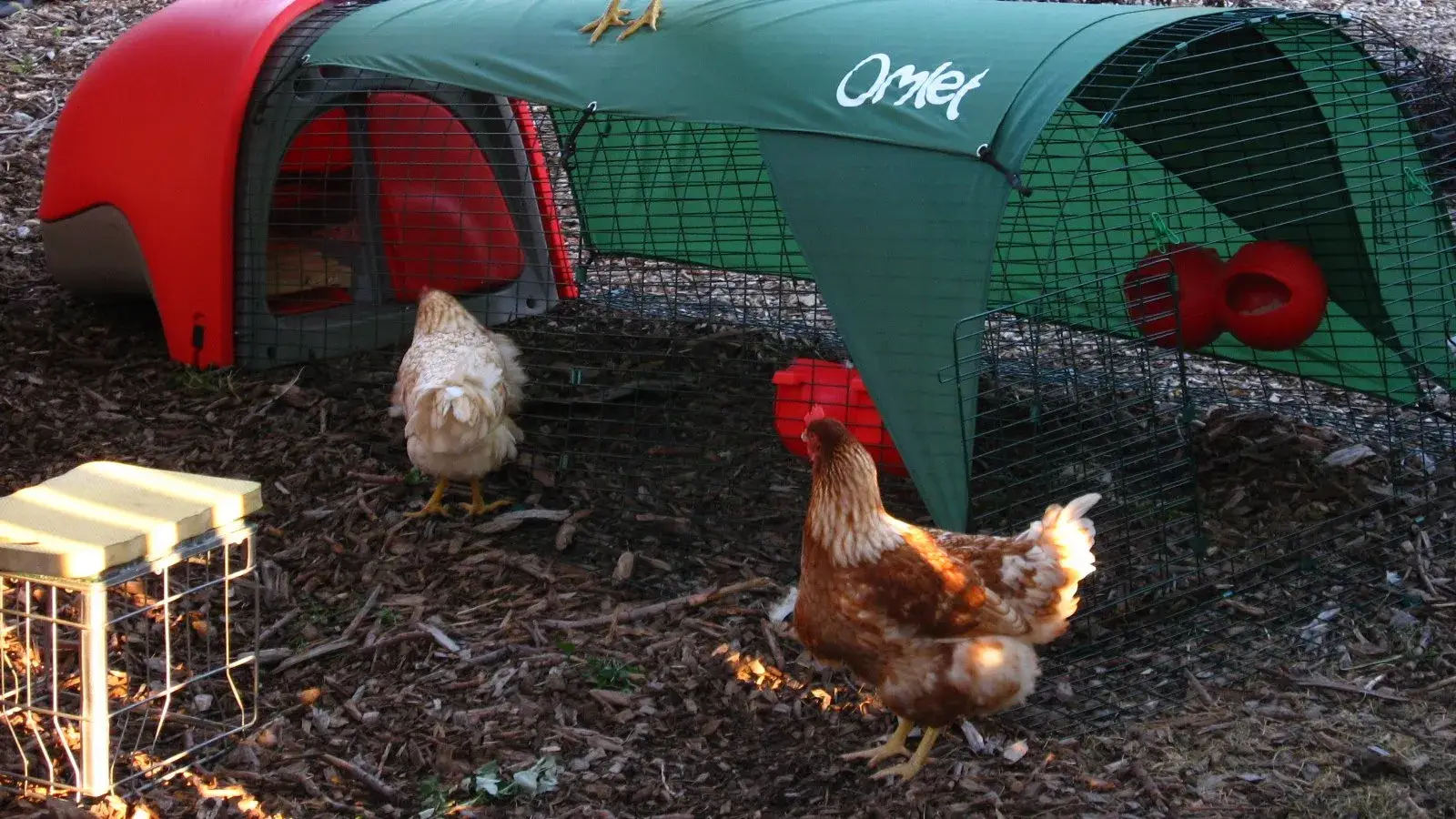
Omlet Eglu Cube Large Chicken Coop | Easy to Clean Plastic Chicken Tractor | The Most Secure Hen House for Complete Peace of Mind | Weatherproof Cool in Summer and Warm in Winter | Green
A plastic coop you can hose out in ten minutes and that mites cannot colonise, sold at a price that only makes sense if you plan to keep chickens for a decade.
What we liked
- Non-porous plastic gives red mite nowhere to hide, which is the single biggest cleaning win available
- Twin-wall insulation holds heat far better than 12 mm fir panels
- Slide-out tray and smooth interior mean a full clean takes about ten minutes with a hose
- Draught-free ventilation is designed in rather than left to a gap under the roof
What we did not
- Costs more than most complete coop, run and automatic door setups combined
- The attached run is only 6 ft long, so you are buying extensions almost immediately
- Fixed moulded design means you cannot modify it, add a window or cut in a second door
- Resale is the only exit if your flock outgrows it, because it cannot be extended upward
Key specifications
- Dimensions
- 39.37 x 37 x 25.59 in (L x W x H)
- Weight
- 123.017942196 pounds
- Colour
- Green
- Bird Capacity
- 6 to 10 standard hens
- Nesting Boxes
- 1 large shared nest area
- Material
- Twin-wall insulated polymer
- Run Included
- Yes, 6 ft run
- Cleaning
- Slide-out tray, hose washable
- Assembly
- About 2 hours, no tools for daily use
Why the Eglu Cube wins this category
Red mite is the reason. Mites live in cracks in timber, come out at night to feed on roosting birds, and are close to impossible to eradicate from a wooden coop once established. A moulded plastic coop with no seams and no grain gives them nowhere to hide, and the whole thing can be hosed and dried in an afternoon.
Everything else follows from that decision. The twin-wall panels trap air the way double glazing does, so the coop holds warmth in winter without a heater and does not turn into an oven under a summer roof. The interior is smooth, so there is nothing for droppings to grip.
Living with the Eglu Cube
The weekly job becomes pulling a tray, tipping it, and putting it back. The seasonal deep clean becomes a hose and twenty minutes of drying. Compare that with sanding, scraping and re-treating a timber coop, and the ownership gap is real.
The nest area is one shared space rather than divided boxes, which suits hens better than most people expect. They pick a corner and use it.
Where the Eglu Cube falls short
The price, and then the run. Even before you add anything, this costs several times what a competent fir coop costs. That maths works if you keep chickens for ten years and never replace the coop. It does not work if you are trying your first three hens.
The run is the sharper complaint. Six feet is a sleeping-and-morning space, not a day range. Omlet quotes bird numbers on the basis that the birds get out daily, and if your routine ever slips, the birds are in a very tight space. Budget for extensions from the start rather than discovering it in month two.
Research based, not hands-on
Assessed on Omlet's published dimensions and materials, the known behaviour of non-porous plastic coops against red mite, and comparison against the timber coops our team has replaced.
- Best for
- Long-term keepers who are tired of scrubbing wood, dealing with red mite, or replacing a rotting coop every four years.
- Skip it if
- This is your first flock and you are not yet certain you will still be keeping chickens in three years.
- The limitation to plan around
- The 6 ft run that comes with it is genuinely too small for the bird numbers Omlet quotes. Plan on the cost of at least one 3 ft extension, or on letting the birds out into a larger run every day without fail.
5 Best Walk-In
VEVOR Large Metal Chicken Coop, 9.8x13.1x6.5 ft Large Walk in Chicken Runs for Yard with Cover, Hen House Enclosure with Security Lock, Outdoor Duck Rabbit Cage Poultry Pen for Backyard, Farm, Yard
A 128 square foot galvanised steel enclosure you can stand up in, priced like a mid-range wooden coop. It is a run and not a coop, and that distinction decides whether it suits you.
What we liked
- You can walk in upright, which changes cleaning from a chore into a five-minute job
- Galvanised steel frame will outlast any fir coop by a decade
- 128 sq ft comfortably meets run-space guidance for a dozen or more birds
- Costs less per square foot than any covered run in its class
What we did not
- There is no henhouse, no roost and no nest box, so you must supply or build all three
- Standard welded wire will stop a dog but not a determined raccoon reaching through
- The cover is PE fabric, which will need replacing every two to three seasons under UV
- Nothing stops digging predators unless you add a buried apron yourself
Key specifications
- Dimensions
- 9.88 x 12.89 x 6.53 in (L x W x H)
- Weight
- 72.97 pounds
- Colour
- Silver - Spire Roof
- Bird Capacity
- 12 to 20 standard hens
- Nesting Boxes
- None, add your own
- Material
- Galvanised steel frame with wire mesh
- Run Included
- It is the run
- Cleaning
- Walk in and rake
- Assembly
- 3 to 4 hours, two people
Why the VEVOR run wins this category
Because standing upright inside a run is not a luxury, it is the reason runs stay clean. Anyone who has spent a season stooping into a four-foot enclosure with a rake knows that the cleaning gradually stops happening. A walk-in with a real door removes that friction permanently.
The other reason is arithmetic. At roughly 128 square feet this gives twelve to sixteen birds the run space they are supposed to have, at a price most covered runs charge for a third of the area.
Living with the VEVOR run
The frame goes together as a tube-and-connector kit, which is why it takes three to four hours and two people. Once up, it is rigid, and galvanised steel does not care about weather in the way that fir does.
Day to day you open a door, walk in, and work normally. Feeders hang from the frame. Waterers sit on blocks. It behaves like a small building rather than like a cage.
Where the VEVOR run falls short
It is not a coop. Nowhere in this structure can a hen roost, lay or shelter from wind at night. You need a henhouse inside it or attached to it, and that is a second purchase or a build project.
The security level is also honest rather than impressive. The welded wire will keep out dogs and stop birds getting out. It will not stop a raccoon that reaches through the mesh, and it will not stop a fox digging under the edge. Both problems are solvable with hardware cloth and a buried apron, but you should price those in rather than assume the enclosure is finished when it is assembled.
Research based, not hands-on
Assessed on the published frame dimensions and materials, the mesh gauge described in the listing, and comparison with the same class of galvanised walk-in run.
- Best for
- Keepers who already have a henhouse and need a large, secure daytime run they can stand up inside.
- Skip it if
- You are buying your first setup and expect a complete coop, because this supplies none of the sleeping, roosting or laying furniture.
- The limitation to plan around
- Welded wire on its own is not raccoon proof. Raccoons reach through 1 by 2 inch mesh, and the fix is wrapping the lower three feet in half-inch hardware cloth, which adds meaningful cost and an afternoon of work.
6 Best Long-Term Buy
OverEZ Classic Medium Chicken Coop for up to 10 Chickens - Nesting Box - Large Bird, Poultry and Hen House, Made in USA
A solid timber henhouse that arrives largely assembled and is built like a small shed rather than a flat-pack kit. The one coop here you buy expecting to still use it in fifteen years.
What we liked
- Solid timber construction rather than 12 mm panel stock, so the frame does not flex
- Arrives largely pre-built, which removes the panel-alignment problems that plague flat packs
- Full-height door lets you walk up and reach the whole interior without crawling
- Two external nest boxes with proper separation from the roosting floor
What we did not
- Costs several times what a fir flat-pack costs, and the gap is not small
- No run is included at all, so a secure daytime enclosure is an entirely separate purchase
- Shipping a pre-built coop is heavy and awkward, and it needs a clear path to its final position
- Once sited it is effectively permanent, because it is far too heavy to reposition
Key specifications
- Dimensions
- 50.25 x 52.5 x 62.25 in (L x W x H)
- Weight
- 320 pounds
- Colour
- Classic
- Bird Capacity
- Up to 10 standard hens
- Nesting Boxes
- 2 external access
- Material
- Solid timber, shingled roof
- Run Included
- No, coop only
- Cleaning
- Full-height door, walk-up access
- Assembly
- Arrives largely pre-built
Why the OverEZ wins this category
Because it is built the way a shed is built, not the way a flat pack is built. Flat-pack fir coops fail in a predictable order: the felt lifts, water gets into the panel edges, the panels swell, the doors stop closing square, and then the screws no longer hold in the softened wood. That sequence usually takes three to five years.
Solid timber and a shingled roof change that arc entirely. There is no reason a coop like this should not last fifteen years with nothing more than periodic re-treatment.
Living with the OverEZ
The pre-assembled delivery is a genuine advantage rather than a marketing point. The single most common cause of a bad flat-pack coop is panels that do not line up, and that problem simply does not arise here.
Living with it is closer to using a shed than a coop. You open a full-height door, step up, and can reach the roost bars, the floor and the nest boxes without kneeling. Cleaning is done standing.
Where the OverEZ falls short
The price is the obvious objection, and it is a real one. The honest way to think about it is total cost: three fir coops over twelve years, plus the time spent assembling and disposing of each one, gets close. But that only holds if you actually keep chickens for twelve years.
The bigger practical gap is that there is no run. This is a henhouse. Birds need a secure daytime space, and pairing this with a proper covered run adds a substantial second cost. Anyone comparing it against an all-in-one coop and run needs to add that number before the comparison means anything.
Research based, not hands-on
Assessed on published construction details and dimensions, the pre-assembled delivery format, and comparison against flat-pack fir coops our team has replaced after three to five years.
- Best for
- Keepers who are certain they will still have a flock in a decade and would rather buy once than replace a fir coop three times.
- Skip it if
- You need a coop and run in one purchase, or you are still working out whether chickens suit your life.
- The limitation to plan around
- There is no run. Budget separately for a covered, predator-resistant enclosure, and remember that this coop's size means you need at least 80 to 100 square feet of run to match it.
How we compared these coops
We started from the full field of chicken coops currently listed on Amazon and cut it down in four passes.
First we removed anything whose own listed dimensions contradicted its own marketing claim by more than a factor of two. That eliminated a surprising amount of the category. Second, we removed near-identical relistings of the same generic coop sold under different brand names, keeping whichever had the better warranty or price. Third, we removed anything without a live listing or with no active offer. Finally, we kept a spread that covered genuinely different buying situations rather than six versions of the same coop.
Each survivor was then measured against the same checklist: interior floor area divided by bird count, covered run area divided by bird count, how the mesh is fixed, what the roof is covered with, whether the nest boxes are separated from the roosting floor, and whether waste can be removed without entering the coop.
What actually matters when you choose a coop
Interior floor space per bird
This is the number that decides whether your flock is calm or fractious, and it is the number manufacturers are loosest with. Four square feet of henhouse floor per standard-size hen is the figure most extension services use. Bantams need roughly two. Birds that free range all day can manage on less, because they only sleep inside.
Work it out yourself before buying. Take the listed henhouse dimensions, not the overall dimensions, multiply length by width in feet, and divide by four. That is your real bird count.
Run space, and whether it is covered
Eight to ten square feet of run per bird is the working guideline. A covered run matters more than most first-time buyers expect, because the days your birds are stuck inside are precisely the wet days when an uncovered run turns to mud.
Run length matters separately from run area. A long, narrow run lets birds walk. A short, wide one does not, and birds that cannot walk away from each other start pecking.
How the wire is attached
This is the single best predictor of whether a coop survives a predator visit. Staples driven into softwood pull out under sustained pulling, and raccoons are extremely good at sustained pulling. Wire that is screwed through a batten, so the batten clamps the mesh against the frame, is enormously stronger.
Mesh size matters too. Half-inch hardware cloth excludes raccoon paws, weasels and rats. One-inch chicken wire does not, and it was designed to keep chickens in rather than predators out.
Roof covering
Roofing felt is the cheapest option and the first thing to fail. Asphalt shingle or a proper metal panel will hold up for many years. If a coop has felt, expect to replace or overlay it around year two.
Cleaning access
A coop you can clean from outside gets cleaned. A coop that requires crawling in with a scraper gets cleaned less and less often. Pull-out trays, side access doors and external nest box lids are not luxuries, they are the difference between a coop that stays healthy and one that does not.
Nest box separation
If the nest area shares a floor with the roost, hens will sleep in the nest boxes and foul them, and you will collect dirty eggs every day. Nest boxes should sit lower than the roost bars and be separated from them.
Sizing your coop honestly
Work forward from the flock you want in two years, not the flock you are buying this month. Almost everyone adds birds. A coop bought for exactly three hens becomes a problem the first time somebody gives you two more.
Add up the interior floor at four square feet per bird, the run at ten square feet per bird, and roost bar at eight to ten inches per bird. One nest box per three to four hens is plenty, because they will queue for their favourite regardless of how many you provide.
Final recommendation
For most people buying one coop for a small backyard flock, the Petsfit Coop with Run is the pick: it has the widest useful run in its price band, three nest boxes and a pull-out tray, and it is the most complete package under $200. Read its capacity as two to three standard hens.
If you already know you will run four to six birds and the coop will stay in one place, the Ketive 116 in Coop gives you the run length that keeps a confined flock civil. If you already own a henhouse and need daytime space, the VEVOR Walk-In Coop is the cheapest way to buy 128 square feet you can stand up in. And if you are certain about the next decade, the OverEZ Classic Medium is the only coop here you buy once.
Questions people ask before buying
How many chickens can I really keep in a coop sold for six birds?
Usually two to three standard hens. The widely used guideline is four square feet of interior henhouse floor per standard-size bird, plus eight to ten square feet of run. Most flat-pack coops advertised for four to six birds provide five to seven square feet of interior floor in total. Bantams need less, roughly two square feet each, and birds that free range all day can tolerate the tighter end. Overcrowding shows up as feather picking, dirty eggs and a coop you cannot keep on top of.
Is a wooden coop or a plastic coop better?
Plastic wins on cleaning and on red mite, because mites live in cracks in timber and have nowhere to hide on a moulded surface. Wood wins on price and on the ability to modify, extend or repair it with basic tools. If red mite is common in your area, or you know you will not enjoy scrubbing, plastic is worth the premium. If you want the largest coop your budget allows, wood gives you far more space per dollar.
Do I need to add hardware cloth to a new coop?
On almost every coop under about $400, yes. Standard chicken wire and 1 by 2 inch welded wire stop birds getting out but do not stop a raccoon reaching through, and staples into softwood pull out under pressure. Half-inch hardware cloth screwed through battens along the lower three feet is the single most effective upgrade you can make, and it typically costs $25 to $60 depending on coop size.
How long does a flat-pack wooden coop last?
Three to five years untreated in a wet climate, and closer to seven or eight if you seal it before it is ever rained on and re-treat it every 12 to 18 months. The usual failure order is roofing felt lifting at the edges, water entering the panel edges, panels swelling, doors no longer closing square, and finally screws losing their grip in softened wood. Sealing the panel end-grain before assembly delays every step of that sequence.
Should the coop sit on grass, dirt, or a hard base?
Anything except permanently on the same patch of grass. A fixed coop will kill the grass underneath and create a sour, muddy patch within about a month. Either move the coop regularly, put it on a levelled bed of coarse sand or gravel that drains, or run a deep litter system with plenty of dry carbon material. A level base also matters mechanically, because a long coop built on a slope will never have doors that close square.
Does a coop need to be heated in winter?
In most of the United States, no. Adult chickens in full feather handle cold far better than they handle damp and draughts, and a sealed, unventilated coop is more dangerous than a cold one because moisture from their breath condenses and causes frostbite. Ventilation above roost height, dry bedding, and a coop that blocks wind will do more than a heater. Heaters make sense mainly for keeping water liquid and for very young or sick birds.
Why you can trust this guide
- Written by
- Sam Reddick, Lead gear reviewer, Chicken Geek. Specialist areas: Coop design and predator proofing, Feeding and watering systems, Cold-weather flock management, Incubation and brooding.
- Fact checked by
- Marta Voss
- Published
- August 6, 2026 · Last updated August 6, 2026 · Products and links rechecked August 6, 2026
- How we picked
- Coops were shortlisted from the current Amazon catalogue, then judged on interior floor area per bird against the 4 sq ft guideline, covered run area against the 8 to 10 sq ft guideline, how the mesh is fixed to the frame, roof covering, and the failure patterns reported by owners of comparable builds.
- Evidence used
- None of the 6 products on this page were sent to us or bought for a hands-on test. Every recommendation here is research based: manufacturer specifications, listed dimensions and materials, owner feedback at volume, and comparison against equipment our team has owned. Each review states this again above the buy button so you are never guessing which kind of evidence sits behind a pick.
- Editorial standards
- No brand pays for placement, and no manufacturer sees this page before it goes live. Read our editorial policy and testing method.
- Affiliate disclosure
- Chicken Geek is reader supported. We earn a commission from qualifying purchases made through links on this page, at no extra cost to you, and no brand has paid for a placement or an award here.
About the author

Lead gear reviewer, Chicken Geek
Sam has kept a backyard laying flock for eleven years, through two coop rebuilds, one very determined raccoon and several winters cold enough to freeze a waterer solid overnight. He writes the buying guides at Chicken Geek and is responsible for how products get compared.
- Eleven years keeping a mixed laying flock of 8 to 14 birds
- Has built, bought and replaced six different coops
- Runs the product comparison framework used across Chicken Geek
- Reads manufacturer manuals, spec sheets and warranty terms before every recommendation