We Compared 4 Poultry Nets and 2 Energizers. The Energizer Matters More
We compared four poultry nets and two energizers on post design, mesh spacing and joule output, because the net is the cheap half of an electric fence.

By Sam Reddick Lead gear reviewer, Chicken Geek
Fact checked by Marta Voss
Published Prices and stock checked 7 min read
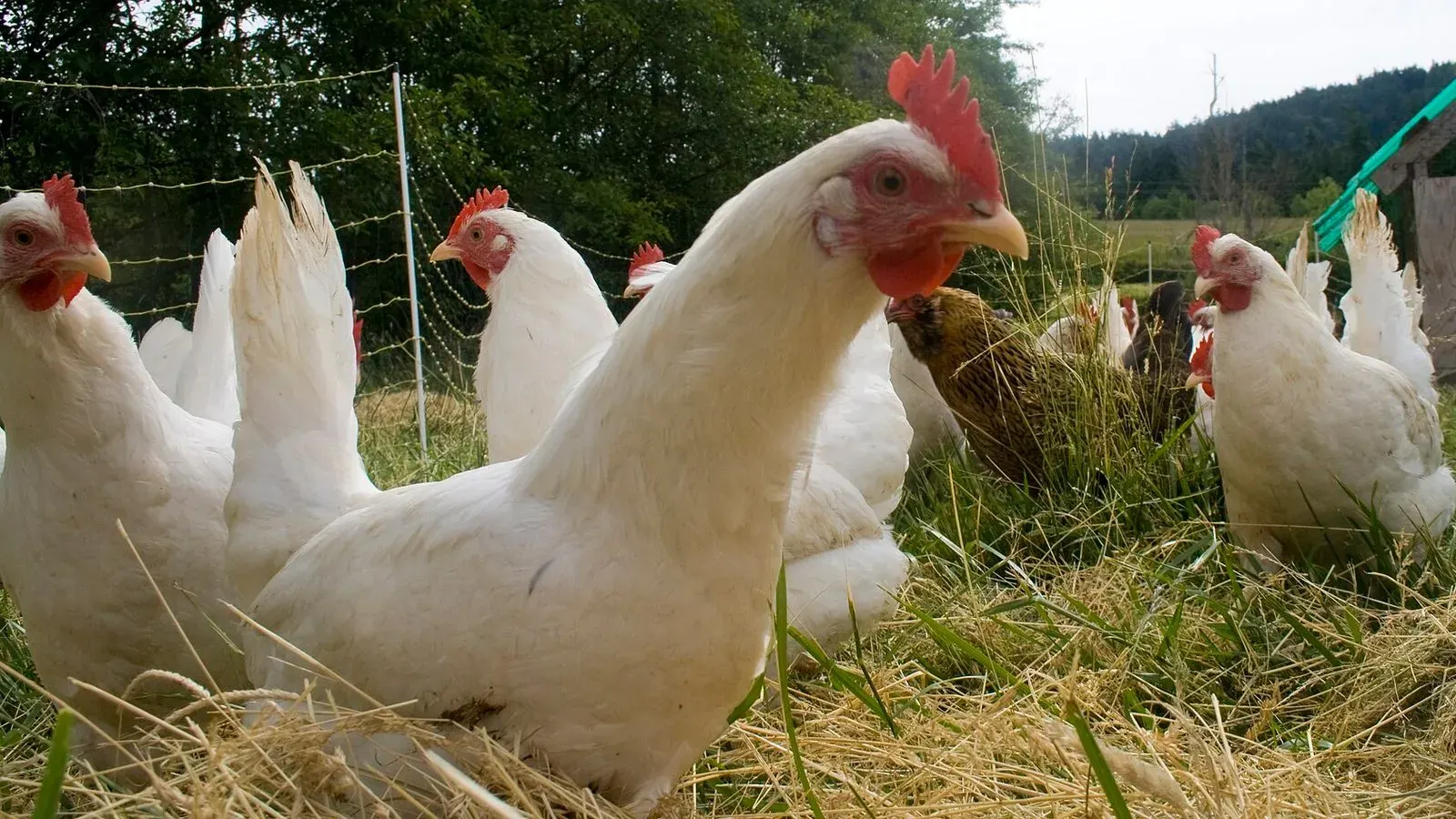
The most expensive mistake in this category is buying a net and assuming you are finished. Netting on its own is a suggestion. Chickens walk into it, foxes push under it, and after a week it is a tangled orange line lying in the grass.
An electric fence is a system with three parts: the net, an energizer, and an earth stake driven properly into damp ground. Get the earthing wrong and a five joule charger delivers a shock a fox will ignore.
So we compared four nets on post design and mesh spacing, and two energizers on output and power source. We also want to be clear about what this kind of fence does. It is a deterrent that teaches, not a barrier that contains. Chickens can fly over 48 inches if they want to, and a determined predator can get through a fence that is not maintained.
Our picks at a glance
Every product below wins one specific situation. Pick the row that matches your flock, your yard and your budget rather than reading top to bottom.
-
Best Overall

Premier 1 PoultryNet 164 ft
Keepers doing genuine rotational grazing who will be moving the fence regularly and need it to survive that.
Check price on Amazon for Premier 1 PoultryNet® Electric Fence for Chickens – 48"H x 164'L on AmazonAbout $239 checked Aug 8, 2026
-
Best Posts
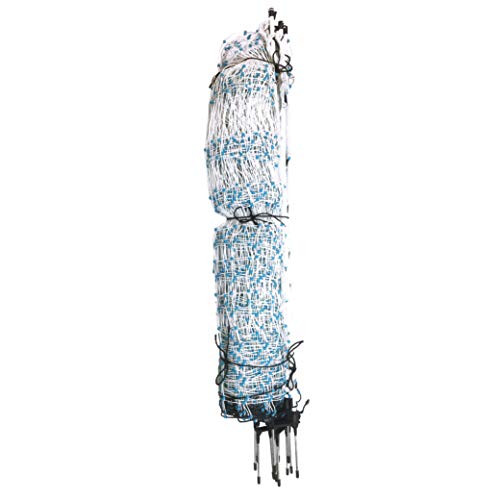
Starkline 164 ft Net
Soft, wet or windy ground where single-spike posts lean over and the net ends up in the grass.
-
Best Budget

FZIFZI Poultry Netting
A first electric fence, or a semi-permanent enclosure that will not be moved every week.
Check price on Amazon for Electric Poultry Netting,47.2" H x 164'L Electric Chicken Fence for Turkeys on AmazonAbout $160 checked Aug 8, 2026
-
Best Short Run
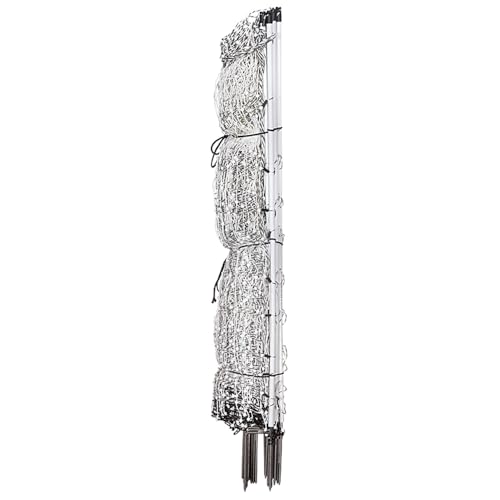
Premier 1 PoultryNet Plus 100 ft
Small paddocks, awkward corners and uneven ground where a standard-density net sags between posts.
Check price on Amazon for Premier 1 PoultryNet® Plus, Electric Fence for Chickens – 48"H x 100'L on AmazonAbout $209 checked Aug 8, 2026
-
Best Mains Energizer

Happy Henhouse Charger
Fences within reach of a mains supply, where consistent output through winter matters more than portability.
-
Best Solar Energizer
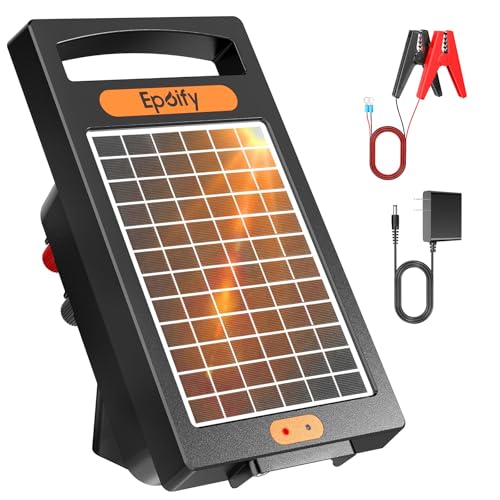
Epoify Solar Charger
A single poultry net in a field with no mains power nearby, kept clear of vegetation.
Check price on Amazon for Epoify 24-Hour Solar Electric Fence Charger, 0.18J, 10-Mile for Livestock on AmazonAbout $69.99 checked Aug 8, 2026
Compare every pick side by side
Swipe the table sideways to see every column on a phone.
| Product | Award | Price band | Net Length | Net Height | Post Type | Energizer Included | Best use case | Buy link |
|---|---|---|---|---|---|---|---|---|
| Premier 1 PoultryNet 164 ft | Best Overall | $120 to $250 | 164 ft | 48 in | Built-in single-spike posts | No | Keepers doing genuine rotational grazing who will be moving the fence reg… | Check price for Premier 1 PoultryNet® Electric Fence for Chickens – 48"H x 164'L on Amazon |
| Starkline 164 ft Net | Best Posts | $120 to $250 | 164 ft | 48 in | Double-spiked fibreglass posts | No | Soft, wet or windy ground where single-spike posts lean over and the net… | Check price for Starkline 48" x 164' Electric Poultry Netting with Double Spiked Fiberglass Posts | Electric Fence for Chickens in Backyards, Homesteads, Farms and Ranches on Amazon |
| FZIFZI Poultry Netting | Best Budget | $120 to $250 | 164 ft | 47.2 in | Built-in posts | No | A first electric fence, or a semi-permanent enclosure that will not be mo… | Check price for Electric Poultry Netting,47.2" H x 164'L Electric Chicken Fence for Turkeys on Amazon |
| Premier 1 PoultryNet Plus 100 ft | Best Short Run | $120 to $250 | 100 ft | 48 in | Built-in posts, extra post density | No | Small paddocks, awkward corners and uneven ground where a standard-densit… | Check price for Premier 1 PoultryNet® Plus, Electric Fence for Chickens – 48"H x 100'L on Amazon |
| Happy Henhouse Charger | Best Mains Energizer | $30 to $60 | Powers a single poultry net run | Not applicable | Not applicable | It is the energizer | Fences within reach of a mains supply, where consistent output through wi… | Check price for Happy Henhouse Electric Fence Charger - Powerful 110V AC Plug-in Fence Energizer for Chickens, Small Farms & Gardens - Easy Setup Predator Protection for Safer Free-Ranging on Amazon |
| Epoify Solar Charger | Best Solar Energizer | $60 to $120 | Powers up to about 10 miles of wire | Not applicable | Not applicable | It is the energizer | A single poultry net in a field with no mains power nearby, kept clear of… | Check price for Epoify 24-Hour Solar Electric Fence Charger, 0.18J, 10-Mile for Livestock on Amazon |
The full reviews
Each review below follows the same order: what it is, why it won its category, how it behaves in real use, and who should buy something else.
1 Best Overall
Premier 1 PoultryNet® Electric Fence for Chickens – 48"H x 164'L
The netting most US smallholders end up on, because the posts are stiff enough to stay upright and the horizontal spacing is tight enough that chicks cannot walk through.
What we liked
- Post stiffness is noticeably better than budget netting, so the fence stays taut
- Tight lower horizontal spacing keeps chicks and bantams from walking through
- Well-supported product with real customer service and spare parts
- 164 ft encloses a genuinely useful paddock for rotational grazing
What we did not
- No energizer included, and that is a substantial additional cost
- Roughly 50 percent more expensive than budget netting of the same size
- Single-spike posts need help in hard or stony ground
About $239 checked Aug 8, 2026
Key specifications
- Dimensions
- 10 x 10 x 54 in (L x W x H)
- Colour
- White
- Net Length
- 164 ft
- Net Height
- 48 in
- Post Type
- Built-in single-spike posts
- Energizer Included
- No
- Ground Stakes
- Included
- Setup Time
- About 15 minutes
Why Premier 1 PoultryNet wins this category
Two things, both of which show up the first time you move the fence rather than in the product photos.
The first is post stiffness. Budget netting uses thinner posts that flex, and a flexed post lets the net sag, and a sagging net touches vegetation and shorts. Premier's posts hold the line taut, which means the fence keeps working.
The second is horizontal spacing at the bottom. Chicks and bantams walk straight through wide-spaced netting, and a fence that a bird can walk through is not a fence.
Living with Premier 1 PoultryNet
The reason this comes up constantly in smallholding conversations is support. Posts break, connectors get lost, and a company that sells spares and answers technical questions turns a damaged fence into a repair rather than a replacement.
At 164 feet you can enclose a paddock big enough to be worth rotating birds through, which is what this kind of fencing is for.
Where Premier 1 PoultryNet falls short
There is no energizer, and this catches people out constantly. Netting on its own is a physical suggestion that chickens will simply walk into and eventually through. It becomes a fence only when it is electrified, which means a charger and a properly driven earth stake, and that is a substantial addition to the price.
Price is the other criticism. This is around half again what budget netting costs for the same length, and the budget netting does work. What you are paying for is that it keeps working after twenty moves rather than ten.
Single-spike posts also struggle in hard, dry or stony ground, where you end up making a pilot hole first.
Research based, not hands-on
Assessed on the published post specification, horizontal spacing and construction, and compared against budget netting on post rigidity and mesh spacing.
- Best for
- Keepers doing genuine rotational grazing who will be moving the fence regularly and need it to survive that.
- Skip it if
- You want a one-time purchase with everything in the box, because the energizer is a separate and significant cost.
- The limitation to plan around
- No energizer is included, and the fence does nothing without one. Budget for a charger and a proper earth stake on top of the netting price, which typically adds a third to a half again.
2 Best Posts
Starkline 48" x 164' Electric Poultry Netting with Double Spiked Fiberglass Posts | Electric Fence for Chickens in Backyards, Homesteads, Farms and Ranches
Double-spiked fibreglass posts, which stay vertical on soft ground and in wind where single-spike plastic posts lean and let the net sag into the grass.
What we liked
- Double spikes resist twisting, so posts stay square to the fence line
- Fibreglass does not go brittle in UV the way plastic posts do
- 48 in height is enough that most standard breeds will not clear it
- Considerably cheaper than the premium branded netting
What we did not
- Fibreglass can splinter if a post is struck or forced into stony ground
- Double spikes are harder to push into hard, dry ground
- No energizer included, as with all netting here
Key specifications
- Dimensions
- 1968 x 6 x 48 in (L x W x H)
- Net Length
- 164 ft
- Net Height
- 48 in
- Post Type
- Double-spiked fibreglass posts
- Energizer Included
- No
- Ground Stakes
- Included
- Setup Time
- About 15 minutes
Why the Starkline netting wins this category
Because the failure mode of electric netting is almost never the wire, it is the posts.
A single-spike post is free to rotate around its spike. Push a net with wind, or set it on soft ground, and the posts twist and lean, the net sags, the bottom wire ends up in wet grass, and the whole fence shorts to earth. At that point it is a physical barrier that chickens ignore.
Two spikes cannot rotate. The post stays square, the net stays up, and the fence stays live.
Living with the Starkline netting
Fibreglass is the other material improvement. Plastic posts chalk and go brittle under UV, and a brittle post snaps at the spike when you pull the fence up to move it, usually in year three.
Forty-eight inches of height is enough that most standard laying breeds will not clear it, though heavy fliers and lighter breeds will if sufficiently motivated.
Where the Starkline netting falls short
The double spikes that make it stable also make it harder to install. On soft pasture they push in easily; on a dry summer field or anywhere with stones you will be working for every post.
That leads to the real limitation, which is that fibreglass splinters. Forcing a post into ground that does not want it, or tapping it in with something hard, can shatter the spike, and fibreglass splinters in a hand are genuinely nasty and difficult to remove. Wear gloves and make a pilot hole with a steel bar in hard ground rather than forcing it.
As with every netting here, there is no energizer, so budget separately for a charger and earth stake.
Research based, not hands-on
Assessed on the published post material and spike design, and compared against single-spike plastic posts on stability and UV durability.
- Best for
- Soft, wet or windy ground where single-spike posts lean over and the net ends up in the grass.
- Skip it if
- Your ground is hard, dry or stony, because double spikes are considerably harder to drive.
- The limitation to plan around
- Fibreglass splinters. Forcing a post into stony ground or hitting it to drive it in can shatter the spike, and fibreglass splinters are unpleasant to get out of a hand, so gloves are genuinely advisable.
3 Best Budget
Electric Poultry Netting,47.2" H x 164'L Electric Chicken Fence for Turkeys
164 feet of 47 inch netting for well under two hundred dollars, which leaves enough budget to buy a decent energizer rather than skimping on the part that matters.
What we liked
- Around a third cheaper than the premium netting for the same length
- Leaves budget for a proper energizer, which is the component that decides performance
- 47 in height is close enough to the 48 in standard to make no practical difference
- Ground stakes included rather than sold separately
What we did not
- Posts are thinner and flex more, so the net sags sooner between moves
- Wider lower horizontal spacing lets chicks and bantams walk through
- Little in the way of spare parts or support if a post breaks
About $160 checked Aug 8, 2026
Key specifications
- Size
- 47.2" H x 164'L Poultry
- Net Length
- 164 ft
- Net Height
- 47.2 in
- Post Type
- Built-in posts
- Energizer Included
- No
- Ground Stakes
- Included
- Setup Time
- About 20 minutes
Why the FZIFZI netting wins this category
Because of how the budget is best spent. An electric fence is a system, and the component that decides whether it works is the energizer, not the net. A cheap net with a good charger performs far better than a premium net with an underpowered one.
At roughly a third less than the premium netting, this leaves real money for a charger with enough output to push through vegetation contact.
Living with the FZIFZI netting
Forty-seven inches against the 48 inch standard is a difference of one inch and no practical consequence. Both heights are high enough for most standard laying breeds and low enough for a determined flier to clear.
Ground stakes included is a small but genuine saving, since they are frequently sold separately.
Where the FZIFZI netting falls short
Post flex is the durability criticism. Thinner posts lean and twist, the net sags between them, and a sagging bottom wire in wet grass shorts the fence to earth. It is manageable if the fence stays in one place and gets checked; it becomes a weekly job if you move it often.
The spacing issue is more serious and is a hard limitation rather than a wear problem. The lower horizontal strands are spaced widely enough that chicks and small bantams walk between them without ever touching a live wire. The fence never gets a chance to teach them anything, because they are not making contact.
If your flock is standard-size birds only, this is fine. With bantams, or with a broody hen leading chicks, it does not contain them and no amount of energizer output changes that.
Research based, not hands-on
Assessed on the published dimensions, spacing and post specification, and compared against premium netting on post rigidity and mesh spacing.
- Best for
- A first electric fence, or a semi-permanent enclosure that will not be moved every week.
- Skip it if
- You keep bantams or have chicks running with the flock, because they will walk through the lower spacing.
- The limitation to plan around
- The lower horizontal spacing is wide enough that chicks and small bantams simply walk through it, unelectrified because they never touch a live strand. If small birds are in your flock, this fence does not contain them.
4 Best Short Run
Premier 1 PoultryNet® Plus, Electric Fence for Chickens – 48"H x 100'L
A hundred feet with extra post density, which is the right specification for an awkward, uneven or curved boundary where a standard net sags between posts.
What we liked
- Extra posts mean shorter spans, so the net stays taut on uneven ground
- 100 ft suits a small paddock or an awkward corner without excess net to coil
- Same post and mesh quality as the longer Premier netting
- Easier for one person to move than a 164 ft roll
What we did not
- Costs nearly as much as the 164 ft net for 60 percent of the length
- More posts means more time to set up and take down per foot
- No energizer or earth stake included, so the fence does nothing as bought
About $209 checked Aug 8, 2026
Key specifications
- Weight
- 23 pounds
- Colour
- Black
- Net Length
- 100 ft
- Net Height
- 48 in
- Post Type
- Built-in posts, extra post density
- Energizer Included
- No
- Ground Stakes
- Included
- Setup Time
- About 10 minutes
Why Premier 1 PoultryNet Plus 100 wins this category
Because standard netting assumes flat, even ground and a straight line, and plenty of real gardens are neither.
On uneven ground or around a curve, a standard net with posts every 12 feet or so sags in the middle of each span. A sagging bottom strand touches grass, shorts to earth, and the fence stops working. Extra post density shortens each span so the net stays off the ground.
Living with Premier 1 PoultryNet Plus 100
A hundred feet is a much more manageable roll for one person than 164 feet, both to carry and to lay out. Anyone who has wrestled a full-length net around a corner alone will recognise the difference.
The post and mesh quality is the same as the longer Premier product, so you are not trading construction for length.
Where Premier 1 PoultryNet Plus 100 falls short
Cost per foot is much worse, and this is the criticism that matters. You pay nearly what the 164 foot net costs for 100 feet, because the extra posts are the expensive part.
That is entirely rational when you need the post density and poor value when you do not. On flat, regular ground the longer standard net encloses considerably more area for barely more money, and it is the obvious purchase.
The extra posts also mean more work per foot at setup and takedown, so if you are moving the fence frequently on easy ground, the standard version is faster.
And as with all netting here, there is no energizer, so the real budget has to include a charger and an earth stake.
Research based, not hands-on
Assessed on the published length, post density and construction, and compared against the 164 ft version on cost per foot and span length.
- Best for
- Small paddocks, awkward corners and uneven ground where a standard-density net sags between posts.
- Skip it if
- You are fencing open, flat, regular ground, because the standard 164 ft net covers more for barely more money.
- The limitation to plan around
- The cost per foot is much worse than the longer roll. You are paying nearly the same amount for 100 feet as for 164, so this only makes sense when the extra post density is solving a real problem.
5 Best Mains Energizer
Happy Henhouse Electric Fence Charger - Powerful 110V AC Plug-in Fence Energizer for Chickens, Small Farms & Gardens - Easy Setup Predator Protection for Safer Free-Ranging
A plug-in 110V energizer that delivers full output every pulse regardless of weather, which is what makes an electric fence something a predator learns to respect.
What we liked
- Mains power means consistent output in every season and all weather
- No battery to run down and no panel to keep clear of snow
- Cheapest energizer here despite being the most reliable
- More output margin than a small solar unit, so vegetation contact matters less
What we did not
- Needs an outdoor-rated mains supply within reach of the fence
- A power cut takes the fence out entirely with no battery fallback
- Fixed position, so the fence has to be moved within cable reach
Key specifications
- Dimensions
- 7.38 x 4.75 x 2.75 in (L x W x H)
- Colour
- 0.25 Joule
- Net Length
- Powers a single poultry net run
- Net Height
- Not applicable
- Post Type
- Not applicable
- Energizer Included
- It is the energizer
- Ground Stakes
- Earth stake included
- Setup Time
- About 10 minutes
Why the Happy Henhouse charger wins this category
Because an electric fence works by teaching, and teaching requires consistency. A predator that gets a proper shock on its first attempt learns and leaves. A predator that gets a weak tingle because the battery was low learns that the fence is unpleasant but survivable, and comes back.
Mains power delivers the same pulse in January that it delivers in June. No battery state, no panel, no cloud cover.
Living with the Happy Henhouse charger
Being the cheapest energizer here while being the most reliable is an unusual combination, and it happens because the expensive parts of a solar unit are the panel and the battery.
The output margin also means grass touching the bottom strand does not kill the fence the way it does with a small solar unit. The fence line still needs keeping clear, and you have more room for error.
Where the Happy Henhouse charger falls short
The location constraint is the whole trade-off. The fence has to be within reach of an outdoor-rated mains supply on an RCD or GFCI-protected circuit, and if you do not have one at the paddock, creating one is a real job.
That constraint quietly limits how you use the land. Rotational grazing is about moving birds across ground, and if every position has to stay within a cable run of the same outlet, the rotation shrinks to whatever a lead reaches.
Power cuts take it out entirely, with no fallback. In an area with unreliable winter supply, that is a night with no fence, and winter nights are when it matters.
Whatever energizer you choose, the earth stake is not optional. A poorly earthed energizer delivers a weak shock no matter how many joules it claims, and bad earthing is the single most common reason electric fences underperform.
Research based, not hands-on
Assessed on the published output and power arrangement, and compared against solar energizers on seasonal consistency and output margin.
- Best for
- Fences within reach of a mains supply, where consistent output through winter matters more than portability.
- Skip it if
- Your paddock has no power nearby, because running an outdoor supply is a real project.
- The limitation to plan around
- A mains energizer ties the fence to a cable run. Rotational grazing means moving the net, and every move has to stay within reach of the same outlet, which quietly limits how you can use the land.
6 Best Solar Energizer
Epoify 24-Hour Solar Electric Fence Charger, 0.18J, 10-Mile for Livestock
A 0.18 joule solar charger with a built-in battery, which is enough output for a single poultry net and needs no cable run to a paddock.
What we liked
- Solar with integrated battery, so no mains cable to the fence line
- 0.18 joules is adequate for a single 164 ft poultry net kept clear of vegetation
- Goes anywhere in a field, which mains chargers cannot
- Includes an earth stake, which is essential and often sold separately
What we did not
- 0.18 joules has little margin, so vegetation touching the net drains it noticeably
- Solar output falls in winter, when predator pressure is highest
- Not enough output to run two nets joined together
About $69.99 checked Aug 8, 2026
Key specifications
- Dimensions
- 6.6 x 4.3 x 8.2 in (L x W x H)
- Weight
- 3.17024732756 pounds
- Colour
- Black
- Net Length
- Powers up to about 10 miles of wire
- Net Height
- Not applicable
- Post Type
- Not applicable
- Energizer Included
- It is the energizer
- Ground Stakes
- Earth stake included
- Setup Time
- About 10 minutes
Why the Epoify solar charger wins this category
Because most poultry netting is used exactly where mains power is not: a back paddock, an orchard, a corner of a field. Running an outdoor cable to it is often impossible and always a project.
A self-contained solar charger with its own battery goes wherever the fence goes, and it comes with an earth stake, which people frequently forget is required and is not optional.
Living with the Epoify solar charger
Set-up is pushing an earth stake in, connecting two leads, and walking away. There is no wiring, no consumer unit and no cable route to plan.
At 0.18 joules it has enough output for a single 164 foot poultry net, which is what most backyard and smallholding setups actually run.
Where the Epoify solar charger falls short
The output margin is thin, and understanding why matters. An energizer's joule rating is the energy it delivers per pulse, and everything touching the fence bleeds some of that to earth. A clean net in dry conditions passes almost all of it to whatever touches the wire. A net with grass growing into the bottom strand loses a large fraction continuously.
With 0.18 joules there is very little spare. A week of grass growth can drop the shock below the level a fox notices, at which point you have a very visible fence that does nothing.
Practically that means strimming the fence line weekly is part of the routine, not an optional tidy-up.
The seasonal problem is the same one every solar product has. Output falls in winter, which is when predator pressure is highest, and snow on the panel takes it to nothing.
Research based, not hands-on
Assessed on the published joule output and power arrangement, and compared against mains energizers on output margin and seasonal reliability.
- Best for
- A single poultry net in a field with no mains power nearby, kept clear of vegetation.
- Skip it if
- You are running more than one net, or your fence line grows fast and you cannot strim it weekly.
- The limitation to plan around
- 0.18 joules leaves almost no margin for vegetation contact. Grass growing into the bottom strand bleeds current to earth, and with this little output the shock drops below the level a predator respects, so weekly strimming is part of owning it.
How we compared these fences
We treated the net and the energizer as two halves of one purchase, because the most common mistake here is buying one and not the other.
Nets were compared on post material and spike design, which determines whether the fence stays upright and taut; on lower horizontal spacing, which determines whether chicks and bantams can walk through; and on height and included accessories.
Energizers were compared on joule output against the length of netting they are expected to run, power source, and how consistent that source is across the year.
What actually matters in an electric fence
The energizer, not the net
If you have a fixed budget, put it here first. A budget net with a good charger works. A premium net with an undersized charger does not.
Joules are the energy delivered per pulse. Everything touching the fence bleeds some of it to earth: grass, weeds, a fallen branch. A charger with margin keeps delivering an effective shock through that; one without margin drops below the level a predator respects after a week of grass growth.
For a single 164 foot poultry net, 0.15 to 0.25 joules is the working range, and more is better.
Earthing, which is where fences actually fail
This is the most underestimated component in the whole system.
An electric fence circuit is completed through the ground. The animal touches the wire, current passes through it into the soil, and back to the energizer through the earth stake. A short stake, or dry summer soil, means the circuit never completes properly and the shock is weak no matter what the energizer's rating says.
Drive the stake deep, into ground that stays damp, and test the fence with a proper tester rather than assuming.
Post design
Posts are what fails. A single-spike post rotates around its spike, leans, lets the net sag, and the bottom strand ends up in wet grass shorting the whole fence.
Double-spiked posts cannot rotate. Stiffer posts sag less between spans. Fibreglass survives UV where plastic goes brittle and snaps in year three.
Mesh spacing at the bottom
Check this if you have bantams or if chicks will be running with the flock. Wide lower spacing means small birds simply walk between the strands without ever touching a live wire, so the fence never teaches them anything.
What the fence does and does not do
It works well against ground predators: foxes, coyotes, dogs, raccoons. They investigate with the nose, and a shock to a wet nose is memorable.
It does nothing against hawks and owls. It is not a physical barrier and light breeds will fly over it if motivated. And a fence that has been shorting out for two weeks is actively teaching predators that it is harmless.
Setting it up so it keeps working
Strim the fence line before you put the net up, and keep strimming it. Vegetation contact is the number one cause of a fence that has quietly stopped working.
Drive the earth stake somewhere that stays damp, not in the middle of a dry field.
Test with a fence tester at the far end of the run, not next to the energizer, because voltage drops along the line.
Walk the line weekly. Look for a leaning post, a strand in the grass, or a section pushed down by an animal.
And introduce the birds during the day, when they can see the fence, so their first contact is a lesson rather than a panic in the dark.
Final recommendation
Premier 1 PoultryNet 164 ft is the net to buy if you are moving the fence regularly. The posts stay upright, the lower spacing holds chicks, and spares are available when something breaks.
On soft or windy ground, the Starkline double-spiked net stays vertical where single-spike posts lean. If budget is tight, the FZIFZI net plus a decent charger beats a premium net plus a weak one, provided you do not keep bantams.
For the energizer, the Happy Henhouse mains charger is both the cheapest and the most consistent if you have power nearby. If you do not, the Epoify Solar Charger works well on a single net, as long as you accept that strimming the fence line weekly becomes part of the job.
Questions people ask before buying
Does electric poultry netting come with an energizer?
Almost never, and it is the most common and most expensive misunderstanding in this category. Netting is just netting. Without an energizer it is a lightweight physical barrier that chickens push through and predators walk under. Budget for the net, an energizer sized to the length of fence, and an earth stake, and expect the complete system to cost a third to a half again more than the net alone.
How many joules do I need for poultry netting?
Around 0.15 to 0.25 joules for a single 164 foot net kept clear of vegetation, and considerably more if you are running two nets or if the fence line grows fast. Joules are the energy delivered per pulse, and everything touching the fence bleeds some of it to earth. A larger energizer than you strictly need is cheap insurance, because it keeps the shock effective when grass grows into the bottom strand.
Will electric netting keep foxes and coyotes out?
It works well against ground predators when it is properly energized, well earthed and kept clear of vegetation, because these animals investigate with the nose and a shock to a wet nose is memorable. It does nothing against hawks or owls, and it is a deterrent rather than a barrier: a fence that has been shorting out for two weeks teaches predators the opposite lesson. Regular checking is part of how it works.
Can chickens fly over a 48 inch electric fence?
Light breeds certainly can and often will, particularly if something on the other side interests them or something inside frightens them. Heavy breeds rarely bother. Netting works largely because birds learn to stay away from it rather than because it is physically insurmountable, and most flocks settle down after a couple of contacts. Clipping one wing on persistent fliers is the usual answer.
Why is my electric fence not shocking properly?
In order of likelihood: vegetation touching the wires and bleeding current to earth, a poor earth stake, and a flat or undercharged battery. Earthing is the most underestimated of the three. The stake needs to be driven deep into ground that stays damp, and in dry summer soil a single short stake often cannot complete the circuit. Buy a fence tester rather than guessing, because you cannot tell by looking.
Is electric netting safe around children and pets?
The shock is unpleasant and startling rather than dangerous, and properly designed fence energizers deliver a short pulse rather than a continuous current. That said, netting is a mesh, and a small child or a pet that becomes entangled in it while it is live is a genuinely bad situation. Site it where unsupervised children do not have access, and switch it off before letting a dog into the enclosure.
Why you can trust this guide
- Written by
- Sam Reddick, Lead gear reviewer, Chicken Geek. Specialist areas: Coop design and predator proofing, Feeding and watering systems, Cold-weather flock management, Incubation and brooding.
- Fact checked by
- Marta Voss
- Published
- August 6, 2026 · Last updated August 6, 2026 · Products and links rechecked August 6, 2026
- How we picked
- Nets were compared on post material and spike design, post rigidity in soft ground, lower horizontal spacing against the body size of chicks and bantams, height, and included ground stakes. Energizers were compared on joule output, power source and seasonal consistency.
- Evidence used
- None of the 6 products on this page were sent to us or bought for a hands-on test. Every recommendation here is research based: manufacturer specifications, listed dimensions and materials, owner feedback at volume, and comparison against equipment our team has owned. Each review states this again above the buy button so you are never guessing which kind of evidence sits behind a pick.
- Editorial standards
- No brand pays for placement, and no manufacturer sees this page before it goes live. Read our editorial policy and testing method.
- Affiliate disclosure
- Chicken Geek is reader supported. We earn a commission from qualifying purchases made through links on this page, at no extra cost to you, and no brand has paid for a placement or an award here.
About the author

Lead gear reviewer, Chicken Geek
Sam has kept a backyard laying flock for eleven years, through two coop rebuilds, one very determined raccoon and several winters cold enough to freeze a waterer solid overnight. He writes the buying guides at Chicken Geek and is responsible for how products get compared.
- Eleven years keeping a mixed laying flock of 8 to 14 birds
- Has built, bought and replaced six different coops
- Runs the product comparison framework used across Chicken Geek
- Reads manufacturer manuals, spec sheets and warranty terms before every recommendation