We Compared 6 Chicken Tractors. These Are the Ones That Actually Get Moved
We compared six chicken tractors on whether one person can actually move them, how much covered run you get, and which frames survive being lifted daily.

By Sam Reddick Lead gear reviewer, Chicken Geek
Fact checked by Marta Voss
Published Prices and stock checked 7 min read
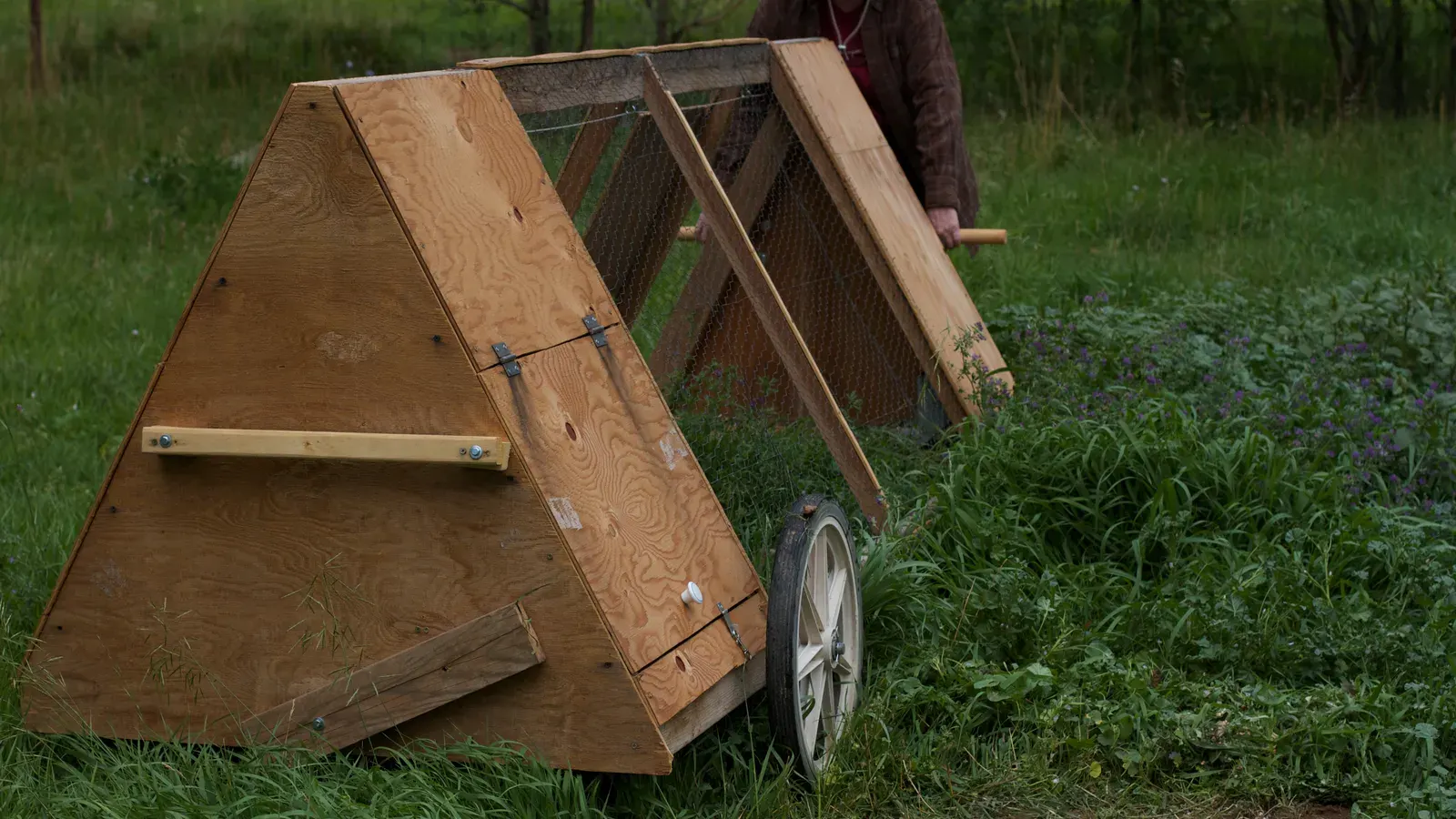
A chicken tractor is only worth owning if it moves. That sounds obvious, and it is the single thing most buyers get wrong. A tractor that needs two people and a good back gets moved on Saturdays, then fortnightly, then never, and at that point you have paid extra for wheels on a coop that is killing one patch of grass.
So we judged these six on the move first. Where are the wheels, is there a handle, how long is the frame, and can one adult lift and walk it without help? Then we looked at covered run area per bird, nest box arrangement and what the frame is made of, because a tractor takes a twisting load every single time it is lifted that a static coop never sees.
We also included one wheel kit rather than a whole tractor, because if you already own a coop in good condition, adding wheels to it beats standing a second structure next to the first one. At $169.99 the kit costs more than two of the complete tractors here, so it is not the cheap option. It is the only one that leaves you with a single coop.
Our picks at a glance
Every product below wins one specific situation. Pick the row that matches your flock, your yard and your budget rather than reading top to bottom.
-
Best Overall
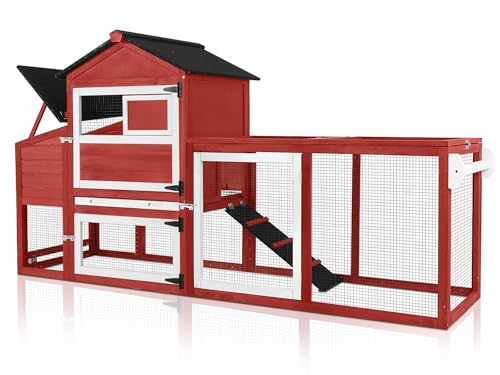
MEDEHOO Mobile Coop
Keepers with two to four hens who want to rotate the flock across a lawn or paddock without a second pair of hands.
-
Best for Six to Eight Hens

GUTINNEEN Mobile Coop
Households running six to eight hens on open grass who can move it with two people a few times a week.
-
Best Run Length for the Money

Lovinhut 91.6 in Coop
Keepers who want the largest covered run they can get on wheels and are willing to accept budget construction to get it.
Check price on Amazon for Chicken Coop with Run & Wheels for 4-8 Chickens, Brown, 91.6"x33.5"x44.1" on AmazonAbout $147 checked Aug 8, 2026
-
Best Budget

PetsCosset Tractor
Two bantams or two small hens in a compact garden, or as a grow-out pen alongside a main coop.
Check price on Amazon for PetsCosset Chicken Coop and Run with Wheels,2-Story Rabbit Hutch on AmazonAbout $126 checked Aug 8, 2026
-
Best Premium

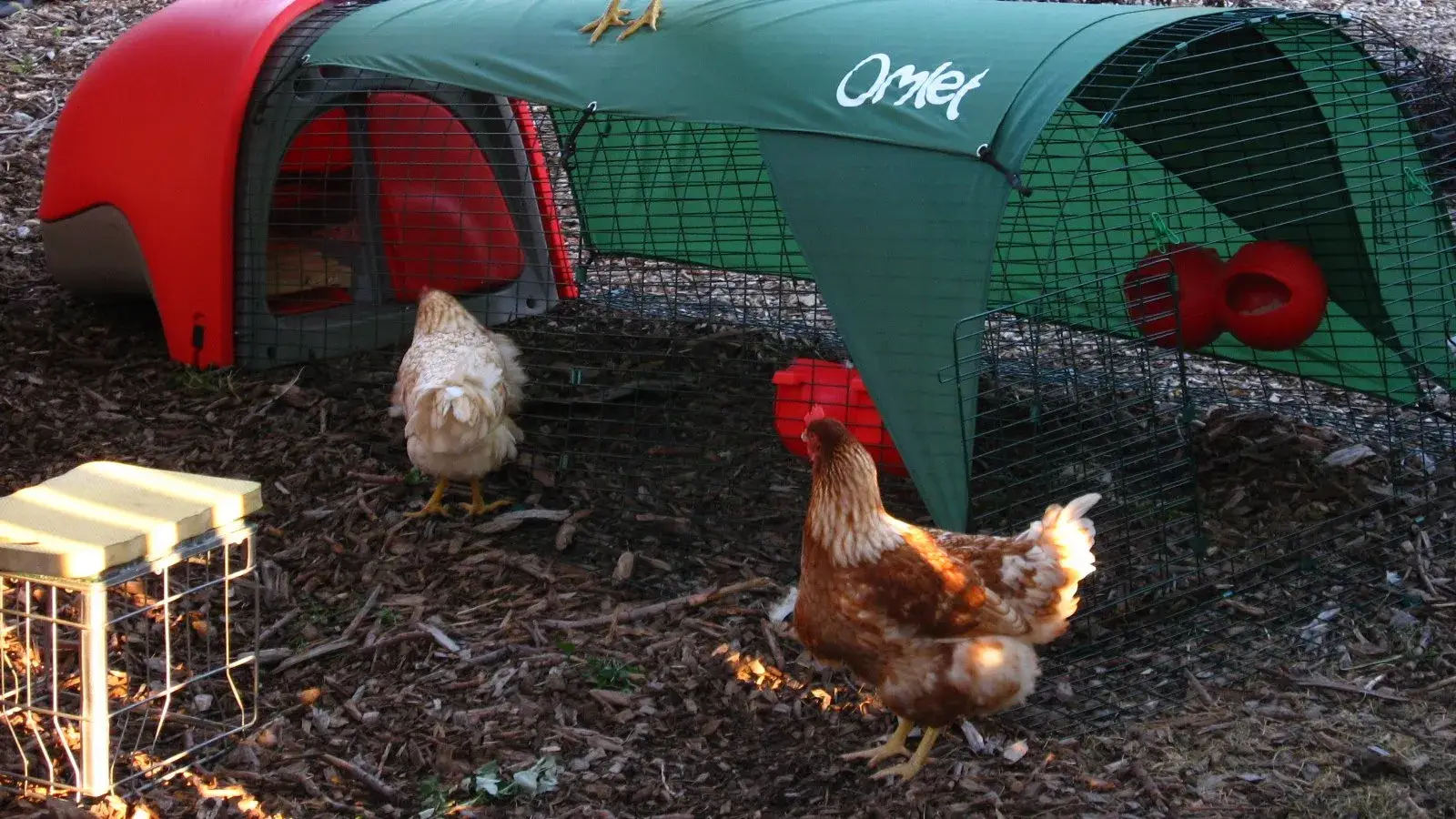
Omlet Eglu Go Up
Long-term keepers with a small flock who want a mobile coop that will still be serviceable in fifteen years.
-
Best Upgrade for a Coop You Already Own
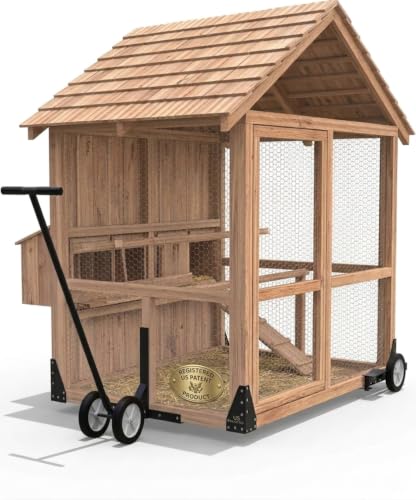
Belinova Wheel Kit
Anyone with a static timber coop in good condition who wants to start rotating it rather than replace the coop entirely.
Check price on Amazon for Belinova Chicken Coop Wheels Kit, Heavy Duty Mobile System for Wooden Coops on AmazonAbout $170 checked Aug 8, 2026
Compare every pick side by side
Swipe the table sideways to see every column on a phone.
| Product | Award | Price band | Bird Capacity | Move Method | Nesting Boxes | One Person Move | Best use case | Buy link |
|---|---|---|---|---|---|---|---|---|
| MEDEHOO Mobile Coop | Best Overall | $120 to $250 | 4 to 6 standard hens | Two wheels and a lift handle | 1 sectionable | Yes on level ground | Keepers with two to four hens who want to rotate the flock across a lawn… | Check price for MEDEHOO Mobile Chicken Coop with Wheels for 4-6 Chickens, Large Outdoor Hen House with Run, Weatherproof Asphalt Roof, Sectionable Nesting Box & Pull-Out Tray, 82.4" L x 25.8" W x 44.1" H - Red on Amazon |
| GUTINNEEN Mobile Coop | Best for Six to Eight Hens | $250 to $500 | 6 to 8 standard hens | Two wheels and a lift handle | 2 | Two people recommended | Households running six to eight hens on open grass who can move it with t… | Check price for GUTINNEEN Mobile Chicken Coop Upgraded with All Arounded Metal Frame Large Hen House with Super Large Wheels for 6–8 Chickens, 6 Nesting Boxes, Metal Run, 76.7" L on Amazon |
| Lovinhut 91.6 in Coop | Best Run Length for the Money | $120 to $250 | 4 to 8 standard hens | Two wheels and a lift handle | 2 | Yes on level ground | Keepers who want the largest covered run they can get on wheels and are w… | Check price for Chicken Coop with Run & Wheels for 4-8 Chickens, Brown, 91.6"x33.5"x44.1" on Amazon |
| PetsCosset Tractor | Best Budget | $120 to $250 | 2 to 4 standard hens | Two wheels and a lift handle | 1 | Yes | Two bantams or two small hens in a compact garden, or as a grow-out pen a… | Check price for PetsCosset Chicken Coop and Run with Wheels,2-Story Rabbit Hutch on Amazon |
| Omlet Eglu Go Up | Best Premium | $500 to $1,000 | 2 to 4 standard hens | Optional wheel kit, raised legs | 1 shared nest area | Yes with the wheel kit | Long-term keepers with a small flock who want a mobile coop that will sti… | Check price for Omlet Raised Chicken Coop Go Up | Easy to Clean and Maintain Plastic Chicken Tractor | Cool in Summer, Warm in Winter Weatherproof Hen House | Green Coop on Amazon |
| Belinova Wheel Kit | Best Upgrade for a Coop You Already Own | $120 to $250 | Depends on your coop | Retrofit lift-and-roll wheels | Not applicable | Yes, that is the point | Anyone with a static timber coop in good condition who wants to start rot… | Check price for Belinova Chicken Coop Wheels Kit, Heavy Duty Mobile System for Wooden Coops on Amazon |
The full reviews
Each review below follows the same order: what it is, why it won its category, how it behaves in real use, and who should buy something else.
1 Best Overall
MEDEHOO Mobile Chicken Coop with Wheels for 4-6 Chickens, Large Outdoor Hen House with Run, Weatherproof Asphalt Roof, Sectionable Nesting Box & Pull-Out Tray, 82.4" L x 25.8" W x 44.1" H - Red
The wheel and handle geometry on this one actually works, which is the whole point of a tractor. One person can lift the end and walk it to fresh grass without help.
What we liked
- Two large wheels sit at the correct end, so the lift is genuinely one-person
- FSC-certified fir with a real asphalt roof rather than tar-paper felt
- Sectionable nest box lets you split it for a broody hen
- Multiple sliding trays make the weekly clean a five-minute job
What we did not
- At 82 in long the frame flexes noticeably when you lift one end on uneven ground
- The 4 to 6 hen rating assumes birds are out on grass all day, not shut in
- Wire is stapled to the frame, which is the standard weak point in this class
Key specifications
- Dimensions
- 82.4 x 25.8 x 44.1 in (L x W x H)
- Colour
- Red
- Bird Capacity
- 4 to 6 standard hens
- Move Method
- Two wheels and a lift handle
- Nesting Boxes
- 1 sectionable
- Material
- FSC fir with asphalt roof
- Run Included
- Yes, full length
- One Person Move
- Yes on level ground
Why the MEDEHOO wins this category
Most chicken tractors fail on one detail: the wheels are in the wrong place, or there is no handle, so moving it needs two people and a bad back. Once that happens the tractor stops moving, and a tractor that does not move is just a coop with wheels on it.
This one puts two large wheels at one end and a lift handle at the other, which gives you a wheelbarrow action rather than a drag. That geometry is why it gets used.
Living with the MEDEHOO
The daily routine is: lift the handle, walk it four feet, drop it. The grass under a stationary coop goes bare in about a week and sour in about a month, so four feet a day is the difference between a lawn and a mud patch.
The sectionable nest box is a genuinely thoughtful touch. Split it and you have a broody pen without buying anything.
Where the MEDEHOO falls short
Frame flex. At almost seven feet long, lifting one end puts the whole load through the timber joints. On a flat lawn that is fine. On rough ground the frame twists, and the doors stop closing squarely after a season of it.
The capacity claim also needs reading carefully. Four to six hens works only because they are on grass all day. Shut them in for a wet weekend and that is a crowded coop.
Research based, not hands-on
Assessed on the published wheel position, frame length and weight, and compared against the handling behaviour of similar long timber tractors our team has moved daily.
- Best for
- Keepers with two to four hens who want to rotate the flock across a lawn or paddock without a second pair of hands.
- Skip it if
- Your ground is rough or sloped, because a long timber frame lifted at one end twists rather than glides.
- The limitation to plan around
- Every lift puts the load on the frame joints. On rough ground the twisting will loosen the screws over a season, and you should expect to re-tighten the frame two or three times a year.
2 Best for Six to Eight Hens
GUTINNEEN Mobile Chicken Coop Upgraded with All Arounded Metal Frame Large Hen House with Super Large Wheels for 6–8 Chickens, 6 Nesting Boxes, Metal Run, 76.7" L
An all-round metal frame with timber panels, which is the right answer for a tractor that has to survive being lifted several hundred times a year.
What we liked
- Metal frame carries the lifting load instead of the timber joints
- Nearly 54 in wide, so the run is a space rather than a corridor
- Two nest boxes with outside access keep egg collection off the run floor
- Wide footprint makes it far more stable on sloping ground than narrow tractors
What we did not
- Heavy enough that two people are realistically needed for every move
- The wide footprint needs a genuinely open lawn, it will not thread between beds
- Costs roughly double the long narrow timber tractors it competes with
Key specifications
- Dimensions
- 76.65 x 53.81 x 36.81 in (L x W x H)
- Colour
- brown
- Bird Capacity
- 6 to 8 standard hens
- Move Method
- Two wheels and a lift handle
- Nesting Boxes
- 2
- Material
- Metal frame with wood panels
- Run Included
- Yes, wide footprint
- One Person Move
- Two people recommended
Why the GUTINNEEN wins this category
The metal frame. Timber tractors fail at the joints because every lift is a twisting load on screws driven into softwood end-grain. A steel frame takes that load in a member designed for it, and the timber panels become cladding rather than structure.
For six to eight birds that matters more, not less, because the tractor is bigger and every lift is heavier.
Living with the GUTINNEEN
At nearly 54 inches wide the run behaves like a run. Birds spread out, dust bathe in a corner, and get away from each other, which is exactly what stops the pecking that plagues narrow tractors.
The two external nest boxes mean you collect eggs from outside, which keeps the run floor undisturbed and keeps mud out of the house.
Where the GUTINNEEN falls short
Weight, and then width. The same frame that makes it durable makes it heavy, and the honest answer is that this is a two-person move. If your household is one person with a spare ten minutes, a lighter tractor that actually gets moved will do more for your birds than a stronger one that does not.
The width is a practical problem too. Fifty-four inches will not go between a raised bed and a fence. Measure the route before you buy, not the destination.
Research based, not hands-on
Assessed on the published frame construction, overall footprint and mass, and compared against the handling of similarly wide metal-framed tractors.
- Best for
- Households running six to eight hens on open grass who can move it with two people a few times a week.
- Skip it if
- You are moving the tractor alone, or your garden has narrow gaps between beds and paths.
- The limitation to plan around
- This is a two-person move. If only one person is ever available, the tractor will stop being moved and you lose the entire reason for owning it rather than a fixed coop.
3 Best Run Length for the Money
Chicken Coop with Run & Wheels for 4-8 Chickens, Brown, 91.6"x33.5"x44.1"
More than seven and a half feet of covered run on wheels at a budget price, which is the most usable floor area per dollar of any tractor in this comparison.
What we liked
- 91.6 in long, the most covered run area per dollar in this comparison
- Two nest boxes at a price where one is normal
- Wheels and handle included rather than sold as an accessory
- Long run gives confined birds room to walk in bad weather
What we did not
- Length plus budget timber is the worst combination for frame flex when lifting
- At 33.5 in wide the run is a corridor, so birds cannot pass each other easily
- Waterproof roof covering rather than asphalt shingle, which shortens roof life
About $147 checked Aug 8, 2026
Key specifications
- Dimensions
- 91.6 x 33.5 x 44.1 in (L x W x H)
- Weight
- 77.18 pounds
- Colour
- Brown
- Bird Capacity
- 4 to 8 standard hens
- Move Method
- Two wheels and a lift handle
- Nesting Boxes
- 2
- Material
- Fir wood, waterproof roof
- Run Included
- Yes, full length
- One Person Move
- Yes on level ground
Why the Lovinhut wins this category
Pure area per dollar. At 91.6 inches it is the longest tractor here that still costs under a hundred and fifty dollars, and covered run area is the thing that decides how your birds behave in a wet week.
Two nest boxes at this price is unusual too. Most budget tractors give you one and expect the birds to sort it out.
Living with the Lovinhut
The long run does its job. Birds walk end to end, dust bathe at one end and eat at the other, and confinement in bad weather is far less stressful for them than in a short tractor.
The wheels and handle are included rather than being an accessory, which means the tractor is a tractor out of the box.
Where the Lovinhut falls short
The combination of length and budget timber is the weak point, and it is a real one. Seven and a half feet of unreinforced softwood frame lifted at one end will twist. Over a season that twisting works the screws loose, and once the frame is out of square the doors and nest lids stop sealing.
The width is the other compromise. At 33.5 inches this is a corridor, not a room. Two birds meeting in the middle have to back up. It is better than a five-foot tractor, but it is not the same as a wide run.
Research based, not hands-on
Assessed on published length, width and materials, and compared against the frame behaviour of the shorter and metal-reinforced tractors in this guide.
- Best for
- Keepers who want the largest covered run they can get on wheels and are willing to accept budget construction to get it.
- Skip it if
- You need a tractor that will still be square in five years, or your ground is anything other than flat.
- The limitation to plan around
- Length and cheap timber pull in opposite directions. Every lift twists a seven-and-a-half-foot frame, and this one does not have the metal reinforcement to resist it, so plan on re-squaring and re-tightening it seasonally.
4 Best Budget
PetsCosset Chicken Coop and Run with Wheels,2-Story Rabbit Hutch
Small, light and cheap enough that moving it twice a day is no effort at all. It is a two-bird tractor whatever the listing says, and at that size it works well.
What we liked
- Light enough to move with one hand while carrying a feed scoop in the other
- Two-storey layout gets the house off the ground on a small footprint
- Cheapest tractor here at $125.99, about $21 under the next one up
- Small enough to fit between raised beds and along narrow paths
What we did not
- Realistically a two-hen tractor, not the three or four the listing suggests
- Thin panels and small-gauge wire will not survive a determined dog, let alone a fox
- Roofing felt rather than asphalt, so expect to overlay the roof by year two
About $126 checked Aug 8, 2026
Key specifications
- Dimensions
- 66 x 26 x 39 in (L x W x H)
- Weight
- 56.21 pounds
- Colour
- Black
- Bird Capacity
- 2 to 4 standard hens
- Move Method
- Two wheels and a lift handle
- Nesting Boxes
- 1
- Material
- Fir wood, waterproof roof
- Run Included
- Yes, small
- One Person Move
- Yes
Why the PetsCosset wins this category
Because the thing that makes a tractor useful is how often it moves, and this one is light enough that moving it is not a decision. Heavier tractors get moved weekly with good intentions. This one gets moved twice a day because it takes eight seconds.
For two birds on a small lawn, that constant rotation keeps the grass alive and the birds on fresh ground, which is the entire promise of the format.
Living with the PetsCosset
The two-storey layout is the right call at this size. Putting the house above the run means the footprint stays small while the birds still get shelter, shade and a covered spot to stand in the rain.
It also threads places a bigger tractor cannot. Between beds, along a side return, around a corner. In a small garden that is the difference between using it everywhere and using it on one patch of lawn.
Where the PetsCosset falls short
Security. The frame is thin, the wire is light gauge, and both are stapled. A determined dog would be through it, and a fox certainly would. In a securely fenced garden during the day that is an acceptable trade for the price. As an overnight house in open country it is not.
The other honest note is capacity. Two birds. The house floor simply is not big enough for more, and crowding a small tractor is worse than crowding a large coop because there is nowhere for a bullied bird to go.
Research based, not hands-on
Assessed on the published panel and wire specification, overall mass and footprint, and compared against the same class of light two-storey hutch-style tractor.
- Best for
- Two bantams or two small hens in a compact garden, or as a grow-out pen alongside a main coop.
- Skip it if
- You have predators heavier than a cat in your area, or more than two birds to house.
- The limitation to plan around
- The wire gauge is light and the frame is thin. This tractor is safe for daytime range in a fenced garden and is not something we would leave birds in overnight where foxes or dogs roam.
5 Best Premium
Omlet Raised Chicken Coop Go Up | Easy to Clean and Maintain Plastic Chicken Tractor | Cool in Summer, Warm in Winter Weatherproof Hen House | Green Coop
A raised plastic coop with an optional wheel kit that turns it into a genuine one-person tractor, and the only option here that will not need re-treating or replacing.
What we liked
- Raised legs put the run underneath, adding shaded floor area without a bigger footprint
- Non-porous plastic means red mite has nowhere to establish
- Optional wheel kit makes moving it a genuinely one-person job
- Twin-wall insulation keeps it usable in both hard frost and summer heat
What we did not
- The wheel kit is a separate purchase on top of an already high price
- Only suits two to four standard hens despite costing more than coops for eight
- Fixed moulded shell means you cannot modify, extend or repair it with normal tools
Key specifications
- Dimensions
- 32 x 29 x 23 in (L x W x H)
- Weight
- 65.3450144568 pounds
- Colour
- Green
- Bird Capacity
- 2 to 4 standard hens
- Move Method
- Optional wheel kit, raised legs
- Nesting Boxes
- 1 shared nest area
- Material
- Twin-wall insulated polymer
- Run Included
- Yes, 6 ft run
- One Person Move
- Yes with the wheel kit
Why the Eglu Go Up wins this category
Because it removes the two jobs that make timber tractors tiring: treating the wood and fighting mites. Neither applies to a moulded plastic shell. You hose it, you dry it, you are finished.
Raising it on legs is the other clever part. The run space underneath is shaded, dry in rain, and costs nothing in footprint, which is exactly the trade a small garden needs.
Living with the Eglu Go Up
With the wheel kit fitted, moving it is a tilt and a walk. Without it, this is a two-hand lift and awkward with it.
The insulated twin-wall shell means the coop is genuinely usable in both directions of the weather. It does not need a heater in frost, and it does not bake under a summer roof the way a thin timber box does.
Where the Eglu Go Up falls short
The maths only works over a long horizon. This costs several times what a competent timber tractor costs, and it houses fewer birds than most of them. You are paying for a coop that outlives three timber replacements, not for capacity.
The accessory pricing is the sharper irritation. A tractor that needs a separately sold wheel kit to be a tractor is not a complete product at its headline price, and buyers should add that cost before comparing.
Research based, not hands-on
Assessed on Omlet's published dimensions, the raised-leg design, and the behaviour of non-porous plastic coops compared with the timber tractors our team has replaced.
- Best for
- Long-term keepers with a small flock who want a mobile coop that will still be serviceable in fifteen years.
- Skip it if
- You need to house more than four standard hens, or the total cost with the wheel kit is beyond what the flock is worth to you.
- The limitation to plan around
- The wheel kit is not included. Without it this is a raised coop you must lift bodily, and with it the total price climbs well past every other tractor in this guide.
6 Best Upgrade for a Coop You Already Own
Belinova Chicken Coop Wheels Kit, Heavy Duty Mobile System for Wooden Coops
A lift-and-roll wheel kit that converts a static coop into a movable one, so a coop you are otherwise happy with starts moving onto fresh grass instead of souring one patch.
What we liked
- Turns a coop you already own into a tractor without replacing a structure that still works
- Lift-and-roll design means the wheels are off the ground when the coop is parked
- Heavy duty steel with rubber tyres that will roll over rough lawn
- Works with most timber coops that have a flat, accessible side rail
What we did not
- Requires drilling into your coop frame, which voids most manufacturer warranties
- Only works if your coop frame is strong enough to take a point load at the mount
- No fitting instructions specific to your coop, so mounting position is your judgement call
- Costs more than the cheapest complete tractor in this guide, so it only makes sense if you value the coop you already have
About $170 checked Aug 8, 2026
Key specifications
- Dimensions
- 8.26 x 4.8 x 38 in (L x W x H)
- Weight
- 30.75007630376 pounds
- Colour
- Chicken Coop Wheels
- Bird Capacity
- Depends on your coop
- Move Method
- Retrofit lift-and-roll wheels
- Nesting Boxes
- Not applicable
- Material
- Steel with rubber tyres
- Run Included
- No
- One Person Move
- Yes, that is the point
Why the Belinova kit wins this category
Because most people who want a chicken tractor already own a coop. Buying a second complete structure to solve a mobility problem leaves you with two coops in a garden that has room for one, and a static coop you now have to sell or scrap. At $169.99 this kit is not the cheap answer. Two complete tractors here cost less than it does, and it is priced level with the MEDEHOO that wins this guide. What it is, is the only option on this page that keeps you down to one coop.
The lift-and-roll geometry is the part that makes it more than a set of castors. Wheels that are permanently down make a coop wobble and let predators work at the gap underneath. These sit clear of the ground until you lift.
Living with the Belinova kit
The move becomes a two-step: lift the far end so the wheels engage, then walk. On a lawn this is comfortably a one-person job for a small or medium coop.
Because the wheels retract, the coop sits flat on the ground when parked, which keeps the base sealed against anything trying to get in underneath.
Where the Belinova kit falls short
It is a retrofit, and retrofits inherit the weaknesses of what they are fitted to. If your coop's side rail is 12 mm panel stock rather than a proper frame member, a bolted wheel bracket concentrates the entire coop's weight into that panel every time you lift. It will eventually pull through.
The other gap is instructions. There is no guidance for your specific coop, so choosing the mounting height and position is your call. Get it wrong and the coop either will not tip far enough to engage the wheels, or tips too far and the birds slide.
Research based, not hands-on
Assessed on the published mounting hardware, wheel size and load rating, and compared against the frame strength of the timber coops in this guide.
- Best for
- Anyone with a static timber coop in good condition who wants to start rotating it rather than replace the coop entirely.
- Skip it if
- Your coop frame is thin, already flexing, or made from panel stock too light to carry a bolted point load.
- The limitation to plan around
- You are drilling into your own coop, and if the frame is not solid at the mounting point the kit will tear out under the first heavy lift. Check the timber thickness at the mount before ordering.
How we compared these chicken tractors
We began with every mobile coop and chicken tractor currently listed on Amazon, then applied four cuts.
Anything without wheels and a lifting point was removed, because it is a coop and not a tractor. Anything whose listed run area was less than ten square feet per bird at its own stated capacity was removed. Duplicate relistings of the same generic frame under different brand names were consolidated. What remained was scored on move-ability, covered run area, frame material and nest box arrangement.
We deliberately kept one wheel kit in the comparison rather than filling the sixth slot with another timber tractor, because for a lot of readers the correct purchase is a set of wheels bolted to the coop they already own rather than a second coop in the garden.
What actually matters in a chicken tractor
Wheel position and handle placement
This decides everything. Wheels at one end with a handle at the other creates a lever, and most adults can manage a lever. Wheels in the middle, or wheels with no handle, means lifting dead weight.
Look at the product photographs rather than the marketing copy. If you cannot see a handle, assume there is not one.
Frame length versus frame material
A tractor takes a twisting load every time it is lifted, and that load grows with length. A five-foot timber frame handles it. An eight-foot timber frame does not, and works its screws loose over a season.
If you want length, buy a metal-framed tractor. If you want budget, buy a shorter one. Long and cheap is the combination that goes out of square.
Covered run area
Ten square feet of run per standard hen is the working figure. The critical word is covered: an uncovered run is unusable on the days the birds most need it.
Run width matters separately from area. A narrow corridor stops birds passing each other, which is a direct cause of pecking in confinement.
Floor security
Tractors have no floor, which is the point. It is also the vulnerability. A fox digs under a tractor edge far faster than it digs under a coop on a base. A flat apron of hardware cloth laid on the ground around the perimeter, held down by the tractor's own weight, fixes this cheaply.
What the roof is covered with
Asphalt shingle lasts. Roofing felt does not, and on a tractor it fails faster than on a static coop because every move flexes the roof panel. If a tractor has felt, plan on overlaying it in year two.
Sizing a chicken tractor honestly
Divide the listed run footprint by ten to get your real bird count, and check the enclosed house floor separately at four square feet per bird. Most tractors marketed for four to six hens are honest two to three bird tractors when the birds are confined, and only reach their claimed number if the birds are also let out into a larger area for part of the day.
Then measure the route. A tractor that cannot get from the shed to the lawn because your side gate is 32 inches wide is a very expensive mistake, and width is the dimension buyers forget.
Final recommendation
For most people the MEDEHOO Mobile Coop is the buy. Its wheels and handle are positioned correctly, the build is a step above budget, and one person can move it, which is the only feature that really matters.
Run six to eight birds and have a second pair of hands? The GUTINNEEN Mobile Coop's metal frame is the one that will still be square in five years. On a tight budget, the PetsCosset Tractor is genuinely light enough to move twice a day. And if you already own a decent coop, buy the Belinova Wheel Kit instead of a whole second structure.
Questions people ask before buying
How often should I move a chicken tractor?
Daily is ideal, and every two days is the realistic limit before the grass suffers. A small flock will strip and foul the ground under a tractor within 24 to 48 hours depending on how green the grass is and how wet the weather has been. If you find yourself moving it weekly, either the tractor is too heavy or the flock is too big for its footprint, and the lawn will show it within a month.
Can one person move a chicken tractor?
With the right one, yes. It depends almost entirely on wheel position and frame length. Wheels at one end plus a handle at the other gives a wheelbarrow action that most adults can manage up to around eight feet of frame. Wheels in the middle, or no handle, means a dead lift and two people. Check where the wheels sit in the product photos before you buy, not the weight figure.
Is a chicken tractor better than a fixed coop?
Better for the grass and for the birds, worse for space per bird and for durability. Tractors keep birds on fresh forage and spread the manure across your lawn instead of concentrating it, but they are almost always smaller than a fixed coop and their frames take a beating from being lifted. If you have a large flock or a small yard with nowhere to rotate to, a fixed coop with deep litter is the better answer.
Are chicken tractors safe from predators overnight?
Less safe than a solid coop, because the floor is usually open grass and the walls are usually lighter. A determined fox or raccoon can dig under the edge in minutes. If you leave birds in a tractor overnight, either add a skirt of hardware cloth that lies flat on the ground around the perimeter, or shut the birds into the enclosed house section and rely on that rather than on the run.
What size chicken tractor do I need?
Work on ten square feet of run per standard hen if the tractor is their only daytime space, and four square feet of enclosed house floor each for sleeping. That means a tractor with a 20 square foot run is a two-bird tractor, whatever the listing says. Measure the run footprint from the listed dimensions rather than trusting the bird count on the box.
Will a chicken tractor damage my lawn?
Only if you leave it in one place. Moved daily, chickens scratch the surface, eat weeds and insects and drop manure that feeds the grass, and the lawn generally improves over a season. Left for a week, they will strip a patch to bare soil and the nitrogen in concentrated manure will burn what is left. The damage is a function of dwell time, not of chickens.
Why you can trust this guide
- Written by
- Sam Reddick, Lead gear reviewer, Chicken Geek. Specialist areas: Coop design and predator proofing, Feeding and watering systems, Cold-weather flock management, Incubation and brooding.
- Fact checked by
- Marta Voss
- Published
- August 6, 2026 · Last updated August 6, 2026 · Products and links rechecked August 6, 2026
- How we picked
- Tractors were judged first on whether one adult can lift and move them, using wheel position, handle placement, frame length and mass. We then compared covered run area per bird, frame material, nest box arrangement and the failure patterns reported for each construction type.
- Evidence used
- None of the 6 products on this page were sent to us or bought for a hands-on test. Every recommendation here is research based: manufacturer specifications, listed dimensions and materials, owner feedback at volume, and comparison against equipment our team has owned. Each review states this again above the buy button so you are never guessing which kind of evidence sits behind a pick.
- Editorial standards
- No brand pays for placement, and no manufacturer sees this page before it goes live. Read our editorial policy and testing method.
- Affiliate disclosure
- Chicken Geek is reader supported. We earn a commission from qualifying purchases made through links on this page, at no extra cost to you, and no brand has paid for a placement or an award here.
About the author

Lead gear reviewer, Chicken Geek
Sam has kept a backyard laying flock for eleven years, through two coop rebuilds, one very determined raccoon and several winters cold enough to freeze a waterer solid overnight. He writes the buying guides at Chicken Geek and is responsible for how products get compared.
- Eleven years keeping a mixed laying flock of 8 to 14 birds
- Has built, bought and replaced six different coops
- Runs the product comparison framework used across Chicken Geek
- Reads manufacturer manuals, spec sheets and warranty terms before every recommendation