We Compared 6 Chicken Saddles on Coverage, Fit and Fastening
We compared six chicken saddles on coverage, fit and fastening, and on the question that matters more, which is what is actually stripping the feathers.

By Marta Voss Editor and fact checker, Chicken Geek
Fact checked by Sam Reddick
Published Prices and stock checked 7 min read
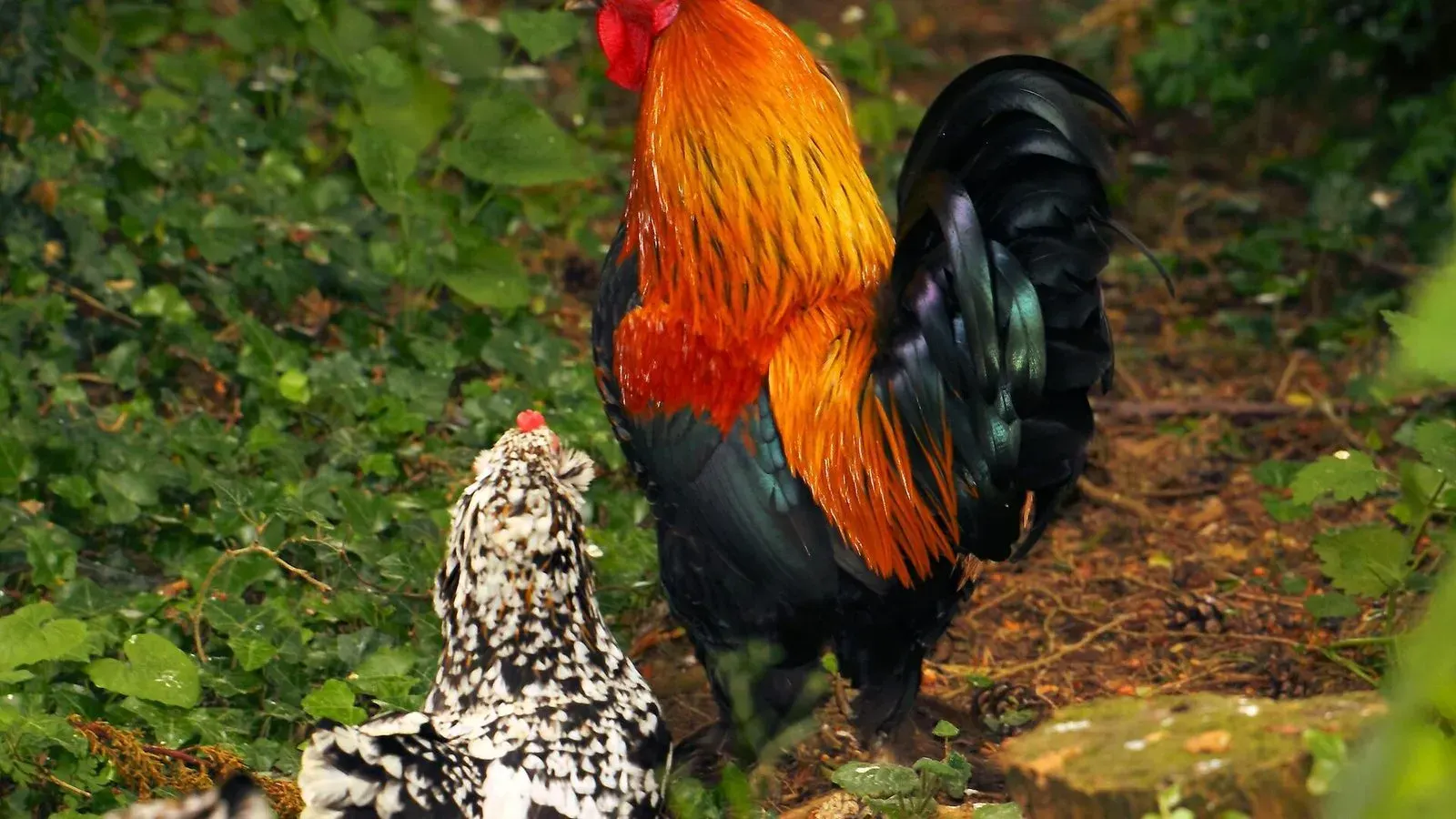
A chicken saddle is a piece of fabric that sits over a hen's back and stops something else wearing her feathers away. It works. It is also, on its own, a cover over a problem rather than a fix for one.
Almost every bare back has one of three causes. Too many roosters for the number of hens, so the same favourite hen is mated many times a day. A rooster whose spurs and claws have grown sharp, so a normal amount of mating still cuts. Or feather picking from a flock that is too crowded or too bored, which is not a mating problem at all and which a saddle will hide while it gets worse underneath.
So we compared these six on coverage, fastening, material and pack size, and we have been blunt about the two situations where a saddle is the wrong answer: a bird already in moult, and a bird whose skin is broken. Both need the saddle off, not on.
Our picks at a glance
Every product below wins one specific situation. Pick the row that matches your flock, your yard and your budget rather than reading top to bottom.
-
Best Overall

Down Under Mesh Saddle
One medium to large standard hen with a worn back from repeated mating, in a climate with real summer heat.
Check price on Amazon for DOWN UNDER OUTDOORS Medium-Large Chicken Saddle Hen Apron Saver (Gray Mesh) on AmazonAbout $14.99 checked Aug 8, 2026
-
Best Wing Protection

HOUGXD Detachable Wings
A hen losing feathers at the wing shoulders as well as the back, where a back-only saddle leaves the worst area exposed.
-
Best for Large Breeds

XLSXEXCL Large 6-Pack
Heavy breed hens such as Orpingtons, Brahmas and Jersey Giants, where a standard 7.5 inch saddle stops short of the damage.
Check price on Amazon for XLSXEXCL 6 Pack Chicken Saddles for Hens Chicken Aprons Back Protector on AmazonAbout $19.99 checked Aug 8, 2026
-
Best Multi-Pack

Down Under 4-Pack
A flock where several medium to large hens have worn backs at once, or anyone who wants a clean spare on hand.
Check price on Amazon for DOWN UNDER OUTDOORS 4 Pack Medium-Large Chicken Saddle, Hen Apron (Mixed) on AmazonAbout $49.99 checked Aug 8, 2026
-
Best for Mating Damage

MYWSN Mating Saddle
A hen being cut rather than just worn, where a heavy rooster's spurs and claws are breaking feathers on the back and flanks.
Check price on Amazon for MYWSN Chicken Saddles for hens, Chicken Hen Mating Saddle on AmazonAbout $21.84 checked Aug 8, 2026
-
Best Budget

Wyiyuan 6-Pack
Covering several small to medium hens cheaply while you fix the rooster ratio or reduce crowding in the run.
Compare every pick side by side
Swipe the table sideways to see every column on a phone.
| Product | Award | Price band | Pack Size | Coverage | Fastening | Material | Best use case | Buy link |
|---|---|---|---|---|---|---|---|---|
| Down Under Mesh Saddle | Best Overall | Under $30 | 1 | Back and shoulders | Elastic wing straps | Breathable mesh | One medium to large standard hen with a worn back from repeated mating, i… | Check price for DOWN UNDER OUTDOORS Medium-Large Chicken Saddle Hen Apron Saver (Gray Mesh) on Amazon |
| HOUGXD Detachable Wings | Best Wing Protection | Under $30 | 1 | Back, shoulders and wing tops | Adjustable straps | Woven fabric | A hen losing feathers at the wing shoulders as well as the back, where a… | Check price for HOUGXD Chicken Saddles for Hens with Detachable Wings, Adjustable Hen Apron Back Protector for Feather Recovery, Double-Layer Breathable Poultry Saver for Standard Breeds (Black,White,Yellow) on Amazon |
| XLSXEXCL Large 6-Pack | Best for Large Breeds | Under $30 | 6 | Back and lower back | Elastic wing straps | Woven fabric | Heavy breed hens such as Orpingtons, Brahmas and Jersey Giants, where a s… | Check price for XLSXEXCL 6 Pack Chicken Saddles for Hens Chicken Aprons Back Protector on Amazon |
| Down Under 4-Pack | Best Multi-Pack | $30 to $60 | 4 | Back and shoulders | Elastic wing straps | Breathable mesh | A flock where several medium to large hens have worn backs at once, or an… | Check price for DOWN UNDER OUTDOORS 4 Pack Medium-Large Chicken Saddle, Hen Apron (Mixed) on Amazon |
| MYWSN Mating Saddle | Best for Mating Damage | Under $30 | 1 | Back and flanks | Elastic wing straps | Padded fabric | A hen being cut rather than just worn, where a heavy rooster's spurs and… | Check price for MYWSN Chicken Saddles for hens, Chicken Hen Mating Saddle on Amazon |
| Wyiyuan 6-Pack | Best Budget | Under $30 | 6 | Back only | Elastic wing straps | Waterproof coated fabric | Covering several small to medium hens cheaply while you fix the rooster r… | Check price for 6Pcs Chicken Saddles Waterproof Hen Aprons Feather Protective Jackets with Elastic Straps Wing Back Protectors Chicken Hen Mating Saddle (Color Random) on Amazon |
The full reviews
Each review below follows the same order: what it is, why it won its category, how it behaves in real use, and who should buy something else.
1 Best Overall
DOWN UNDER OUTDOORS Medium-Large Chicken Saddle Hen Apron Saver (Gray Mesh)
Breathable mesh over the back and shoulders on elastic wing straps, which is the right shape for the most common problem, a standard hen worn bare by repeated mating.
What we liked
- Covers the back and the shoulders, which is where a rooster's feet actually land
- Breathable mesh lets heat out, so it can stay on through a warm spell
- Elastic wing straps keep it centred while a rooster is standing on it
- Sized for medium to large hens, which covers most standard laying breeds
What we did not
- Sized for medium to large hens, so it slides and rubs on a bantam or a light small hen
- Back and shoulder coverage only, so flank damage from a spur is left uncovered
- The mesh weave can catch a pin feather, so it has to come off for the whole moult
- One saddle per pack, so three damaged hens means buying it three times
About $14.99 checked Aug 8, 2026
Key specifications
- Dimensions
- 7.67715 x 7.67715 x 0.3937 in (L x W x H)
- Weight
- 0.13889122506 pounds
- Colour
- Grey Mesh
- Pack Size
- 1
- Coverage
- Back and shoulders
- Fastening
- Elastic wing straps
- Material
- Breathable mesh
- Bird Size
- Medium to large hens
Why the Down Under Mesh Saddle wins this category
Because it matches the most common version of the problem. A standard laying hen, one rooster too many in the flock, feathers gone from the back and the tops of the shoulders. This covers exactly that area, and the shoulder coverage is the part cheaper saddles skip.
Mesh is the other reason. A hen carrying a solid panel of fabric in July is carrying an extra layer she cannot take off, and a bird that cannot lose heat pants, drinks more and lays less.
Living with the Down Under Mesh Saddle
The elastic wing straps do the real work. They pass around the base of each wing and hold the panel centred while a rooster grips and shifts on top of it, which is the moment a badly held saddle slips sideways.
Check under it weekly. The strap folds stay warm and slightly damp, which is where rubbing starts and where mites congregate, and neither shows itself if you never lift the fabric.
Where the Down Under Mesh Saddle falls short
Sizing is the first limit. It is cut for a medium to large hen, and on a bantam or a light small breed there is too much panel for the bird, so it works its way sideways and the edge starts to rub.
Coverage is the second. It reaches the back and shoulders, so a hen who is being cut low on the flanks by a sharp spur is still exposed there.
Then the moult. The mesh surface can snag a pin feather, and a snapped pin bleeds and hurts, so this comes off at the first dropped feathers and stays off until the new plumage hardens.
Research based, not hands-on
Assessed on the published coverage, fastening, material and stated bird size, and compared against the other saddles here on fit and heat behaviour.
- Best for
- One medium to large standard hen with a worn back from repeated mating, in a climate with real summer heat.
- Skip it if
- Your hen is a bantam or a light small breed, because a saddle cut for a larger bird will not sit still on her.
- The limitation to plan around
- It covers the damage and it does not reduce it. The hen is still being mated as often as she was, so this only buys the feathers time while you fix the rooster ratio or trim the spurs.
2 Best Wing Protection
HOUGXD Chicken Saddles for Hens with Detachable Wings, Adjustable Hen Apron Back Protector for Feather Recovery, Double-Layer Breathable Poultry Saver for Standard Breeds (Black,White,Yellow)
The only saddle here that covers the wing tops as well as the back and shoulders, and the wing panels detach, so you can reduce the coverage as the feathers come back.
What we liked
- Covers the wing tops, an area every other saddle in this guide leaves bare
- Wing panels detach, so coverage can be cut back as the plumage recovers
- Adjustable straps rather than fixed elastic, so the fit can be set to the bird
- Double-layer fabric stands up better to claw and spur pressure than single mesh
What we did not
- Double-layer woven fabric is the least breathable full-coverage option here, which matters in summer heat
- At 15.35 in long it reaches well down the bird, and on a smaller standard hen it can foul the tail base
- Detachable wing panels add fixings that work loose, and a loose panel hangs where a hen can catch it
- One saddle per pack at 20.98, so three damaged hens costs 62.94 against 8.99 for the six-pack here
Key specifications
- Dimensions
- 15.35 x 10.8 x 0.19 in (L x W x H)
- Colour
- Black,White,Yellow
- Pack Size
- 1
- Coverage
- Back, shoulders and wing tops
- Fastening
- Adjustable straps
- Material
- Woven fabric
- Bird Size
- Adjustable, most standard hens
Why the HOUGXD Detachable Wings saddle wins this category
Because wing shoulder damage is real and almost nothing covers it. A rooster gripping a hen puts pressure on the back, the shoulders and the tops of the wings, and most saddles stop at the shoulder line. If the bare patch is on the wing itself, a back-only saddle sits next to the problem rather than on it.
The panels detaching is the sensible half of the design. You fit the wings while the wings need them and take them off once the feathers return, instead of carrying the extra fabric all season.
Living with the HOUGXD Detachable Wings saddle
Adjustable straps are worth more than they look. Elastic wing loops are one length and the bird has to suit them. Straps you can set mean a light hen and a heavier hen can both get a fit that neither slides nor pinches.
The double-layer weave is the toughest surface here after the padded option, which is what you want if the damage is coming from claws rather than from simple wear.
Where the HOUGXD Detachable Wings saddle falls short
Heat is the main cost. Two layers of woven fabric across the back, shoulders and wing tops is a lot of insulation on a bird that cannot sweat, and in a hot summer that is a genuine welfare issue rather than a comfort one.
Size is the second problem. The panel measures 15.35 in long, and on a smaller standard hen that reaches past where you want it, sitting near the tail base and getting soiled.
The detachable wings also add fixings, and fixings loosen. A wing panel hanging off one side is something a hen can stand on, catch and tear.
Research based, not hands-on
Assessed on the published coverage area, panel dimensions, adjustable fastening and double-layer construction, and compared against back-only saddles on exposed area.
- Best for
- A hen losing feathers at the wing shoulders as well as the back, where a back-only saddle leaves the worst area exposed.
- Skip it if
- You keep birds in a hot climate, because this is the heaviest and least ventilated coverage in the comparison.
- The limitation to plan around
- More coverage is not automatically better. Every extra panel is another surface trapping heat and another edge that can rub, so fit the wings only while the wing tops are actually bare.
3 Best for Large Breeds
XLSXEXCL 6 Pack Chicken Saddles for Hens Chicken Aprons Back Protector
A 9.8 by 12 inch panel, which is the size a heavy breed actually needs, and six of them in the pack for the price most brands charge for one.
What we liked
- 9.8 by 12 in reaches the lower back on an Orpington or a Brahma
- Six in a pack, enough to cover several hens or keep clean spares in rotation
- Covers the lower back, where a heavy rooster's feet drag as he steps off
- Elastic wing straps hold a large panel centred on a wide-backed bird
What we did not
- Far too large for a bantam or a light breed, and an oversized panel slides and rubs
- No shoulder coverage, so a hen worn bare at the shoulder line stays exposed there
- Woven fabric holds water after rain and stays damp against the skin underneath
- Multicolor pack means you take the colours you are sent, which makes matching a set awkward
About $19.99 checked Aug 8, 2026
Key specifications
- Size
- 25x30cm/9.8x12 inch
- Colour
- Multicolor
- Pack Size
- 6
- Coverage
- Back and lower back
- Fastening
- Elastic wing straps
- Material
- Woven fabric
- Bird Size
- 9.8 x 12 in, large hens
Why the XLSXEXCL Large 6-Pack wins this category
Because most saddles are cut for an average hen and a Brahma is not one. A panel around 7.5 inches square sits neatly on a standard layer and stops halfway down the back of a heavy breed, which leaves the lower back, the exact place a big rooster's feet drag as he dismounts, uncovered.
At 9.8 by 12 inches this reaches. That is the entire argument for it, and for a heavy breed hen it is a good one.
Living with the XLSXEXCL Large 6-Pack
Six in the pack changes how you use a saddle. You can put a clean one on while the dirty one dries, which matters more than it sounds, because a saddle that never comes off for washing traps scurf and gives mites a warm covered place to sit.
The elastic wing straps are the standard arrangement, and on a wide-backed bird they have more panel to hold, so check the fit again a few days after fitting.
Where the XLSXEXCL Large 6-Pack falls short
It only covers the back and lower back. There is no shoulder panel, so if your hen's bare patch is high, at the shoulder line where a rooster grips, this puts the fabric below the problem.
The woven fabric is slow to dry. After heavy rain the panel sits wet against the skin, and damp skin under fabric is where rubbing and scurf start.
And six saddles is a number worth pausing on. If you genuinely need all six, the flock has a ratio or crowding problem that no amount of fabric is going to solve.
Research based, not hands-on
Assessed on the published panel dimensions against heavy breed back measurements, plus the stated coverage area, fastening and pack size.
- Best for
- Heavy breed hens such as Orpingtons, Brahmas and Jersey Giants, where a standard 7.5 inch saddle stops short of the damage.
- Skip it if
- Your flock is bantams or light breeds, because this panel is bigger than the bird's back and will not stay where you put it.
- The limitation to plan around
- Size is the whole point and also the whole risk. On the right bird it is the only saddle here that reaches far enough, and on the wrong bird it is a loose sheet of fabric that will chafe.
4 Best Multi-Pack
DOWN UNDER OUTDOORS 4 Pack Medium-Large Chicken Saddle, Hen Apron (Mixed)
The same breathable mesh saddle as our top pick, four to a box in four different colours, which lets you cover several hens and tell at a glance whose is whose.
What we liked
- Four saddles in burgundy, pink, blue and green, so each hen has an identifiable one
- Same breathable mesh construction as the single Down Under saddle
- Spares let you wash one and refit another the same day
- Back and shoulder coverage on every panel, not back only
What we did not
- Works out around 12.50 per saddle against 14.99 for a single, so the pack saves less than most multi-packs do
- Sized for medium to large hens only, so a mixed flock with bantams gets no usable fit for the small birds
- Needing four saddles at once usually points at a rooster ratio problem the saddles will not fix
- Mesh has to come off every bird in moult, so you may end up with four unused panels for two months
About $49.99 checked Aug 8, 2026
Key specifications
- Dimensions
- 7.4803 x 7.4803 x 0.47244 in (L x W x H)
- Weight
- 0.15652820602 pounds
- Colour
- Burgundy, Pink, Blue and Green
- Pack Size
- 4
- Coverage
- Back and shoulders
- Fastening
- Elastic wing straps
- Material
- Breathable mesh
- Bird Size
- Medium to large hens
Why the Down Under 4-Pack wins this category
Because it is the best saddle here sold in the quantity that a real problem arrives in. Mating damage rarely lands on one hen. A rooster has favourites, usually two or three of them, and they all go bare within a few weeks of each other.
Four colours is a small thing that turns out to be useful. Saddles need lifting and checking, and when every hen is wearing an identical grey panel it is easy to lose track of which bird you looked at last week.
Living with the Down Under 4-Pack
The rotation is the real benefit. Saddles get dirty, and a dirty saddle held against the skin is where scurf builds and mites settle in. With spares you take one off, wash it, and put a dry one on the same afternoon rather than leaving a bare back exposed for a day.
The mesh is the same breathable material as the single version, so the summer heat behaviour is the same too.
Where the Down Under 4-Pack falls short
The pack economics are weaker than they look. At roughly 12.50 a saddle against 14.99 for one, you are paying most of the single price four times over, so this only makes sense if you actually need the quantity.
The sizing is unchanged, meaning medium to large hens only. In a mixed flock the bantams get nothing usable out of the box.
And the honest point: four hens in saddles is not a fixed flock. It is a flock with too much rooster for the number of hens, and covering all four backs treats the appearance of the problem rather than the problem.
Research based, not hands-on
Assessed on the published pack contents, coverage, material and sizing, and compared on unit cost against the single-saddle version from the same brand.
- Best for
- A flock where several medium to large hens have worn backs at once, or anyone who wants a clean spare on hand.
- Skip it if
- Only one hen is damaged, because a single saddle costs a third of this and does the identical job.
- The limitation to plan around
- Four saddles is a symptom worth reading. If four hens in one flock have bare backs, the ratio of roosters to hens or the space per bird is the thing to change first.
5 Best for Mating Damage
MYWSN Chicken Saddles for hens, Chicken Hen Mating Saddle
Padded fabric across the back and flanks, which is the construction to reach for when the damage is coming from a heavy rooster's claws and spurs rather than from simple wear.
What we liked
- Padding spreads claw and spur pressure instead of letting it press on one point
- Covers the flanks as well as the back, which most saddles here leave bare
- The toughest surface in this comparison against a rooster with sharp spurs
- Elastic wing straps in the standard arrangement, so fitting is familiar
What we did not
- Padding traps heat and moisture against the skin, which is the worst combination in a humid summer
- One size only, so a bantam or a heavy breed hen both end up with a fit that shifts
- Thick padded fabric is slow to dry after washing or rain, so you need a second saddle to rotate
- Flank coverage means more fabric contact, and more contact means more places to check for rubbing
About $21.84 checked Aug 8, 2026
Key specifications
- Size
- One Size
- Colour
- Black White
- Pack Size
- 1
- Coverage
- Back and flanks
- Fastening
- Elastic wing straps
- Material
- Padded fabric
- Bird Size
- One size, standard hens
Why the MYWSN Mating Saddle wins this category
Because there are two different kinds of mating damage and they need different fabric. Repeated mating by a blunt-footed rooster wears feathers away, and mesh handles that. A rooster with long, sharp spurs and overgrown claws cuts, and a thin panel gets a hole in it fast.
Padding is what absorbs that. It spreads the load of a claw across a wider area instead of letting it dig through one spot, and the flank coverage reaches the sides where a spur catches as he steps down.
Living with the MYWSN Mating Saddle
Coverage down the flanks is the feature almost nothing else here offers. If the bare patches run down the hen's sides rather than sitting neatly on her back, a back-only saddle simply misses them.
One size keeps buying simple, and the elastic wing straps are the same familiar arrangement as everything else in this guide, so there is nothing new to learn about fitting it.
Where the MYWSN Mating Saddle falls short
Heat is the price of the padding. A bird cannot sweat, and a padded panel across the back and flanks is a large insulated area she has no way to shed. In a humid summer that is a real welfare cost and the saddle should come off.
One size is the second problem. A bantam gets a panel that moves on her, a heavy breed hen gets one that stops short, and a saddle that shifts is a saddle that rubs.
It is also slow to dry. A padded saddle soaked in rain stays damp for a long time, which is exactly the condition that starts skin trouble underneath.
None of that changes the underlying point. If a rooster's spurs are cutting your hens, the spurs are the thing to deal with, not the fabric.
Research based, not hands-on
Assessed on the published padded construction, coverage area, sizing and fastening, and compared against mesh and single-layer woven saddles on abrasion and heat.
- Best for
- A hen being cut rather than just worn, where a heavy rooster's spurs and claws are breaking feathers on the back and flanks.
- Skip it if
- You keep birds through hot, humid summers, because padding over the back and flanks is a lot of insulation on a bird that cannot sweat.
- The limitation to plan around
- Padding hides what is underneath more effectively than any other saddle here. That is the point of it and also the risk, so lift it weekly and look at the skin rather than trusting the panel.
6 Best Budget
6Pcs Chicken Saddles Waterproof Hen Aprons Feather Protective Jackets with Elastic Straps Wing Back Protectors Chicken Hen Mating Saddle (Color Random)
Six waterproof-coated saddles for the price most brands charge for half of one, which makes it the cheap way to cover several small to medium hens while you sort out the real cause.
What we liked
- Six saddles for about 1.50 each, the lowest cost per bird in this comparison
- Waterproof coated fabric sheds rain instead of soaking it up
- The 9 by 9 in panel is cut for small to medium hens, which most saddles here are not
- Elastic wing straps, the same proven fastening as the more expensive options
What we did not
- Back only, so a hen worn bare at the shoulders where a rooster grips gets no cover there
- The waterproof coating does not breathe, so heat and moisture build up underneath in summer
- At 9 by 9 in it stops short on a large breed hen, and a panel that does not reach slides sideways
- Colours are sent at random, so you cannot choose or match what arrives
Key specifications
- Dimensions
- 1 x 1 x 1 in (L x W x H)
- Colour
- multicolor
- Pack Size
- 6
- Coverage
- Back only
- Fastening
- Elastic wing straps
- Material
- Waterproof coated fabric
- Bird Size
- 9 x 9 in, small to medium hens
Why the Wyiyuan 6-Pack wins this category
On cost per covered bird, nothing else here is close. Six saddles works out around a dollar and a half each, which is less than a tenth of what a single premium saddle costs, and for a hen who simply needs her back feathers left alone for a few weeks that is enough.
The sizing is also genuinely useful. Most saddles here are cut for medium to large hens, which leaves keepers of smaller birds with a panel that will not sit still. This 9 by 9 inch panel is sold for small to medium birds, so the strap spacing suits a lighter hen even though the sheet itself is not the smallest measurement on the page.
Living with the Wyiyuan 6-Pack
The waterproof coating is the one place this beats more expensive saddles. Woven fabric soaks up rain and stays wet against the skin for hours. A coated panel sheds it, so a hen caught in a downpour is not carrying a damp compress on her back all afternoon.
Six panels also means you can wash one and refit another without leaving a back bare.
Where the Wyiyuan 6-Pack falls short
Coverage is where the money went. This is a back panel and nothing more, no shoulders and no flanks, and the shoulders are where a rooster's feet land. For a lot of hens the bare patch starts exactly where this saddle stops.
The coating cuts both ways. Waterproof means airtight, and an airtight panel in July traps heat and sweat-damp air against the skin, which is the condition that starts scurf and gives mites somewhere warm to sit. Lift it and look more often than you would with mesh.
Size rules out heavy breeds. On an Orpington a 9 by 9 in panel covers part of the back, and a saddle that does not reach is one that shifts and chafes.
Research based, not hands-on
Assessed on the published coverage, panel size, coating and pack contents, and compared on cost per bird and covered area against every other saddle in this guide.
- Best for
- Covering several small to medium hens cheaply while you fix the rooster ratio or reduce crowding in the run.
- Skip it if
- You keep large breeds, because a 9 by 9 in panel does not reach far enough down the back of a heavy hen.
- The limitation to plan around
- Back-only coverage is the trade-off for the price. If the bare skin runs onto the shoulders or the flanks, this saddle sits beside the damage rather than over it.
How we compared these chicken saddles
Every saddle was judged on four things and against one question.
The four things are coverage, fastening, material and pack size. Coverage means which part of the bird the fabric actually reaches: the back alone, the back and shoulders, the back and flanks, or the wing tops as well. Fastening means the elastic wing loops, because that is the only thing holding the saddle in place while a rooster stands on it. Material decides whether the hen overheats in July or stays wet after rain. Pack size decides what the real cost is, since the number of saddles you need is the number of damaged hens, not one.
The question underneath all of that is whether a saddle is the right purchase at all. We have said so, product by product, where the honest answer is that fixing the flock would do more.
Find the cause before you buy the saddle
Count your roosters
One rooster to about ten hens is the ratio that keeps mating damage rare. Two roosters in a small flock is the single most common reason a keeper ends up shopping for saddles, because the same two or three favourite hens absorb all of it, several times a day, every day.
If you have a bare-backed hen and a spare rooster, rehoming the rooster is a better purchase than any saddle on this page. It is free and it stops the damage rather than covering it.
Check the spurs and the claws
A rooster grips the hen's shoulders and back with his feet during mating. Blunt claws and short spurs press. Long, sharp spurs and overgrown claws cut, and a single rooster with sharp spurs can strip a hen faster than three blunt ones.
Look at his feet before you look at saddles. Spur and claw trimming is a normal husbandry job, and if you have not done it, ask someone who has rather than guessing, because the spur has a live core.
Rule out feather picking
If the bare patches are at the vent, the tail base, the neck or the breast rather than the back and shoulders, this is not mating damage. It is picking, and picking comes from crowding, boredom, low protein or a habit spreading through the flock.
A saddle over a picked back does nothing about any of that. The bird gets picked somewhere else, and you have made it harder to notice.
What actually matters in a chicken saddle
Coverage against the damage you have. Back only is enough for a hen who is simply losing feathers to repeated mating. Back and shoulders is the right default, because the shoulders are where a rooster's feet land. Flank coverage matters if the damage runs down the sides. Wing top coverage is for the bird losing feathers at the wing shoulder specifically.
Fastening. All six here use elastic loops that pass around the base of each wing. That is the standard design and it works, with one thing to watch: the loops sit in a skin fold that gets warm and damp, so it is the first place to check for rubbing and for mites.
Material. Breathable mesh is the best compromise in warm weather. Woven fabric is tougher and slower to dry. Padded fabric takes the most abuse from spurs and traps the most heat. Waterproof coated fabric sheds rain and does not breathe at all.
Pack size. A single saddle suits one damaged hen. Multi-packs are cheaper per bird and useful for rotating a clean spare on while one is washed. If you genuinely need six, look hard at the flock first.
Fitting one without causing a new problem
Fit it snug enough that it does not slide sideways and loose enough that you can slip a finger under each wing loop. A saddle that slides is a saddle that rubs.
Lift it weekly. You are checking the skin underneath, the wing loops for chafing, and the warm covered area for mites, which like exactly that kind of habitat.
Take it off during a moult. Pin feathers have a blood supply and they hurt when pressed and bleed when snapped. Take it off if the skin is broken, too, and deal with the wound properly before covering anything.
Final recommendation
The Down Under Mesh Saddle is the best all-round buy: back and shoulder coverage, breathable mesh for summer, and sizing that fits a normal standard layer.
If your hen is a heavy breed, the XLSXEXCL Large 6-Pack is the one that will actually reach her lower back. If the damage is clearly spur damage from a heavy rooster, the padded MYWSN Mating Saddle takes more punishment than mesh will. And if you want a cheap way to cover several hens while you sort out the rooster ratio, the Wyiyuan 6-Pack does the basic job for about a dollar and a half a bird.
Questions people ask before buying
Does a chicken saddle fix the cause of a bare back?
No. A saddle stops further wear on the feathers underneath it, and that is all it does. The cause is nearly always too many roosters for the number of hens, a rooster with sharp spurs and claws, or feather picking in a crowded or bored flock. If you fit a saddle and change nothing else, the same hen is still being mated as often, or still being pecked, and you have simply stopped being able to see it. Fit the saddle for the bird's comfort, then fix the ratio, blunt the spurs or reduce the crowding.
How many hens do I need per rooster?
Around ten hens to one rooster is the usual working figure for standard breeds, and light breeds can carry a few more per rooster than heavy ones. Below that ratio, the favourite hens get mated repeatedly and their back and shoulder feathers go first. Two roosters in a flock of twelve is a common backyard situation and it is one of the most reliable ways to end up with three bare-backed hens. Rehoming one rooster usually does more for the flock than six saddles will.
Can a hen wear a saddle during a moult?
Take it off. New feathers come through as pin feathers with a blood supply inside the shaft, and they are painful if knocked and they bleed if broken. A saddle sitting on a back full of pins presses on every one of them, and a mesh or woven surface can catch a pin and snap it. Moult is also the point at which the back is regrowing on its own, so the saddle has the least to do. Take it off at the first sign of dropped feathers and leave it off until the new plumage has hardened.
What if the skin under the saddle is already broken?
A saddle does not go on broken skin. Fabric rubbing an open wound keeps it open, traps moisture and warmth against it, and hides it from you at exactly the point you need to be looking at it daily. Separate the hen from the rooster or from the flock, keep the wound clean and dry, and get a vet involved if it is deep, if it smells, or if flies have reached it. Fly strike on an open back is a fast and serious problem. Put the saddle back only once the skin has closed over.
Will a saddle stop feather picking by other hens?
Only where the fabric sits, and that is the trap. Feather picking comes from crowding, boredom, too little protein or a habit that has spread through the flock, and a bird that is being picked will simply be picked somewhere the saddle does not cover, usually the vent, the tail base or the neck. Vent picking in particular can turn serious quickly. If the damage is picking rather than mating, treat the saddle as a very small part of the answer and spend the effort on space, distraction and feed instead.
What size chicken saddle do I need?
Match it to the breed, and read what the maker says the panel is for rather than the number alone. A saddle sized for a medium to large hen, roughly 7.5 to 8 inches square, suits most standard layers. A heavy breed like an Orpington or a Brahma needs the 9.8 by 12 inch pattern or it will not reach the lower back. For a bantam or a light small hen, look for a panel sold for small to medium birds, such as the 9 by 9 inch style here, because the shape and the strap spacing matter more than the measurement. Fit matters more than coverage does: a saddle that is too big slides sideways and rubs, and a saddle that is too small leaves the exact area you bought it for uncovered.
Why you can trust this guide
- Written by
- Marta Voss, Editor and fact checker, Chicken Geek. Specialist areas: Editorial fact checking, Chick brooding and starter nutrition, Small-flock husbandry, Feed labels and nutrition claims.
- Fact checked by
- Sam Reddick
- Published
- August 6, 2026 · Last updated August 6, 2026 · Products and links rechecked August 6, 2026
- How we picked
- Saddles were compared on how much of the back, shoulder and flank they cover, how the wing loops hold under a mating attempt, how the material behaves in summer heat and in rain, how the sizing matches real hen dimensions, and how many saddles come in a pack against how many hens usually need one.
- Evidence used
- None of the 6 products on this page were sent to us or bought for a hands-on test. Every recommendation here is research based: manufacturer specifications, listed dimensions and materials, owner feedback at volume, and comparison against equipment our team has owned. Each review states this again above the buy button so you are never guessing which kind of evidence sits behind a pick.
- Editorial standards
- No brand pays for placement, and no manufacturer sees this page before it goes live. Read our editorial policy and testing method.
- Affiliate disclosure
- Chicken Geek is reader supported. We earn a commission from qualifying purchases made through links on this page, at no extra cost to you, and no brand has paid for a placement or an award here.
About the author

Editor and fact checker, Chicken Geek
Marta edits every guide on Chicken Geek and checks that each claim can be traced back to a manufacturer specification, a published standard or a stated first-hand observation. She keeps a small backyard flock of six hens and has raised chicks from day one for eight seasons.
- Eight seasons raising chicks from day-old to point of lay
- Checks every specification in a Chicken Geek guide against the manufacturer listing
- Removes any testing claim that cannot be backed up
- Keeps a flock of six hens in a suburban backyard