We Compared 6 Chicken First Aid Kits on What They Actually Treat
We compared six chicken first aid kits and sprays on what they actually treat, egg withdrawal, shelf life, and when you need a vet instead.

By Marta Voss Editor and fact checker, Chicken Geek
Fact checked by Sam Reddick
Published Prices and stock checked 7 min read
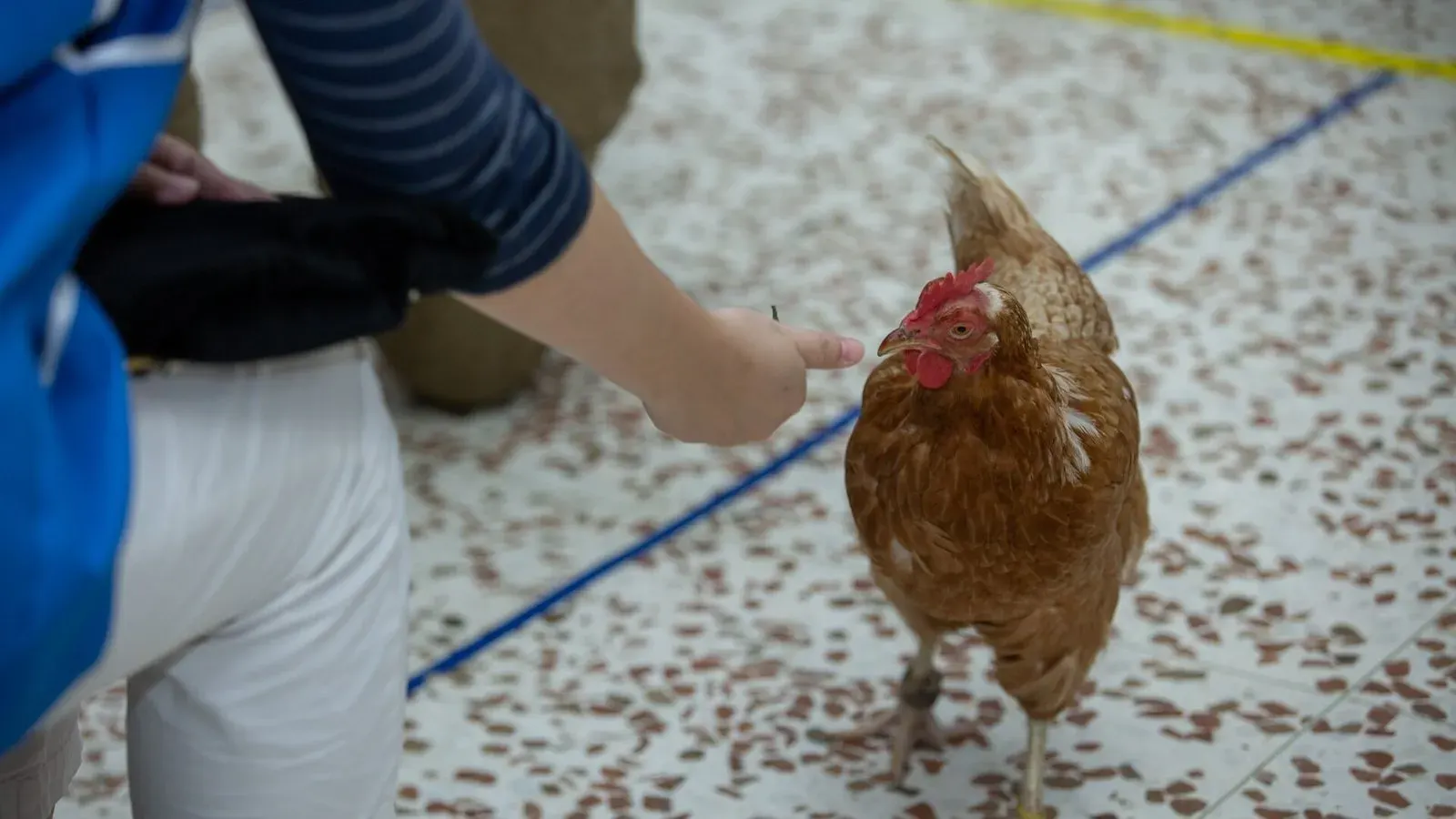
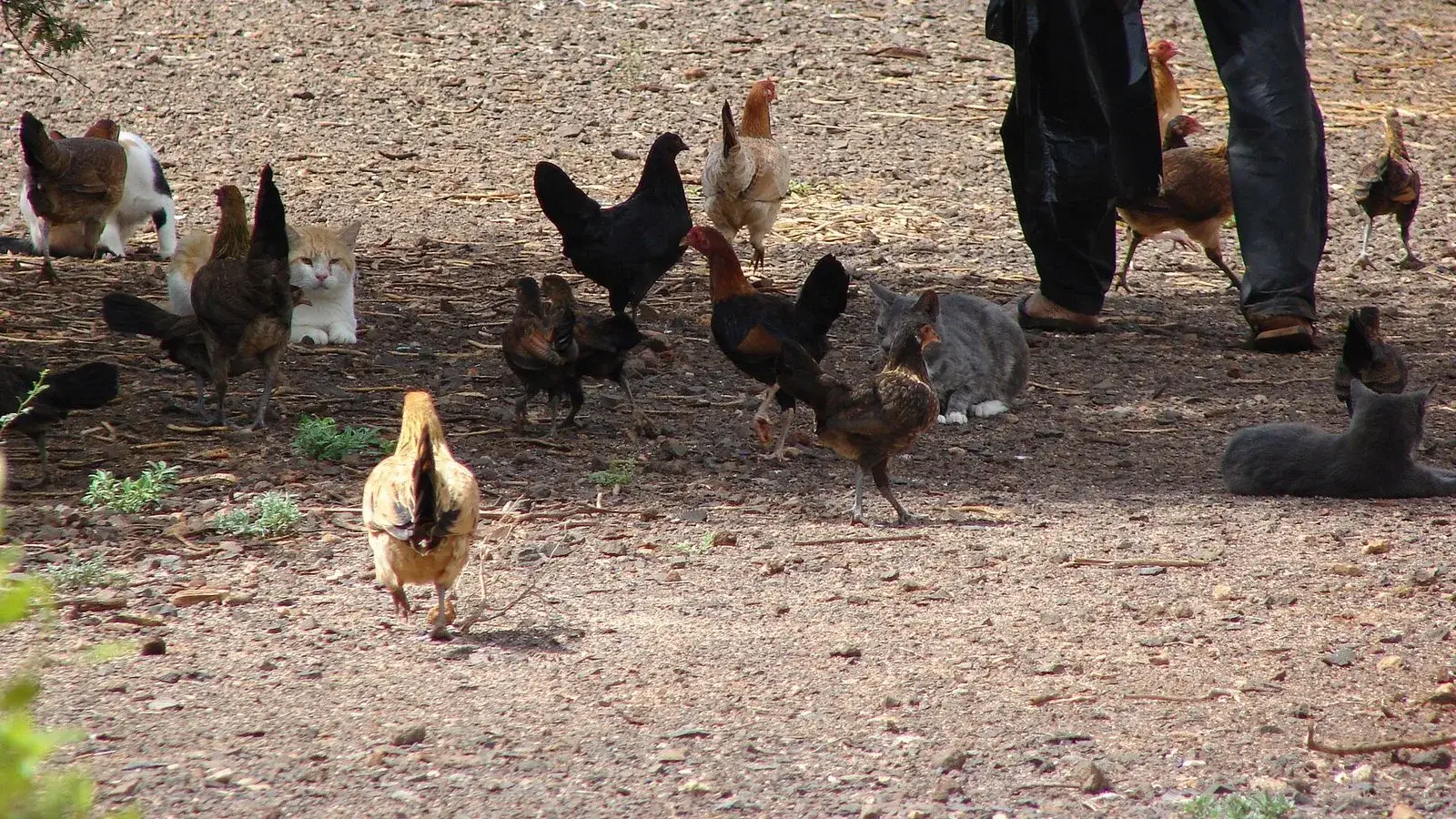
Two things save more injured birds than anything you can buy. The first is separating the bird the moment you see blood, because chickens are drawn to red and will peck at an open wound until the injury turns fatal. That can happen in a few hours. The second is owning the supplies before you need them, because injuries turn up at 9pm on a Sunday when every feed store and vet office is shut.
So the honest way to shop this category is to buy for what a kit can genuinely handle. That means minor cuts, pecking wounds, bumblefoot aftercare, splayed leg in a very young chick, and supportive care while a bird rests. Respiratory disease, sour crop, egg binding and anything that has not improved in 48 hours are vet problems. No spray on this page is a substitute for a diagnosis.
We compared six options on what condition each one actually addresses, whether the label states an egg withdrawal, how long it keeps on a shelf, and what it leaves you unable to deal with. Some of the most useful items in a chicken first aid kit are not products at all, and we say which ones below.
Our picks at a glance
Every product below wins one specific situation. Pick the row that matches your flock, your yard and your budget rather than reading top to bottom.
-
Best Overall

Vetericyn Plus Poultry
Any keeper who wants one bottle in the coop that handles the common wounds without an egg withdrawal question.
-
Best Complete Kit
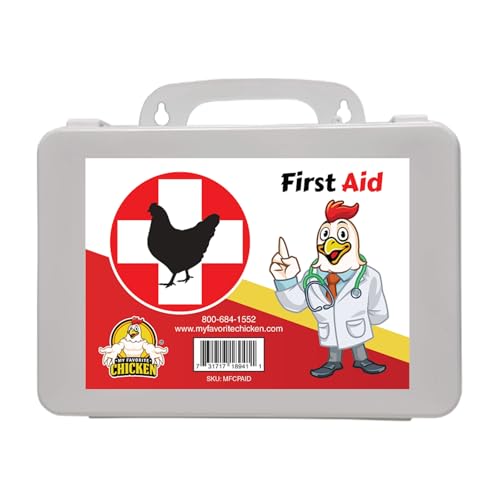
Essential Poultry Kit
Keepers who want the whole shelf bought in one order and kept in one place, ready before anything goes wrong.
Check price on Amazon for Essential Poultry First Aid Kit on AmazonAbout $105 checked Aug 8, 2026
-
Best for Leg Injuries
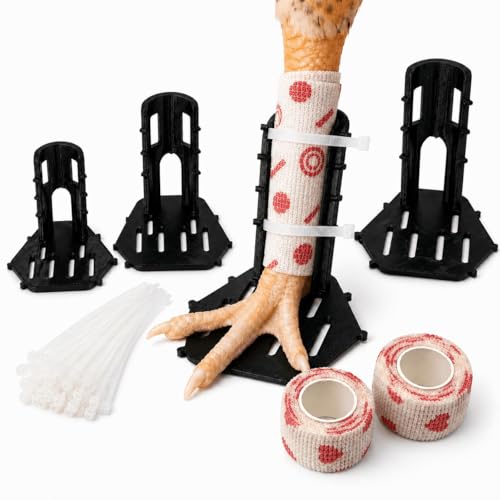
Whadirom Leg Splints
Anyone who hatches chicks and wants splints already in the drawer before splayed leg shows up in a brooder.
-
Best Traditional Remedy
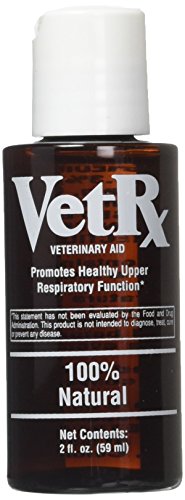
VetRx Poultry Aid
Keepers who want an inexpensive traditional comfort measure to use alongside proper care, not instead of it.
Check price on Amazon for Vetrx Poultry Aid, 2 fl.oz on AmazonAbout $17.50 checked Aug 8, 2026
-
Best Organic Wound Spray

Flock First Organic
Keepers who sell or market eggs as organically raised and want every input on the birds to match that claim.
-
Best Respiratory Support
![Samorillo Flock Shield Respiratory Aid for Poultry - [Made in USA] - 4oz Chicken Supp…](https://m.media-amazon.com/images/I/51QhnmS06ZL._SL500_.jpg)
Flock Shield Respiratory
Keepers who want something to support a flock through mild respiratory signs while a vet appointment is being arranged.
Compare every pick side by side
Swipe the table sideways to see every column on a phone.
| Product | Award | Price band | Kit Type | Contents | Egg Safe | Use Case | Best use case | Buy link |
|---|---|---|---|---|---|---|---|---|
| Vetericyn Plus Poultry | Best Overall | Under $30 | Wound spray | 8 oz hypochlorous wound spray | Yes, no withdrawal stated | Cuts, pecking wounds, bumblefoot aftercare | Any keeper who wants one bottle in the coop that handles the common wound… | Check price for Vetericyn Plus Poultry Care Spray | Healing Aid and Skin Repair for Chicken Wounds, Pecking Injuries, Bumblefoot, Vent Prolapses, and More. 8 ounces on Amazon |
| Essential Poultry Kit | Best Complete Kit | $60 to $120 | Complete kit | Multiple treatments, dressings and tools | Mixed, check each component | General flock emergencies | Keepers who want the whole shelf bought in one order and kept in one plac… | Check price for Essential Poultry First Aid Kit on Amazon |
| Whadirom Leg Splints | Best for Leg Injuries | Under $30 | Support device | Four sizes of leg and foot splint | Not applicable, external device | Splayed leg, slipped tendon, leg injury | Anyone who hatches chicks and wants splints already in the drawer before… | Check price for Whadirom 4 Sizes Poultry Leg Splint Set, Chicken Foot and Leg Support Brace Kit with Cohesive Wrap and Cable Ties, Black PET Splints for Chickens, Ducks and Geese on Amazon |
| VetRx Poultry Aid | Best Traditional Remedy | Under $30 | Respiratory aid | 2 fl oz camphor and oil blend | Yes, no withdrawal stated | Congestion, scaly leg, comfort care | Keepers who want an inexpensive traditional comfort measure to use alongs… | Check price for Vetrx Poultry Aid, 2 fl.oz on Amazon |
| Flock First Organic | Best Organic Wound Spray | Under $30 | Wound spray | USDA organic wound spray | Yes, no withdrawal stated | Minor wounds and skin irritation | Keepers who sell or market eggs as organically raised and want every inpu… | Check price for Eaton Pet and Pasture Flock First USDA Organic Chicken Wound Spray – Natural Poultry First Aid for Bumblefoot, Pecking Wounds, Cuts, Frostbite & Scaly Leg Mites, Vet Recommended, 8 oz on Amazon |
| Flock Shield Respiratory | Best Respiratory Support | Under $30 | Respiratory aid | 4 oz respiratory support supplement | Yes, no withdrawal stated | Supportive care during respiratory signs | Keepers who want something to support a flock through mild respiratory si… | Check price for Flock Shield Respiratory Aid for Poultry - [Made in USA] - 4oz Chicken Supplement, Rooster Booster for Respiratory System - Dropper, Spray Top Included - Safe for All Birds - Drinking Water Additive on Amazon |
The full reviews
Each review below follows the same order: what it is, why it won its category, how it behaves in real use, and who should buy something else.
1 Best Overall
Vetericyn Plus Poultry Care Spray | Healing Aid and Skin Repair for Chicken Wounds, Pecking Injuries, Bumblefoot, Vent Prolapses, and More. 8 ounces
An 8 oz hypochlorous wound spray that covers the injuries backyard flocks actually get, and it answers the question people ask first: the label states no egg withdrawal.
What we liked
- Applies one-handed, which is what you need on a bird that is struggling
- Label states no egg withdrawal, so laying hens stay in the kitchen rotation
- Covers cuts, pecking wounds and bumblefoot aftercare from a single bottle
- About two years unopened, so it can sit in the coop until the day you need it
What we did not
- Hypochlorous chemistry weakens after the bottle is opened, so an old half-used bottle is not doing what a fresh one does
- It cleans and moistens a wound and does nothing to stop bleeding, so a bad tear still needs pressure and a dressing
- The liquid is clear, so the wound stays visibly red and flockmates will keep pecking unless the bird is separated
- 8 oz empties quickly if you are flushing a bumblefoot wound twice a day for a fortnight
Key specifications
- Dimensions
- 2.2047244072 x 2.2047244072 x 6.4960629855 in (L x W x H)
- Weight
- 0.6 pounds
- Colour
- Multicolored
- Kit Type
- Wound spray
- Contents
- 8 oz hypochlorous wound spray
- Egg Safe
- Yes, no withdrawal stated
- Use Case
- Cuts, pecking wounds, bumblefoot aftercare
- Shelf Life
- About 2 years unopened
- Bottle Size
- 8 oz
- Active Ingredient
- Not stated, listing says antibiotic free and non-toxic
- Egg Withdrawal
- Listing states no egg withdrawal period
- Staining
- Listing states non-dyeing and non-irritating
- Applicator
- Spray, listing says use a few times daily
- Labelled Uses
- Pecking sores, flank wounds, breast blisters, vent prolapse, frost bite, bumblefoot
Why the Vetericyn Poultry Spray wins this category
Because it answers the two questions that stop people acting quickly. The first is what to put on the wound, and the second is whether the eggs are still safe. The label states no egg withdrawal, which means you can treat a laying hen at 9pm and not spend the next fortnight throwing eggs away out of caution.
It also fits the physical reality of the job. You will be doing this alone, with one hand around a bird who has decided she would rather not be helped. A spray bottle works at any angle and needs one hand.
Living with the Vetericyn Poultry Spray
The use cases on the label match the injuries backyard flocks actually get: pecking wounds, cuts on the comb or back, and bumblefoot aftercare once the foot has been dealt with.
Around two years unopened is the specification that matters for a first aid item, because this bottle spends most of its life sitting in a bucket in the coop waiting. Write the date on it when you break the seal.
Where the Vetericyn Poultry Spray falls short
It does not stop bleeding. Flushing a wound is the second step, not the first, and if blood is running you need pressure and a dressing before any spray is useful.
The wound also stays red, because the liquid goes on clear. Some keepers use a purple or blue coloured spray for exactly that reason, to mask the wound from the rest of the flock. This one does not, so separating the injured bird is not optional.
Potency after opening is the quiet drawback. Hypochlorous solutions degrade once air gets in, so the bottle you opened two seasons ago is a weaker product than the one on the shelf.
Research based, not hands-on
Assessed on the published contents, stated egg withdrawal position and shelf life from the listing, and compared against the other wound sprays here on application and coverage.
- Best for
- Any keeper who wants one bottle in the coop that handles the common wounds without an egg withdrawal question.
- Skip it if
- You want a product that treats internal illness, because this works on the outside of the bird and nothing else.
- The limitation to plan around
- It supports a clean wound, it does not close one. Deep tears, anything gaping and anything near the vent still need pressure, a dressing and usually a vet, and the spray only helps once the bleeding has stopped.
2 Best Complete Kit
Essential Poultry First Aid Kit
One box with the treatments, dressings and tools already in it, which solves the real problem in this category: not having the right thing in the coop at 9pm on a Sunday.
What we liked
- Treatments, dressings and tools arrive together, so nothing is missing on the night
- Buying it in one go is what most keepers never get around to doing item by item
- A single box in the coop is faster to find than supplies spread across a house
- Covers general flock emergencies rather than one narrow injury type
What we did not
- Egg safety is mixed across the components, so you have to check each label yourself before you use anything
- The parts expire at different rates, so the kit goes stale piece by piece rather than all at once
- It costs about four times a single wound spray, and the spray is what most keepers reach for
- A pre-packed box still does not include a crate, which is the item that saves the most birds
About $105 checked Aug 8, 2026
Key specifications
- Kit Type
- Complete kit
- Contents
- Multiple treatments, dressings and tools
- Egg Safe
- Mixed, check each component
- Use Case
- General flock emergencies
- Shelf Life
- Varies by component
Why the Essential Poultry Kit wins this category
Because the most common failure in backyard first aid is not choosing the wrong product. It is owning nothing at all when something goes wrong. Assembling a kit item by item is a job that stays on the list for years, and a box that arrives complete is the version people actually finish.
It also puts everything in one place. Supplies scattered between a kitchen drawer, a shed and a car boot are supplies you cannot find in the dark.
Living with the Essential Poultry Kit
Multiple treatments, dressings and tools cover the general run of flock emergencies rather than one narrow injury. That breadth is the point of a kit, and it is why it suits a keeper who does not yet know which problem they are going to meet first.
Keep it in the coop or the run store, not in the house. The walk back indoors while holding a bleeding hen is the part that wastes time.
Where the Essential Poultry Kit falls short
Egg safety is mixed across the components, and that is a genuine complication rather than a footnote. One item in the box may carry a withdrawal period while the rest do not, and working that out from labels at night with an injured bird under your arm is exactly the wrong moment. Read every label on arrival and mark the lid.
The parts also age at different rates, so the kit does not expire on one clean date. A wound spray may lapse while the dressings are fine, which means a twice-yearly check rather than one diary entry.
Then there is overlap. If you already keep a wound spray and cohesive wrap, most of the value here is convenience, and the price reflects a full box rather than the two items you will use most.
Research based, not hands-on
Assessed on the published kit type, stated contents description and mixed egg safety position from the listing, and compared against buying the equivalent single products separately.
- Best for
- Keepers who want the whole shelf bought in one order and kept in one place, ready before anything goes wrong.
- Skip it if
- You already own wound spray, gauze and cohesive wrap, because the overlap makes the price hard to justify.
- The limitation to plan around
- Mixed egg rules are the thing to plan around. Read every component label the day the box arrives, write which items carry a withdrawal on the lid, and you will not be reading small print one-handed in the dark.
3 Best for Leg Injuries
Whadirom 4 Sizes Poultry Leg Splint Set, Chicken Foot and Leg Support Brace Kit with Cohesive Wrap and Cable Ties, Black PET Splints for Chickens, Ducks and Geese
Four sizes of moulded leg splint with cohesive wrap and cable ties, and it is the only item here that corrects a structural problem rather than dressing a surface one.
What we liked
- Four sizes cover chicks through to adult birds, ducks and geese
- Cohesive wrap and cable ties are included, so nothing else has to be sourced on the night
- Moulded PET holds a set shape better than the taped card most people improvise with
- Reusable, so one purchase covers several hatches
What we did not
- Splayed leg only corrects reliably in the first days of life, so ordering these after you spot it usually means they arrive too late
- Cable ties can be pulled tight enough to cut circulation, so a splinted bird needs checking at least twice a day
- Four fixed sizes means a bird between sizes gets a loose or pinching fit with no adjustment
- Splinting a leg that is actually paralysed by disease delays the diagnosis that matters
Key specifications
- Dimensions
- 4 x 4 x 3 in (L x W x H)
- Colour
- black
- Kit Type
- Support device
- Contents
- Four sizes of leg and foot splint
- Egg Safe
- Not applicable, external device
- Use Case
- Splayed leg, slipped tendon, leg injury
- Shelf Life
- Reusable
Why the Whadirom Leg Splints win this category
Because nothing else on this page fixes anything. Sprays clean a wound and let the bird heal it. A splint holds a leg in the right position while bone, tendon and muscle set around that position, which is a mechanical correction with a real outcome.
Splayed leg in a newly hatched chick is the case it is built for, and it is one of the few backyard problems where prompt home treatment genuinely works.
Living with the Whadirom Leg Splints
Having the wrap and the ties in the same bag matters more than it sounds. The moment you need a splint you need it that hour, and improvising with plasters and card at midnight is how bad splints happen.
Four sizes covering chicks up to adult ducks and geese means one purchase serves several seasons, and PET holds its shape rather than folding under a bird's weight.
Where the Whadirom Leg Splints fall short
Timing beats every other consideration. Splayed leg responds well when it is corrected within the first days of life. Left for a fortnight, the joint has usually set and a splint will not undo it. That means these only help if they are already in the drawer when the chick hatches, and ordering them the day you notice the problem is usually ordering them too late.
Cable ties need watching. They make a firm fit easy and they make an over-tight fit just as easy, and a leg with the circulation restricted for a day is a worse injury than the one you started with. Check the foot for warmth and colour twice a day.
Finally, a splint on the wrong diagnosis is a trap. A chick that suddenly cannot stand may have a nutritional deficiency or a viral paralysis, and strapping the leg treats none of it while the real problem progresses.
Research based, not hands-on
Assessed on the published size range, materials and included wrap and ties from the listing, and compared against improvised splinting on fit and adjustability.
- Best for
- Anyone who hatches chicks and wants splints already in the drawer before splayed leg shows up in a brooder.
- Skip it if
- You keep a settled adult flock and never incubate, because the main use case for these is a chick a few days old.
- The limitation to plan around
- The window is the whole story. A chick with splayed leg corrected within the first few days usually walks normally, and the same deformity left for two weeks generally does not correct, so these are worth owning only if they are already in the house.
4 Best Traditional Remedy
Vetrx Poultry Aid, 2 fl.oz
A 2 fl oz camphor and oil preparation that has been in poultry sheds for generations, useful as comfort care and honestly not a treatment for anything.
What we liked
- Oil-based, so it keeps for several years and survives being forgotten in a coop
- Cheapest item in this guide at around $17.50 for a bottle that lasts a long time
- Label states no egg withdrawal, so it does not interrupt a laying flock
- Small 2 fl oz bottle takes almost no room in a kit
What we did not
- No controlled evidence that it treats respiratory disease, so leaning on it can delay the vet visit that actually helps
- Camphor and oil mats the feathers where it is applied and then collects dust and bedding
- The 2 fl oz bottle is small if you are dosing a whole flock rather than one bird
- Scaly leg mites need a proper mite treatment, and using this alone lets the infestation continue
About $17.50 checked Aug 8, 2026
Key specifications
- Dimensions
- 4 x 1 x 1 in (L x W x H)
- Weight
- 0.15 pounds
- Colour
- Yellow
- Kit Type
- Respiratory aid
- Contents
- 2 fl oz camphor and oil blend
- Egg Safe
- Yes, no withdrawal stated
- Use Case
- Congestion, scaly leg, comfort care
- Shelf Life
- Several years
Why the VetRx Poultry Aid wins this category
On history and on price, not on proof. This is a camphor and oil blend that has been sold to poultry keepers for well over a century, and a lot of experienced keepers keep a bottle without expecting it to cure anything.
As comfort care it has a place. Warming a bird, easing the feel of a blocked nose and giving a keeper something to do while a vet appointment is arranged are not nothing, and at around $17.50 the bottle is the cheapest thing here.
Living with the VetRx Poultry Aid
Shelf life is its quiet advantage. An oil preparation keeps for several years, so the bottle you buy today will still be usable long after a wound spray has quietly lost potency in the same bucket.
The label states no egg withdrawal, which means a laying hen can be treated without disrupting the household. The 2 fl oz bottle is small, but the dose per bird is small too.
Where the VetRx Poultry Aid falls short
The evidence is the problem, and we would rather say so plainly than sell it harder. There is no controlled trial base showing that camphor and oil treat respiratory disease in chickens. Popularity across a century is not the same as proof.
That matters because of what it displaces. Mycoplasma and infectious bronchitis look similar from the outside and are managed very differently, and both progress while a keeper waits to see. If a bird has a rattle, discharge or open-mouth breathing, call a vet and use this only as comfort alongside.
Scaly leg is the same story. The listing mentions it, and an established mite infestation needs a dedicated treatment rather than an oil that soothes the surface.
The oil also mats feathers where it touches them, which then picks up dust and bedding.
Research based, not hands-on
Assessed on the published contents, stated use cases and label position on egg withdrawal, and on the absence of published controlled trials supporting the respiratory claims.
- Best for
- Keepers who want an inexpensive traditional comfort measure to use alongside proper care, not instead of it.
- Skip it if
- You are looking for something that treats an infection, because there is no evidence base for that use here.
- The limitation to plan around
- Treat it as comfort care only. A bird with laboured breathing, discharge or a rattle has an infection that needs a diagnosis, and the two days spent applying this instead of calling a vet is time the illness uses.
5 Best Organic Wound Spray
Eaton Pet and Pasture Flock First USDA Organic Chicken Wound Spray – Natural Poultry First Aid for Bumblefoot, Pecking Wounds, Cuts, Frostbite & Scaly Leg Mites, Vet Recommended, 8 oz
An 8 oz USDA organic wound spray that covers the same minor wounds and skin irritation as our top pick, for keepers who want a certified organic input on their birds.
What we liked
- USDA organic certification, which matters if you sell eggs as organically raised
- Label states no egg withdrawal, so a laying hen keeps producing for the kitchen
- Spray delivery works one-handed on a bird that does not want to be held
- About two years unopened, long enough to sit unused in a coop kit
What we did not
- Organic certification describes how the ingredients are farmed and says nothing about how well the spray helps a wound heal
- Costs more than the Vetericyn while covering a narrower list of jobs
- Listed for frostbite and scaly leg mites, and neither of those is something a wound spray can be expected to resolve
- 8 oz goes fast if you are dressing a wound twice daily, and there is no larger size in the listing
Key specifications
- Colour
- Beige
- Kit Type
- Wound spray
- Contents
- USDA organic wound spray
- Egg Safe
- Yes, no withdrawal stated
- Use Case
- Minor wounds and skin irritation
- Shelf Life
- About 2 years unopened
- Bottle Size
- 8 oz
- Active Ingredient
- Not stated, listing says USDA Certified Organic and natural
- Egg Withdrawal
- Not stated
- Staining
- Not stated
- Applicator
- Spray bottle, listing says it will not burn or sting
- Labelled Uses
- Cuts, scrapes, pecking wounds, sores, minor burns and bumblefoot; title also claims frostbite and scaly leg mites, which the bullets do not repeat
Why the Eaton Flock First Spray wins this category
Because it is the one wound spray here that carries USDA organic certification, and for some keepers that is a purchasing rule rather than a preference. If you sell eggs at a gate or a market and describe the birds as organically raised, every input you put on them has to fit that story.
For minor wounds and skin irritation it does the ordinary job of a wound spray: flush the area, keep it moist and clean, let the bird do the healing.
Living with the Eaton Flock First Spray
Application is the same one-handed spray routine as any bottle in this format, which is what you want when you are holding a hen who is trying to leave.
The label states no egg withdrawal, and around two years unopened means the bottle survives sitting in a coop bucket until you need it. Write the opening date on it.
Where the Eaton Flock First Spray falls short
The certification needs putting in its place. USDA organic is a claim about how ingredients were grown and processed, not about clinical performance on a wound, so buying it expecting faster healing than a conventional spray is buying the wrong thing.
Against the Vetericyn it costs more and covers a slightly narrower brief. Our top pick lists bumblefoot and vent prolapse alongside cuts, which is a wider net for a keeper who wants one bottle.
Two of the listed uses also deserve a caution. Frostbite is tissue that has already died and needs warmth, dry housing and time rather than a spray. Scaly leg mites are a parasite living under the leg scales and need a dedicated mite treatment. A wound spray may soothe the surface in both cases, and it will not fix either.
Eight ounces is also a short supply for a long course of dressing.
Research based, not hands-on
Assessed on the published contents, certification, stated use cases and egg withdrawal position, and compared against the other wound spray in this guide on coverage and price.
- Best for
- Keepers who sell or market eggs as organically raised and want every input on the birds to match that claim.
- Skip it if
- Certification is not something you need, because you are paying for the label rather than for extra performance on a wound.
- The limitation to plan around
- Certification is not efficacy. USDA organic governs how the ingredients were produced, not whether the finished spray outperforms anything else, so buy it for the label if you need the label and not for a healing advantage.
6 Best Respiratory Support
Flock Shield Respiratory Aid for Poultry - [Made in USA] - 4oz Chicken Supplement, Rooster Booster for Respiratory System - Dropper, Spray Top Included - Safe for All Birds - Drinking Water Additive
A 4 oz supplement with a dropper and a spray top that goes into drinking water as supportive care during respiratory signs, and the word to hold on to is supportive: it is not a treatment.
What we liked
- Dropper and spray top included, so you can dose a whole flock or one bird
- Water additive means no handling, which suits a bird already stressed and breathing hard
- Label states no egg withdrawal, so a laying flock is not interrupted
- About two years unopened, so it can wait in the kit until it is needed
What we did not
- Supportive care only, and treating a real respiratory infection with it delays the diagnosis that decides the outcome
- Dosing through the drinking water misses the sick bird entirely if she has stopped drinking, which is common
- A shared waterer doses every bird in the flock whether or not they need it
- 4 oz is a small bottle for repeat dosing across a flock waterer over several days
Key specifications
- Size
- 4 oz
- Colour
- Clear
- Kit Type
- Respiratory aid
- Contents
- 4 oz respiratory support supplement
- Egg Safe
- Yes, no withdrawal stated
- Use Case
- Supportive care during respiratory signs
- Shelf Life
- About 2 years unopened
Why the Flock Shield Respiratory wins this category
On delivery, mostly. A bird with respiratory signs is already working hard to breathe, and catching, restraining and dosing her adds stress to the one system that is struggling. A drinking water additive avoids that, and the included dropper still lets you target a single bird.
The spray top gives a third option for a bird that will not drink much, which is sensible flexibility from one 4 oz bottle.
Living with the Flock Shield Respiratory
The label states no egg withdrawal, which matters here more than in the wound sprays, because a water additive doses the whole flock and every laying hen in it.
About two years unopened means it will still be usable when you need it, and respiratory trouble tends to arrive at the first hard cold snap rather than on a schedule.
Where the Flock Shield Respiratory falls short
The honest limit is that this is support, not treatment. Respiratory signs come from several causes, mycoplasma and infectious bronchitis among them, they look similar from a few feet away, and they are managed very differently. A supplement does not tell you which one you have and does not clear any of them.
That makes the real risk a timing risk. Two or three days of dosing the waterer and hoping is time an infection uses to spread through the coop. Open-mouth breathing, a rattle, swelling around the eyes or discharge from the nostrils should send you to a vet the same day.
The delivery method also has a blind spot. A genuinely sick hen often stops drinking, so the bird who needs it most is the one getting the smallest dose, while healthy birds at the same waterer get a full one. If a bird is off water, dose her directly with the dropper and tell the vet how much she has had.
Research based, not hands-on
Assessed on the published size, delivery method, stated use case as supportive care and egg withdrawal position, and on the distinction between supportive supplements and licensed treatments.
- Best for
- Keepers who want something to support a flock through mild respiratory signs while a vet appointment is being arranged.
- Skip it if
- A bird is breathing with her mouth open or has discharge from the eyes or nostrils, because that is a vet call and not a supplement one.
- The limitation to plan around
- This does not treat infection. Mycoplasma and infectious bronchitis look alike from the outside and are managed differently, so anything beyond a mild sniffle, or anything not clearly better in 48 hours, needs a diagnosis rather than another dose.
How we compared these first aid kits
Every product was judged against the emergencies a backyard keeper actually meets, not against the list of conditions printed on the label.
We looked at what each one does mechanically. Does it clean a wound, support a limb, or go into the drinking water? We checked whether the label states an egg withdrawal, because almost everyone reading this is eating the eggs. We looked at shelf life, since a first aid item is bought long before it is used and is worthless if it has gone off. And we were strict about the line between treating a condition and supporting a bird through one, because that line is where birds get lost.
Nothing on this site has been used on a live bird by us. These assessments rest on published specifications, stated label claims and well-documented poultry husbandry practice.
The two things that save a bird, and neither comes in a box
Separate the injured bird first, before you go looking for a bottle. Chickens are drawn to the colour red. A small wound on a bird left in the flock attracts pecking, the pecking widens the wound, and the widened wound attracts the rest of the flock. It escalates fast enough that a hen with a minor tear in the morning can be dead the same day. A dog crate, a large cardboard box or a spare pen with food and water is the most effective first aid equipment you can own, and it costs nothing.
Buy the supplies before the injury. This sounds obvious and almost nobody does it. Injuries do not schedule themselves for a Tuesday afternoon. They happen after dark, at a weekend, on a holiday, and the difference between a bird you can help and a bird you can only watch is usually a bottle you either have in the coop or do not.
What actually matters in a chicken first aid kit
Wound care that works on a moving bird
A hen with an open wound does not want to be handled, and you will be doing this alone with one hand holding the bird. That rules out anything fiddly. A spray you can apply one-handed, from a bottle that works at any angle, is worth more than a more clever product that needs two hands and a helper.
Rinsing matters more than the specific chemistry. Most backyard wounds are dirty rather than infected, and flushing the debris out is the part that decides how the wound heals.
Whether you can still eat the eggs
This is the specification most people never check, and it is the one that catches them out.
Single-product sprays are easy: the label states a withdrawal or it does not. Complete kits are harder, because a box holding six different products can carry six different rules, and finding that out at 10pm with a bleeding hen under your arm is the wrong time. If you buy a kit, read every label the day it arrives and write the answer on the lid.
Support devices and the narrow window on splayed leg
Splints are the one item here that fixes a structural problem rather than dressing a surface one. They also come with a deadline. Splayed leg in a newly hatched chick responds well when it is corrected in the first few days of life, and the same deformity left for a fortnight generally does not correct at all.
That makes splints worth owning only if you hatch. Ordering them after you notice the problem usually means they arrive too late to work.
Shelf life, and the part nobody checks
Hypochlorous wound sprays lose potency once the bottle is opened, which means the half-used bottle from two summers ago may not be doing what you think it is doing. Oil-based products keep for years. Dressings and splints keep indefinitely.
Write the opening date on every bottle and check the kit twice a year. A first aid kit that has quietly expired is worse than no kit at all, because you stop looking for alternatives.
What a first aid kit cannot treat
This is the part most guides in this category skip, so we will be blunt about it.
Nothing on this page treats a disease. The wound sprays clean and support healing on the outside of the bird. VetRx is a traditional camphor and oil preparation used for comfort, not a licensed treatment. The respiratory supplement supports a bird, it does not clear an infection.
Respiratory disease, sour crop, egg binding, sudden paralysis and any bird that is not clearly better within 48 hours all need a vet. Mycoplasma and infectious bronchitis look similar from the outside and are managed very differently, and telling them apart is a diagnosis rather than a guess. Reaching for a supplement in those situations mostly gives the illness a two-day head start.
Final recommendation
The Vetericyn Poultry Spray is the one to buy first. It covers the injuries that actually happen in a backyard flock, it applies one-handed to a bird that is objecting, and the label states no egg withdrawal, which removes the question people worry about most.
If you would rather buy the whole shelf at once, the Essential Poultry Kit puts dressings, tools and treatments in one box, at the cost of having to check each component's egg rules yourself. If you hatch chicks, add the Whadirom Leg Splints now rather than later, because splayed leg has a window of a few days. And if you want a wound spray with organic certification, the Eaton Flock First Spray is the one, though it costs a little more and its stated use case is narrower than our top pick.
Keep the crate ready, and keep a vet's number on the lid of the box.
Questions people ask before buying
What should be in a chicken first aid kit?
The short list is a wound spray, gauze and self-adhesive cohesive wrap, blunt-nosed scissors, disposable gloves, tweezers, a saline rinse, an electrolyte and vitamin powder, and a towel to wrap a struggling bird. Two things matter more than any of it: a crate or box to separate an injured bird, and a written note of your nearest avian vet's number and hours. Add leg splints only if you are hatching chicks, because splayed leg is the one problem they fix.
Why do I have to separate an injured chicken?
Because chickens investigate red, and a wound on a bird left in the flock attracts pecking from every other bird in it. The pecking opens the wound wider, which attracts more pecking, and a hen that was walking around at breakfast can be dead by evening. Move her to a crate or a box with food and water the moment you see blood, before you go looking for the spray. Keep her in sight and sound of the flock if you can, so reintroduction later is easier.
Can I still eat the eggs after treating a hen?
Check the label on the specific product every time, because the answer changes between bottles. The wound sprays here state no egg withdrawal, and neither does VetRx. Complete kits are the trap: they bundle several products with different rules, so one item in the box can carry a withdrawal period while the rest do not. If a label is unclear or missing, or if a vet has prescribed an antibiotic, discard the eggs until you have a definite answer.
When does a sick chicken need a vet instead of a first aid kit?
Whenever the problem is inside the bird rather than on the outside of it. Laboured breathing, open-mouth breathing, rattling, discharge from the eyes or nostrils, a hen straining and unable to pass an egg, a swollen or sour-smelling crop, sudden paralysis, or any bird that is not clearly improving within 48 hours all need a professional diagnosis. First aid supplies handle wounds and support a bird while she rests. They do not treat infection, and using them instead of calling a vet mostly buys the disease time.
Can I use human first aid products like Neosporin on a chicken?
Plain antibiotic ointment is commonly used on poultry wounds, but the important rule is to avoid anything containing a pain-relief ingredient ending in caine, such as lidocaine or pramoxine, because those are considered dangerous to birds. Avoid hydrogen peroxide too: it damages healthy tissue in the wound bed and slows healing. A poultry-specific wound spray removes the guesswork, which is most of the argument for buying one.
How long do first aid supplies last before they need replacing?
Wound sprays typically keep around two years unopened, and less once the bottle has been used, because the active chemistry in hypochlorous sprays degrades after opening. Oil-based products like VetRx last several years. Splints and wraps do not expire in any meaningful sense. Write the opening date on every bottle with a marker, check the kit twice a year at the same time you do a coop deep clean, and replace anything past date before it is the only thing you have at 9pm on a Sunday.
Why you can trust this guide
- Written by
- Marta Voss, Editor and fact checker, Chicken Geek. Specialist areas: Editorial fact checking, Chick brooding and starter nutrition, Small-flock husbandry, Feed labels and nutrition claims.
- Fact checked by
- Sam Reddick
- Published
- August 6, 2026 · Last updated August 6, 2026 · Products and links rechecked August 6, 2026
- How we picked
- Products were compared on the condition each one actually addresses, whether the label states an egg withdrawal period, shelf life before and after opening, how the product is applied to a bird that does not want to be held, and how clearly it is limited to supportive care rather than treatment.
- Evidence used
- None of the 6 products on this page were sent to us or bought for a hands-on test. Every recommendation here is research based: manufacturer specifications, listed dimensions and materials, owner feedback at volume, and comparison against equipment our team has owned. Each review states this again above the buy button so you are never guessing which kind of evidence sits behind a pick.
- Editorial standards
- No brand pays for placement, and no manufacturer sees this page before it goes live. Read our editorial policy and testing method.
- Affiliate disclosure
- Chicken Geek is reader supported. We earn a commission from qualifying purchases made through links on this page, at no extra cost to you, and no brand has paid for a placement or an award here.
About the author

Editor and fact checker, Chicken Geek
Marta edits every guide on Chicken Geek and checks that each claim can be traced back to a manufacturer specification, a published standard or a stated first-hand observation. She keeps a small backyard flock of six hens and has raised chicks from day one for eight seasons.
- Eight seasons raising chicks from day-old to point of lay
- Checks every specification in a Chicken Geek guide against the manufacturer listing
- Removes any testing claim that cannot be backed up
- Keeps a flock of six hens in a suburban backyard