We Compared 6 Dried Mealworms on Cost Per Pound
We compared six dried mealworm bags on cost per pound and stated protein. Nutrition barely moves between brands while the price per pound more than doubles.

By Marta Voss Editor and fact checker, Chicken Geek
Fact checked by Sam Reddick
Published Prices and stock checked 7 min read
Dried mealworms are the easiest thing in the world to overpay for. Every bag says high protein, every bag shows happy hens, and the price per pound across this group runs from $4.00 to $9.00.
The nutrition does not move nearly that much. Three of these six publish a protein figure and they land at 51, 51 and 52 percent. That spread is inside measurement noise. You are not buying a better worm at the top of this range, you are buying a smaller bag and better packaging.
So the deciding number is cost per pound. Worked out from the pack prices, VITAMORSEL is $4.00 a pound, KAYPET $4.40, Premium Poultry $4.60, SANSECT $5.37, Hatortempt $8.00 and RANZ $9.00. Hatortempt costs nearly double KAYPET per pound and states 52 percent protein against 51.
The second spec nobody checks is moisture, because moisture is what turns a bag mouldy in a warm feed bin. Only one of these six states it.
Our picks at a glance
Every product below wins one specific situation. Pick the row that matches your flock, your yard and your budget rather than reading top to bottom.
-
Best Overall

KAYPET 10 lb
A flock of eight or more birds, or two households splitting a bag, where 10 lb will be used within a few months.
Check price on Amazon for KAYPET Dried Mealworms 10LB Meal Worms for Chicken Ducks and Wild Birds on AmazonAbout $43.99 checked Aug 8, 2026
-
Best Budget

VITAMORSEL 5 lb
Keepers with five to ten birds who want the lowest cost per pound without committing to a 10 lb bag.
Check price on Amazon for VITAMORSEL 5LB Dried Mealworms High-Protein Natural Treats for Chickens on AmazonAbout $19.99 checked Aug 8, 2026
-
Best for a Clean Bag With Less Shell Dust

SANSECT 5 lb
Keepers who scatter treats on grass or in a run and are tired of feeding half a bag of shell fragments to the wind.
Check price on Amazon for SANSECT 5LB Dried Mealworms for Chickens, Ducks, Wild Birds, Reptile Food on AmazonAbout $26.86 checked Aug 8, 2026
-
Best Small Bag for Three or Four Hens

RANZ 2 lb
Anyone with three or four hens, or a first time buyer testing whether their flock takes to mealworms at all.
Check price on Amazon for RANZ 2LB Dried Mealworms for Chickens & Wild Birds, High Protein Poultry Treat on AmazonAbout $17.99 checked Aug 8, 2026
-
Best for Buyers Who Want a Non-GMO Label

Premium Poultry 5 lb
Keepers who prefer a non-GMO feed chain and want that wording on the bag at a reasonable cost per pound.
Check price on Amazon for Premium Poultry Mealworms for Chickens & All Birds, Non GMO & Organic, 5lb on AmazonAbout $22.99 checked Aug 8, 2026
-
Best If You Want a Full Nutrition Panel

Hatortempt 5 lb
Buyers who want protein, fat and fibre all published before they commit, and are willing to pay for the label.
Check price on Amazon for Hatortempt 5lb Dried Mealworms for Chickens & Wild Birds, Chicken Feed on AmazonAbout $39.99 checked Aug 8, 2026
Compare every pick side by side
Swipe the table sideways to see every column on a phone.
| Product | Award | Price band | Bag Weight | Stated Protein | Stated Fat | Insect Type | Processing | Packaging | Best use case | Buy link |
|---|---|---|---|---|---|---|---|---|---|---|
| KAYPET 10 lb | Best Overall | $30 to $60 | 10 lb | 51% | 24% | Non-GMO dried mealworms | Double microwave-dried, not freeze-dried, moisture held at 4.2% or less | Resealable zipper bag, no refrigeration needed | A flock of eight or more birds, or two households splitting a bag, where… | Check price for KAYPET Dried Mealworms 10LB Meal Worms for Chicken Ducks and Wild Birds on Amazon |
| VITAMORSEL 5 lb | Best Budget | Under $30 | 5 lb | Not stated, described only as high protein | Not stated | Dried mealworms | Zero-additive natural drying | Sealed moisture-proof 5 lb pack | Keepers with five to ten birds who want the lowest cost per pound without… | Check price for VITAMORSEL 5LB Dried Mealworms High-Protein Natural Treats for Chickens on Amazon |
| SANSECT 5 lb | Best for a Clean Bag With Less Shell Dust | Under $30 | 5 lb | 51% | Not stated | Dried mealworms raised on wheat, corn, carrots, fruit and veg | Quick-dried, hand-picked to remove empty shells, no additives or preservatives | Resealable zip-top bag, no refrigeration needed | Keepers who scatter treats on grass or in a run and are tired of feeding… | Check price for SANSECT 5LB Dried Mealworms for Chickens, Ducks, Wild Birds, Reptile Food on Amazon |
| RANZ 2 lb | Best Small Bag for Three or Four Hens | Under $30 | 2 lb | Not stated | Not stated | Whole dried mealworms | Carefully dried whole, no artificial additives or preservatives | 2 lb resealable bag | Anyone with three or four hens, or a first time buyer testing whether the… | Check price for RANZ 2LB Dried Mealworms for Chickens & Wild Birds, High Protein Poultry Treat on Amazon |
| Premium Poultry 5 lb | Best for Buyers Who Want a Non-GMO Label | Under $30 | 5 lb | Not stated, described only as high protein | Not stated | 100% natural dried mealworms | Non-GMO, no preservatives, additives or fillers | Not stated | Keepers who prefer a non-GMO feed chain and want that wording on the bag… | Check price for Premium Poultry Mealworms for Chickens & All Birds, Non GMO & Organic, 5lb on Amazon |
| Hatortempt 5 lb | Best If You Want a Full Nutrition Panel | $30 to $60 | 5 lb | 52% | 20%, with 10% fibre | Non-GMO dried mealworms | Quick-dried for crispness, strict quality checks | Thick resealable zip-top bag, no refrigeration needed | Buyers who want protein, fat and fibre all published before they commit,… | Check price for Hatortempt 5lb Dried Mealworms for Chickens & Wild Birds, Chicken Feed on Amazon |
The full reviews
Each review below follows the same order: what it is, why it won its category, how it behaves in real use, and who should buy something else.
1 Best Overall
KAYPET Dried Mealworms 10LB Meal Worms for Chicken Ducks and Wild Birds
The only bag here that publishes a moisture figure, at 4.2 percent or less, and it does it at $4.40 a pound with 51 percent protein stated. That combination of a full label and a low cost per pound is not matched anywhere else in this group.
What we liked
- The only bag here that states a moisture figure, held at 4.2 percent or less
- $4.40 a pound, the second lowest cost per pound in this comparison
- Publishes both protein at 51 percent and fat at 24 percent
- Resealable zipper bag with no refrigeration needed
- Double microwave drying is a stated process rather than a vague natural drying claim
What we did not
- Ten pounds is a lot of treat for a small flock, and fed at a sensible rate it can sit open in a warm shed long enough to go stale or draw grain moths
- Highest sticker price in this comparison at $43.99, which is a large outlay for something that is not a feed
- At 24 percent stated fat it is the richest bag here that publishes a figure, so it displaces layer ration faster per handful
- A large bag crumbles more as it empties, so the last few pounds are increasingly broken shell and dust
About $43.99 checked Aug 8, 2026
Key specifications
- Size
- 10 Pound (Pack of 1)
- Bag Weight
- 10 lb
- Stated Protein
- 51%
- Stated Fat
- 24%
- Insect Type
- Non-GMO dried mealworms
- Processing
- Double microwave-dried, not freeze-dried, moisture held at 4.2% or less
- Packaging
- Resealable zipper bag, no refrigeration needed
Why the KAYPET 10 lb wins this category
For a specification nobody else here publishes. Moisture held at 4.2 percent or less is the number that decides whether a bag of dried worms is still good in month four, and KAYPET is the only product in this comparison that states one.
The rest of the label is honest too. Protein at 51 percent and fat at 24 percent, both stated. Compare that with VITAMORSEL, RANZ and Premium Poultry, which publish no protein, no fat and no moisture and describe themselves as high protein.
And it does this cheaply. At $43.99 for 10 lb that is $4.40 a pound, second only to VITAMORSEL at $4.00 and well under the $8.00 of Hatortempt 5 lb, which states 52 percent protein against KAYPET's 51. One percentage point of protein does not justify nearly double the cost per pound.
Living with the KAYPET 10 lb
The resealable zipper is the right packaging for something you open every day, and no refrigeration is needed, so it lives in the feed store with everything else.
Double microwave drying is a stated process rather than a marketing phrase, and it is not freeze drying, which the listing is upfront about. What matters practically is that the worms come out dry and stay crisp rather than leathery.
Feed them the way you would feed any treat. A small handful scattered between several birds, from a dish or on grass rather than into deep litter where they get buried and spoil. Hens learn the sound of the bag within days, which is the real value of keeping one around: a flock that comes when you shake it goes into the coop at dusk without any chasing.
Where the KAYPET 10 lb falls short
The size is the problem for most backyard keepers. Treats should be roughly a tenth of what a bird eats in a day, and at that rate a small flock takes a very long time to get through 10 lb. A bag opened and closed daily through a warm summer is exactly what grain moths find, and stale worms are what you are left with even if nothing gets in.
It is also the biggest single outlay in this guide at $43.99. That is a lot of money committed to something that is not a feed and does not replace layer ration or oyster shell.
The 24 percent fat figure is worth reading properly. It is the highest stated fat here, which means every handful displaces more of the balanced ration than a leaner treat would. That is an argument for measuring rather than pouring.
And a large bag breaks down as it empties. By the last few pounds you are dealing with fragments and shell dust, which is better tipped into a wet mash than scattered on the ground.
Research based, not hands-on
Assessed on cost per pound calculated from the pack price and stated weight, on the published protein, fat and moisture figures against the other five bags, and on bag size against how much treat a normal backyard flock consumes.
- Best for
- A flock of eight or more birds, or two households splitting a bag, where 10 lb will be used within a few months.
- Skip it if
- You keep three or four hens, because the bag will still be open next summer and moths find open feed long before you finish it.
- The limitation to plan around
- Ten pounds only stays good if you store it properly. Keep the bag inside a sealed bin in a dry place rather than open on a shelf in the feed shed, and decant a week of worms into a smaller tub for daily use.
2 Best Budget
VITAMORSEL 5LB Dried Mealworms High-Protein Natural Treats for Chickens
The lowest cost per pound in this comparison at $4.00, in a 5 lb bag that a normal backyard flock can actually finish. The trade is a listing that publishes no protein, no fat and no moisture figure at all.
What we liked
- Lowest cost per pound here at $4.00
- Five pounds is a size a normal backyard flock finishes before it goes stale
- Sealed moisture-proof pack, which is the right packaging for dried insects
- Zero-additive drying, so nothing is added to the worms
- Costs $24 less up front than the 10 lb KAYPET bag while still buying at a low rate per pound
What we did not
- Publishes no protein, no fat and no moisture percentage, so high protein here is the seller's description rather than a stated figure
- With no moisture number you cannot judge how it will hold up in a humid feed shed against the 4.2 percent KAYPET states
- Natural drying is not defined anywhere, so the actual process is unknown
- Five pounds is still a large amount of treat for three or four birds fed at a sensible rate
About $19.99 checked Aug 8, 2026
Key specifications
- Dimensions
- 13.39 x 5.9 x 11.4 in (L x W x H)
- Weight
- 5 pounds
- Bag Weight
- 5 lb
- Stated Protein
- Not stated, described only as high protein
- Stated Fat
- Not stated
- Insect Type
- Dried mealworms
- Processing
- Zero-additive natural drying
- Packaging
- Sealed moisture-proof 5 lb pack
Why the VITAMORSEL 5 lb wins this category
On the number that decides this category. At $19.99 for 5 lb it works out at $4.00 a pound, the lowest in this comparison, ahead of KAYPET 10 lb at $4.40 and half the $8.00 of Hatortempt 5 lb.
More usefully, it gets there in a bag size a backyard flock can actually finish. The other low cost per pound option here is a 10 lb bag, and buying cheaply by the pound stops being a saving when half the bag goes stale.
Five pounds also keeps the up front spend at $19.99 rather than $43.99, which matters if you are not certain your birds will take to worms at all.
Living with the VITAMORSEL 5 lb
A moisture-proof sealed pack is the right packaging for dried insects, because water is what ruins a bag rather than time on the shelf.
Feed it like any treat. A small handful shared between several birds, offered from a dish or scattered on grass rather than into deep litter where the worms get buried, scratched around and eventually spoil. Keep all treats together to roughly a tenth of daily intake, since the layer feed and oyster shell are what actually keep a hen laying.
Store it closed, in a dry place, ideally inside a sealed bin. That is worth doing with any bag here and it matters more with one that does not tell you its moisture content.
Where the VITAMORSEL 5 lb falls short
The label is close to empty. No protein figure, no fat figure, no moisture figure. High protein appears in the title as a description and there is no number behind it anywhere on the page.
That is not automatically a sign of a worse worm. The three bags here that do publish protein land at 51, 51 and 52 percent, which suggests the category is fairly uniform. But it does mean you are buying on trust where KAYPET, SANSECT and Hatortempt all give you something to check.
The missing moisture number is the one that stings. KAYPET states 4.2 percent or less, and in a humid feed shed that margin is the difference between a bag that lasts and a bag that grows mould. Here you cannot compare.
Zero-additive natural drying is also undefined. It might mean air dried, oven dried or something else. The listing never says.
And 5 lb is still a lot of treat for a small flock. Three or four hens fed sensibly will take many months to get through it, so plan storage properly rather than leaving it open on a shelf.
Research based, not hands-on
Assessed on cost per pound calculated from the pack price and stated weight, on bag size against normal backyard treat consumption, and on the absence of published nutrition figures compared with the three bags here that state them.
- Best for
- Keepers with five to ten birds who want the lowest cost per pound without committing to a 10 lb bag.
- Skip it if
- You want to read a nutrition panel before buying, because this listing publishes no protein, fat or moisture figure of any kind.
- The limitation to plan around
- Nothing about the composition is published. If you need to know what percentage protein or fat you are feeding, this bag cannot tell you and you should buy one of the three here that states it.
3 Best for a Clean Bag With Less Shell Dust
SANSECT 5LB Dried Mealworms for Chickens, Ducks, Wild Birds, Reptile Food
The only bag here that says empty shells are hand picked out before packing, which is aimed squarely at the dust problem every mealworm bag develops. You pay $5.37 a pound for that step.
What we liked
- Hand picked to remove empty shells, the only bag here that states that step
- Publishes 51 percent protein, within a point of the highest figure stated here, at a lower cost per pound than Hatortempt
- States what the larvae were raised on, namely wheat, corn, carrots, fruit and veg
- No additives or preservatives, stated plainly
- Resealable zip-top bag with no refrigeration needed
What we did not
- $5.37 a pound is about 22 percent more than KAYPET at $4.40 for the same stated 51 percent protein
- Publishes no fat figure, so you cannot judge how heavily a handful displaces layer ration
- Publishes no moisture figure, which is the spec that decides how the bag holds up in a humid feed shed
- Hand sorting happens before shipping, and dried worms keep breaking in transit, so the bag will still develop dust
About $26.86 checked Aug 8, 2026
Key specifications
- Size
- 5 Pound (Pack of 1)
- Weight
- 5 pounds
- Colour
- YELLOW
- Bag Weight
- 5 lb
- Stated Protein
- 51%
- Stated Fat
- Not stated
- Insect Type
- Dried mealworms raised on wheat, corn, carrots, fruit and veg
- Processing
- Quick-dried, hand-picked to remove empty shells, no additives or preservatives
- Packaging
- Resealable zip-top bag, no refrigeration needed
Why the SANSECT 5 lb wins this category
For a processing step nobody else claims. The listing says the worms are hand picked to remove empty shells before packing.
That is worth something because shell dust is the quiet annoyance of feeding dried mealworms. Empty cases and fragments do not interest a hen, they blow off the grass, and scattered into a run they end up in the litter. A bag with fewer of them in it goes further in practice than its weight suggests.
It also publishes 51 percent protein, which matches the highest stated figure in this group within a percentage point, and it does it at $5.37 a pound against the $8.00 a pound of Hatortempt 5 lb.
The listing is unusually specific about rearing too, naming wheat, corn, carrots, fruit and veg. That is more than any other bag here says about what the insects ate.
Living with the SANSECT 5 lb
Five pounds is the size most backyard flocks can finish before worms go stale, which is the practical argument against the 10 lb bags however good their price per pound looks.
The resealable zip-top bag is right, and no refrigeration is needed, so it lives with the rest of the feed.
Feed it as a treat and nothing more. A small handful between several birds, keeping all treats to roughly a tenth of daily intake, because the layer ration and the oyster shell are what actually support a laying hen. Scatter on grass or feed from a dish rather than into deep litter.
Where the SANSECT 5 lb falls short
The price per pound is the honest cost of the sorting step. At $26.86 for 5 lb that is $5.37 a pound, about 22 percent more than KAYPET 10 lb at $4.40, for the same stated 51 percent protein. Whether cleaner worms are worth about a dollar a pound is a fair question and the answer depends on how you feed them.
The label is also incomplete. There is no fat figure, which matters because fat is what makes mealworms displace balanced ration rather than add to it. The two bags here that publish fat state 20 and 24 percent, so this one is presumably in that range, but the listing does not say.
There is no moisture figure either. Only KAYPET publishes one, at 4.2 percent or less, and moisture is what decides whether a bag survives a humid summer in a feed shed.
And the sorting has limits. Whatever is picked out at the factory, brittle dried worms keep breaking in a truck and in a bin. You will still find dust at the bottom of this bag, and that dust is best tipped into a wet mash rather than scattered.
Research based, not hands-on
Assessed on cost per pound calculated from the pack price and stated weight, on the published protein figure against the other bags that state one, on the stated processing steps, and on what the listing leaves out.
- Best for
- Keepers who scatter treats on grass or in a run and are tired of feeding half a bag of shell fragments to the wind.
- Skip it if
- Cost per pound is your deciding factor, because KAYPET states the same protein figure at $4.40 a pound.
- The limitation to plan around
- The hand sorting is done at the factory, not at your feed bin. Dried worms are brittle and keep breaking on the journey and in storage, so expect fragments at the bottom of this bag as well, just fewer of them at the start.
4 Best Small Bag for Three or Four Hens
RANZ 2LB Dried Mealworms for Chickens & Wild Birds, High Protein Poultry Treat
Two pounds is the right size for a small flock, and a small bag finished fresh beats a large bag gone stale. You pay $9.00 a pound for that, the highest cost per pound in this comparison.
What we liked
- Two pounds is a size three or four hens can finish while the worms are still fresh
- Lowest sticker price here at $17.99, so the least money at risk if your birds ignore them
- Whole dried worms rather than a crumbled mix
- No artificial additives or preservatives, stated on the listing
- Resealable bag, so it can be opened daily without repacking
What we did not
- $9.00 a pound is the highest cost per pound in this comparison, more than double KAYPET at $4.40
- Publishes no protein, no fat and no moisture figure, so high protein is the seller's wording with no number behind it
- Carefully dried is not a defined process, so how the worms were dried is unknown
- Two pounds runs out quickly if you use treats for training or for getting a larger flock in at dusk
About $17.99 checked Aug 8, 2026
Key specifications
- Size
- 2 Pound (Pack of 1)
- Weight
- 2 pounds
- Bag Weight
- 2 lb
- Stated Protein
- Not stated
- Stated Fat
- Not stated
- Insect Type
- Whole dried mealworms
- Processing
- Carefully dried whole, no artificial additives or preservatives
- Packaging
- 2 lb resealable bag
Why the RANZ 2 lb wins this category
Because bag size is a real decision and the cheapest pound of mealworms is worthless if it goes stale in your shed.
Treats should be roughly a tenth of what a bird eats in a day. For three or four hens that is a small handful shared out, which means a 10 lb bag would still be open two summers from now. Two pounds is a quantity a small flock actually gets through.
It is also the lowest sticker price in this guide at $17.99, which makes it the sensible first purchase if you have never fed mealworms and do not know whether your birds will bother with them.
Whole dried worms are what you want for scattering as well. Fragments blow away and get lost in litter.
Living with the RANZ 2 lb
The resealable bag means you can open it daily without decanting into a tub, and 2 lb is small enough to keep somewhere dry indoors rather than in a damp feed store.
The best use of a small bag is training. Hens learn the sound of a mealworm bag within a few days, and a flock that comes when you shake it is a flock that goes into the coop at dusk without anybody chasing birds around a run in the dark. That is worth more than the nutrition.
Feed from a dish or onto grass. Worms scattered into deep litter get buried, scratched about and eventually spoil.
Nothing here replaces layer feed or oyster shell, and mealworms should not be used to try to fix a laying problem or a bird that seems unwell. If a hen is off, that needs a proper look and a vet if anything is genuinely wrong.
Where the RANZ 2 lb falls short
Cost per pound is the cost of convenience. At $17.99 for 2 lb it works out at $9.00 a pound, the most expensive in this guide, more than double KAYPET 10 lb at $4.40 and well above VITAMORSEL 5 lb at $4.00. If you have eight or more birds this is the wrong bag, and the saving from a 5 lb pack is real money.
The label publishes nothing. No protein percentage, no fat percentage, no moisture. High protein appears in the title and there is no figure supporting it anywhere. Three bags in this comparison do publish a protein number and this one does not.
Carefully dried is not a process either. It tells you nobody wants to say how the worms were dried.
And 2 lb goes quickly if treats are part of your daily routine. If you use worms every evening to bring birds in, plan on reordering often, which is where the per pound price starts to hurt.
Research based, not hands-on
Assessed on cost per pound calculated from the pack price and stated weight, on bag size against the treat intake of a small flock, and on the absence of published nutrition figures compared with the three bags here that state them.
- Best for
- Anyone with three or four hens, or a first time buyer testing whether their flock takes to mealworms at all.
- Skip it if
- You keep eight or more birds, because 2 lb at $9.00 a pound is the most expensive way here to feed a flock that size.
- The limitation to plan around
- There is no published protein, fat or moisture figure anywhere on the listing. You are buying on the size of the bag and the price, not on anything you can compare.
5 Best for Buyers Who Want a Non-GMO Label
Premium Poultry Mealworms for Chickens & All Birds, Non GMO & Organic, 5lb
A 5 lb bag at $4.60 a pound, third lowest here, carrying both a non-GMO and an organic claim. Neither claim names a certifier, so read them as a preference rather than a standard.
What we liked
- $4.60 a pound, the third lowest cost per pound in this comparison
- Five pounds is a size a normal backyard flock finishes before it goes stale
- Carries both non-GMO and organic wording for buyers who care about the feed chain
- No preservatives, additives or fillers, stated plainly
- Described as 100 percent natural dried mealworms with nothing blended in
What we did not
- Neither the non-GMO nor the organic claim names a certifier, so no independent body stands behind either word
- Non-GMO on an insect describes the wheat and corn the larvae were raised on, not the insects, which the listing never explains
- Publishes no protein, no fat and no moisture figure, so high protein is a description rather than a number
- The packaging is not described at all, so whether the bag reseals is unknown before it arrives
About $22.99 checked Aug 8, 2026
Key specifications
- Dimensions
- 0 x 0 x 0 in (L x W x H)
- Bag Weight
- 5 lb
- Stated Protein
- Not stated, described only as high protein
- Stated Fat
- Not stated
- Insect Type
- 100% natural dried mealworms
- Processing
- Non-GMO, no preservatives, additives or fillers
- Packaging
- Not stated
Why the Premium Poultry 5 lb wins this category
Because it is the bag here aimed at buyers who care what the insects were raised on, and it does not charge much of a premium for that position.
At $22.99 for 5 lb it works out at $4.60 a pound. That is third lowest in this comparison, behind VITAMORSEL 5 lb at $4.00 and KAYPET 10 lb at $4.40, and well under SANSECT 5 lb at $5.37 or Hatortempt 5 lb at $8.00. Label claims here are not being sold at a big markup.
Five pounds is also the practical size. Most backyard flocks finish it while the worms are still fresh, which the 10 lb options make harder.
Living with the Premium Poultry 5 lb
Feed it as a treat, at roughly a tenth of daily intake alongside everything else you offer, from a dish or scattered on grass rather than into deep litter where worms get buried and spoil.
The no preservatives, no additives, no fillers wording is worth having in a category where some cheap bags are padded out. What you are buying is dried worms and nothing mixed in.
Store it closed in a dry place. That is good practice for any bag here, and it matters more with one that does not publish a moisture figure.
Hens learn the sound of the bag quickly, which is the most useful thing about keeping mealworms around at all. Nothing here replaces a complete layer feed or oyster shell, and treats should never be used to try to fix a laying problem or a bird that seems unwell.
Where the Premium Poultry 5 lb falls short
The two claims that define this product are the weakest part of it. Non-GMO and organic both appear without a certifier being named. In the US those words mean something specific when a body such as the Non-GMO Project or a USDA accredited certifier stands behind them, and this listing names neither.
There is also a point about what non-GMO can even describe here. Mealworms are not genetically modified organisms sold in any commercial form. What the claim describes is the wheat, corn and vegetable matter the larvae were fed. That is a legitimate thing to care about, and the listing never explains it, which leaves buyers assuming it means something about the insects.
Beyond the claims, the label is bare. No protein figure, no fat figure, no moisture figure. KAYPET publishes all three. Here you get high protein as a description.
And the packaging is not described at all, so whether it arrives in a resealable zip-top bag like SANSECT and Hatortempt, or in a plain sack you have to decant, is something you find out on delivery.
Research based, not hands-on
Assessed on cost per pound calculated from the pack price and stated weight, on what the non-GMO and organic wording can and cannot describe for an insect product, and on the absence of published nutrition figures and packaging detail.
- Best for
- Keepers who prefer a non-GMO feed chain and want that wording on the bag at a reasonable cost per pound.
- Skip it if
- You expect a certified claim, because no certifying body is named for either the non-GMO or the organic wording.
- The limitation to plan around
- The two label claims that set this bag apart are both unverified on the page. If certification matters to you rather than wording, this listing does not provide it and no other bag in this guide does either.
6 Best If You Want a Full Nutrition Panel
Hatortempt 5lb Dried Mealworms for Chickens & Wild Birds, Chicken Feed
The most complete published panel here, with 52 percent protein, 20 percent fat and 10 percent fibre all stated. It is also $8.00 a pound, nearly double KAYPET, for one percentage point more protein.
What we liked
- Publishes protein, fat and fibre, the fullest nutrition panel in this comparison
- Stated 52 percent protein is the highest published figure here
- Stated 20 percent fat is the lowest published figure here, so it displaces slightly less ration per handful
- Thick resealable zip-top bag, described as heavier than a standard pouch
- No refrigeration needed, so it stores with the rest of the feed
What we did not
- $8.00 a pound is nearly double KAYPET at $4.40, and the protein difference is one percentage point
- Publishes no moisture figure, which is the spec that decides how a bag survives a humid feed shed
- The 52 percent protein and 51 percent of the cheaper bags are within measurement noise, so the panel does not justify the price gap
- Quick-dried for crispness is not a defined process, and strict quality checks names no standard
About $39.99 checked Aug 8, 2026
Key specifications
- Dimensions
- 13.9763779385 x 11.6141732165 x 4.9212598375 in (L x W x H)
- Weight
- 5 pounds
- Treat Type
- Dried mealworms
- Protein
- About 50%
- Pack Size
- 5 lb
- Cost Per Pound
- Moderate
- Training Use
- Excellent
- Winter Use
- Good, high fat
- Bag Weight
- 5 lb
- Stated Protein
- 52%
- Stated Fat
- 20%, with 10% fibre
- Insect Type
- Non-GMO dried mealworms
- Processing
- Quick-dried for crispness, strict quality checks
- Packaging
- Thick resealable zip-top bag, no refrigeration needed
Why the Hatortempt 5 lb wins this category
Because it publishes the most. Protein at 52 percent, fat at 20 percent and fibre at 10 percent, all on the page before you buy.
That is more than anything else here gives you. KAYPET 10 lb publishes protein, fat and moisture. SANSECT 5 lb publishes protein only. VITAMORSEL, RANZ and Premium Poultry publish nothing at all and describe themselves as high protein.
If you want to know what you are feeding rather than take a seller's word for it, this is the bag with the most numbers on it. The 20 percent fat figure is also the lowest published here, which is a mild point in its favour, since fat is what makes a treat displace balanced ration.
Living with the Hatortempt 5 lb
The thick resealable zip-top bag is genuinely better packaging than a thin pouch that splits at the seam after a few weeks of daily opening. No refrigeration is needed, so it stores alongside the layer feed.
Five pounds is a size a normal backyard flock finishes while the worms are still fresh, which is the practical argument against the 10 lb bags whatever their price per pound.
Feed it like any other treat. A small handful shared between birds, keeping all treats to roughly a tenth of daily intake, offered from a dish or on grass rather than tipped into deep litter. Layer feed and oyster shell remain what actually supports a laying hen, and mealworms are not a treatment for anything.
Where the Hatortempt 5 lb falls short
The price is hard to defend on the numbers it publishes. At $39.99 for 5 lb this is $8.00 a pound. KAYPET 10 lb is $4.40 a pound and states 51 percent protein. SANSECT 5 lb is $5.37 a pound and also states 51 percent.
One percentage point of protein is not a difference. Protein figures on dried insects move with the batch, the rearing diet and the test method, and 51 against 52 is inside that noise. You are paying nearly double per pound for a rounding difference and a thicker bag.
The panel is also not as complete as it first looks. There is no moisture figure, and moisture is the specification that decides whether a bag goes mouldy in a warm feed shed. KAYPET publishes it at 4.2 percent or less. This one does not.
Quick-dried for crispness and strict quality checks are both phrases rather than processes. Neither names a temperature, a method or a standard, so they tell you nothing you can compare against another bag.
Research based, not hands-on
Assessed on the published protein, fat and fibre figures against the other bags that state any, on cost per pound calculated from the pack price and stated weight, and on what the listing still leaves out.
- Best for
- Buyers who want protein, fat and fibre all published before they commit, and are willing to pay for the label.
- Skip it if
- Cost per pound matters to you, because KAYPET at $4.40 a pound and SANSECT at $5.37 both state 51 percent protein against this bag's 52 percent at $8.00.
- The limitation to plan around
- You are paying about $3.60 a pound more than KAYPET for one percentage point of stated protein. If the panel is genuinely what you want, buy it knowing that is the trade rather than expecting a better worm.
How we compared these dried mealworms
We started by dividing every pack price by its stated weight, because that is the number that separates these products and almost nobody works it out on the shelf.
Then we read what each bag actually publishes. Three of the six state a protein percentage. Two state a fat percentage. One states moisture. The rest describe themselves as high protein and leave it there, which is a description and not a specification.
After that we compared the drying method, whether shells are hand sorted out, the packaging, and bag size against how quickly a normal backyard flock could reasonably finish it. Marketing wording about being natural or premium was recorded and set aside.
What actually matters in a bag of mealworms
Cost per pound
Here is the whole ranking in one line. VITAMORSEL is $4.00 a pound, KAYPET $4.40, Premium Poultry $4.60, SANSECT $5.37, Hatortempt $8.00 and RANZ $9.00.
That is a spread of more than two to one from top to bottom. Against it, the protein figures where they exist are 51, 51 and 52 percent.
Hatortempt states 52 percent protein and costs nearly double KAYPET per pound, which states 51. That single percentage point is not what you are paying for.
Small bags always cost more per pound, and there is a good reason to buy one anyway if your flock is small. Just go in knowing that is the trade you are making.
Moisture, the spec nobody reads
Dried mealworms fail in storage, not in the bowl. What ruins a bag is water, and a bag that starts out with more moisture in it has less margin before mould shows up.
Only KAYPET publishes a figure, at 4.2 percent or less. Nobody else states one at all. That does not mean the others are wet, it means you have no way to compare.
If your feed store is a warm shed in a humid summer, this matters more than the protein number everyone quotes.
Protein and fat, and why the fat is the real story
Protein gets the headline and fat is the number that should change how you feed.
Stated fat here runs 20 to 24 percent. That is a rich treat. Every handful displaces layer ration that was formulated with the right calcium, protein and vitamin balance for a laying hen, and a bird full of mealworms eats less of the feed she actually needs.
This is why the usual guidance is to keep all treats together to roughly a tenth of daily intake. It is not a rule about mealworms specifically, it is about not diluting the ration.
Whole worms against dust
Dried worms are brittle. They break in transit, they break in the bag, and by the last quarter of a large bag a fair share is fragments.
SANSECT is the only product here that says shells are hand picked out, which is aimed at the same problem from the other end. Whether that survives shipping is another question, but it is at least a processing step somebody paid for.
What mealworms are actually for
Nothing here replaces a complete layer feed or a dish of oyster shell. Mealworms are a treat, and they are a treat with two genuine uses.
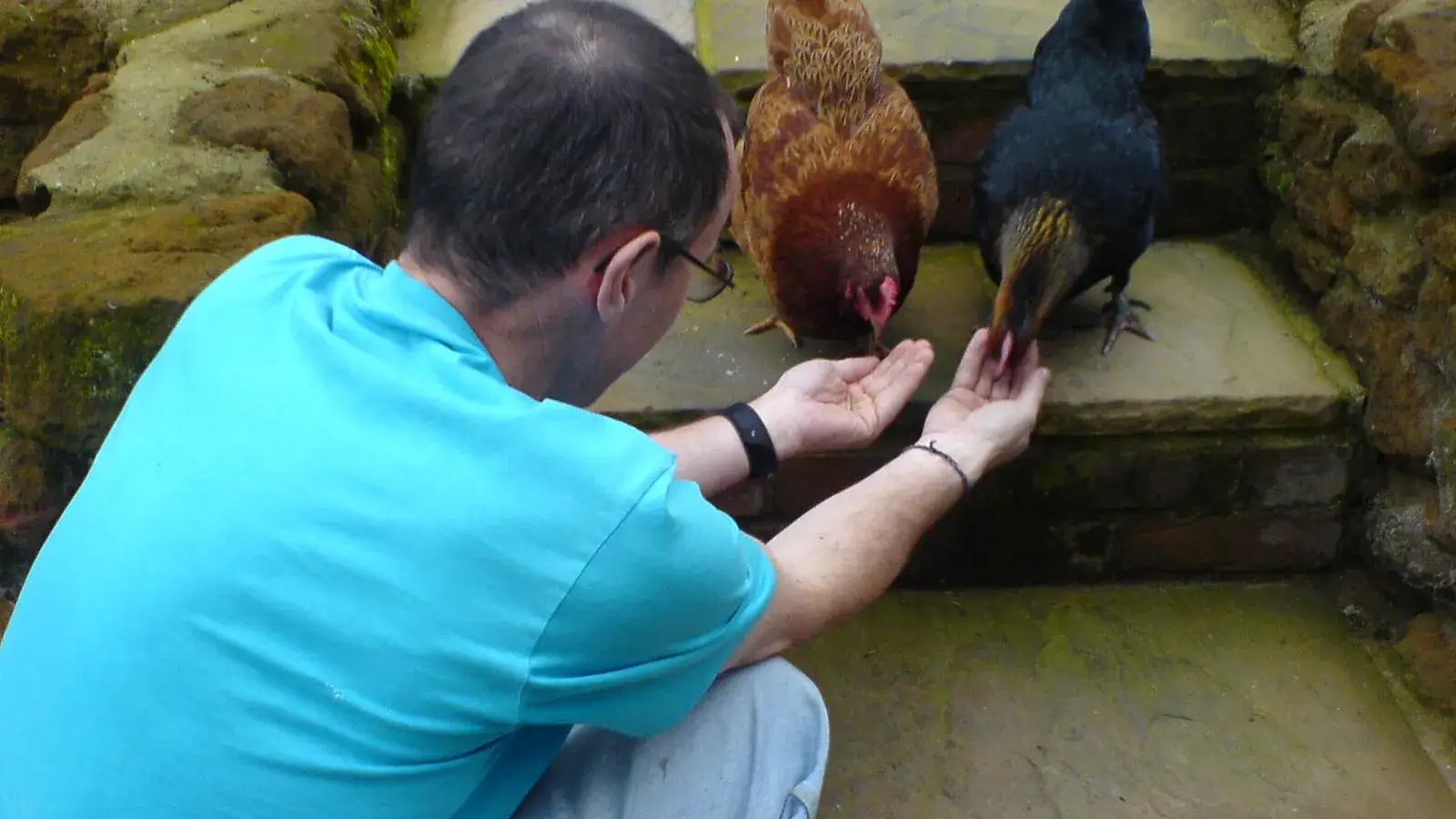
The first is taming. Hens learn the sound of the bag within days. That gives you a flock that comes when you shake it, which is how you get birds back in at dusk without chasing anybody around a run in the dark, and how you get a nervous pullet to stand still enough to be checked over.
The second is diverting attention. A scatter of worms at the far end of the run buys you a few minutes to clean a coop or move a feeder without twelve birds standing in it.
What they are not is a treatment. Do not feed them to fix a laying problem, a moult, or a bird that seems off colour. A hen who has stopped laying, is losing condition or is behaving oddly needs a proper look, and if something is genuinely wrong a vet is the right answer rather than a bigger bag of treats.
One practical habit worth forming: feed them from a dish or scatter them on grass rather than into deep litter. Worms lost in bedding get scratched around, buried and eventually spoil.
Final recommendation
KAYPET 10 lb is the best buy. At $4.40 a pound it is within 40 cents of the cheapest here, it publishes 51 percent protein and 24 percent fat, and it is the only bag in the group that states a moisture figure. That last point is the one that decides whether the bag is still good in month four.
If you want the lowest cost per pound, VITAMORSEL 5 lb is $4.00 and a more manageable bag size, though it publishes no protein or fat figure at all. If your flock is three or four birds, RANZ 2 lb is the sensible size even at $9.00 a pound, because a small bag finished fresh beats a big bag gone stale. And if you want a full published panel to read before buying, Hatortempt 5 lb is the one that gives you protein, fat and fibre, at nearly double the cost per pound of KAYPET.
Questions people ask before buying
How many mealworms can I give my chickens a day?
Keep all treats together to roughly a tenth of what a bird eats in a day. For an average laying hen that is a small handful of mealworms between several birds, not a scoopful each. Mealworms are a treat and not a feed. Stated fat here runs 20 to 24 percent, so every gram of worms displaces layer ration that was balanced for calcium, protein and vitamins. A complete layer feed and oyster shell on the side stay the foundation, whatever else you offer.
Is more expensive mealworm better quality?
Not by the numbers on these bags. The three products here that publish a protein figure state 51, 51 and 52 percent, which is a spread you would struggle to call a difference. Meanwhile the cost per pound runs from $4.00 to $9.00. What the extra money usually buys is a smaller bag, a thicker zip-top pouch or a hand sorting step that removes empty shells. Those can be worth paying for, but they are packaging and processing, not nutrition.
Will mealworms help my hens through a moult?
They add protein to the diet and protein is what feathers are made of, so they are not useless, but do not treat them as a remedy. A moulting hen needs a complete ration with enough protein in it, and a handful of worms on top does not change the balance of what is in the feeder. If you want to support a moult properly, look at the protein percentage of the feed itself rather than piling on treats, because treats fed heavily dilute the ration rather than improving it.
Do dried mealworms go off?
They go stale and they can go mouldy, and moisture is what decides which. Only KAYPET states a moisture figure here, at 4.2 percent or less. Anything holding more water than that is more vulnerable in a humid feed shed, particularly in a bag that gets opened every day in summer. Store the bag closed, in a dry place, ideally inside a sealed bin, and buy a size your flock will finish in a few months rather than a year.
Are non-GMO mealworms worth paying for?
Understand what the label describes first. An insect does not have a GMO version on the market, so a non-GMO claim on mealworms describes the wheat, corn and vegetable matter the larvae were raised on. Premium Poultry uses both non-GMO and organic in its listing without naming a certifier, which means neither word is doing verified work there. If the feed chain matters to you, treat these claims as a preference rather than a standard, because none of them is independently confirmed on the page.
What do I do with the dust at the bottom of the bag?
Do not throw it out and do not scatter it. Dried worms crumble as the bag empties, and the last inch is mostly broken shell and powder that blows away or sits in the litter attracting nothing but ants. Tip it into a wet mash instead, meaning a little layer feed mixed with warm water until it holds together. The powder sticks to the mash, the birds get it, and nothing goes to waste.
Why you can trust this guide
- Written by
- Marta Voss, Editor and fact checker, Chicken Geek. Specialist areas: Editorial fact checking, Chick brooding and starter nutrition, Small-flock husbandry, Feed labels and nutrition claims.
- Fact checked by
- Sam Reddick
- Published
- August 8, 2026 · Last updated August 8, 2026 · Products and links rechecked August 8, 2026
- How we picked
- Bags were compared on cost per pound calculated from the pack price and stated weight, on the protein and fat figures each listing publishes, on whether a moisture percentage is stated, on the drying method and whether shells are removed, and on bag size against how much a small flock can get through before the worms go stale.
- Evidence used
- None of the 6 products on this page were sent to us or bought for a hands-on test. Every recommendation here is research based: manufacturer specifications, listed dimensions and materials, owner feedback at volume, and comparison against equipment our team has owned. Each review states this again above the buy button so you are never guessing which kind of evidence sits behind a pick.
- Editorial standards
- No brand pays for placement, and no manufacturer sees this page before it goes live. Read our editorial policy and testing method.
- Affiliate disclosure
- Chicken Geek is reader supported. We earn a commission from qualifying purchases made through links on this page, at no extra cost to you, and no brand has paid for a placement or an award here.
About the author

Editor and fact checker, Chicken Geek
Marta edits every guide on Chicken Geek and checks that each claim can be traced back to a manufacturer specification, a published standard or a stated first-hand observation. She keeps a small backyard flock of six hens and has raised chicks from day one for eight seasons.
- Eight seasons raising chicks from day-old to point of lay
- Checks every specification in a Chicken Geek guide against the manufacturer listing
- Removes any testing claim that cannot be backed up
- Keeps a flock of six hens in a suburban backyard