We Compared 6 Layer Feeds on Protein, Calcium and Waste
We compared six layer feeds on protein, calcium, form and cost per pound, and explain why the wrong feed can harm roosters, ducks and growing pullets.

By Marta Voss Editor and fact checker, Chicken Geek
Fact checked by Sam Reddick
Published Prices and stock checked 7 min read
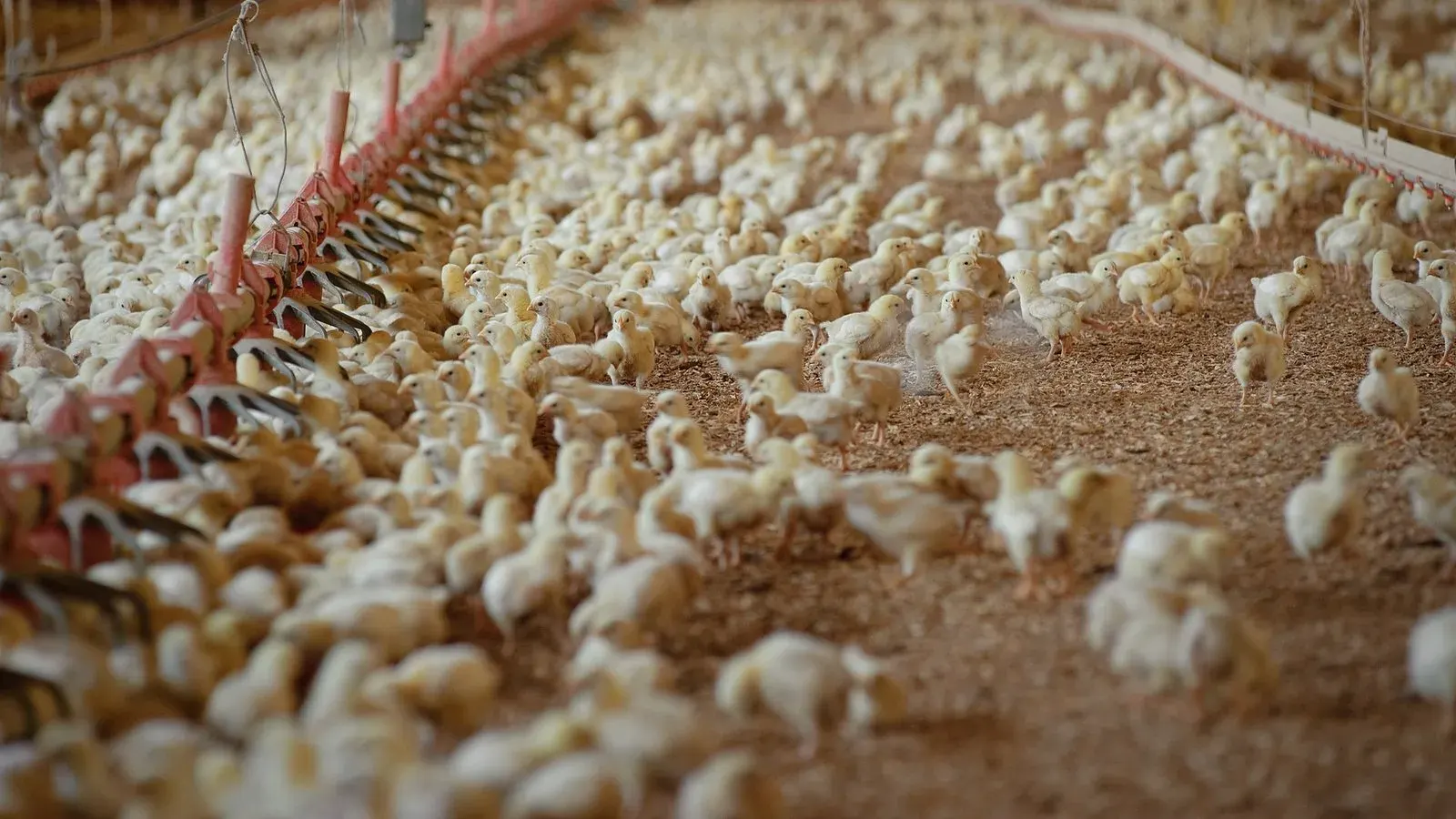
Feed is where most of your money goes and where most of your eggs come from, and the differences between bags are smaller than the marketing suggests and more important than beginners expect.
We compared six rations on four things. Protein, because 16 percent is the standard for laying hens and deviations should have a reason. Calcium, which is the specification that decides whether a feed is safe for the non-laying birds in your yard. Physical form, because crumbles, pellets and mash waste feed in completely different ways. And cost per pound, which for a 50 lb sack against an 8 lb bag differs by a factor most people never calculate.
The single most important thing in this guide is free: if your yard contains a rooster, a duck or a pullet that has not started laying, standard layer feed is the wrong ration for them, and we explain why below.
Our picks at a glance
Every product below wins one specific situation. Pick the row that matches your flock, your yard and your budget rather than reading top to bottom.
-
Best Overall

Purina Layena Crumbles
Most backyard laying flocks, particularly mixed-size flocks including light breeds and bantams.
Check price on Amazon for Purina, Layena Crumbles, Chicken Feed for Laying Hens, 50 lbs on AmazonAbout $42.99 checked Aug 8, 2026
-
Best Pellets

Purina Layena Pellets
Flocks of standard-size hens where feed waste is the main frustration and every bird is big enough for a full pellet.
Check price on Amazon for Purina, Layena Pellets, Chicken Feed for Laying Hens, 50 lbs on AmazonAbout $43.49 checked Aug 8, 2026
-
Best for Mixed Flocks
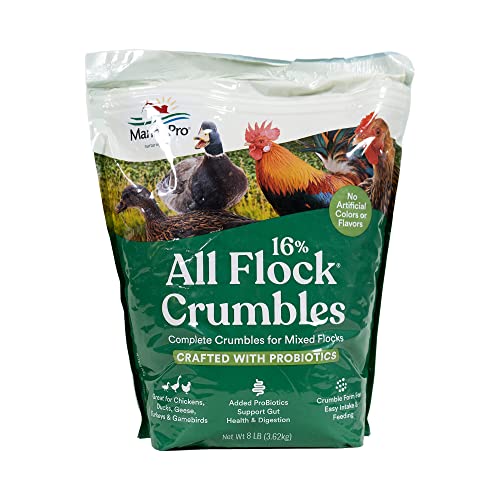
Manna Pro All Flock
Yards with a mix of laying hens, roosters, ducks or growing pullets, where a single high-calcium layer ration would harm some of the birds.
Check price on Amazon for Manna Pro All Flock Crumbles with Probiotics, Chicken & Duck Food, 8 lb Bag on AmazonAbout $15.49 checked Aug 8, 2026
-
Best Organic

New Country Classic
Keepers selling eggs as organic, or anyone specifically avoiding soy in their flock's diet.
-
Best Whole Grain

Scratch and Peck Layer Mash
Keepers who want a visible, minimally processed ration and are willing to feed it as a wet mash or provide free-choice grit.
Check price on Amazon for Scratch and Peck Feeds | Layer Mash for Chickens & Ducks | 40 lb Bag on AmazonAbout $64.99 checked Aug 8, 2026
-
Best Small Bag

Manna Pro Layer Pellets
Very small flocks of two or three hens, where a large sack would lose vitamin potency before the birds finished it.
Check price on Amazon for Manna Pro Layer Pellets Chicken Feed, 16% Protein, Digestive Aid, 8 lb Bag on AmazonAbout $17.50 checked Aug 8, 2026
Compare every pick side by side
Swipe the table sideways to see every column on a phone.
| Product | Award | Price band | Protein | Form | Bag Size | Organic | Best use case | Buy link |
|---|---|---|---|---|---|---|---|---|
| Purina Layena Crumbles | Best Overall | $30 to $60 | 16% | Crumbles | 50 lb | No | Most backyard laying flocks, particularly mixed-size flocks including lig… | Check price for Purina, Layena Crumbles, Chicken Feed for Laying Hens, 50 lbs on Amazon |
| Purina Layena Pellets | Best Pellets | $30 to $60 | 16% | Pellets | 50 lb | No | Flocks of standard-size hens where feed waste is the main frustration and… | Check price for Purina, Layena Pellets, Chicken Feed for Laying Hens, 50 lbs on Amazon |
| Manna Pro All Flock | Best for Mixed Flocks | Under $30 | 18% | Crumbles | 8 lb | No | Yards with a mix of laying hens, roosters, ducks or growing pullets, wher… | Check price for Manna Pro All Flock Crumbles with Probiotics, Chicken & Duck Food, 8 lb Bag on Amazon |
| New Country Classic | Best Organic | $30 to $60 | 17% | Classic grind, with probiotics and kelp | 25 lb | Yes, certified | Keepers selling eggs as organic, or anyone specifically avoiding soy in t… | Check price for New Country Organics | Classic Layer Feed for Laying Hens | Soy-Free | 17% Protein | Certified Organic and Non-GMO | 25 lbs on Amazon |
| Scratch and Peck Layer Mash | Best Whole Grain | $60 to $120 | 16% | Whole grain mash | 40 lb | No, but non-GMO verified | Keepers who want a visible, minimally processed ration and are willing to… | Check price for Scratch and Peck Feeds | Layer Mash for Chickens & Ducks | 40 lb Bag on Amazon |
| Manna Pro Layer Pellets | Best Small Bag | Under $30 | 16% | Pellets | 8 lb | No | Very small flocks of two or three hens, where a large sack would lose vit… | Check price for Manna Pro Layer Pellets Chicken Feed, 16% Protein, Digestive Aid, 8 lb Bag on Amazon |
The full reviews
Each review below follows the same order: what it is, why it won its category, how it behaves in real use, and who should buy something else.
1 Best Overall
Purina, Layena Crumbles, Chicken Feed for Laying Hens, 50 lbs
The 16 percent layer ration most US flocks are raised on, in crumble form, from a mill with the scale to keep its formulation and its freshness consistent bag to bag.
What we liked
- Consistent formulation between bags, which not every small mill manages
- Crumbles suit small and light breeds that struggle with full-size pellets
- Added oyster strip calcium supports shell strength without separate supplementing
- Widely stocked, so you are unlikely to be caught without feed
What we did not
- Crumbles produce noticeably more dust and fines than pellets, and fines get wasted
- Contains soy and corn, which some keepers deliberately avoid
- Not organic, and there is no organic version of this exact ration
About $42.99 checked Aug 8, 2026
Key specifications
- Dimensions
- 32 x 14 x 4 in (L x W x H)
- Weight
- 50 pounds
- Protein
- 16%
- Calcium
- Added oyster strip calcium
- Form
- Crumbles
- Bag Size
- 50 lb
- Organic
- No
- Soy Free
- No
Why Purina Layena Crumbles wins this category
Consistency, which is a genuinely undervalued property in feed. A large mill running a fixed formulation produces a bag in March that is nutritionally the same as the bag in September. Smaller mills using whatever grain is available locally do not always manage that, and flocks notice: a formulation change shows up as a dip in laying about two weeks later.
Sixteen percent protein with added calcium is the standard laying ration, and it is standard because it works.
Living with Purina Layena Crumbles
Crumbles are the right choice for a mixed flock. A full-size pellet is a mouthful for a Sussex and a challenge for a bantam or a light Leghorn, and birds that find feed awkward eat less of it.
Availability matters more than it sounds. Running out of feed on a Sunday is a real problem, and this is stocked almost everywhere.
Where Purina Layena Crumbles falls short
Fines. Crumbles are pellets that have been broken, and breaking produces dust. That dust settles to the bottom of the bag and the bottom of the feeder, and birds pick around it rather than eating it. Over a fifty pound sack the loss is visible.
The fix is worth knowing: tip the fines into a bowl, add a little warm water to make a wet mash, and serve it as a morning treat. The birds eat it enthusiastically and nothing is wasted.
The ingredient objection is a matter of preference rather than nutrition. This contains corn and soy, which are the standard base of commercial poultry rations and which some keepers avoid on principle. If that is you, there are better choices in this comparison.
Research based, not hands-on
Assessed on the published guaranteed analysis and ingredient list, and compared against the pelleted and whole-grain rations here on waste and suitability by breed.
- Best for
- Most backyard laying flocks, particularly mixed-size flocks including light breeds and bantams.
- Skip it if
- You are committed to organic, soy-free or corn-free feeding.
- The limitation to plan around
- Crumbles break down into fines at the bottom of the bag and the bottom of the feeder, and birds pick around them. Expect to lose a visible amount of every bag as dust unless you mix the fines with a little water into a wet mash.
2 Best Pellets
Purina, Layena Pellets, Chicken Feed for Laying Hens, 50 lbs
The same 16 percent ration as the crumbles in pellet form, which wastes noticeably less because there are no fines for birds to pick around.
What we liked
- Pellets produce far fewer fines than crumbles, so less feed is wasted
- Every pellet contains the complete ration, so birds cannot selectively feed
- Same consistent formulation and calcium level as the crumble version
- Flows cleanly through port feeders without bridging
What we did not
- Full-size pellets are awkward for bantams and very light breeds
- Pullets moving onto layer feed take a few days to adjust to pellet size
- Contains corn and soy, and is not organic
About $43.49 checked Aug 8, 2026
Key specifications
- Dimensions
- 27 x 15 x 4 in (L x W x H)
- Weight
- 50 pounds
- Protein
- 16%
- Calcium
- Added oyster strip calcium
- Form
- Pellets
- Bag Size
- 50 lb
- Organic
- No
- Soy Free
- No
Why Purina Layena Pellets wins this category
Waste, and there are two mechanisms.
The first is fines: pellets are the intact form, so there is no dust for birds to pick around and none settling at the bottom of the feeder.
The second is more interesting. In a mash or a poorly bound crumble, hens will pick out the bits they like and leave the rest, which means the bird is not eating the balanced ration you paid for. A complete pellet makes that impossible. Every mouthful is the full formulation.
Living with Purina Layena Pellets
Pellets also behave better mechanically. They flow through port feeders without bridging, they do not cake at the port when the air is humid, and they can be scooped without a cloud of dust.
The ration itself is identical to the crumble version, so if you have a flock doing well on Layena there is nothing to adjust nutritionally when you switch form.
Where Purina Layena Pellets falls short
Size. A full-size layer pellet is a comfortable mouthful for a standard hen and a large one for a bantam or a light Leghorn. Small birds manage, and they work harder at it and eat less over a day.
In a mixed flock that difference compounds. The larger birds eat efficiently and the small ones eat less than they should, and over a season it shows in condition and in laying.
Pullets coming off grower crumbles also take a few days to adjust, and it is worth watching that they are actually eating rather than assuming it.
Research based, not hands-on
Assessed on the published guaranteed analysis and physical form, and compared against the crumble version on waste and bird suitability.
- Best for
- Flocks of standard-size hens where feed waste is the main frustration and every bird is big enough for a full pellet.
- Skip it if
- You keep bantams or very light breeds, because the pellet size is genuinely awkward for them.
- The limitation to plan around
- Pellet size is a real constraint for small birds. Bantams will eat pellets but work harder at it, and in a mixed flock the small birds end up eating less than the large ones, which shows up in condition over a season.
3 Best for Mixed Flocks
Manna Pro All Flock Crumbles with Probiotics, Chicken & Duck Food, 8 lb Bag
An 18 percent ration with deliberately low calcium, which is the only correct way to feed a flock containing ducks, roosters or growing pullets alongside laying hens.
What we liked
- Low calcium is safe for roosters, ducks and growing birds that layer feed harms
- 18 percent protein suits growing birds and supports moulting adults
- Includes probiotics, which help during the stress of introducing new birds
- One feed for the whole yard rather than separate rations in separate feeders
What we did not
- Laying hens need free-choice oyster shell alongside it, which is an extra purchase
- 8 lb bags are an expensive way to buy feed per pound
- Crumble form generates the same fines and dust as any crumble
About $15.49 checked Aug 8, 2026
Key specifications
- Dimensions
- 14 x 10 x 4.5 in (L x W x H)
- Weight
- 8 pounds
- Colour
- WHITE
- Protein
- 18%
- Calcium
- Low, offer oyster shell separately
- Form
- Crumbles
- Bag Size
- 8 lb
- Organic
- No
- Soy Free
- No
Why Manna Pro All Flock wins this category
Because layer feed is genuinely bad for anything that is not a laying hen, and a lot of people do not know it. Layer rations carry around four percent calcium to build eggshells. Roosters, ducks and pullets that have not started laying have no use for that calcium, and sustained excess is associated with kidney damage.
An all-flock ration drops the calcium to a normal maintenance level and raises the protein, which suits everything in a mixed yard.
Living with Manna Pro All Flock
Eighteen percent protein is the other half of the logic. Growing pullets need more protein than an adult layer, and adults rebuilding feathers during autumn moult need it too. A single ration at 18 percent serves the whole yard reasonably.
The included probiotics are most useful at the moments flocks are stressed: introducing new birds, moving house, or the week after a predator scare.
Where Manna Pro All Flock falls short
The oyster shell requirement is not optional and it is the thing people forget. Laying hens on all-flock feed must have free-choice crushed oyster shell in a separate small dish, which they will self-regulate accurately. Without it, shells thin out within a few weeks, and thin shells break in the nest, which is how egg eating starts.
Bag size is the other criticism. Eight pounds is a top-up quantity, not a way to feed a flock, and the cost per pound at that size is high. Buy the largest bag your storage allows.
If your flock is only laying hens, this is the wrong choice anyway. A proper layer ration with calcium built in is simpler and cheaper.
Research based, not hands-on
Assessed on the published guaranteed analysis and calcium level, and compared against layer rations on suitability for non-laying birds.
- Best for
- Yards with a mix of laying hens, roosters, ducks or growing pullets, where a single high-calcium layer ration would harm some of the birds.
- Skip it if
- You keep only laying hens, because a proper layer ration with built-in calcium is simpler and cheaper.
- The limitation to plan around
- You must provide free-choice oyster shell separately or your layers will produce thin shells. All-flock feed is deliberately low in calcium, and forgetting the oyster shell converts a correct decision into a laying problem within weeks.
4 Best Organic
New Country Organics | Classic Layer Feed for Laying Hens | Soy-Free | 17% Protein | Certified Organic and Non-GMO | 25 lbs
Certified organic and soy-free at 17 percent protein, which is a genuinely difficult combination to find and the reason this costs what it does.
What we liked
- Certified organic rather than merely described as natural
- Soy-free, which almost no organic layer ration manages
- 17 percent protein, slightly above the standard and useful during moult
- Mash form means you can see the actual grains rather than a uniform pellet
What we did not
- Costs roughly double per pound compared with conventional layer feed
- Mash lets hens pick out favourites and leave the rest, unbalancing the ration
- 25 lb bags mean more frequent ordering than 50 lb conventional sacks
Key specifications
- Size
- 25 Pound (Pack of 1)
- Weight
- 25 pounds
- Colour
- Black
- Protein
- 17%
- Calcium
- Added calcium
- Form
- Classic grind, with probiotics and kelp
- Bag Size
- 25 lb
- Organic
- Yes, certified
- Soy Free
- Yes
- Certification
- Certified Organic and Non-GMO, grains sourced in North America
- Protein Percent
- 17%
- Life Stage
- Layer
- Corn And Soy
- Soy-free, contains organic corn
Why New Country Organics wins this category
Because organic and soy-free together is a genuinely scarce combination. Plenty of feeds are organic and use organic soy as the protein base. Plenty are soy-free and conventional. Doing both means sourcing organic peas, alfalfa or fishmeal for the protein, and that is expensive and difficult, which is why so few mills offer it.
If either is a requirement for you, the field of options is small and this is at the top of it.
Living with New Country Organics
Seventeen percent protein is slightly above the standard sixteen, and that margin is useful in two situations: during the autumn moult, when birds are rebuilding feathers out of protein, and in winter when energy demand rises.
Mash form has one real advantage, which is transparency. You can see the actual ingredients rather than a uniform brown pellet, and grain quality is visible.
Where New Country Organics falls short
Cost, and it is roughly double conventional feed per pound. That is the honest price of organic certification plus soy-free sourcing, and for a flock of six hens it is a meaningful annual difference.
The nutritional criticism is more important. Mash allows selective feeding. Hens sort through it, eat the grains they like and leave the finer fraction, which is exactly where the vitamin and mineral supplementation sits. The bird then does not receive the balanced ration on the label.
The fix is to feed it as a wet mash, mixing with a little water so nothing can be picked out. That works well and it is a daily job rather than filling a hopper once a week.
Twenty-five pound bags also mean ordering twice as often as with a 50 lb sack.
Research based, not hands-on
Assessed on the published certification, guaranteed analysis and physical form, and compared against conventional pelleted rations on cost and selective feeding.
- Best for
- Keepers selling eggs as organic, or anyone specifically avoiding soy in their flock's diet.
- Skip it if
- Cost per pound is a deciding factor, because the gap against conventional feed is large and permanent.
- The limitation to plan around
- Mash invites selective feeding. Hens pick out the grains they prefer and leave the finer supplement fraction, which means the bird is not eating the balanced ration on the label unless you feed it as a wet mash.
5 Best Whole Grain
Scratch and Peck Feeds | Layer Mash for Chickens & Ducks | 40 lb Bag
Whole grains you can identify by eye, non-GMO verified, in a 40 lb bag. It is the feed for people who want to see what their birds are eating.
What we liked
- Whole, visible grains rather than a ground and re-formed pellet
- Non-GMO Project verified, which is an audited claim rather than a label word
- Encourages natural scratching and foraging behaviour
- 40 lb bag keeps cost per pound reasonable for a premium feed
What we did not
- Whole grain mash is the worst format for selective feeding
- Birds need grit available, because whole grains must be ground in the gizzard
- Costs meaningfully more per pound than conventional pellets
About $64.99 checked Aug 8, 2026
Key specifications
- Dimensions
- 29 x 15.5 x 4 in (L x W x H)
- Weight
- 40 pounds
- Colour
- Brown
- Protein
- 16%
- Calcium
- Added calcium
- Form
- Whole grain mash
- Bag Size
- 40 lb
- Organic
- No, but non-GMO verified
- Soy Free
- No
Why Scratch and Peck wins this category
Transparency, and for a lot of keepers that is the whole point of keeping chickens rather than buying eggs. A pellet is a uniform brown cylinder that could contain anything. A whole grain mash lets you see wheat, peas, oats and the rest, and judge the quality yourself.
The non-GMO Project verification is worth distinguishing from vaguer claims. It is an audited certification with a supply chain behind it, not a marketing adjective.
Living with Scratch and Peck
Birds engage with whole grain differently. They sort, scratch and pick, which is closer to natural foraging behaviour and keeps a confined flock occupied in a way that pellets do not. In a run where boredom leads to feather picking, that is a genuine benefit.
At 40 lb the bag size keeps the cost per pound sensible for a premium feed, unlike the 25 lb organic sacks.
Where Scratch and Peck falls short
Two related problems, and both are about how the bird actually processes it.
Selective feeding is the first. A mash of visibly different grains is an invitation for a hen to eat her favourites and leave the rest, and what gets left is usually the fine supplement fraction carrying the vitamins and minerals. Feeding as a wet mash prevents it and turns feeding into a daily job.
Grit is the second, and it is a hard requirement rather than a suggestion. Chickens have no teeth and grind whole grain in the gizzard using swallowed stones. A flock with no access to soil or without free-choice insoluble grit will pass whole grain undigested, which wastes the feed and can cause an impacted crop.
If you free range on soil, that is usually covered. If your birds live on a hard-floored run, buy grit.
Research based, not hands-on
Assessed on the published grain form, verification and guaranteed analysis, and compared against ground and pelleted rations on digestion and selective feeding.
- Best for
- Keepers who want a visible, minimally processed ration and are willing to feed it as a wet mash or provide free-choice grit.
- Skip it if
- You fill a hopper once a week and want the birds to receive a balanced ration with no further thought.
- The limitation to plan around
- Whole grains have to be ground by the bird in her gizzard, which needs insoluble grit. A flock on whole grain feed without free-choice grit available will not digest it properly, and that is a real husbandry requirement rather than an optional extra.
6 Best Small Bag
Manna Pro Layer Pellets Chicken Feed, 16% Protein, Digestive Aid, 8 lb Bag
A standard 16 percent layer pellet in an 8 lb bag, which is the sensible size for two or three hens where a 50 lb sack would go stale before it was finished.
What we liked
- 8 lb is about right for two or three hens over a month, so the feed stays fresh
- Standard 16 percent layer formulation with added calcium
- Pellet form, so fewer fines and less selective feeding than a crumble
- Small bag is easy to store in a sealed container in a garage or shed
What we did not
- Costs substantially more per pound than a 50 lb sack
- Runs out quickly with more than three birds, so reordering is frequent
- Contains corn and soy, and is not organic
About $17.50 checked Aug 8, 2026
Key specifications
- Dimensions
- 14.5 x 10 x 4 in (L x W x H)
- Weight
- 8 pounds
- Protein
- 16%
- Calcium
- Added calcium for shell strength
- Form
- Pellets
- Bag Size
- 8 lb
- Organic
- No
- Soy Free
- No
Why Manna Pro Layer Pellets wins this category
Because feed is perishable and people forget it. The vitamins in a compound ration degrade over time, faster in heat and humidity, and most guidance suggests using feed within a couple of months of the mill date.
Three hens eat about three quarters of a pound a day, so a 50 lb sack takes them more than two months, and the last of that sack is nutritionally weaker than the first. An 8 lb bag is roughly a month, which is the right pace.
Living with Manna Pro Layer Pellets
Storage is genuinely easier. A small bag fits in a sealed bucket or bin on a shelf, where a 50 lb sack in a garage is a rodent invitation and a slug of floor space.
Pellet rather than crumble is the right call at this size, because it means fewer fines settling in the bottom of a small feeder where they represent a bigger proportion of the total.
Where Manna Pro Layer Pellets falls short
Cost per pound, and the gap is large. Buying feed in 8 lb bags is several times more expensive per pound than buying a 50 lb sack, in the same way that buying any staple in single portions is.
That only makes sense below about four birds. At five or six hens a 50 lb sack is finished inside two months anyway, so the freshness argument disappears and you are simply paying more.
The formulation itself is the conventional standard: corn and soy based, not organic. That is fine and it is not a premium product in any respect except the packaging.
Research based, not hands-on
Assessed on the published guaranteed analysis and bag size, and compared against 50 lb sacks on cost per pound and feed freshness over time.
- Best for
- Very small flocks of two or three hens, where a large sack would lose vitamin potency before the birds finished it.
- Skip it if
- You have more than three or four hens, because the cost per pound is hard to justify at that scale.
- The limitation to plan around
- You are paying a large premium for the small pack. That only makes sense below about four birds, where the alternative is a 50 lb sack going stale, and above that number it is simply an expensive way to buy feed.
How we compared these feeds
We started from the guaranteed analysis printed on each bag rather than from the marketing on the front, recording protein and calcium for every ration.
Physical form was assessed against two distinct waste mechanisms: fines, which are generated by crumbles and left uneaten at the bottom of feeders, and selective feeding, which mash allows and complete pellets prevent.
Certification claims were separated into audited ones, such as USDA Organic and Non-GMO Project Verified, and unaudited descriptive words such as "natural", which mean nothing in feed labelling.
Finally we calculated cost per pound, because bag size differences of six times produce price differences that headline figures hide.
What actually matters in chicken feed
Protein, and when to deviate from 16 percent
Sixteen percent is the laying standard and it is correct for a hen in normal production.
Go higher, to 18 or 20 percent, during the autumn moult. Feathers are largely protein, and a bird regrowing a full coat while also being asked to lay is being asked for more than she has. Higher protein for those six to eight weeks is one of the few feed changes with a visible effect.
Growing pullets also need more, which is what grower rations are for.
Calcium, and the mistake that matters
This is the specification that determines who in your yard can safely eat a feed.
Layer rations carry roughly four percent calcium. A laying hen puts most of that into eggshells. A rooster, a duck or a pullet not yet laying has no use for it, must excrete it, and sustained excess is linked to kidney damage.
If your flock is only laying hens, layer feed is correct and simplest. If it is mixed, feed an all-flock ration with normal calcium and put crushed oyster shell in a separate dish. Hens regulate their own calcium intake accurately when given the choice.
Form, and the two kinds of waste
Pellets: least waste, complete ration in every mouthful, awkward for bantams.
Crumbles: suit small birds, generate fines that settle uneaten in the feeder.
Mash: most natural to eat, invites selective feeding, works properly only wet.
If you have a crumble feeder full of dust, do not throw it out. Mix the fines with warm water into a wet mash and serve it as a morning feed; the birds will clear it enthusiastically.
Freshness and bag size
Feed is perishable. Vitamin content declines from the mill date, faster in heat.
Work out your consumption before choosing bag size: a quarter pound per standard bird per day. Six hens use 1.5 lb a day, which finishes a 50 lb sack in about five weeks, which is ideal. Three hens take more than two months over the same sack, which is not.
Store in a sealed container rather than the paper bag, both for freshness and because a paper sack in a shed is a rodent invitation.
Certifications worth paying for
USDA Organic and Non-GMO Project Verified are audited claims with a supply chain behind them.
"Natural", "premium" and "farm fresh" are not regulated in any meaningful way on feed labels and should be ignored entirely.
Grit, oyster shell and the two dishes
Two small dishes alongside the feeder solve most nutritional questions.
Insoluble grit goes in one. Chickens have no teeth and grind food in the gizzard with swallowed stone. Birds with access to soil usually find their own; birds on a hard-floored run or eating whole grains need it supplied.
Crushed oyster shell goes in the other, for any flock containing laying hens. They take what they need and ignore it when they do not, which is why free choice works better than mixing calcium into feed for a mixed flock.
Final recommendation
Purina Layena Crumbles is the sensible default for most backyard laying flocks. Sixteen percent protein, added calcium, consistent formulation, and crumbles that suit a mixed-size flock.
If every bird is standard size and feed waste bothers you, the pelleted version of the same ration wastes less. If your yard has roosters, ducks or growing pullets in it, Manna Pro All Flock plus a dish of oyster shell is the correct answer rather than an upgrade. For certified organic and soy-free, New Country Organics is one of very few options that manages both.
Questions people ask before buying
What protein percentage do laying hens need?
Sixteen percent is the standard for a laying hen in normal production, and it is what almost every layer ration is formulated to. Higher protein around 18 to 20 percent is genuinely useful in two situations: during the autumn moult, when birds are rebuilding feathers which are largely protein, and for growing pullets before they start laying. Feeding well above 18 percent to adult layers year round gives no benefit and costs more.
Can roosters eat layer feed?
Not as a permanent diet. Layer rations contain around four percent calcium to build eggshells, which is far more than a bird that is not laying can use, and sustained excess calcium is associated with kidney damage in roosters. The same applies to ducks and to pullets that have not started laying. The correct answer for a mixed yard is an all-flock ration with normal calcium, plus free-choice oyster shell that the laying hens will self-regulate.
When should pullets switch from grower to layer feed?
At around 18 weeks, or when the first egg appears, whichever comes first. Switching too early exposes a bird whose skeleton is still developing to layer levels of calcium, which she cannot use and has to excrete. Switching too late means she starts laying without the calcium reserves to build good shells. Watching for the first egg is more reliable than counting weeks, because breeds mature at different rates.
Crumbles, pellets or mash?
Pellets waste the least, because there are no fines for birds to pick around and every pellet contains the full ration, so selective feeding is impossible. Crumbles suit bantams and light breeds that find full pellets awkward, at the cost of dust and fines. Mash allows the most selective feeding, meaning hens eat their favourite grains and leave the vitamin fraction, and it works properly only if you feed it as a wet mash.
How long does chicken feed stay fresh?
Aim to use a bag within about two months of the mill date, and sooner in heat and humidity. Vitamins degrade over time, and a bag that has sat in a hot shed since spring is nutritionally weaker than the label says. Buy a bag size that your flock finishes in that window, store it in a sealed container rather than the paper sack, and keep it cool and dry.
Do chickens need grit and oyster shell?
They are two different things and both matter. Insoluble grit is small stones that sit in the gizzard and grind food, and any bird eating whole grains or foraging needs it unless she has access to soil. Oyster shell is soluble calcium for eggshells, and laying hens on an all-flock ration must have it available free choice. Offer both in separate small dishes and the birds will take what they need.
Why you can trust this guide
- Written by
- Marta Voss, Editor and fact checker, Chicken Geek. Specialist areas: Editorial fact checking, Chick brooding and starter nutrition, Small-flock husbandry, Feed labels and nutrition claims.
- Fact checked by
- Sam Reddick
- Published
- August 6, 2026 · Last updated August 6, 2026 · Products and links rechecked August 6, 2026
- How we picked
- Feeds were compared on published guaranteed analysis for protein and calcium, physical form and its effect on feed waste and selective feeding, certification claims and whether they are audited, bag size against realistic consumption rates, and cost per pound.
- Evidence used
- None of the 6 products on this page were sent to us or bought for a hands-on test. Every recommendation here is research based: manufacturer specifications, listed dimensions and materials, owner feedback at volume, and comparison against equipment our team has owned. Each review states this again above the buy button so you are never guessing which kind of evidence sits behind a pick.
- Editorial standards
- No brand pays for placement, and no manufacturer sees this page before it goes live. Read our editorial policy and testing method.
- Affiliate disclosure
- Chicken Geek is reader supported. We earn a commission from qualifying purchases made through links on this page, at no extra cost to you, and no brand has paid for a placement or an award here.
About the author

Editor and fact checker, Chicken Geek
Marta edits every guide on Chicken Geek and checks that each claim can be traced back to a manufacturer specification, a published standard or a stated first-hand observation. She keeps a small backyard flock of six hens and has raised chicks from day one for eight seasons.
- Eight seasons raising chicks from day-old to point of lay
- Checks every specification in a Chicken Geek guide against the manufacturer listing
- Removes any testing claim that cannot be backed up
- Keeps a flock of six hens in a suburban backyard