We Compared 6 Chicken Coop Fans on Heat, Power and Control
We compared six chicken coop fans on power source, thermostat control and airflow, because heat kills more backyard hens than cold and a fan is a summer tool only.

By Sam Reddick Lead gear reviewer, Chicken Geek
Fact checked by Marta Voss
Published Prices and stock checked 7 min read
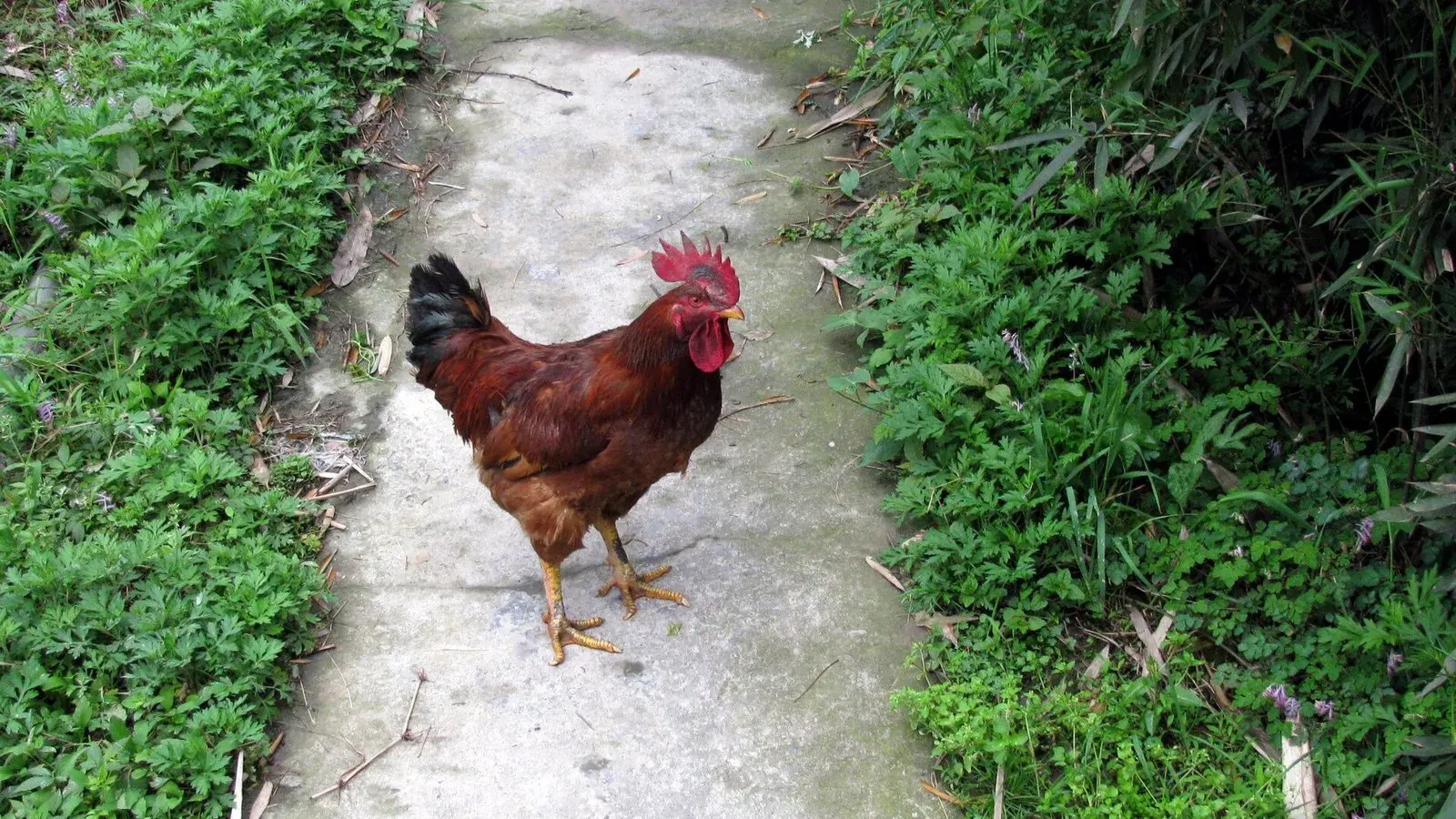
A chicken has no sweat glands. She sheds heat by panting, by holding her wings out from her body and by pushing blood through her comb and wattles, and every one of those routes stops working once the air around her gets close to her own body temperature. That is why heat kills far more backyard birds than cold ever does, and why a hot afternoon is a bigger problem than a frozen night.
A fan helps with that, and it is worth being blunt about what it does not do. It does not replace ventilation. If your coop has no exhaust opening at the ridge, above the height of the roost, a fan is just stirring the same hot, damp, ammonia-heavy air around the birds. Fix the vents first, then add a fan to push more air through them.
The other half of this is timing. A coop fan is a summer tool. Running one in winter drives cold air across roosting birds, which is the thing that causes frostbitten combs and chilled hens, so control matters as much as airflow. Solar suits the job for exactly that reason. The fan works hardest when the sun is out, which is when the coop is hot.
Our picks at a glance
Every product below wins one specific situation. Pick the row that matches your flock, your yard and your budget rather than reading top to bottom.
-
Best Overall
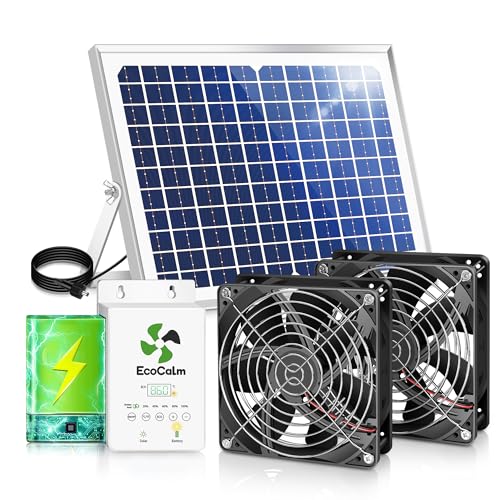
ecoCalm Thermostatic
Keepers with a standard backyard coop who want the fan to manage itself through spring and autumn without being switched on and off.
Check price on Amazon for ecoCalm Solar Exhaust Fan for Chiken Coop with Smart Thermostat and Battery on AmazonAbout $64.79 checked Aug 8, 2026
-
Best Value

Fanspex 5.5 in 2-Fan Kit
Keepers who want summer airflow at the lowest sensible price and are willing to disconnect or cover the panel through the cold months.
Check price on Amazon for Fanspex 5.5" Solar 2 Fan Kit Waterproofed for Chicken Coop & Greenhouse on AmazonAbout $34.19 checked Aug 8, 2026
-
Best with Battery
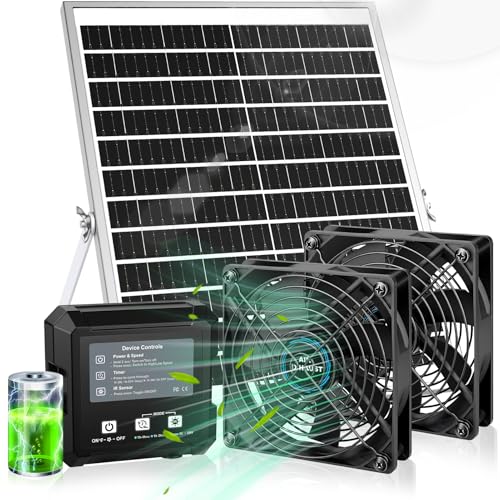
TARKARI 25W with Battery
Keepers in climates where evenings stay hot long after sunset and a fan that stops with the light leaves the coop uncomfortable.
-
Best for Large Coops

Fanspex 3-Fan Kit
Larger coops, converted sheds and long runs of housing where a two fan kit is clearly not shifting enough air on a hot afternoon.
Check price on Amazon for Fanspex Solar 3 Fan Kit Waterproofed for Chicken Coop, Greenhouse & Shed on AmazonAbout $49.99 checked Aug 8, 2026
-
Best Mains Option

SHENVITASO 8 in Vent Fan
Walk in coops, converted sheds and anyone with power already at the coop who needs airflow through hot nights as well as hot afternoons.
-
Best Budget

pqins 5 in Solar Kit
Small coops of a few hens, or anyone who wants to add basic summer airflow without spending much to find out whether it helps.
Compare every pick side by side
Swipe the table sideways to see every column on a phone.
| Product | Award | Price band | Power Source | Fan Count | Fan Size | Thermostat | Best use case | Buy link |
|---|---|---|---|---|---|---|---|---|
| ecoCalm Thermostatic | Best Overall | $60 to $120 | Solar with battery storage | 2 | 5.5 in | Yes, smart thermostat | Keepers with a standard backyard coop who want the fan to manage itself t… | Check price for ecoCalm Solar Exhaust Fan for Chiken Coop with Smart Thermostat and Battery on Amazon |
| Fanspex 5.5 in 2-Fan Kit | Best Value | $30 to $60 | Solar panel, direct drive | 2 | 5.5 in | No | Keepers who want summer airflow at the lowest sensible price and are will… | Check price for Fanspex 5.5" Solar 2 Fan Kit Waterproofed for Chicken Coop & Greenhouse on Amazon |
| TARKARI 25W with Battery | Best with Battery | $30 to $60 | 25 W solar with battery storage | 1 exhaust fan | Exhaust unit | Smart sensing on and off | Keepers in climates where evenings stay hot long after sunset and a fan t… | Check price for Solar-Powered Chicken Coop Exhaust Fan with Battery & Smart Sensing – 25W Solar Panel, 2 * 4.7" Fans, 3 Modes, IP65 Waterproof | Ideal for Chicken Coop, Dog House, Greenhouse, Outside on Amazon |
| Fanspex 3-Fan Kit | Best for Large Coops | $30 to $60 | Solar panel, direct drive | 3 | 5.5 in | No | Larger coops, converted sheds and long runs of housing where a two fan ki… | Check price for Fanspex Solar 3 Fan Kit Waterproofed for Chicken Coop, Greenhouse & Shed on Amazon |
| SHENVITASO 8 in Vent Fan | Best Mains Option | $30 to $60 | 25 W solar or mains adapter | 1 | 8 in | No | Walk in coops, converted sheds and anyone with power already at the coop… | Check price for Solar Exhaust Fan, 25W Solar Panel + 8" Ventilation Vent Fan, with Power Adapter, Anti-backflow Valve, High Speed Solar Powered Exhaust Fan with Bracket for Shed, Chicken Coop, Greenhouse, Dog House on Amazon |
| pqins 5 in Solar Kit | Best Budget | Under $30 | Solar panel, direct drive | 2 | 5 in | No | Small coops of a few hens, or anyone who wants to add basic summer airflo… | Check price for pqins 5 Inch Solar Powered Fan, Solar Exhaust Intake Fan Kit, IPX7 Waterproof Dual Fans with 13Ft On/Off Switch Cable, Cooling Ventilation for Greenhouse, Chicken Coop, Shed, Outside No Battery on Amazon |
The full reviews
Each review below follows the same order: what it is, why it won its category, how it behaves in real use, and who should buy something else.
1 Best Overall
ecoCalm Solar Exhaust Fan for Chiken Coop with Smart Thermostat and Battery
Two 5.5 in fans with solar and battery storage, and a thermostat that decides when they run, which is the one feature that stops a coop fan working against you in the cold months.
What we liked
- The smart thermostat runs the fans on temperature rather than on sunlight
- Battery storage keeps air moving through the warm hour after sunset
- Two 5.5 in fans move more air than the single fan units at this price
- A 5.5 x 2 x 5.5 in body fits a gable vent on a compact coop without a large cutout
What we did not
- Two 5.5 in fans are sized for a small coop, so a walk in shed needs something bigger
- Battery and thermostat electronics are two more outdoor components that can fail, and neither is serviceable
- Costs close to double the plain solar kits here for the same 5.5 in fan size
About $64.79 checked Aug 8, 2026
Key specifications
- Dimensions
- 5.5 x 2 x 5.5 in (L x W x H)
- Colour
- Black
- Power Source
- Solar with battery storage
- Fan Count
- 2
- Fan Size
- 5.5 in
- Thermostat
- Yes, smart thermostat
- Weather Rating
- Outdoor rated
Why the ecoCalm Thermostatic wins this category
Because it answers the question the rest of the category ignores. A coop fan needs to run on a hot day and stay off on a cold one, and sunlight does not tell you which is which. A bright, still morning in March produces plenty of panel output and no heat at all, and a direct drive fan will happily blow that cold air across roosting birds.
A thermostat breaks that link. The fans run on a temperature reading, so the shoulder seasons stop being your problem to manage with a switch and a good memory.
Living with the ecoCalm Thermostatic
Battery storage is the second thing it gets right. A coop that has been in the sun since noon is still shedding stored heat at 8pm, long after a direct drive panel has given up. The birds are on the roost by then, up in the warmest part of the coop, so an hour of extraction after sunset lands where it is needed.
The unit itself is small at 5.5 x 2 x 5.5 in, which means a modest hole in a gable end rather than the large cutout an 8 in fan needs.
Where the ecoCalm Thermostatic falls short
Capacity is the honest limit. Two 5.5 in fans suit a coop of a few hens. Put this on a walk in shed and it will run all afternoon without meaningfully changing the air, because airflow follows blade area and there is not much of it here.
The electronics are the other consideration. A direct drive kit is a panel, a wire and a motor. This adds a battery and a thermostat, both living outdoors in dust and temperature swings, and neither is repairable.
The price buys that control. If you are happy to flip a switch twice a year, the cheaper kits do the airflow for considerably less.
Research based, not hands-on
Assessed on the published fan size, fan count, thermostat function and battery storage, and compared against direct drive solar kits on shoulder season behaviour.
- Best for
- Keepers with a standard backyard coop who want the fan to manage itself through spring and autumn without being switched on and off.
- Skip it if
- You have a walk in coop or converted shed, because two 5.5 in fans will not change the air in that volume fast enough.
- The limitation to plan around
- The thermostat setting is the manufacturer's, not yours. You are trusting somebody else's idea of hot, so mount a thermometer at roost height and check that the fan is actually running when your birds are panting.
2 Best Value
Fanspex 5.5" Solar 2 Fan Kit Waterproofed for Chicken Coop & Greenhouse
Two 5.5 in waterproofed fans on a direct drive solar panel, which does the whole summer job for about half the price of a thermostatic unit as long as you accept the sun as your switch.
What we liked
- Direct drive means a panel, a cable and a motor, with no battery or board to fail
- Two 5.5 in fans match a standard backyard coop of a few hens
- Waterproofed fan housings suit a unit that lives on an outside wall year round
- Output rises and falls with sunlight, which tracks coop temperature reasonably well in high summer
What we did not
- No thermostat, so the fans run on a bright cold morning when the birds want still air
- No battery, so extraction stops at sunset while the coop is still shedding stored heat
- The 15.4 x 12.6 in panel needs a clear south facing spot, which not every run offers
About $34.19 checked Aug 8, 2026
Key specifications
- Dimensions
- 15.4 x 12.6 x 1 in (L x W x H)
- Colour
- Black
- Power Source
- Solar panel, direct drive
- Fan Count
- 2
- Fan Size
- 5.5 in
- Thermostat
- No
- Weather Rating
- Waterproofed fan housings
Why the Fanspex 5.5 in 2-Fan Kit wins this category
Because it strips the category back to the part that does the work. A panel, a cable, two 5.5 in fans. No board to corrupt, no battery to swell, no thermostat to disagree with, and it costs about what a bag of feed costs.
For high summer that is enough. When the sun is on the coop roof, the panel is at full output and the fans are pulling hot air out at the ridge. When it clouds over, the coop is cooler anyway.
Living with the Fanspex 5.5 in 2-Fan Kit
Two 5.5 in fans suit a backyard coop of four to eight birds, provided you mount them high on a gable and set them to extract rather than blow inward.
The panel needs thought. At 15.4 x 12.6 in it wants unshaded sun through the middle of the day, and the coop is often in the shadiest corner of a garden. Mounting the panel on a fence or shed roof and running the cable back usually beats bolting it to the coop.
Waterproofed housings mean the fans can stay in place year round.
Where the Fanspex 5.5 in 2-Fan Kit falls short
The missing thermostat is the real cost of the low price, and it is not a minor point. On a clear, cold morning the panel makes power and the fans push cold air over birds that are still on the roost. That is a draught, and a draught in cold weather causes chilled birds and frostbitten combs.
There is no battery either, so the fans stop the moment the light goes, which is when a coop that baked all afternoon is at its worst.
Neither point makes it a bad buy. They make it a fan that needs an owner who remembers it exists.
Research based, not hands-on
Assessed on the published fan count, fan size, panel dimensions and direct drive wiring, and compared against thermostatic units on shoulder season control.
- Best for
- Keepers who want summer airflow at the lowest sensible price and are willing to disconnect or cover the panel through the cold months.
- Skip it if
- You will not reliably remember to shut it down in autumn, because unmanaged winter running is worse than having no fan at all.
- The limitation to plan around
- Sunlight is the only control you get. Plan the winter answer before you fit it, whether that is an inline switch you can reach from the ground, an unplugged connector or a cover over the panel from October onwards.
3 Best with Battery
Solar-Powered Chicken Coop Exhaust Fan with Battery & Smart Sensing – 25W Solar Panel, 2 * 4.7" Fans, 3 Modes, IP65 Waterproof | Ideal for Chicken Coop, Dog House, Greenhouse, Outside
A 25 W panel, battery storage and smart sensing on one exhaust unit, built to keep extracting through the hot hour after sunset when direct drive kits have already stopped.
What we liked
- Battery storage covers the evening period when a coop is still shedding stored heat
- A 25 W panel is the largest here alongside the SHENVITASO, so it charges through hazy weather
- Smart sensing switches the fan on and off without you touching it
- IP65 rating suits permanent outdoor mounting in rain and blown dust
What we did not
- The specification records one exhaust unit while the product title lists two 4.7 in fans, so what arrives in the box is not clear before you order
- Smart sensing gives you no temperature you can set by hand, so you inherit the maker's threshold
- Rechargeable cells lose capacity over a few seasons, and the evening running time goes first
Key specifications
- Colour
- Black
- Power Source
- 25 W solar with battery storage
- Fan Count
- 1 exhaust fan
- Fan Size
- Exhaust unit
- Thermostat
- Smart sensing on and off
- Weather Rating
- Outdoor rated
Why the TARKARI 25W with Battery wins this category
Because a coop does not cool down when the sun goes down. Timber, felt and a small enclosed volume hold heat, so the interior lags behind the outside air, and the worst hour is often after the birds have gone to roost. They are then in the warmest part of the building with no way to move out of it.
A direct drive fan is dead by then. This one is not. The battery keeps the exhaust running into the evening, which is the most useful thing storage buys you here.
Living with the TARKARI 25W with Battery
The 25 W panel is generous for a unit this size. That headroom matters on a hazy, humid afternoon, weather that is hard on birds and poor for panel output at once, because the panel still gathers enough to run the fan and put something back into the cells.
Smart sensing handles the on and off decision, so unlike the direct drive kits you are not relying on the sun to be an honest thermometer. IP65 means it can be mounted high on a gable and left there.
Where the TARKARI 25W with Battery falls short
The listing does not agree with itself on what you get. The specification records a single exhaust unit. The product title lists two 4.7 in fans. Those are not the same purchase, and the difference decides whether a seized motor halves your airflow or ends it. Ask the seller before you order if redundancy is why you are choosing this one.
What is not in doubt is the fan size. Nothing here is an 8 in blade, so on a walk in coop this is undersized whichever count turns up.
The sensing threshold is not adjustable. That is fine when it agrees with your climate and your breeds, and there is nothing you can do when it does not. Heavy feathered birds struggle earlier than the average, and you cannot tell this fan that.
The battery is the wear item. Cells lose capacity with cycling and heat, and evening running time shortens first, so the feature you bought it for fades before anything else does.
Research based, not hands-on
Assessed on the published panel wattage, battery storage, smart sensing behaviour and IP65 rating, and compared against direct drive kits on evening extraction.
- Best for
- Keepers in climates where evenings stay hot long after sunset and a fan that stops with the light leaves the coop uncomfortable.
- Skip it if
- You want something with nothing to degrade, because a direct drive kit has no cells to lose capacity and no sensor to disagree with.
- The limitation to plan around
- The battery is the part with a service life. Everything else here will outlast it, and when the cells fade you get a fan that works fine at noon and dies at dusk, which is the opposite of why you bought it.
4 Best for Large Coops
Fanspex Solar 3 Fan Kit Waterproofed for Chicken Coop, Greenhouse & Shed
The same waterproofed 5.5 in fans as the two fan kit with a third added, which raises total blade area by half for a small step up in price and suits a bigger coop or a converted shed.
What we liked
- Three 5.5 in fans give half again the blade area of the two fan kit
- Losing one motor still leaves two running, which a single fan unit cannot offer
- Fans can be split across two openings to pull air from both ends of a long coop
- Waterproofed housings and a 15.8 in panel built for permanent outdoor mounting
What we did not
- No thermostat, so the fans run whenever the panel sees light including cold bright mornings
- Three fans share one direct drive panel, so each runs slower than it would alone in weak sun
- No battery, so all extraction stops at sunset while the coop is still warm
About $49.99 checked Aug 8, 2026
Key specifications
- Dimensions
- 15.8 x 1.5 x 6.3 in (L x W x H)
- Colour
- Black
- Power Source
- Solar panel, direct drive
- Fan Count
- 3
- Fan Size
- 5.5 in
- Thermostat
- No
- Weather Rating
- Waterproofed fan housings
Why the Fanspex 3-Fan Kit wins this category
Because coop volume decides how much air you need to move, and a lot of buyers underestimate theirs. A 4 ft by 8 ft shed with standing headroom holds several times the air of a small backyard coop, and a pair of 5.5 in fans on that volume makes a noise without changing much.
Three fans of the same size give half again the blade area for a modest step in price, which is the cheapest way to scale up short of moving to a single 8 in unit.
Living with the Fanspex 3-Fan Kit
The useful trick with three fans is that they need not all sit in one hole. On a long coop you can put two at the far gable and one at the near end, which pulls air along the building rather than churning it in one corner.
Redundancy is the quiet benefit. Cheap fan motors fail after a few seasons of dust and damp, and losing one of three leaves you two thirds of your airflow rather than none.
The 15.8 in panel and the waterproofed housings mean the assembly can stay up through winter, with the panel disconnected or covered.
Where the Fanspex 3-Fan Kit falls short
One panel now feeds three motors, which changes the maths in poor light. Under cloud the available current is shared, so each fan spins slower than one fan on the same panel would. In bright sun that is irrelevant. On a muggy overcast day, which is when birds suffer, it is not.
There is still no thermostat, so the winter problem is unchanged. Bright, cold mornings will spin these up over roosting birds unless you disconnect the panel or fit a switch you can reach.
And there is no battery, so extraction ends with the daylight while the coop is still giving back the afternoon's heat.
Research based, not hands-on
Assessed on the published fan count, fan size, panel dimensions and direct drive wiring, and compared against the two fan kit and single fan units on total blade area.
- Best for
- Larger coops, converted sheds and long runs of housing where a two fan kit is clearly not shifting enough air on a hot afternoon.
- Skip it if
- Your coop is a standard small backyard unit, because a third fan on 144 cubic feet is money spent on airflow you do not need.
- The limitation to plan around
- Three fans on one direct drive panel means the panel is the ceiling. In weak or partial sun the available power is split three ways and each fan turns slower, so this is not automatically better than the two fan kit on a hazy day.
5 Best Mains Option
Solar Exhaust Fan, 25W Solar Panel + 8" Ventilation Vent Fan, with Power Adapter, Anti-backflow Valve, High Speed Solar Powered Exhaust Fan with Bracket for Shed, Chicken Coop, Greenhouse, Dog House
A single 8 in vent fan on a 25 W panel that can also run from a mains adapter, which makes it the only fan here that keeps extracting through a still, hot night.
What we liked
- An 8 in blade sweeps far more area than the 5 in and 5.5 in fans elsewhere in this guide
- The mains adapter lets it run at 3am during a heat wave, which no solar only fan can do
- An anti-backflow valve stops outside air being pushed back through the fan when it is idle
- Supplied with a bracket, so mounting high on a gable does not need a fabricated frame
What we did not
- No thermostat, so on mains power it runs continuously unless you add a timer or a temperature switch
- The 8 in body needs a large cutout in the coop wall, which is a bigger job than a 5.5 in fan
- Running mains to a coop means a GFCI protected circuit and cable routed away from rodents
Key specifications
- Dimensions
- 13.5 x 6.2 x 15.3 in (L x W x H)
- Colour
- Grey
- Power Source
- 25 W solar or mains adapter
- Fan Count
- 1
- Fan Size
- 8 in
- Thermostat
- No
- Weather Rating
- Outdoor rated
Why the SHENVITASO 8 in Vent Fan wins this category
Because solar has one gap and this is the fan that fills it. A hot, still night after a hot day is what puts birds in trouble, and every solar only unit here is off or coasting on a battery by then. Plug this into a mains adapter and it runs until you stop it.
Blade size is the second reason. Airflow follows swept area, and an 8 in fan sweeps over twice what a 5 in fan does, so one of these beats a pair of the small kits.
Living with the SHENVITASO 8 in Vent Fan
The dual power arrangement is flexible. Run it from the 25 W panel through normal summer weeks and reach for the adapter during a heat wave, when the risk to the birds is real.
The anti-backflow valve is worth understanding. When the fan is idle, an open 8 in hole in a gable lets wind blow straight into the coop. The valve closes that path, which matters in winter when you want ventilation without a wind tunnel. The bracket also saves building a mount at height.
Where the SHENVITASO 8 in Vent Fan falls short
There is no thermostat, and on mains power that omission gets worse rather than better. A solar fan without one at least stops at night. A mains fan runs until somebody unplugs it, and a fan running over roosting birds in November is doing harm. Budget for a plug in timer or a thermostatic socket.
Installation is a bigger commitment too. At 13.5 x 6.2 x 15.3 in this needs a proper cutout and a solid mounting surface. The cable run is a real job as well: an outbuilding circuit should be GFCI protected and routed where rodents cannot chew the insulation, because gnawed cable in a bedded coop is a fire risk.
Research based, not hands-on
Assessed on the published 8 in fan size, dual solar and mains power options, anti-backflow valve and bracket, and compared against solar only kits on night time operation.
- Best for
- Walk in coops, converted sheds and anyone with power already at the coop who needs airflow through hot nights as well as hot afternoons.
- Skip it if
- Your coop is small and has no power nearby, because the cutout is large and the mains ability is the main reason to pay for this one.
- The limitation to plan around
- Mains capability is only useful if you add control. With no thermostat, a plugged in fan runs day and night in every season, so pair it with a plug in timer or a temperature switch before you rely on the adapter.
6 Best Budget
pqins 5 Inch Solar Powered Fan, Solar Exhaust Intake Fan Kit, IPX7 Waterproof Dual Fans with 13Ft On/Off Switch Cable, Cooling Ventilation for Greenhouse, Chicken Coop, Shed, Outside No Battery
Two 5 in IPX7 fans on a direct drive panel with a 13 ft on and off switch cable, which is the cheapest way to get real airflow and the easiest one to shut down for winter.
What we liked
- A 13 ft cable with an on and off switch lets you kill the fans from the ground
- IPX7 rated fan housings for a unit that stays mounted through rain
- Two fans rather than one, so a single motor failure does not stop all airflow
- The lowest price here, which makes a second kit for a second coop realistic
What we did not
- 5 in fans are the smallest here, so a shed sized coop will be undersized from day one
- No battery, so extraction stops at sunset while the coop is still releasing stored heat
- No thermostat, so the switch is you, and a forgotten switch means winter draught over the roost
Key specifications
- Dimensions
- 16 x 13 x 2 in (L x W x H)
- Colour
- 5" Fan 2 Kit
- Power Source
- Solar panel, direct drive
- Fan Count
- 2
- Fan Size
- 5 in
- Thermostat
- No
- Weather Rating
- IPX7 fans
Why the pqins 5 in Solar Kit wins this category
On price, obviously, but the switch is what makes it a sensible budget pick rather than just a cheap one. Every direct drive solar fan has the same problem: it runs whenever the panel sees light, including on a cold, bright morning when a draught over the roost is the last thing your birds need.
Most kits leave you to solve that by climbing up and disconnecting the panel. This one has 13 ft of cable with a switch on it, so shutting the fans down for winter happens from the ground in a second.
Living with the pqins 5 in Solar Kit
Two fans rather than one is worth having at this price. Cheap motors seize after a few seasons of dust and damp, and two means a failure halves your airflow instead of ending it.
IPX7 housings mean the fans can stay bolted on year round, and with the switch in the cable you may never need to touch the panel.
The low price makes duplication practical too. Two kits on two small coops still costs less than one thermostatic unit.
Where the pqins 5 in Solar Kit falls short
The fans are the smallest on this page. Airflow scales with the swept area of the blade, so a 5 in fan moves less than a 5.5 in one and a fraction of what an 8 in unit shifts. On a compact coop for three or four hens that is adequate. On anything shed sized it is not.
There is no battery, so the fans stop when the light goes, which is when a coop that soaked up sun all afternoon is hottest inside.
And there is no thermostat. The switch is a good manual answer, and it is still a manual answer, so it depends on you remembering in October.
Research based, not hands-on
Assessed on the published fan size, fan count, IPX7 rating and switch cable length, and compared against the larger 5.5 in and 8 in fans on swept blade area.
- Best for
- Small coops of a few hens, or anyone who wants to add basic summer airflow without spending much to find out whether it helps.
- Skip it if
- You have a walk in coop or a large flock, because two 5 in fans will not change the air fast enough in that volume.
- The limitation to plan around
- The fans are small and the panel is direct drive, so this is a summer afternoon tool and nothing more. Match it to a compact coop and it works. Put it on a shed and you have bought a noise.
How we compared these coop fans
Every fan here was judged against one question. Does it move hot air out of the coop when the coop is hot, and can you stop it running when the coop is not?
That breaks into four things. Power source, because getting a mains cable to a coop at the bottom of a garden is often the real obstacle rather than the fan itself. Control, because a direct drive solar fan runs whenever the panel sees light, including on a bright, cold morning in March when the birds want still air. Fan count and blade size against coop volume, because two 5.5 in fans and one 8 in fan are not the same tool. And weather rating, because this thing lives outdoors on a wall for years.
We also looked at what happens after sunset. A coop that baked all afternoon is still warm at 8pm, and that is exactly when a direct drive fan has already stopped.
Fix the ventilation before you buy a fan
This is the part most buyers skip, and a fan cannot make up for it.
Ventilation means a permanent opening high up, at or near the ridge and above the height of the roost bars, that lets warm, damp, ammonia-heavy air leave. Air comes in lower down, usually through soffit gaps or a covered vent near the floor. That flow works with no power at all, and it is what keeps a coop dry through winter.
The reason the height matters is draught. Air crossing a roosting bird strips the insulating layer of trapped air out of her feathers. Above roost height, the air moves out over her head and she never feels it.
Cover every opening with half inch hardware cloth, not chicken wire. A raccoon will pull chicken wire apart, and a vent is a hole in your coop whichever way you look at it.
Once that is right, a fan simply increases the rate of air change through openings that already work. Bolted onto a sealed coop, it does very little.
What actually matters in a coop fan
Power source, and why solar fits this job
Nearly every fan sold for coops is solar, and that is not just a convenience. The demand for cooling tracks sunlight almost perfectly. Hot afternoon, panel at full output, fans at full speed. Overcast, cooler, fans idle.
Direct drive means the panel feeds the motor with no battery in the middle. It is the simplest and cheapest arrangement and it has fewer parts to fail. Battery storage costs more and buys you the hour or two after sunset when a coop is still shedding the heat it soaked up all day.
Mains power is the only option that runs at 3am during a heat wave. It also means a cable run to the coop, on a GFCI protected circuit, out of reach of rodents.
A thermostat, or the sun as your switch
This is the specification almost nobody checks, and it decides whether the fan is helping or hurting in the shoulder seasons.
A thermostat runs the fan on a temperature reading, so on a cold, bright day it stays off. Without one, sunlight is your only switch, and sunlight is a poor proxy for heat in March and October.
If you buy a fan with no thermostat, you need a manual answer. An inline on and off switch, an unplugged panel or a cover over it through the cold months. Decide which before you fit it, because a fan you cannot reach without a ladder is a fan you will leave running.
Fan count and blade size against coop volume
Two 5.5 in fans suit a small backyard coop. Three of the same fans suit a bigger one. A single 8 in fan moves considerably more air than either, because airflow scales with the swept area of the blade rather than with the count on the box.
Work from volume. A 4 ft by 6 ft coop with 6 ft headroom is about 144 cubic feet, and you want that air replaced several times an hour on a hot day. Undersizing is the common mistake, and a small fan on a large coop makes a noise without changing much.
Mounting, and where the air actually goes
Mount high, on a gable end or the upper part of a rear wall, and set the fan to extract. Hot air is already at the top of the coop, so that is where you take it from.
Never aim a fan at the roost. A jet of air across roosting birds is a draught, and a draught in a coop is a problem in every season, not just winter.
Final recommendation
The ecoCalm Thermostatic is the best all-round buy. It is the only pick here with a real thermostat, which means it runs on the days that need it and stays off on the days that do not, and battery storage carries it through the warm hour after sunset.
If you want the most air for the money, the Fanspex 5.5 in 2-Fan Kit does the core job for about half the price, provided you accept that the sun is your switch. For a walk in coop or a converted shed, the SHENVITASO 8 in Vent Fan moves the most air on this page and is the only one that can run off mains through a still, hot night. On the tightest budget the pqins 5 in Solar Kit is the sensible pick, and its 13 ft switch cable is a better winter answer than most of the pricier kits offer.
Questions people ask before buying
At what temperature do chickens need a fan?
Most standard laying breeds start showing heat stress somewhere above 85F, and above 90F it becomes serious. The signs are panting with the beak open, wings held away from the body, pale combs, birds standing rather than dust bathing and a sharp drop in eggs. Heavy feathered breeds and large combless birds struggle sooner than light Mediterranean breeds. A fan is worth switching on before you see panting rather than after, because a bird that is already panting has run out of easy ways to cool down.
Do chickens need a fan in winter?
No, and running one is actively harmful. Chickens handle cold well when they are dry and out of moving air, because they fluff their feathers to trap a layer of warm air against the skin. A fan blowing across a roost strips that layer away and pushes the bird's effective temperature well below the air temperature, which is how frostbitten combs happen. Winter needs passive ventilation to carry moisture out, not forced air. Switch the fan off, unplug the panel or cover it from October to April depending on your climate.
Is a fan a substitute for coop ventilation?
No. Ventilation is the permanent opening that lets warm, damp, ammonia-laden air leave the coop at the ridge and lets fresh air in low down, and it has to work whether or not anything is powered. A fan only speeds up air that already has somewhere to go. If your coop is effectively sealed, a fan will circulate the same stale air and change very little. The order is: cut proper vents above roost height first, then add a fan for summer.
Should a coop fan blow air in or suck air out?
Pull it out. An exhaust fan mounted high on a gable or rear wall removes the hottest, dampest air from the top of the coop and draws replacement air in through the lower vents, which gives you a full change of air without a jet of wind hitting the birds. A fan blowing inward at roost height is the arrangement that chills birds and stirs dust. If a kit only has intake fans, mount them high and aim them so air travels out of the coop rather than across the roost.
Do solar coop fans work on cloudy days?
Direct drive solar fans slow down or stop under heavy cloud, because the panel feeds the motor directly with no storage in between. In practice that matters less than it sounds, since an overcast day is usually a cooler day. Where it does matter is a hot, hazy afternoon, when the coop is still baking and the panel output has dropped. If your summers are humid and overcast rather than bright and dry, a model with battery storage or a mains adapter is the safer choice.
Is it safe to run a mains powered fan in a chicken coop?
It can be, with care. Dust, feathers and moisture are all present in a coop, and any mains cable running to an outbuilding should be on a GFCI protected circuit, properly rated for outdoor use, and routed where birds and rodents cannot reach it. Rodents chewing cable insulation is a genuine coop fire risk. Keep the motor housing away from bedding, clean dust off the blades and guard regularly, and never run an extension lead through a window as a permanent arrangement.
Why you can trust this guide
- Written by
- Sam Reddick, Lead gear reviewer, Chicken Geek. Specialist areas: Coop design and predator proofing, Feeding and watering systems, Cold-weather flock management, Incubation and brooding.
- Fact checked by
- Marta Voss
- Published
- August 6, 2026 · Last updated August 6, 2026 · Products and links rechecked August 6, 2026
- How we picked
- Fans were compared on power source and whether a cable to the coop is realistic, on control and whether the fan can be stopped in winter, on fan count and blade size against coop volume, on weather rating for a unit that lives outdoors, and on what happens in the hot hours after sunset.
- Evidence used
- None of the 6 products on this page were sent to us or bought for a hands-on test. Every recommendation here is research based: manufacturer specifications, listed dimensions and materials, owner feedback at volume, and comparison against equipment our team has owned. Each review states this again above the buy button so you are never guessing which kind of evidence sits behind a pick.
- Editorial standards
- No brand pays for placement, and no manufacturer sees this page before it goes live. Read our editorial policy and testing method.
- Affiliate disclosure
- Chicken Geek is reader supported. We earn a commission from qualifying purchases made through links on this page, at no extra cost to you, and no brand has paid for a placement or an award here.
About the author

Lead gear reviewer, Chicken Geek
Sam has kept a backyard laying flock for eleven years, through two coop rebuilds, one very determined raccoon and several winters cold enough to freeze a waterer solid overnight. He writes the buying guides at Chicken Geek and is responsible for how products get compared.
- Eleven years keeping a mixed laying flock of 8 to 14 birds
- Has built, bought and replaced six different coops
- Runs the product comparison framework used across Chicken Geek
- Reads manufacturer manuals, spec sheets and warranty terms before every recommendation