We Compared 6 Chicken Nesting Boxes on Cleanliness and Mite Resistance
We compared six nesting boxes on material, compartment count, roll-away design and perch layout, the details that decide whether eggs come out clean.

By Marta Voss Editor and fact checker, Chicken Geek
Fact checked by Sam Reddick
Published Prices and stock checked 7 min read
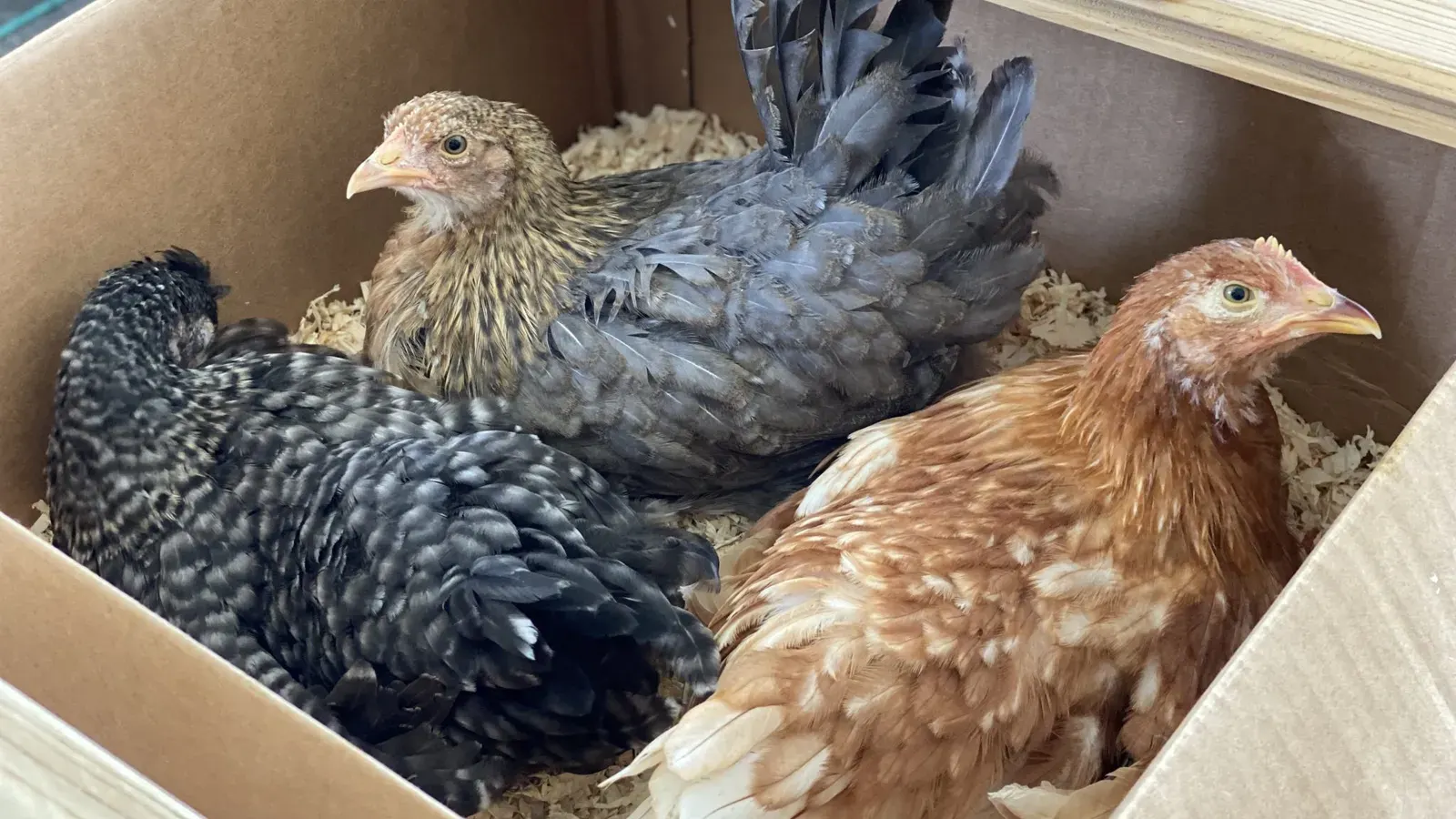
A nesting box has one measurable output: how clean your eggs are when you pick them up. Everything else about the design is in service of that.
We compared six boxes on the four things that change the answer. Material, because timber harbours red mite and steel does not, but steel is cold and hens notice. Compartment count against the one box per three to four hens guideline. Whether the eggs roll away out of reach, which is the only reliable cure for egg eating. And perch layout, because a hen roosting on a nest box rail will fill that box with droppings overnight.
We have included one nest liner rather than a sixth box, because for a lot of people the actual problem is not the box, it is that the bedding keeps ending up on the coop floor.
Our picks at a glance
Every product below wins one specific situation. Pick the row that matches your flock, your yard and your budget rather than reading top to bottom.
-
Best Overall

YENAM 3-Hole Box
Keepers of nine to twelve hens who want a nest box that will not harbour mites and can be cleaned in seconds.
Check price on Amazon for Chicken Nesting Boxes 3 Hole, Large Metal Hen Laying Box with Swing Perch on AmazonAbout $56.99 checked Aug 8, 2026
-
Best Roll-Away

Redants Roll-Away
Anyone with an egg-eating hen, or keepers who are tired of washing eggs before they can be sold or stored.
-
Best Wooden Box

Bavlesfuire 3-Hole
Keepers whose hens are refusing to use a cold or bright nest box, or anyone whose coop is unheated and genuinely cold.
-
Best for Large Flocks

GarveeLife 10-Hole
Flocks of twenty-five birds and up, where lining a wall with two-hole boxes would cost more and take far longer.
-
Best Budget

TRYKERPET 2-Hole Box
A first flock of six to eight hens where the budget is better spent on feed, bedding and a decent feeder.
Check price on Amazon for TRYKERPET Wooden Chicken Nesting Box, Wall Mounted or Floor Use, 2 Holes on AmazonAbout $29.99 checked Aug 8, 2026
-
Best Nest Liner

Pecking Order Nest Pads
Anyone tired of refilling nest boxes with loose shavings that the hens immediately kick out onto the coop floor.
Check price on Amazon for Pecking Order Nest Box Pads for Chicken Nesting Boxes Aspen Excelsior Made in USA (10 Pack) on AmazonAbout $18.88 checked Aug 8, 2026
Compare every pick side by side
Swipe the table sideways to see every column on a phone.
| Product | Award | Price band | Compartments | Mount Type | Material | Roll Away | Best use case | Buy link |
|---|---|---|---|---|---|---|---|---|
| YENAM 3-Hole Box | Best Overall | $30 to $60 | 3 | Wall mount | Galvanised steel | No | Keepers of nine to twelve hens who want a nest box that will not harbour… | Check price for Chicken Nesting Boxes 3 Hole, Large Metal Hen Laying Box with Swing Perch on Amazon |
| Redants Roll-Away | Best Roll-Away | $120 to $250 | 2 | Free standing or wall mount | Powder-coated steel | Yes, rear collection tray | Anyone with an egg-eating hen, or keepers who are tired of washing eggs b… | Check price for Redants Chicken Nesting Box, Metal Chicken Laying Box with Roll Away Egg Collection, Reversible Wall Mountable Chicken Coop Nesting Boxes for Hens, Ducks, Waterproof, 24"×19.5"×20", Up to 20+ Hens on Amazon |
| Bavlesfuire 3-Hole | Best Wooden Box | $30 to $60 | 3 | Wall mount | Solid wood | No | Keepers whose hens are refusing to use a cold or bright nest box, or anyo… | Check price for Chicken Nesting Box 3 Compartments - Wall Mount Wooden Egg Laying Nest Box for Chicken Coop, Easy to Assemble & Versatile Use for Hens, Ducks, Chickens on Amazon |
| GarveeLife 10-Hole | Best for Large Flocks | $120 to $250 | 10 | Free standing with legs | Galvanised steel | No | Flocks of twenty-five birds and up, where lining a wall with two-hole box… | Check price for GarveeLife 10 Compartment Chicken Nesting Box, Nesting Boxes for Chickens, Metal Chicken Laying Boxes with Perch, Secure Lid, Versatile Wall Mount or Free Standing for Hens, Red on Amazon |
| TRYKERPET 2-Hole Box | Best Budget | Under $30 | 2 | Wall mount | Fir wood | No | A first flock of six to eight hens where the budget is better spent on fe… | Check price for TRYKERPET Wooden Chicken Nesting Box, Wall Mounted or Floor Use, 2 Holes on Amazon |
| Pecking Order Nest Pads | Best Nest Liner | Under $30 | Fits 10 boxes | Drop-in liner | Aspen excelsior | No | Anyone tired of refilling nest boxes with loose shavings that the hens im… | Check price for Pecking Order Nest Box Pads for Chicken Nesting Boxes Aspen Excelsior Made in USA (10 Pack) on Amazon |
The full reviews
Each review below follows the same order: what it is, why it won its category, how it behaves in real use, and who should buy something else.
1 Best Overall
Chicken Nesting Boxes 3 Hole, Large Metal Hen Laying Box with Swing Perch
Galvanised steel with a swing-down perch, which solves the two problems wooden nest boxes have: mites in the joints and hens roosting on the front rail.
What we liked
- Galvanised steel gives red mite nowhere to hide, unlike timber joints
- Swing-down perch folds up at night so hens cannot roost on it and foul the boxes
- Three compartments serve nine to twelve hens comfortably
- Wipes clean rather than needing scraping and re-treating
What we did not
- Steel is cold to the touch, so it needs a deeper layer of bedding than a wooden box
- Wall mounting into a thin flat-pack coop panel needs a batten added behind it
- No roll-away feature, so hens can still break and eat eggs
About $56.99 checked Aug 8, 2026
Key specifications
- Dimensions
- 12.18 x 9.9 x 15.43 in (L x W x H)
- Colour
- Red
- Compartments
- 3
- Mount Type
- Wall mount
- Material
- Galvanised steel
- Roll Away
- No
- Perch
- Swing-down perch
- Hens Served
- 9 to 12 hens
Why the YENAM wins this category
Two design decisions, both aimed at problems every keeper eventually meets.
The first is material. Red mite lives in cracks, and a timber nest box is nothing but cracks. Galvanised steel with folded seams gives them nowhere. The second is the swing-down perch: hens will roost on a nest box front rail if you let them, and a hen that roosts above a nest box fills it with droppings overnight. Folding the perch up at dusk ends that.
Living with the YENAM
Cleaning is a wipe rather than a scrape. There is no grain for droppings to key into and nothing to re-treat annually.
Three compartments is the right number for nine to twelve hens. In practice they will queue for one favourite box regardless, and the other two exist so the queue moves and so you can take one out of service.
Where the YENAM falls short
Steel is cold. A hen sitting on a thin layer of shavings over metal loses heat through her breast, and in winter some birds simply decide the floor is warmer. The answer is a deeper bedding layer than you would use in a wooden box, topped up more often, which is a small ongoing job rather than a one-time fix.
The other gap is that it does not solve egg eating. Once a hen learns to break eggs the habit spreads through a flock quickly, and only a roll-away design removes the opportunity.
Research based, not hands-on
Assessed on the published material, compartment count and perch design, and compared against the timber boxes here on mite harbourage and cleaning.
- Best for
- Keepers of nine to twelve hens who want a nest box that will not harbour mites and can be cleaned in seconds.
- Skip it if
- You have an egg-eating hen, because nothing here separates the egg from the bird.
- The limitation to plan around
- Steel conducts heat away from a sitting hen far faster than wood. Without a genuinely deep bedding layer, hens will use it less in cold weather and lay on the coop floor instead.
2 Best Roll-Away
Redants Chicken Nesting Box, Metal Chicken Laying Box with Roll Away Egg Collection, Reversible Wall Mountable Chicken Coop Nesting Boxes for Hens, Ducks, Waterproof, 24"×19.5"×20", Up to 20+ Hens
The egg rolls out of the hen's reach the moment it is laid, which is the only reliable cure for egg eating and the best defence against dirty eggs.
What we liked
- Eggs roll into a covered rear tray, out of reach of hens and away from droppings
- Ends egg eating by removing the opportunity rather than by managing the bird
- Eggs come out visibly cleaner than from a conventional box
- Powder-coated steel with a front landing rail rather than a roosting perch
What we did not
- Needs a genuinely level installation or eggs either do not roll or roll too hard and crack
- Two compartments only, so it suits six to eight hens rather than a large flock
- Costs several times what a conventional two-hole box costs
Key specifications
- Dimensions
- 24 x 19.5 x 20 in (L x W x H)
- Weight
- 28.49915660874 pounds
- Colour
- Silver
- Compartments
- 2
- Mount Type
- Free standing or wall mount
- Material
- Powder-coated steel
- Roll Away
- Yes, rear collection tray
- Perch
- Front landing rail
- Hens Served
- 6 to 8 hens
Why the Redants roll-away wins this category
Egg eating is the vice that ends flocks. One hen breaks an egg, discovers what is inside, and within a fortnight three more have learned it. There is no reliable behavioural cure once the habit is set.
A roll-away box removes the opportunity entirely. The egg leaves the nest within seconds of being laid and goes somewhere the hen cannot follow. That is the whole solution.
Living with the Redants roll-away
The secondary benefit shows up daily. Conventional nest boxes hold eggs in bedding that hens then stand on, scratch and sometimes foul. Roll-away eggs arrive in a covered tray having touched nothing, and the difference in how clean they are is immediately obvious.
Collection changes too. You open a rear tray rather than reaching under a sitting hen, which everybody prefers, including the hen.
Where the Redants roll-away falls short
Installation tolerance. This is not a box you can hang roughly and adjust later. The slope has to be right within a fairly narrow band, and both ways of getting it wrong are bad: too flat and the eggs stay put, defeating the purpose; too steep and they arrive at the tray hard enough to crack, which creates exactly the broken egg you were trying to prevent.
Capacity is the other limitation. Two compartments serves six to eight hens. For a bigger flock you are buying two units, and at this price that adds up quickly.
Research based, not hands-on
Assessed on the published roll-away geometry, materials and compartment count, and compared against conventional boxes on egg cleanliness and egg eating.
- Best for
- Anyone with an egg-eating hen, or keepers who are tired of washing eggs before they can be sold or stored.
- Skip it if
- You cannot mount it dead level, because the whole mechanism depends on a consistent, gentle slope.
- The limitation to plan around
- The angle is everything and it is entirely on you. Too shallow and the eggs sit in the nest anyway; too steep and they roll fast enough to crack against the back of the tray. Get a spirit level out before you fix it.
3 Best Wooden Box
Chicken Nesting Box 3 Compartments - Wall Mount Wooden Egg Laying Nest Box for Chicken Coop, Easy to Assemble & Versatile Use for Hens, Ducks, Chickens
Solid wood with three compartments, which hens take to faster than steel because it holds warmth and feels enclosed the way a natural nest site does.
What we liked
- Timber holds warmth, so hens settle in it faster than in steel boxes
- Three compartments suits nine to twelve hens
- Solid wood rather than thin panel stock, so it carries a sitting hen without flexing
- Enclosed, darker interior is what a broody hen is actually looking for
What we did not
- Timber joints are prime red mite habitat and will need treating
- Wall mount into a flat-pack coop panel needs a batten added behind it
- Absorbs moisture from droppings and will eventually need replacing rather than cleaning
Key specifications
- Dimensions
- 14 x 11.8 x 11.4 in (L x W x H)
- Weight
- 14.9693875898 pounds
- Compartments
- 3
- Mount Type
- Wall mount
- Material
- Solid wood
- Roll Away
- No
- Perch
- Front rail
- Hens Served
- 9 to 12 hens
Why the Bavlesfuire wins this category
Because hens choose nest sites the same way their ancestors did: somewhere dark, enclosed and warm. Steel boxes tick the first two and fail the third, and in a cold coop some hens respond by laying on the floor instead.
Solid timber holds warmth against a sitting bird. If your hens are refusing a metal box or you are collecting floor eggs, changing material is often the whole fix.
Living with the Bavlesfuire
The construction matters here. Solid wood rather than the thin panel stock used on cheap boxes means the floor does not flex under a heavy bird, which is what makes hens distrust a nest and abandon it.
The enclosed shape is also what a broody hen wants, so if you plan to hatch under a hen at any point, this is a more cooperative box than an open steel one.
Where the Bavlesfuire falls short
Red mite. It is worth being blunt: timber nest boxes are where red mite infestations usually start, because the joints and end-grain give them daytime shelter within inches of a bird that sits still for an hour every day.
If you have never had mite, a timber box treated twice a year with a suitable product is manageable. If you have had mite, adding more timber to your coop is working against yourself.
The second issue is that wood absorbs. A steel box gets dirty and is wiped. A timber box gets dirty, absorbs moisture and ammonia, and eventually reaches a point where cleaning no longer helps and it needs replacing.
Research based, not hands-on
Assessed on the published construction and compartment count, and compared against the galvanised boxes here on hen acceptance and mite harbourage.
- Best for
- Keepers whose hens are refusing to use a cold or bright nest box, or anyone whose coop is unheated and genuinely cold.
- Skip it if
- You have had red mite before, because timber gives it exactly the harbourage it needs.
- The limitation to plan around
- Red mite lives in timber joints and is very difficult to clear once established. A wooden nest box needs treating at least twice a year, and if mite is already in your coop this is the wrong material to add.
4 Best for Large Flocks
GarveeLife 10 Compartment Chicken Nesting Box, Nesting Boxes for Chickens, Metal Chicken Laying Boxes with Perch, Secure Lid, Versatile Wall Mount or Free Standing for Hens, Red
Ten galvanised compartments on legs, which is the cheapest way per bird to give thirty or forty hens somewhere to lay without lining a wall with separate units.
What we liked
- Ten compartments serves thirty to forty hens at the standard ratio
- Free standing on legs, so no wall structure is needed to carry the weight
- Galvanised steel throughout resists mites and hoses clean
- Front rails on both tiers rather than only the lower one
What we did not
- Two tiers means hens compete for the upper row and ignore the lower one
- Free standing on legs makes it easy for a hen to get underneath and lay there instead
- Large, heavy and awkward to move once assembled and filled
Key specifications
- Dimensions
- 53.54 x 16.93 x 26.57 in (L x W x H)
- Weight
- 50.18 pounds
- Colour
- red
- Compartments
- 10
- Mount Type
- Free standing with legs
- Material
- Galvanised steel
- Roll Away
- No
- Perch
- Front rails on both tiers
- Hens Served
- 30 to 40 hens
Why the GarveeLife wins this category
Cost per bird. Once a flock passes about twenty-five hens, buying and mounting five separate two-hole boxes is both more expensive and considerably more work than one ten-hole stand.
The free-standing legs matter as much as the compartments. Wall-mounting several loaded steel nest boxes requires structure that a lot of sheds and coops simply do not have, and this removes that problem entirely.
Living with the GarveeLife
Galvanised steel throughout means the whole unit can be hosed down, which at this flock size is the only cleaning method that scales. There is no timber to scrape or re-treat.
Having front rails on both tiers rather than just the lower one is a small thing done properly. Without a rail hens land awkwardly and knock bedding out.
Where the GarveeLife falls short
Hen psychology, and it is a real capacity issue rather than a quibble. Hens prefer the highest available nest, and in a two-tier unit that means the top row is contested while the bottom row sits empty. You will regularly find three hens waiting for an upper box with five lower boxes free.
Plan for effective capacity of around seven boxes rather than ten.
The legs create a second, smaller problem: the space underneath is a dark, enclosed spot, which is exactly what a hen looking for a private nest is after. Expect floor eggs under the stand unless you block the gap.
Research based, not hands-on
Assessed on the published compartment count, materials and stand design, and compared against wall-mounted boxes on cost per bird.
- Best for
- Flocks of twenty-five birds and up, where lining a wall with two-hole boxes would cost more and take far longer.
- Skip it if
- You have fewer than fifteen hens, because most of the compartments will simply never be used.
- The limitation to plan around
- Hens strongly prefer the higher nest, so in practice the upper tier is contested and the lower tier is half empty. Plan on the effective capacity being closer to seven boxes than ten.
5 Best Budget
TRYKERPET Wooden Chicken Nesting Box, Wall Mounted or Floor Use, 2 Holes
Two wooden compartments for under thirty dollars, which is the right purchase for a first flock of six hens that does not need anything cleverer.
What we liked
- Cheapest complete nest box here by a clear margin
- Two compartments is exactly right for six to eight hens
- Wall mount keeps it off the floor and away from bedding
- Timber holds warmth better than steel in an unheated coop
What we did not
- Fir panel stock is thin enough to flex under a heavy sitting bird
- Untreated timber joints will need mite treatment from the first season
- No perch or landing rail, so hens land straight into the bedding and scatter it
About $29.99 checked Aug 8, 2026
Key specifications
- Dimensions
- 25.6 x 14.96 x 16.93 in (L x W x H)
- Weight
- 37.8 pounds
- Colour
- Natural
- Compartments
- 2
- Mount Type
- Wall mount
- Material
- Fir wood
- Roll Away
- No
- Perch
- Front rail
- Hens Served
- 6 to 8 hens
Why the TRYKERPET wins this category
Because for a first flock the nest box is genuinely not where the money should go. Six hens with two adequate wooden compartments will lay perfectly well, and the twenty-five dollars saved against the next cheapest complete box buys a better feeder or a proper bag of bedding, both of which affect daily life more.
Two compartments is also the correct number rather than a compromise. The guideline is one box per three to four hens.
Living with the TRYKERPET
Wall mounting is the right arrangement and it is included. Nest boxes on the floor collect bedding, droppings and curious birds, and eggs laid in them are dirtier.
Timber has the warmth advantage over steel in an unheated coop, which matters for winter laying more than most people expect.
Where the TRYKERPET falls short
The panel stock is thin, and thin panels flex. A heavy hen settling onto a floor that gives slightly will often stand up and try somewhere else, and a nest box hens do not trust is a nest box that produces floor eggs. With light hybrids it is fine. With Orpingtons it may not be.
The missing landing rail is the daily irritation. Hens approach a nest box by flying up to a perch and then stepping in. Without a rail they fly straight in, land on the bedding, and kick a good portion of it out onto the coop floor. You will be refilling it every few days.
Research based, not hands-on
Assessed on the published construction, panel thickness and compartment count, and compared against the solid timber and steel boxes in this guide.
- Best for
- A first flock of six to eight hens where the budget is better spent on feed, bedding and a decent feeder.
- Skip it if
- You keep heavy breeds, because the panel stock flexes under weight and hens distrust a nest that moves.
- The limitation to plan around
- There is no landing rail. Hens fly up and land directly into the bedding, which scatters it out of the box, so you will be topping up nest material noticeably more often than with a railed box.
6 Best Nest Liner
Pecking Order Nest Box Pads for Chicken Nesting Boxes Aspen Excelsior Made in USA (10 Pack)
Moulded aspen pads that stay in the box instead of being kicked out, which fixes the single most annoying thing about loose shavings in a nest.
What we liked
- Stays put, unlike loose shavings which end up on the coop floor within a day
- Moulded nest shape encourages hens to settle in the centre rather than the corner
- Ten pads cover a normal flock's boxes for months
- Lifting out a soiled pad and dropping in a fresh one takes seconds
What we did not
- Costs meaningfully more per nest per month than a bale of shavings
- Fixed 13 by 13 in size will not fit smaller or oddly shaped boxes
- Thinner insulation than a deep layer of shavings, so cold steel boxes still feel cold
About $18.88 checked Aug 8, 2026
Key specifications
- Dimensions
- 14 x 13 x 6.5 in (L x W x H)
- Colour
- Wood
- Compartments
- Fits 10 boxes
- Mount Type
- Drop-in liner
- Material
- Aspen excelsior
- Roll Away
- No
- Perch
- Not applicable
- Hens Served
- Any flock size
Why the Pecking Order pads win this category
Because loose nest bedding does not stay in the nest. Hens scratch and turn before settling, and within a day a good handful of shavings is on the coop floor. Refilling nest boxes is a small job that happens over and over.
A moulded pad is a single piece with a formed hollow. The hen sits in the hollow, the pad does not move, and the job disappears.
Living with the Pecking Order pads
Changing one is faster than cleaning a box. Lift the soiled pad out, drop a fresh one in, done. There is no scraping, no scooping and nothing to sweep off the floor afterwards.
The moulded hollow also encourages hens to settle in the middle of the box rather than pushing bedding into one corner and laying on bare timber, which is what produces cracked eggs.
Where the Pecking Order pads fall short
Cost. A bale of pine shavings is cheap and lasts a long time. Ten pads cost several times more per nest per month, and if kicked-out bedding does not actually bother you, there is no reason to spend it.
The sizing is the harder constraint. At 13 by 13 inches these fit standard boxes and nothing else, and they cannot be trimmed because the moulded rim is what holds the shape. If your nest boxes are a non-standard size, measure before ordering rather than after.
They are also thinner than a deep layer of shavings, so in a steel nest box in a cold coop they do not solve the warmth problem on their own.
Research based, not hands-on
Assessed on the published dimensions, material and pack size, and compared against loose pine shavings on retention, cost per nest and insulation.
- Best for
- Anyone tired of refilling nest boxes with loose shavings that the hens immediately kick out onto the coop floor.
- Skip it if
- Your nest boxes are not close to 13 by 13 inches, or you already have a bale of shavings and no complaint.
- The limitation to plan around
- Measure your boxes first. These are a fixed size, they do not cut down neatly because the moulded shape is structural, and a pad that does not sit flat in the box is worse than loose bedding.
How we compared these nesting boxes
We treated egg cleanliness as the outcome and worked backwards from it.
Material was scored on two axes: mite harbourage and thermal behaviour. Timber loses on the first and wins on the second, which is a genuine trade rather than a ranking. Compartment counts were checked against the one box per three to four hens guideline, not against the manufacturer's claim.
We then looked at whether eggs remain accessible to the hen after laying, whether a perch or rail is provided and whether it can be folded away at night, and how each box is actually cleaned in practice.
What actually matters in a nesting box
Material, and the trade it forces
Red mite lives in cracks in timber, feeds on birds at night, and is extremely difficult to clear once established. Nest boxes are its favourite habitat, because a hen sits still in one for an hour every day.
Galvanised steel removes the harbourage completely. It is also cold, and a hen sitting on thin bedding over metal loses heat through her breast. In an unheated coop some birds respond by laying on the floor instead.
The practical answer is steel with a deeper bedding layer than you think you need, unless your coop is genuinely cold, in which case timber plus a mite treatment routine is the better trade.
Roll-away or conventional
A conventional box leaves the egg with the hen. That is fine until one bird breaks one, discovers what is inside, and teaches the rest.
A roll-away box moves the egg out of reach within seconds. It is the only reliable cure for egg eating, and it produces visibly cleaner eggs as a side effect because nothing stands on them. The cost is a fussier installation, because the slope has to be right.
Perches, and folding them away
Hens will roost on a nest box rail if they can, and a hen roosting above a nest fills it overnight. Boxes with a fold-up perch let you close that off at dusk. Boxes with a fixed rail need to be positioned so that a better roost is always available higher up.
Height and position relative to roosts
Nest boxes should be 18 to 24 inches off the floor and always lower than the roost bars. Get that relationship the wrong way round and the flock will sleep in the nests.
Darker is better. Hens look for enclosed, dim places to lay, which is why a box in a bright corner gets ignored in favour of a gap behind the feed bin.
Sizing and quantity for your flock
A standard nest box is about 12 by 12 by 12 inches, which suits most standard breeds. Larger breeds do better with 14 inches square. Bantams are happy in something smaller and will use a full-size box anyway.
For quantity, take your flock size and divide by three, then round up. Six hens: two boxes. Twelve hens: four. Thirty hens: ten. Going beyond that ratio is spending money on boxes that will sit empty while three hens queue for the popular one.
Final recommendation
The YENAM 3-Hole Box is the best all-round buy: galvanised steel that mites cannot colonise, a fold-away perch that stops overnight fouling, and the right compartment count for nine to twelve hens.
If any hen in your flock has started eating eggs, buy the Redants Roll-Away instead and treat it as a fix rather than an upgrade. In a genuinely cold coop, or if your hens are refusing metal, the Bavlesfuire 3-Hole timber box is the warmer option. And if your actual complaint is bedding all over the coop floor, the Pecking Order Nest Pads solve that for less than the price of a new box.
Questions people ask before buying
How many nesting boxes do I need?
One box for every three to four hens, and there is no benefit in going beyond that. Hens do not distribute themselves evenly across available boxes. They collectively decide one box is the correct one and queue for it while the others sit empty, which is normal behaviour and not a sign of a problem. Extra boxes exist so that the queue keeps moving and so you can take one out of service for cleaning or for a broody hen.
How high should nesting boxes be?
Off the floor but below the roosts, usually around 18 to 24 inches up. The critical relationship is that the roost bars must be higher than the nest boxes. Hens instinctively sleep at the highest available point, so if a nest box is higher than the roost they will sleep in it, which fills it with droppings overnight and gives you dirty eggs every morning.
Why are my hens laying on the floor instead of in the box?
Usually one of four things. The box is too bright, so try making it darker. The box is cold, which is common with steel boxes in an unheated coop and is fixed with a deeper bedding layer. The box floor flexes under the hen's weight, so she does not trust it. Or there is a more attractive dark, enclosed spot elsewhere, such as under a raised nest stand or behind a feed bin. Blocking the alternative usually resolves it faster than anything else.
What is the best bedding for nesting boxes?
Something deep enough to cushion an egg and dry enough not to mat. Pine shavings are the standard and work well, though hens kick them out. Straw holds shape better but can harbour mites in its hollow stems. Moulded aspen pads stay put and change in seconds but cost more per month. Whatever you use, the layer needs to be genuinely deep, because a thin layer over a hard floor is how eggs crack.
How do I stop hens eating their own eggs?
Remove the opportunity, because the habit is close to impossible to unlearn once established and it spreads to other birds. A roll-away nest box, where the egg leaves the nest within seconds of being laid, is the only reliable fix. Beyond that, collect eggs more often, make sure the birds have enough calcium so shells are not thin, and check that the nest bedding is deep enough that eggs are not cracking on a hard floor.
Do nesting boxes need to be cleaned often?
Nest boxes should be the cleanest place in your coop, so check them daily and change the bedding whenever it is soiled rather than on a schedule. If a box is regularly full of droppings, a hen is roosting in it or above it overnight, and the fix is to raise the roosts, add a fold-up perch, or block the box in the evening and open it in the morning.
Why you can trust this guide
- Written by
- Marta Voss, Editor and fact checker, Chicken Geek. Specialist areas: Editorial fact checking, Chick brooding and starter nutrition, Small-flock husbandry, Feed labels and nutrition claims.
- Fact checked by
- Sam Reddick
- Published
- August 6, 2026 · Last updated August 6, 2026 · Products and links rechecked August 6, 2026
- How we picked
- Boxes were compared on material and its mite harbourage, compartment count against the one box per three to four hens guideline, whether eggs roll clear of the hen, perch and landing rail design, mounting method and how each is cleaned.
- Evidence used
- None of the 6 products on this page were sent to us or bought for a hands-on test. Every recommendation here is research based: manufacturer specifications, listed dimensions and materials, owner feedback at volume, and comparison against equipment our team has owned. Each review states this again above the buy button so you are never guessing which kind of evidence sits behind a pick.
- Editorial standards
- No brand pays for placement, and no manufacturer sees this page before it goes live. Read our editorial policy and testing method.
- Affiliate disclosure
- Chicken Geek is reader supported. We earn a commission from qualifying purchases made through links on this page, at no extra cost to you, and no brand has paid for a placement or an award here.
About the author

Editor and fact checker, Chicken Geek
Marta edits every guide on Chicken Geek and checks that each claim can be traced back to a manufacturer specification, a published standard or a stated first-hand observation. She keeps a small backyard flock of six hens and has raised chicks from day one for eight seasons.
- Eight seasons raising chicks from day-old to point of lay
- Checks every specification in a Chicken Geek guide against the manufacturer listing
- Removes any testing claim that cannot be backed up
- Keeps a flock of six hens in a suburban backyard