We Measured 6 Coops Sold for 6 Hens. Only Half of Them Fit
We measured the house floor and run area of six coops sold for six hens against the four square feet per bird standard. Most fall short. Three do not.

By Sam Reddick Lead gear reviewer, Chicken Geek
Fact checked by Marta Voss
Published Prices and stock checked 7 min read
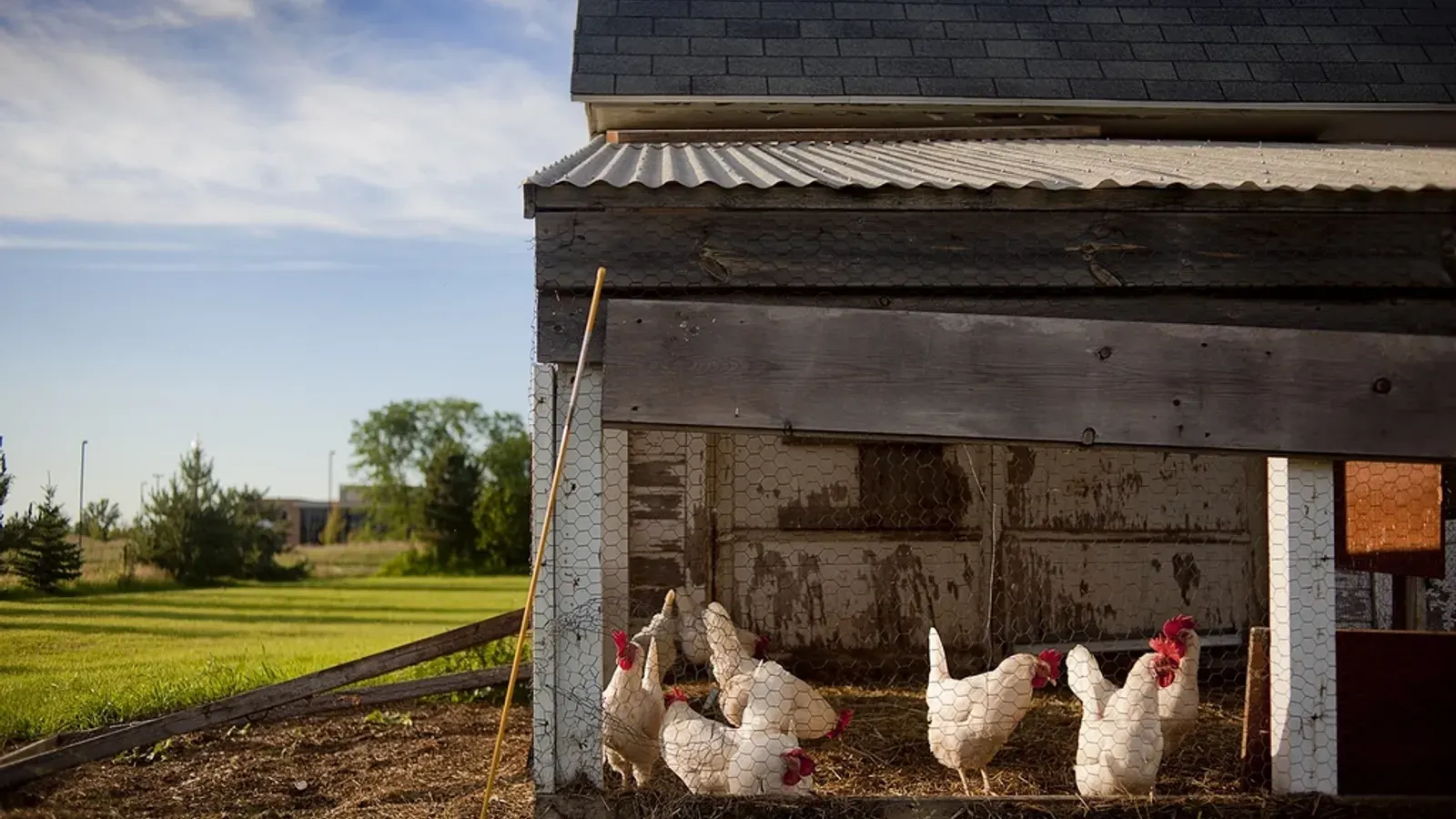
Six hens is the flock size where coop marketing and coop reality part company. Almost every coop in this bracket is advertised for six to eight birds, and almost none of them provides the interior floor area that number requires.
So this guide starts with a measurement rather than an opinion. Four square feet of henhouse floor per standard-size hen, plus eight to ten square feet of run, is the figure used by most extension services. We took the listed dimensions for each coop, worked out the actual house and run areas, and compared them against that standard.
Three of the six coops here genuinely house six standard hens. The other three are excellent coops for three or four birds, and we have said so plainly rather than repeating their listings. If you keep bantams, or your birds free range every single day, the picture changes and we have explained where.
Our picks at a glance
Every product below wins one specific situation. Pick the row that matches your flock, your yard and your budget rather than reading top to bottom.
-
Best Overall

Ketive 130.6 in Coop
A settled flock of six standard hens that free ranges most days and needs somewhere civilised to be confined in bad weather.
-
Best Room to Grow

FunXplore 120 in Coop
Keepers who expect to go from six birds to eight or ten and would rather buy the bigger coop once than replace it in two years.
Check price on Amazon for 120" Large Chicken Coop with Run for 6-10 Chickens Poultry Cage on AmazonAbout $365 checked Aug 8, 2026
-
Best Predator Resistance

HomeSheek 6-10 Coop
Keepers in raccoon or weasel country who want a coop for six that is genuinely secure overnight without a weekend of DIY upgrades.
-
Best Mobile Option

GUTINNEEN Wheeled Coop
Keepers with six hens and enough lawn or paddock to rotate them across, who have a second pair of hands available.
-
Best for Small Footprints

YZU 2-Story Coop
Suburban keepers with six hens, a small yard and a routine that reliably lets the birds out into the garden every day.
Check price on Amazon for 2-Story Chicken Coop for 6-8 Chickens, Sturdy and Easy to Assemble on AmazonAbout $215 checked Aug 8, 2026
-
Best Budget
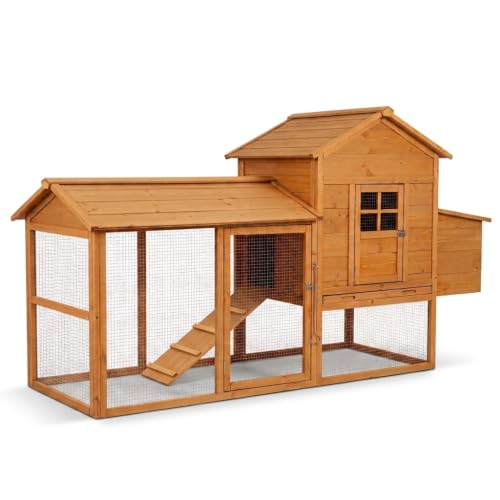
CHURRZZ 84.6 in Coop
Keepers with three or four hens on a tight budget who want a complete coop and run rather than a bare henhouse.
Compare every pick side by side
Swipe the table sideways to see every column on a phone.
| Product | Award | Price band | Bird Capacity | Coop Floor Area | Run Area | Nesting Boxes | Best use case | Buy link |
|---|---|---|---|---|---|---|---|---|
| Ketive 130.6 in Coop | Best Overall | $120 to $250 | 6 to 8 standard hens | About 9 sq ft raised house | About 17 sq ft | 2 | A settled flock of six standard hens that free ranges most days and needs… | Check price for Ketive Large Chicken Coop and Run for 6-8 Chickens, 130.6" L Wooden Hen House, 2 Story Poultry Cage with Nesting Box, Pull-Out Tray, 4 Perches, Ramp, Indoor/Outdoor Pet Hutch Backyard Use, Black on Amazon |
| FunXplore 120 in Coop | Best Room to Grow | $250 to $500 | 6 to 10 standard hens | About 14 sq ft | About 30 sq ft | 3 | Keepers who expect to go from six birds to eight or ten and would rather… | Check price for 120" Large Chicken Coop with Run for 6-10 Chickens Poultry Cage on Amazon |
| HomeSheek 6-10 Coop | Best Predator Resistance | $250 to $500 | 6 to 10 standard hens | About 12 sq ft | About 10 sq ft | 2 | Keepers in raccoon or weasel country who want a coop for six that is genu… | Check price for HomeSheek Large Chicken Coop for 6-10 Chickens, Outdoor Predator Proof Wooden Hen House Design with 2 Nesting Boxes and Weatherproof Roof, Easy to Clean Poultry Cage for Outsides on Amazon |
| GUTINNEEN Wheeled Coop | Best Mobile Option | $250 to $500 | 6 to 8 standard hens | About 11 sq ft | Moves to fresh grass daily | 2 | Keepers with six hens and enough lawn or paddock to rotate them across, w… | Check price for GUTINNEEN Large Chicken Coop on Wheels Mobile Wooden Hen House Weatherproof Duck Poultry Cage 67.3" L for 6-8 Chickens with 6 Nesting Box on Amazon |
| YZU 2-Story Coop | Best for Small Footprints | $120 to $250 | 6 to 8 standard hens | About 9 sq ft upper house | About 9 sq ft beneath | 2 | Suburban keepers with six hens, a small yard and a routine that reliably… | Check price for 2-Story Chicken Coop for 6-8 Chickens, Sturdy and Easy to Assemble on Amazon |
| CHURRZZ 84.6 in Coop | Best Budget | $120 to $250 | 4 to 6 standard hens | About 6 sq ft raised house | About 10 sq ft | 1 sectionable | Keepers with three or four hens on a tight budget who want a complete coo… | Check price for CHURRZZ 84.6" Wooden Chicken Coop for 4-6 Chickens, Outdoor Backyard Poultry House with Spacious Run, Nesting Box with Lid Support, Slide-Out Tray for Easy Cleaning, Weather-Resistant Animal Habitat on Amazon |
The full reviews
Each review below follows the same order: what it is, why it won its category, how it behaves in real use, and who should buy something else.
1 Best Overall
Ketive Large Chicken Coop and Run for 6-8 Chickens, 130.6" L Wooden Hen House, 2 Story Poultry Cage with Nesting Box, Pull-Out Tray, 4 Perches, Ramp, Indoor/Outdoor Pet Hutch Backyard Use, Black
Just under eleven feet of coop and run for a price most makers charge for eight, and the run length is what a flock of six needs on the days they cannot go out.
What we liked
- 130.6 in of covered run, the longest here for the money
- Two nest boxes at the correct ratio for six to eight hens
- Raised house keeps the sleeping area off wet ground
- External nest access means you collect eggs without opening the run
What we did not
- At 26 in deep the run is a walking corridor rather than a space birds can spread out in
- Nearly eleven feet of frame demands genuinely level ground or the doors bind
- Plated rather than galvanised hardware, so latches and hinges will rust within a year
Key specifications
- Dimensions
- 130.6 x 26 x 39.2 in (L x W x H)
- Weight
- 97.8 pounds
- Colour
- Black
- Bird Capacity
- 6 to 8 standard hens
- Coop Floor Area
- About 9 sq ft raised house
- Run Area
- About 17 sq ft
- Nesting Boxes
- 2
- Roost Bar Length
- About 46 in
- Material
- Fir wood, asphalt roof
Why the Ketive 130 wins this category
Because for six hens the binding constraint is almost never the henhouse, it is the run. Nearly every coop marketed at this flock size gives adequate sleeping space and a run that stops being usable the moment the birds are shut in for more than a day.
At 130.6 inches this gives you the most covered run of anything at this price, and that is the specification that decides whether a wet week is uneventful or ends in feather picking.
Living with the Ketive 130
The two external nest boxes are the daily win. Lift, collect, walk away, without opening the run and without the birds using the open door as an opportunity.
The raised house does two useful things at once: it keeps the sleeping floor off damp ground, and it puts covered, shaded run space underneath at no cost in footprint.
Where the Ketive 130 falls short
Depth. Twenty-six inches is a corridor. Birds can walk it end to end, which is more than most coops offer, but they cannot spread out sideways, dust bathe away from the traffic, or get out of another bird's way. For a flock that goes out most days that is a fair trade. For a permanently confined flock of six it is not enough.
The other predictable issue is hardware. Plated steel hinges and latches on a coop that lives outdoors will show rust in the first year, and a corroded latch is the component you least want to fail.
Research based, not hands-on
Assessed on published run length, depth and house dimensions, and compared against the wider and shorter coops in this guide on confinement behaviour.
- Best for
- A settled flock of six standard hens that free ranges most days and needs somewhere civilised to be confined in bad weather.
- Skip it if
- The birds will be shut in permanently, because at 26 in deep the run is too narrow to be a full-time home for six.
- The limitation to plan around
- The run is long but narrow. Six hens shut in for a week will be walking a corridor, not using a space, and the pecking order gets tested in a way it does not in a wider run.
2 Best Room to Grow
120" Large Chicken Coop with Run for 6-10 Chickens Poultry Cage
The only coop here with enough house floor and run area that six hens is comfortable rather than the ceiling, which matters because almost everyone ends up with more birds.
What we liked
- 56 in wide, so the run is a space birds can spread out in rather than a corridor
- Three nest boxes, enough for a flock that grows past eight
- Around 30 sq ft of run, the most confined area per bird in this comparison
- Genuine headroom in the house, so birds can stand and stretch on the floor
What we did not
- The most expensive coop in this comparison by a significant margin
- Ten feet by nearly five needs a large, flat, dedicated area
- Weight and size make it a two-person, half-day assembly
About $365 checked Aug 8, 2026
Key specifications
- Dimensions
- 120 x 56.3 x 59.1 in (L x W x H)
- Colour
- Brown
- Bird Capacity
- 6 to 10 standard hens
- Coop Floor Area
- About 14 sq ft
- Run Area
- About 30 sq ft
- Nesting Boxes
- 3
- Roost Bar Length
- About 50 in
- Material
- Fir wood, asphalt roof
Why the FunXplore wins this category
Because six is rarely the final number. Almost every keeper who starts with six ends up with eight, either because somebody rehomes a pair or because a batch of chicks does better than expected. A coop bought to exactly fit six becomes a problem within eighteen months.
At around 30 square feet of run and 56 inches of width, this is the only option here where eight birds would still be reasonable.
Living with the FunXplore
Width is the difference you notice. At 56 inches birds pass each other, dust bathe in one corner while others eat in another, and a bird low in the pecking order has somewhere to be. Narrow runs remove that option and the flock behaviour shows it.
Three nest boxes is the correct ratio at this flock size, and it means one can be out of service for cleaning without a queue forming.
Where the FunXplore falls short
Price and permanence. This costs roughly double the mid-range coops in this comparison, and once it is built it is not moving. That makes siting a one-shot decision: level ground, decent drainage, and somewhere you are happy to have a large timber structure for a decade.
The ground underneath will also go bare within weeks, as it does under any fixed coop. Plan for deep litter or a sand base at purchase, not after the first wet month.
Research based, not hands-on
Assessed on published run and house dimensions and nest box count, and compared against the narrower coops in this guide on area per confined bird.
- Best for
- Keepers who expect to go from six birds to eight or ten and would rather buy the bigger coop once than replace it in two years.
- Skip it if
- Your space or budget is fixed at six birds, because you are paying for capacity you will not use.
- The limitation to plan around
- This is a large, permanent structure. Once assembled you are not repositioning it, so the patch underneath will need deep litter or a drained base from day one, and the site decision is effectively final.
3 Best Predator Resistance
HomeSheek Large Chicken Coop for 6-10 Chickens, Outdoor Predator Proof Wooden Hen House Design with 2 Nesting Boxes and Weatherproof Roof, Easy to Clean Poultry Cage for Outsides
Hardware cloth and twist-lock latches fitted at the factory, which is a specification you normally have to build yourself onto a coop this size.
What we liked
- Twist-lock latches instead of the hook-and-eye standard at this price
- Hardware cloth on windows and run rather than one-inch chicken wire
- Around 12 sq ft of house floor, comfortable for six standard hens
- Solid wood gives a genuinely windproof enclosed sleeping space
What we did not
- The run is only about 10 sq ft, well under what six confined birds need
- Sits directly on soil with no dig barrier, which is the one gap in its security
- Heavy and permanent, so the siting decision cannot be revisited
Key specifications
- Dimensions
- 69.5 x 31.5 x 59.1 in (L x W x H)
- Colour
- Grey(69.5"L x 31.5"W x 59.1"H)
- Mesh Type
- Hardware cloth on windows and run
- Frame
- Solid wood with metal mesh
- Dig Defence
- None built in
- Latch Type
- Twist-lock latches
- Roof Cover
- Asphalt roof
- Bird Capacity
- 6 to 10 standard hens
- Coop Floor Area
- About 12 sq ft
- Run Area
- About 10 sq ft
- Nesting Boxes
- 2
- Roost Bar Length
- About 40 in
- Material
- Solid wood with metal mesh
Why the HomeSheek wins this category
Because the two components that decide whether a coop survives a night are the mesh and the latch, and almost no timber coop at this size ships with either specified properly. One-inch chicken wire and a hook are the defaults.
Hardware cloth plus twist-lock latches, factory fitted, saves you a roll of mesh, a bag of screws and an afternoon.
Living with the HomeSheek
Twelve square feet of house floor is a comfortable sleeping space for six standard hens rather than a technical minimum, which shows up in how the birds settle at dusk. Crowded roosts produce squabbling; this one does not.
Solid timber construction gives you a real windbreak. On a cold night that matters far more than a heater, because it is draught rather than cold that harms birds in full feather.
Where the HomeSheek falls short
The run, which is roughly ten square feet. The working guideline is eight to ten square feet per bird, so that figure is right for a single hen. Six birds in that run for a full day is not a workable arrangement, and this coop only makes sense paired with a larger fenced area.
The ground line is the second gap. Every other part of the security specification is well judged, and then the sill sits on bare soil. If foxes or dogs are a factor where you live, lay a hardware cloth apron before you assemble it, because retrofitting one means taking the coop apart.
Research based, not hands-on
Assessed on the published latch type, mesh specification and house dimensions, and compared against the timber coops in this guide that use staples and hook latches.
- Best for
- Keepers in raccoon or weasel country who want a coop for six that is genuinely secure overnight without a weekend of DIY upgrades.
- Skip it if
- The birds will be confined all day, because the attached run is far too small to be their only daytime space.
- The limitation to plan around
- The run is the weak point of the package. About ten square feet is right for one bird, not six, so this coop only works if the flock has a larger fenced area or free range during the day.
4 Best Mobile Option
GUTINNEEN Large Chicken Coop on Wheels Mobile Wooden Hen House Weatherproof Duck Poultry Cage 67.3" L for 6-8 Chickens with 6 Nesting Box
A coop sized for six birds that can still be moved, which means the grass underneath recovers instead of turning into the bare, sour patch every fixed coop creates.
What we liked
- Wheels on a coop rated for six to eight birds, which is unusual at this size
- About 11 sq ft of raised house floor, the most enclosed space here
- Two nest boxes with external access
- Moving it weekly avoids the bare, sour ground that fixed coops create
What we did not
- Heavy enough that moving it is realistically a two-person job
- No fixed run, so the birds need fencing or free ranging to have daytime space
- Wooden frame on wheels takes a twisting load every move, and it will need re-tightening
Key specifications
- Dimensions
- 67.3 x 40 x 49.75 in (L x W x H)
- Weight
- 63.77 pounds
- Colour
- Light Grey
- Bird Capacity
- 6 to 8 standard hens
- Coop Floor Area
- About 11 sq ft
- Run Area
- Moves to fresh grass daily
- Nesting Boxes
- 2
- Roost Bar Length
- About 38 in
- Material
- Fir wood, metal frame
Why the GUTINNEEN wheeled coop wins this category
Because ground damage is the problem nobody warns first-time keepers about. Six hens in a fixed spot will strip the grass in a week and sour the soil in a month, and after that you are managing mud from October to April.
Very few coops rated for six birds have wheels at all. This one does, and moving it even weekly changes that outcome completely.
Living with the GUTINNEEN wheeled coop
Around eleven square feet of raised house floor is the largest enclosed space in this comparison, which means the sleeping quarters are genuinely comfortable for six birds rather than technically adequate.
The two external nest boxes keep egg collection off the floor and away from bedding, which is how you get clean eggs rather than eggs you have to wash.
Where the GUTINNEEN wheeled coop falls short
It is a house, not a house and run. The birds need daytime space, and this does not supply it. Either they free range or you buy fencing, and either way that is a decision and a cost that the listing does not surface.
Weight is the other honest limit. A coop this size on wheels is at the edge of what one person can tip and walk. In practice it is a two-person move, and if it is not moved the entire advantage over a fixed coop disappears.
Research based, not hands-on
Assessed on the published house dimensions, wheel arrangement and mass, and compared against the fixed coops in this guide and the tractors in our chicken tractor comparison.
- Best for
- Keepers with six hens and enough lawn or paddock to rotate them across, who have a second pair of hands available.
- Skip it if
- You have a small fixed yard with nowhere to move to, or you will always be moving it alone.
- The limitation to plan around
- There is no attached run. This is a mobile henhouse, so the birds need either free range access or a separate fenced area, and that is a second cost and a second decision.
5 Best for Small Footprints
2-Story Chicken Coop for 6-8 Chickens, Sturdy and Easy to Assemble
Stacks the house above the run so six hens fit into a footprint barely larger than a garden bench, which is the only way this flock size works in a small yard.
What we liked
- Roughly 39 in by 35 in on the ground, the smallest footprint here for six birds
- Two-storey layout puts shaded, dry run space underneath the house at no cost in area
- Two nest boxes, the right number for six to eight hens
- Simple enough that assembly is genuinely a solo job
What we did not
- Total usable area is the smallest here, so the birds must free range daily
- Ramp between floors is a daily traffic bottleneck for six birds
- Vertical stacking makes cleaning the upper floor awkward without a step
About $215 checked Aug 8, 2026
Key specifications
- Dimensions
- 39.1 x 35.4 x 41.7 in (L x W x H)
- Weight
- 63.8 pounds
- Colour
- Natural Wood / Orange-brown
- Bird Capacity
- 6 to 8 standard hens
- Coop Floor Area
- About 9 sq ft upper house
- Run Area
- About 9 sq ft beneath
- Nesting Boxes
- 2
- Roost Bar Length
- About 35 in
- Material
- Fir wood, waterproof roof
Why the YZU wins this category
Because the constraint some people have is not budget or flock size, it is ground area. A 39 by 35 inch footprint fits on a patio, in a side return, or in the corner of a small garden where nothing else that houses six hens will go.
The two-storey layout is how it manages that. Putting the house above the run means the same square feet serve twice.
Living with the YZU
The space underneath the house is genuinely useful rather than a technicality. It is shaded in summer, dry in rain, and birds gravitate to it, which is exactly what you want the covered portion of a run to do.
Assembly is a solo job, which is not true of most coops rated for six birds. The panels are small enough to hold in place while you drive a screw.
Where the YZU falls short
Total area, and it is the thing you must be honest with yourself about. Six hens need somewhere to be for the whole day. This coop's combined house and run area assumes they are out in the garden for most of it, and that assumption has to hold every day, not on average.
The ramp is the second issue. Six birds moving between two floors up a single ramp creates a queue, and queues are where a dominant hen decides to stand. In a flock with any tension, that ramp becomes a checkpoint.
Research based, not hands-on
Assessed on published footprint and internal layout, and compared against the wider single-storey coops in this guide on area per bird.
- Best for
- Suburban keepers with six hens, a small yard and a routine that reliably lets the birds out into the garden every day.
- Skip it if
- The birds will spend whole days shut in, because the combined house and run area is well under what six confined hens need.
- The limitation to plan around
- The total enclosed area only works because the birds are meant to be out most of the day. Miss a few days of free ranging in a row and six hens in this footprint will start pecking each other.
6 Best Budget
CHURRZZ 84.6" Wooden Chicken Coop for 4-6 Chickens, Outdoor Backyard Poultry House with Spacious Run, Nesting Box with Lid Support, Slide-Out Tray for Easy Cleaning, Weather-Resistant Animal Habitat
Seven feet of coop and run for well under half what the larger options cost. It is a four-bird coop honestly, and a good one at that size.
What we liked
- Cheapest coop here by a wide margin at nearly seven feet long
- Sectionable nest box lets you separate a broody hen without buying a second coop
- Asphalt roof rather than felt, which is unusual at this price
- Light enough that two people can shift it to fresh grass
What we did not
- About 6 sq ft of house floor, so four birds is the honest ceiling not six
- 25 in deep makes the run a narrow corridor
- Thin panel stock means the frame flexes and the screws will need re-tightening yearly
Key specifications
- Dimensions
- 84.65 x 25.2 x 44.09 in (L x W x H)
- Weight
- 51.81 pounds
- Colour
- Natural Wood
- Bird Capacity
- 4 to 6 standard hens
- Coop Floor Area
- About 6 sq ft raised house
- Run Area
- About 10 sq ft
- Nesting Boxes
- 1 sectionable
- Roost Bar Length
- About 30 in
- Material
- Fir wood, asphalt roof
Why the CHURRZZ wins this category
Because at this price the realistic alternatives are worse: bare henhouses with no run, or wire boxes with a plywood lid. This is a complete coop, run, nest box and tray package at a price that leaves budget for feed, bedding and a decent feeder.
The asphalt roof is the detail that lifts it above its neighbours. Roofing felt is the standard at this price and it is the first thing to fail.
Living with the CHURRZZ
The sectionable nest box is more useful than it sounds. Broody hens need separating, and normally that means a second coop or a cardboard box in the garage. Splitting a nest box solves it for free.
At this weight two people can move it around the garden, which keeps the ground under it from going sour the way it does under a heavy fixed coop.
Where the CHURRZZ falls short
Capacity, and it is the reason this cannot be the overall pick in a guide about six hens. Six square feet of house floor is comfortable for one and a half standard birds by the usual guideline, or three to four if they are out on grass all day. Putting six in it produces exactly the outcomes crowding always produces: dirty eggs, feather picking and a coop you cannot keep clean.
The build is the other compromise. Thin panels flex, screws loosen in softwood, and you should expect to go round it with a screwdriver once a year.
Research based, not hands-on
Assessed on published house and run dimensions and roof covering, and compared against the larger coops in this guide on area per bird.
- Best for
- Keepers with three or four hens on a tight budget who want a complete coop and run rather than a bare henhouse.
- Skip it if
- You actually have six standard hens, because the house floor supports fewer than that at any sensible density.
- The limitation to plan around
- Six hens will not fit properly. The raised house gives about six square feet, which is one and a half birds at the standard four square feet each, or three to four birds if they range all day. Treat the listed capacity as marketing.
How we sized these coops
Every coop in this comparison was assessed the same way. We took the listed henhouse dimensions, converted them to square feet, and divided by six. We did the same for the run area. Then we compared both against the guidelines most extension services publish: four square feet of house floor per standard-size hen, and eight to ten square feet of run.
Overall dimensions were ignored, because a coop's overall length includes the run, the nest box overhang and the roof eaves, none of which a bird sleeps on. Only interior floor counts.
Where a coop failed the test, we kept it in the guide if it is genuinely good at a smaller flock size and said which size that is.
What actually matters when you have six hens
House floor area
Six standard hens want around 24 square feet of interior floor. Below that, bedding gets wet faster than you can manage it, ammonia builds up, and the birds start to irritate each other.
The number moves if your birds are bantams, which need roughly two square feet each, or if they are out of the coop from dawn to dusk every day without exception.
Run area and run width
Around 48 to 60 square feet of run for six birds. But width matters separately from area, and this is where most coops in this bracket fall down.
A run that is 130 inches long and 26 inches deep has the same area as one that is 65 by 52, and behaves completely differently. In the narrow one, birds cannot pass each other. A bird being chased has nowhere to go except forward. In the square one, a bullied bird can circle away.
If your birds will spend whole days confined, prioritise width over length.
Roost bar length
Five feet total for six standard hens, at eight to ten inches each. Two bars at different heights work better than one long one, because it gives the flock somewhere to sort out its pecking order that is not the nest boxes.
Roosts must be higher than the nest boxes. Hens sleep at the highest point available, and if that is a nest box you will be washing eggs every day.
Ventilation above head height
Six birds produce a surprising amount of moisture overnight. Ventilation needs to be above roosting height so that damp air leaves without blowing across the birds. Vents at bird level are draughts, and draughts do far more harm in winter than cold does.
Two flock sizes, two different answers
If your six hens free range most days, buy for run length and nest box arrangement, because the coop is a bedroom rather than a home. The Ketive 130.6 in Coop is the value pick on that basis.
If your six hens are confined, buy for total area and run width, and accept that this costs more. The FunXplore 120 in Coop is the only option in this comparison that genuinely does it.
Final recommendation
The Ketive 130.6 in Coop is the best buy for most people with six hens, because most people with six hens let them out. It gives the most covered run per dollar here and has the right nest box count.
If the birds stay in, the FunXplore 120 in Coop is worth the extra: 56 inches of width means it is a space rather than a corridor. In predator country the HomeSheek 6-10 Coop arrives with hardware cloth and twist-lock latches already fitted. And if your budget is genuinely tight, the CHURRZZ 84.6 in Coop is a good coop for three or four birds, which is a better outcome than a poor coop for six.
Questions people ask before buying
How much space do 6 chickens actually need?
Around 24 square feet of henhouse floor and 48 to 60 square feet of run for six standard-size hens, using the four square feet per bird house and eight to ten square feet per bird run guidelines. Bantams need roughly half that. Birds that free range for most of daylight hours can manage with less run, because the run is then a shelter rather than their whole world, but the house figure does not change because they all sleep in it at once.
Can I keep 6 chickens in a coop advertised for 6 chickens?
Often not, and this is the single most common disappointment in backyard chicken keeping. Manufacturers rate coops on how many birds physically fit inside rather than on how many can live there without behavioural problems. Take the listed henhouse dimensions, not the overall dimensions, convert to square feet and divide by four. If the answer is less than six, the coop is not a six-bird coop no matter what the box says.
How many nest boxes do 6 hens need?
Two is plenty. The guideline is one box per three to four hens, and in practice hens do not distribute themselves across available boxes anyway. They queue for whichever box the flock has collectively decided is correct and ignore the others. Two boxes means the queue moves and gives you one in reserve when you need to clean or when a hen goes broody and occupies one.
How much roost bar do 6 chickens need?
About eight to ten inches of bar per standard hen, so five feet of roost for six birds, which usually means two shorter bars rather than one long one. Roosts should be higher than the nest boxes, because hens instinctively sleep at the highest available point and will sleep in the nest boxes if those are higher, which fouls them and gives you dirty eggs.
What happens if a coop is too small for the flock?
The symptoms appear in a predictable order. Bedding gets damp faster than you can change it, ammonia builds up, eggs come out dirty, and then feather picking starts, usually on the bird lowest in the pecking order. Once picking becomes a habit it is difficult to stop even after you add space. It is much easier to buy the larger coop first than to fix a crowded flock later.
Should I buy a bigger coop than I need right now?
Almost always yes. Flock sizes grow, rarely shrink, and the marginal cost of a coop one size up is far smaller than the cost of buying twice. A coop that is too large has no downside at all beyond price and footprint, because chickens huddle for warmth regardless of how much room they have and empty space does not make a coop colder in any meaningful way.
Why you can trust this guide
- Written by
- Sam Reddick, Lead gear reviewer, Chicken Geek. Specialist areas: Coop design and predator proofing, Feeding and watering systems, Cold-weather flock management, Incubation and brooding.
- Fact checked by
- Marta Voss
- Published
- August 6, 2026 · Last updated August 6, 2026 · Products and links rechecked August 6, 2026
- How we picked
- We converted the listed dimensions of each coop into house floor area and run area, divided both by six, and compared the result against the 4 sq ft house and 8 to 10 sq ft run per standard hen guidelines. Nest box count, run width and predator specification were used to separate coops that passed.
- Evidence used
- None of the 6 products on this page were sent to us or bought for a hands-on test. Every recommendation here is research based: manufacturer specifications, listed dimensions and materials, owner feedback at volume, and comparison against equipment our team has owned. Each review states this again above the buy button so you are never guessing which kind of evidence sits behind a pick.
- Editorial standards
- No brand pays for placement, and no manufacturer sees this page before it goes live. Read our editorial policy and testing method.
- Affiliate disclosure
- Chicken Geek is reader supported. We earn a commission from qualifying purchases made through links on this page, at no extra cost to you, and no brand has paid for a placement or an award here.
About the author

Lead gear reviewer, Chicken Geek
Sam has kept a backyard laying flock for eleven years, through two coop rebuilds, one very determined raccoon and several winters cold enough to freeze a waterer solid overnight. He writes the buying guides at Chicken Geek and is responsible for how products get compared.
- Eleven years keeping a mixed laying flock of 8 to 14 birds
- Has built, bought and replaced six different coops
- Runs the product comparison framework used across Chicken Geek
- Reads manufacturer manuals, spec sheets and warranty terms before every recommendation