We Compared 6 Chicken Leg Bands on Fit Range
We compared six chicken leg bands on fit range against a shank that is still growing, which is the thing that decides whether a band stays safe.

By Marta Voss Editor and fact checker, Chicken Geek
Fact checked by Sam Reddick
Published Prices and stock checked 7 min read
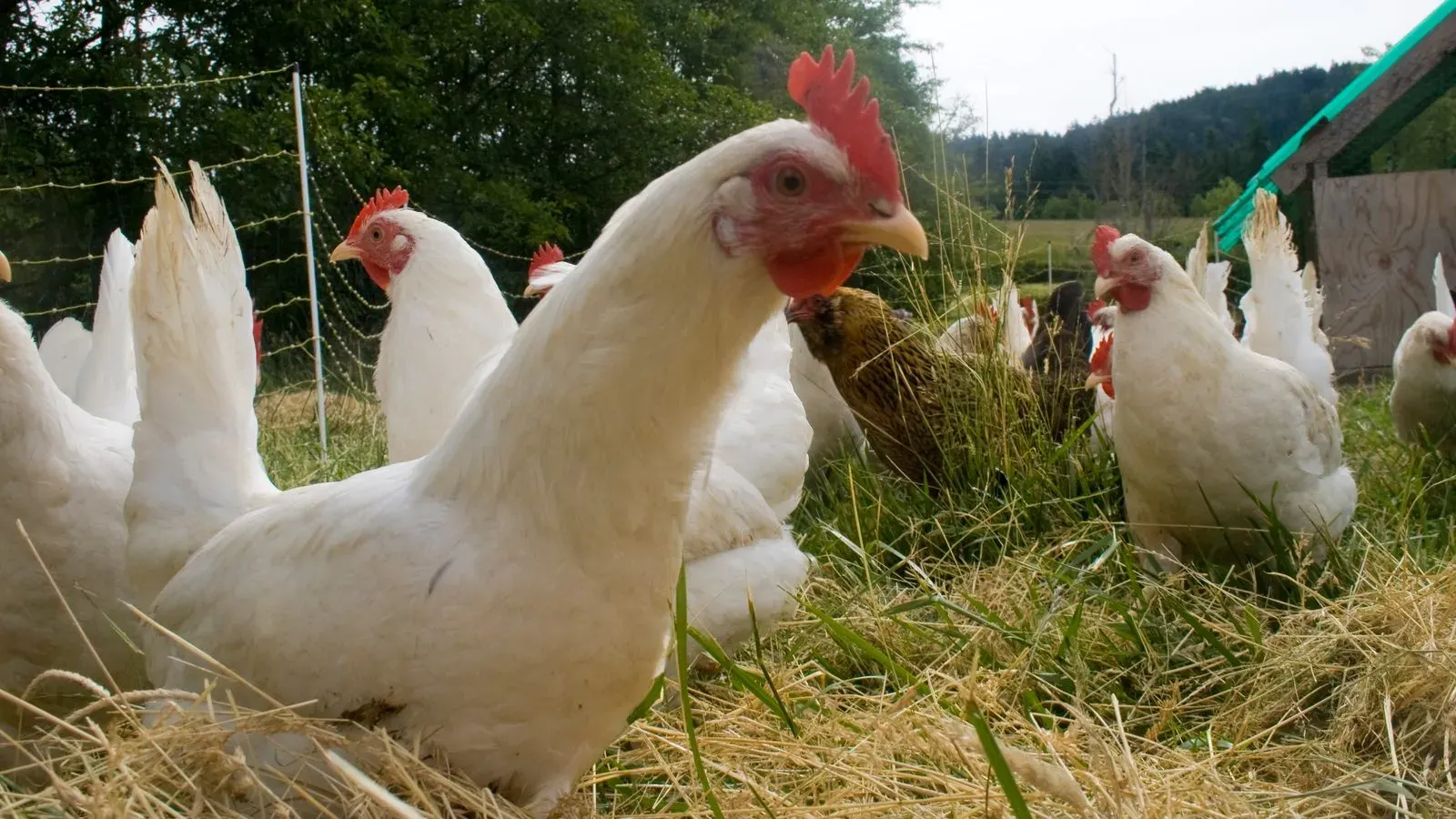
Leg bands are how you tell one buff hen from four other buff hens. They are how you know which bird went off lay, which one you treated last month, and which chick came from which hatch.
Most buying guides sort them by colour count and by whether the numbers are printed or etched. That is the wrong first question. The thing that decides whether a band is safe is its fit range against a shank that is still growing. A 16 mm inner diameter suits a full grown standard hen, but a cockerel's shank thickens quickly from around 12 weeks, and a fixed ring that fitted him in October can be a tourniquet by December.
That one specification splits this field cleanly in half. Two of these are fixed at 16 mm, which makes them adult only bands whatever the listing says. Two adjust across a wide span, one is sold as a universal fit, and one is a rubber spiral in a single stock size. We have said which is which, and we have been direct about the checking routine that has to come with any of them.
Our picks at a glance
Every product below wins one specific situation. Pick the row that matches your flock, your yard and your budget rather than reading top to bottom.
-
Best Overall

InnoHHustle 120 Pcs
A mixed age flock with chicks, pullets and adults of different breeds, where one fixed diameter would not fit everything.
-
Best Value for a Full Grown Flock

Patelai 100 Bands
A flock of full grown standard hens where you want individual numbered records at the lowest possible cost per bird.
-
Best for Spotting a Bird Across the Yard
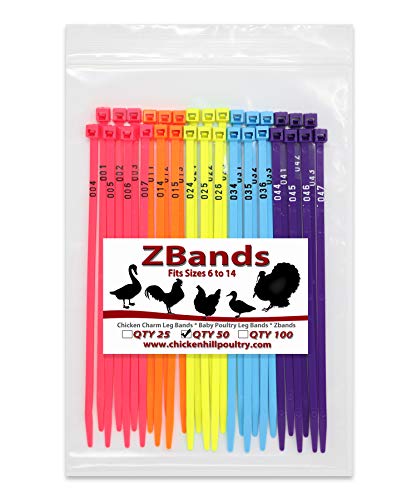
Chicken Hill ZBand
A keeper who wants to identify a particular hen from a distance without catching her, in a run with long grass or heavy cover.
Check price on Amazon for 50 ZBand Numbered Poultry Leg Bands, Fluorescent, Fits Sizes 6 to 14 on AmazonAbout $13.99 checked Aug 8, 2026
-
Best Budget

Mutai 16mm Rings
A small flock of full grown standard hens where five colours are enough to tell everybody apart and cost is the deciding factor.
-
Best for Kids Naming Six Pet Hens

Charm Quick-Release
A family with a handful of named pet hens, where the point of banding is that a child can tell the birds apart.
Check price on Amazon for Adjustable Chicken Leg Bands with Charms, Reusable Quick-Release Tags on AmazonAbout $11.99 checked Aug 8, 2026
-
Best Spiral Band That Cannot Pop Open

Spiral Bands Size 11
A keeper who has lost clip on bands to wire and bedding and wants a design with no closure that can be sprung open.
Compare every pick side by side
Swipe the table sideways to see every column on a phone.
| Product | Award | Price band | Band Type | Quantity | Size Or Diameter | Numbered | Material | Colours | Best use case | Buy link |
|---|---|---|---|---|---|---|---|---|---|---|
| InnoHHustle 120 Pcs | Best Overall | Under $30 | Zip-tie style self-locking strap, trim the tail to fit | 120 bands | Adjustable 10 mm to 30 mm (0.4 to 1.18 in) | Yes, laser etched, 20 numbers per colour | Plastic with smooth polished edges, listed as anti-freezing | 6 colours, 20 of each | A mixed age flock with chicks, pullets and adults of different breeds, wh… | Check price for Chicken Leg Bands, 120 Pcs Adjustable Chicken Leg Rings Identification Band Colorful Numbered Chick Tags for Legs Poultry Foot Rings Legs Bands for Poultry Identification Chickens Duck Turkey(10-30mm) on Amazon |
| Patelai 100 Bands | Best Value for a Full Grown Flock | Under $30 | Clip-on ring, buckles shut by hand | 100 bands | 16 mm / 0.63 in | Yes, laser etched 001 to 100 | Plastic, listed as reusable | 5 colours, 20 of each: red, purple, yellow, green, blue | A flock of full grown standard hens where you want individual numbered re… | Check price for Patelai 100 Pieces 16 mm Chicken Leg Rings with 5 Colors Numbered Chicken Leg Bands Colorful Poultry Clip on Bands Ankle Rings for Ducks Chicks Guinea Pigeons Goose on Amazon |
| Chicken Hill ZBand | Best for Spotting a Bird Across the Yard | Under $30 | Numbered ZBand with a universal fit design, one size for the whole flock | 50 bands in a reclosable bag | Fits band sizes 6 to 14; band is 5 in long and 0.14 in wide | Yes, 1 to 50 in colour-coded blocks of ten | Not stated | 5 colours in blocks of ten: fluorescent pink, orange, yellow and blue, plus purple | A keeper who wants to identify a particular hen from a distance without c… | Check price for 50 ZBand Numbered Poultry Leg Bands, Fluorescent, Fits Sizes 6 to 14 on Amazon |
| Mutai 16mm Rings | Best Budget | Under $30 | Clip-on round ring, no tools needed | 50 bands | 16 mm / 0.63 in inner diameter, one size | Not stated, colour only | TPU, listed as cold, frost and heat resistant | 5 mixed colours | A small flock of full grown standard hens where five colours are enough t… | Check price for Mutai 16mm Chicken Identification Band 50PCS 16mm 5Color Plastic Poultry Chickens Ducks Leg Rings Clip-On Round Tags Poultry Identification Bands on Amazon |
| Charm Quick-Release | Best for Kids Naming Six Pet Hens | Under $30 | Zip-tie style band with a press-to-release button, plus clip-on charms | 40 bands and 20 charms, with a storage box | 5.91 in band length, wraps to fit | Not stated, birds are told apart by 20 cartoon charms | Flexible plastic bands, coated metal charms | 4 colours, 10 of each: white, black, blue, green | A family with a handful of named pet hens, where the point of banding is… | Check price for Adjustable Chicken Leg Bands with Charms, Reusable Quick-Release Tags on Amazon |
| Spiral Bands Size 11 | Best Spiral Band That Cannot Pop Open | Under $30 | Spiral ID leg band | 25 per pack | Standard size 11 | Not stated, colour only | Synthetic rubber, listed as resilient and non-brittle | Assorted mixed colours with no colour choice on this option; listing names white, red, blue, green, pink, yellow, black, purple, brown and orange | A keeper who has lost clip on bands to wire and bedding and wants a desig… | Check price for Other Poultry Equipment Poultry Spiral ID Leg Bands Standard Size 11, Assorted Synthetic Rubber, 25 per Pack on Amazon |
The full reviews
Each review below follows the same order: what it is, why it won its category, how it behaves in real use, and who should buy something else.
1 Best Overall
Chicken Leg Bands, 120 Pcs Adjustable Chicken Leg Rings Identification Band Colorful Numbered Chick Tags for Legs Poultry Foot Rings Legs Bands for Poultry Identification Chickens Duck Turkey(10-30mm)
One box that covers every bird you keep. The 10 mm to 30 mm strap fits a bantam pullet and a heavy breed cock, and 120 laser etched bands for $9.99 works out at about 8 cents each.
What we liked
- Adjusts from 10 mm to 30 mm, so the same box bands a bantam pullet and a heavy breed cock
- Laser etched with 20 numbers per colour, giving 120 distinct identities across 6 colours
- About 8 cents a band, close to the lowest per band cost in this guide
- Listed as anti-freezing, which matters for a plastic band left on through a hard winter
What we did not
- A zip style band locks once, so removing it means cutting it off with snips rather than opening it
- The trimmed tail leaves an edge that catches on hardware cloth unless you smooth it after cutting
- Laser etched numbers fade after a muddy season, so the numbering is not as permanent as it sounds
- Adjustability tempts you to fit it on a growing cockerel and forget it, and a locked band does not grow with him
Key specifications
- Dimensions
- 4.3 x 0.56 x 0.15 in (L x W x H)
- Colour
- Multiple Colors
- Band Type
- Zip-tie style self-locking strap, trim the tail to fit
- Quantity
- 120 bands
- Size Or Diameter
- Adjustable 10 mm to 30 mm (0.4 to 1.18 in)
- Numbered
- Yes, laser etched, 20 numbers per colour
- Material
- Plastic with smooth polished edges, listed as anti-freezing
- Colours
- 6 colours, 20 of each
Why the InnoHHustle 120 Pcs wins this category
Because it is the only pack here that fits every bird you are likely to own. The strap adjusts from 10 mm to 30 mm, or 0.4 to 1.18 in, which reaches down to a bantam pullet's shank and up to a heavy breed cock. Both fixed rings in this guide are stuck at 16 mm, which makes them adult standard hen bands and nothing else.
The numbering is the second reason. Twenty laser etched numbers per colour across six colours gives 120 identities, enough for a flock far larger than most backyards will ever hold, and each band is individually readable once the bird is in hand.
Living with the InnoHHustle 120 Pcs
Fitting is quick. Wrap the strap, pull it to the size you want, and trim the tail. There is no ring to force open and no clip to fumble with cold fingers.
Two habits go with it. Smooth the cut end after trimming, because a sharp tail catches on hardware cloth and on nest box wire. And check that the band still slides freely on the shank, fortnightly on growing birds and monthly on adults.
Where the InnoHHustle 120 Pcs falls short
It locks once, and that is the trade for the fit range. A clip on ring can be popped open and moved to another bird. This one cannot. Removal means snips, and refitting a growing cockerel means a fresh band every time. At 8 cents apiece that is a small cost and it still means catching the bird.
The trimmed tail is the second issue. Cut it flush and it is fine. Leave a corner and it is an edge on a bird that pushes through wire and bedding all day.
The etching is the third. Laser etched numbers are crisp on a new band and they fade after a season of mud, so a bird you banded in spring may need the number read close up by autumn. The colour survives longer than the number does, which is worth knowing when you write your key: put the colour first and use the number as the second layer.
Research based, not hands-on
Assessed on the stated 10 mm to 30 mm adjustment range, the laser etched numbering scheme, the anti-freezing material claim and the per band cost against the other five packs in this guide.
- Best for
- A mixed age flock with chicks, pullets and adults of different breeds, where one fixed diameter would not fit everything.
- Skip it if
- You want a band you can take off by hand, because this one locks shut and only comes off with a cut.
- The limitation to plan around
- It locks once. Every size change means cutting the old band off and fitting a new one, which is fine at 8 cents a band and still means handling the bird each time.
2 Best Value for a Full Grown Flock
Patelai 100 Pieces 16 mm Chicken Leg Rings with 5 Colors Numbered Chicken Leg Bands Colorful Poultry Clip on Bands Ankle Rings for Ducks Chicks Guinea Pigeons Goose
One hundred numbered 16 mm rings for $5.99, about 6 cents a band, which is the lowest per band cost in this guide and the sensible buy if every bird you band is already full grown.
What we liked
- About 6 cents a band, the lowest per band cost of the six packs in this guide
- Laser etched 001 to 100, so every bird in a large flock gets a unique identity
- Five colours with 20 of each lets you group birds by hatch, breed or pen at a glance
- Clips shut by hand with no tools, and the listing describes them as reusable
What we did not
- Fixed at 16 mm inner diameter, so a growing cockerel will outgrow it and the ring cannot be let out
- A clip on ring that can be opened by hand can also be caught and popped off by wire or bedding
- No cold weather claim is stated, so brittleness after a hard freeze is untested by the listing
- Etched numbers need the bird in hand to read, so this does nothing for spotting a hen across the run
Key specifications
- Dimensions
- 0.63 x 0.63 x 0.39 in (L x W x H)
- Band Type
- Clip-on ring, buckles shut by hand
- Quantity
- 100 bands
- Size Or Diameter
- 16 mm / 0.63 in
- Numbered
- Yes, laser etched 001 to 100
- Material
- Plastic, listed as reusable
- Colours
- 5 colours, 20 of each: red, purple, yellow, green, blue
Why the Patelai 100 Bands is the value pick
Because if your birds have finished growing, the fit question is already answered and all that is left is cost and records. One hundred bands for $5.99 is about 6 cents each, which is the cheapest per band figure on this page, and every one of them is etched with its own number from 001 to 100.
That combination is what a laying flock actually needs: a unique identity per bird so you can track who went off lay, who you wormed, and who came from which hatch, without paying more than a few dollars for the whole system.
Living with the Patelai 100 Bands
They clip shut by hand. No pliers, no trimming, no cut edge to smooth, and the listing describes them as reusable, so a band that comes off a rehomed bird can go on another one.
Five colours at 20 apiece gives you a grouping layer on top of the numbers. Colour for the pen or the hatch, number for the bird. Note which leg you used and write the key down, because left and right doubles the codes you can make.
Where the Patelai 100 Bands falls short
The fixed 16 mm diameter is the real boundary. It is sized for a full grown standard hen. Put it on a cockerel at 12 weeks and his shank will thicken past it, and a ring that cannot be let out becomes a tourniquet. There is no adjustment to fall back on, so this is an adult only band whatever else the listing lists it for.
Clip on closure cuts both ways. A ring you can open by hand is a ring that bedding, wire or a determined hen can open too, so expect to lose a few and to find them in the run.
Nothing is stated about cold. The material is described as plastic and listed as reusable, with no frost or freeze claim, so after the first hard cold snap it is worth checking a few for cracks before you trust the whole set through winter.
Research based, not hands-on
Assessed on the stated 16 mm fixed inner diameter, the 001 to 100 laser etched numbering, the clip on closure design and the per band cost against the other five packs in this guide.
- Best for
- A flock of full grown standard hens where you want individual numbered records at the lowest possible cost per bird.
- Skip it if
- You are banding chicks, pullets or cockerels, because a fixed 16 mm ring cannot be let out as the shank thickens.
- The limitation to plan around
- The 16 mm diameter is not adjustable. It is right for a full grown standard hen, too big for a bantam and too small for a heavy breed cock, and none of that changes after purchase.
3 Best for Spotting a Bird Across the Yard
50 ZBand Numbered Poultry Leg Bands, Fluorescent, Fits Sizes 6 to 14
The only fluorescent bands in this guide. Pink, orange, yellow and blue read from ten feet away in long grass, which is something an etched number can never do.
What we liked
- Fluorescent pink, orange, yellow and blue read across a run and through long grass
- Universal fit design covers band sizes 6 to 14, so one size serves a mixed flock
- Numbered 1 to 50 in colour coded blocks of ten, giving colour and number together
- Arrives in a reclosable bag, which keeps 50 small bands from scattering in a drawer
What we did not
- About 28 cents a band, over four times the per band cost of the Patelai pack here
- Material is not stated at all, so cold weather brittleness and UV fading cannot be judged before buying
- Fifty bands per pack against 100 in the Patelai and 120 in the InnoHHustle, so a flock over fifty needs a second bag
- Fluorescent colour fades in sunlight over time, and the whole reason for buying it is the colour
About $13.99 checked Aug 8, 2026
Key specifications
- Size
- One Size
- Colour
- Orange,Blue,Pink,Purple
- Band Type
- Numbered ZBand with a universal fit design, one size for the whole flock
- Quantity
- 50 bands in a reclosable bag
- Size Or Diameter
- Fits band sizes 6 to 14; band is 5 in long and 0.14 in wide
- Numbered
- Yes, 1 to 50 in colour-coded blocks of ten
- Material
- Not stated
- Colours
- 5 colours in blocks of ten: fluorescent pink, orange, yellow and blue, plus purple
Why the Chicken Hill ZBand is the one you can see
Because everything else on this page assumes you will have the bird in your hands. An etched number is exact and it is unreadable at ten feet, so identifying a hen means catching her first, which is the job you were trying to avoid.
Fluorescent pink, orange, yellow and blue solve that. They read across a run, in shade and through long grass, which is where an ordinary opaque colour disappears. If your reason for banding is watching who is limping, who is off the feeder or who is laying away, this is the property to buy.
Living with the Chicken Hill ZBand
The band is 5 in long and 0.14 in wide, and the universal fit design is stated to cover band sizes 6 to 14, so one type serves a mixed flock rather than needing a size per breed.
The numbering is set up sensibly for the colour job. Numbers run 1 to 50 in colour coded blocks of ten, so the colour tells you the group from a distance and the number tells you the bird once she is in hand. That is the two layer system that actually works on a flock.
Where the Chicken Hill ZBand falls short
Cost per band is the first thing to weigh. Fifty bands for $13.99 is about 28 cents each, over four times what the Patelai pack costs per band. You are paying for visibility, and on a flock of thirty that adds up quickly.
The material is not stated anywhere on the listing, which is a real gap. Cold weather brittleness and sun fading are both material properties, and with nothing published you cannot judge either before buying. Three of the other packs here do name a material and say something about how it behaves in cold: the Mutai TPU, the anti-freezing InnoHHustle plastic and the non brittle synthetic rubber spirals.
Fading is the specific risk to plan around. Fluorescent finishes dull under UV, and the entire reason to pay a premium for this band is the colour. When the pink starts reading as pale grey across the run, the band has stopped doing the one job it was bought for, so budget on replacing rather than treating this as a permanent fit.
Research based, not hands-on
Assessed on the stated universal fit across band sizes 6 to 14, the 5 in band length, the fluorescent colour set, the 1 to 50 numbering and the per band cost against the other packs here.
- Best for
- A keeper who wants to identify a particular hen from a distance without catching her, in a run with long grass or heavy cover.
- Skip it if
- You are banding a large flock on a tight budget, because at about 28 cents a band it costs over four times what the Patelai pack costs per band.
- The limitation to plan around
- Its advantage is visual, so it depends on the colour staying bright. Plan on the fluorescent finish dulling in sun over a season or two, and on replacing bands when it does.
4 Best Budget
Mutai 16mm Chicken Identification Band 50PCS 16mm 5Color Plastic Poultry Chickens Ducks Leg Rings Clip-On Round Tags Poultry Identification Bands
The lowest sticker price in this guide at $4.99 for 50 rings, in TPU that is listed as cold, frost and heat resistant, which is the most specific temperature claim on this page.
What we liked
- Lowest sticker price in this guide at $4.99 for 50 rings
- TPU listed as cold, frost and heat resistant, which names both ends of the range where other packs name one or none
- Clips on by hand with no tools, so a whole flock can be banded in one session
- Five mixed colours is enough to code five groups, or ten using both legs
What we did not
- Not numbered, so on a flock larger than your colour count you cannot tell two birds apart
- Fixed at 16 mm inner diameter, so a growing cockerel outgrows it and the ring cannot be let out
- At about 10 cents a band it costs more per band than the numbered Patelai pack does
- Fifty rings in one colour mix with no choice of shades, so a planned colour scheme is not possible
Key specifications
- Size
- 0.63 inch
- Colour
- Blue
- Band Type
- Clip-on round ring, no tools needed
- Quantity
- 50 bands
- Size Or Diameter
- 16 mm / 0.63 in inner diameter, one size
- Numbered
- Not stated, colour only
- Material
- TPU, listed as cold, frost and heat resistant
- Colours
- 5 mixed colours
Why the Mutai 16mm Rings is the budget pick
Because $4.99 is the lowest amount of money you can spend on this page and still end up with 50 bands on 50 legs. If the job is simply telling a few hens apart, that is the whole requirement.
TPU is the second reason, and it is a better material story than most of this field. The listing calls it cold, frost and heat resistant, which covers both ends of the range. The InnoHHustle only says anti-freezing and the spiral bands only say non brittle, and the other three packs say nothing about temperature at all. A band that has gone brittle in a January freeze can crack when a hen jumps off a roost, so a stated cold rating is worth more than it sounds.
Living with the Mutai 16mm Rings
They clip on by hand. No pliers, no trimming, no cut edge, which means you can band a whole flock in a single evening session with someone holding the birds.
Use both legs to stretch what five colours can do. A blue band on the left and a blue band on the right are two different birds, which turns five colours into ten identities without spending anything more. Write the key down as you go.
Where the Mutai 16mm Rings falls short
There is no numbering. The listing states colour only, and that is the ceiling on what this pack can do. On six hens it is fine. On twenty it is not, because you run out of colours long before you run out of birds and you cannot record an individual hen at all.
The 16 mm diameter is fixed and one size. It suits a full grown standard hen, and it will not let out for a cockerel whose shank is still thickening, so this is an adult only band. Fitting one on a growing bird and leaving it is how a band ends up embedded.
Per band it is also not the cheapest here despite the low sticker. Fifty for $4.99 is about 10 cents a band, while the Patelai pack is about 6 cents and carries numbers as well. The low price buys you a smaller commitment, not a lower unit cost.
Research based, not hands-on
Assessed on the stated 16 mm fixed inner diameter, the TPU material with its cold, frost and heat resistance claim, the absence of numbering and the per band cost against the other packs here.
- Best for
- A small flock of full grown standard hens where five colours are enough to tell everybody apart and cost is the deciding factor.
- Skip it if
- You need individual records, because these carry no numbers and colour alone runs out fast on a flock over ten birds.
- The limitation to plan around
- Colour is the only identifier. Five colours means five identities per leg, so the moment your flock outgrows that count you are guessing which hen is which.
5 Best for Kids Naming Six Pet Hens
Adjustable Chicken Leg Bands with Charms, Reusable Quick-Release Tags
A wrap to fit band with a press to release button and 20 clip on charms, which turns identification into something a child can do by picking a symbol rather than reading a number.
What we liked
- Press to release button means the band comes off by hand, with no snips needed
- Wraps to fit on a 5.91 in band, so it suits a bantam and a standard hen from the same box
- Twenty cartoon charms give a visual identity a child can name and remember
- Comes with a storage box, which keeps 40 bands and 20 charms from getting lost in a drawer
What we did not
- No numbering at all, so identification depends on 20 charms and stops working on a large flock
- Clip on charms are extra hardware on the leg that can catch on wire or bedding and pull off
- About 30 cents a band, which is roughly five times the per band cost of the Patelai pack here
- Coated metal charms in a wet run will eventually corrode where the coating chips
About $11.99 checked Aug 8, 2026
Key specifications
- Dimensions
- 7 x 4.7 x 0.75 in (L x W x H)
- Colour
- Multicolor
- Band Type
- Zip-tie style band with a press-to-release button, plus clip-on charms
- Quantity
- 40 bands and 20 charms, with a storage box
- Size Or Diameter
- 5.91 in band length, wraps to fit
- Numbered
- Not stated, birds are told apart by 20 cartoon charms
- Material
- Flexible plastic bands, coated metal charms
- Colours
- 4 colours, 10 of each: white, black, blue, green
Why the Charm Quick-Release suits a small pet flock
Because it solves a different problem from the rest of this page. On six named pet hens, nobody is keeping laying records by number. What people want is for a seven year old to walk out and know which one is which, and a cartoon charm does that better than an etched 037 ever will.
The closure is the other reason. A press to release button means the band comes off by hand. Every other adjustable band here either locks permanently and needs snips, or clips shut on a fixed diameter.
Living with the Charm Quick-Release
The band wraps to fit on a 5.91 in strap, so it will close down on a bantam and open out for a standard hen from the same box. That is a genuine advantage over the two fixed 16 mm rings here, and it means the band can be let out as a young bird grows rather than cut off.
Forty bands and 20 charms in a storage box is a lot of small parts, and the box is more useful than it sounds. Loose charms in a drawer disappear.
Where the Charm Quick-Release falls short
There are no numbers, and that is the hard ceiling. Twenty charms and four colours is a fine identification system for six hens and it is unusable at thirty. If your flock grows, this set does not grow with it and you will be buying numbered bands anyway.
The charms are extra hardware hanging off a bird's leg. Anything that clips on can catch on hardware cloth, nest box wire or bedding, and either pull off or hold the leg for a moment. Check them at the same time you check the bands, and pull off any charm that is working loose.
Cost is the last thing. Forty bands for $11.99 is about 30 cents a band, roughly five times what the Patelai pack costs per band, and the Patelai carries numbers. You are paying for the charms and the quick release, so make sure those are the features you actually want.
Research based, not hands-on
Assessed on the stated 5.91 in wrap to fit band length, the press to release closure, the 40 band and 20 charm pack contents and the absence of any numbering.
- Best for
- A family with a handful of named pet hens, where the point of banding is that a child can tell the birds apart.
- Skip it if
- You keep more than about ten birds, because 20 charms and four colours will not carry a flock that size.
- The limitation to plan around
- Identification rests entirely on the charms. There are no numbers, so if a charm comes off in the run that bird has lost her identity until you refit her.
6 Best Spiral Band That Cannot Pop Open
Other Poultry Equipment Poultry Spiral ID Leg Bands Standard Size 11, Assorted Synthetic Rubber, 25 per Pack
A synthetic rubber spiral in stock size 11, listed as resilient and non brittle. There is no clip and no buckle to fail, so nothing on this band can be caught by wire and sprung open.
What we liked
- Spiral design has no clip or buckle, so there is nothing for wire or bedding to pop open
- Synthetic rubber listed as resilient and non brittle, which is the property that matters in a freeze
- Winds on and off by hand, so a band can be removed without snips and reused
- Ten colours are named on the listing, which is the widest colour set in this guide
What we did not
- About 72 cents a band, by far the highest per band cost of the six packs here
- No numbering, so on a flock larger than your colour count individual records are impossible
- Sold as assorted mixed colours with no colour choice, so a planned colour code cannot be ordered
- One stock size 11 with no stated range, so a bird outside that size has no option in this pack
Key specifications
- Colour
- mix
- Band Type
- Spiral ID leg band
- Quantity
- 25 per pack
- Size Or Diameter
- Standard size 11
- Numbered
- Not stated, colour only
- Material
- Synthetic rubber, listed as resilient and non-brittle
- Colours
- Assorted mixed colours with no colour choice on this option; listing names white, red, blue, green, pink, yellow, black, purple, brown and orange
Why the Spiral Bands Size 11 stays on
Because there is nothing on it to open. A clip on ring has a closure, and a closure is a point of failure: bedding, hardware cloth or a hen scratching at her own leg can catch it and spring it. A spiral band winds around the shank instead, and it comes off only if it is unwound.
The material backs that up. Synthetic rubber described as resilient and non brittle is the right property for a band left on through a winter. A plastic that has gone brittle can crack when a bird lands off a roost, and rubber that stays flexible will not.
Living with the Spiral Bands Size 11
Fitting is a winding action rather than a click, and the same action takes it off, so a band can be removed by hand and reused on another bird. That is worth something on a flock where birds come and go.
Size 11 is a stock poultry band size, so it is worth checking your birds against a size chart before ordering rather than assuming. There is only the one size in this pack.
Where the Spiral Bands Size 11 falls short
The price is the immediate problem. Twenty five bands for $18 is about 72 cents each, which is the highest per band cost on this page by a wide margin. For comparison, $5.99 buys 100 numbered Patelai bands. You are paying almost twelve times as much per bird for a band that carries no number.
Which brings up the second problem. There is no numbering at all, colour only, so on a flock bigger than your colour set you cannot record individual birds.
The last one is the colour assortment. The listing names ten colours and ships them assorted, with no colour choice on this option. If you had planned a code, blue for the 2025 hatch and green for the 2026 hatch, you cannot order to it. You get what is in the bag and you build the code afterwards, which is workable and is not what you set out to do.
Research based, not hands-on
Assessed on the spiral design with no clip or buckle, the stated synthetic rubber material with its resilient and non brittle description, the stock size 11 and the per band cost against the other packs here.
- Best for
- A keeper who has lost clip on bands to wire and bedding and wants a design with no closure that can be sprung open.
- Skip it if
- You want a planned colour code, because this pack ships assorted with no way to choose which colours arrive.
- The limitation to plan around
- You cannot pick the colours. The pack is assorted, so the code you designed on paper may not match the bands that turn up in the bag.
How we compared these chicken leg bands
The first sort was fit range, and it did most of the work.
Two bands here are fixed. The Patelai and the Mutai are both 16 mm, or 0.63 in, of inner diameter, one size and no adjustment. That is a good fit for a full grown standard hen and it is an adult only band, whatever else the listing mentions. Two adjust widely. The InnoHHustle spans 10 mm to 30 mm on a zip style strap you trim to length, which covers a bantam pullet through a heavy breed cock. The Chicken Hill ZBand takes a different route, a universal fit design that the listing says covers band sizes 6 to 14. The charm set wraps to fit on a 5.91 in band. The spiral bands come in a single stock size 11.
After fit we looked at numbering, colour visibility, cold weather behaviour and cost per band. Numbering is a three way tie, InnoHHustle, Patelai and the ZBand, and adjustability is another three way tie, so neither could decide an award on its own.
What actually matters in a leg band
Fit range against a growing shank
This is the whole decision. A chick banded at six weeks is not the same bird at six months, and the shank is the part that changes most obviously. A fixed 16 mm ring on a growing cockerel is the single most common way keepers end up with an embedded band.
If your flock is all adult hens of one breed, a fixed diameter is fine and it is cheaper. If you have chicks, pullets, cockerels or several breeds at once, buy the range.
Reading the band from a distance
An etched number is precise and useless at ten feet. You need the bird in your hands to read it, which means catching her, which is the thing you were trying to avoid.
Colour is what works at a distance, and this is where the ZBand is genuinely different from everything else on this page. Fluorescent pink, orange, yellow and blue read across a run and through long grass, where a standard opaque colour does not. If your reason for banding is to spot a particular hen from the kitchen window, that is the property to buy.
Numbering, and what you can do without it
Three of these are numbered. The InnoHHustle etches 20 numbers per colour, the Patelai runs 001 to 100 and the ZBand runs 1 to 50 in colour blocks of ten.
The other three are colour only. That is workable on a small flock and it falls apart on a large one. The charm set is the extreme version: it asks you to tell birds apart by 20 cartoon charms, which is fine for six pet hens with names and unusable at thirty.
Cost per band, not cost per pack
The pack prices here range from $4.99 to $18. Per band the spread is wider than the sticker suggests. The Patelai works out at about 6 cents a band, the InnoHHustle about 8 cents, the Mutai about 10 cents, the ZBand about 28 cents, the charm set about 30 cents and the spiral pack about 72 cents. Cheap wins plainly on this page: $5.99 buys 100 numbered Patelai bands while $18 buys 25 unnumbered spiral ones.
The banding routine nobody mentions before you buy
Check fortnightly while a bird is growing and monthly once she is adult. The test is simple: the band should slide freely up and down the shank. If it does not, take it off.
Cut off anything that has started to embed rather than trying to prise it open, and look at the leg for swelling above and below the band. A leg that is swollen, broken or discoloured is a vet question, not a band question.
Keep a written key. Bird, colour, leg, number. Left and right double your codes from the same set of colours, and a code you never wrote down is worth nothing three months later.
Smooth any cut edge. A zip style band leaves a trimmed tail, and a sharp tail catches on hardware cloth and on nest box wire.
Final recommendation
The InnoHHustle 120 Pcs is the best all round buy. It adjusts from 10 mm to 30 mm, so one box covers every bird you are likely to keep, it is laser etched with 20 numbers per colour, and at about 8 cents a band it is close to the cheapest here.
If your flock is all full grown standard hens, the Patelai 100 Bands does the same identification job at about 6 cents a band, the lowest per band cost in this guide. If your reason for banding is spotting a hen across the yard, the Chicken Hill ZBand is the only fluorescent option here. And if you want the cheapest way to put a colour on 50 adult birds, the Mutai 16mm Rings has the lowest sticker price on this page at $4.99.
Questions people ask before buying
What size leg band does a chicken need?
For a full grown standard hen, 16 mm of inner diameter is the usual figure, and both fixed rings in this guide are built to it. A bantam needs less, and a heavy breed cock bird needs more. The problem is that a bird is only one size for part of her life. A cockerel's shank thickens fast from about 12 weeks, and a fixed 16 mm ring fitted before that will not open again. If your birds are still growing, or you keep several breeds at different sizes, an adjustable band that spans a range is the safer purchase than a single stated diameter.
Can a leg band cut off a bird's circulation?
Yes, and this is the one real risk of banding. A ring that no longer has room to move sits tight against the shank, restricts blood flow and can start to embed in the skin. It happens most often on young birds that were banded before they finished growing, and it can go unnoticed because feathering and dirt hide the leg. Check banded birds fortnightly while they are growing and monthly once they are adult. If a band no longer slides freely up and down the shank, cut it off. If the leg is swollen, discoloured or the band has pressed into the skin, take the band off and get a vet to look at it.
How often should I check a banded bird?
Fortnightly on anything still growing, monthly on adults. You are looking for two things. First, whether the band still slides freely up and down the shank, which is the simplest test of whether there is room. Second, whether the leg is swollen above or below the band, whether the skin is broken, and whether any part of the band has started to sink into the scale. Cut off anything that has begun to embed, and cut it off rather than trying to force it open. This routine is the part most keepers only learn about after the first band goes tight.
Is a numbered band better than a colour coded one?
They do different jobs and it depends on your distance from the bird. An etched number is exact and it identifies a specific hen, but you have to have the bird in hand to read it. A strong colour identifies a bird across the yard while she is still moving. On a flock of six, colour alone works and numbers are a bonus. On a flock of thirty, colour alone runs out and you need numbers to keep individual records. The most useful setup is both: a colour for the group and a number for the bird, with a written key noting which leg each band is on.
Do plastic leg bands survive a hard freeze?
Some are built for it and some say nothing. The Mutai rings are TPU and are listed as cold, frost and heat resistant. The InnoHHustle bands are described as anti-freezing. The spiral bands are synthetic rubber described as resilient and non brittle, which is the property that matters, because a plastic that has gone brittle in a cold snap can crack when a hen jumps down off a roost. Where a listing states nothing about temperature, plan on checking bands after the first real freeze and replacing any that have gone hard or split.
Which leg should I band, and does it matter?
It does not matter to the bird, and it matters a great deal to your records. Using left and right doubles the number of codes you can make from the same set of colours, so six colours on two legs gives you twelve identities before you have used a single number. What matters is writing it down. Keep a simple key on paper or on your phone that lists the bird, the colour, the leg and the number, and update it whenever you cut a band off. A colour code you have not recorded is just a coloured ring.
Why you can trust this guide
- Written by
- Marta Voss, Editor and fact checker, Chicken Geek. Specialist areas: Editorial fact checking, Chick brooding and starter nutrition, Small-flock husbandry, Feed labels and nutrition claims.
- Fact checked by
- Sam Reddick
- Published
- August 8, 2026 · Last updated August 8, 2026 · Products and links rechecked August 8, 2026
- How we picked
- We compared the stated fit range or inner diameter on every band against the shank of a bantam, a standard hen and a growing cockerel, then looked at whether the band is numbered, how the colours read at a distance, what the material does in a freeze, and what each pack costs per band rather than per box.
- Evidence used
- None of the 6 products on this page were sent to us or bought for a hands-on test. Every recommendation here is research based: manufacturer specifications, listed dimensions and materials, owner feedback at volume, and comparison against equipment our team has owned. Each review states this again above the buy button so you are never guessing which kind of evidence sits behind a pick.
- Editorial standards
- No brand pays for placement, and no manufacturer sees this page before it goes live. Read our editorial policy and testing method.
- Affiliate disclosure
- Chicken Geek is reader supported. We earn a commission from qualifying purchases made through links on this page, at no extra cost to you, and no brand has paid for a placement or an award here.
About the author

Editor and fact checker, Chicken Geek
Marta edits every guide on Chicken Geek and checks that each claim can be traced back to a manufacturer specification, a published standard or a stated first-hand observation. She keeps a small backyard flock of six hens and has raised chicks from day one for eight seasons.
- Eight seasons raising chicks from day-old to point of lay
- Checks every specification in a Chicken Geek guide against the manufacturer listing
- Removes any testing claim that cannot be backed up
- Keeps a flock of six hens in a suburban backyard