We Compared 6 Chicken Dust Baths on Staying Dry and Dust Safety
We compared six chicken dust baths and dust bath mixes on whether they stay dry, how many hens they hold, and how safely they handle diatomaceous earth.

By Sam Reddick Lead gear reviewer, Chicken Geek
Fact checked by Marta Voss
Published Prices and stock checked 7 min read
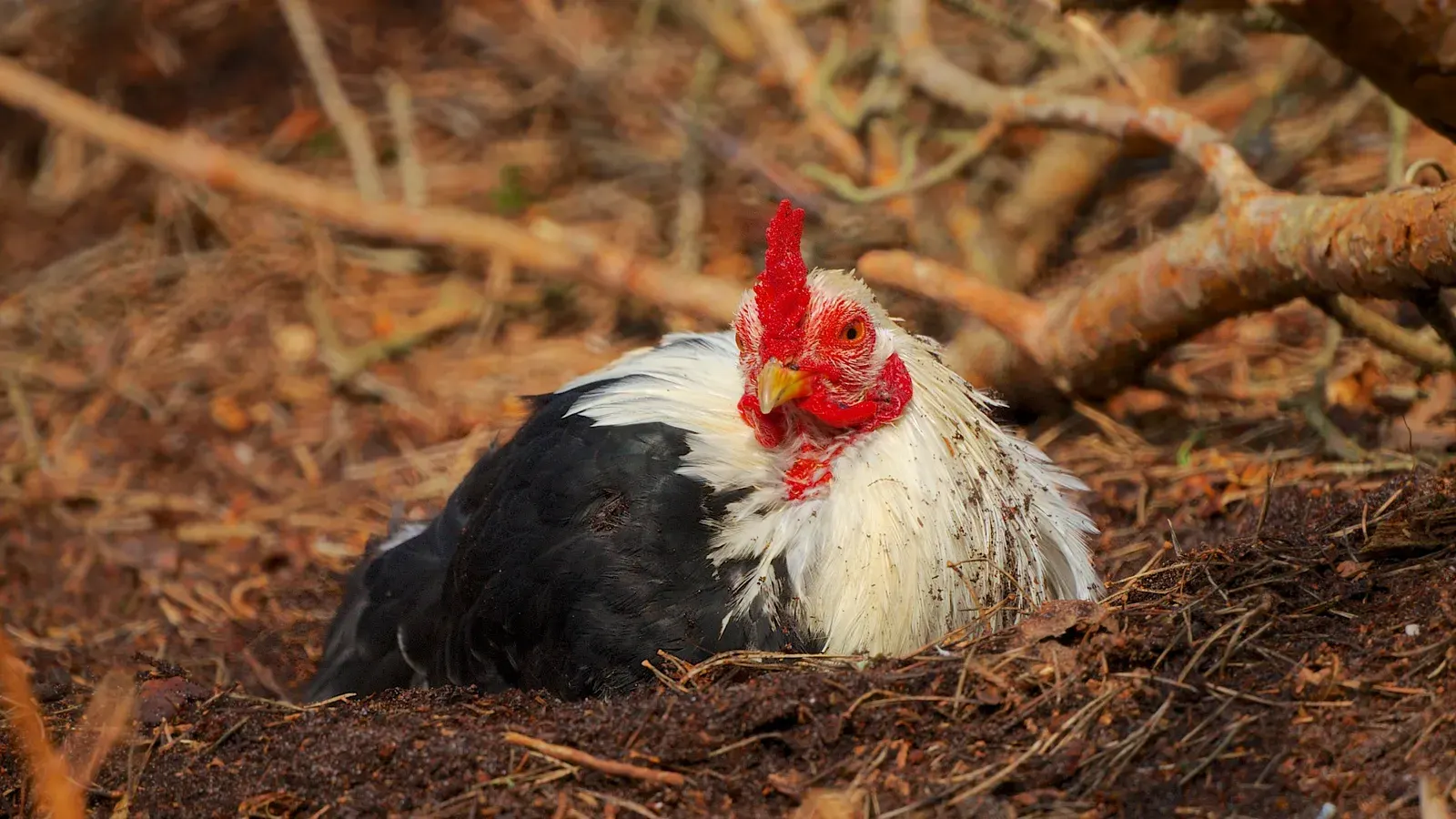
A dust bath is not enrichment. It is how a chicken controls mites and lice on her own body, working fine dust down through the feathers to the skin where the parasites actually live. A flock with a dry place to do that has far fewer parasite problems than a flock without one, so this is preventative health rather than a toy.
That word dry is the whole specification. Wet dust is mud, and mud does nothing at all. This is why a bottomless tub standing on dry ground under cover beats a solid tub that catches every rainfall and holds it, and it is the axis we judged all six products on.
The last thing worth knowing before you spend money is diatomaceous earth. It is in most bagged mixes, and it is also a fine silica dust that irritates the airways of birds and of the person filling the tub. Mixed into sand and dry soil it is reasonable. Tipped in neat and stirred into a cloud, it is not.
Our picks at a glance
Every product below wins one specific situation. Pick the row that matches your flock, your yard and your budget rather than reading top to bottom.
-
Best Overall
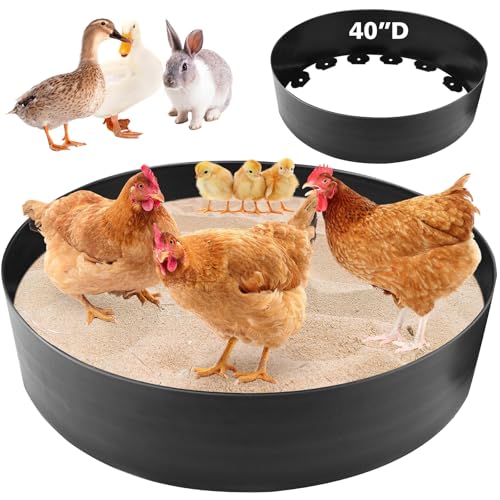
UCandy 40 in Tub
Flocks of three or more birds that have a dry, covered corner of the run to give over to a permanent bath.
-
Best Dust Bath Mix

Fresh Coop DE Mix 20 lb
Keepers who want a ready-made mineral mix to work into a sand and soil base without measuring out neat powder.
-
Best Foldable

Starotatess Foldable 32 in
Keepers with no permanently covered corner who need a bath they can empty, dry and put away between showers.
-
Best for Odour Control

Arden Line Zeolite Mix
Keepers whose real complaint is a damp, ammonia-smelling bathing area inside a covered run or under a raised coop.
Check price on Amazon for Zeolite Chicken Dust Bath, 6 lb, Natural Mineral Dust Bath for Chickens on AmazonAbout $23.99 checked Aug 8, 2026
-
Best for Small Runs

Kalekey Adjustable 25 in
Small flocks or tight runs where a 40 inch permanent bath would take up most of the usable floor.
-
Best Natural Blend

Chickie-Whiz Volcanic Ash
Keepers who want a mineral additive for the bath but would rather not handle a sack of neat diatomaceous earth.
Compare every pick side by side
Swipe the table sideways to see every column on a phone.
The full reviews
Each review below follows the same order: what it is, why it won its category, how it behaves in real use, and who should buy something else.
1 Best Overall
UCandy Chicken Dust Bath Tub, 40''D x 5.9''H Bottomless Design, PE Material, Adjustable Dust Bath for Chickens, Chicken Coop Cleaner Container,Essential Chicken Coop Accessory
A 40 inch bottomless ring that stands on your own dry ground, so rain that lands in it drains away instead of sitting in a solid base and turning the dust to mud.
What we liked
- Bottomless, so water drains into the soil rather than standing in the tub
- 40 inches across lets three or four hens bathe together instead of queueing
- 5.9 inches deep is close to the hollow a hen scrapes for herself
- PE plastic will not rot like a timber frame or rust like a steel one
What we did not
- Bottomless means the dust is only as dry as the ground under it, so clay or a low spot wets it from below
- At 5.9 inches deep, an enthusiastic hen will scrape a fair amount of the mix over the rim
- A 40 inch footprint takes most of the floor in a run under about 30 square feet
Key specifications
- Dimensions
- 135 x 5.9 x 5.9 in (L x W x H)
- Colour
- Black
- Product Type
- Bottomless tub
- Size
- 40 in diameter, 5.9 in deep
- Material
- PE plastic
- Weatherproof
- Yes, use under cover
- Hens Served
- 3 to 4 at once
Why the UCandy 40 in Tub wins this category
Because it gets right the one thing that decides whether a dust bath gets used at all. Dust only works while it is dry, and a solid tub holds rain until somebody empties and refills it. This one has no floor, so what lands in it drains into the ground and the surface dries out on its own.
Size is the second reason. Chickens bathe socially, and 40 inches takes three or four birds in the same hollow. In a flock with a firm pecking order, that is the difference between everyone getting a turn and two hens owning the bath.
Living with the UCandy 40 in Tub
At 5.9 inches deep it holds enough sand and soil for a bird to scrape a proper hollow rather than skidding on a hard base. That is at the lower end of what a hen digs for herself, so fill it close to the rim and top it up as it settles.
PE plastic suits something that sits on wet ground year round. It does not rot, it does not rust, and it can be lifted and hosed out.
Where the UCandy 40 in Tub falls short
The bottomless design cuts both ways. It drains, and the dust also sits directly on your soil, so on clay or in a low corner moisture wicks up and the bottom layer never dries. A paving slab or a few inches of coarse sand under the ring fixes it.
The depth is modest. Hens throw dust hard with both wings, and at 5.9 inches a fair amount goes over the side, so expect to top it up.
The footprint is the last consideration. Forty inches is a lot of run floor to commit permanently, and in a small run a narrower bath leaves more room for the birds to walk about.
Research based, not hands-on
Assessed on the published diameter, depth, material and bottomless construction, and compared against solid-based tubs on what happens to the contents after rain.
- Best for
- Flocks of three or more birds that have a dry, covered corner of the run to give over to a permanent bath.
- Skip it if
- Your run has no covered area at all, because an open bottomless ring becomes a ring of wet soil.
- The limitation to plan around
- It has no floor, so the ground decides how dry the dust stays. On heavy clay or in a dip that collects water, set it on a paving slab or a bed of coarse sand before you fill it, or the bottom two inches will stay damp all winter.
2 Best Dust Bath Mix
Progressive Planet Fresh Coop Dust Bath, 20lbs - Food-Grade Diatomaceous Earth & Calcium Montmorillonite Clay - Supports Healthy Feathers, Reduces Boredom & Encourages Natural Dust Bathing
Twenty pounds of food-grade diatomaceous earth already blended with calcium montmorillonite clay, which is a safer way to buy DE than a sack of the neat powder.
What we liked
- Diatomaceous earth arrives pre-blended with clay rather than as a neat silica powder
- 20 lb refills a large tub several times, so one bag lasts a season
- Food-grade rather than the pool-filter grade sold for filtration
- Clay adds body, so the mix does not blow straight out of an open tub
What we did not
- Diatomaceous earth is a fine silica dust and irritates the airways of birds and people in a cloud
- The bag has to be stored properly dry, because damp DE clumps and stops abrading
- Sand and sifted garden soil do most of the same job for almost nothing, so this is a convenience buy
Key specifications
- Dimensions
- 18.75 x 15 x 4.5 in (L x W x H)
- Weight
- 20 pounds
- Product Type
- Dust bath mix
- Size
- 20 lb
- Material
- Food-grade diatomaceous earth blend
- Weatherproof
- No, must be kept dry
- Hens Served
- Refills a large tub several times
Why the Fresh Coop DE Mix 20 lb wins this category
Because of what it is not. Most diatomaceous earth is sold as neat white powder, and people tip a scoop into a tub and stir, which produces exactly the cloud you do not want around birds that have no good way to clear fine particles.
Blending the DE with calcium montmorillonite clay changes the handling. The clay gives the mix body, so more of it stays in the tub and less hangs in the air. The abrasive fraction still does its job against lice and mites, which is to damage the waxy layer that stops a parasite drying out.
Living with the Fresh Coop DE Mix 20 lb
Twenty pounds is a genuinely useful quantity. Used as it should be, as a minority ingredient worked into sand and dry soil, a bag refills a large tub several times over a season.
Food-grade matters here. The pool-filter grade of diatomaceous earth is heat treated into a different, more hazardous crystalline form and has no place near livestock. Buying a bag that states food grade removes that question.
Where the Fresh Coop DE Mix 20 lb falls short
It is still silica dust, and no amount of clay changes that. Add it on a still day, wear a mask, and keep the proportion low. If a bird is already wheezing or open-mouth breathing, leave DE out of the bath entirely and get advice from a vet.
Storage is the practical trap. Diatomaceous earth only abrades while it is dry, and a bag left on a damp shed floor turns to lumps that do nothing.
The last point is honest value. A bath of plain sand and sifted dry soil delivers most of the benefit for the cost of a shovel. This mix is a convenience, not the thing that makes the bath work.
Research based, not hands-on
Assessed on the published composition, grade and bag weight, and on established guidance about handling fine silica dust around poultry and people.
- Best for
- Keepers who want a ready-made mineral mix to work into a sand and soil base without measuring out neat powder.
- Skip it if
- Any bird in your flock already has laboured breathing, because added silica dust is the wrong thing in that situation.
- The limitation to plan around
- This is an additive, not a complete dust bath. Twenty pounds sounds like a lot until you try to fill a 40 inch tub with it, and it should go in as a minor fraction of a sand and dry soil base rather than as the whole contents.
3 Best Foldable
Chicken Dust Bath Tub - 32"D & 8"H Foldable Chicken Coop Accessories to Mix Sand Chilli DE Or Lime Dust in Chicken House, Keep Poultry Hens, Rooster, Button Quail Healthy & Clean, Double as Duck Pool
A 32 inch coated fabric tub with an 8 inch wall that folds flat, which makes it the one bath here you can tip out and stand on its side before the rain arrives.
What we liked
- Folds flat, so it can be emptied and put away when wet weather is forecast
- 8 inches deep holds more dust than the shallow rigid tubs and loses less over the rim
- 32 inches is enough width for two or three hens to bathe at once
- Doubles as a shallow duck pool if you keep waterfowl as well
What we did not
- The base is solid, so any rain landing in it stays there until somebody tips it out
- Folding it away only helps if a person is present to do it before the weather turns
- Coated fabric is a wear surface, and claws working the same spot will eventually score through it
Key specifications
- Dimensions
- 32 x 32 x 8 in (L x W x H)
- Weight
- 3.4392112872 pounds
- Colour
- Blue
- Product Type
- Foldable tub
- Size
- 32 in diameter, 8 in deep
- Material
- Coated fabric with frame
- Weatherproof
- Yes, folds away when wet
- Hens Served
- 2 to 3 at once
Why the Starotatess Foldable 32 in wins this category
Because it answers a real problem, which is that most runs have no dry corner. If you cannot put a permanent bath under cover, the next best thing is a bath that comes out on dry days and goes away on wet ones, and a tub that folds flat is the only version of that which is not a nuisance.
The depth helps too. At 8 inches it is the deepest container here, and depth is what keeps the mix in the tub when a hen throws it about with both wings.
Living with the Starotatess Foldable 32 in
Thirty-two inches takes two or three birds at once, which is enough for a small flock to bathe together rather than argue over a single spot.
The coated fabric has a second use if you keep ducks, because the same tub filled a few inches deep is a serviceable dabbling pool. That is a genuine dual purpose, though obviously not at the same time.
Where the Starotatess Foldable 32 in falls short
The base is solid, and that is the trade for portability. Rain that lands in it has nowhere to go, so the mix goes from dust to sludge in one wet night and stays that way until you tip the lot out and start again.
That means the design depends on you. It works beautifully for someone who is at home and watching the forecast, and it works badly for someone who is out all day and finds a tub of wet grit every time it rains.
Fabric is also a consumable in a way that plastic is not. Chickens scratch hard in a fixed spot, and a coated fabric wall will show wear long before a moulded plastic ring does.
Research based, not hands-on
Assessed on the published dimensions, depth and coated fabric construction, and compared against rigid and bottomless tubs on how each handles rainfall.
- Best for
- Keepers with no permanently covered corner who need a bath they can empty, dry and put away between showers.
- Skip it if
- You want something you can fill once and forget, because a fabric tub with a solid base needs managing around the weather.
- The limitation to plan around
- It is weatherproof only in the sense that you can move it. Left out in a downpour it holds the water like any solid tub, so the design assumes somebody is around to fold it, and a bath sitting full of rain is doing nothing for your birds.
4 Best for Odour Control
Zeolite Chicken Dust Bath, 6 lb, Natural Mineral Dust Bath for Chickens
Six pounds of natural zeolite, a mineral that holds moisture and ammonia rather than abrading parasites, which makes it an addition to a bath rather than the bath itself.
What we liked
- Zeolite holds ammonia and moisture, so the bath area smells better in a covered run
- Natural single-mineral product with no added insecticide to think about
- Holding moisture helps keep the surrounding mix drier for longer
- Small bag size suits topping up an existing bath rather than filling one
What we did not
- Zeolite absorbs and holds, it does not abrade the way a fine silica dust does
- 6 pounds will not fill a 40 inch tub even once, so it is a supplement not a base
- Once the mineral is saturated with moisture it stops working and needs replacing rather than drying out
About $23.99 checked Aug 8, 2026
Key specifications
- Dimensions
- 4 x 8 x 6 in (L x W x H)
- Weight
- 6 pounds
- Colour
- Pale Green
- Product Type
- Dust bath mix
- Size
- 6 lb
- Material
- Natural zeolite mineral
- Weatherproof
- No, must be kept dry
- Hens Served
- Refills a small tub several times
Why the Arden Line Zeolite Mix wins this category
Because it does one thing well and is honest about what that thing is. Zeolite is a natural mineral with a porous structure that traps water molecules and ammonia. It has been used for years to take the sharpness out of poultry litter, and the same behaviour helps in a bathing area under a coop or in a covered run corner.
That matters more than it sounds. A bath in a sheltered spot gets droppings in it, droppings produce ammonia, and ammonia in a confined run irritates the airways of the birds standing in it.
Living with the Arden Line Zeolite Mix
Six pounds is a top-up quantity. Worked through the top few inches of an existing sand and soil bath, it takes the damp edge off and keeps the surface loose for longer between turns with a trowel.
Being a single natural mineral with nothing added is a point in its favour. There is no insecticide to calculate a dose for and nothing that needs a withdrawal period on your eggs.
Where the Arden Line Zeolite Mix falls short
The mechanism is the thing to be clear about. Zeolite absorbs, it does not scour. The mixes that act on lice and mites work by abrading the waxy cuticle that stops a parasite drying out, and zeolite is not doing that. If parasite control is why you are shopping, this is not the product.
The quantity is the other constraint. Six pounds will not fill any of the tubs in this guide on its own, so budget for a base of sand and dry soil and treat this as an additive.
Saturation is the last point. Once the mineral has taken up all the moisture and ammonia it can hold, it is inert, and the fix is fresh material rather than drying out what is in there.
Research based, not hands-on
Assessed on the published mineral composition and bag weight, and on the established behaviour of zeolite as an ammonia and moisture absorbent in poultry housing.
- Best for
- Keepers whose real complaint is a damp, ammonia-smelling bathing area inside a covered run or under a raised coop.
- Skip it if
- You are buying it expecting a parasite treatment, because moisture control is a different job from mite control.
- The limitation to plan around
- It manages damp and smell, not mites. Zeolite works by holding ammonia and water in its structure, so it improves the conditions around a bath without doing anything directly to lice or mites, and it needs replacing once it is full.
5 Best for Small Runs
Kalekey Chicken Dust Bath Tub, Adjustable 25'' Chicken Dust Bath Contain Bottomless Design, Dust Bath for Chickens, Ducks, Turkeys, Quails for Farms, Chicken Coops (Green)
An adjustable bottomless ring that opens out to 25 inches, so it drains like the larger tub while taking a fraction of the floor space in a small run.
What we liked
- Bottomless, so rain drains into the ground instead of standing in the base
- Adjustable diameter lets you set it to the space you actually have
- 25 inches at full width suits one or two hens without dominating a small run
- PP plastic shrugs off wet ground and hoses clean
What we did not
- At 25 inches only one bird bathes comfortably, so a larger flock takes turns and squabbles
- Bottomless again, so damp ground beneath keeps the lower layer of dust wet
- The adjustable joint is a moving part, and a hen shoving against the wall can work it loose
Key specifications
- Dimensions
- 5.9 x 5.9 x 5.9 in (L x W x H)
- Colour
- Green
- Product Type
- Adjustable bottomless ring
- Size
- Adjustable to 25 in diameter
- Material
- PP plastic
- Weatherproof
- Yes, use under cover
- Hens Served
- 1 to 2 at once
Why the Kalekey Adjustable 25 in wins this category
Because a lot of runs cannot spare 40 inches of floor. In a small covered run the bath competes with the feeder, the waterer and the space the birds need to walk, and a 25 inch ring leaves room for all of that.
It keeps the important part of the larger design. There is no floor, so rain soaks away into the ground rather than turning the mix into a bowl of wet grit, which is what puts most solid tubs out of action after a wet night.
Living with the Kalekey Adjustable 25 in
The adjustable diameter is more useful than it first appears. You can set it narrow to slide into an awkward corner or under a raised coop, then open it out later if you move it somewhere with more room.
PP plastic suits something sitting on wet soil. It does not rot or corrode, and it lifts out for hosing when the mix needs replacing.
Where the Kalekey Adjustable 25 in falls short
Capacity is the honest limit. Twenty-five inches is one hen lying flat, maybe two small ones squeezed in, and chickens like to bathe in company. In a flock of six or more that means the confident birds use it and the bottom of the pecking order waits, which is precisely the bird most likely to end up carrying lice.
The bottomless design inherits whatever is underneath it. On clay or in a corner that collects runoff, the bottom of the mix stays damp, and the fix is a slab or a bed of coarse sand under the ring.
The adjustable joint is the one part that can fail. Hens push hard against the wall of a bath while they scratch, and a sliding fastening will need checking and resetting in a way that a single moulded ring would not.
Research based, not hands-on
Assessed on the published adjustable diameter, material and bottomless construction, and compared against the larger fixed tubs on bathing positions and footprint.
- Best for
- Small flocks or tight runs where a 40 inch permanent bath would take up most of the usable floor.
- Skip it if
- You keep six or more birds, because one bathing position in a flock that size means the lower-ranked hens rarely get a turn.
- The limitation to plan around
- One bird at a time is the real constraint. Chickens bathe socially and a single small bath tends to be claimed by the same high-ranking hens, so in a bigger flock this is a second bath rather than the only one.
6 Best Natural Blend
5.5lb Chickie-Whiz Chicken Dust Bath - Made in USA - All Natural Volcanic Ash Dust Bath for Chickens - Healthier Eggs & Feathers - Chicken Coop Accessories for Farms by Billy Buckskin Co.
A 5.5 pound blend built on natural volcanic ash rather than diatomaceous earth, which gives you a fine abrasive mineral without a bag of neat silica powder in the shed.
What we liked
- Volcanic ash gives a fine abrasive particle without buying neat diatomaceous earth
- Single natural mineral base with no insecticide and no withdrawal period on eggs
- 5.5 lb bag is easy to handle and store somewhere genuinely dry
- Made in the USA, which makes the supply chain easy to check
What we did not
- Volcanic ash is still a fine mineral dust, so it needs mixing into sand rather than tipping in neat
- 5.5 pounds is a top-up quantity and will not fill any of the tubs in this guide
- The healthier feathers and eggs claims on the bag are not backed by published trial data
Key specifications
- Dimensions
- 6 x 6 x 10 in (L x W x H)
- Product Type
- Dust bath mix
- Size
- 5.5 lb
- Material
- Natural volcanic ash blend
- Weatherproof
- No, must be kept dry
- Hens Served
- Refills a small tub several times
Why the Chickie-Whiz Volcanic Ash wins this category
Because it offers the useful property of a mineral bath additive without the specific thing that makes people uneasy. Fine abrasive minerals help against lice and mites by scratching the waxy layer that keeps a parasite from drying out, and volcanic ash provides that particle without a bag of diatomaceous earth in the shed.
For keepers who have read about silica dust and would rather not handle it, that is a reasonable position, and this is the tidiest way to act on it.
Living with the Chickie-Whiz Volcanic Ash
Five and a half pounds is easy to lift, easy to store somewhere properly dry, and easy to use up before it absorbs moisture from a shed floor. That is not a trivial point, because any mineral additive stops working once it goes damp.
There is nothing else in it. No insecticide means no dose to calculate and no withdrawal period on your eggs.
Where the Chickie-Whiz Volcanic Ash falls short
Changing the mineral does not remove the dust. Volcanic ash is still fine enough to hang in the air when you stir it, and a chicken's respiratory system has no good way of clearing that. Mix it into a sand and soil base on a still day, wear a mask while you do it, and keep the proportion small. If a bird is already breathing badly, leave it out and ask a vet.
The quantity is the practical limit. A 5.5 pound bag is nowhere near enough to fill a 32 or 40 inch tub, so the base is still sand and sifted dry soil and this goes on top as a fraction.
The claims on the bag need care. Better feathers and better eggs are plausible knock-on effects of a bird with fewer parasites, which is not the same as evidence that this product delivers them.
Research based, not hands-on
Assessed on the published composition and bag weight, and on the general behaviour of fine abrasive mineral dusts against external poultry parasites.
- Best for
- Keepers who want a mineral additive for the bath but would rather not handle a sack of neat diatomaceous earth.
- Skip it if
- You need volume, because at 5.5 pounds this is an additive and the bulk of the bath still has to be sand and dry soil.
- The limitation to plan around
- Swapping diatomaceous earth for volcanic ash changes the material, not the dust. It is still a fine mineral that hangs in the air when you stir it, so the same handling rules apply: mix on a still day, wear a mask, keep the proportion low.
How we compared these dust baths
Six products, two different jobs. Three of them are containers and three of them are the mineral mix that goes inside a container, so they were judged on different things and then ranked on the same question: does this help a hen keep parasites off her own skin.
The containers were assessed on whether the design keeps dust dry, how much floor they take, how deep the dust can sit, and how many birds can use them at once. The mixes were assessed on what the mineral actually does, what the bag weight fills, and how much dilution the material needs before it is sensible to put a bird in it.
Nothing here was scored on how attractive the bath looks. A dust bath that sits in the rain is decoration.
What actually matters in a chicken dust bath
Staying dry, which decides everything
Dust works because dry particles slide down between the feather barbs, coat the shaft, and block the breathing pores of small parasites. Add water and every part of that stops. Wet sand packs, wet clay sets, and a hen will simply walk past it.
So the first question about any tub is what happens after a wet night. A solid tub holds the rain that lands in it until somebody tips it out and refills it, which in practice means the bath is out of use for days at a time. A bottomless tub lets that water drain into the soil below, and the top few inches dry out again on their own.
Neither design survives a fully exposed run. Cover beats container every time.
Depth, and what a hen actually digs
Watch a hen make her own bath and she scrapes a hollow around 4 to 6 inches deep and wide enough to lie flat in. That is the target.
A 5.9 inch tub is at the shallow end of useful and a hen will fling some of the contents over the rim. An 8 inch tub holds more and loses less. Below about 4 inches the bird is bathing on a hard surface with a sprinkling of dust on it, which is not the same activity.
Floor space against flock size
Chickens bathe socially. Given room, three or four birds will pile into the same hollow, and that matters in a flock with a pecking order, because a single small bath is quickly claimed by the same two birds.
A 25 inch bath is one or two hens. A 40 inch bath is three or four. Set that against how much of your run floor you are willing to give up permanently.
Diatomaceous earth, and the dose that matters
Diatomaceous earth is the ingredient most bagged mixes are built around. It is fossilised diatom skeletons, it is abrasive at a microscopic scale, and it works on parasites by damaging the waxy layer that stops them drying out. It only does this while it is dry.
The part that gets skipped is that it is also a fine respirable dust. Silica dust is a known respiratory irritant, birds have a very efficient respiratory system with no good way to clear it, and a keeper stirring a tub of neat powder is breathing the same cloud. Nobody needs to panic about it, and nobody should be tipping a bag of it into a tub and mixing it with their hands.
Use it as a fraction of a sand and soil base, add it on a still day, and wear a mask. If a bird is already wheezing, leave it out entirely and get advice.
Mixing a dust bath that works
Start with dry sand and sifted dry soil in roughly equal parts. That mixture alone is most of the benefit, and it costs almost nothing.
Add wood ash from untreated, unpainted timber if you have a fire, because the particle size is very fine and it fills the gaps between sand grains. Never use ash from treated wood or from coal.
Then, and only then, work in a commercial mix or a scoop of diatomaceous earth as a minority ingredient. Sixteen parts base to one part powder is a sensible starting point and errs on the side of caution.
Keep the whole thing under cover, top it up rather than replacing it, and turn it over with a trowel when it starts to compact. Take out any droppings, because a bath the birds have fouled is a way to move worm eggs around the flock rather than a way to control mites.
Final recommendation
The UCandy 40 in Tub is the best all-round buy. It is big enough for several hens at once, close to the depth a bird digs for herself, and being bottomless it drains rather than filling up, which is the failure that ruins most dust baths.
If your run is small, the Kalekey Adjustable 25 in does the same thing for one or two birds at a lower price and a much smaller footprint. If you have no covered corner at all, the Starotatess Foldable 32 in is the only container here you can empty and stand on its side before the rain arrives. For what goes inside, the Fresh Coop DE Mix 20 lb is the sensible bagged option because the diatomaceous earth is already blended with clay rather than sold neat, and the Arden Line Zeolite Mix is worth adding if damp and ammonia smell in the bath area are your real complaint.
Questions people ask before buying
Do chickens really need a dust bath?
Yes, and it is closer to a health requirement than a comfort. Dust bathing is the only way a chicken cleans excess oil out of her feathers and smothers the mites and lice that live at the skin. Birds on open ground make their own pit under a hedge or in a flower bed. Birds in a run on grass, gravel or a hard floor often have nowhere suitable, and those are the flocks where lice and northern fowl mite problems show up first.
Is diatomaceous earth safe for chickens?
Food-grade diatomaceous earth is widely used in poultry keeping, but treat it as a dust hazard rather than a harmless powder. It is fine silica, and a cloud of it irritates the respiratory tract of both birds and people. The sensible approach is to mix it into sand and dry soil at a small proportion rather than filling a tub with it neat, to add it on a still day, and to wear a mask while you do. If a bird already has laboured breathing, leave it out and speak to a vet.
What should I put in a chicken dust bath?
The base is dry sand and sifted dry soil in roughly equal parts, because those two do most of the work of scouring feathers. Wood ash from untreated timber is a traditional third ingredient and adds a very fine particle. A commercial mix or a scoop of diatomaceous earth can go in on top of that as a minor fraction. What matters more than the recipe is that every part of it is bone dry when it goes in.
How do I stop a dust bath filling with rain?
Put it under cover, because no tub design solves this on its own. A corner of a covered run, the space under a raised coop or a sheet of roofing over one end of the run all work. A bottomless tub helps because water that does land in it drains away into the soil instead of standing, while a solid tub holds it until you tip it out. If your only option is open ground, a foldable tub you can empty and stand on its side is the practical compromise.
How big should a chicken dust bath be?
Allow enough width for a bird to lie flat and throw dust with both wings, which is about 15 inches for a standard hen, and around 4 to 6 inches of depth so she can scrape a hollow. A 25 inch bath serves one or two birds at a time. A 40 inch bath takes three or four. Chickens like to bathe together, so a bath that only fits one bird in a flock of eight tends to be occupied by the same high-ranking hens.
Will a dust bath clear mites my flock already has?
Treat a dust bath as prevention, not as a cure. It reduces the parasite load birds pick up and it keeps a healthy flock on top of ordinary numbers of lice and mites. An established infestation, particularly red mite living in the coop rather than on the bird, needs the coop treated and usually needs a proper acaricide product. If you can see crawling mites at the vent or scabby skin, ask a vet or an experienced keeper rather than relying on a tub of powder.
Why you can trust this guide
- Written by
- Sam Reddick, Lead gear reviewer, Chicken Geek. Specialist areas: Coop design and predator proofing, Feeding and watering systems, Cold-weather flock management, Incubation and brooding.
- Fact checked by
- Marta Voss
- Published
- August 6, 2026 · Last updated August 6, 2026 · Products and links rechecked August 6, 2026
- How we picked
- Baths and mixes were compared on whether the design keeps the dust dry, what happens to them in rain, how many hens can bathe at once, the depth against the pit a hen digs for herself, and whether a mix contains fine silica dust that has to be diluted before use.
- Evidence used
- None of the 6 products on this page were sent to us or bought for a hands-on test. Every recommendation here is research based: manufacturer specifications, listed dimensions and materials, owner feedback at volume, and comparison against equipment our team has owned. Each review states this again above the buy button so you are never guessing which kind of evidence sits behind a pick.
- Editorial standards
- No brand pays for placement, and no manufacturer sees this page before it goes live. Read our editorial policy and testing method.
- Affiliate disclosure
- Chicken Geek is reader supported. We earn a commission from qualifying purchases made through links on this page, at no extra cost to you, and no brand has paid for a placement or an award here.
About the author

Lead gear reviewer, Chicken Geek
Sam has kept a backyard laying flock for eleven years, through two coop rebuilds, one very determined raccoon and several winters cold enough to freeze a waterer solid overnight. He writes the buying guides at Chicken Geek and is responsible for how products get compared.
- Eleven years keeping a mixed laying flock of 8 to 14 birds
- Has built, bought and replaced six different coops
- Runs the product comparison framework used across Chicken Geek
- Reads manufacturer manuals, spec sheets and warranty terms before every recommendation