We Compared 6 Automatic Chicken Feeders on What Happens Between Visits
We compared six automatic chicken feeders on what happens to the feed between visits, because a gravity hopper and a motorised timer are not the same machine.

By Marta Voss Editor and fact checker, Chicken Geek
Fact checked by Sam Reddick
Published Prices and stock checked 7 min read
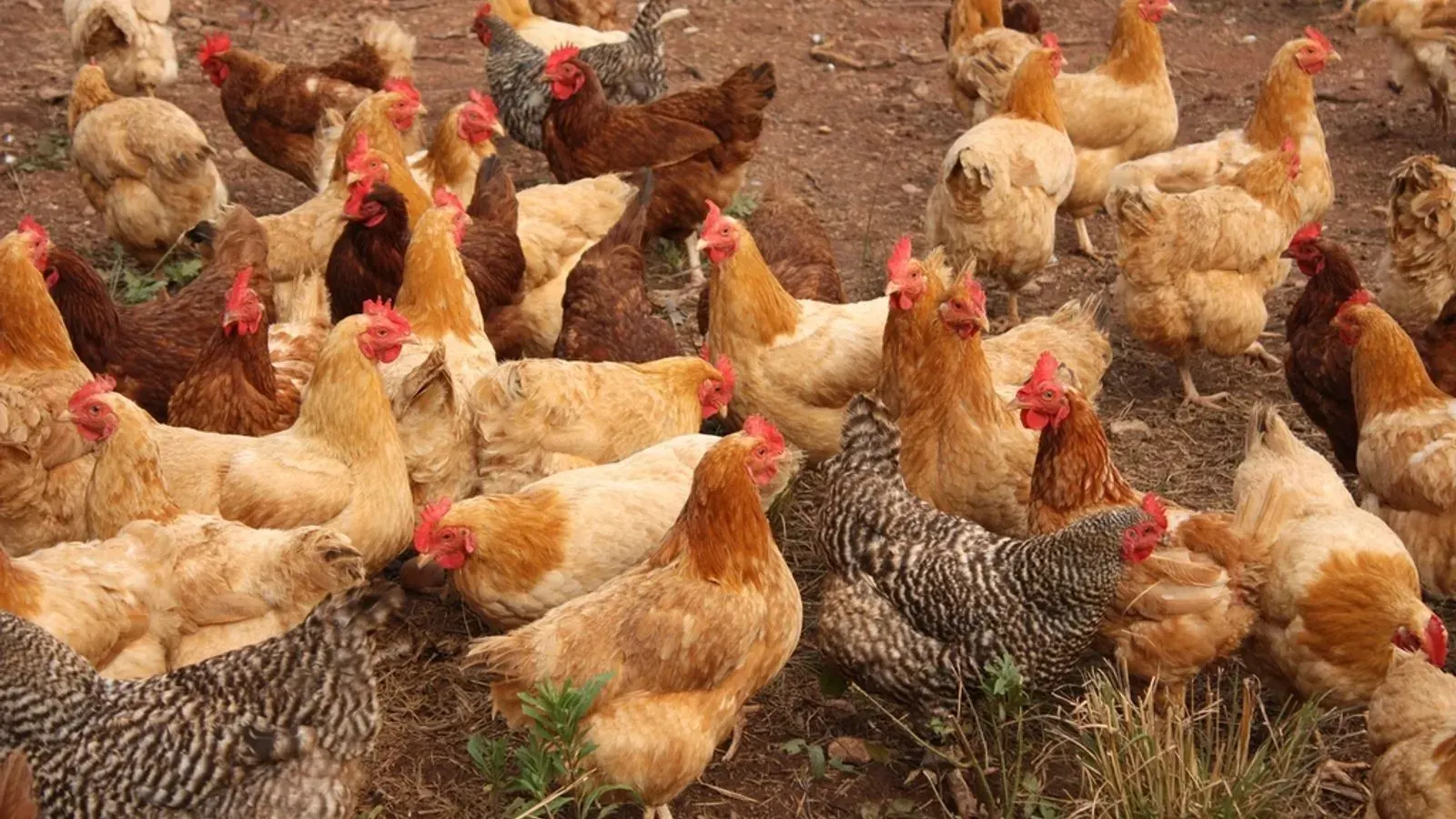
The word automatic is doing two different jobs on this page. A gravity feeder holds feed in a hopper and lets it fall into a port or a trough, where it sits in the open until a hen takes it. A motorised timer feeder keeps the whole load sealed and throws a measured amount on the ground a few times a day. Both get listed as automatic chicken feeders, and most buyers never notice which one they ordered.
That one difference decides nearly everything else. If feed sits in a port around the clock, then rain, wild birds and rodents all get a turn at it, and the shape of the port is the only thing in their way. If feed stays sealed until the motor runs, the hopper stays dry and shut, but whatever lands on the ground is on the ground, and anything the flock does not clear belongs to the sparrows. Neither type is better in the abstract. One suits a covered run, the other suits open ground and a keeper who is out all day.
The other thing worth knowing before you spend money is that no gravity hopper empties itself. The bottom few inches bridge over the outlet and stop flowing, so usable capacity is always under the number on the box. Buy on port shape and mounting height first, and treat the headline capacity as a rough guide.
Our picks at a glance
Every product below wins one specific situation. Pick the row that matches your flock, your yard and your budget rather than reading top to bottom.
-
Best Overall

kingump 12-Port
A backyard flock of roughly six to a dozen hens where feed should stay covered but a refill every few days is no trouble.
-
Best Big Hopper With Real Ports
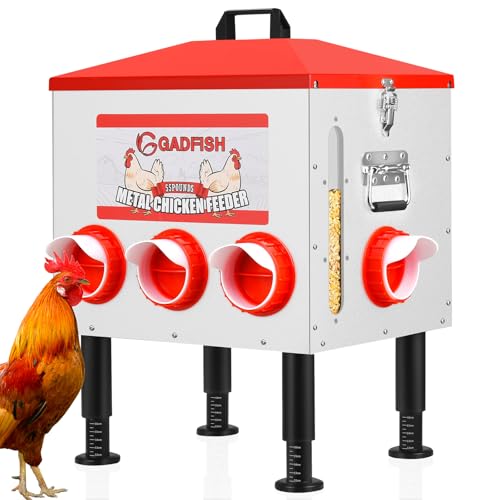
GADFISH 55 lb
Flocks of about eight to fifteen birds where you want to fill a feeder every few weeks instead of every few days.
-
Best Budget Complete Feeder

Silaifu 2.8 Gal
A small flock and a first automatic feeder, where the point is to stop scattering feed on the ground without spending much.
-
Best for Timed Feeding Away From Mains Power

Proshine Solar Timer
Keepers who are out all day, feed whole pellets, and want the stored feed sealed rather than sitting open in a port.
Check price on Amazon for Proshine 12L Automatic Chicken Feeder with Timer, Solar & AC Powered on AmazonAbout $180 checked Aug 8, 2026
-
Best for Adding a Timer to a Bin You Already Own

Briidea Timer Kit
Anyone with a sound feed bin or barrel already in the run who wants timed feeding without buying a whole new feeder.
-
Best for Wheeling Feed Out to a Big Run

FULUPET 120 lb
Large flocks on a big covered run where you want to fill once and wheel the feeder to the birds rather than carry sacks.
Compare every pick side by side
Swipe the table sideways to see every column on a phone.
| Product | Award | Price band | Capacity | Feed Delivery | Ports Or Outlets | Construction | Mounting | Power Source | Best use case | Buy link |
|---|---|---|---|---|---|---|---|---|---|---|
| kingump 12-Port | Best Overall | $30 to $60 | 20 lb of pellets, grain or crumbles | Gravity through deep ports | 12 ports, maker says 10 or more hens can eat at once | Metal body with a sealed lid and 5 mm reinforced tripod | Hangs, or stands on the tripod at 4 adjustable heights | None, gravity only | A backyard flock of roughly six to a dozen hens where feed should stay co… | Check price for Metal Chicken Feeder No Waste - 20LB Large Chicken Feeder with 12 Ports & 4 Adjustable Heights Tripod Stand, Automatic Hanging Poultry Feeder, Rainproof for Backyard Chickens & Small Flocks on Amazon |
| GADFISH 55 lb | Best Big Hopper With Real Ports | $60 to $120 | 55 lb | Gravity through extended ports | 8 ports, maker says 8 birds can feed at once | Aluminium-coated galvanised sheet metal with a conical lid | Rotating height-adjustable legs with a wide base | None, gravity only | Flocks of about eight to fifteen birds where you want to fill a feeder ev… | Check price for GADFISH 55 lbs Large Capacity Automatic Chicken Feeder - 8 Feeding Ports, No Waste Chicken Feeder, Height-Adjustable Legs & Secure Locking Lid for Chickens, Ducks & Poultry on Amazon |
| Silaifu 2.8 Gal | Best Budget Complete Feeder | $30 to $60 | 2.8 gallon translucent bucket | Gravity, refills the ports as birds eat | No-waste anti-scratch ports, count not stated | PP plastic bucket with galvanised parts | Built-in legs that raise the feeder off the ground | None, gravity only | A small flock and a first automatic feeder, where the point is to stop sc… | Check price for Chicken Feeder with No Waste Ports, Automatic Poultry Feeder for Chickens, Gravity Chicken Feeders Kit for Outdoor Coop, 2.8 Gal-Capacity Bucket with Legs on Amazon |
| Proshine Solar Timer | Best for Timed Feeding Away From Mains Power | $120 to $250 | 12 L hopper, maker says 7 to 10 days for 10 hens | Motorised timer, up to 6 feeds a day, 0 to 20 seconds each, three throw distances. Pellets 3 to 10 mm, no wet or powdery feed | Scatters feed on the ground, no ports | Fully sealed body with silicone gaskets and a desiccant compartment in the lid | Not stated | Solar with a 2200 mAh battery, maker says up to 30 days per charge, AC adapter included | Keepers who are out all day, feed whole pellets, and want the stored feed… | Check price for Proshine 12L Automatic Chicken Feeder with Timer, Solar & AC Powered on Amazon |
| Briidea Timer Kit | Best for Adding a Timer to a Bin You Already Own | $30 to $60 | Not stated, the kit bolts onto a container you supply | Programmable digital timer, up to 6 feedings a day, each 1 to 60 seconds | One spin plate that throws feed about 5 to 6.5 ft | Galvanised steel spin plate, flame-retardant ABS housing | Adjustable mount that fits most feed containers, extra 8 mm studs for height | 12 V solar panel (sold separately) or batteries (not included), low battery indicator | Anyone with a sound feed bin or barrel already in the run who wants timed… | Check price for Automatic Chicken Feeder Timer, Briidea Poultry Feeder Motor and Timer Kit, Metal Spin Plate, Adjustable Mount, Ideal for Chickens, Ducks, Geese on Amazon |
| FULUPET 120 lb | Best for Wheeling Feed Out to a Big Run | $120 to $250 | 120 lb, maker says it feeds 20 chickens for up to 14 days | Gravity flow into a high-lip trough | Open trough, no individual ports | Heavy-duty galvanised steel with a secure top lid | Rolls on 360 degree swivel wheels with brakes | None, gravity only | Large flocks on a big covered run where you want to fill once and wheel t… | Check price for FULUPET 120 LB Large Chicken Feeder No-Waste, Heavy Duty Galvanized Metal Poultry Feeder with 360 Swivel Wheels, Rainproof Automatic Gravity Trough for Outside Coop, Chickens, Ducks, Geese on Amazon |
The full reviews
Each review below follows the same order: what it is, why it won its category, how it behaves in real use, and who should buy something else.
1 Best Overall
Metal Chicken Feeder No Waste - 20LB Large Chicken Feeder with 12 Ports & 4 Adjustable Heights Tripod Stand, Automatic Hanging Poultry Feeder, Rainproof for Backyard Chickens & Small Flocks
Twelve deep ports, a sealed lid and 20 lb of capacity in a metal body, and it either hangs or stands on a tripod so the feed line clears wet ground. The best balance here between covered feed and a hopper you can lift.
What we liked
- Twelve deep ports keep feed under cover rather than sitting in an open trough
- Takes 20 lb of pellets, grain or crumbles, so it is not fussy about feed type
- Sealed lid keeps rain out of the hopper rather than off the feed only
- Hangs or stands on a 4 height tripod, so the feed line can be set to your birds
- Metal body rather than plastic, which matters where rodents chew
What we did not
- Twelve ports drain a 20 lb hopper quickly, so this is a refill every few days rather than every few weeks
- The maker's line about 10 or more hens eating at once carries no bird size behind it, so large breeds will fit fewer
- A hanging metal feeder swings when hens crowd one side, so it wants the tripod on firm ground rather than loose shavings
Key specifications
- Dimensions
- 13 x 7.6 x 13 in (L x W x H)
- Colour
- green
- Capacity
- 20 lb of pellets, grain or crumbles
- Feed Ports
- 12 with adjustable flow
- Material
- Galvanised steel
- Rodent Resistant
- Yes, metal body
- Weatherproof
- Yes
- Mounting
- Hangs, or stands on the tripod at 4 adjustable heights
- Feed Delivery
- Gravity through deep ports
- Ports Or Outlets
- 12 ports, maker says 10 or more hens can eat at once
- Construction
- Metal body with a sealed lid and 5 mm reinforced tripod
- Power Source
- None, gravity only
Why the kingump 12-Port wins this category
Because it answers the question this guide is built around. Between visits, feed sits inside a deep port under a sealed lid instead of lying open in a trough.
That is the whole argument. A hooded port narrows the opening enough that a sparrow has to work at it and most rain runs off the lid rather than into the feed. Nothing else here manages the same trick at $53.99 while still holding 20 lb and giving you a choice of hanging or standing.
The metal body counts too. Plastic hoppers are lighter and cheaper, and rodents chew through them. Sheet metal takes that option away, which is the argument for paying more than the $35.99 plastic bucket here costs.
Living with the kingump 12-Port
The tripod is the part that makes it pleasant. Four height settings means you can put the feed line at the height of your birds' backs, which is the single easiest way to stop hens scratching bedding into the ports and standing in what they are eating.
It also lifts the hopper off the ground. A feeder sitting on soil pulls damp up into the bottom of the load, and damp feed is exactly the feed that bridges and stops flowing.
At 13 by 7.6 by 13 inches it is a small object for 20 lb, so it fits inside a coop or under a run roof without eating floor space. Filling it is a single scoop job rather than a two person lift.
Where the kingump 12-Port falls short
Capacity against port count is the honest weakness. Twelve ports is generous access, but 20 lb feeding a dozen hens is roughly a week, and less if the flock includes big birds. If you wanted a feeder you top up monthly, this is not it.
The maker's claim that 10 or more hens can eat at once is stated without a bird size. Twelve ports on a 13 inch body means the ports are close together, and heavy breeds shoulder each other off. Read it as twelve openings, not ten simultaneous large hens.
Hanging it is the option to think twice about. A metal feeder on a chain swings as soon as birds crowd one side, feed spills, and the swinging puts them off. On firm ground the tripod is the better choice, and on deep loose shavings the legs sink and you are back to adjusting it every few weeks.
Research based, not hands-on
Assessed on the published capacity, port count, body material and mounting options, and on how deep port gravity feeders behave against rain, wild birds and bridging.
- Best for
- A backyard flock of roughly six to a dozen hens where feed should stay covered but a refill every few days is no trouble.
- Skip it if
- You want to fill a feeder once a month and forget it, because twelve open ports empty 20 lb faster than that.
- The limitation to plan around
- Plan around the drain rate. Twelve ports over a 20 lb hopper is a lot of open feed line for the amount of feed behind it, so treat this as a weekly job.
2 Best Big Hopper With Real Ports
GADFISH 55 lbs Large Capacity Automatic Chicken Feeder - 8 Feeding Ports, No Waste Chicken Feeder, Height-Adjustable Legs & Secure Locking Lid for Chickens, Ducks & Poultry
Nearly triple the kingump's capacity in aluminium-coated galvanised sheet, with eight extended ports and adjustable legs. The pick when you want a big hopper without giving up port protection.
What we liked
- 55 lb hopper, so a flock of ten runs about three weeks between fills
- Eight extended ports keep feed hooded instead of open in a trough
- Aluminium-coated galvanised sheet metal resists rust better than bare steel
- Conical lid sheds rain rather than holding a puddle on top
- Rotating height-adjustable legs set the feed line and lift it off wet soil
What we did not
- Only eight ports for 55 lb of feed, so a flock of a dozen queues at first light
- At 16.1 pounds empty plus a full load, it is not something you move once it is filled
- Feed at the bottom of a 55 lb hopper can sit for weeks in warm weather, and slow turnover is how a hopper goes stale
- A 55 lb column of feed sitting over the port outlets is the load that bridges hardest, so expect to knock the side regularly to keep the ports fed
Key specifications
- Dimensions
- 12.6 x 21.06 x 16.14 in (L x W x H)
- Weight
- 16.1 pounds
- Colour
- Silver
- Capacity
- 55 lb
- Feed Delivery
- Gravity through extended ports
- Ports Or Outlets
- 8 ports, maker says 8 birds can feed at once
- Construction
- Aluminium-coated galvanised sheet metal with a conical lid
- Mounting
- Rotating height-adjustable legs with a wide base
- Power Source
- None, gravity only
Why the GADFISH 55 lb earns its place
Because it takes the design that works and scales it up without dropping back to an open trough. Feed still lands in an extended port, hooded and narrow, rather than in a channel any bird can stand over.
At 55 lb it holds close to three times what the kingump does. For a flock of ten eating roughly 2.5 lb a day that is around three weeks of feed, which changes the job from a weekly chore to a monthly one.
The material is the other reason it is here. Aluminium-coated galvanised sheet handles wet air better than plain galvanised, and the conical lid sheds rain rather than collecting it in a rim.
Living with the GADFISH 55 lb
The legs rotate and adjust, so you can set the feed line to your birds and re-level the feeder on uneven run floor. That is more useful than it sounds, because a big hopper leaning on soft ground tips its load to one side and empties unevenly.
The wide base helps here too. A 55 lb feeder that gets knocked is a mess to clear, and a broad footprint at 12.6 by 21 inches makes that much less likely than a hanging feeder would.
The locking lid is worth using every time. A conical lid that is not latched is an invitation to a determined crow, and the whole point of the hopper is that the stored feed stays clean.
Where the GADFISH 55 lb falls short
Eight ports for 55 lb is the imbalance. The hopper suits a bigger flock than the port count comfortably serves, so at first light and again in the late afternoon you will see birds waiting. If you keep a dozen or more, plan on a second feeding point rather than expecting eight ports to cover them.
Weight is the practical limit. 16.1 pounds empty plus a full load means it stays where you put it. Site it before you fill it, and site it somewhere you can reach with a feed sack.
Bridging scales with the load above the outlet, and 55 lb is the biggest column of feed of any port feeder here. Feed arches over the outlet, the ports run empty, and several inches sit still above them. A knock on the side clears it, but you have to remember to do it.
Storage life is the quiet one. Feed loses vitamin content over the months and picks up damp in a humid summer, so 55 lb only makes sense if your flock will actually clear it in a few weeks.
Research based, not hands-on
Assessed on published capacity, port count, empty weight, body dimensions and coating, and on how large gravity hoppers behave with pellets and crumble.
- Best for
- Flocks of about eight to fifteen birds where you want to fill a feeder every few weeks instead of every few days.
- Skip it if
- You keep three or four hens, because 55 lb will go stale long before that flock eats through it.
- The limitation to plan around
- Turnover is the thing to plan around. Buy the capacity you will actually eat through in a few weeks, not the largest hopper you can afford.
3 Best Budget Complete Feeder
Chicken Feeder with No Waste Ports, Automatic Poultry Feeder for Chickens, Gravity Chicken Feeders Kit for Outdoor Coop, 2.8 Gal-Capacity Bucket with Legs
A 2.8 gallon bucket, no-waste ports and built-in legs for $35.99, which is the cheapest feeder here that you can fill and use on the day it arrives. The listing never states how many ports you get.
What we liked
- Complete working feeder at $35.99, with nothing else to buy
- No-waste anti-scratch ports rather than an open trough
- Built-in legs lift the feeder off wet ground with no tripod to assemble
- Translucent bucket lets you see the feed level without opening the lid
- Galvanised parts in the build rather than plastic throughout
What we did not
- The listing never states a port count, so you cannot work out how many hens can feed at once before it arrives
- A PP plastic bucket can be gnawed, and rodents get through plastic in a way they do not get through sheet metal
- Capacity is quoted in gallons rather than pounds, so it cannot be lined up against the pound rated hoppers here without weighing a fill
- A translucent body lets light onto the feed, which speeds up vitamin loss compared with an opaque hopper
Key specifications
- Dimensions
- 12 x 7 x 11 in (L x W x H)
- Colour
- translucent
- Capacity
- 2.8 gallon translucent bucket
- Feed Delivery
- Gravity, refills the ports as birds eat
- Ports Or Outlets
- No-waste anti-scratch ports, count not stated
- Construction
- PP plastic bucket with galvanised parts
- Mounting
- Built-in legs that raise the feeder off the ground
- Power Source
- None, gravity only
Why the Silaifu 2.8 Gal makes the list
Because at $35.99 it is the lowest price of any complete feeder on this page, and it still has ports rather than an open trough. The only cheaper item here is the Briidea kit at $33.24, and that is a motor with no container, so it is not a working feeder until you add one.
The legs are the detail that lifts it above a plain bucket with holes cut in it. They raise the feed line off the ground, which keeps damp out of the bottom of the load and stops birds scratching bedding straight into the openings.
The translucent body is a genuine convenience. You can see the level from across the run and refill before the ports run dry, which is more useful day to day than another few pounds of capacity.
Living with the Silaifu 2.8 Gal
It is a small object at 12 by 7 by 11 inches, so it fits inside a coop or under a low run roof where the taller hoppers here will not go.
Cleaning is straightforward. A plastic bucket takes a brush and hot water without any worry about scratching a coating, which is the one place plastic genuinely beats sheet metal.
Refilling is a bucket-sized job rather than a sack-sized one. For three or four hens that is a fill every few days, which suits a keeper who is home anyway and wants the feed covered rather than the trips reduced.
Where the Silaifu 2.8 Gal falls short
The missing port count is the real complaint. Every other feeder here tells you how many birds can eat at once, and this one describes the ports as no-waste and anti-scratch without ever saying how many there are. That is the number that decides whether your flock queues, so buy it expecting a small figure and be pleased if it is not.
Plastic is the material question. PP holds up fine against weather and washing, but rodents chew plastic and they do not chew galvanised sheet. If you already know rats visit your run, this is the wrong body.
Capacity in gallons is also awkward. 2.8 gallons is a volume, the other hoppers here are rated by weight, and the two do not convert cleanly without knowing your feed density. Treat it as a small hopper and check it often.
The clear bucket has one downside to go with its convenience. Daylight degrades vitamins in feed over time, so an opaque hopper keeps a long fill in better condition than a translucent one does.
Research based, not hands-on
Assessed on the published capacity, materials, leg design and port description, and on the gap in the listing where a port count should be.
- Best for
- A small flock and a first automatic feeder, where the point is to stop scattering feed on the ground without spending much.
- Skip it if
- You have a known rat problem, because a plastic bucket is the one body here that a rodent can work through.
- The limitation to plan around
- The unstated port count is the thing to plan around. Assume a small number of feeding positions and add a second feeder if you keep more than a few birds.
4 Best for Timed Feeding Away From Mains Power
Proshine 12L Automatic Chicken Feeder with Timer, Solar & AC Powered
The only complete feeder here that keeps the whole load sealed between visits, with up to six timed throws a day and solar power so it does not need to sit near a socket. Pellets only, which rules a lot of keepers out.
What we liked
- Feed stays sealed in a gasketed body between feeds instead of sitting open in a port
- Up to 6 feeds a day at 0 to 20 seconds each, so you can match the throw to your flock
- Three throw distances, which lets you spread feed rather than pile it
- Solar with a 2200 mAh battery, so it can sit anywhere in a run with sky above it
- Desiccant compartment in the lid works against damp in the stored feed
- AC adapter included, so you are not stuck if the panel underperforms in winter
What we did not
- Takes 3 to 10 mm pellets only, so keepers on crumble, mash or wet mash cannot use it at all
- Feed lands on the ground, so anything the flock does not clear quickly goes to wild birds or gets trodden in
- At $179.99 it is the most expensive feeder in this guide, and the timer is the main thing the extra money buys
- A motor, a battery and a clock are three more things to fail, and a flat battery means no feed goes out at all
- The listing does not state how it mounts, so plan the siting yourself rather than assuming a bracket
About $180 checked Aug 8, 2026
Key specifications
- Dimensions
- 12.13 x 15.28 x 18.5 in (L x W x H)
- Colour
- white
- Capacity
- 12 L hopper, maker says 7 to 10 days for 10 hens
- Feed Delivery
- Motorised timer, up to 6 feeds a day, 0 to 20 seconds each, three throw distances. Pellets 3 to 10 mm, no wet or powdery feed
- Ports Or Outlets
- Scatters feed on the ground, no ports
- Construction
- Fully sealed body with silicone gaskets and a desiccant compartment in the lid
- Mounting
- Not stated
- Power Source
- Solar with a 2200 mAh battery, maker says up to 30 days per charge, AC adapter included
Why the Proshine Solar Timer is worth the money for some keepers
Because it is the only complete feeder on this page where the feed is not exposed between visits. Silicone gaskets, a closed lid and a desiccant compartment mean the stored load stays dry and shut until the motor runs.
That matters if your problem is not waste but access. Wild birds cannot raid a sealed body. Rain cannot get to a sealed body. Feed only appears when you have told it to, for as little as a few seconds at a time.
The solar panel and 2200 mAh battery are what make it practical in a real run. Maker's figures put it at up to 30 days per charge, and the AC adapter is there for the weeks when a winter sky does not deliver.
Living with the Proshine Solar Timer
The programming is the part you will fiddle with. Six feeds a day is more than most flocks need, but the 0 to 20 second range is the useful control. Start short, watch how quickly the ground clears, and lengthen from there.
Three throw distances let you spread feed over a wider patch. That is worth using, because a tight pile means the dominant birds hold it and the rest wait.
The 12 L hopper is rated by the maker at 7 to 10 days for ten hens, which lines up with a flock eating around a quarter of a pound each a day. That is a fill roughly once a week, and the sealed body means a week-old fill is in better condition than a week-old fill in an open hopper.
Where the Proshine Solar Timer falls short
Feed size is the hard stop. 3 to 10 mm pellets, nothing wet, nothing powdery. If your birds are on crumble or you feed a mash, this feeder simply does not work for you, and no setting changes that.
Ground scatter is the second compromise. A sealed hopper protects the feed you are storing and does nothing for the feed it has just thrown. On dry hardstanding the flock clears it fast. On a muddy winter run, a fair share of every throw disappears into the ground.
Cost sits alongside that. At $179.99 it is the most expensive feeder in this guide, and what the extra buys is timing and sealing, not capacity. On volume alone the metal gravity hoppers here hold far more for far less.
Then there are the failure points. A gravity feeder has nothing to break. This one has a motor, a spin mechanism, a clock and a battery, and if any of those stop, so does feeding.
Mounting is unstated in the listing, so work out where it will sit and how it will be held before it arrives rather than after.
Research based, not hands-on
Assessed on the published feed size limits, timer range, battery capacity, sealing and stated run time, and on how ground scatter feeding behaves against port feeding.
- Best for
- Keepers who are out all day, feed whole pellets, and want the stored feed sealed rather than sitting open in a port.
- Skip it if
- Your birds are on crumble or mash, or your run turns to mud in winter, because scattered feed needs dry ground to work.
- The limitation to plan around
- Feed size is the thing to plan around. Everything about this feeder depends on running 3 to 10 mm pellets and nothing damp or powdery.
5 Best for Adding a Timer to a Bin You Already Own
Automatic Chicken Feeder Timer, Briidea Poultry Feeder Motor and Timer Kit, Metal Spin Plate, Adjustable Mount, Ideal for Chickens, Ducks, Geese
A motor, a digital timer and a galvanised spin plate that bolt onto a container you supply. It is not a feeder, it is the automatic part of one, so the listed price is not the price of a working setup.
What we liked
- Turns a feed bin you already own into a timed feeder
- Programmable timer with up to 6 feedings a day, each 1 to 60 seconds
- Galvanised steel spin plate rather than a plastic one on the wear part
- Adjustable mount fits most feed containers, with extra 8 mm studs for height
- Low battery indicator, so a flat pack does not go unnoticed for days
- Small at 3.9 by 5.4 by 2.8 inches, so it does not dominate the container it sits on
What we did not
- No container is included, so the listed price is not the cost of a finished feeder
- The 12 V solar panel is sold separately and batteries are not included, so budget for a power source as well
- It throws feed 5 to 6.5 ft onto the ground, which works on dry hardstanding and wastes feed on mud
- Your container has to be sound and rodent-resistant, because the kit does nothing to protect the feed it sits under
Key specifications
- Dimensions
- 3.9 x 5.4 x 2.8 in (L x W x H)
- Weight
- 1.1904962148 pounds
- Colour
- black
- Capacity
- Not stated, the kit bolts onto a container you supply
- Feed Ports
- Timed release chute
- Material
- Galvanised steel spin plate, ABS housing
- Rodent Resistant
- Yes if the hopper is sealed
- Weatherproof
- Shelter it from direct rain
- Mounting
- Adjustable mount that fits most feed containers, extra 8 mm studs for height
- Feed Delivery
- Programmable digital timer, up to 6 feedings a day, each 1 to 60 seconds
- Ports Or Outlets
- One spin plate that throws feed about 5 to 6.5 ft
- Construction
- Galvanised steel spin plate, flame-retardant ABS housing
- Power Source
- 12 V solar panel (sold separately) or batteries (not included), low battery indicator
Why the Briidea Timer Kit is here at all
Because it solves a different problem from the rest of this list. Everything else is a feeder. This is the mechanism that makes a feeder automatic, sold on its own.
If you already have a lidded bin, a barrel or a bucket in the run holding feed, the kit bolts underneath it and turns it into a timed feeder. The adjustable mount is designed to fit most containers, and the extra 8 mm studs let you set the height so the spin plate clears the base.
That is a sensible way to spend money if the container is the part you already own. Buying the same function as a finished product costs a good deal more.
Living with the Briidea Timer Kit
Programming works the same way as any digital feeder timer. Up to six feedings a day, each set anywhere from 1 to 60 seconds, so you can start with a short throw and lengthen it once you see how quickly the flock clears the ground.
The spin plate is galvanised steel. That is the right choice for the part that pellets hammer against thousands of times, and it is the detail that separates this from the cheapest plastic mechanisms.
The low battery indicator earns its keep. On a timed feeder, a dead power source is not obvious until birds have missed a feed, so a warning before that happens is genuinely useful.
Where the Briidea Timer Kit falls short
The price is not the price. There is no container, no solar panel and no batteries in the box, so what you actually spend depends on what is already in your shed. Compare it against the complete feeders here only after you have added those up.
Feed protection is entirely down to your container. The kit has a flame-retardant ABS housing and a metal plate, and none of that keeps a rat out of a plastic bin. If your existing container is not sound, fix that first.
Scatter feeding brings the same trade as any timed thrower. A 5 to 6.5 ft throw is fine on dry ground and poor on mud, where a share of every feed gets trodden in before the birds find it.
There is also no port and no trough, so at no point is feed protected from weather once it lands. This is a mechanism for keepers whose run stays dry, not a fix for a wet winter yard.
Research based, not hands-on
Assessed on the published timer range, throw distance, mount fitment, materials and power requirements, and on what the kit leaves the buyer to supply.
- Best for
- Anyone with a sound feed bin or barrel already in the run who wants timed feeding without buying a whole new feeder.
- Skip it if
- You are starting from nothing, because you would be sourcing a container and a power source on top of this.
- The limitation to plan around
- Plan around what is not in the box. A container and a power source are both on you, and the finished cost depends entirely on what you already have.
6 Best for Wheeling Feed Out to a Big Run
FULUPET 120 LB Large Chicken Feeder No-Waste, Heavy Duty Galvanized Metal Poultry Feeder with 360 Swivel Wheels, Rainproof Automatic Gravity Trough for Outside Coop, Chickens, Ducks, Geese
120 lb of galvanised steel on braked swivel wheels, which is the only feeder here you can roll out to a paddock and roll back. The open trough is the weak part, so it belongs under cover.
What we liked
- 120 lb hopper, the largest capacity in this guide by a wide margin
- 360 degree swivel wheels with brakes, so a full load moves without lifting
- Heavy-duty galvanised steel body rather than plastic
- Secure top lid keeps rain and wild birds out of the stored feed
- A 37.8 in body gives a long trough edge, so a big flock eats at once
What we did not
- An open trough with no ports leaves the feed line exposed to rain and wild birds all day
- At 33 pounds empty plus a full load, it needs firm level ground and a gate the wheels will pass through
- With no ports there is nothing between a hen's feet and the feed, so billed-out feed and droppings land back in the trough
- 120 lb takes weeks for most backyard flocks to clear, and feed sitting that long loses condition in warm damp weather
Key specifications
- Dimensions
- 37.8 x 14.3 x 16 in (L x W x H)
- Weight
- 33 pounds
- Colour
- Black and Red
- Capacity
- 120 lb, maker says it feeds 20 chickens for up to 14 days
- Feed Delivery
- Gravity flow into a high-lip trough
- Ports Or Outlets
- Open trough, no individual ports
- Construction
- Heavy-duty galvanised steel with a secure top lid
- Mounting
- Rolls on 360 degree swivel wheels with brakes
- Power Source
- None, gravity only
Why the FULUPET 120 lb suits a big run
Because of the wheels. Every other feeder here stays where you put it, and a 120 lb load is not something you carry. Braked 360 degree swivel wheels mean you can fill it by the feed store and roll it out to the birds.
The capacity backs that up. At 120 lb it holds more than twice the GADFISH and six times the kingump, which is the right shape for a flock big enough that refilling is a real job.
The maker says it feeds 20 chickens for up to 14 days. That works out at about 0.43 lb a bird a day, which is well above the quarter pound a laying hen usually eats, so the claim is conservative rather than optimistic. For most flocks a full load lasts longer than stated.
Living with the FULUPET 120 lb
Site it under cover first and everything else follows. Under a run roof or in a barn the open trough stops being a problem, and the feeding edge that runs the 37.8 inch length of the body becomes an advantage because a dozen birds can line up without jostling.
The brakes matter more than they sound. A wheeled feeder that rolls when hens lean on it walks around the run and ends up somewhere you did not want it. Set the brakes every time.
Filling is a whole-sack job rather than a scoop one. The listing does not state how wide the top lid opens, so check that before you plan on tipping bags straight in. What the wheels do give you is the option of bringing the feeder to the sacks rather than the sacks to the feeder.
Where the FULUPET 120 lb falls short
Geometry is the honest weakness, and it is the reason this sits at the bottom of the order. There are no ports. Feed lies in an open trough with a high lip and nothing else, so rain gets in from above, sparrows and starlings feed freely, and hens bill feed over the edge onto the ground.
At $127.99 it costs more than any other gravity feeder in this guide while offering the least protection at the feed line. That is a fair trade only if you have somewhere covered to put it.
Weight and size are practical constraints. 33 pounds empty and 37.8 inches long means level ground, a wide enough gate and no steps between the store and the run.
Turnover is the last one. 120 lb is several weeks of feed for most backyard flocks, and feed that sits that long in a humid summer loses vitamin content and can pick up damp at the bottom of the hopper.
Research based, not hands-on
Assessed on the published capacity, trough geometry, empty weight, dimensions and wheel design, and on the arithmetic behind the maker's 20 chickens for 14 days claim.
- Best for
- Large flocks on a big covered run where you want to fill once and wheel the feeder to the birds rather than carry sacks.
- Skip it if
- Your feeding area is open to the sky, because an open trough and rain are a bad combination whatever the body is made of.
- The limitation to plan around
- Shelter is the thing to plan around. This feeder needs a roof over it, and without one the trough collects rain, droppings and wild birds.
How we compared these automatic chicken feeders
The first question asked of every feeder was a simple one. Between the moment you walk away and the moment you come back, where is the feed?
That splits this list in two. Four of these products are gravity feeders, so the answer is that feed sits in a port or a trough the whole time. Two are motorised timer products, so the answer is that feed sits sealed inside the body and only appears in throws of seconds at a time.
After that, four things. Port and trough geometry, because a deep narrow port and an open trough behave nothing alike once rain or a flock of sparrows arrives. Usable capacity, because published capacity ignores the feed that will never flow. Mounting, since a feeder that sits on wet ground picks up damp from below and a hanging feeder swings when hens crowd one side. And feed compatibility, because a timer feeder that only takes pellets is no use to a keeper on crumble.
Gravity feeder or timer feeder
What a gravity feeder does between visits
It keeps feed in front of the birds all day, which suits how hens eat. They take small amounts often rather than large meals, so constant access means the timid birds at the bottom of the pecking order get their turn instead of queueing behind the dominant ones at a scoop twice a day.
The cost of that is exposure. Feed at the port is open to the weather, to wild birds and to rodents for every hour you are not there. Port design is the whole defence. A deep, hooded port with a narrow opening makes a sparrow work for it and keeps most rain off. An open trough does nothing.
What a timer feeder does between visits
It seals the feed. Silicone gaskets and a closed lid mean nothing gets into the hopper, and on the Proshine there is even a desiccant compartment to hold damp back.
The trade is that the feed goes on the ground. Both timer products here run up to six feeds a day, and a measured throw is meant to match what the flock will clear quickly, but any surplus is sitting in the dirt with no protection whatsoever. Timer feeders suit dry ground and a flock that eats fast. They are poor on mud.
What actually matters once you have picked a type
Port geometry, not port count
Port count is the number on the listing, and it tells you how many birds can eat at once. It says nothing about how well the feed is protected. A shallow port is a hole in a wall that rain blows into and a sparrow can perch at. A deep or extended port puts a hood and a few inches of tube between the weather and the feed. Count is easy to publish, so it is the number brands lead with. Depth is the one that decides how much feed you lose.
Port count also cuts the other way on capacity. Twelve ports over a 20 lb hopper is a lot of open feed line for the feed behind it. Eight ports over 55 lb means fewer birds eating at once but a hopper that lasts far longer.
Usable capacity is under the label
Every gravity hopper bridges near the bottom. Pellets arch over the outlet, the port empties, and several inches of feed sit above it doing nothing until you knock the side. Plan on that. A hopper rated at 20 lb behaves like a smaller one, and the taller and narrower the body, the more it happens.
Mounting height and wet ground
The feed line should sit at about the height of a hen's back. Too low and birds scratch bedding into the ports and stand in the feed. Too high and the smallest birds cannot reach.
Just as important is what is under the feeder. A feeder standing directly on soil wicks damp up into the bottom of the hopper. Legs, a tripod or a hanging chain all fix that. On loose shavings, legs sink and a hanging feeder swings, so firm ground under the mount matters more than the mount itself.
Feed type decides more than you think
Gravity feeders take almost anything. Pellets flow best, crumble flows adequately, and mash flows badly but still works if the ports are wide.
Timer feeders are far fussier. A spin plate is built to fling whole pellets, and the Proshine states 3 to 10 mm pellets with no wet or powdery feed. If your flock is on crumble, on mash, or on a wet mash in cold weather, the Proshine is out by its own specification. The Briidea kit publishes no feed size limit at all, so ask the seller before you assume a spin plate will handle crumble. Check that specification before anything else, because it is the one that quietly rules people out after they have paid.
Scratch grain and mixed corn are a separate matter. They separate in a hopper, so hens pick out the corn and leave the rest, which is bad for balanced nutrition whatever feeder you use. Keep treats out of the main hopper.
Final recommendation
The kingump 12-Port is the pick for a normal backyard flock. Twelve deep ports, a sealed lid, a metal body and the choice of hanging or standing on a tripod give you covered feed at a sensible height for $53.99. Its weakness is drain rate, so expect to refill every few days rather than every few weeks.
If you keep more birds, the GADFISH 55 lb runs the same gravity idea with nearly triple the hopper and eight extended ports, which suits a flock that will actually turn 55 lb over before it goes stale. If you want feed sealed between visits and your birds are on pellets, the Proshine Solar Timer is the only complete feeder here that does that, and it runs on solar so it does not need to be near power. And if you already have a sound feed bin you want to automate, the Briidea Timer Kit bolts a motor and a clock onto it for far less than a whole new feeder, as long as you plan for the panel or batteries it does not include.
Questions people ask before buying
What is the difference between a gravity feeder and a timer feeder?
A gravity feeder has no moving parts. Feed falls down the hopper under its own weight and refills the port or trough as birds eat, so there is always feed sitting in the open. A timer feeder has a motor and a clock. The hopper stays sealed until the set time, then a spin plate throws a measured amount of feed on the ground. Gravity means constant access and constant exposure. A timer means sealed storage and short feeding windows. Decide which of those two you actually want before you compare capacities.
Does an automatic feeder keep rats and wild birds out of the feed?
Not on its own. A deep port narrows the opening and makes it awkward for a sparrow to perch and feed, which cuts losses, but the feed is still reachable. An open trough gives no protection at all. A timer feeder keeps the stored feed sealed, which is a real gain against rodents, but the feed it throws on the ground is completely open until the birds clear it. If rats are the main problem, a treadle feeder that shuts when a bird steps off is the design built for that job.
How much capacity do I actually need?
A laying hen eats roughly a quarter of a pound of feed a day, so six hens go through about 1.5 lb a day and ten hens about 2.5 lb. Work out your daily figure, decide how often you want to refill, then add a margin because the bottom of the hopper will not flow. A 20 lb hopper is a little over a week for ten hens on paper, and less than that in practice once the bottom of the load stops flowing. Bigger is not automatically better either, because feed sitting for a month in warm weather goes stale and can pick up damp.
Can I run crumble or mash through a timer feeder?
Usually not. Spin plate mechanisms are built for whole pellets, and the Proshine Solar Timer states 3 to 10 mm pellets with no wet or powdery feed. Crumble and mash pack, bridge and clog a narrow outlet, and fine dust gets into the motor housing. If your flock is on crumble or mash, or you feed a wet mash, a timer feeder is the wrong tool and a gravity port feeder is the sensible choice. Check the stated feed size on any timer product before ordering, because it is the specification that locks most people out.
Can I leave the flock alone for a week with an automatic feeder?
Feed is usually the easiest part to solve for a few days, but it is not the only one. Water runs out or freezes faster than feed does, eggs need collecting, and a hen that is unwell needs someone to notice. An automatic feeder can cover a long weekend comfortably if the hopper is full and the flock is healthy. For a full week, most keepers still arrange for someone to look in. If you see a bird that is off its feed, hunched or losing condition while you are away, that is a call for a vet, not a feeder problem.
Why does my hopper stop flowing when there is still feed in it?
That is bridging. Feed pellets arch across the narrow part of the outlet and hold each other up, so the port empties while several inches of feed sit still above it. Damp feed, fine crumble and a very tall narrow hopper all make it worse. It is why usable capacity is always under label capacity. A tap on the side of the hopper clears it, and building the habit of a knock every time you pass the feeder stops birds going hungry in front of a hopper that looks full.
Why you can trust this guide
- Written by
- Marta Voss, Editor and fact checker, Chicken Geek. Specialist areas: Editorial fact checking, Chick brooding and starter nutrition, Small-flock husbandry, Feed labels and nutrition claims.
- Fact checked by
- Sam Reddick
- Published
- August 8, 2026 · Last updated August 8, 2026 · Products and links rechecked August 8, 2026
- How we picked
- Feeders were compared on what happens to the feed between visits, on port and trough geometry against rain, wild birds and rodents, on published capacity against how much of it actually flows, on mounting height over wet ground, and on what a motorised timer adds and what it locks out.
- Evidence used
- None of the 6 products on this page were sent to us or bought for a hands-on test. Every recommendation here is research based: manufacturer specifications, listed dimensions and materials, owner feedback at volume, and comparison against equipment our team has owned. Each review states this again above the buy button so you are never guessing which kind of evidence sits behind a pick.
- Editorial standards
- No brand pays for placement, and no manufacturer sees this page before it goes live. Read our editorial policy and testing method.
- Affiliate disclosure
- Chicken Geek is reader supported. We earn a commission from qualifying purchases made through links on this page, at no extra cost to you, and no brand has paid for a placement or an award here.
About the author

Editor and fact checker, Chicken Geek
Marta edits every guide on Chicken Geek and checks that each claim can be traced back to a manufacturer specification, a published standard or a stated first-hand observation. She keeps a small backyard flock of six hens and has raised chicks from day one for eight seasons.
- Eight seasons raising chicks from day-old to point of lay
- Checks every specification in a Chicken Geek guide against the manufacturer listing
- Removes any testing claim that cannot be backed up
- Keeps a flock of six hens in a suburban backyard