We Compared 6 Chicken Plucking Fingers on Hole Fit and Retention
We compared six sets of chicken plucking fingers on drum hole diameter and retention, because a finger that does not fit your holes flies out of the drum mid batch.

By Sam Reddick Lead gear reviewer, Chicken Geek
Fact checked by Marta Voss
Published Prices and stock checked 7 min read
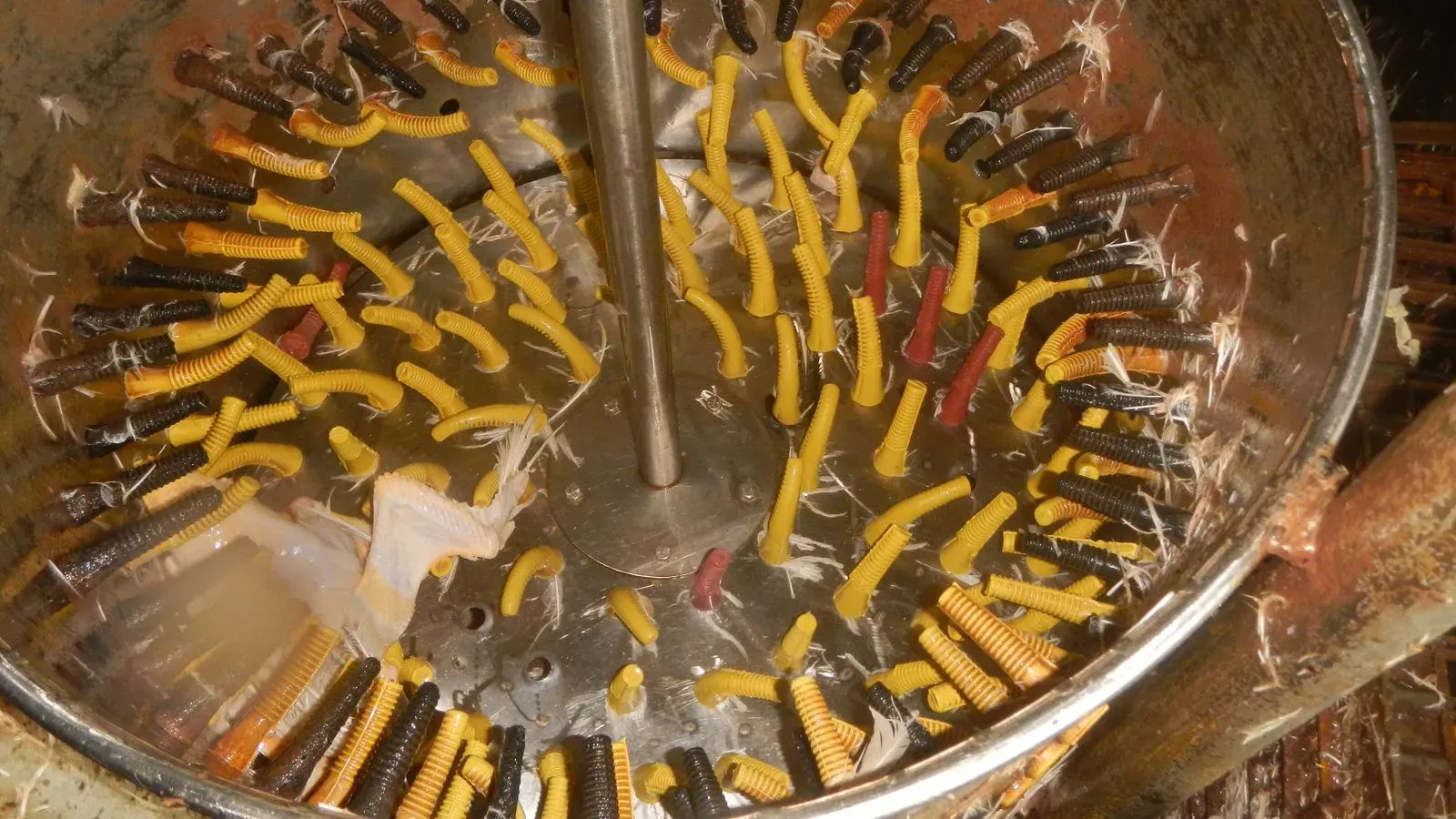
The specification that decides this purchase is the diameter of the holes in your drum or base plate, and almost nobody measures it before ordering.
Get it wrong in one direction and the base of the finger is too slim. It spins in the hole, works loose and fires across the yard halfway through a batch, usually into the grass where you will never find it. Get it wrong the other way and the base is too fat to seat at all, and you spend an evening with soapy water and a pair of pliers persuading rubber into holes that do not want it.
Only one brand here states a hole size at all. Frienda publishes 1/2 in holes for its light brown set and 3/4 in for its black set, along with the base diameter of each. CYTGOUPER's 100-pack at least tells you to measure your drum first, which quietly contradicts the fits most standard machines line on its own 96-pack and the universal size claim on the Morishima.
So before you read another word about rubber quality, go and put a caliper or a drill bit through one of your holes. That number decides everything else.
Our picks at a glance
Every product below wins one specific situation. Pick the row that matches your flock, your yard and your budget rather than reading top to bottom.
-
Best Overall for 1/2 Inch Drum Holes

Frienda 150 1/2 in
Keepers relining a drum plucker with 1/2 in holes who want the fit settled before the parcel arrives.
-
Best for 3/4 Inch Drum Holes

Frienda 150 3/4 in
Keepers with a larger barrel plucker drilled for 3/4 in holes who process turkeys or geese alongside chickens.
-
Best Budget Refill

CYTGOUPER 96-Pack
Keepers with a common drum plucker who want the cheapest possible refill and can accept a small risk on fit.
-
Best Short Fingers for a Shallow Drum

CYTGOUPER 100-Pack
Keepers with a shallow drum or a drill attachment plate where a long finger would fold over rather than grip.
-
Best for Yardbird Machines

Yardbird OEM 12-Pack
Owners of a Yardbird plucker who want a replacement part that is guaranteed to seat correctly with no measuring.
-
Best for Quail, Pheasant and Pigeon

Morishima 50-Pack
Keepers processing small game birds such as quail, pheasant and pigeon on a drill attachment drum.
Compare every pick side by side
Swipe the table sideways to see every column on a phone.
| Product | Award | Price band | Quantity | Finger Size | Machine Hole Fit | Material | Bird Types | Retention Design | Best use case | Buy link |
|---|---|---|---|---|---|---|---|---|---|---|
| Frienda 150 1/2 in | Best Overall for 1/2 Inch Drum Holes | $30 to $60 | 150 fingers | 2.56 in tall, 0.39 in bottom diameter | 1/2 in holes | Rubber, light brown colour | Chicken, turkey, duck, goose, quail | Deep grooves that lock into the drum | Keepers relining a drum plucker with 1/2 in holes who want the fit settle… | Check price for Frienda 150 Pcs Chicken Plucker Fingers for Machine Light Brown Rubber Plucker Fingers Hair Removal Suit 1/2 Inch Holes for Chicken, Duck, Quail, Goose, Poultry Feather Plucking Attachment on Amazon |
| Frienda 150 3/4 in | Best for 3/4 Inch Drum Holes | $30 to $60 | 150 fingers | 3.2 in tall, 0.5 in bottom diameter | 3/4 in holes | Rubber, black colour | Chicken, turkey, duck, goose, quail | Deep grooves that lock into the drum | Keepers with a larger barrel plucker drilled for 3/4 in holes who process… | Check price for Frienda 150 Pcs Chicken Plucker Fingers for Machine Black Rubber Plucker Fingers Hair Removal Suit 3/4 Inch Holes for Chicken, Duck, Quail, Goose, Poultry Feather Plucking Attachment on Amazon |
| CYTGOUPER 96-Pack | Best Budget Refill | Under $30 | 96 fingers | Not stated | Not stated, listing says it fits most standard plucker machines | Rubber, described as premium rubber | Chickens, ducks, geese, turkeys | Not stated | Keepers with a common drum plucker who want the cheapest possible refill… | Check price for CYTGOUPER Chicken Plucker Fingers 96 Packs,Replacement Rubber Plucking Fingers for Poultry Plucker Machine,Soft Elastic Durable Replacement for Chicken Duck Turkey Goose on Amazon |
| CYTGOUPER 100-Pack | Best Short Fingers for a Shallow Drum | $30 to $60 | 100 fingers | 2.4 x 0.75 in | Not stated, listing tells you to measure your drum holes first | Rubber, described as high-quality rubber | Chickens, turkeys, ducks, geese, pigeons | Protruding winding design | Keepers with a shallow drum or a drill attachment plate where a long fing… | Check price for CYTGOUPER Rubber Chicken Plucker Fingers 100 Pcs,2.4x0.75in Length Chicken Plucking Fingers Drill Attachment,Flexible Duck Plucker Removal Attachments for Chickens Turkeys Ducks Geese on Amazon |
| Yardbird OEM 12-Pack | Best for Yardbird Machines | $30 to $60 | 12 fingers | Not stated in the feature text, item dimensions listed as 3.86 x 0.92 x 0.92 in | Not stated as a hole size, sold as OEM fit for all Yardbird pluckers | All-natural rubber | Not stated, listed only as poultry processing | Pushed in past the shoulder so it seats in a groove | Owners of a Yardbird plucker who want a replacement part that is guarante… | Check price for Yardbird Plucker Fingers, OEM Replacement Fingers Chicken Pluckers, All-Natural Rubber Material, Easy to Install, Package Contains Qty 12 Fingers, Model: 52045 on Amazon |
| Morishima 50-Pack | Best for Quail, Pheasant and Pigeon | Under $30 | 50 fingers | 0.7 x 1 x 3.5 in | Not stated, listing calls it a universal size for most plucker machines | Natural rubber | Chicken, quail, pheasant, pigeon, birds | Not stated | Keepers processing small game birds such as quail, pheasant and pigeon on… | Check price for Morishima 50 PCS Chicken Plucker Fingers Rubber Plucker Drill Attachment for Chicken/Pheasant/Pigeon/Quail on Amazon |
The full reviews
Each review below follows the same order: what it is, why it won its category, how it behaves in real use, and who should buy something else.
1 Best Overall for 1/2 Inch Drum Holes
Frienda 150 Pcs Chicken Plucker Fingers for Machine Light Brown Rubber Plucker Fingers Hair Removal Suit 1/2 Inch Holes for Chicken, Duck, Quail, Goose, Poultry Feather Plucking Attachment
The only kind of listing in this category that tells you what it fits: 1/2 in holes, 0.39 in base diameter, deep locking grooves. At 150 fingers for about 27 cents each it covers a home drum and the spares.
What we liked
- States both the drum hole size and the base diameter, which four of the six sets here never do
- Deep locking grooves bite on the inside of the drum wall so the finger stays put
- 150 fingers covers a typical home drum with a generous margin of spares
- About 27 cents a finger, the second cheapest per finger price in this guide
- Sold for chicken, turkey, duck, goose and quail rather than a single bird type
What we did not
- At 2.56 in tall these are short fingers, so in a deep drum they work the legs and back well and reach the breast of a large turkey poorly
- 150 fingers is more than many home drums will take, so part of the price is spares you may not need for years
- The 0.39 in base is a hard fit in a true 1/2 in hole, which is the point, but it means fitting all 150 is an evening of work with soapy water
- No compound or hardness figure is published, so there is nothing to compare against the natural rubber sets here
Key specifications
- Dimensions
- 11.02 x 8.66 x 2.36 in (L x W x H)
- Weight
- 2.81 pounds
- Colour
- Light Brown
- Quantity
- 150 fingers
- Finger Size
- 2.56 in tall, 0.39 in bottom diameter
- Machine Hole Fit
- 1/2 in holes
- Material
- Rubber, light brown colour
- Bird Types
- Chicken, turkey, duck, goose, quail
- Retention Design
- Deep grooves that lock into the drum
Why the Frienda 150 1/2 in wins this category
Because it answers the only question that matters before you buy, and almost nothing else here does.
Plucking fingers fail in one of two ways. Too slim at the base and they spin, work loose and fly out of a running drum. Too fat and they will not seat without a fight you may not win. Both failures come from a mismatch between the base of the finger and the hole in your machine, and you cannot judge that from a photograph.
Frienda publishes both numbers. 1/2 in holes, 0.39 in base. That lets you measure a hole with a caliper or a drill bit and know the answer before you spend anything. The CYTGOUPER 96-Pack says it fits most standard machines and the Morishima calls itself universal, and neither claim can be checked.
Living with the Frienda 150 1/2 in
The deep locking grooves are the retention mechanism and they work on a simple principle. Something on the finger has to be wider than the hole, so pulling it back out takes real force. That is what keeps a finger in place when the drum is turning fast with a wet bird in it.
At 150 fingers this is a full drum lining with spares, which is the right way to buy them. Fingers should be replaced in groups, because a mix of new soft rubber and old hard rubber plucks unevenly.
The set is sold for chicken, turkey, duck, goose and quail, so it is not tied to one bird size.
Where the Frienda 150 1/2 in falls short
Length is the honest limitation. At 2.56 in these are short fingers. In a shallow drum or a drill attachment plate that is fine and even preferable. In a deep barrel plucker the bird tends to ride away from the wall, and a short finger does a good job on the legs, the back and the flanks while reaching the breast of a large turkey less well. If big birds are your main job, the taller 3.2 in Frienda 150 3/4 in or the 3.5 in Morishima suits them better, assuming the hole size matches.
Quantity is the second point. Most home drums do not take 150 fingers, so a share of the 39.99 is stock for future seasons. That is not waste, because rubber does wear out, but it is worth knowing that you are not buying 150 working fingers on day one.
Fitting is genuinely slow. A 0.39 in base in a 1/2 in hole is meant to be tight, and 150 of them is an evening with a bowl of soapy water.
Research based, not hands-on
Assessed on the published 1/2 in hole fit and 0.39 in base diameter, on the stated 2.56 in length against drum depth, on the locking groove retention design, and on cost per finger.
- Best for
- Keepers relining a drum plucker with 1/2 in holes who want the fit settled before the parcel arrives.
- Skip it if
- Your machine has 3/4 in holes, because a 0.39 in base will spin and the fingers will leave the drum during a batch.
- The limitation to plan around
- Measure your holes first. This set is specified for 1/2 in and a hole that has worn or was drilled loosely will not hold a 0.39 in base securely.
2 Best for 3/4 Inch Drum Holes
Frienda 150 Pcs Chicken Plucker Fingers for Machine Black Rubber Plucker Fingers Hair Removal Suit 3/4 Inch Holes for Chicken, Duck, Quail, Goose, Poultry Feather Plucking Attachment
The same published approach in the larger size: 3/4 in holes, 0.5 in base, deep locking grooves, and a taller 3.2 in finger that reaches the breast of a big bird better than the short set does.
What we liked
- States 3/4 in hole fit and a 0.5 in base diameter rather than claiming a universal fit
- At 3.2 in tall it reaches the breast and shoulders of a large bird in a deep drum
- Deep locking grooves hold the finger in the wall once it is through
- 150 fingers is a full drum lining with spares for later seasons
- Rated for chicken, turkey, duck, goose and quail
What we did not
- At 49.99 this is the most expensive pack in this guide, about 33 cents a finger against 27 cents for the same brand's 1/2 in set
- A 0.5 in base will not hold in a 1/2 in hole, so buying the wrong one of these two sets means fingers leaving the drum mid batch
- The 6.59 lb pack weight tells you how much rubber is here, and fitting 150 tight bases is slow work
- No hardness or compound figure is published, so there is nothing to compare against the natural rubber sets in this guide
Key specifications
- Dimensions
- 9.06 x 8.46 x 6.69 in (L x W x H)
- Weight
- 6.59 pounds
- Colour
- Black
- Quantity
- 150 fingers
- Finger Size
- 3.2 in tall, 0.5 in bottom diameter
- Machine Hole Fit
- 3/4 in holes
- Material
- Rubber, black colour
- Bird Types
- Chicken, turkey, duck, goose, quail
- Retention Design
- Deep grooves that lock into the drum
Why the Frienda 150 3/4 in wins this category
Because larger drums exist, and most of this category pretends they do not.
Plenty of barrel pluckers are drilled for 3/4 in holes rather than 1/2 in, and a finger with a 0.39 in base in one of those will spin and fly out on the first bird. This set gives you the matching pair of numbers: 3/4 in holes, 0.5 in base. That is a check you can do with a drill bit in your shed before you spend anything.
It is the only set in this guide specified for the larger hole size, which makes it the answer for that machine rather than one option among several.
Living with the Frienda 150 3/4 in
The extra length changes what the fingers reach. At 3.2 in this finger stands taller in the drum than the 2.56 in light brown set, so on a big bird riding away from the wall it makes contact with the breast and the shoulders rather than mostly the legs and flanks. If you process turkeys or geese, that is the difference between a clean bird and twenty minutes of finishing by hand.
Retention is the same deep locking groove arrangement. The base is wider than the hole, so once it is pulled through it takes force to get back out.
At 6.59 lbs the pack is noticeably heavier than the smaller set, which is simply more rubber per finger.
Where the Frienda 150 3/4 in falls short
Price is the first honest point. At 49.99 this is the most expensive pack in this guide, and per finger it works out around 33 cents against about 27 cents for the same brand's 1/2 in set. You are paying for larger fingers, which is fair, but it is not the value pick here.
The bigger risk is buying the wrong one. These two Frienda sets are photographed similarly and described in near identical language, and the only meaningful difference is a hole size buried in the title. A 0.5 in base in a 1/2 in hole cannot be seated. A 0.39 in base in a 3/4 in hole will not stay. Read the title twice.
Fitting 150 tight bases takes an evening, and no compound or hardness figure is given, so you cannot compare the rubber against the natural rubber sets from Yardbird and Morishima on anything more than reputation.
Research based, not hands-on
Assessed on the published 3/4 in hole fit and 0.5 in base diameter, on the 3.2 in length against drum depth and bird size, on the groove retention, and on cost per finger.
- Best for
- Keepers with a larger barrel plucker drilled for 3/4 in holes who process turkeys or geese alongside chickens.
- Skip it if
- Your machine has 1/2 in holes, because a 0.5 in base cannot be seated in them and the pack is not the cheap option here.
- The limitation to plan around
- Confirm the hole size before ordering. These two Frienda sets look near identical in listings and photographs, and the only real difference is the number that decides whether they fit.
3 Best Budget Refill
CYTGOUPER Chicken Plucker Fingers 96 Packs,Replacement Rubber Plucking Fingers for Poultry Plucker Machine,Soft Elastic Durable Replacement for Chicken Duck Turkey Goose
The cheapest fingers in this guide at about 23 cents each, and the cheapest pack outright at 22.13. The catch is that the listing states no hole size, no finger size and no retention design at all.
What we liked
- About 23 cents a finger, the lowest per finger price in this guide
- Cheapest pack outright at 22.13, so a failed fit is a small loss rather than a painful one
- 96 fingers is close to a full drum lining for most home machines
- Sold for chickens, ducks, geese and turkeys rather than one bird size
- Described as soft and elastic, which is what makes a finger grip rather than skid
What we did not
- No hole size, no base diameter and no finger length are stated, so there is no way to check the fit before it arrives
- The fits most standard plucker machines claim is contradicted by the same brand's 100-pack, which tells you to measure your drum holes first
- No retention design is described, so you cannot tell whether the finger has a groove or shoulder to hold it in the wall
- With no published dimensions you cannot tell whether these are short fingers for a shallow drum or long ones for a deep barrel
Key specifications
- Colour
- Yellow-brown
- Quantity
- 96 fingers
- Finger Size
- Not stated
- Machine Hole Fit
- Not stated, listing says it fits most standard plucker machines
- Material
- Rubber, described as premium rubber
- Bird Types
- Chickens, ducks, geese, turkeys
- Retention Design
- Not stated
Why the CYTGOUPER 96-Pack wins this category
Price, and a pack size that actually matches a drum.
At about 23 cents a finger this is the cheapest per finger in the guide, and at 22.13 it is also the cheapest pack outright. Ninety-six fingers is close to a full lining for a typical home barrel plucker, so this is a whole refill rather than a handful of spares.
That combination is the argument. Fingers are a consumable. They perish, they split at the base and they get lost. If your machine takes a common size, buying the cheapest full set and replacing the lot every few seasons is a reasonable way to run a plucker.
The rubber is described as soft and elastic, which is the property that makes a finger grip feathers rather than skid over them.
Living with the CYTGOUPER 96-Pack
The set is sold for chickens, ducks, geese and turkeys, so it is not limited to a single bird size on paper.
Replacing all 96 at once is the sensible way to use them. A drum with a mix of fresh soft fingers and old hardened ones plucks unevenly, because the hard ones stop flexing and simply push the bird around instead of gripping it.
At this price, keeping a full spare set on the shelf is affordable in a way that it is not with the Yardbird OEM fingers at roughly 3.33 each.
Where the CYTGOUPER 96-Pack falls short
The listing tells you nothing you can check. No hole size, no base diameter, no finger length, no retention design. Fits most standard plucker machines is not a specification, it is a hope.
That matters because fit is the whole game in this category. A base slightly too slim spins in the hole and the finger leaves the drum mid batch, usually into the grass. A base too fat will not seat at all.
The claim is also undercut by CYTGOUPER's own 100-pack, which tells buyers to measure their drum holes first. Both cannot be right. If measuring first is necessary advice on one product, then most standard machines is not a reliable promise on the other.
The missing length figure has a practical cost too. Without it you cannot tell whether these suit a shallow drill attachment plate or a deep barrel, and that changes which part of the bird gets plucked properly.
Research based, not hands-on
Assessed on cost per finger against the other five packs, on the material description, and on what the listing does and does not state about fit, dimensions and retention.
- Best for
- Keepers with a common drum plucker who want the cheapest possible refill and can accept a small risk on fit.
- Skip it if
- You want to know the fit before ordering, because this listing publishes no dimension of any kind.
- The limitation to plan around
- Everything about the fit is unstated. If your drum is anything other than a common size, order a small quantity elsewhere first or accept that this pack is a gamble at 22.13.
4 Best Short Fingers for a Shallow Drum
CYTGOUPER Rubber Chicken Plucker Fingers 100 Pcs,2.4x0.75in Length Chicken Plucking Fingers Drill Attachment,Flexible Duck Plucker Removal Attachments for Chickens Turkeys Ducks Geese
At 2.4 x 0.75 in these are the shortest stated finger length in this guide, which suits a shallow drum or a drill attachment plate. The listing also tells you to measure your drum holes first, which is the right advice.
What we liked
- Publishes a finger size of 2.4 x 0.75 in rather than leaving the dimensions blank
- The listing tells you to measure your drum holes before ordering, which is honest advice
- Shortest stated finger length here at 2.4 in, which suits a shallow drum or a drill attachment plate
- Protruding winding design gives the finger something to hold itself in the hole with
- Sold for five bird types including pigeons, which no other set here names except the Morishima
What we did not
- It tells you to measure your holes but never states which hole size the finger is for, so the advice cannot be acted on
- At 2.4 in these are too short to reach the breast of a large turkey in a deep barrel plucker
- About 33 cents a finger, roughly 40 percent more than the same brand's 96-pack, for fingers with fewer feathers-worth of reach
- The 0.75 in figure is quoted as part of a size rather than as a base diameter, so it is not clear whether it describes the base or the widest point
Key specifications
- Colour
- As shown in the picture
- Quantity
- 100 fingers
- Finger Size
- 2.4 x 0.75 in
- Machine Hole Fit
- Not stated, listing tells you to measure your drum holes first
- Material
- Rubber, described as high-quality rubber
- Bird Types
- Chickens, turkeys, ducks, geese, pigeons
- Retention Design
- Protruding winding design
Why the CYTGOUPER 100-Pack wins this category
Short fingers are a real requirement, not a compromise, and this is the shortest stated length here.
A drill attachment plate or a shallow drum holds the bird close to the rubber. In that arrangement a tall finger has nowhere to go. It folds over, drags rather than plucks, and wears at the bend. A 2.4 in finger stands the right height for the gap and does its work with the tip and the upper body of the rubber, which is where the grip is.
This set also does something no other listing here does. It tells you to measure your drum holes before you order. That single sentence is better buying advice than anything in the rest of the category.
Living with the CYTGOUPER 100-Pack
The protruding winding design is the retention mechanism. The principle is the familiar one, something on the finger stands wider than the hole so it grips once it is pushed through.
A hundred fingers is a full lining for most home machines with a small margin, and the pack covers chickens, turkeys, ducks, geese and pigeons. That is five bird types, matching the Frienda sets, and it is the only listing here besides the Morishima that names pigeons.
Publishing a finger size at all puts this ahead of the 96-pack from the same brand, which states nothing measurable.
Where the CYTGOUPER 100-Pack falls short
The advice to measure is excellent and then goes nowhere. The listing never states which hole size the finger fits. So you dutifully put a caliper across your drum, read 1/2 in, and have no number here to compare it against. The 0.75 in in the size is quoted as part of a length and width pair rather than labelled as a base diameter, so it is not clear whether it is the base or the widest point of the body.
Reach is the second limit and it is the flip side of the strength. At 2.4 in this is the shortest stated length in the guide, and in a deep barrel plucker with a turkey in it the bird simply does not come close enough to the wall for a finger this size to work the breast.
Price is the third point. At roughly 33 cents a finger it costs about 40 percent more than the CYTGOUPER 96-Pack, which is the same brand with the same silence on hole size.
Research based, not hands-on
Assessed on the published 2.4 x 0.75 in finger size against drum depth and bird size, on the protruding winding retention design, and on cost per finger against the same brand's 96-pack.
- Best for
- Keepers with a shallow drum or a drill attachment plate where a long finger would fold over rather than grip.
- Skip it if
- You run a deep barrel plucker with large birds, because a 2.4 in finger will not reach the breast of a bird riding away from the wall.
- The limitation to plan around
- The advice to measure your drum holes is good, but no matching hole size is published for this finger, so you still cannot confirm the fit before it arrives.
5 Best for Yardbird Machines
Yardbird Plucker Fingers, OEM Replacement Fingers Chicken Pluckers, All-Natural Rubber Material, Easy to Install, Package Contains Qty 12 Fingers, Model: 52045
The OEM part for Yardbird pluckers, which removes every fit question if you own one. Twelve fingers for 39.99 works out at about 3.33 each, roughly fourteen times the cheapest set in this guide.
What we liked
- Sold as the OEM replacement for Yardbird pluckers, so the fit is settled if you own one
- All-natural rubber rather than an unspecified compound
- Seats past a shoulder into a groove, a defined retention design rather than a vague claim
- A 12 pack is the right quantity for replacing the handful of fingers that fail each season
- Item dimensions of 3.86 x 0.92 x 0.92 in are published, so you can compare it against your existing fingers
What we did not
- About 3.33 a finger, roughly fourteen times the per finger price of the CYTGOUPER 96-Pack, and the material is not fourteen times better
- Twelve fingers will not reline a drum, so a full replacement means buying several packs at 39.99 each
- No hole size is stated as a number, so if you do not own a Yardbird machine there is nothing to check the fit against
- No bird types are listed at all, which is unusual in this category and leaves the intended bird size unstated
Key specifications
- Dimensions
- 3.86 x 0.92 x 0.92 in (L x W x H)
- Colour
- Tan
- Quantity
- 12 fingers
- Finger Size
- Not stated in the feature text, item dimensions listed as 3.86 x 0.92 x 0.92 in
- Machine Hole Fit
- Not stated as a hole size, sold as OEM fit for all Yardbird pluckers
- Material
- All-natural rubber
- Bird Types
- Not stated, listed only as poultry processing
- Retention Design
- Pushed in past the shoulder so it seats in a groove
Why the Yardbird OEM 12-Pack wins this category
Because for one group of buyers it eliminates the entire problem this guide is about.
Every other set here asks you to measure a hole, compare it against a base diameter that may or may not be published, and hope. If you own a Yardbird plucker, this is the manufacturer's own part for it. There is no caliper, no drill bit, no ordering the wrong size and waiting a week.
The retention is a defined design rather than a phrase. The finger is pushed through until it passes a shoulder, and that shoulder seats into a groove. That is a mechanism you can picture and check.
The material is stated as all-natural rubber, which is more information than most of this category gives.
Living with the Yardbird OEM 12-Pack
Twelve is a sensible top-up quantity. Plucker fingers do not usually fail all at once. You lose one or two a season to splitting at the base, and a few more get thrown out of the drum and never found. A dozen replacements covers a couple of years of that on most machines.
Published item dimensions of 3.86 x 0.92 x 0.92 in give you something to hold an old finger against, which is useful even if you are simply confirming that you ordered the right thing.
Natural rubber stays flexible in cool conditions better than some cheaper compounds, though as with any rubber it still benefits from running the drum for a minute before the first bird.
Where the Yardbird OEM 12-Pack falls short
The per finger price is the honest issue and it is a large one. At 39.99 for twelve, each finger is about 3.33. The CYTGOUPER 96-Pack works out at about 23 cents. That is roughly a fourteen-fold difference, and nothing about natural rubber justifies that multiple on material alone. What you are paying for is the guaranteed fit and the brand's part number.
That makes relining a whole drum with these very expensive. A barrel plucker that takes 100 fingers would cost several hundred dollars to refill at this rate, which is not a sensible way to buy a consumable.
If you do not own a Yardbird machine, the case largely collapses. No hole size is stated as a number, so there is nothing to measure against, and the bird types are not listed at all.
Research based, not hands-on
Assessed on the OEM designation and what that guarantees for Yardbird machine owners, on the stated natural rubber and shoulder retention, and on cost per finger against the other five packs.
- Best for
- Owners of a Yardbird plucker who want a replacement part that is guaranteed to seat correctly with no measuring.
- Skip it if
- You are relining a whole drum, because 12 fingers at 39.99 makes a full set a very expensive way to buy rubber.
- The limitation to plan around
- This is a top-up pack, not a refill. Work out how many fingers your drum takes before ordering, because the cost of doing a whole machine this way runs into hundreds.
6 Best for Quail, Pheasant and Pigeon
Morishima 50 PCS Chicken Plucker Fingers Rubber Plucker Drill Attachment for Chicken/Pheasant/Pigeon/Quail
The only set here sold specifically for quail, pheasant and pigeon, in natural rubber at 0.7 x 1 x 3.5 in. At about 56 cents a finger it is the second dearest per finger in this guide and states no hole size.
What we liked
- The only set in this guide sold for quail, pheasant and pigeon alongside chicken
- Natural rubber rather than an unspecified compound
- At 3.5 in long it is taller than either Frienda set, so it reaches a bird riding away from the drum wall
- Published finger size of 0.7 x 1 x 3.5 in gives you something to measure against
- A 50 pack suits a small drill attachment drum rather than a full barrel
What we did not
- The universal size claim is not backed by any stated hole diameter, so there is nothing to check before ordering
- About 56 cents a finger, more than twice the CYTGOUPER 96-Pack, without publishing the fit information that would justify it
- No retention design is stated at all, so you cannot tell what holds the finger in the drum wall
- Fifty fingers is well short of a full lining for most barrel pluckers, so a refill means two or three packs
Key specifications
- Size
- 1 Count (Pack of 50)
- Quantity
- 50 fingers
- Finger Size
- 0.7 x 1 x 3.5 in
- Machine Hole Fit
- Not stated, listing calls it a universal size for most plucker machines
- Material
- Natural rubber
- Bird Types
- Chicken, quail, pheasant, pigeon, birds
- Retention Design
- Not stated
Why the Morishima 50-Pack wins this category
Small birds are the reason to look at this set.
Quail, pheasant and pigeon are all named on the listing. No other pack here names pheasant at all, the CYTGOUPER 100-Pack is the only other one that names pigeon, and the two Frienda sets name quail but stop there. A quail is a fraction of the size of a broiler and it does not survive an aggressive drum, so the choice of rubber and the way the bird moves through the machine both matter more.
At 3.5 in it is also longer than either Frienda set and the CYTGOUPER 100-Pack. A longer finger reaches further into the barrel, which is what you want when the bird is small and light enough to ride around in the middle rather than press against the wall.
The material is stated as natural rubber, which is more than four of these six listings tell you, because they say only rubber with an adjective in front of it.
Living with the Morishima 50-Pack
Fifty fingers is the quantity for a drill attachment drum or a small home-built plate, which is the kind of machine most people use for game birds. It is not a barrel plucker refill.
The published size of 0.7 x 1 x 3.5 in gives you at least one number to compare against your machine, even though it is not labelled as a base diameter.
Longer fingers flex more than short ones. On light birds that is an advantage, because the rubber gives rather than bruising, and it is part of why this length suits quail.
Where the Morishima 50-Pack falls short
The universal size claim is the weak point. There is no such thing as a universal plucking finger, because drums are drilled at different diameters, and the listing never states which hole it fits. A finger that spins in its hole works loose and leaves the drum, and no amount of universal in a product description prevents that.
No retention design is described either. Frienda names deep locking grooves, CYTGOUPER's 100-pack names a protruding winding design and Yardbird describes a shoulder seating into a groove. Here there is nothing, so you cannot tell what is meant to hold the finger in place.
Cost per finger is the last point. At about 56 cents each these are more than twice the CYTGOUPER 96-Pack and about double the Frienda 150 1/2 in, and the extra money is not buying published fit information. Fifty fingers also will not line a barrel, so a full machine takes two or three packs.
Research based, not hands-on
Assessed on the published 0.7 x 1 x 3.5 in size against drum depth and small bird handling, on the natural rubber material, on the untestable universal fit claim, and on cost per finger.
- Best for
- Keepers processing small game birds such as quail, pheasant and pigeon on a drill attachment drum.
- Skip it if
- You need a full drum lining, because 50 fingers at about 56 cents each is an expensive way to reline a barrel plucker.
- The limitation to plan around
- No hole size is published and no retention design is described, so the universal claim is untestable. Measure your holes and compare them against the 0.7 in dimension before you order.
How we compared these plucking fingers
Every set here was judged against one question. Will it seat properly in your machine and stay there?
That comes down to four things. Stated drum hole fit, which is the number most listings never give. Base diameter, which is the number that actually does the work. Retention design, meaning whatever the finger uses to hold itself in place once it is through the hole. And finger length, because a short finger in a deep drum reaches the legs and the back far better than it reaches the breast of a large bird.
We also worked out cost per finger for every pack, since pack sizes here run from 12 to 150 and the sticker price tells you almost nothing.
Measure the hole before you order anything
This takes two minutes and saves a return.
Put a caliper across one hole in the drum wall or base plate. If you do not have a caliper, find the drill bit that just slides through. Most home machines are 1/2 in or 3/4 in.
Do not measure an old finger instead. Rubber that has been through a season of hot water and grease has compressed and stretched, and the base will read smaller than the hole it came out of. You will order a size down and end up with fingers that spin.
Note the number somewhere permanent, on the machine itself if possible. You will need it again in three years and you will not remember it.
What actually matters in a plucking finger
Stated hole fit, and who actually publishes one
Frienda is the only brand here that gives you both numbers. The light brown set is for 1/2 in holes with a 0.39 in base. The black set is for 3/4 in holes with a 0.5 in base. That is a specification you can check against your machine before you spend anything.
The CYTGOUPER 100-Pack does the next best thing, which is to tell you to measure your drum holes first. That is honest advice and it also quietly undermines the marketing on the rest of the category.
The CYTGOUPER 96-Pack says it fits most standard plucker machines. The Morishima calls itself a universal size. Neither names a hole diameter, so neither claim can be checked.
The Yardbird OEM 12-Pack is a different case. It states no hole size either, but it is sold as the OEM part for Yardbird pluckers, so if you own one the fit is settled.
Retention design
Getting a finger into a hole is half the job. Keeping it there is the other half.
Frienda uses deep locking grooves that bite on the inside of the drum wall. The CYTGOUPER 100-Pack uses what it calls a protruding winding design. The Yardbird finger is pushed through past a shoulder so it seats into a groove. The CYTGOUPER 96-Pack and the Morishima state nothing at all.
The principle is the same in each case. Something on the finger has to be wider than the hole, so that once it is through, pulling it back out takes force.
Length against drum depth
A finger works the part of the bird it can reach.
The Frienda 1/2 in finger is 2.56 in tall. The Frienda 3/4 in finger is 3.2 in. The Morishima is 3.5 in long. The CYTGOUPER 100-Pack is 2.4 in.
Short fingers suit a shallow drum and a small bird. In a deep drum they work the legs, the back and the sides well and reach the breast of a large bird less easily, simply because the bird sits away from the wall. Longer fingers make contact sooner but flex more, so they push rather than grip if the rubber is soft.
Cost per finger
This is where the honesty lives in this category.
The CYTGOUPER 96-Pack is about 23 cents a finger, the cheapest here. The Frienda 150 1/2 in is about 27 cents. The CYTGOUPER 100-Pack is about 33 cents. The Morishima 50-Pack is about 56 cents. The Yardbird OEM 12-Pack is about 3.33.
That last number is roughly fourteen times the CYTGOUPER, and it is not buying better rubber. It is buying a part number that is guaranteed to fit a specific machine, plus a pack size that suits replacing a handful rather than a whole drum.
Two things owners learn later
Cold rubber grips poorly. Run the drum for a minute before the first bird goes in, and if the machine has been standing in a cold shed give it longer. Warm fingers flex and grab. Cold ones skid.
Grease and sunlight perish rubber. Store spare fingers in a dark dry box, not on a shelf by a window and not next to the oil can. A set that sits in the sun for two summers will be hard and cracked before it has plucked a single bird.
Final recommendation
The Frienda 150 1/2 in set is the best buy for most keepers, because it is the only sort of listing that lets you check the fit before you pay. It states 1/2 in holes and a 0.39 in base, it uses deep locking grooves, and 150 fingers covers a home drum with plenty of spares.
If your machine has 3/4 in holes, the Frienda 150 3/4 in is the same product in the size you need, with a taller 3.2 in finger. On the tightest budget the CYTGOUPER 96-Pack is the cheapest per finger here at about 23 cents, provided you accept that no hole size is published and you are measuring by eye. If you own a Yardbird plucker, the Yardbird OEM 12-Pack removes the guesswork entirely, and a 12 pack is the right quantity for topping up rather than relining a drum.
Questions people ask before buying
How do I know what size plucking fingers my machine takes?
Measure a hole, not a finger. Put a caliper across the hole in the drum wall or base plate, or find a drill bit that just fits, and work from that. Most home pluckers use 1/2 in or 3/4 in holes. The finger you want has a base slightly larger than the hole so it has to be pulled or pushed through and grips once seated. Do not measure an old finger that has been in service, because rubber compresses and stretches over time and will give you a smaller number than the hole.
What happens if the fingers are slightly too small?
They spin in the hole and eventually leave the machine. A plucker drum turns fast enough that a finger with any play in its base will work itself loose over a batch or two, then fly out. You lose the finger, you get an unbalanced patch on the drum, and if the finger lands in the barrel with a bird it goes into the wash water with the carcass. If you are between sizes, take the larger base and expect a hard fit rather than the smaller one and an easy one.
How many plucking fingers does a machine need?
It depends entirely on the machine, and the count is set by the number of holes rather than by anything on the pack. Small drill attachment drums use as few as 20 or 30. A barrel plucker with a spinning base plate and a lined wall can take well over 100. Count the holes in your machine before ordering, then add a margin for spares, because you will lose a few every season to tearing and to fingers that fly. A 150 count pack is generous for most home drums and mostly spares.
Do plucking fingers wear out?
Yes, and faster than people expect. Rubber perishes with ultraviolet light, with grease and with repeated hot wet cycles, so a set stored on a machine in a sunny shed degrades even in the years you do not use it. The usual failure is a finger that splits at the base or goes hard and stops flexing. Replace them in groups rather than one at a time, because a mix of new soft fingers and old hard ones plucks unevenly. Store spare fingers dark, dry and away from oil.
Are more expensive plucking fingers better rubber?
Usually not. The price spread in this category is mostly about pack size and about whether you are buying a guaranteed fit for a specific machine. The CYTGOUPER 96-Pack works out at about 23 cents a finger. The Yardbird OEM 12-Pack is about 3.33 a finger, roughly fourteen times as much, and what that buys is certainty that it fits a Yardbird plucker rather than better material. If you own a Yardbird machine that certainty is worth something. If you do not, it is not.
Why do my birds still have pin feathers after plucking?
That is usually a scalding problem rather than a finger problem. Water at roughly 145 to 150 degrees F for 30 to 60 seconds loosens the feathers so the rubber can take them. Water that is too cool leaves the wing and tail feathers locked in no matter how good the fingers are. Cold rubber also grips poorly, so run the drum for a minute before the first bird goes in. If the scald is right and the fingers are soft and warm, most of what is left will be genuine pin feathers that need tweezers.
Why you can trust this guide
- Written by
- Sam Reddick, Lead gear reviewer, Chicken Geek. Specialist areas: Coop design and predator proofing, Feeding and watering systems, Cold-weather flock management, Incubation and brooding.
- Fact checked by
- Marta Voss
- Published
- August 8, 2026 · Last updated August 8, 2026 · Products and links rechecked August 8, 2026
- How we picked
- Fingers were compared on stated drum hole fit and base diameter, on retention design and how the finger is held in the hole, on finger length against drum depth, on the bird types each set is sold for, and on cost per finger rather than cost per pack.
- Evidence used
- None of the 6 products on this page were sent to us or bought for a hands-on test. Every recommendation here is research based: manufacturer specifications, listed dimensions and materials, owner feedback at volume, and comparison against equipment our team has owned. Each review states this again above the buy button so you are never guessing which kind of evidence sits behind a pick.
- Editorial standards
- No brand pays for placement, and no manufacturer sees this page before it goes live. Read our editorial policy and testing method.
- Affiliate disclosure
- Chicken Geek is reader supported. We earn a commission from qualifying purchases made through links on this page, at no extra cost to you, and no brand has paid for a placement or an award here.
About the author

Lead gear reviewer, Chicken Geek
Sam has kept a backyard laying flock for eleven years, through two coop rebuilds, one very determined raccoon and several winters cold enough to freeze a waterer solid overnight. He writes the buying guides at Chicken Geek and is responsible for how products get compared.
- Eleven years keeping a mixed laying flock of 8 to 14 birds
- Has built, bought and replaced six different coops
- Runs the product comparison framework used across Chicken Geek
- Reads manufacturer manuals, spec sheets and warranty terms before every recommendation