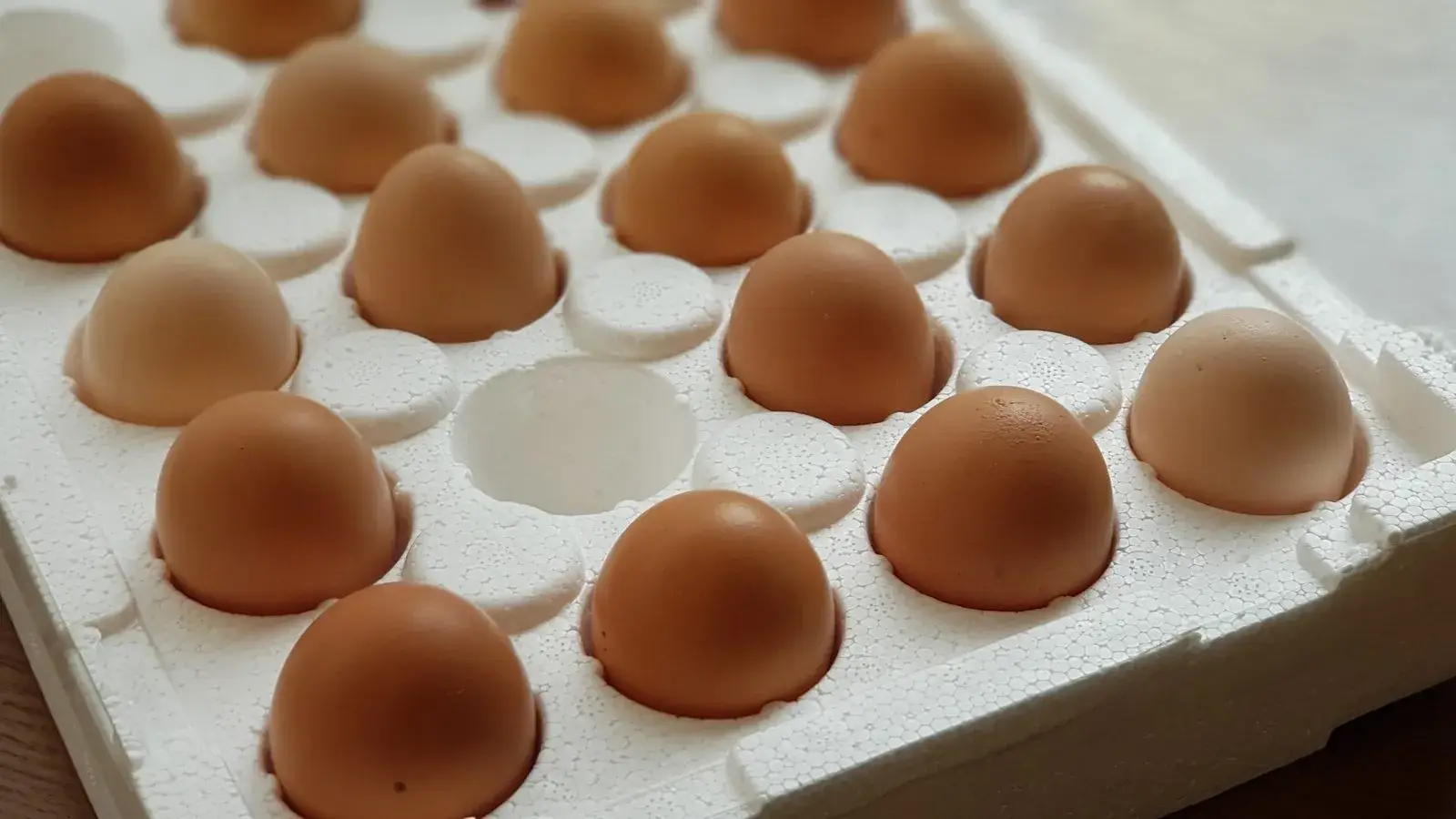
We Compared 6 Ceramic Nest Eggs on Weight and Cost Per Egg
We compared six ceramic nest eggs on weight per egg and real cost per egg, and explain why most listings never publish the one number that decides whether they work.

By Sam Reddick Lead gear reviewer, Chicken Geek
Fact checked by Marta Voss
Published Prices and stock checked 7 min read
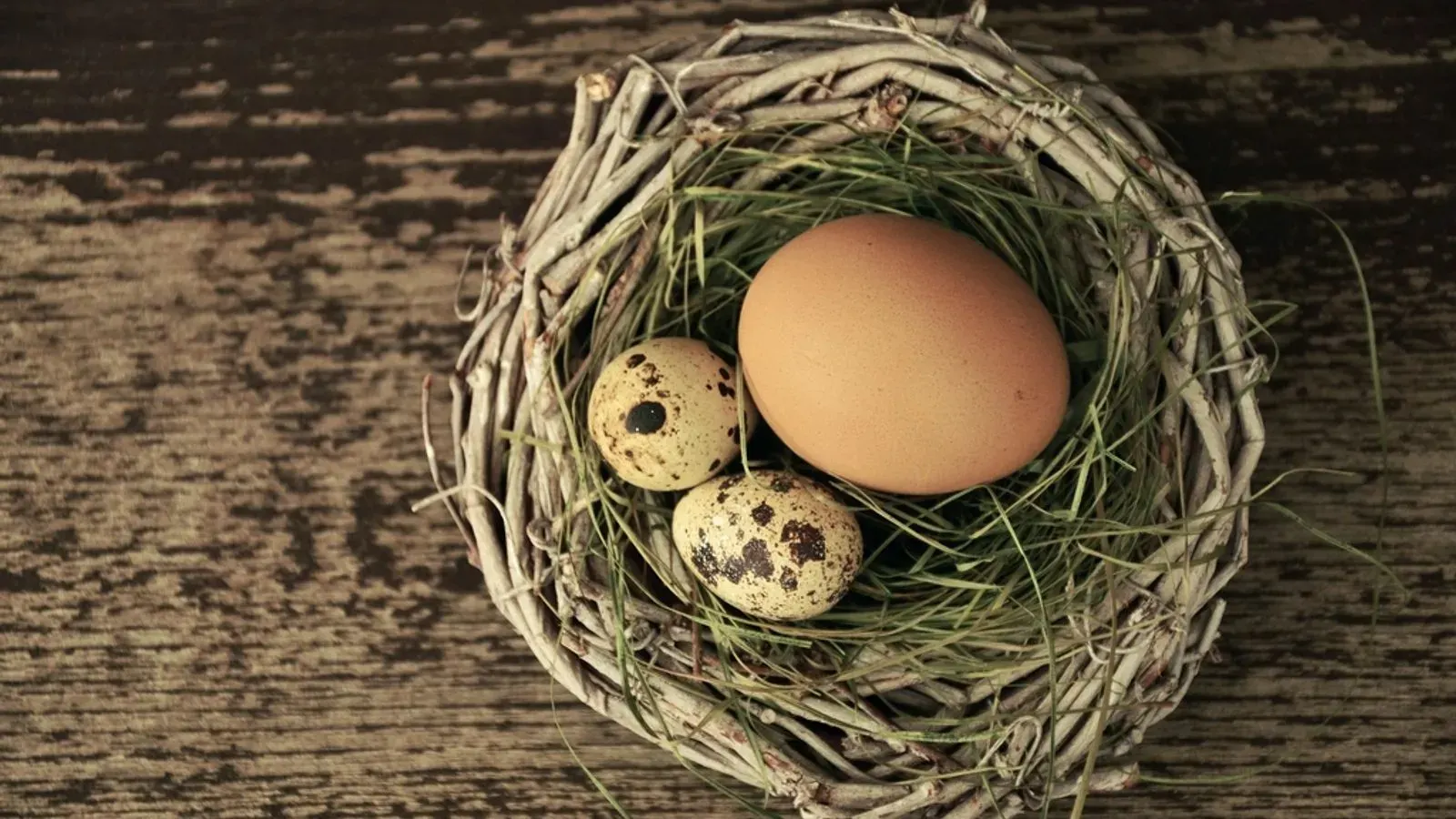
A ceramic nest egg has one job. It sits in the box and tells a hen this is where eggs go. For that to work she has to leave it alone, which means she cannot shove it into the corner, roll it out of the box, or crack it open.
That comes down to weight, and weight is the number almost nobody checks. A real large egg is about 2 oz. Get much lighter than that and the egg skitters around under a settling hen instead of sitting still like the real thing.
Almost no listing states it. Of the six sets here, only two give you enough to work it out. Cackle Hatchery publishes 0.25 lb for two eggs, which is about 2 oz each, a genuine match for a real egg. JolliLudo publishes 1.22 lb for twelve, about 1.6 oz each, lighter but still substantial. The brown Brillante pair quotes 0.02 lb, a third of an ounce, which is not credible for a solid ceramic egg 2.25 in long, so we record it as a listing figure rather than a fact, and the white Brillante set publishes no weight at all.
The other honest number is cost per egg, which is not the same as the price on the page.
Our picks at a glance
Every product below wins one specific situation. Pick the row that matches your flock, your yard and your budget rather than reading top to bottom.
-
Best Overall

Nest Box Queen 6
Keepers with four to six nest boxes who want one egg per box plus a spare, in the colour most flocks actually lay.
Check price on Amazon for Nest Box Queen Ceramic Chicken Nest Eggs for Nest Box Training (6 Brown Eggs) on AmazonAbout $14.99 checked Aug 8, 2026
-
Best Weight for Nest Box Training

Cackle Hatchery 2-Pack
Anyone with one or two nest boxes, or a keeper who wants at least one dummy egg of confirmed realistic weight in the coop.
Check price on Amazon for Cackle Hatchery Brown Ceramic Nest Eggs (2ct) - Chicken Egg Accessories on AmazonAbout $9.99 checked Aug 8, 2026
-
Best for a Long Row of Boxes

JolliLudo 12-Pack
Keepers with six or more nest boxes, or anyone running multiple coops who wants one dummy egg in every box.
Check price on Amazon for JolliLudo 12 Pcs Ceramic Eggs for Nesting Boxes, Fake Eggs,Brown on AmazonAbout $27.99 checked Aug 8, 2026
-
Best Budget

Eggcetera 4-Pack
Anyone with three or four nest boxes who wants one dummy egg per box without spending much.
Check price on Amazon for Eggcetera Ceramic Nest Eggs 4-Pack (Brown) on AmazonAbout $10.99 checked Aug 8, 2026
-
Best for a White Egg Flock

Brillante White 6
Anyone keeping white egg breeds such as Leghorns who wants a dummy egg that matches what the flock produces.
-
Best Look-Alike for a Brown Layer

Brillante Brown
Someone with one or two nest boxes and a brown laying flock who wants the closest published size match to a real egg.
Compare every pick side by side
Swipe the table sideways to see every column on a phone.
| Product | Award | Price band | Pack Quantity | Material | Egg Dimensions | Country Of Origin | Stated Uses | Best use case | Buy link |
|---|---|---|---|---|---|---|---|---|---|
| Nest Box Queen 6 | Best Overall | Under $30 | 6 eggs | Ceramic | Not stated | Hand crafted in the USA | Nest box training, broodiness test with a clutch, egg pecking deterrent, home decor | Keepers with four to six nest boxes who want one egg per box plus a spare… | Check price for Nest Box Queen Ceramic Chicken Nest Eggs for Nest Box Training (6 Brown Eggs) on Amazon |
| Cackle Hatchery 2-Pack | Best Weight for Nest Box Training | Under $30 | 2 eggs | Ceramic | Not stated | Handcrafted in the USA | Nest box training, egg pecking deterrent, broody hen test, decor and crafts | Anyone with one or two nest boxes, or a keeper who wants at least one dum… | Check price for Cackle Hatchery Brown Ceramic Nest Eggs (2ct) - Chicken Egg Accessories on Amazon |
| JolliLudo 12-Pack | Best for a Long Row of Boxes | Under $30 | 12 eggs | Ceramic, described as wear resistant and not breakable by hens | About 1.7 x 2.3 in (4.2 x 5.8 cm) | Not stated | Guide hens to lay in designated areas, anti-pecking training, ducks and pigeons, agricultural education props | Keepers with six or more nest boxes, or anyone running multiple coops who… | Check price for JolliLudo 12 Pcs Ceramic Eggs for Nesting Boxes, Fake Eggs,Brown on Amazon |
| Eggcetera 4-Pack | Best Budget | Under $30 | 4 eggs | Ceramic per the title | Not stated | Not stated | Not stated, the listing has no bullet points | Anyone with three or four nest boxes who wants one dummy egg per box with… | Check price for Eggcetera Ceramic Nest Eggs 4-Pack (Brown) on Amazon |
| Brillante White 6 | Best for a White Egg Flock | Under $30 | 6 eggs | Ceramic | 2.25 x 1.75 x 1.75 in | Made in USA | Nest box training, discourage egg pecking and eating, broody test, decor and crafts | Anyone keeping white egg breeds such as Leghorns who wants a dummy egg th… | Check price for Ceramic Chicken Nesting Eggs (White) - Fake Training Eggs for Laying Chickens, Hen Nest Boxes & Home Decoration - 6 Pack on Amazon |
| Brillante Brown | Best Look-Alike for a Brown Layer | Under $30 | 2 eggs | Ceramic | 2.25 x 1.75 x 1.75 in | Made in USA | Nest box training, discourage egg pecking and eating, broody test, decor and crafts | Someone with one or two nest boxes and a brown laying flock who wants the… | Check price for Br BRILLANTE Ceramic Chicken Nesting Eggs (Brown) - Fake Training Eggs for Laying Chickens, Hen Nest Boxes & Home Decoration on Amazon |
The full reviews
Each review below follows the same order: what it is, why it won its category, how it behaves in real use, and who should buy something else.
1 Best Overall
Nest Box Queen Ceramic Chicken Nest Eggs for Nest Box Training (6 Brown Eggs)
Six brown ceramic eggs at $2.50 each, which is the pack size that matches most backyard box rows without leaving spares in a drawer. Hand crafted in the USA, and the second cheapest per egg here.
What we liked
- Six eggs matches the box count in most backyard coops
- $2.50 an egg, the second lowest per egg figure in this comparison
- Hand crafted in the USA, which is stated rather than implied
- Brown finish suits the majority of backyard flocks, which lay brown eggs
- Ceramic wipes clean and does not absorb moisture off the nest floor
What we did not
- Publishes no weight and no per egg dimensions at all, so you are judging size and heft from a photograph
- Six eggs is more than a two or three box coop needs, and the surplus does nothing in a drawer
- The listed egg pecking deterrent claim has no good evidence behind it for a hen who already eats eggs
- Ceramic cracks if it lands on a concrete floor, so boxes above hard standing will lose one eventually
About $14.99 checked Aug 8, 2026
Key specifications
- Dimensions
- 6 x 4 x 3 in (L x W x H)
- Colour
- Brown
- Pack Quantity
- 6 eggs
- Material
- Ceramic
- Egg Dimensions
- Not stated
- Country Of Origin
- Hand crafted in the USA
- Stated Uses
- Nest box training, broodiness test with a clutch, egg pecking deterrent, home decor
Why the Nest Box Queen 6 wins this category
Because the pack size is right and the price per egg is close to the best here.
Six eggs at $14.99 works out at $2.50 each. Only the JolliLudo 12-Pack beats that, at $2.33, and it does so by making you buy twelve. Most backyard coops have three to six boxes. Six eggs covers a full row with one to spare for the day a nest egg goes out with the litter.
Brown is the right default colour too. The great majority of backyard flocks lay brown eggs, and a dummy that looks like what the birds are producing is the point of the exercise.
Living with the Nest Box Queen 6
Use one per box, bedded into the hollow rather than sitting on top of flat shavings. An egg that looks laid reads correctly to a hen. One perched on the surface gets nudged to the edge.
Put them out a week or two before your pullets are due to start, which is around 16 to 18 weeks for most breeds, then leave them in place. They cost nothing to keep there and they hold the habit through a moult or a coop move, which is when birds sometimes start experimenting with the floor.
Ceramic is the easier material to live with. A glazed surface wipes clean and does not soak up whatever is on the nest floor, which is where wooden dummies fall down.
Where the Nest Box Queen 6 falls short
The listing publishes no weight and no per egg dimensions. That is a real gap in this category, because weight is the specification that decides whether a hen can shove the egg out of the box. Cackle Hatchery publishes a figure that works out at about 2 oz an egg, a genuine match for a real one, and JolliLudo publishes enough to calculate 1.6 oz. Here you are judging from a photograph.
Six is also the wrong number for a small coop. If you have two or three boxes, half the pack sits unused and the cheaper Eggcetera 4-Pack covers you for $4 less.
The listing repeats the standard claim that a ceramic egg deters egg pecking. It may put a hen off trying, but there is no good evidence it stops a bird who has already learned to eat eggs, and buying one as a cure will waste time you should be spending on calcium, more boxes and more frequent collecting.
One practical note that applies to all of these: mark them with a permanent marker. Six brown ceramic eggs are indistinguishable from the real thing in a collecting basket.
Research based, not hands-on
Assessed on pack quantity against typical backyard box counts, on cost per egg calculated across all six sets here, on stated country of origin and material, and on what the listing publishes against what it leaves out.
- Best for
- Keepers with four to six nest boxes who want one egg per box plus a spare, in the colour most flocks actually lay.
- Skip it if
- You need to confirm the weight before buying, because this listing publishes no weight figure of any kind.
- The limitation to plan around
- Neither a weight nor a per egg dimension is published anywhere in the listing, so the one specification that decides whether a hen leaves it alone is something you have to take on trust.
2 Best Weight for Nest Box Training
Cackle Hatchery Brown Ceramic Nest Eggs (2ct) - Chicken Egg Accessories
The only set here whose published weight works out at about 2 oz an egg, a genuine match for a real large egg. That is the specification that decides whether a hen leaves it alone, and this is the one listing that lets you check it.
What we liked
- Published 0.25 lb for two eggs works out at roughly 2 oz each, matching a real large egg
- The only listing here that lets you verify weight before buying
- Handcrafted in the USA, stated on the listing
- Lowest pack price in this comparison at $9.99
- Brown finish matches what most backyard flocks lay
What we did not
- $5.00 an egg is more than double the JolliLudo 12-Pack per egg, so covering four or more boxes gets expensive fast
- Two eggs covers two boxes, and most backyard coops have more than that
- No per egg dimensions are published, only the weight, so the shape and length are still from a photograph
- Ceramic that heavy cracks harder if it drops onto concrete under a raised box
About $9.99 checked Aug 8, 2026
Key specifications
- Dimensions
- 6 x 4 x 3 in (L x W x H)
- Weight
- 0.24912235606 pounds
- Colour
- Brown
- Pack Quantity
- 2 eggs
- Material
- Ceramic
- Egg Dimensions
- Not stated
- Country Of Origin
- Handcrafted in the USA
- Stated Uses
- Nest box training, egg pecking deterrent, broody hen test, decor and crafts
Why the Cackle Hatchery 2-Pack wins this category
Because it publishes the number the rest of this category hides. The listing gives 0.25 lb for two eggs. That is about 2 oz an egg, which is what a real large egg weighs.
Weight is the whole reason a nest egg works. A hen settling into a box shuffles, turns and pushes. An egg with the right heft stays in the hollow. A light one travels to the corner and then over the lip, and a nest egg on the coop floor is teaching nothing.
Nest Box Queen, Eggcetera and the Brillante White 6 publish no weight at all. The Brillante Brown pair publishes 0.02 lb, a third of an ounce, which cannot be right for a solid ceramic egg 2.25 in long. JolliLudo works out at 1.6 oz. This is the only one here that lands on a realistic figure you can check for yourself.
Living with the Cackle Hatchery 2-Pack
Two eggs suits a small coop directly, and it is also a sensible way to buy if you want one known-good dummy egg to compare against a cheaper set.
Bed each one into the hollow of the shavings rather than resting it on the surface. A heavy egg sitting in a dip behaves like a laid egg, which is the impression you are trying to create for a pullet coming up to point of lay.
At $9.99 this is the lowest sticker price in the comparison, so it is a cheap way to test whether nest eggs work for your birds at all before committing to a six or twelve pack.
The brown finish is right for the majority of backyard flocks, and being handcrafted in the USA is stated rather than left vague.
Where the Cackle Hatchery 2-Pack falls short
The per egg cost is the problem. Five dollars an egg is the second highest in this guide, behind only the Brillante Brown pair at $5.95. If you have five boxes, three of these packs cost about $30 and give you six eggs, where the JolliLudo 12-Pack gives you twelve for $27.99.
Two eggs also does not cover a normal coop. Most backyard setups have three to six boxes, so a single pack leaves most of them unmarked.
And while the weight is published, the per egg dimensions are not. You know how heavy it is and not how long it is, so the visual match to your birds' eggs is still a photograph judgement.
Worth noting too: a 2 oz ceramic egg dropped from a raised box onto concrete is more likely to break than a lighter one, so if your boxes sit above hard standing, expect to replace one eventually.
Research based, not hands-on
Assessed on the published pack weight divided by egg count against the weight of a real large egg, on cost per egg calculated across all six sets, and on pack quantity against typical backyard box counts.
- Best for
- Anyone with one or two nest boxes, or a keeper who wants at least one dummy egg of confirmed realistic weight in the coop.
- Skip it if
- You are covering four or more boxes, because at $5.00 an egg only the Brillante Brown pair costs more per egg, and four boxes means two packs and $19.98.
- The limitation to plan around
- Two eggs is the whole pack. Filling a normal four to six box row means buying two or three packs, at which point you have spent more than the twelve egg JolliLudo set for half the eggs.
3 Best for a Long Row of Boxes
JolliLudo 12 Pcs Ceramic Eggs for Nesting Boxes, Fake Eggs,Brown
Twelve eggs at $2.33 each, the lowest cost per egg here, and the only set that publishes both a per egg size and a pack weight that divides into a believable figure. Buy it if you have a long row of boxes to fill.
What we liked
- Lowest cost per egg in this comparison at $2.33
- Publishes per egg dimensions of about 1.7 x 2.3 in, close to a real large egg
- Published 1.22 lb for twelve works out at about 1.6 oz an egg, which you can verify
- Twelve eggs covers a long box row with spares for losses
- Described as wear resistant and not breakable by hens, which is a reasonable claim for solid ceramic
What we did not
- At about 1.6 oz an egg it is lighter than a real large egg, so a determined hen can shift it further than a 2 oz dummy
- Twelve eggs in a three box coop leaves nine sitting in a drawer doing nothing
- No country of origin is stated anywhere in the listing
- Highest pack price here at $27.99, so a small flock pays the most to use the least of it
About $27.99 checked Aug 8, 2026
Key specifications
- Dimensions
- 12.6 x 4.72 x 2.95 in (L x W x H)
- Weight
- 1.22 pounds
- Colour
- Brown
- Pack Quantity
- 12 eggs
- Material
- Ceramic, described as wear resistant and not breakable by hens
- Egg Dimensions
- About 1.7 x 2.3 in (4.2 x 5.8 cm)
- Country Of Origin
- Not stated
- Stated Uses
- Guide hens to lay in designated areas, anti-pecking training, ducks and pigeons, agricultural education props
Why the JolliLudo 12-Pack wins this category
On arithmetic. Twelve eggs for $27.99 is $2.33 each, the cheapest per egg in this guide, ahead of the Nest Box Queen 6 at $2.50 and well ahead of the two egg packs at $5.00 and $5.95.
It is also one of only three sets that publishes a per egg size, alongside the two Brillante packs. About 1.7 x 2.3 in is a close match for a real large egg, which is what you want a dummy to look like sitting in the bedding. Three of the six sets here state nothing at all.
And it publishes a pack weight you can divide into a figure that makes sense. Only the Cackle Hatchery 2-Pack does that as well, which makes these two the listings where a buyer can check the specification that actually matters.
Living with the JolliLudo 12-Pack
Twelve is the right count if you run a six box row and want a spare for each, or if you keep two coops. One egg per box is the standard approach and there is no benefit to stacking more than one in a box unless you are deliberately testing a hen for broodiness.
The claim that hens cannot break them is reasonable. Solid ceramic is far harder than a beak, and the failure mode for these is a fall onto concrete, not a peck.
The listing also mentions ducks and pigeons, which is fair enough since the same trick works on other laying birds. The line about agricultural education props is filler and worth ignoring.
Where the JolliLudo 12-Pack falls short
The weight is the honest weakness. Divide 1.22 lb by twelve and you get about 1.6 oz an egg, which is noticeably under the roughly 2 oz of a real large egg and under the 2 oz that Cackle Hatchery publishes. It is heavy enough to behave properly in a well bedded nest, but a hen shuffling on bare box floor will move it further than she would move a heavier one. Bed it in.
Pack size is the other issue and it cuts hard for small flocks. This is the highest sticker price in the comparison at $27.99. In a three box coop you use three eggs and put nine away, which turns the best price per egg into the worst value on the page.
No country of origin is stated either. Cackle Hatchery, Nest Box Queen and both Brillante sets all say USA. This one says nothing.
Research based, not hands-on
Assessed on published pack weight divided by egg count against a real large egg, on the published per egg dimensions, on cost per egg calculated across all six sets, and on pack quantity against typical backyard box counts.
- Best for
- Keepers with six or more nest boxes, or anyone running multiple coops who wants one dummy egg in every box.
- Skip it if
- You have three or fewer boxes, because you will pay the highest pack price here and use a quarter of it.
- The limitation to plan around
- The calculated 1.6 oz an egg is under the roughly 2 oz of a real large egg. Bed each one well into the shavings rather than leaving it on the surface, because a lighter dummy is easier for a settling hen to push aside.
4 Best Budget
Eggcetera Ceramic Nest Eggs 4-Pack (Brown)
Four brown ceramic eggs for $10.99, the cheapest of any pack here that covers more than two boxes. The trade is a listing with no bullet points at all, so almost nothing about it is published.
What we liked
- Cheapest of any pack here that covers more than two nest boxes
- $2.75 an egg, the third lowest per egg figure in this comparison
- Four eggs matches the most common small coop box count
- Brown finish matches what most backyard flocks lay
- Ceramic wipes clean and does not soak up moisture from the nest floor
What we did not
- The listing has no bullet points, so no weight, no egg dimensions and no country of origin are published anywhere
- Weight is the one spec that decides whether a hen can push the egg out of the box, and there is no way to check it here
- Four eggs leaves a six box row two openings short, and a second pack adds two you do not need
- Nothing is stated about the glaze or finish, so how closely it matches a real brown egg is a photograph judgement
About $10.99 checked Aug 8, 2026
Key specifications
- Dimensions
- 4 x 4 x 2.75 in (L x W x H)
- Colour
- Brown
- Pack Quantity
- 4 eggs
- Material
- Ceramic per the title
- Egg Dimensions
- Not stated
- Country Of Origin
- Not stated
- Stated Uses
- Not stated, the listing has no bullet points
Why the Eggcetera 4-Pack wins this category
On price for the job most people actually need doing. Four eggs at $10.99 is $2.75 each, and more usefully it is the cheapest way in this guide to put a dummy egg in more than two boxes.
Compare the alternatives for a four box coop. Two Cackle Hatchery 2-Packs cost $19.98. The Nest Box Queen 6 costs $14.99 and gives you two spares. The Brillante White 6 costs $19.50. This one covers four boxes for $10.99 and nothing else here gets close.
Brown is the right colour for most flocks, and ceramic is the right material, being denser than wood for the same size and easy to wipe clean.
Living with the Eggcetera 4-Pack
Four is a good match for the small coop most keepers actually have. Three or four boxes is normal for a flock of six to ten hens, so this is one egg per box with nothing spare.
Use them the way you would use any nest egg. One per box, bedded into the hollow rather than sitting on flat shavings, put out a week or two before pullets are due to start laying, then left in place permanently.
Mark them with a permanent marker before they go in. Brown ceramic in a collecting basket looks exactly like the real thing, and somebody will try to crack one.
Where the Eggcetera 4-Pack falls short
The listing is close to empty. There are no bullet points, so there is no weight, no per egg dimension, no country of origin and no stated use. That is the least published information of any product in this guide, and it means the specification that decides whether a nest egg works at all, its weight, is simply not available.
That is a real risk and not a formality. A dummy egg much lighter than the roughly 2 oz of a real large egg gets pushed to the edge of the box by a settling hen and then out of it. Cackle Hatchery publishes a figure you can check. Here you cannot.
Pack size is the other limit. Four covers four boxes exactly, with no spare for the one that inevitably goes out with the litter, and a six box row needs a second pack with two eggs left over.
Research based, not hands-on
Assessed on cost per egg calculated across all six sets, on pack quantity against typical backyard box counts, and on the near total absence of published specifications compared with the other five listings here.
- Best for
- Anyone with three or four nest boxes who wants one dummy egg per box without spending much.
- Skip it if
- You want a published specification to buy on, because this listing publishes the least of any set here.
- The limitation to plan around
- There is no weight figure, no egg dimension and no origin on the page. If a hen can shove the egg around, you will only find that out after it arrives, so treat the low price as the reason to take the risk.
5 Best for a White Egg Flock
Ceramic Chicken Nesting Eggs (White) - Fake Training Eggs for Laying Chickens, Hen Nest Boxes & Home Decoration - 6 Pack
The only white set here, which matters if you keep Leghorns or Anconas and want a dummy that looks like what your hens lay. It publishes egg dimensions of 2.25 x 1.75 in, close to a real large egg.
What we liked
- The only white ceramic nest eggs in this comparison
- Publishes per egg dimensions of 2.25 x 1.75 in, a close match for a real large egg
- Six eggs covers a full backyard box row with a spare
- Made in USA, stated on the listing
- White shows dirt clearly, so you can see when the nest needs fresh bedding
What we did not
- No weight is published anywhere in the listing, so the one specification that decides whether a hen can shove the egg out of the box cannot be checked
- $3.25 an egg is more than the Nest Box Queen 6 at $2.50 for the same pack count
- A white dummy in a flock that lays brown eggs stands out, which defeats the point of the look-alike
- Ceramic cracks on a concrete floor, and a raised box over hard standing will eventually cost you one
Key specifications
- Dimensions
- 2.25 x 1.75 x 1.75 in (L x W x H)
- Colour
- White
- Pack Quantity
- 6 eggs
- Material
- Ceramic
- Egg Dimensions
- 2.25 x 1.75 x 1.75 in
- Country Of Origin
- Made in USA
- Stated Uses
- Nest box training, discourage egg pecking and eating, broody test, decor and crafts
Why the Brillante White 6 wins this category
Because it is the only white option here, and colour matching is a real reason to choose a nest egg.
If you keep Leghorns, Anconas, Andalusians or California Whites, your birds lay white eggs and a brown dummy in the box is obviously not one of theirs. The other five sets in this guide are all brown.
It also publishes something useful. The stated 2.25 x 1.75 in per egg is close to a real large egg, which is the size you want. Three of the six sets here state no egg dimension at all.
Six eggs covers a normal backyard box row with one spare, and Made in USA is stated on the page rather than implied.
Living with the Brillante White 6
One per box, bedded into the hollow of the shavings. That applies to every nest egg, but a white one gives you a small bonus: it shows soiling clearly, so a grubby dummy is a quick visual cue that the box needs fresh bedding.
Put them out a week or two before your pullets reach point of lay, then leave them there. There is no reason to take a nest egg out once laying is established, and it holds the habit through a moult or a coop move.
Mark them with a permanent marker anyway. A white ceramic egg in a basket of white eggs is invisible, which is exactly the situation that ends with someone cracking one on a bowl.
Where the Brillante White 6 falls short
There is no weight figure at all. The listing gives dimensions and stops there, so the specification that decides whether a hen can shove the egg out of the box is missing. A solid ceramic egg 2.25 in long ought to land somewhere near the 2 oz of a real large egg, and the Cackle Hatchery 2-Pack is the only set here that publishes a number you can actually check against that.
The price is the other point. At $19.50 for six that is $3.25 an egg, against $2.50 an egg for the Nest Box Queen 6 in the same pack count. You are paying about $4.50 more for the white finish.
And the colour only helps if it is right. In a flock laying brown eggs a white dummy stands out in the box rather than blending in, which undoes the whole reason for buying a realistic looking egg.
Research based, not hands-on
Assessed on the published per egg dimensions against a real large egg, on the absence of any published weight figure, on cost per egg calculated across all six sets, and on colour match to common laying breeds.
- Best for
- Anyone keeping white egg breeds such as Leghorns who wants a dummy egg that matches what the flock produces.
- Skip it if
- Your hens lay brown eggs, because a white dummy in the box looks nothing like what they are laying.
- The limitation to plan around
- The listing publishes a size but no weight, so you cannot confirm the heft before it arrives. The stated 2.25 x 1.75 in is close to a real large egg, and a solid ceramic egg that size should land near 2 oz, but that is an inference rather than a published figure.
6 Best Look-Alike for a Brown Layer
Br BRILLANTE Ceramic Chicken Nesting Eggs (Brown) - Fake Training Eggs for Laying Chickens, Hen Nest Boxes & Home Decoration
A pair of brown ceramic eggs with published dimensions of 2.25 x 1.75 in, which is about the size of a real large egg. The closest stated visual match here for a brown laying flock, at the highest cost per egg in the guide.
What we liked
- Publishes per egg dimensions of 2.25 x 1.75 in, close to a real large egg
- Brown finish matches what most backyard flocks lay
- Made in USA, stated on the listing
- Two eggs is a sensible way to try nest eggs before buying a large pack
- Ceramic wipes clean and does not absorb moisture from the nest floor
What we did not
- At $5.95 an egg it is the most expensive per egg in this comparison, more than double the JolliLudo 12-Pack
- The stated 0.02 lb weight is a third of an ounce, which is not credible for a solid ceramic egg this size, so the real weight is unknown
- Two eggs covers two boxes, so a normal four to six box row needs three packs at over $35
- The listed egg pecking deterrent claim is not supported by good evidence for a hen who already eats eggs
Key specifications
- Dimensions
- 2.25 x 1.75 x 1.75 in (L x W x H)
- Weight
- 0.02 pounds
- Colour
- Brown
- Pack Quantity
- 2 eggs
- Material
- Ceramic
- Egg Dimensions
- 2.25 x 1.75 x 1.75 in
- Country Of Origin
- Made in USA
- Stated Uses
- Nest box training, discourage egg pecking and eating, broody test, decor and crafts
Why the Brillante Brown wins this category
On stated size. The listing gives 2.25 x 1.75 in per egg, which is about what a real large egg measures, and it is brown, which is what the great majority of backyard flocks lay.
That combination is rarer here than it should be. Nest Box Queen, Cackle Hatchery and Eggcetera all sell brown eggs and none of them publishes a per egg dimension. JolliLudo publishes about 1.7 x 2.3 in but says nothing about where it is made. This one gives you a brown egg, a stated size and a stated origin.
If you have one or two boxes and want the closest published match to what your hens produce, this is the pair to buy.
Living with the Brillante Brown
Two eggs suits a small coop, and it is also a low commitment way to see whether nest eggs make any difference to your birds before spending $27.99 on a set of twelve.
Bed each one into the hollow rather than sitting it on top of flat shavings. That is how a real egg sits and it is what stops a settling hen nudging the dummy to the edge of the box.
Put them out a week or two before pullets reach point of lay, then leave them there permanently. There is no reason to remove a nest egg once laying is established.
Mark both with a permanent marker. A brown ceramic egg is indistinguishable from a real one once it is in the basket.
Where the Brillante Brown falls short
Cost per egg is the headline problem. Two eggs at $11.90 is $5.95 each, the most expensive in this guide, and more than double the $2.33 of the JolliLudo 12-Pack. Filling a five box row would take three packs and cost over $35, which is more than twelve eggs from JolliLudo.
The weight figure is unusable. The listing quotes 0.02 lb, about a third of an ounce, and a solid ceramic egg 2.25 in long cannot weigh that. So the specification that decides whether a hen can push it out of the nest is missing in practice, even though a number appears on the page. Cackle Hatchery is the only set here that publishes a weight that works out to a realistic 2 oz.
The listing also repeats the standard claim that a ceramic egg discourages egg pecking and eating. It is a plausible deterrent for a bird who has not tried yet. For a hen who has already learned that a broken egg is food, there is no good evidence a dummy stops her, and the changes that do work are more calcium, more boxes, darker boxes, collecting more often and a roll away box.
Research based, not hands-on
Assessed on the published per egg dimensions against a real large egg, on whether the stated weight figure is physically plausible, on cost per egg calculated across all six sets, and on pack quantity against typical backyard box counts.
- Best for
- Someone with one or two nest boxes and a brown laying flock who wants the closest published size match to a real egg.
- Skip it if
- You are filling more than two boxes, because at $5.95 an egg this is the most expensive way here to do it.
- The limitation to plan around
- The 0.02 lb weight on this listing cannot be correct for a solid ceramic egg 2.25 in long, so the figure that would tell you whether a hen can push it out of the nest is unusable.
How we compared these ceramic nest eggs
We started with weight, because weight is what decides whether a hen leaves the egg where you put it.
Only two of these six publish enough to calculate it. Cackle Hatchery lists 0.25 lb for a pair, about 2 oz an egg, which matches a real large egg. JolliLudo lists 1.22 lb for twelve, about 1.6 oz each. The brown Brillante pair states 0.02 lb, a third of an ounce, which cannot be right for a solid ceramic egg 2.25 in long, so we treat it as a listing error rather than a specification. Nest Box Queen, Eggcetera and the white Brillante set publish no weight at all.
After that we worked out cost per egg across the whole group, compared pack quantity against the number of boxes a normal backyard coop has, and read what each listing claims a nest egg does. Claims about egg pecking were recorded and not repeated as fact.
What actually matters in a ceramic nest egg
Weight per egg
A real large egg is about 2 oz. That is the target.
Ceramic is dense, so a solid egg of the right size gets close to it without anyone trying. The problem is that you usually cannot confirm it, because the weight field on these listings is either missing or is the shipping weight of the whole box.
If a nest egg is much lighter than a real one, a hen settling on the nest pushes it aside, and over a few days it works its way to the corner or over the lip. An egg on the coop floor is not training anything.
Size, which is not a differentiator here
Three sets publish egg dimensions and all are about right. Both Brillante packs give 2.25 x 1.75 in and JolliLudo gives about 2.3 x 1.7 in. A real large egg sits close to that.
The other three state nothing. This is worth knowing rather than worth choosing on, because a ceramic egg sold as a chicken nest egg is made to look like a chicken egg and none of these is going to arrive the size of a golf ball.
Cost per egg, not pack price
This is where the ranking changes. Worked per egg, JolliLudo is $2.33, Nest Box Queen $2.50, Eggcetera $2.75, Brillante White $3.25, Cackle Hatchery $5.00 and Brillante Brown $5.95.
The two egg packs are the expensive ones per unit, which is what you would expect, and the twelve pack is the cheapest.
That does not make the twelve pack the best buy. Pack size should match your box count. Most backyard coops run three to six boxes, and twelve eggs in a three box coop is nine eggs in a drawer doing nothing.
What the listing claims it can do
Nearly every product here says a ceramic egg discourages egg pecking and egg eating. It is a plausible deterrent and it is not a cure.
Once a hen has learned that a broken egg is food, a hard object in the nest rarely unteaches her. The fixes that work are more calcium, more boxes, darker boxes, collecting more often, and a roll away box that removes the egg before she gets to it. Buy the nest egg for training pullets to the box, which is what it is genuinely good at.
Getting a pullet to use the box
Put one egg in each box a week or two before your pullets are due to start laying, at around 16 to 18 weeks for most breeds.
Bed the egg into the hollow rather than leaving it sitting on top of flat shavings. A nest egg that looks like it was laid there reads correctly to a bird. One that is perched on the surface gets nudged out.
Leave it in place once they start laying. It costs nothing and it keeps the habit anchored, particularly through a moult or a move when birds sometimes start experimenting with the coop floor.
If a hen starts laying somewhere else anyway, move a nest egg to the place she has chosen for a couple of days and then move it back to the box. Chasing her out of the wrong spot rarely works as well.
And mark them. A permanent marker takes five seconds and saves somebody hitting a ceramic egg on the edge of a mixing bowl.
Final recommendation
The Nest Box Queen 6 is the best all round buy. Six eggs at $14.99 is $2.50 an egg, the second lowest per egg figure in this group, and six is the count that matches most backyard box rows without leaving spares in a drawer.
If you want the one set here whose published weight actually works out at a realistic 2 oz an egg, buy the Cackle Hatchery 2-Pack and accept that $5.00 an egg is the price of a number you can check. If you are covering a long row of boxes, the JolliLudo 12-Pack is the cheapest per egg at $2.33 and it publishes its egg dimensions. And if you just want four eggs for four boxes without spending much, the Eggcetera 4-Pack at $10.99 is the cheapest way here to cover more than two boxes.
Questions people ask before buying
How heavy should a ceramic nest egg be?
Close to a real one, which is about 2 oz for a large egg. That weight is what keeps it sitting in the hollow of the bedding while a hen shuffles around on top of it. A light egg gets pushed to the edge of the box or out of it entirely, and an egg that has left the nest is teaching nothing. Of the six sets here, only Cackle Hatchery publishes a figure that works out at roughly 2 oz per egg, and only JolliLudo publishes anything else you can calculate from.
Do ceramic eggs stop chickens eating their own eggs?
There is no good evidence that they cure a hen who has already learned to eat eggs. Nearly every listing in this category claims it, and it is plausible as a deterrent, because a hen who pecks something solid and unrewarding may not try again. Treat it as one thing to try rather than the fix. The changes that actually work on established egg eating are more calcium in the diet, more nest boxes so hens are not crowded, darker boxes, collecting eggs more often, and a roll away box that moves the egg out of reach. If eggs are breaking easily in the first place, that points at calcium or age and is worth a word with a vet.
How many ceramic eggs do I need?
One per nest box is the standard approach, and that is what most keepers end up using. The point is to mark each box as a laying place, not to fill any of them. Count your boxes and buy that number plus a spare, because one will get buried in bedding or thrown out with the litter eventually. Buying twelve for a three box coop puts nine in a drawer, which is why the lowest price per egg is not automatically the best buy.
Are ceramic or wooden nest eggs better?
Ceramic is heavier for the same size, which is the property that matters most, and it is easier to clean because a glazed surface does not absorb anything. Wood is lighter and porous, so it takes up moisture and whatever is on the nest floor. Ceramic can crack if it lands on concrete, which wood will not, so if your boxes sit above a hard floor, expect to lose one now and then. For most backyard coops ceramic is the more sensible choice.
Will a ceramic egg make a hen go broody?
It can encourage a hen who is already inclined that way, and that cuts both ways. A clutch of ceramic eggs left in a box is the traditional way to test whether a hen will sit, because a broody bird will settle on them and stay. If you do not want broody hens, use one egg per box rather than a clutch, and keep collecting real eggs promptly. A single nest egg on its own rarely triggers anything.
How do you stop someone cracking a fake egg at breakfast?
Mark them. This is the thing every keeper learns late, usually the morning somebody brings a ceramic egg into the kitchen and hits it on the side of a bowl. A permanent marker on the shell, an X or a dot on both ends, takes five seconds and survives washing. It also helps you spot at a glance which egg in the box is the dummy when you are collecting in poor light.
Why you can trust this guide
- Written by
- Sam Reddick, Lead gear reviewer, Chicken Geek. Specialist areas: Coop design and predator proofing, Feeding and watering systems, Cold-weather flock management, Incubation and brooding.
- Fact checked by
- Marta Voss
- Published
- August 8, 2026 · Last updated August 8, 2026 · Products and links rechecked August 8, 2026
- How we picked
- Sets were compared on published weight per egg against a real large egg, on stated egg dimensions where any were given, on cost per egg rather than pack price, on pack quantity against a typical backyard box count, and on what each listing claims a nest egg can do against what the evidence supports.
- Evidence used
- None of the 6 products on this page were sent to us or bought for a hands-on test. Every recommendation here is research based: manufacturer specifications, listed dimensions and materials, owner feedback at volume, and comparison against equipment our team has owned. Each review states this again above the buy button so you are never guessing which kind of evidence sits behind a pick.
- Editorial standards
- No brand pays for placement, and no manufacturer sees this page before it goes live. Read our editorial policy and testing method.
- Affiliate disclosure
- Chicken Geek is reader supported. We earn a commission from qualifying purchases made through links on this page, at no extra cost to you, and no brand has paid for a placement or an award here.
About the author

Lead gear reviewer, Chicken Geek
Sam has kept a backyard laying flock for eleven years, through two coop rebuilds, one very determined raccoon and several winters cold enough to freeze a waterer solid overnight. He writes the buying guides at Chicken Geek and is responsible for how products get compared.
- Eleven years keeping a mixed laying flock of 8 to 14 birds
- Has built, bought and replaced six different coops
- Runs the product comparison framework used across Chicken Geek
- Reads manufacturer manuals, spec sheets and warranty terms before every recommendation